Imagine stepping into your backyard on a warm summer morning and plucking a cluster of vibrant crimson, spiky-haired tropical fruit straight from the branch. You twist open the leathery skin to reveal a glistening, translucent pearl of sweet, floral, grape-like flesh—far juicier and more aromatic than anything you could ever buy at a grocery store.
Growing a rambutan tree at home is a dream for many fruit enthusiasts, yet it is also one of the most misunderstood tropical trees in backyard horticulture. Too many enthusiastic gardeners plant a seed from a store-bought fruit, baby it for five years, and end up with a sprawling evergreen that refuses to produce a single blossom—or watch it collapse overnight from root rot or an unexpected chilly breeze.
The good news? Once you understand what this Southeast Asian rainforest native actually needs—specifically its strict preference for acidic, fast-draining soil, high humidity, grafted genetics, and a brief dry-spell trigger for flowering—growing a thriving, heavy-bearing tree becomes completely achievable. Whether you are planting in the ground in a tropical climate or managing a compact specimen in a large container, this complete guide walks you through every step from selection to harvest.
📋 Rambutan Tree Quick-Care Snapshot
🌱 Rambutan Tree Overview: What to Know Before You Plant
Before you dig a hole or buy a pot, understanding the biology of Nephelium lappaceum will save you years of frustration.
Botanical Profile & Native Habitat 🌴
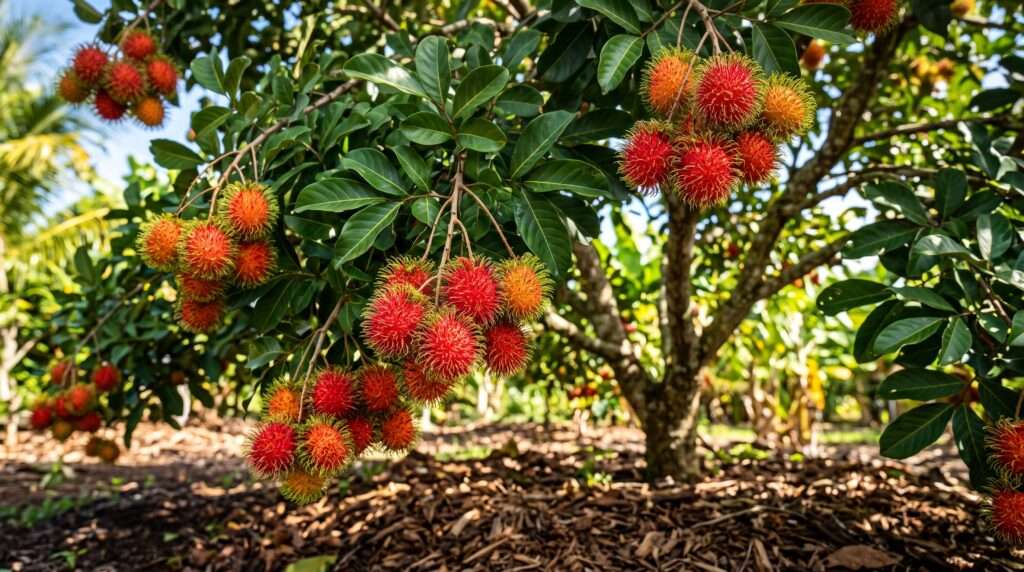
The rambutan belongs to the Sapindaceae (soapberry) family, making it a close botanical cousin to both lychee (Litchi chinensis) and longan (Dimocarpus longan). Native to the warm, humid lowlands of Malaysia, Indonesia, and Thailand, its name comes from the Malay word rambut, meaning “hair”—a playful nod to the soft, flexible spines covering its bright red or golden-yellow rind.
In its native rainforest habitat, a rambutan tree grows into a handsome, spreading evergreen reaching 40 to 60 feet tall with glossy, dark green pinnate leaves. In home orchards, however, regular post-harvest pruning easily keeps in-ground trees around 12 to 20 feet, while container-grown trees stay a manageable 6 to 10 feet.
Grafted Trees vs. Growing from Seed (Crucial for Fruit!) 🧬
Here is the #1 mistake beginners make: planting a seed from a supermarket rambutan and expecting a backyard harvest.
Rambutan trees are trioecious, meaning an individual tree can be:
-
Male: Produces only pollen-bearing flowers and will never bear fruit.
-
Female: Produces only female flowers and requires a nearby male or hermaphrodite tree for pollination.
-
Hermaphrodite: Produces both functional male and female flowers, allowing it to self-pollinate reliably.
When you grow a rambutan from seed, you are rolling the genetic dice. Roughly 40% to 50% of seedlings turn out to be non-fruiting males, and even female seedlings take 5 to 8 years to mature—often yielding sour, small, or clingstone fruit.
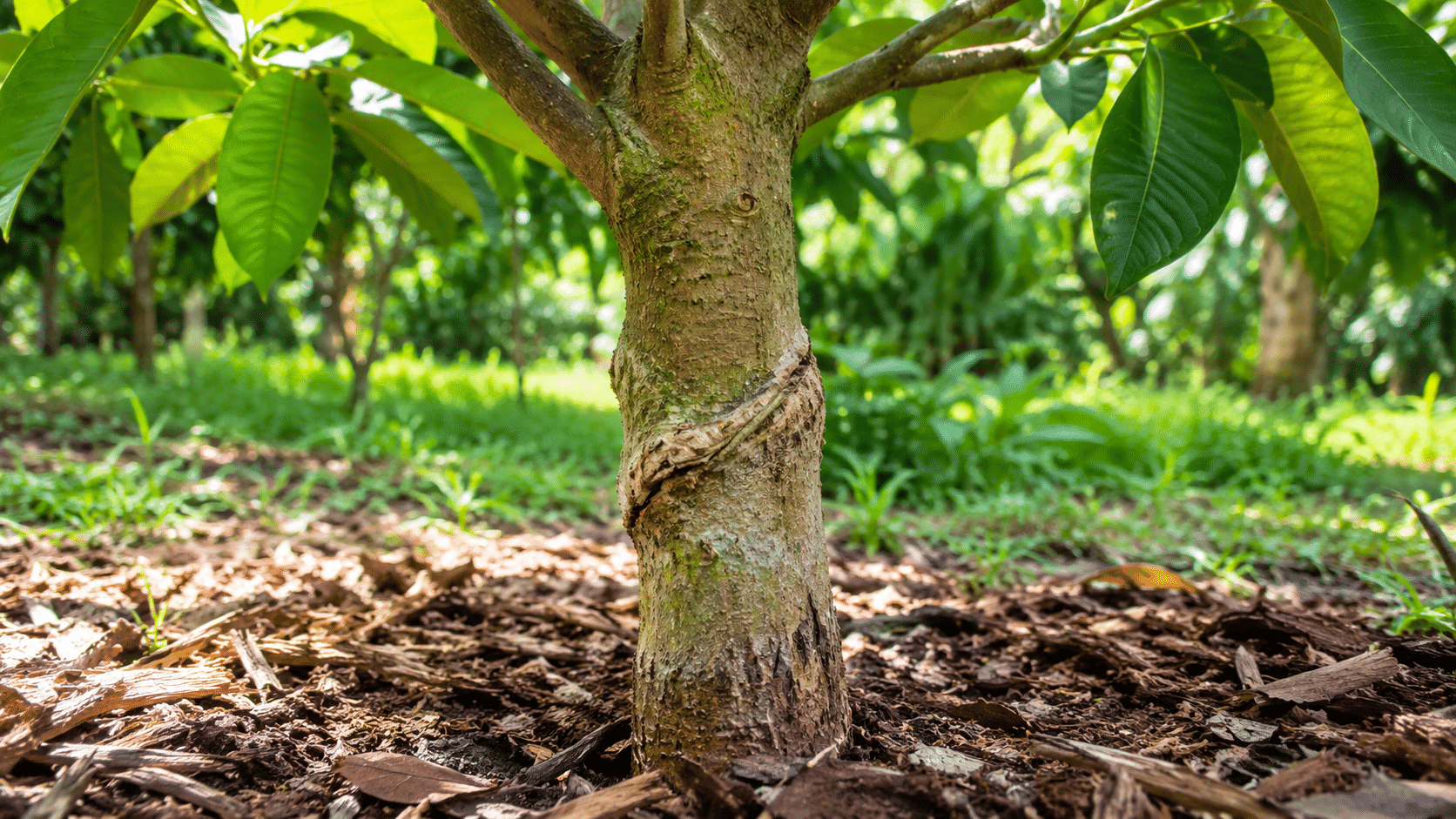
Expert Recommendation: Always invest in a grafted rambutan tree from a reputable tropical nursery. Grafted trees are cloned from proven, heavy-bearing hermaphroditic or female cultivars, guarantee sweet, true-to-type fruit, and begin fruiting in just 2 to 4 years.
Top Rambutan Cultivars for Home Growers 🏆
If you have the choice, select a named cultivar suited to your space and taste preferences:
-
Rongrien (Thailand): Widely considered the gold standard. Produces oval, bright red fruit with signature green-tipped hairs, crisp sweet flesh (20–21° Brix), and a clean-separating seed.
-
N18 (Malaysia): A heavy, consistent producer of large, oblong red fruit with thick, juicy arils that peel effortlessly.
-
Binjai (Indonesia): Prized by connoisseurs for its exceptionally sweet (up to 22° Brix), crunchy flesh and profuse fruiting habit.
-
E35 (Sri Lanka): A standout choice for smaller yards. It produces eye-catching golden-yellow fruit on a naturally more compact, semi-dwarf canopy.
☀️ Ideal Growing Conditions for a Thriving Rambutan Tree
Because rambutans evolved near the equator, mimicking their warm, humid, wind-sheltered environment is the foundation of healthy growth.
Climate, Temperature & USDA Hardiness Zones 🌡️
Rambutan is strictly a tropical species that thrives outdoors in USDA Hardiness Zones 10b through 12. Its sweet spot for active growth and fruit development is between 75°F and 90°F (24°C–32°C).
Unlike lychee—which actually appreciates a brief winter chill to trigger blooms—rambutan hates the cold. Temperatures dipping below 50°F (10°C) can stall growth and cause leaf drop, while any frost is fatal to young trees and severely damaging to mature canopies.
💡 Microclimate Pro Tip: If you live in a borderline Zone 10b area (such as coastal South Florida or sheltered pockets of Southern California), plant your tree on the south-facing side of a masonry wall or house. The structure absorbs daytime heat and radiates it back at night, creating a 3°F to 5°F warmer buffer during winter cold snaps.
Sunlight & Wind Protection 🌤️
Established rambutan trees need full sun (6 to 8+ hours of direct sunlight daily) to fuel heavy flower clusters and high sugar content in the fruit. However, young trees (under 1–2 years old) have tender foliage that scorches easily in intense afternoon sun. Provide 30% to 50% shade cloth during their first summer, then gradually acclimate them to full sun.
Equally important is wind protection. Rambutan wood is somewhat brittle, and its large, delicate leaves shred easily in strong gusts. Sustained dry winds also strip moisture from the foliage and desiccate fragile flower panicles. Plant near a natural windbreak, privacy hedge, or fence.
Soil Type, Drainage & Optimal pH 🪴
Rambutan roots are notoriously sensitive to standing water. They require deep, fertile, loamy, well-draining soil packed with organic matter.
Just as critical is soil acidity: aim for a soil pH between 5.5 and 6.5. In alkaline soils (pH above 7.0), rambutan trees struggle to absorb iron, zinc, and magnesium, leading to chronic leaf yellowing (chlorosis) and stunted growth.
-
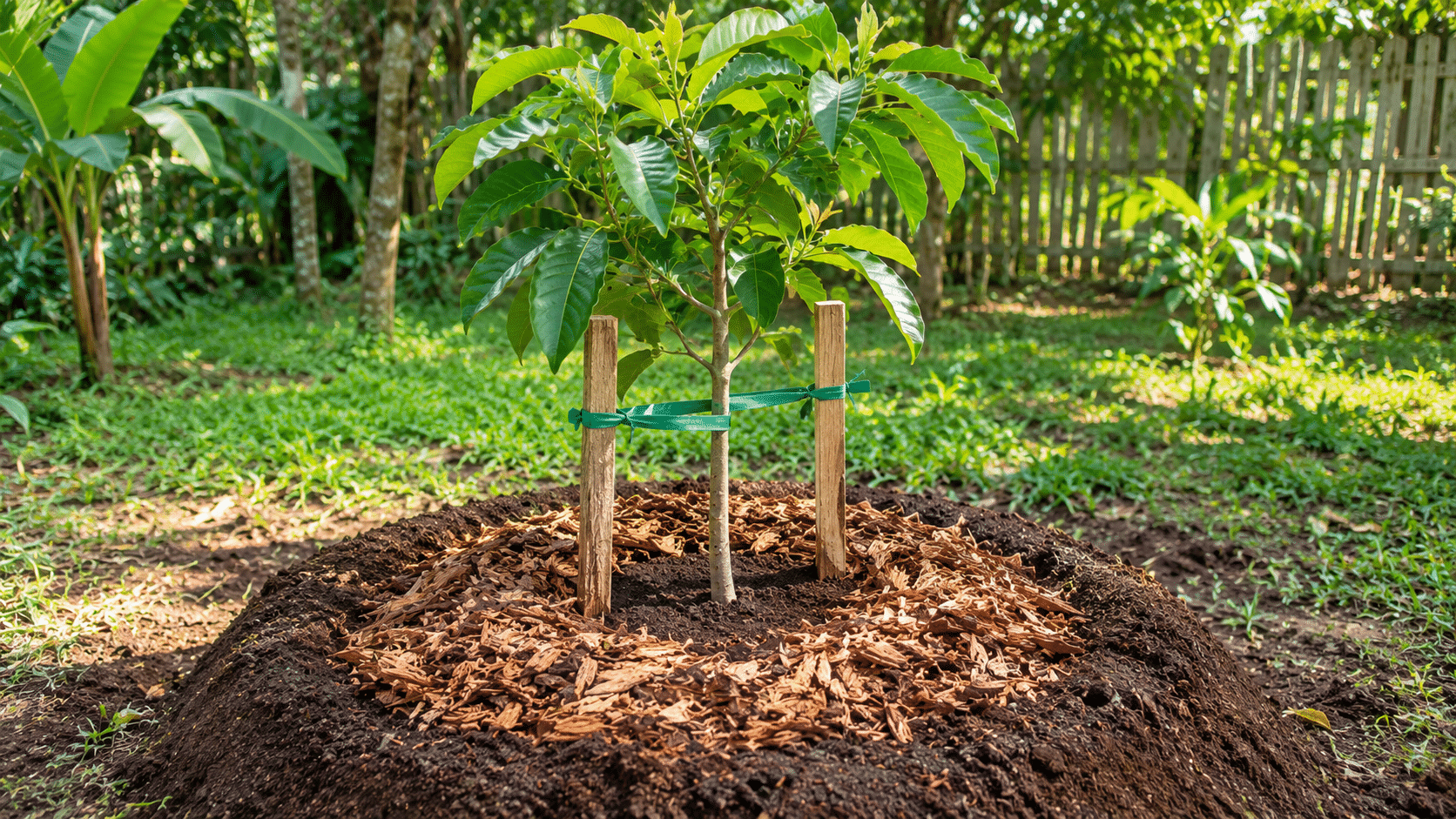
Heavy Clay Fix: If your yard has dense clay or a high water table, never dig a deep “bathtub” hole. Instead, build a raised planting mound roughly 18 to 24 inches (50 cm) high and 4 to 5 feet wide using a blend of native topsoil, composted pine bark, and coarse sand.
Humidity Requirements 💧
Native to humid tropics, rambutan trees perform best at 70% to 80% relative humidity. If humidity consistently drops below 50%, you will notice crispy, brown leaf tips and poor fruit set. In drier climates, grouping tropical plants together, laying down thick organic mulch, and using micro-sprinklers under the canopy can noticeably boost local humidity.
🕳️ How to Plant a Rambutan Tree Step-by-Step
Getting the planting process right sets your tree up for decades of vigorous growth.
Best Time to Plant & Proper Spacing 📏
The ideal time to plant an in-ground rambutan tree is at the start of the warm, rainy season (typically late spring to early summer). Warm soil encourages rapid root expansion before any cooler weather arrives.
Give your tree plenty of room to breathe: space in-ground trees 20 to 30 feet (6–10 meters) apart from other large trees or structures. Good airflow around the canopy is your best natural defense against fungal diseases.
Step-by-Step In-Ground Planting Guide 🛠️
-
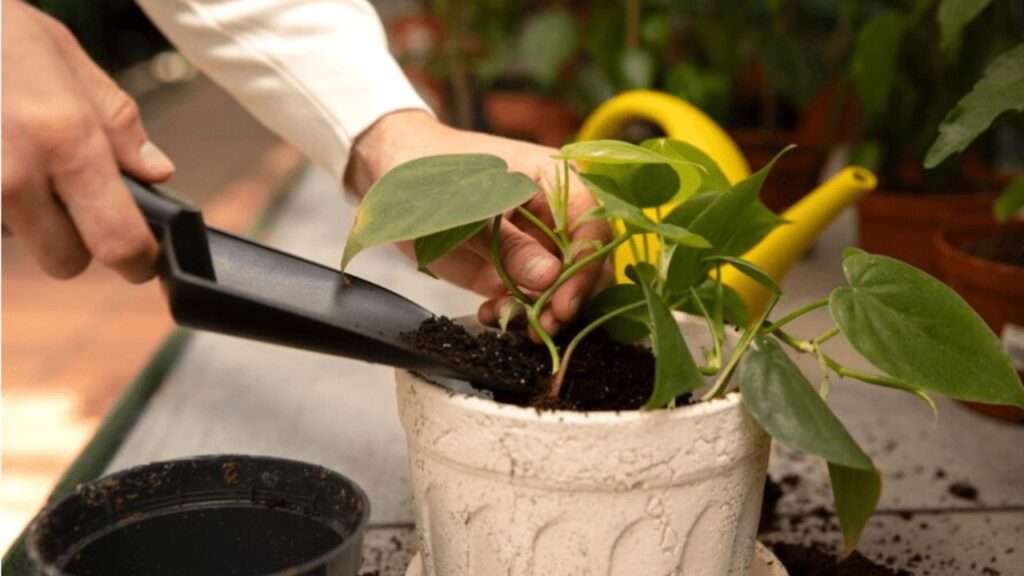
Dig the Planting Hole: Excavate a hole roughly 24 inches (60 cm) wide and 24 inches deep—or twice as wide as the root ball, and just as deep.
-
Amend the Backfill: Mix the excavated native soil with 25% well-rotted compost or aged pine bark fines to boost drainage and acidity. Avoid adding raw manure or strong synthetic fertilizers directly into the hole, as they can burn tender roots.
-
Position the Root Ball: Gently slide the tree from its nursery pot without disturbing the fragile root mass. Set it in the hole so the top of the root ball sits level with (or 1 inch above) the surrounding soil line. Never bury the graft union.
-
Backfill and Water Deeply: Fill the hole halfway, water thoroughly to eliminate air pockets, then finish backfilling and tamp gently.
-
Stake for Support: Drive two sturdy stakes on opposite sides of the tree and tie them loosely with soft arborist tape for the first 1 to 2 years to protect the trunk from wind rock.
-
Apply a Mulch Ring: Spread a 3- to 4-inch layer of organic wood chips or shredded leaves around the base, keeping the mulch 4 to 6 inches away from the trunk to prevent collar rot.
Growing a Rambutan Tree in Containers (For Cooler Climates) 🏡
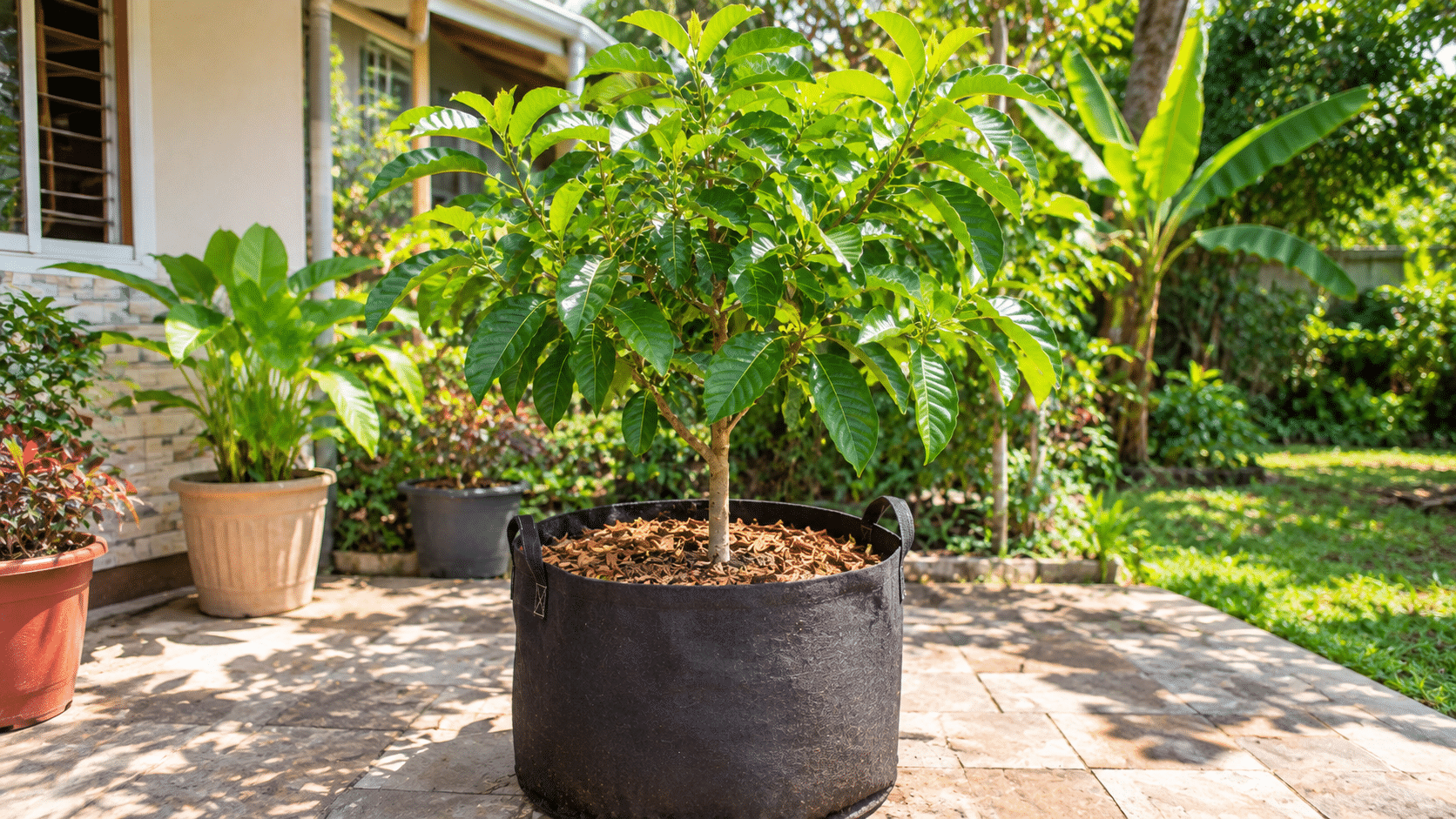
Live outside Zone 10b? You can still grow a rambutan tree in a container and bring it indoors when temperatures dip below 55°F (13°C).
-
Pot Progression: Start a young grafted tree in a 3- to 5-gallon pot with abundant drainage holes. Step up gradually to a 15- to 25-gallon container (fabric grow bags or wheeled resin pots work great) to keep the tree at a compact 6 to 10 feet.
-
Acidic Potting Mix: Skip standard garden soil. Blend 40% coco coir or peat moss, 40% fine pine bark, and 20% perlite or pumice for airy, slightly acidic drainage.
-
Overwintering Indoors: Place the tree in your brightest south-facing window and supplement with a full-spectrum LED grow light for 10–12 hours a day. Run a nearby humidifier (or set the pot on a wide pebble tray filled with water) and keep it far away from dry, blowing heating vents.
🚿 Essential Rambutan Tree Care & Maintenance
Once established, a consistent care rhythm—timed to the tree’s natural growth and fruiting cycles—is what separates a leafy ornamental from a fruit-laden powerhouse.
Watering Schedule & The “Dry Spell” Flowering Secret 🌧️
During the first year, water deeply 2 to 3 times per week whenever the top 2 inches of soil feel dry. Mature trees need consistent moisture throughout spring and summer, especially from flowering through fruit swell—irregular watering during fruiting causes the rinds to split.
🌟 The E-E-A-T Flowering Secret: If your mature, healthy rambutan tree produces lush green leaves all year but refuses to bloom, it is likely getting too much year-round water. In the wild, rambutans rely on a brief dry season to trigger floral induction. Once your tree’s latest flush of new leaves has hardened off (and temperatures remain comfortably above 72°F / 22°C), withhold irrigation for 2 to 4 weeks until the soil dries slightly and the leaves show very mild midday droop. When you resume deep watering, the tree responds with a dramatic burst of flower panicles.
Fertilizing for Lush Foliage & Sweet Fruit 🧪
Rambutans are moderate-to-heavy feeders whose nutritional needs shift throughout the year:
-
Post-Harvest / Vegetative Phase: Apply a balanced, slow-release tropical fruit fertilizer (such as 8-3-9 or 10-10-10 with micronutrients) right after harvest to fuel fresh canopy growth.
-
Pre-Flowering & Fruiting Phase: Cut back sharply on nitrogen (which pushes leaves instead of flowers) and switch to a high-potassium, moderate-phosphorus formula. Potassium is the secret to sweet, juicy fruit and strong rind color.
-
Micronutrient Watch: Rambutans are notorious magnesium hogs. If you see older leaves turning yellow between the veins while the veins stay green, drench the root zone with 1 tablespoon of Epsom salt (magnesium sulfate) dissolved per gallon of water every 4 to 6 weeks, or apply a chelated palm/tropical micronutrient blend.
Pruning & Canopy Management ✂️
Prune lightly during the first two years to establish 3 to 4 well-spaced scaffold branches and remove any dead, crossing, or inward-growing limbs.
Once the tree begins bearing, perform your main pruning immediately after harvest:
-
Cut back 20% to 30% of the branches that just fruited.
-
Open the center of the canopy slightly to let sunlight and air reach the interior.
-
Keep the overall height manageable (12–15 feet in-ground) so you can harvest clusters safely from the ground or a short step ladder.
Mulching & Root Zone Care 🍂
Rambutan feeder roots sit close to the soil surface. Replenish your 3- to 4-inch organic mulch layer (hardwood chips, leaf mold, or straw) twice a year. As it decomposes, it naturally buffers soil pH, cools the shallow root zone during heatwaves, and feeds beneficial mycorrhizal fungi.
🌿 Propagating Rambutan Trees
If you enjoy experimenting with plant propagation, you can multiply rambutan trees at home—just keep in mind that your chosen method dramatically affects how long you will wait for fruit.
Starting from Fresh Seed (For Hobbyists) 🌰
Growing a rambutan tree from seed is a fun, rewarding project for patience-minded gardeners or anyone wanting a lush tropical houseplant. However, rambutan seeds are recalcitrant, meaning they cannot tolerate drying out and lose viability within just a few days of being removed from the fruit.
-
Prep Immediately: Rinse every trace of sweet pulp off the fresh seed so it doesn’t invite mold.
-
Planting: Lay the seed flat side down, ½ to 1 inch deep in a moist, airy seed-starting mix (coco coir and perlite work best).
-
Warmth & Germination: Keep the pot in a warm spot between 75°F and 85°F (24°C–30°C) with high humidity. You should see a sturdy sprout emerge in 2 to 3 weeks.
Grafting & Air Layering (For Faster Fruit) 🪴
For serious fruit growers, clonal propagation is the only way to guarantee sweet, true-to-type harvests in 2 to 4 years.
-
Patch Budding & Approach Grafting: This is the commercial gold standard. Nurseries graft scion wood from a proven hermaphrodite cultivar (like Rongrien or N18) onto vigorous 1-year-old seedling rootstock during the warm, humid rainy season when sap flow is high.
-
Air Layering (Marcotting): While you can air layer a rambutan branch, it roots much less reliably than its cousin, the lychee. Air-layered trees also develop shallower, weaker root systems that require heavy staking in windy areas—making grafted trees the clear winner for long-term resilience.
🐛 Common Rambutan Pests, Diseases & Troubleshooting
A well-fed rambutan tree in fast-draining soil with good airflow is naturally resilient, but tropical warmth and humidity can invite a few familiar garden troublemakers.
Common Pests & Organic Controls 🐞
-
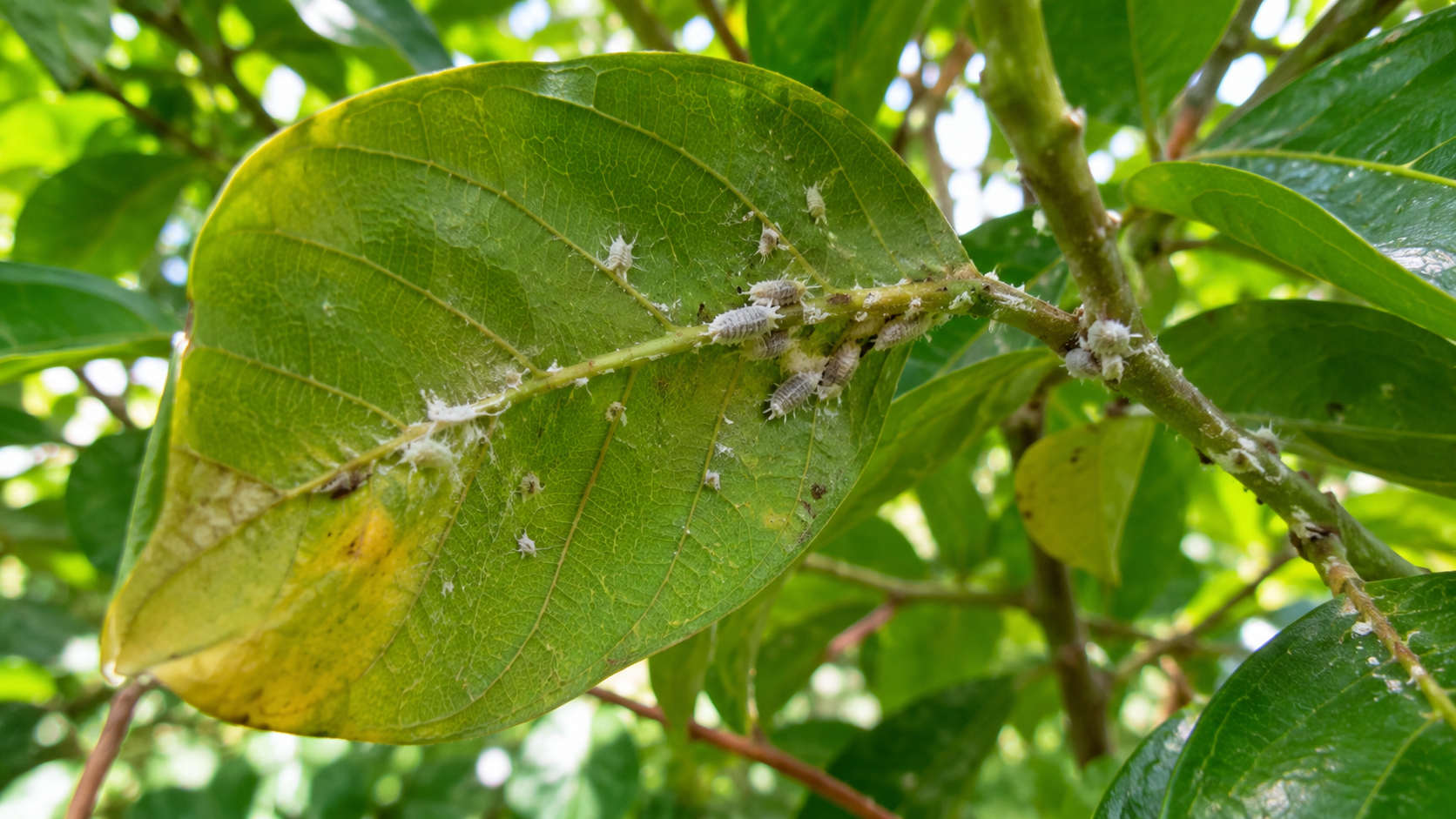
Mealybugs, Scale & Aphids: These sap-sucking insects cluster on tender new leaf flushes and flower panicles, leaving behind sticky honeydew that attracts ants and black sooty mold. Treat early outbreaks with cold-pressed neem oil or insecticidal soap sprayed in the early morning or evening, and encourage beneficial predators like ladybugs and lacewings.
-
Leaf Miners: Tiny larvae tunnel inside young leaves, leaving silvery, squiggly trails and curled foliage. Prune off heavily damaged leaves and apply an organic spinosad spray to protect new growth flushes.
-
Fruit Flies & Birds: As fruit clusters turn bright red, they become a magnet for fruit flies and hungry birds. The most effective organic solution is bagging developing fruit clusters with breathable mesh organza bags or paper fruit bags a few weeks before ripening, paired with pheromone traps nearby.
Fungal Diseases to Watch For 🍄
-
Powdery Mildew: Appears as a white, dusty coating on flower panicles, young shoots, and developing fruit—especially during humid, overcast spells. Prevent it with open-canopy pruning, and treat active cases with wettable sulfur or potassium bicarbonate sprays.
-
Anthracnose: Causes dark, sunken spots on leaves, stems, and ripening fruit. Improve air circulation, clear fallen debris from beneath the tree, and apply a copper-based organic fungicide as a preventative during prolonged rainy periods.
-
Phytophthora Root Rot: The #1 killer of homegrown rambutan trees. Triggered by soggy, poorly drained soil, it causes sudden wilting, yellowing, and canopy dieback. Prevention—via raised mounds, fast-draining soil, and careful watering—is far more effective than any cure.
Quick Troubleshooting Table 🔍
| Symptom | Likely Cause | Immediate Fix |
| Yellow leaves with green veins | Magnesium or iron deficiency; alkaline soil (pH > 7.0) | Apply Epsom salt drench (1 tbsp/gal) and acidify soil with elemental sulfur or pine bark mulch. |
| Splitting or cracking fruit | Sudden heavy watering after a dry spell during fruit swell | Keep soil moisture steady and even from fruit set until harvest; add a 3–4 inch mulch layer. |
| Brown, crispy leaf edges | Low humidity (< 50%), harsh windburn, or cold temps (< 50°F) | Increase local humidity, erect a windbreak, or move potted trees indoors before cold snaps. |
| Healthy, lush tree with zero fruit | Non-fruiting male seedling, lack of dry-spell trigger, or excess nitrogen | Verify tree is grafted; withhold water for 2–4 weeks post-flush; switch to a high-potassium fertilizer. |
🧺 Harvesting & Storing Fresh Rambutan Fruit
Nothing beats the moment your tree’s canopy lights up with heavy clusters of crimson or golden-yellow fruit. Timing your harvest properly ensures peak sweetness.
How to Tell When Rambutans Are Ripe 🔴
Rambutans are non-climacteric fruits—meaning they do not ripen or sweeten further once picked from the tree.
-
Timeline: Fruit typically matures 15 to 20 weeks after flowering.
-
Visual & Touch Cues: Wait until the rind reaches its full, vibrant cultivar color (deep red, bright orange, or golden yellow) with the soft spines still fresh and pliable—not dried or blackened. The fruit should feel slightly yielding when gently squeezed.
-
Taste Test: Always sample one fruit from a cluster before harvesting the whole bunch.
-
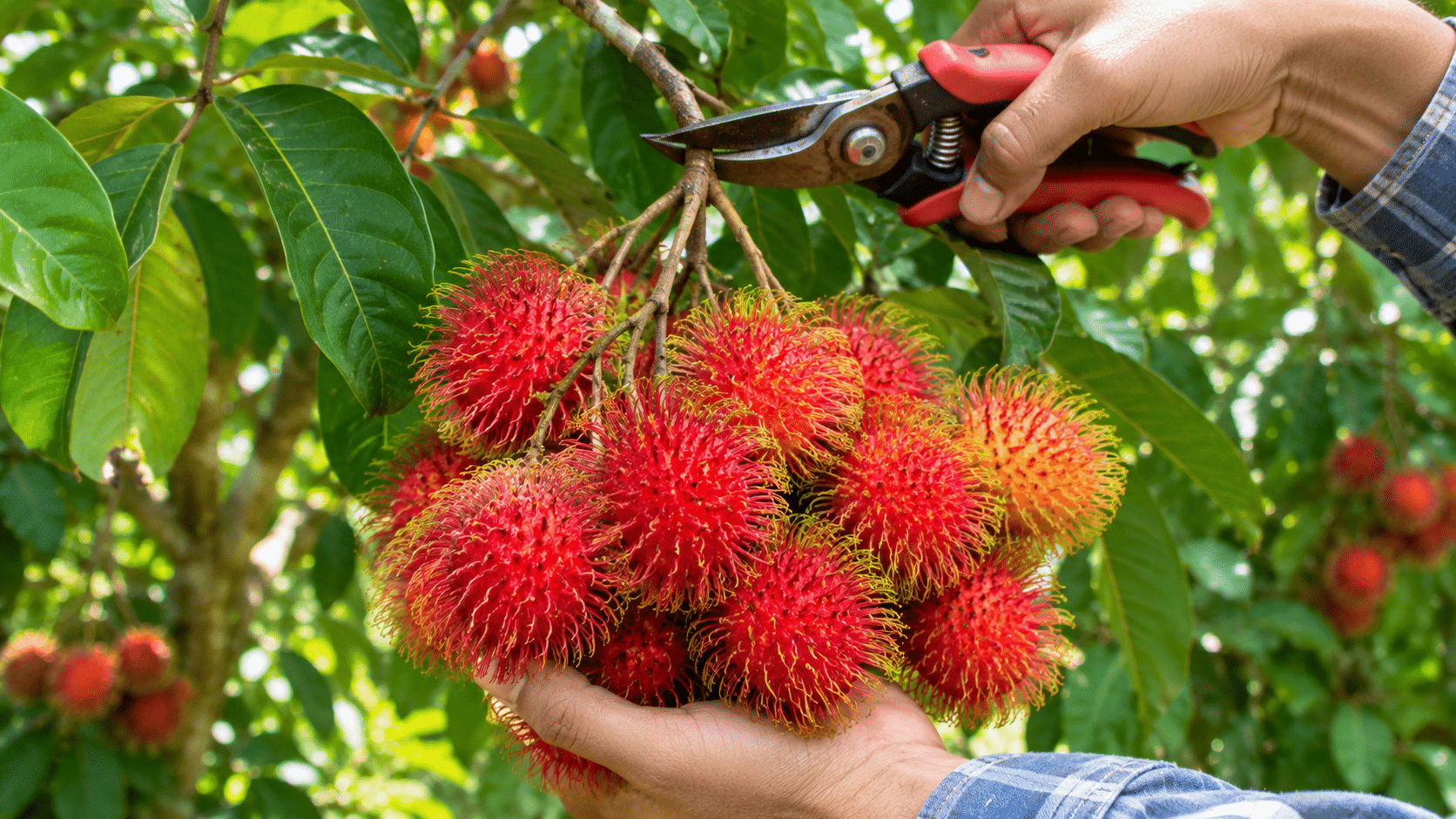
Proper Harvesting Technique: Use clean, sharp pruning shears to clip the entire fruit cluster along with a short section of stem. Never yank individual fruits off the branch, as tearing the leathery skin causes rapid spoilage.
Post-Harvest Storage Tips ❄️
Fresh rambutans are best enjoyed straight off the tree, as their delicate skin loses moisture quickly.
-
Room Temperature: Keep unwashed fruit in a cool, shaded spot away from direct sun for 1 to 2 days.
-
Refrigerator: Place unwashed fruits in a perforated plastic bag or breathable produce container inside the high-humidity crisper drawer. They will stay sweet and juicy for 1 to 2 weeks. Rinse right before peeling and eating.
❓ Frequently Asked Questions About Rambutan Trees
How long does it take for a rambutan tree to bear fruit?
A grafted rambutan tree typically begins producing its first harvest in 2 to 4 years after planting. In contrast, a tree grown from seed takes 5 to 8 years to mature—and carries a high risk of being a non-fruiting male.
Do I need two rambutan trees for pollination?
Not necessarily. If you buy a grafted hermaphroditic cultivar (such as Rongrien, N18, or Binjai), a single tree produces both functional male and female flowers and can self-pollinate reliably. However, planting a second compatible cultivar nearby often boosts overall fruit set through cross-pollination by bees.
Can a rambutan tree grow indoors?
Yes, you can grow a rambutan tree indoors in a 15- to 25-gallon container if you provide a bright south-facing window, full-spectrum LED grow lights, acidic fast-draining potting mix, and 70%+ humidity. Keep in mind that while it makes a gorgeous tropical houseplant, getting it to flower and set fruit strictly indoors is challenging without warm outdoor summers.
Why are my rambutan tree’s leaves turning brown on the tips?
Brown, crispy leaf tips are almost always caused by low ambient humidity, dry windburn, salt buildup from over-fertilizing, or temperatures dropping below 50°F (10°C). Flushing the soil with clean water, adding mulch, and boosting humidity around the canopy usually halts the damage.
What is the difference between a rambutan tree and a lychee tree?
While both belong to the soapberry family and taste deliciously sweet and floral, lychee trees are slightly more cold-tolerant (handling brief dips near freezing) and actually need a cool winter chill to flower. Rambutan trees are strictly tropical, frost-intolerant, require higher humidity, and produce larger fruits covered in soft, hair-like spines rather than a bumpy red shell.
🌟 Final Thoughts: Bringing the Tropics to Your Backyard
Growing a rambutan tree may require a little more attention than a standard backyard citrus, but the payoff—armfuls of sweet, jewel-like tropical fruit right outside your door—is well worth the effort. Focus on the three non-negotiables: start with a grafted cultivar, plant it in fast-draining, slightly acidic soil, and protect it from frost and dry winds. Once your tree settles in and you master that brief pre-bloom dry spell, you will enjoy lush evergreen shade and abundant, mouthwatering harvests for decades to come.
Are you growing a rambutan tree in your yard or trying your hand at a container specimen? Drop your USDA hardiness zone and your favorite cultivar in the comments below—I’d love to hear how your tree is doing! 🌺✨