
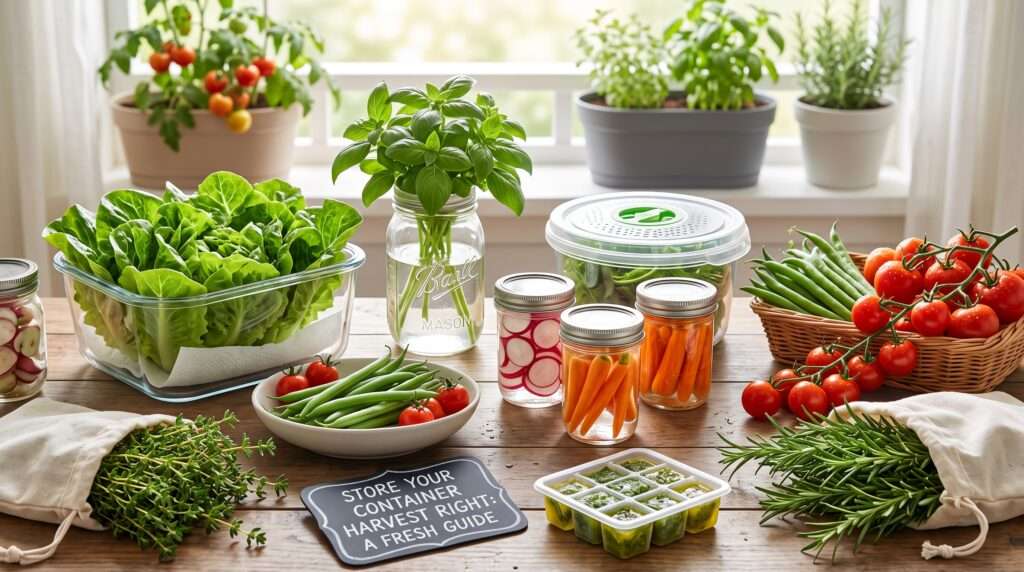
Imagine spending months carefully nurturing your patio or balcony garden. You’ve tested the soil, dialed in your watering schedule, and finally, the rewarding day arrives. You pluck those vibrant cherry tomatoes, crisp lettuce leaves, and fragrant basil sprigs. But within 48 hours, the lettuce is limp, the basil is blackening, and the tomatoes have lost their magic. Watching your homegrown food rot on the kitchen counter is a heartbreak no gardener should endure.
Mastering the art of storing freshly harvested container produce is just as critical as the growing process itself. Container gardening often yields small, continuous “micro-batches” rather than massive farm-scale hauls. This unique growing style requires specialized, small-scale strategies to keep that steady supply crisp, nutrient-dense, and flavorful. Whether you are prepping meals for your family or capturing those perfectly styled, vibrant harvests for visual inspiration before you eat them, this science-backed guide will show you exactly how to control temperature, humidity, and handling to double or even triple the shelf life of your homegrown bounty.
The Golden Rules of Post-Harvest Handling 🥇
Before you even bring your harvest indoors, the way you handle the plant dictates how long the produce will last. Professional growers rely on horticultural science to extend shelf life, and you can apply these exact principles to your container garden.

Timing is Everything: When to Harvest for Maximum Shelf Life ⏱️
The time of day you pull vegetables from their containers drastically affects their longevity. Plants go through a daily cycle of water uptake and respiration.
-
The Morning Advantage: Always aim to harvest in the early morning, just after the dew has dried but before the midday sun hits. At this time, plant cells are highly turgid (filled to the brim with water), making leafy greens and fruiting crops crisp and resilient.
-
Avoiding “Field Heat”: If you harvest in the late afternoon, the produce retains “field heat.” Warm vegetables respire (breathe) faster, which rapidly accelerates the degradation process once they are off the vine.
-
Ripeness Indicators: Harvest at peak storage potential. For example, pick cucumbers just before they show any signs of yellowing, and harvest tomatoes at the “breaker stage” (when they first start showing a blush of color) so they can finish ripening safely indoors, away from pests.
The “Wash vs. No-Wash” Dilemma Solved 🚰
One of the most common mistakes new gardeners make is aggressively washing all their produce the second they bring it inside.
-
The Rule of Thumb: Wait to wash your harvest until right before you plan to eat or cook it.
-
Moisture Management: Excess surface moisture is the enemy of longevity. It creates the perfect breeding ground for bacteria and mold, accelerating rot. Produce has natural protective coatings that water can strip away.
-
The Exception: If your root vegetables (like carrots or radishes grown in deep pots) are caked in muddy soil, you can gently rinse them. However, they must be laid out on a towel and allowed to dry completely before going into cold storage.
Temperature Shock: Removing Heat Gently 🌡️
Taking a sun-warmed zucchini and throwing it directly into a frigid, 35°F (1.6°C) refrigerator is a recipe for disaster. This drastic temperature shift causes condensation to build up rapidly inside storage bags, leading to slimy produce. Instead, let your harvest rest in a shaded, well-ventilated area of your kitchen for 30 to 60 minutes to gently cool down before transferring it to the fridge.
Categorizing Your Container Bounty: What Goes Where? 🧺
Not all vegetables are created equal when it comes to climate preferences. Grouping your harvest by storage needs is the easiest way to prevent accidental spoilage.
The Countertop VIPs (Room Temperature Lovers) 🪴
These crops suffer from “chilling injury” if placed in the refrigerator. Cold temperatures break down their cell walls, leading to mealy textures and a complete loss of flavor.
-
The Crops: Tomatoes, basil, eggplant, cucumbers (for short durations), and peppers (if eaten within a few days).
-
How to Store: Keep them on the counter, out of direct sunlight. Tomatoes should be stored stem-side down to prevent moisture from escaping through the top scar.
The Crisper Drawer Residents (Cold & Humid) 🥬
These vegetables thrive in cold environments with high humidity to prevent them from drying out and wilting.
-
The Crops: Leafy greens (lettuce, spinach, kale, chard), broccoli, green beans, and peas.
-
How to Store: Utilize your refrigerator’s crisper drawers set to high humidity. Use perforated plastic bags or glass containers with a slightly damp paper towel to maintain crispness while still allowing the plants to breathe.
The Cool, Dark Cupboard Dwellers (Dry & Dark) 🧅
Root cellars were invented for this exact category. They need low humidity, cool temperatures, and absolute darkness.
-
The Crops: Potatoes, onions, garlic, and winter squash.
-
How to Store: Keep them in mesh bags or open baskets in a pantry or cupboard. Darkness is crucial to prevent potatoes from photosynthesizing and turning green (which produces toxic solanine). Ensure good airflow to prevent mold.
Step-by-Step Storage Strategies by Popular Container Crops 📋
Let’s break down the exact, skyscraper-level techniques for the most common plants grown in pots and balcony planters.
1. Leafy Greens (Lettuce, Spinach, Kale, Swiss Chard) 🥗
Leafy greens are notorious for wilting overnight if mishandled. Container gardeners often utilize the “cut-and-come-again” method, meaning you are storing delicate, tender baby leaves.
-
The “Wash, Spin, and Towel” Method: If you must wash your greens to remove potting soil, use a salad spinner to remove as much water as physically possible.
-
The Container Strategy: Line a large glass Tupperware container with a dry paper towel. Loosely drop the greens inside, and place another dry paper towel on top before snapping the lid shut. The towels will absorb excess ambient moisture, keeping the greens crisp for up to 10 days.

2. Fruiting Vegetables (Tomatoes, Cucumbers, Zucchini) 🥒
-
Tomatoes: Never put a homegrown tomato in the fridge. The cold halts the enzyme activity that creates volatile flavor compounds, permanently ruining the taste. Store them on a plate at room temperature.
-
Cucumbers & Zucchini: These are tricky. They like it cool, but not too cold. Below 50°F (10°C), they develop water-soaked “pits” on their skin and start to decay. Wrap them individually in a dry paper towel and place them inside an open plastic bag in the warmest part of your fridge (usually the front of the top shelf or the door).
3. Fresh Container Herbs (Woody vs. Tender) 🌿
Herbs from patio containers add massive value to cooking, but they degrade incredibly fast. Treat them based on their stem type.
-
Tender Herbs (Basil, Cilantro, Parsley, Mint): Treat these like a bouquet of flowers. Snip the very ends of the stems and place them in a glass jar with an inch of fresh water. Keep basil on the countertop (the fridge turns basil black). Cilantro and parsley jars can be loosely covered with a plastic bag and kept in the fridge.
-
Woody Herbs (Rosemary, Thyme, Oregano): These prefer the “damp towel” method. Wrap the sprigs loosely in a barely-damp paper towel and place them in a resealable bag in the crisper drawer.
4. Root Vegetables (Radishes, Carrots from Deep Containers) 🥕
Growing roots in deep pots is incredibly rewarding, but the green leafy tops are a silent threat once harvested.
-
The Crucial Step: Cut the green tops off immediately, leaving about half an inch of stem. If left attached, the greens will continue to draw moisture and nutrients directly out of the root, leaving your carrots and radishes limp and rubbery within hours.
-
Water Submersion: For ultimate crunch, peel or scrub your carrots and radishes, slice them, and submerge them completely in a mason jar filled with clean water in the fridge. Change the water every few days, and they will stay intensely crisp for weeks.
Ethylene Gas: The Invisible Spoilage Culprit 💨
To truly elevate your post-harvest E-E-A-T (Experience, Expertise, Authoritativeness, and Trustworthiness), you must understand ethylene. Ethylene is a natural, invisible gas produced by certain fruits and vegetables as they ripen. When trapped in a small space—like a kitchen counter or a crisper drawer—it acts as an aging hormone, forcing nearby sensitive produce to over-ripen and rot prematurely.
| High Ethylene Producers (Keep Isolated) | Ethylene-Sensitive Crops (Keep Away) |
|---|---|
| Tomatoes | Lettuce & Spinach |
| Cantaloupes & Melons | Cucumbers |
| Peppers | Fresh Herbs |
| Apples & Bananas (Store-bought) | Broccoli & Green Beans |

Strategic Separation Tactics 🛑
If you have a small urban kitchen, organization is everything. Never store your freshly picked container tomatoes next to your homegrown cucumbers on the counter. The tomatoes will pump out ethylene gas, causing the cucumbers to turn yellow and mushy in record time. Dedicate one crisper drawer strictly for greens (sensitive) and the other for items that might emit small amounts of ripening gas.
Preserving the Excess: When You Harvest Too Much at Once 🧊
Sometimes your container garden hits a sudden peak, leaving you with more cherry tomatoes or green beans than you can possibly eat in a week. When fresh storage limits are reached, pivot to preservation.
Freezing Basics for Peak Nutrition ❄️
Freezing locks in nutrients, but it requires preparation. Most vegetables must be blanched before freezing. Blanching involves dropping the produce into boiling water for 1-3 minutes, then immediately plunging it into an ice bath. This crucial step deactivates the enzymes that cause loss of color, flavor, and texture during frozen storage.
-
Herbs: Chop excess basil or oregano, place it into ice cube trays, fill the trays with high-quality olive oil, and freeze. You now have instant flavor bombs for winter soups and pastas.
Quick Pickling and Dehydrating 🥒☀️
-
Refrigerator Pickles: You don’t need a massive canning setup to preserve food. Excess radishes, jalapeños, and cucumbers can be sliced, placed in a jar with vinegar, water, salt, and garlic, and kept in the fridge for up to a month.
-
Air-Drying: Tie bundles of woody herbs (rosemary, thyme) with twine and hang them in a dry, well-ventilated area out of direct sunlight. Once completely brittle, crumble them into airtight glass spice jars.

💡 Expert Pro-Tips for the Container Gardener
-
Succession Sowing as “Living Storage”: The best place to store produce is often on the plant itself. By succession sowing (planting new seeds every two weeks), you stagger your harvest. Leave crops on the vine or in the soil until the exact evening you plan to cook them.
-
Repurpose Nursery Pots: If you have clean, dark plastic nursery pots left over from planting, flip them upside down over harvested root vegetables stored in a cool corner of your balcony to simulate a dark root cellar environment.
-
Ethylene Absorbers: Consider purchasing inexpensive ethylene-absorbing packets (often called “produce savers”) to toss into your crisper drawers. They neutralize the gas and significantly extend the life of your tender greens.
Frequently Asked Questions (FAQs) ❓
Why do my fresh garden cucumbers get slimy in the fridge after just three days? Cucumbers suffer from chilling injury at standard refrigerator temperatures (below 40°F). Storing them in a highly humid environment without airflow exacerbates this. Wrapping them in a dry paper towel absorbs the excess moisture that causes surface slime.
Can I store my homegrown tomatoes in the fridge if they are getting too soft? It is a last resort. If a tomato is on the verge of rotting and you cannot eat it today, putting it in the fridge will halt the ripening process. However, it will permanently destroy the flavor profile and turn the flesh mealy. It is better to quickly chop and freeze overripe tomatoes for future sauces.
Do I need to wash organic container vegetables before storing them? No. Even if you don’t use chemical pesticides, washing introduces moisture that accelerates bacterial rot. Always wait to wash your produce under cool running water just moments before you intend to consume it.
How do I keep my cut-and-come-again lettuce crisp for a whole week? The secret is absolute dryness combined with an airtight seal. Spin the greens thoroughly, use dry paper towels above and below the leaves in a rigid glass container, and keep them in the coldest part of your fridge (usually the back of the bottom shelf).
Understanding the science behind plant respiration, moisture control, and ethylene gas transforms you from a casual gardener into a true post-harvest expert. By implementing these tailored storage techniques for your container produce, you honor the time, energy, and love you poured into growing your food. Your vibrant harvests will remain beautifully crisp, profoundly flavorful, and ready to enjoy exactly when you need them.











