
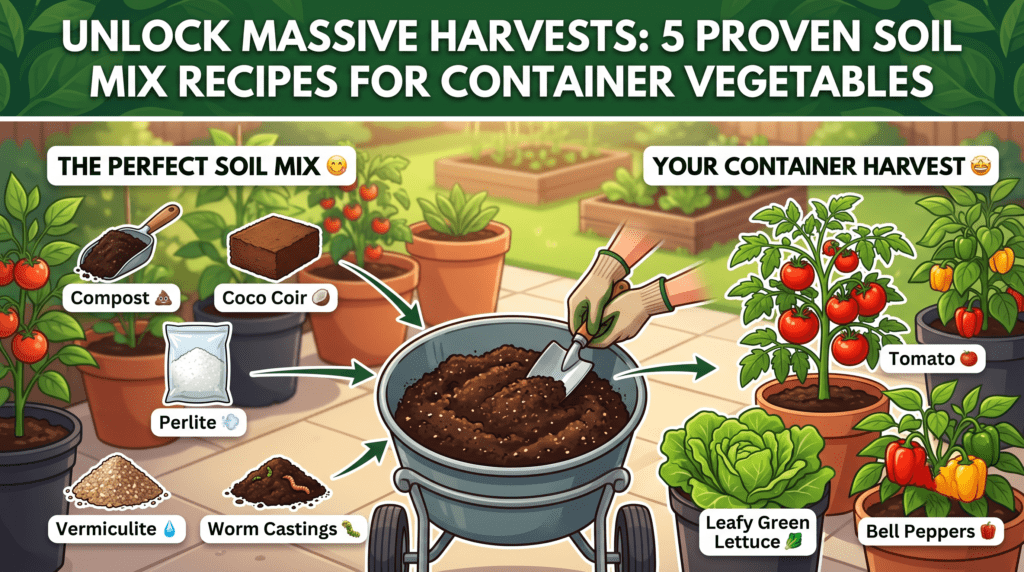
Imagine spending your weekend carefully planting beautiful, vibrant vegetable seedlings into your favorite patio pots, only to watch them turn yellow, stunt, and produce a disappointing, meager harvest a few weeks later. 🥺
It is a frustrating reality for many home growers. But if you want to avoid this heartbreak, you need to start with the right foundation. Finding the best soil mix recipes for container vegetables is the single most important step for any patio, balcony, or backyard container gardener.
After years of meticulously testing different potting mediums, battling compacted root systems, and studying soil health, I’ve learned that the secret to a massive yield isn’t just expensive liquid fertilizer—it’s the soil structure. A thriving, lush container garden doesn’t just feed your family; it yields those picture-perfect, vibrant veggies that look absolutely stunning when you are designing your next YouTube thumbnail or snapping a viral Pinterest pin. 📸✨
In this comprehensive guide, I will walk you through the exact science of potting mediums and share my top 5 proven DIY soil blends. Let’s dig in so you can grow your heaviest, healthiest harvest yet! 🌱
🔬 Why You Can’t Use Garden Dirt in Pots (The Science of Container Soil)
The biggest mistake beginners make is taking a shovel to their backyard and filling their pots with native topsoil. While that dirt might work wonders in the ground, putting it in a pot is a recipe for disaster. Here is the science behind why. 🧑🔬
The Drainage Dilemma 💧
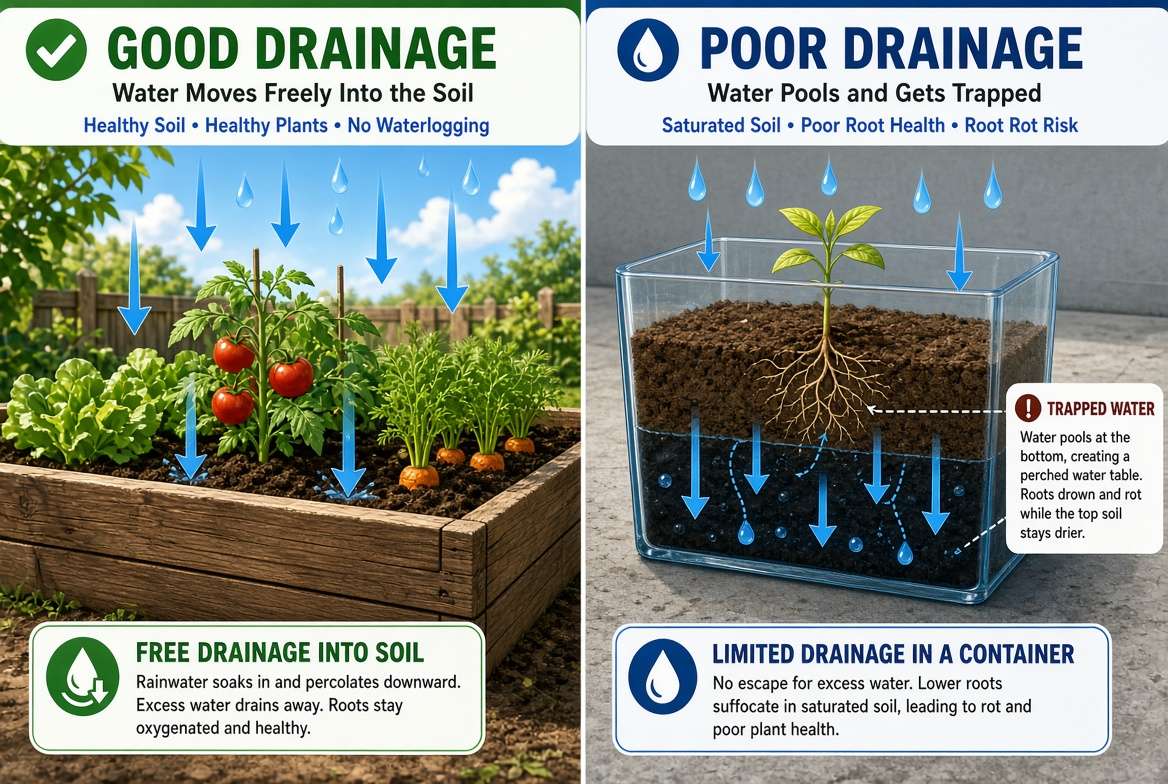
In a traditional garden bed, moisture moves through the earth via deep capillary action, aided by earthworms, beneficial insects, and expansive root networks. In a pot, this natural subterranean system breaks down entirely.
When you put regular dirt into a container, water pools at the bottom, creating what is known as a “perched water table.” This soggy bottom layer refuses to drain properly, turning the lower half of your pot into a swamp that suffocates plants.
Soil Compaction and Root Suffocation 🌬️
Plant roots need oxygen just as desperately as they need water. Ground soil, especially if it contains heavy clay, compacts incredibly fast when restricted to a pot. Every time you water, the dirt particles bind tighter and tighter together. Eventually, it turns into concrete. When roots cannot push through the soil to expand, the plant becomes hopelessly stunted.
The Disease and Pest Risk 🐛
A container is an isolated, closed ecosystem. When you introduce backyard dirt, you are also bringing in soil-borne pathogens, fungal spores, dormant pests, and aggressive weed seeds. Without the vast, balanced ecosystem of the open ground to keep these issues in check, they will quickly overrun your vulnerable vegetable seedlings.
👩🌾 Expert Insight: “You must treat your container not just as a pot of dirt, but as a carefully curated life-support system. You are 100% responsible for providing the perfect balance of air, water, and organic nutrition.”
🧱 The Holy Trinity of Potting Soil: Understanding Your Ingredients
Before we start mixing, you need to understand the building blocks of a high-quality DIY potting mix. Every successful recipe relies on balancing three crucial elements: bulk, drainage, and nutrition. ⚖️
| Ingredient Category | Purpose in the Mix | Best Options for DIY Mixes |
|---|---|---|
| 1. The Base (Bulk & Moisture) | Provides volume, holds water like a sponge, and gives roots a soft medium to anchor into. | Coco Coir, Sphagnum Peat Moss |
| 2. Aeration (Drainage) | Creates tiny air pockets so roots can breathe and excess water can easily flow out of the pot. | Perlite, Pumice, Coarse Sand, Vermiculite |
| 3. Nutrition (Food) | Feeds the plant, provides structural organic matter, and introduces beneficial microbes to the soil. | High-Quality Compost, Worm Castings, Aged Manure |
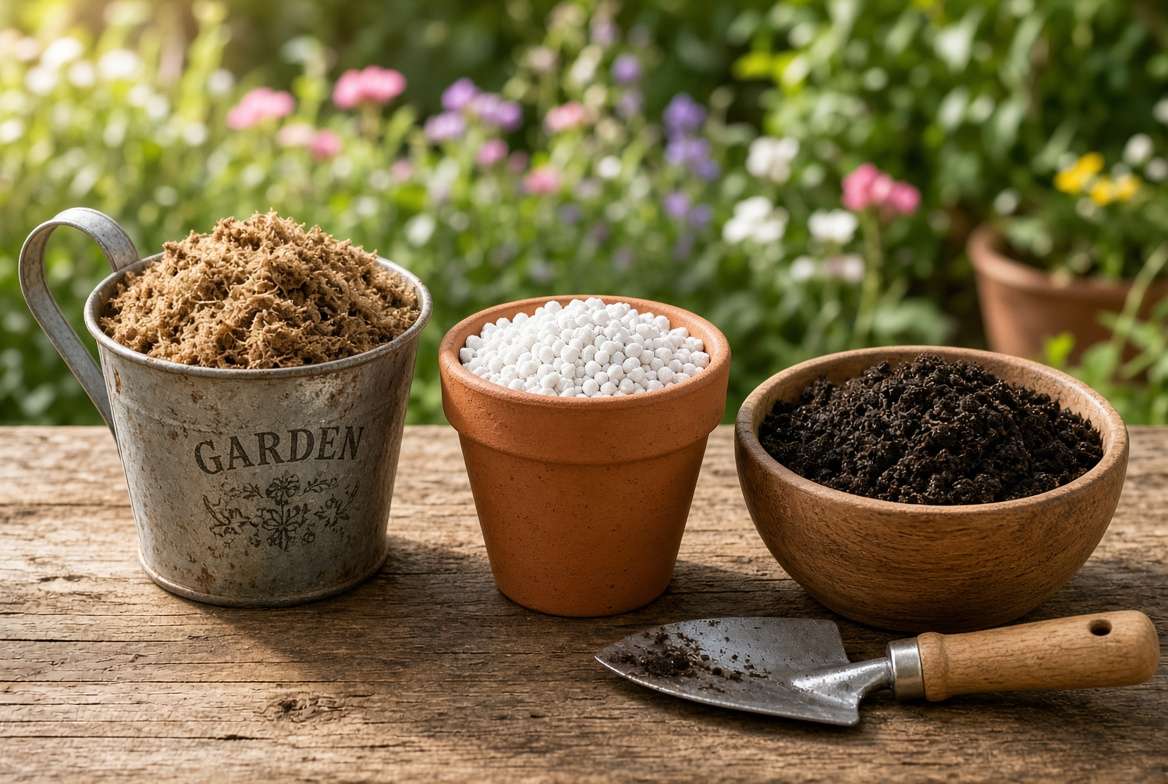
By adjusting the ratios of these three categories, you can create customized environments tailored exactly to what different types of vegetables crave. 🍅🥒
🏆 5 Proven Soil Mix Recipes for Container Vegetables
Here are the precise formulas to build the ultimate growing mediums. We use “parts” for these recipes so you can easily scale them up or down. A “part” can be anything—a scoop, a gallon jug, or a 5-gallon bucket—as long as you use the same measuring container for the whole batch! 🪣
🍅 Recipe 1: The All-Purpose Bountiful Blend (Best for Tomatoes & Peppers)
Tomatoes, eggplants, and bell peppers are heavy yielders that require steady moisture but will succumb to root rot if left in standing water. They also need a steady supply of calcium to prevent blossom end rot.
-
2 parts Coco Coir (for consistent moisture retention)
-
1 part Perlite (for excellent drainage and aeration)
-
1 part High-Quality Compost (for rich organic matter and beneficial microbes)
-
Expert Add-in: 1 cup of organic granular tomato fertilizer (rich in calcium) per cubic foot of mix.
Why it works: This mix provides the perfect balance of moisture control and drainage. The compost slowly releases calcium and micronutrients, ensuring your fruiting plants have the energy to set heavy, juicy yields. 🌶️
🥕 Recipe 2: The Root Booster (Best for Carrots, Radishes & Beets)
Root crops are notoriously fussy in containers. If the soil is too dense, has too many clumps, or retains too much water, your carrots will grow short, forked, and deformed. They demand an incredibly loose, obstacle-free medium.
-
1 part Peat Moss or Coco Coir (sifted to remove large chunks)
-
2 parts Coarse Sand or Fine Pumice (for extreme drainage and friability)
-
0.5 part Sifted Compost (absolutely no large wood chips or twigs)
Why it works: By doubling the drainage materials and keeping organic matter minimal and sifted, this sandy loam mimic allows delicate taproots to plunge straight down without encountering any resistance. The result? Perfectly straight, long carrots and crisp radishes! 🧅
🥬 Recipe 3: The Leafy Green Machine (Best for Lettuce, Spinach & Herbs)
Leafy greens like lettuce, spinach, kale, and basil have completely different requirements than fruiting or root vegetables. They grow quickly, have shallow root systems, and require a tremendous amount of nitrogen to produce lush, tender foliage. Furthermore, if they dry out, they will become stressed and “bolt” (go to seed, turning bitter).
-
2 parts Peat Moss (exceptional moisture retention)
-
1 part Vermiculite (a highly absorbent mineral that holds water better than perlite)
-
1 part Worm Castings (nature’s ultimate nitrogen powerhouse)
Why it works: Vermiculite acts as a moisture reservoir, keeping the roots cool and damp even during warm afternoon sun. The high concentration of worm castings provides a gentle, non-burning, extended release of nitrogen that encourages explosive leafy growth. 🥗
🥒 Recipe 4: The Heavy Feeder Mix (Best for Cucumbers, Squash & Melons)
Vining plants are the marathon runners of the garden. Cucumbers, zucchini, and melons produce massive amounts of vegetation and water-heavy fruit in a very short window. They will deplete a standard potting mix of its nutrients in a matter of weeks.
-
1 part Coco Coir (for bulk and hydration)
-
1 part Perlite (for vital root aeration)
-
2 parts Rich Compost and Aged Manure Blend (for dense, heavy nutrition)
-
Expert Add-in: 1/2 cup of blood meal (nitrogen) and 1/2 cup of bone meal (phosphorus) per cubic foot.
Why it works: This recipe leans heavily into rich organic matter. The aged manure provides a dense nutritional base, while the blood and bone meal ensure these rapid growers have the immediate fuel they need to support expansive vines and massive fruit development. 🍈
🏙️ Recipe 5: The Lightweight Balcony Blend (Best for Weight-Restricted Spaces)
If you are gardening on a high-rise balcony, a fire escape, or using hanging baskets, weight is a critical safety factor. Wet compost and heavy garden soils can cause structural damage or snap brackets. You need a mix that delivers maximum nutrition with minimal mass.
-
3 parts Peat Moss (extremely lightweight base)
-
2 parts Perlite (ultra-light volcanic glass for aeration)
-
0.5 part Dehydrated Worm Castings (concentrated, light nutrition)
-
Expert Add-in: 2 tablespoons of kelp meal and a high-quality, slow-release organic fertilizer blend.
Why it works: By completely eliminating heavy, dense compost and saturated manures, this soil-less mix stays incredibly light even after a deep watering. The concentrated worm castings and dry organic fertilizers provide all the necessary food without the heavy bulk. 🪴
🛠️ Step-by-Step: How to Mix Your Soil Like a Pro
Now that you have your perfect recipe, it is time to blend it. Mixing container soil properly is vital; if your ingredients are clumped, plant roots will hit “dead zones” of dry peat or pure fertilizer, which can burn them.
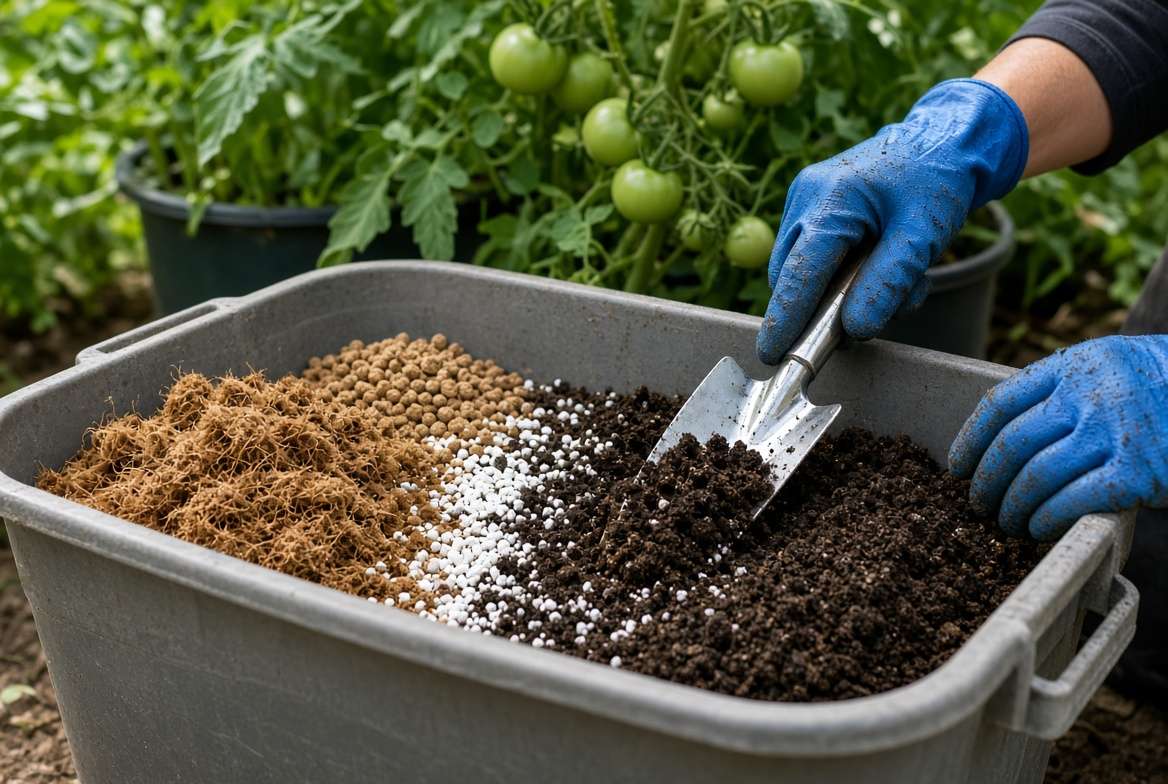
Step 1: Hydrate the Base Completely 💦 Never mix dry coco coir or dry peat moss. Both of these mediums are highly hydrophobic when completely dry, meaning they will actually repel water. Place your coir bricks or loose peat in a large tub, add water slowly, and let it expand and absorb moisture until it feels like a damp sponge.
Step 2: Measure by Parts 🪣 Consistency is key. Choose a measuring vessel—a small bucket for a single pot, or a large wheelbarrow for a whole patio garden. Fill the vessel level to the top for each “part” called for in the recipe.
Step 3: The Tarp Method (Save Your Back!) 🏕️ Mixing heavy soil in a deep bucket with a trowel is exhausting. Instead, lay a large, clean plastic tarp flat on the ground. Pour all your measured ingredients into the center. Grab two corners of the tarp and pull them toward the opposite corners, rolling the soil over itself. Walk around the tarp, pulling different corners until the mix is beautifully homogeneous.
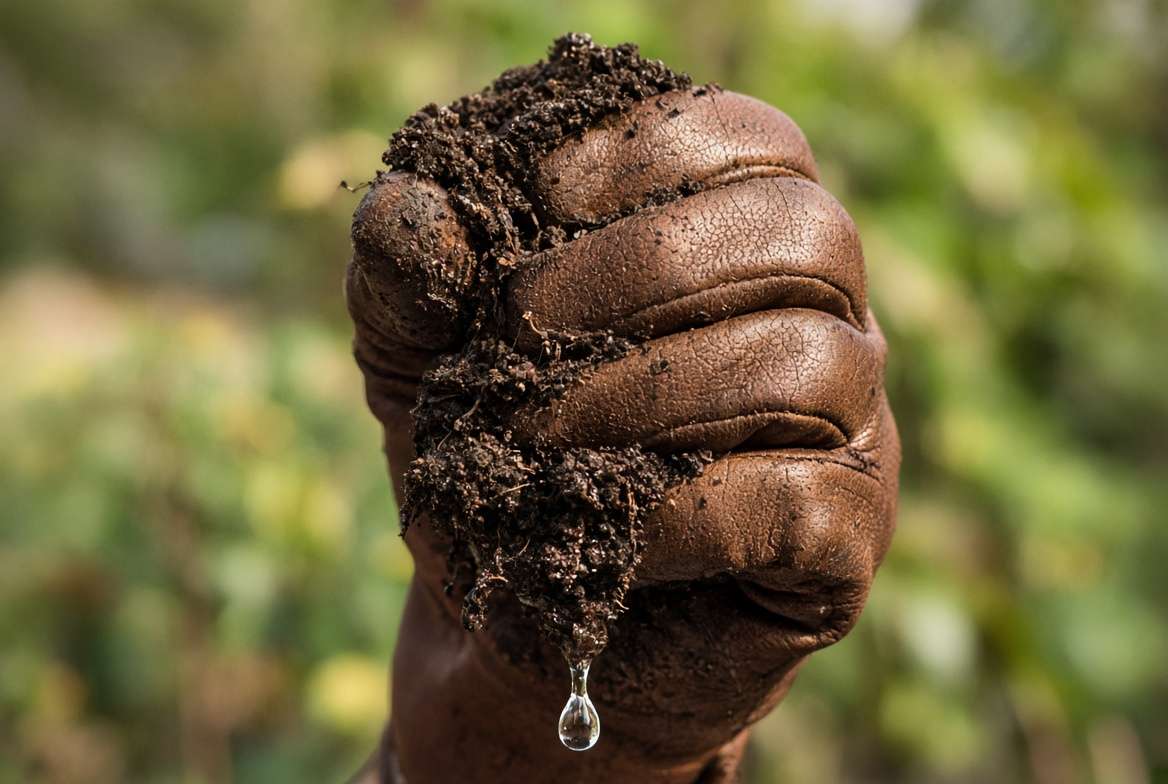
Step 4: The Squeeze Test ✊ Before filling your pots, perform the squeeze test. Take a handful of your finished mix and squeeze it tightly in your fist.
-
Too wet: Water streams out. (Add more dry base/perlite).
-
Too dry: It immediately falls apart into dust. (Add more water).
-
Perfect: It holds its shape like a loose clump of dough, but easily crumbles apart when you poke it with your finger.
♻️ Can You Reuse Container Soil? (A Sustainable Approach)
A common question among budget-conscious gardeners is whether they need to buy new ingredients every single season. The reality? Yes, you can reuse your potting mix, but you must revitalize it!
At the end of a growing season, your once-fluffy soil mix is depleted of nutrients, structurally broken down, and often compacted. Here is how to refresh it for next spring:
-
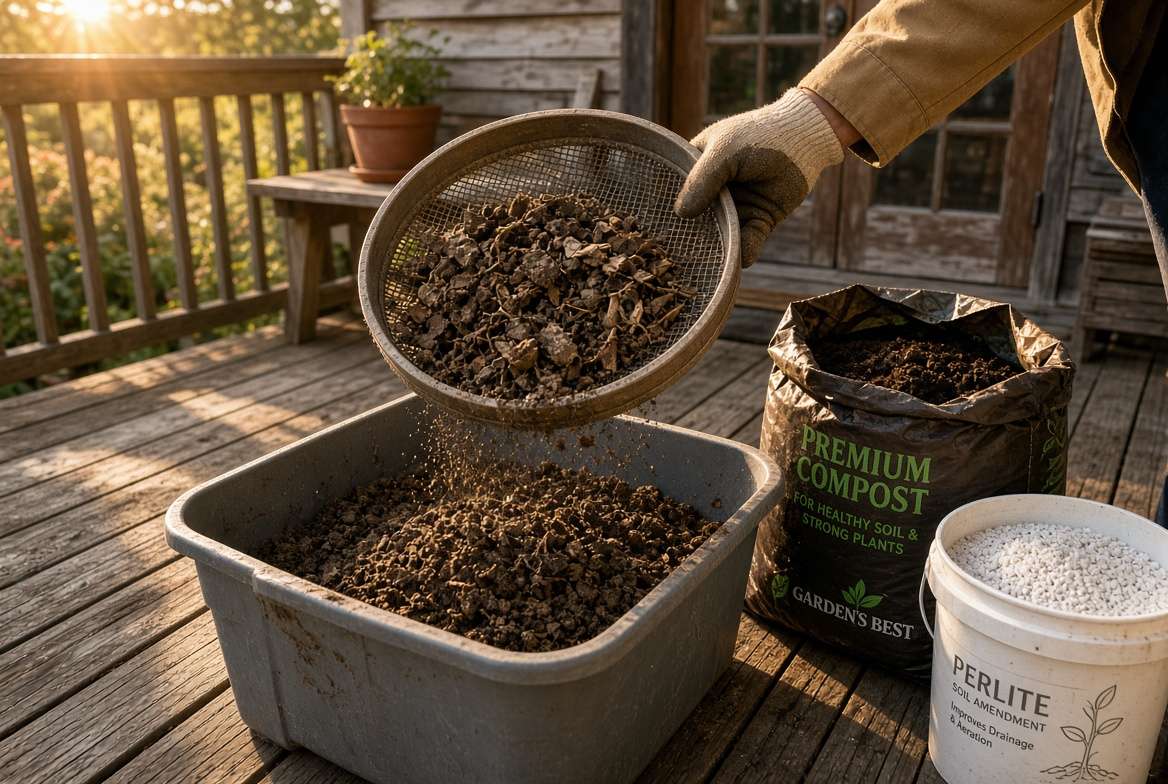
Sift and Clean: Dump the old soil into a wheelbarrow. Remove any large root balls, grubs, or uncomposted debris.
-
Solarize (Optional but Recommended): If your plants suffered from blight, mildew, or severe pest infestations last year, place the old slightly damp soil into black plastic contractor bags and leave them in the hot summer sun for 3-4 weeks. The intense heat will pasteurize the mix, killing pathogens and weed seeds. ☀️
-
Amend and Refresh: Old soil has lost its structure and food. To revitalize it, mix the old soil with 25% fresh high-quality compost, a few generous scoops of new perlite (as old perlite crushes over time), and a fresh dose of slow-release organic fertilizer.
❓ Frequently Asked Questions (FAQs)
What is the difference between potting soil and potting mix? While often used interchangeably, they are technically different. “Potting soil” usually contains actual earth or dirt, making it heavy and better suited for raised beds. “Potting mix” is a soil-less medium (made of peat, coir, perlite, etc.) specifically engineered for proper drainage and aeration in enclosed containers.
Can I use styrofoam peanuts in the bottom of my pot instead of perlite? This is a hard no. 🚫 While it used to be a popular trick to save potting mix and reduce weight, styrofoam peanuts do not provide any actual capillary aeration to the roots. Worse, they compress over time, harbor stagnant water, and eventually leach microplastics into the soil where your food is growing. Stick to perlite or pumice!
How much soil mix do I actually need to fill a standard 5-gallon bucket? A standard 5-gallon bucket holds roughly 0.7 cubic feet of soil. If you are mixing a batch for three 5-gallon buckets, you will need a recipe that yields just over 2 cubic feet of finished material.
Why is my container soil growing white mold on the surface? A fuzzy white layer on top of your potting mix is usually a harmless saprophytic fungus breaking down organic matter. However, it indicates two things: a lack of proper airflow across the soil surface, or a mix that is retaining too much moisture. Let the top inch of the soil dry out completely between waterings, and ensure your pots are not crowded too closely together. 🌬️
🌱 Conclusion
Creating the perfect environment for your plants does not have to be a guessing game. By ditching the heavy garden dirt and taking the time to craft your own custom soil mix recipes for container vegetables, you are making the single best investment possible for your patio garden.
Remember that gardening is always a beautiful experiment. Do not be afraid to tweak these formulas! If you live in a scorching, arid climate, you might want to add a little more coco coir to retain moisture. If you live in a cool, rainy area, bumping up the perlite will save your roots from drowning.
Which of these 5 proven recipes are you going to mix up first? Are you tackling tomatoes, or trying your hand at container carrots? Drop a comment below, and don’t forget to share your massive container harvests on social media—happy growing! 👩🌾🚜✨











