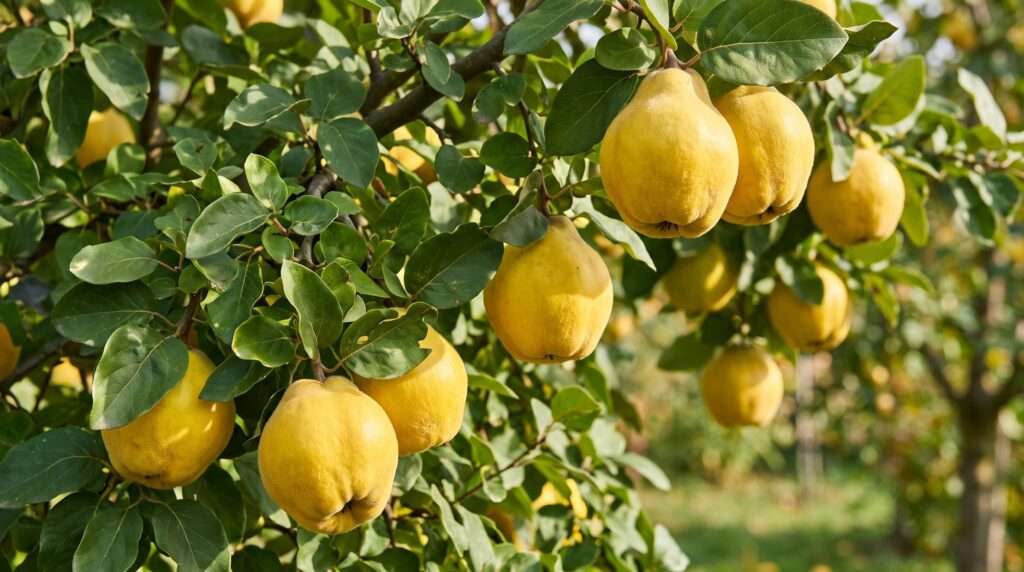
There is a specific kind of heartbreak known only to home orchardists. You plant a gorgeous quince tree, tend it lovingly through the seasons, and watch in awe as it bursts into a cloud of soft, shell-pink blossoms every spring. You start dreaming of fragrant bowls of golden fruit and homemade membrillo. Then summer arrives, the petals fall, and… nothing. Either no fruit forms at all, or the few tiny green pears that do appear drop to the grass by June.
If this sounds familiar, take a deep breath—it isn’t you, and your tree isn’t broken. 🌿
Growing a fruiting quince (Cydonia oblonga) is actually one of the most rewarding, low-maintenance projects you can take on in a backyard orchard. However, quince trees have a few non-negotiable quirks—particularly when it comes to pruning, root depth, and fertilizer—that trip up even seasoned gardeners. Treat a quince like an apple or a peach tree, and you can accidentally sabotage your entire harvest.
Drawing on years of hands-on orchard management and horticultural science, this guide walks you through everything you need to know to plant, care for, and troubleshoot your quince tree so it rewards you with heavy, aromatic harvests every autumn.
Quince Tree Care at a Glance 📋🍐
True Quince vs. Flowering Quince: Are You Growing the Right Tree? 🌸🍐
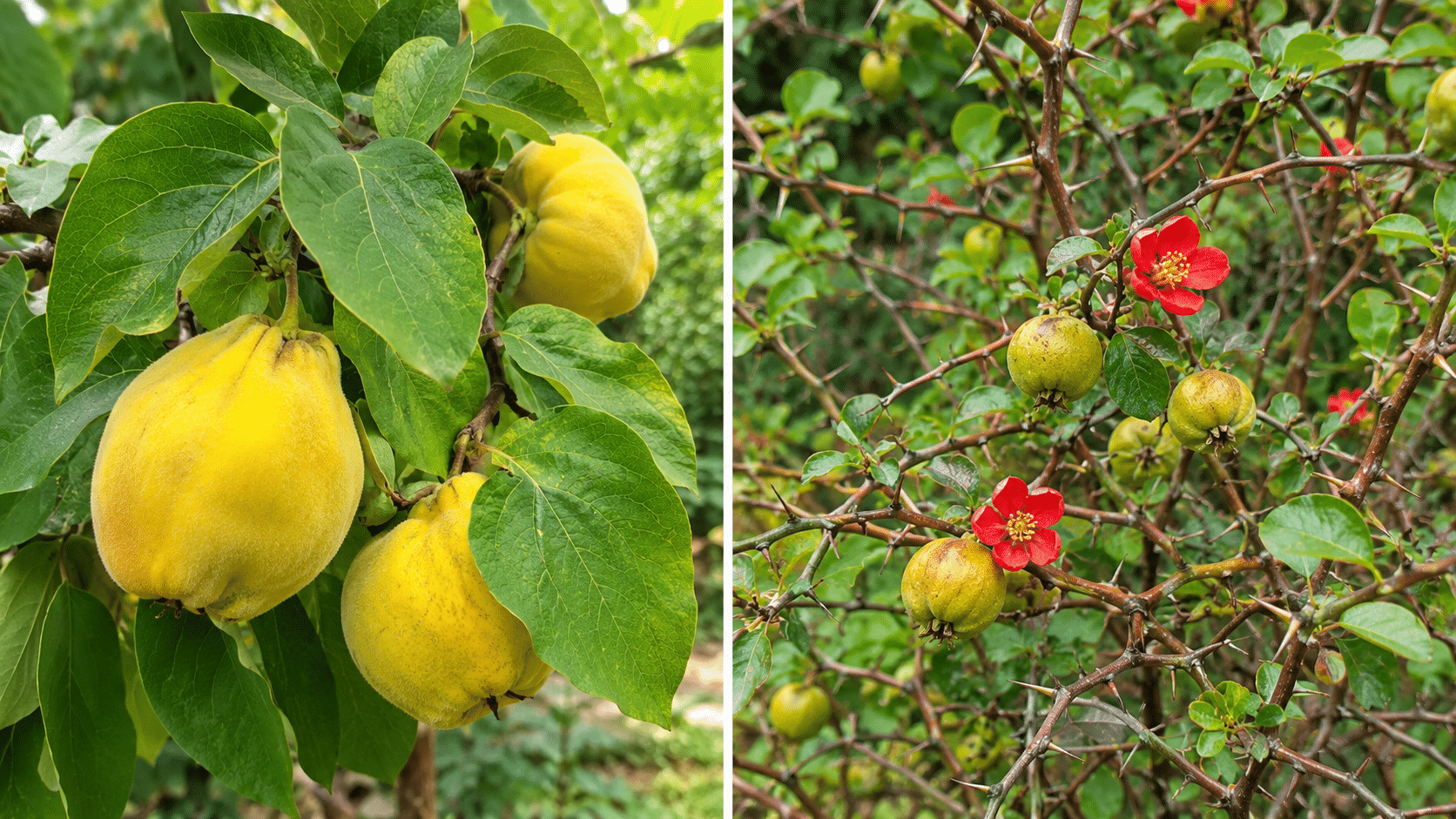
Before we dive into soil and pruning, we need to clear up the single most common mystery in the gardening world. Many homeowners who wonder why their quince isn’t producing big, golden fruit actually have a Flowering Quince (Chaenomeles speciosa), not a True Fruiting Quince (Cydonia oblonga).
While they belong to the same botanical family (Rosaceae), they behave very differently in the landscape. Flowering quince is an ornamental shrub prized for its early spring blooms; while it occasionally sets fruit, those fruits are small, rock-hard, and intensely sour. True quince is a small, graceful tree bred specifically for its large, fuzzy, intensely fragrant golden fruit.
How to Tell Them Apart 🔍
-
Growth Habit: True quince grows as a single-trunk or multi-stemmed small tree (10–15 feet) with smooth, thornless branches. Flowering quince is a dense, sprawling, thorny shrub that rarely exceeds 6–8 feet.
-
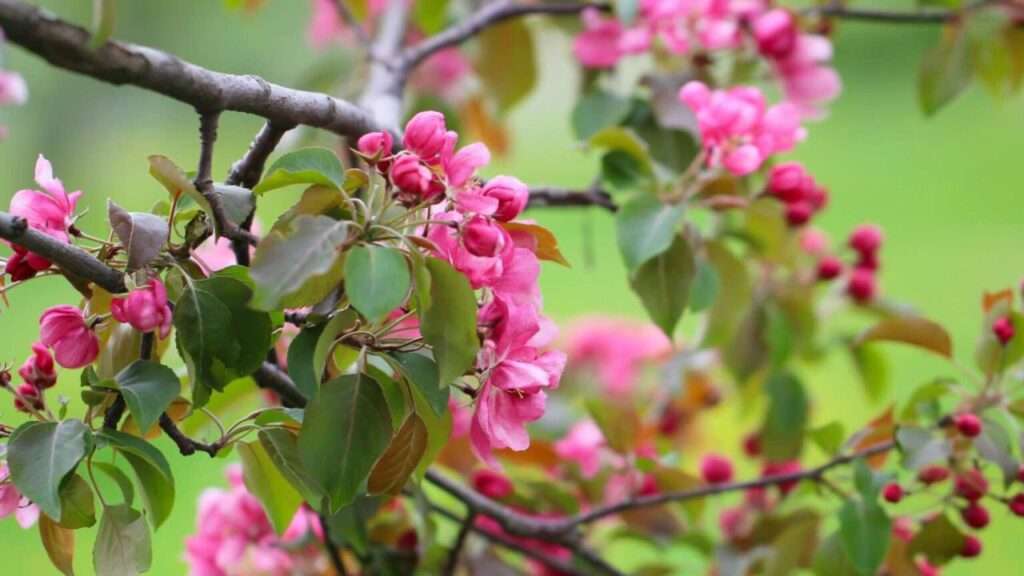
Blossom Color & Timing: True quince blooms late in spring (often after apples and pears) with large, solitary, pale pink-to-white flowers. Flowering quince blooms very early in spring with clusters of fiery red, coral, orange, or bright pink flowers.
-
The Fruit: True quince produces large, pear- or apple-shaped fruit covered in a soft white down (fuzz) that rubs off as it ripens to a glowing yellow. Flowering quince produces small, smooth, green-to-yellowish-green fruits that sit tightly against the thorny stems.
If you want a reliable culinary harvest, double-check your nursery tag for the botanical name Cydonia oblonga.
Choosing the Best Quince Tree Variety for Your Climate 🌍🌡️
Selecting the right cultivar sets the foundation for a productive tree. Like other pome fruits, quince trees require a specific number of chill hours—accumulated hours between 32°F and 45°F (0°C to 7°C) during winter dormancy—to break dormancy properly and set flower buds.
Thankfully, quinces are quite adaptable, generally requiring between 100 and 500 chill hours depending on the variety. This makes them viable from crisp northern gardens all the way down to mild-winter regions like coastal California and the southern US.
Top Fruiting Quince Varieties to Plant 🌟
-
Smyrna: The gold standard for culinary quince. Originating from Turkey, ‘Smyrna’ produces massive, bright yellow, furrow-skinned fruit with an intoxicating floral aroma. It requires around 300 chill hours and is a heavy, reliable bearer.
-
Aromatnaya: A standout Russian heirloom and one of the very few quinces that can actually be eaten raw when fully tree-ripened. It has a sweet-tart flavor with notes of pineapple and lemon, exceptional cold hardiness (down to Zone 4), and good disease resistance.
-
Pineapple: Developed by legendary horticulturist Luther Burbank, this variety is famous for its distinct tropical, pineapple-like fragrance. It has a low chill requirement (around 200–300 hours), making it a top pick for warmer Zone 8 and 9 gardens.
-
Orange (Apple Quince): A classic heirloom that produces round, apple-shaped fruit with deep golden skin and rich orange flesh when cooked. It ripens earlier in the autumn than most other varieties, making it ideal for gardeners in shorter-season northern climates.
💡 Expert Tip: Always buy a grafted tree rather than growing from seed (seed-grown trees take 8–10 years to fruit and rarely match the parent). For backyard gardens, look for trees grafted onto Quince A (semi-dwarfing, 10–12 feet) or Quince C (dwarfing, 8–10 feet) rootstock. These rootstocks encourage earlier fruiting—often within 2 to 3 years!
How to Plant a Quince Tree for Maximum Fruit Production 🌱☀️
Where and how you put your tree in the ground determines its vigor and disease resistance for the next 30 years. Quince trees are relatively forgiving, but they will sulk—and refuse to fruit—if planted in the wrong microclimate.
Picking the Perfect Spot (Sun & Airflow) ☀️💨
Sunlight is the fuel for fruit bud formation. Your quince tree needs at least 6 to 8 hours of direct, unfiltered sunlight every single day. While a quince will survive in partial shade, it will put all its energy into stretching for light and growing leaves, leaving you with sparse blossoms and zero fruit.
Equally important is good air circulation. Avoid planting your tree in a low-lying frost pocket (where cold air pools in spring and kills blossoms) or crammed tightly against a solid fence. Gentle airflow dries morning dew off the leaves quickly, which is your best natural defense against fungal leaf spot and fire blight.
Soil Requirements & Drainage 🪱
Quince trees thrive in deep, fertile, loamy soil with a slightly acidic to neutral pH (6.0 to 7.0). If your soil is overly alkaline (pH above 7.5), the tree will struggle to absorb iron, leading to iron chlorosis—a condition where the leaves turn bright yellow while the veins stay green.
Because quinces have shallow roots, they appreciate soil that holds moisture well without ever becoming waterlogged. If you have heavy clay, amend the planting area broadly with aged compost, or plant the tree on a slight mound (6–8 inches high) to ensure excess winter rain drains away from the crown.
Step-by-Step Planting Guide 🪴
The best time to plant a bare-root quince tree is in late fall or early spring while the tree is fully dormant. Container-grown trees can be planted from spring through early fall, provided you stay on top of watering.
-
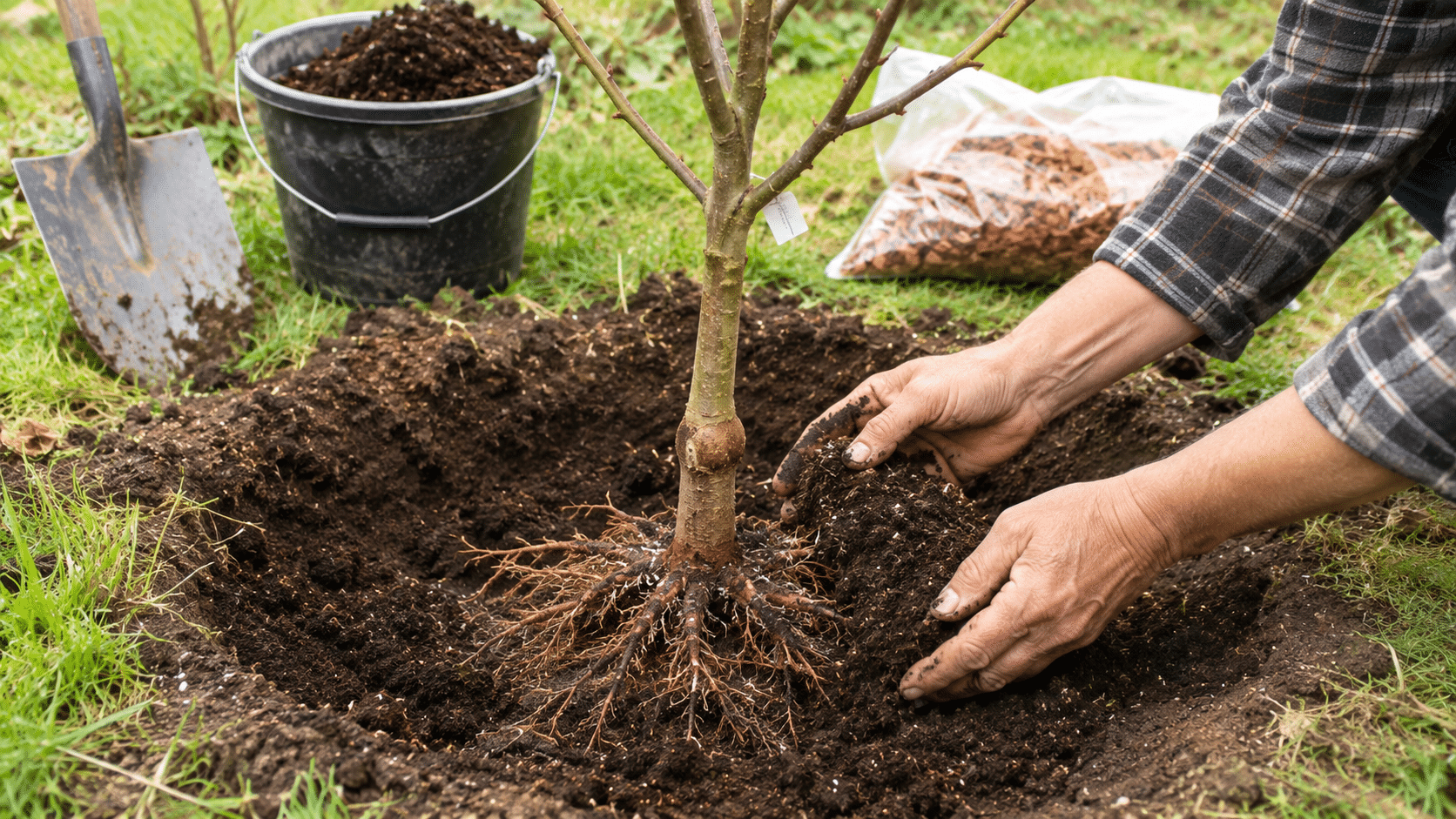
Dig the Right Hole: Dig a hole twice as wide as the root ball, but no deeper than the root ball itself. Roughen the sides of the hole with a garden fork so roots can easily penetrate the surrounding native soil.
-
Check the Graft Union: Position the tree in the hole so the graft union (the noticeable bump or scar near the base of the trunk) sits 2 to 3 inches above the final soil line. Burying the graft union can cause the rootstock to send up wild suckers or rot.
-
Backfill Gently: Fill the hole with the native soil you dug out, mixing in no more than 20% aged compost if your soil is very poor. Avoid creating a “bathtub effect” by filling the hole solely with rich potting mix.
-
Water In Deeply: Once the hole is two-thirds full, flood it with water to settle the soil and eliminate air pockets around the roots. Finish backfilling and water again.
-
Stake Young Trees: Because quince trees have shallow, fibrous root systems, young trees can lean in strong winds. Drive a sturdy wooden stake a few inches away from the trunk and tie the tree loosely with a soft figure-8 tree tie for its first two years.
Essential Quince Tree Care: The Secret to Heavy Yields 💧🌿
Once your tree is established, its day-to-day care is wonderfully straightforward. However, there are two areas where well-meaning gardeners routinely go wrong: watering and fertilizing.
Watering Schedule (Shallow Roots Warning!) 💧
Unlike oak or walnut trees that send deep taproots far underground, quince trees have very shallow, wide-spreading root systems—most of their feeder roots sit in the top 12 to 18 inches of soil.
-
First Two Years: Water deeply once or twice a week during dry spells to help the root system expand.
-
Mature Trees: Once established, quinces are moderately drought-tolerant, except during mid-to-late summer when the fruit is actively swelling. If the soil dries out completely in July or August, the tree will panic and drop its developing fruit to save itself. Give mature trees a deep, slow soak once every 7–10 days during hot, dry stretches.
The Golden Rule of Fertilizing Quince Trees ⚠️
If you only remember one thing from this entire section, let it be this: Do not over-fertilize your quince tree with high-nitrogen fertilizer.
It is tempting to feed a young fruit tree heavy doses of balanced synthetic fertilizer to make it grow faster. With quince, this backfires spectacularly for two reasons:
-
Leaves Over Fruit: Excess nitrogen signals the tree to stay in “vegetative mode,” pushing out yards of lush green leaves while suppressing flower bud formation.
-
The Fire Blight Magnet: Fast, tender, nitrogen-fueled shoots are the absolute favorite entry point for Fire Blight, a devastating bacterial disease that can kill a quince tree in a single season.
What to do instead: In early spring, simply top-dress the soil around the drip line with a 1-to-2-inch layer of well-rotted compost or aged manure. That slow, gentle release of organic nutrients is all a healthy quince tree needs to produce a bumper crop.
Mulching & Winter Protection 🍂
Because those shallow roots hate baking in the summer sun and competing with lawn grass, mulching is non-negotiable. Apply a 2-to-3-inch layer of organic mulch (such as arborist wood chips, shredded bark, or straw) in a wide ring extending out to the tree’s drip line.
Always keep the mulch pulled back 3 to 4 inches from the trunk in a “donut” shape—never pile it up like a volcano against the bark, which traps moisture, invites collar rot, and gives voles a cozy place to chew the trunk in winter.
How to Prune a Quince Tree Without Cutting Off Your Fruit ✂️🌳
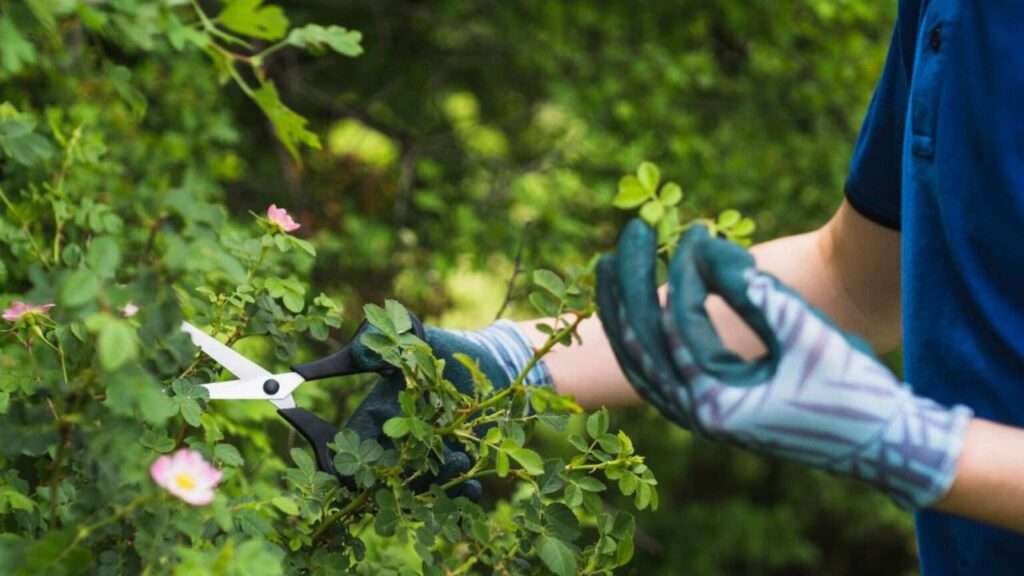
If there is one skill that separates a barren quince tree from a heavy producer, it is knowing when to put the pruning shears down. Many enthusiastic gardeners prune their quince trees the exact same way they prune apples or peaches—heading back the tips of branches to encourage bushy growth—and accidentally chop off their entire upcoming harvest in the process.
Understanding How Quinces Fruit 🌸🍐
Apples and pears produce most of their fruit on short, stubby, permanent fruiting spurs that live for years. Quince trees do not work that way.
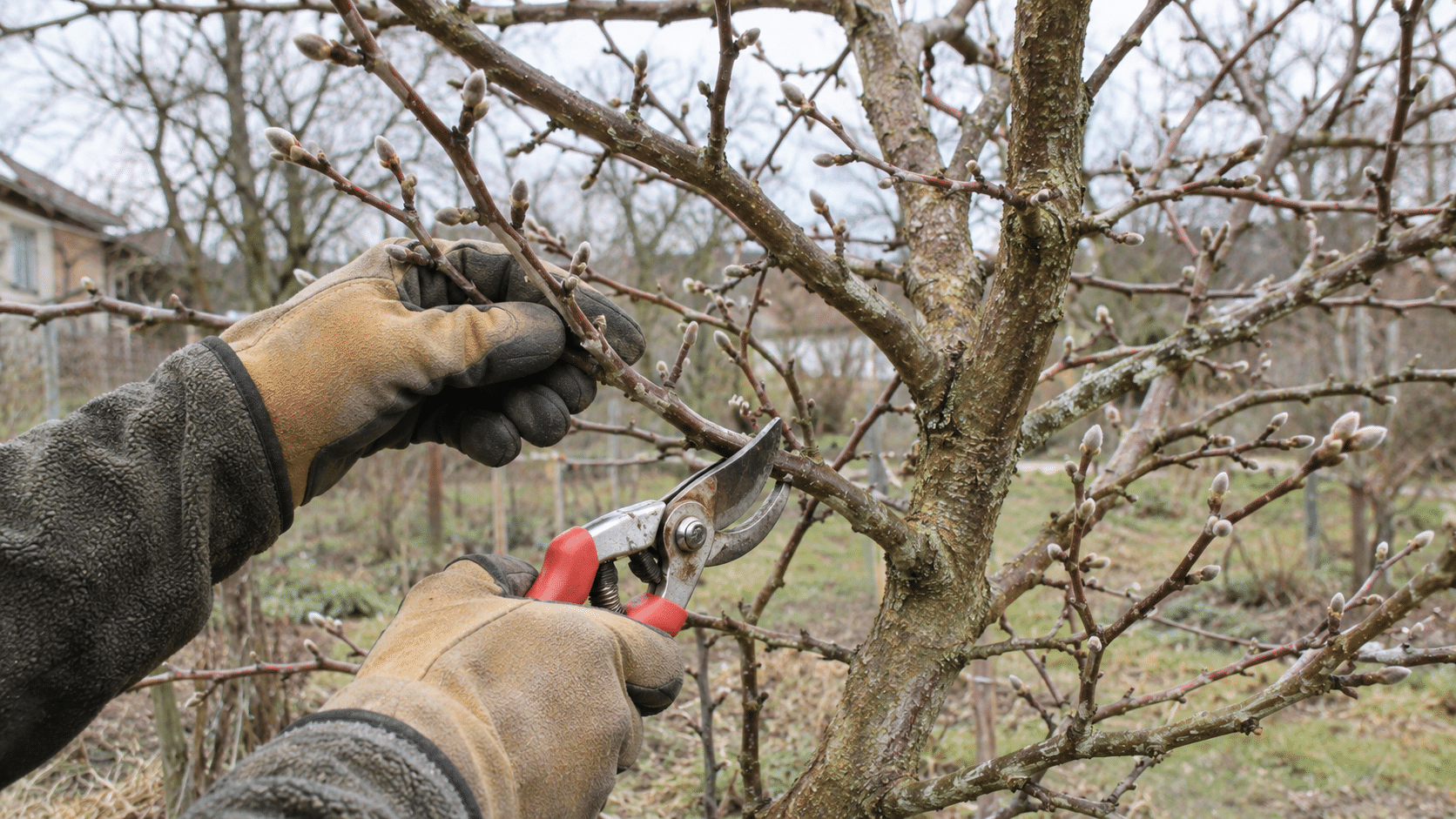
Quinces are primarily tip-bearers. In spring, the tree pushes out short, new shoots from the buds near the ends of last year’s wood, and the flowers—and subsequent fruit—form right at the tips of those current-season shoots. If you shear back the ends of your branches every winter, you are literally cutting off the wood that holds your spring blossoms.
Year-by-Year Pruning Strategy 📅✂️
Always prune your quince tree in late winter while it is fully dormant (just before buds swell in early spring). Dormant pruning minimizes sap bleeding and drastically reduces the risk of spreading bacterial diseases like fire blight.
-
Years 1–3 (Formative Pruning): Your only goal in the early years is to build a strong, open framework. Train your tree into an open-center (vase) shape by selecting 3 to 5 sturdy, well-spaced scaffold branches radiating outward from the main trunk at wide angles (45–60 degrees). Remove any competing central leader shoots and trim off low branches or suckers sprouting from below the graft union.
-
Mature Trees (Maintenance Pruning): Once your tree’s shape is established, adopt a minimalist approach. Every winter, simply remove the “3 Ds”—Dead, Diseased, or Damaged wood—along with any branches that are crossing or rubbing against each other. If the center of the canopy gets too dense, thin out a few whole branches back to their point of origin to let sunlight and air reach the interior. Never “tip” or shear the outer ends of healthy branches.
💡 Expert Tip: Because quince wood is relatively brittle and the fruit gets surprisingly heavy by autumn, lightly thinning out overcrowded branches in winter prevents limbs from snapping under the weight of a bumper crop.
Why Isn’t My Quince Tree Producing Fruit? (Troubleshooting Guide) 🔍🍐
If your tree is healthy, leafy, and properly pruned, yet you are still staring at empty branches, run through this five-point diagnostic checklist. Almost every fruiting failure comes down to one of these culprits:
1. The Tree Is Too Young ⏳
Patience is part of the orchardist’s toolkit. While a grafted quince tree may produce a handful of showy blossoms in its second year, it typically takes 3 to 5 years after planting to build enough root mass and carbohydrate reserves to hold a reliable crop to maturity. If your tree is under three years old, it’s actually better to pinch off the first few fruits so the tree directs its energy into strong roots.
2. Late Spring Frosts ❄️
One of the great advantages of growing a quince tree is that it blooms later in spring than peaches, apricots, or plums, helping it dodge many early cold snaps. However, a sudden hard freeze (below 28°F / -2°C) while the blossoms are open will blacken the delicate flower centers, preventing fruit set for the entire season. If a late frost is forecast while your tree is in bloom, draping a lightweight frost cloth over a young tree overnight can save your harvest.
3. Pollination Needs a Boost 🐝
Technically, quince trees are self-fertile—meaning a single tree can pollinate itself and set fruit. In real-world backyard orchards, however, self-pollination can be hit-or-miss if spring weather is cold, rainy, or windy (when bees stay inside their hives). Planting a second quince variety nearby for cross-pollination—or underplanting your tree with bee-friendly perennials like lavender, borage, and thyme—will noticeably increase both your fruit set and the size of your quinces.
4. Too Much Shade or Nitrogen 🌿
As we covered earlier, a tree receiving less than 6 hours of direct sun—or one sitting next to a heavily fertilized lawn—will stay stuck in vegetative growth mode. If your tree is pushing out more than 18–24 inches of bright green, whip-like shoot growth every summer without flowering, stop all nitrogen feeding immediately and check if nearby shade trees need trimming back.
5. Normal “June Drop” (or Drought Stress) 💧
In late spring or early summer, it is completely normal for a quince tree to shed a percentage of its marble-sized baby fruits. This natural self-thinning process, known as June drop, ensures the tree only keeps the fruit it has enough energy to ripen properly. However, if all the fruit drops in mid-summer, the culprit is almost always inconsistent watering stressing those shallow roots.
Common Quince Tree Pests & Diseases (And How to Beat Them) 🐛🛡️
Quince trees are generally tougher than apples and peaches, requiring far fewer sprays to stay healthy. Still, knowing how to spot and manage their top three adversaries will keep your tree thriving for decades.
Fire Blight (The #1 Threat) 🔥
Caused by the bacterium Erwinia amylovora, fire blight is the most serious disease affecting quince trees, especially during warm, wet springs.
-
Symptoms: Shoot tips suddenly wilt, turn black or dark brown as if scorched by a blowtorch, and curve downward into a classic “shepherd’s crook” shape. Blossoms may also turn brown and cling to the branch.
-
Actionable Fix: Act immediately during dry weather. Prune infected branches 8 to 12 inches below the lowest visible sign of discoloration into healthy green wood. Crucial step: Sterilize your pruning shears between every single cut by dipping them in 70% rubbing alcohol or a 10% bleach solution so you don’t spread the bacteria to healthy limbs. Bag and trash (or burn) the infected clippings—never compost them.
Quince Leaf Blight (Entomosporium) 🍂
This fungal disease loves humid summers and stagnant air.
-
Symptoms: Small reddish-brown or purplish spots appear on the leaves in mid-summer, eventually coalescing until the leaves turn yellow and drop prematurely. Severe infections can also cause dark, corky spots on the fruit.
-
Actionable Fix: Sanitation is your strongest weapon. In autumn, rake up and destroy every fallen leaf around the base of the tree (the fungus overwinters in dead leaf litter and splashes back up onto new leaves with spring rain). Keeping the canopy open for airflow and applying a preventative copper fungicide spray at bud break in spring will keep it in check if your climate is humid.
Quince Rust & Codling Moths 🐛
-
Quince Rust: If you notice bright orange, fuzzy growths on developing fruit or twigs, you are dealing with cedar-quince rust. This fungus requires two hosts to complete its life cycle: quince and Eastern Red Cedar (or ornamental junipers). Whenever possible, plant your quince tree well away from juniper bushes, and apply an organic sulfur or copper spray in early spring if rust has been an issue in the past.
-
Codling Moths: The same caterpillars that tunnel into apples will occasionally target quince. Hang pheromone traps in early spring to disrupt mating, wrap corrugated cardboard bands around the trunk in summer to trap migrating larvae, or coat developing fruit in organic kaolin clay (Surround WP), which creates a harmless, dusty barrier that deters moths from laying eggs.
Harvesting, Ripening, and Storing Your Quince Crop 🧺✨
There is nothing quite like the moment your quince tree finally delivers. Unlike pears, which are picked hard and green to ripen indoors, quinces develop their richest flavor and most intoxicating perfume right on the tree.
When to Harvest Quince 🍂🍐
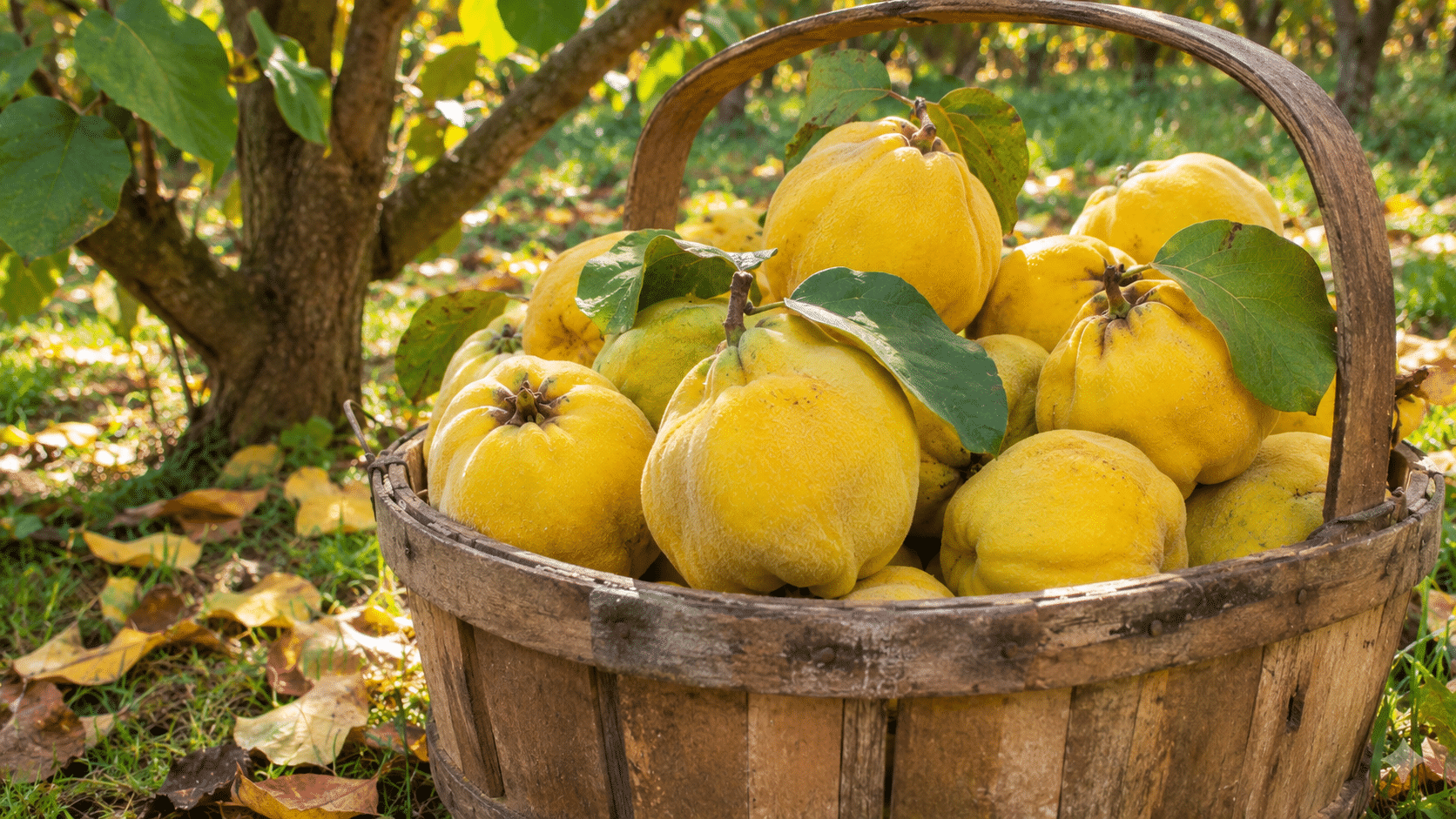
Leave your quinces on the tree as long as possible in autumn—typically October to early November, right before the first hard freeze hits. Your fruit is ready to pick when:
-
The skin transitions completely from greenish-yellow to a deep, glowing golden-yellow.
-
The soft white fuzz coating the skin rubs off easily with your thumb.
-
The fruit gives off an unmistakable, intoxicating floral-citrus aroma you can smell from several feet away.
Handling & Storage Tips 📦
Don’t let their rock-hard feel fool you: quinces bruise remarkably easily, and any hidden bruise will quickly turn into a brown rot spot in storage. Twist each fruit gently upward off the branch rather than pulling, and lay them carefully in a padded basket—never toss them into a bucket.
Store unblemished quinces in a single layer in a cool, dark, well-ventilated spot (like a root cellar, unheated garage, or crisp refrigerator drawer at 35°F–45°F). Properly stored, they will keep beautifully for 2 to 3 months.
👃 Fun Orchardist Tip: Never store quinces in the same closed bin or crisper drawer as apples, pears, or butter! Their essential oils are so potent that they will literally perfume every other food around them. (On the flip side, placing two ripe quinces in a bowl on your kitchen counter makes the best all-natural autumn air freshener on earth.)
Quick Culinary Note 🍯
Unless you are growing a rare sweet cultivar like ‘Aromatnaya’, don’t bite into a raw quince expecting an apple—most varieties are fiercely astringent and dry straight off the tree. The magic happens with heat. When poached in syrup, roasted alongside pork or chicken, or slow-simmered with sugar into Spanish membrillo (quince paste), the pale, hard flesh transforms into a tender, jewel-toned ruby-red delicacy with notes of honey, rosewater, and citrus.
Frequently Asked Questions About Growing a Quince Tree ❓🌱
Can you grow a quince tree in a pot or container?
Yes! Quince trees are well-suited to patio and container growing, provided you choose a dwarfing rootstock like Quince C. Plant it in a large, heavy container (at least 20 to 25 gallons) with excellent drainage holes, use a high-quality, loam-based potting mix, and stay diligent with summer watering and annual spring top-dressing with compost.
How big does a quince tree get?
Most fruiting quince trees mature to a very manageable 10 to 15 feet tall and wide, making them ideal for small suburban backyards and urban food forests. Trees on dwarfing rootstock stay even more compact at 8 to 10 feet.
Do you need two quince trees to get fruit?
No, you only need one. True quince trees (Cydonia oblonga) are self-pollinating. However, if you have the space, planting two different varieties (such as ‘Smyrna’ and ‘Pineapple’) will cross-pollinate and reliably produce noticeably heavier harvests.
How fast do quince trees grow?
Quince trees have a slow-to-moderate growth rate, typically adding about 12 inches of new growth per year. Their naturally compact, graceful, slightly gnarled habit means they require far less aggressive pruning than vigorous apple or plum trees.
Enjoying Your Golden Harvest 🍐💛
Growing a quince tree that actually produces fruit doesn’t require complicated chemical schedules or a degree in horticulture—it simply requires working with the tree’s natural rhythm instead of against it. Give your tree full sun, protect its shallow roots with consistent moisture and mulch, skip the heavy nitrogen fertilizer, and keep your pruning shears away from the fruiting tips. Do those four things, and your quince tree will reward you for decades with spring beauty and baskets of fragrant golden fruit every autumn.
What growing zone are you in, and which quince variety are you growing (or dreaming of planting)? Drop a comment below—and let us know what you plan to make with your very first harvest: poached quince, spiced jelly, or classic membrillo! 🍐✨