You bring home a lush, glossy tropical plant from the nursery, place it in the brightest corner of your living room, and picture yourself living in a serene indoor jungle. Fast-forward three weeks, and that same plant looks like it survived a desert windstorm—crispy brown leaf tips, curled foliage, and leaves dropping one by one. 🏜️💔
If this sounds painfully familiar, take a deep breath: you don’t have a “black thumb.” You just have a dry home.
Most modern houses and apartments hover between 20% and 35% relative humidity, especially when winter heating or summer air conditioning kicks into overdrive. Meanwhile, the plants we love most evolved on warm, misty rainforest floors where humidity stays between 60% and 80%. Keeping tropical plants indoors under desert-like conditions is a constant uphill battle—unless you know how to bridge that gap.
After years of growing more than 50 tropical houseplants through brutal, radiator-heated winters, I’ve learned the hard way which humidity hacks are a complete waste of time and which ones actually save your leaves. You don’t need to turn your living room into a damp, mold-prone greenhouse. With a few smart adjustments to your microclimate, watering routine, and plant selection, your indoor jungle can stay lush and vibrant all year round. 🪴💚
🏜️ Why Dry Air Hurts Tropical Plants (The Quick Science)
To fix dry-air damage, it helps to understand what is actually happening inside your plant’s leaves.
Plants “breathe” through microscopic pores on the undersides of their leaves called stomata. Through a process called transpiration, water travels from the roots, up the stems, and evaporates out through these pores. This steady flow is how plants cool themselves and pull essential nutrients up from the soil.
When your indoor air is bone-dry, it acts like a giant sponge, pulling moisture out of the stomata far faster than the roots can absorb and replace it. To survive this rapid dehydration, the plant slams its stomata shut. While this slows water loss, it also halts photosynthesis and starves the outer edges of the leaves of moisture—causing the cells furthest from the stems to dry out and die.
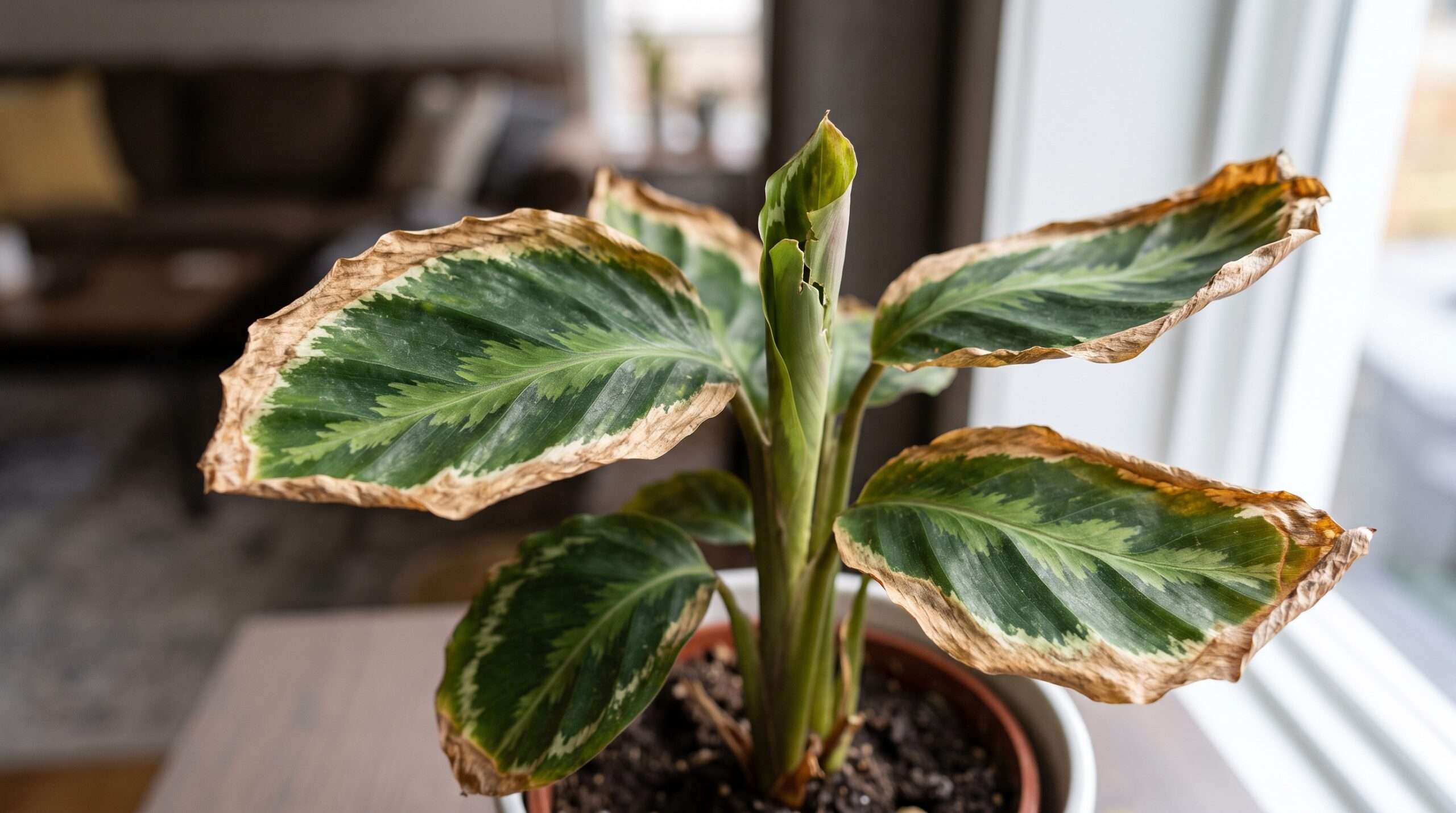
🚨 5 Warning Signs Your Home Is Too Dry
Your plants will almost always tell you they are struggling with low humidity before the damage becomes fatal. Watch out for these classic symptoms:
-
Crispy, brown leaf tips and margins: This is the #1 sign of low indoor humidity for tropical plants. The edges turn papery, dry, and brown while the rest of the leaf remains green.
-
Inward leaf curling: Plants like Calatheas, Philodendrons, and Peace Lilies will physically roll their leaves inward like little tacos 🌮 to reduce their surface area and trap moisture.
-
Stuck or torn new leaves: New foliage needs ambient moisture to unfurl smoothly. In dry air, emerging leaves often get trapped inside their protective sheaths (cataphylls) and rip as they force their way out.
-
Sudden bud drop: Flowering tropicals—such as Anthuriums, Orchids, and Hibiscus—will sacrifice their blooms first when stressed by dry air.
-
Spider mite outbreaks 🕷️: These microscopic pests hate moisture and thrive in hot, dry, stagnant air. If you notice fine webbing under leaves or dusty, stippled foliage, low humidity is likely rolling out the welcome mat for them.
🌡️ Step 1: Measure Your Home’s Microclimate First
Before you buy a single humidifier or rearrange your furniture, stop guessing. You cannot manage what you don’t measure.
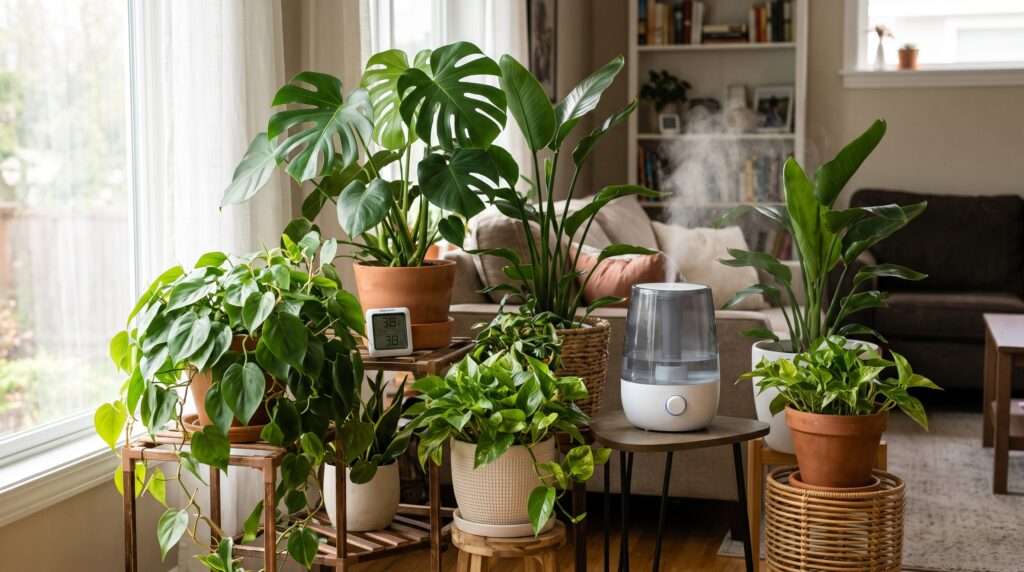
Pick up a small digital hygrometer (they usually cost $10 to $15 online or at any hardware store). Knowing whether your living room sits at 42% humidity or a brutal 18% completely changes your dry air houseplant care strategy.
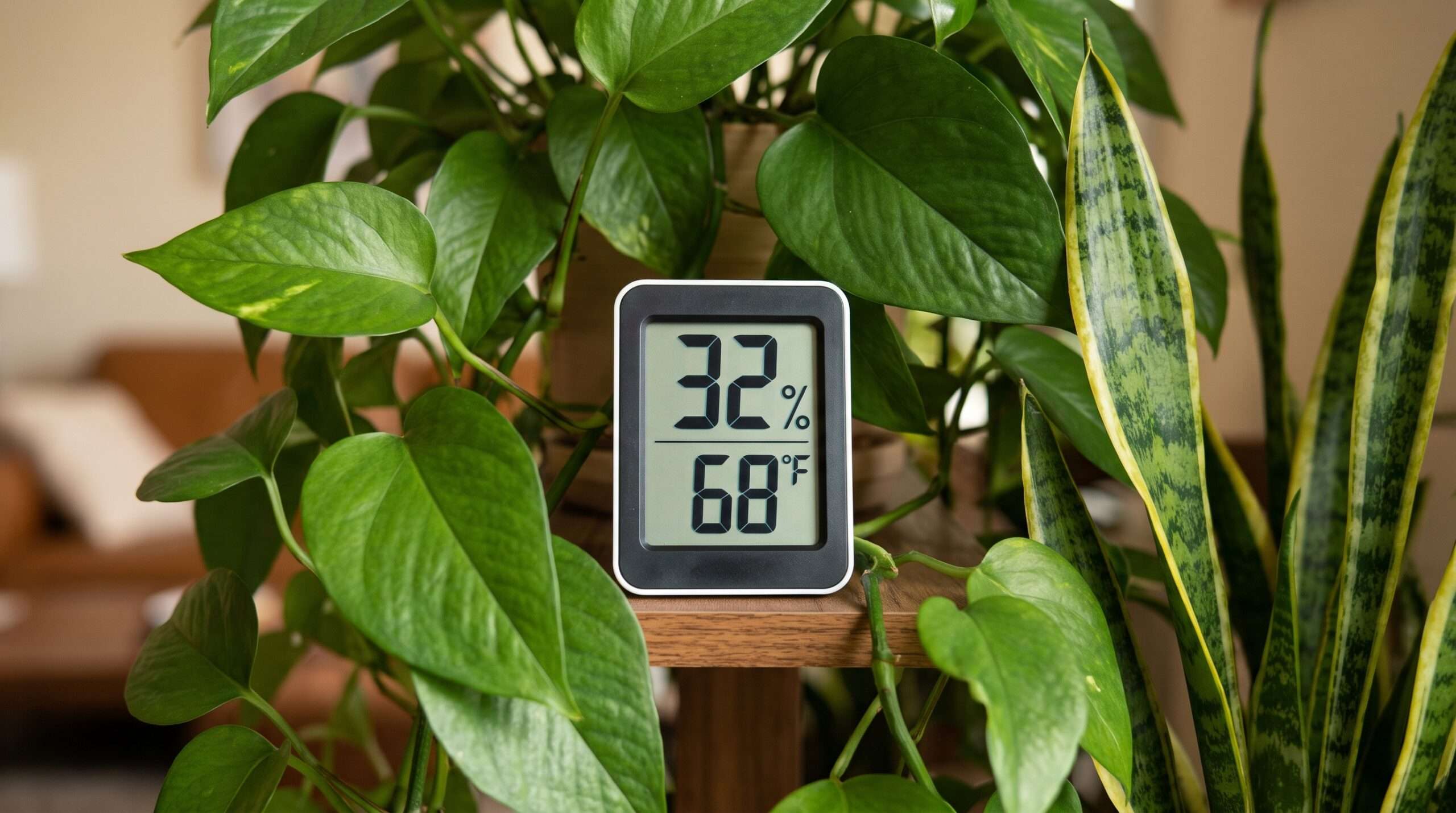
🗺️ Map Out Your “Danger Zones”
Humidity isn’t uniform throughout your house. A room can average 40% relative humidity overall while the exact spot your Monstera sits in drops to 20%. Walk around with your hygrometer and watch out for these hidden moisture-killers:
-
HVAC vents and floor registers: Even a gentle stream of heated or air-conditioned air blowing across foliage will desiccate a tropical plant in days.
-
Radiators and space heaters: Direct radiant heat bakes moisture out of both the air and the potting mix.
-
Drafty windows: Cold winter air holds very little moisture, and sudden temperature plunges shock tropical tissue.
-
Electronics: Warm exhaust from TVs, gaming consoles, or desktop computers creates localized dry pockets.
💡 Expert Tip: Always place your hygrometer right next to your plants at leaf level—not across the room on a bookshelf. I once measured 45% humidity on my living room wall, only to discover my Fiddle Leaf Fig six feet away near a ceiling vent was sitting in a 24% dead zone!
💨 Step 2: 5 Proven Ways to Boost Humidity (And 2 Myths to Skip)
Once you know your baseline numbers, it’s time to raise the ambient moisture around your plants. Not all humidity methods are created equal—here is what actually works, ranked by effectiveness.
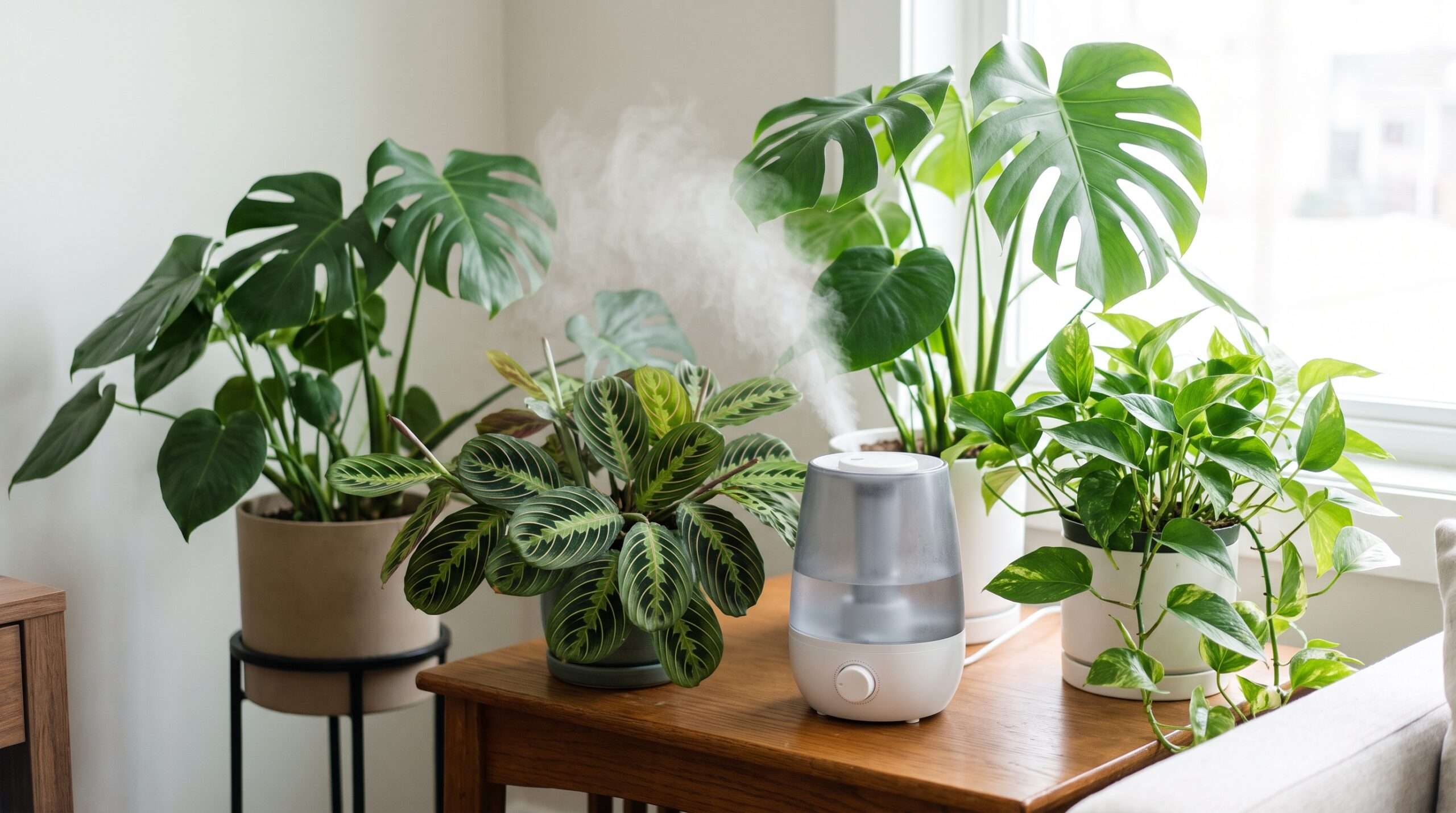
1. Use a Cool-Mist Humidifier (The Gold Standard) 🌫️
If you are serious about keeping tropical plants indoors through dry seasons, a dedicated humidifier is the single best investment you can make. Nothing else raises ambient humidity reliably across an entire room.
-
Ultrasonic vs. Evaporative: Ultrasonic humidifiers are whisper-quiet and emit a visible cool mist, making them popular for plant rooms. However, if you fill them with hard tap water, they will coat your leaves and furniture in a fine white mineral dust—always use distilled or filtered water in ultrasonic models. Evaporative humidifiers use a wick filter and a fan; they don’t leave white dust and won’t over-humidify a room, though they require occasional filter replacements.
-
The Sweet Spot: Aim for 45% to 55% relative humidity. This is the magic zone where almost all tropical houseplants thrive, while your walls, drywall, and window frames stay completely safe from condensation and mold.
2. Group Plants Together to Create a Microclimate 🪴🤝🪴
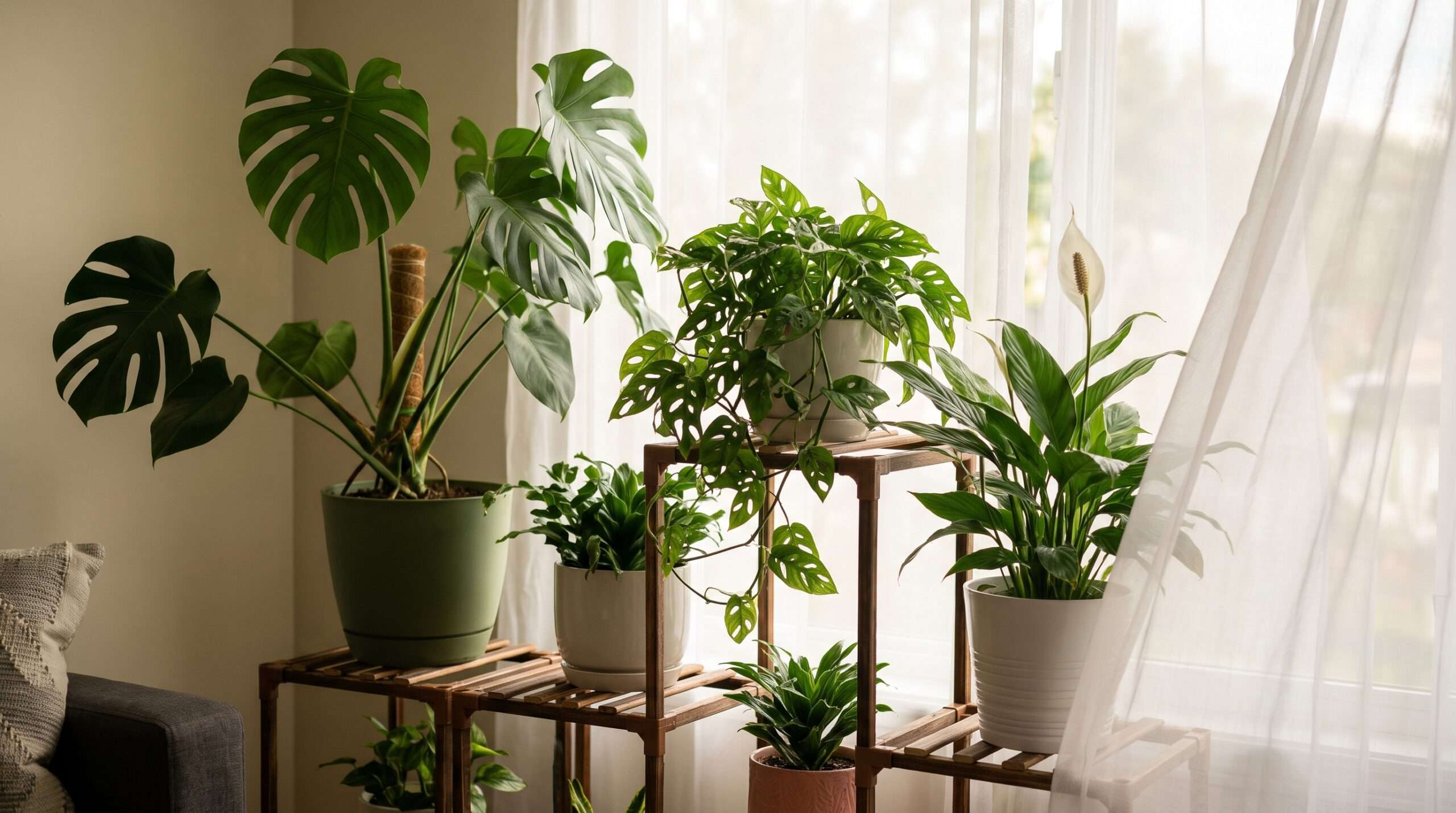
Plants naturally release moisture into the air through transpiration. When a single plant sits alone on a side table, that moisture dissipates instantly. When you cluster four to six plants together on a plant stand or windowsill, they trap that shared moisture in a localized bubble—often raising the immediate humidity by 5% to 10%.
Place taller, tougher plants on the outer edges of the cluster and tuck your more humidity-sensitive plants right in the center.
3. Use Micro-Enclosures for High-Maintenance Divas 🫧
If you only own one or two ultra-fussy tropicals—like a Jewel Orchid, Maidenhair Fern, or rare velvety Anthurium—you don’t need to humidify your whole house. Instead, place them inside a glass cloche, terrarium, or converted IKEA greenhouse cabinet. Enclosed glass setups effortlessly maintain 70%+ humidity with almost zero daily effort. Just remember to crack the lid or add a tiny USB fan for airflow so fungal issues don’t develop.
4. Relocate to Naturally Humid Rooms 🛁
Bathrooms and kitchens naturally experience spikes in humidity from showers, boiling water, and dishwashers. Moving smaller tropicals into these rooms can give them a noticeable boost—with one major caveat: light.
A dark, windowless bathroom will kill a tropical plant much faster than dry air will. Only move plants to the bathroom if there is a bright window, or pair the space with a compact full-spectrum LED grow light.
5. Pebble Trays: Do They Actually Work? 🪨
You’ve probably seen the classic advice to set your pots on a shallow tray filled with pebbles and water (making sure the bottom of the pot sits above the waterline so the roots don’t rot).
Here is the honest, experience-backed truth: pebble trays have very limited power. When I tested them with a digital hygrometer placed right beside the leaves, a pebble tray only raised humidity by about 2% to 5%—and only within a few inches of the water’s surface. They can offer a tiny helping hand to a compact 4-inch fern, but they will not save a six-foot Bird of Paradise in a 20% humidity living room.
🚫 Myth-Buster: Why Misting Is Mostly a Waste of Time 💦 Grabbing a spray bottle and misting your plants feels therapeutic, but it does almost nothing for indoor humidity. Studies and real-world hygrometer tests consistently show that misting only raises humidity for 10 to 15 minutes before the droplets evaporate. Worse, leaving standing water on leaves in a low-airflow indoor room creates the perfect breeding ground for bacterial and fungal leaf spot. Save your spray bottle for wiping dust off foliage—and leave humidity to a humidifier.
🚿 Step 3: Adjust Your Watering & Soil for Dry Homes
Dry air doesn’t just affect your plant’s leaves; it completely changes how water behaves in the pot.
💧 Don’t Confuse Dry Air With Dry Soil
This is the single most common mistake beginners make during winter plant care indoors. You see crispy brown leaf tips, assume the plant is thirsty, and pour more water into the pot.
Unfortunately, soaking the soil won’t fix dry air. Because the plant’s roots are already sitting in damp potting mix while growth slows down, extra water suffocates the roots and triggers root rot—leaving you with a plant that has both crispy tips and yellowing, mushy stems. Always stick your finger two inches into the soil (or use a wooden chopstick) to check for moisture before watering.
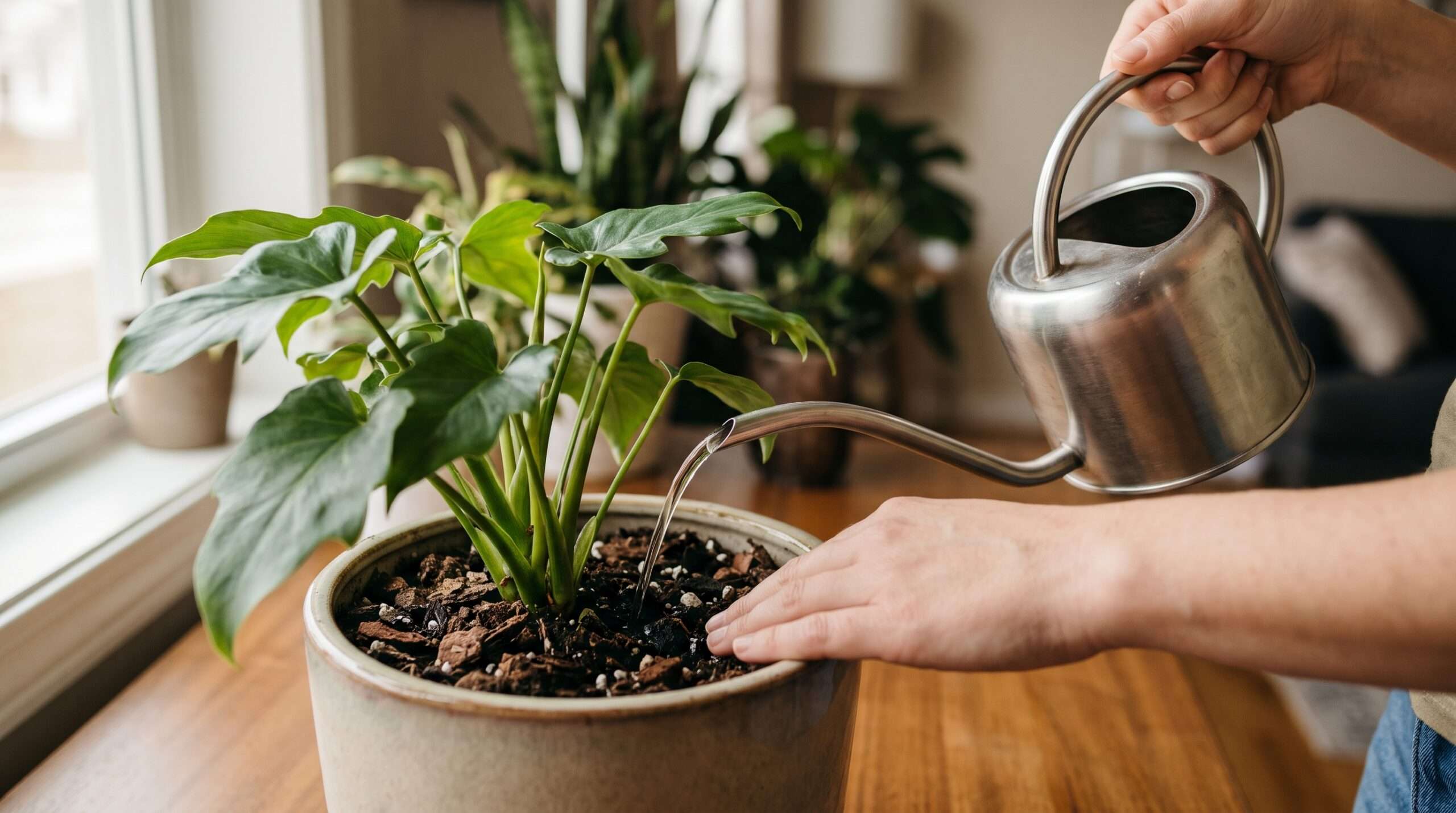
🪵 Upgrade to a Chunky, Moisture-Retentive Soil Mix
Standard bagged potting soil is often heavy on peat moss, which becomes hydrophobic (water-repellent) when it dries out in low-humidity homes. When you water it, the liquid just runs straight down the sides of the pot and out the drainage hole without ever hydrating the root ball.
Instead, build a chunky, airy tropical mix that holds even moisture without staying soggy:
-
40% High-quality indoor potting mix or coco coir (coco coir rehydrates much more easily than peat)
-
30% Orchid bark (adds structure and pockets of moisture)
-
20% Perlite or pumice (ensures oxygen reaches the roots)
-
10% Worm castings (gentle, slow-release nutrients)
🌡️ Switch to Room-Temperature, Filtered Water
Cold tap water straight from the faucet can shock delicate tropical roots. Furthermore, many municipal water supplies contain chlorine, chloramine, and fluoride—minerals that accumulate in leaf tips and cause browning that looks identical to dry-air damage (especially on Calatheas, Dracaenas, and Spider Plants). Switching to room-temperature filtered water, rainwater, or distilled water eliminates this hidden trigger.
💡 Pro Insight: If your potting mix has become bone-dry and hydrophobic, try bottom watering. Set the nursery pot in a basin of room-temperature water for 20–30 minutes until the top of the soil feels damp, then let it drain completely. This ensures the entire root ball hydrates evenly.
☀️ Step 4: Balance Light, Temperature & Airflow
Humidity doesn’t exist in a vacuum. Light, heat, and air movement all work together to determine how fast your plants lose moisture.
🌤️ Bright, Indirect Light (Avoid Harsh Direct Sun)
Direct afternoon sun streaming through a south- or west-facing window combined with dry indoor air is a recipe for rapid leaf scorch. Most tropical plants grow beneath a rainforest canopy, where sunlight is bright but dappled. Pull sensitive plants a few feet back from harsh windows, or hang a sheer white curtain to diffuse the rays while keeping the room bright.
🌡️ Keep Temperatures Consistent
Tropical plants prefer the same temperatures humans find comfortable: 65°F to 80°F (18°C to 27°C). The real danger in dry homes isn’t usually the daytime temperature—it’s the sudden nighttime drop near poorly insulated windows. Keep foliage from physically touching cold glass during winter nights, as this can cause instant blackening and cold damage.
🌬️ Gentle Airflow Prevents Mold & Pests
When you start raising indoor humidity to 50%+, stagnant air becomes your enemy. Running a small oscillating fan on its lowest setting—pointed across the room, never directly at your plants—mimics natural rainforest breezes. Gentle airflow strengthens plant stems, helps water evaporate cleanly from soil surfaces, and drastically reduces the risk of powdery mildew and fungus gnats.
❄️ Step 5: Seasonal Care: Winter Heating vs. Summer AC
Dry indoor air isn’t strictly a winter problem—central air conditioning strips moisture from the air just as aggressively in July as a furnace does in January. Use this quick reference to adjust your routine across the seasons:
🏆 Best Tropical Plants Indoors for Dry Homes
If you live in an arid climate or simply don’t want to babysit a humidifier every day, choosing the right species is half the battle. Some tropicals have thick, waxy cuticles (outer leaf layers) that lock moisture in naturally.
💪🌿 Tough Tropicals That Tolerate 35%–45% Humidity
-
Monstera Deliciosa: Iconic, dramatic, and surprisingly resilient. Its thick, leathery leaves handle average household humidity with ease as long as it gets bright, indirect light.
-
Heartleaf Philodendron & Pothos: Fast-growing, forgiving vining plants that adapt effortlessly to dry air and bounce back quickly if you forget a watering.
-
Bird of Paradise (Strelitzia nicolai): Loves sunny spots and tolerates lower humidity far better than most large statement plants (note: occasional natural leaf splitting is normal and actually helps it in the wild!).
-
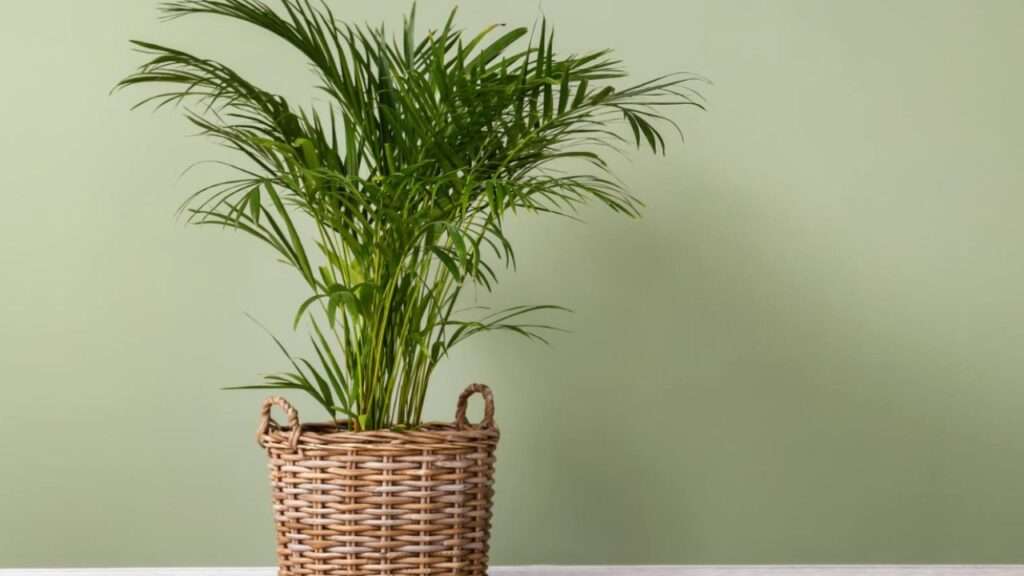
Parlor Palm (Chamaedorea elegans): While Majesty Palms and Areca Palms are notorious for crisping up indoors, the Parlor Palm is compact, slow-growing, and much more tolerant of dry living rooms.
-
ZZ Plant & Snake Plant: Technically tropical/subtropical natives, these two store water in their thick rhizomes and leaves, making them virtually indestructible in dry apartments.
👑💧 “Humidity Divas” to Avoid (Unless You Have a Humidifier)
To save yourself heartache, hold off on these beauties until you have a reliable humidifier or glass cabinet running:
-
Calathea & Maranta (Prayer Plants): Gorgeous patterned foliage, but they will crisp up almost immediately below 50% humidity or when given tap water.
-
Maidenhair Ferns (Adiantum): Paper-thin fronds that can dry to a crisp in a single afternoon if the air drops too low.
-
Velvet-Leaf Alocasias: Prone to spider mites and leaf drop when indoor humidity dips.
🩺 Quick Troubleshooting Guide for Dry-Air Damage
Already dealing with a stressed plant? Use this diagnostic cheat sheet to fix the issue fast:
-
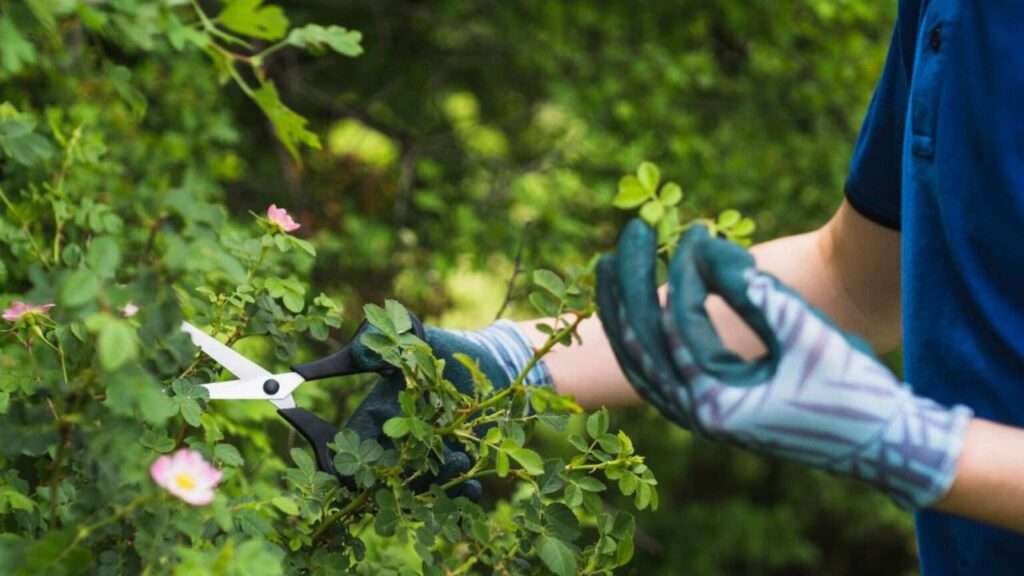
Brown, crispy leaf tips: Caused by low humidity or tap water minerals. Fix: Trim the dead tips with clean, sterilized scissors (following the natural pointed shape of the leaf), switch to filtered water, and move the plant closer to a humidifier.
-
Fine webbing or dusty, speckled leaves: Classic spider mites. Fix: Take the plant into the shower and rinse the undersides of every leaf with lukewarm water, then treat thoroughly with insecticidal soap or neem oil once a week for three weeks. Raise ambient humidity to keep them from returning.
-
Yellow, soft lower leaves + crispy tips: You’ve been overwatering to compensate for dry air. Fix: Hold off on watering until the top 2 inches of soil are dry. If the soil smells sour or stays soggy for over a week, unpot the plant, trim away any black, mushy roots, and repot into fresh, chunky mix.
-
Stuck new leaf refusing to unfurl: Ambient air is too dry. Fix: Resist the urge to pry it open with your fingers (it will snap!). Instead, drape a warm, damp paper towel gently around the stuck leaf for 10 minutes, or place the plant near a running humidifier for a day.
❓ Frequently Asked Questions (FAQs)
What is the minimum humidity for tropical plants indoors?
Most common tropical houseplants can survive at 35% to 40% relative humidity, thrive between 50% and 60%, and begin showing visible stress (crispy tips, curling, pest issues) when levels drop below 30%.
Should I cut off brown tips on my tropical plants?
Yes, trimming brown tips improves the plant’s appearance and won’t hurt it. Use clean, sharp shears and leave a tiny, hairline sliver of brown rather than cutting into the healthy green tissue—cutting into living green cells creates a fresh wound that will simply turn brown again.
Can I run a humidifier all day around my houseplants?
You can, provided you monitor the room’s humidity level. Keep indoor humidity under 60% to prevent condensation on windows, peeling wallpaper, or household mold. The easiest hands-off approach is buying a humidifier with a built-in humidistat, which automatically shuts off once your target percentage is reached.
Do tropical plants need fertilizer in the winter?
Generally, no. When natural daylight hours shorten in winter, most tropical plants slow down or enter semi-dormancy. Feeding a plant that isn’t actively growing causes fertilizer salts to build up in the soil, which burns roots and worsens brown leaf tips. Wait until you see fresh new growth in spring to resume fertilizing.
💚 Start Small and Watch Your Indoor Jungle Thrive
Keeping tropical plants indoors when your home feels like a desert doesn’t require expensive greenhouse renovations or hours of daily misting. It comes down to working with your home’s environment instead of fighting it: grab a $10 hygrometer to see what you’re really dealing with, invest in one good cool-mist humidifier, group your plants together, and adjust your watering so you never drown dry-air-stressed roots.
Start with just one or two of these changes this week, and you’ll be amazed at how quickly your next round of new leaves unfurls glossy, whole, and vibrant. ✨🪴
Which tropical plant has been the toughest for you to keep happy in your dry home? Drop its name in the comments below—I’d love to help you troubleshoot it! 💬👇