
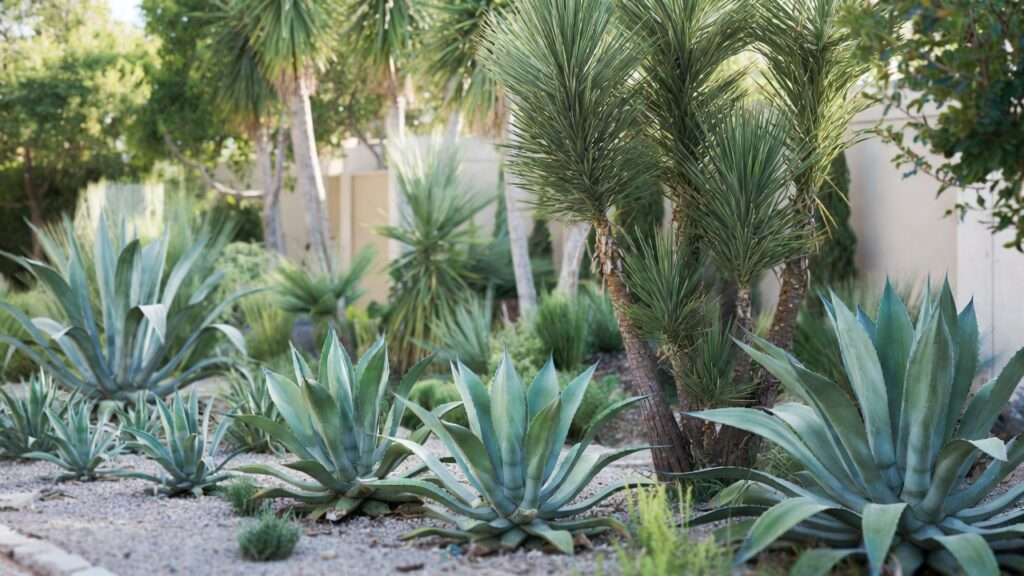
Imagine stepping into your yard and being greeted by bold, sculptural plants that look effortlessly elegant, thrive with almost no watering, and cut your maintenance time to nearly zero—all while slashing your water bill and boosting curb appeal. 🌞 In regions with hot, dry spells (or even humid areas like Khulna, Bangladesh, where seasonal dryness hits hard), agave and yucca landscaping ideas offer the perfect solution for creating resilient, eye-catching gardens. These architectural powerhouses—spiky rosettes, silvery-blue tones, and towering flower spikes—deliver year-round drama without the hassle of traditional lawns.
Whether you’re battling high utility costs, poor soil, or simply want a modern desert-inspired oasis that requires minimal effort, this in-depth guide draws from real horticultural expertise to provide practical, proven designs. As someone who’s worked with these plants in arid and subtropical settings for years, I’ve seen them transform ordinary yards into sustainable showstoppers. Let’s explore how to make them work for you! 🚀
Why Choose Agave and Yucca for Your Landscape? 💚
Agave and yucca stand out in drought-tolerant landscaping for good reason. Their thick, fleshy leaves store water efficiently, allowing them to survive extended dry periods with deep, infrequent watering once established. 🌿
- Extreme Drought Tolerance – Ideal for xeriscape yards; many need supplemental water only during the hottest months.
- Ultra-Low Maintenance – Forget weekly mowing or fertilizing—these evergreens resist most pests and diseases.
- Year-Round Architectural Interest – Striking forms provide structure in winter, while yuccas offer reliable creamy-white blooms and agaves produce dramatic (though monocarpic) flower stalks.
- Eco-Friendly Benefits – They reduce runoff, support pollinators like moths and hummingbirds, and promote water-wise gardening in an era of climate challenges. 🌍
- Versatility Across Climates – From true deserts to subtropical zones with good drainage, they adapt well (even in humid areas if planted in raised beds or sandy soil).
In my experience, homeowners in water-restricted regions save hundreds annually on irrigation after switching to agave-yucca-focused designs. These aren’t just plants—they’re smart investments in beauty and sustainability.
Understanding Agave and Yucca: Key Differences and Similarities 🆚
While often grouped in xeriscape plans, agave and yucca have distinct traits that influence design choices.
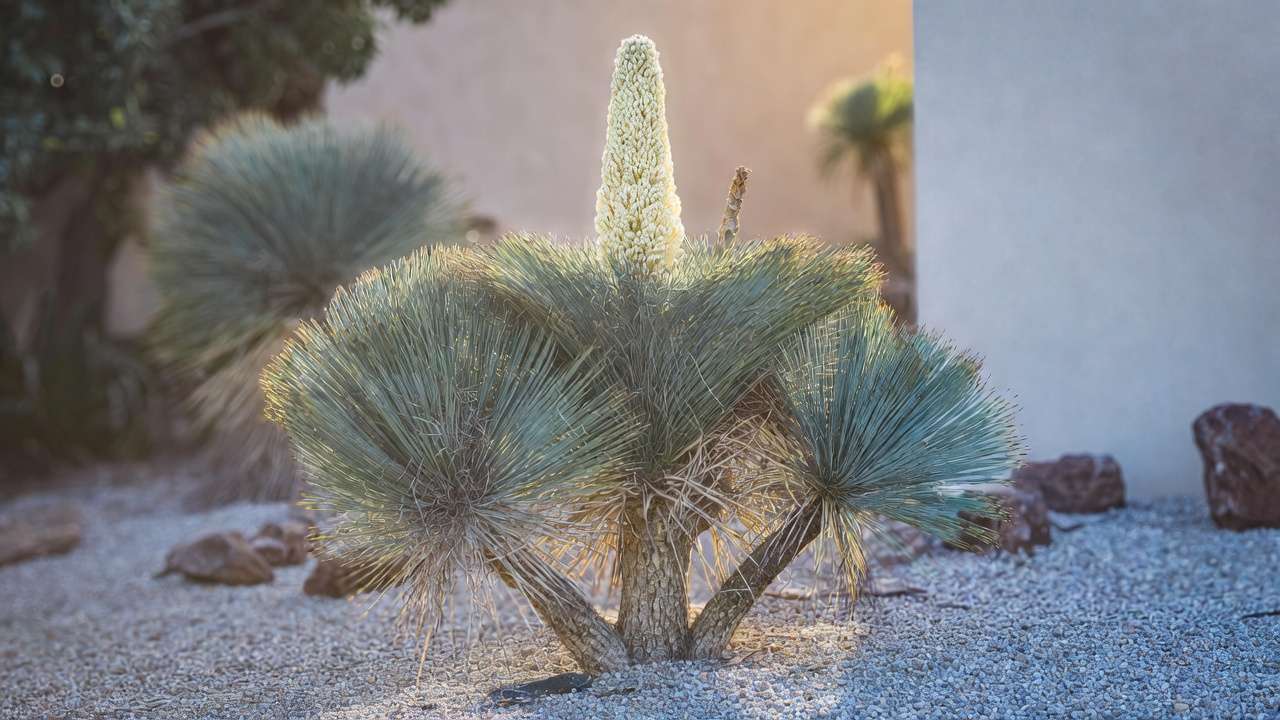
Agave Basics
Agaves form symmetrical rosettes with thick, sword-like leaves edged in teeth or spines. Sizes range from compact 1-2 ft dwarfs to massive 6-10+ ft giants. Most are monocarpic—they bloom spectacularly once after 10-30+ years, then die—but produce offsets (“pups”) to continue the display.
Yucca Basics
Yuccas feature rigid, sword-shaped leaves in rosettes or emerging tree-like trunks. They’re more reliable bloomers, sending up tall spikes of bell-shaped white flowers pollinated by yucca moths. Many are cold-hardy and form woody stems over time.
Both love full sun (6+ hours) and excellent drainage to prevent root rot—essential in any landscape.
Best Varieties for Landscaping (with Pros/Cons) 🌟
- Agave ‘Blue Glow’ – Compact (2-3 ft), glowing blue-green leaves with red-gold edges; stunning focal point, cold-hardy to zone 8 ❄️
- Agave parryi (Artichoke Agave) – Hardy, globe-shaped rosette; thrives in poor soil, great for colder xeriscapes.
- Agave americana – Classic giant with bold blue-gray leaves; use sparingly as a dramatic specimen (spreads via pups).
- Yucca rostrata (Blue Beaked Yucca) – Tree-form (up to 10-15 ft) with a pom-pom head of thin blue leaves; elegant vertical accent.
- Yucca filamentosa (Adam’s Needle) – Cold-hardy (zone 4+), thread-like leaf edges; reliable bloomer, perfect for borders.
- Hesperaloe parvifolia (Red Yucca) – Grass-like with coral-pink blooms; not a true yucca but excellent for color pops 🔥
Choose based on your space—compact for small yards, tree-like for drama.

(Here are some beautiful examples of Agave ‘Blue Glow’ in garden settings—notice the glowing edges against mulch! ✨)
Top Agave and Yucca Landscaping Ideas (Core Inspiration) 🎨
These designs solve real problems like boring lawns, erosion on slopes, or lack of curb appeal while staying low-water and low-effort.
1. Classic Xeriscape Rock Garden Design
Layer large agaves as focal points amid gravel mulch, boulders, and smaller yuccas. Add paths of decomposed granite for easy access. This creates a natural, textured look that suppresses weeds beautifully.
(These xeriscape examples show how rocks + agave/yucca create lush yet water-wise beauty! 🌵)
2. Modern Front Yard Curb Appeal
Plant symmetrical Agave ‘Blue Glow’ or Yucca rostrata flanking your entryway. Use gravel paths, subtle uplighting for nighttime drama, and minimal hardscaping. This boosts property value with clean, architectural lines.
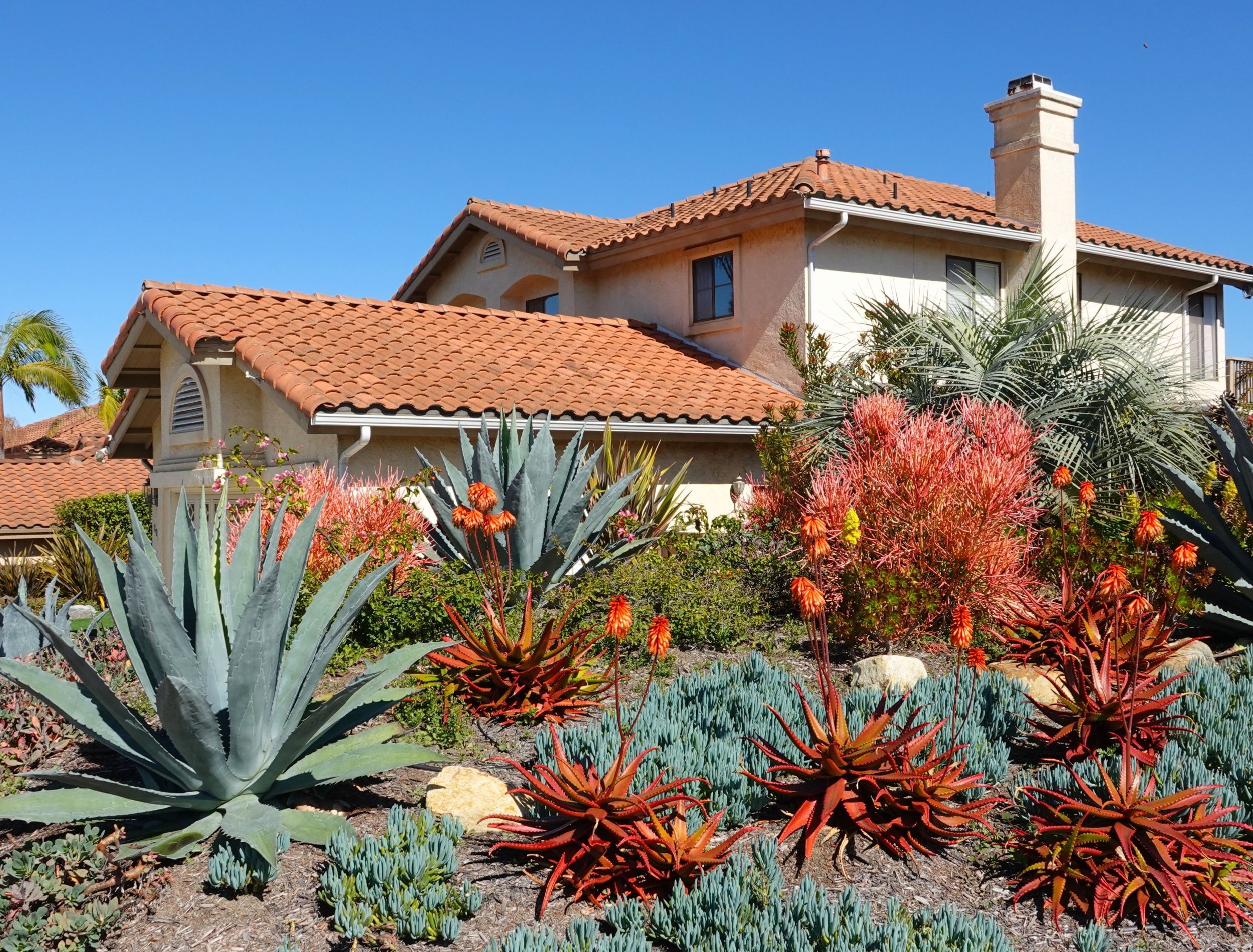
3. Container Drama on Patios or Balconies
Use large pots for a single specimen agave or mixed yucca with trailing succulents. Perfect for small spaces or renters—move them for protection in marginal climates.
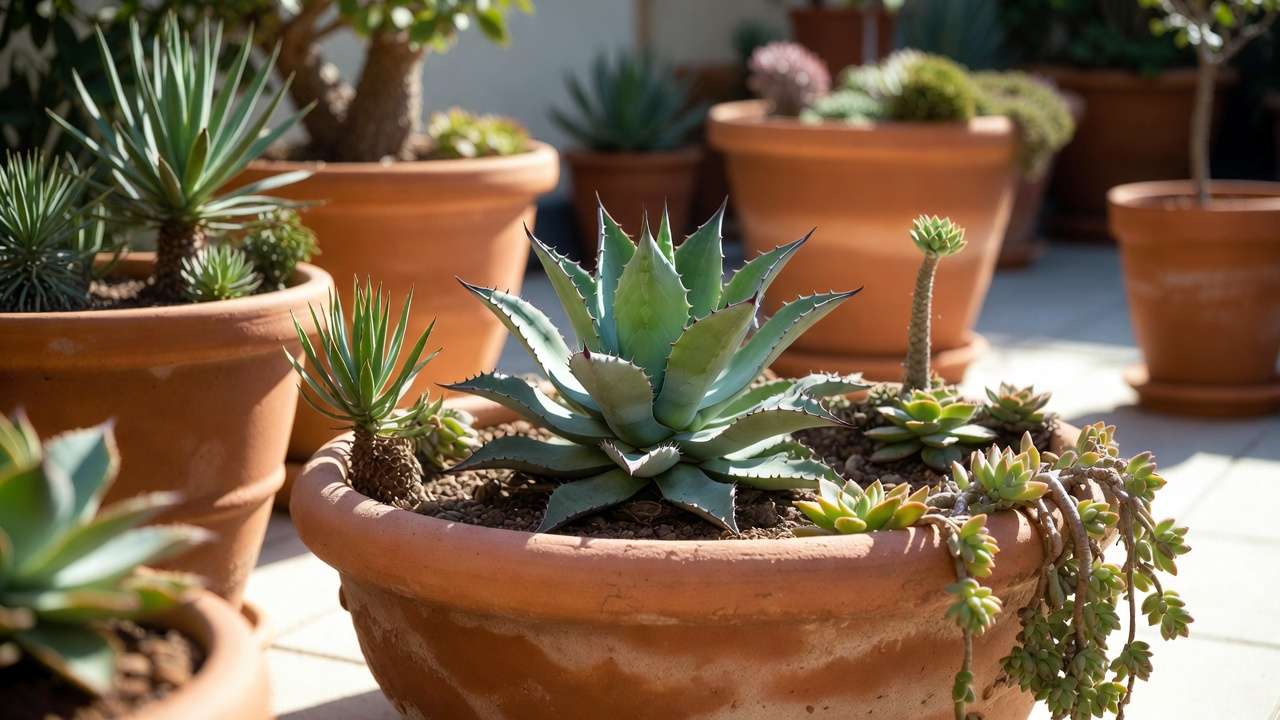
4. Slope Stabilization & Erosion Control
Mass tough yuccas (like filamentosa) and agaves to hold soil on hillsides. Their deep roots prevent erosion while adding visual interest.
5. Desert Oasis with Color Pops
Pair red yucca blooms with purple salvias, lavenders, or penstemon for vibrant accents against silvery agaves.
6. Minimalist Monochrome Garden
Focus on blue-silver tones: Agave ‘Blue Glow’, Yucca rostrata, and blue fescue grasses for serene, cool elegance.
7. Tropical-Desert Fusion (for Warmer Zones)
Blend with palms, bird of paradise, or aloes for exotic flair—great for subtropical areas with drainage tweaks.
Best Companion Plants to Pair with Agave and Yucca 🌿
Enhance contrast and texture without adding water needs:
- Groundcovers → Sedum, ice plant (Delosperma), trailing lantana.
- Grasses → Blue fescue, muhly grass, fountain grass for movement.
- Flowering Accents → Salvia, penstemon, gaura, red hot poker.
- Other Succulents → Echeveria, aloe, prickly pear (Opuntia).
- Avoid → Thirsty turf or annuals—stick to drought-lovers for harmony.
These combos create layered, pollinator-friendly gardens.
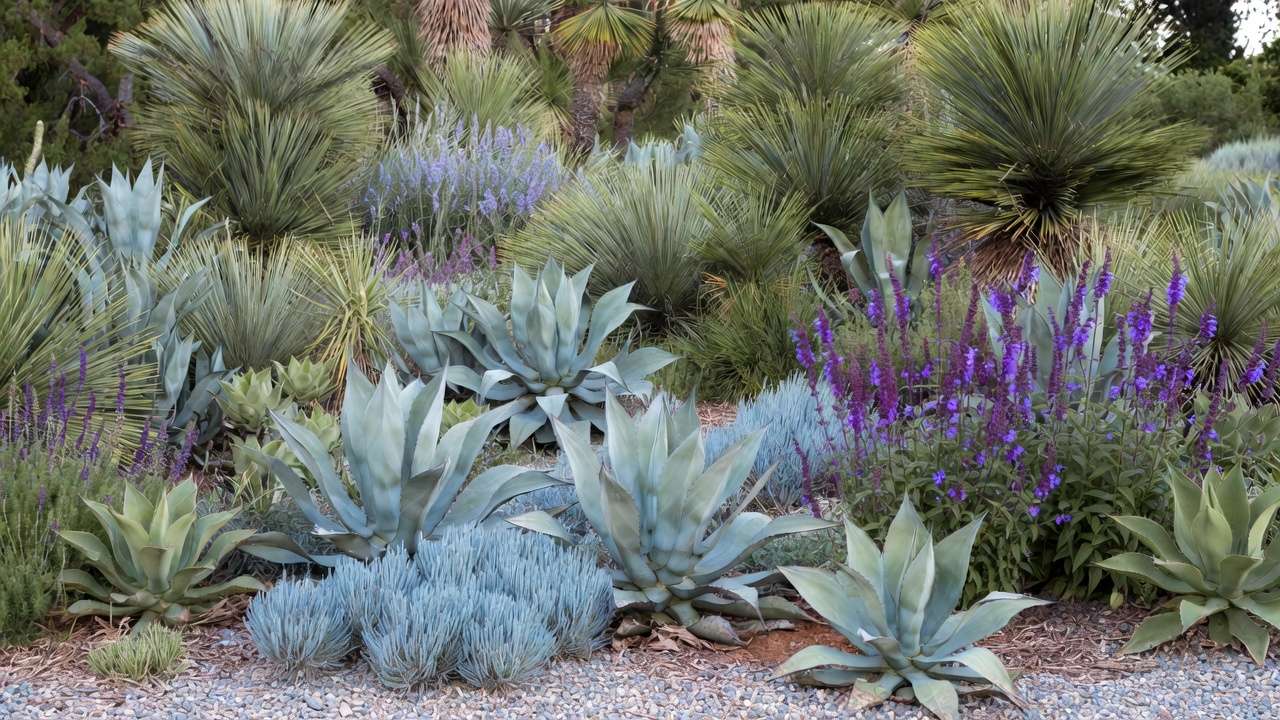
Design Principles for Stunning Results (Expert Tips) ⚖️
Creating a cohesive, professional-looking landscape with agave and yucca isn’t just about planting randomly. These principles—drawn from years of designing and maintaining drought-tolerant gardens—help you achieve that magazine-worthy look while keeping everything functional and safe.
- Scale & Proportion Always consider mature size. Place massive Agave americana or Yucca rostrata toward the back or as a single dramatic centerpiece. Use compact varieties like Agave ‘Blue Glow’ or Yucca filamentosa in the foreground or along borders. This creates depth and prevents the garden from feeling crowded or unbalanced.
- Texture Contrast The spiky, rigid texture of agave and yucca shines when played against softer elements. Pair them with fine-textured blue fescue grass, feathery muhly grass, or round boulders. This contrast makes every plant pop visually.
- Color Harmony Lean into the natural palette: silvery-blues, gray-greens, and subtle golds. Warm-toned decomposed granite or river rock mulch enhances the cool tones of ‘Blue Glow’ and rostrata. For subtle pops, introduce red yucca flowers or golden barrel cacti nearby.
- Spacing & Safety Give plants plenty of room—agaves can spread 6–10 ft wide! Keep sharp-tipped varieties at least 3–4 ft from walkways, patios, and play areas (especially important for families with kids or pets 🐶👶). Plant smaller, softer yuccas closer to paths.
- Focal Points & Odd-Number Grouping Use specimens in groups of 3, 5, or 7 for a natural, dynamic feel. One large Yucca rostrata rising above low agaves creates instant drama. Repeat this pattern in different areas for rhythm.
- Mulch Magic Skip organic mulch (it holds too much moisture). Use inorganic options: decomposed granite, crushed lava rock, river pebbles, or gravel in 2–3 inch layers. These suppress weeds, retain soil temperature, improve drainage, and tie the whole design together beautifully.
Pro Tip: Sketch your plan on graph paper first (or use free apps like Garden Planner). Mark mature sizes—this prevents the #1 mistake I see: plants planted too close together.
Planting and Care Guide: Step-by-Step Success 🌱
Success with agave and yucca is 90% about the right start and then stepping back.
Site Selection & Soil Prep
- Choose full sun (minimum 6 hours; more is better).
- Drainage is non-negotiable—standing water kills faster than drought.
- In heavy clay or humid climates (like parts of Khulna), build raised beds or mounds 12–18 inches high and mix in 50% coarse sand or gravel.
- Ideal pH: 6.0–8.0 (most are very forgiving).
How to Plant Agave and Yucca
- Dig a hole 2–3 times wider than the root ball, but only as deep as the nursery pot.
- Gently remove from pot; tease apart circling roots if needed.
- Set at the same soil level (crown should never be buried).
- Backfill with native soil mixed with gravel if needed—no rich compost!
- Water deeply once to settle soil, then wait—overwatering at planting is the #1 killer.
Watering & Maintenance Schedule
- First month: Water deeply every 5–7 days (more in extreme heat).
- Months 2–6: Every 10–14 days.
- Established (Year 2+): Only during prolonged dry spells (every 3–6 weeks max). Many survive on rainfall alone after year 2.
- Fertilizer: Almost never needed. If growth is slow, use a low-nitrogen cactus fertilizer once in spring.
- Pruning: Remove only dead or damaged lower leaves with clean, sharp pruners. Cut spent yucca flower stalks to the base after blooming. For agaves, leave the dead mother plant—it becomes a sculptural element while pups grow.
Common Problems & Solutions
- Root rot → Improve drainage immediately; remove affected plants if severe.
- Agave weevil → Look for chewed leaves; treat with beneficial nematodes or systemic insecticide (rare in most regions).
- Mealybugs/scale → Wipe with alcohol-soaked cotton or use horticultural oil.
- Cold damage (in marginal zones) → Wrap in frost cloth or mulch heavily around base during rare freezes.
- Sunburn on new plants → Acclimate gradually if moving from shade.
Real-World Examples & Case Studies 📸
- Southwest US Front Yard Transformation Before: Thirsty lawn, high water bills. After: Gravel base, three Agave ‘Blue Glow’ as anchors, Yucca rostrata as vertical accents, red yucca for color, blue fescue filling gaps. Result: 70% less water use, compliments from neighbors every week.
- Small Urban Patio in a Hot Climate Two large terracotta pots: one with Agave parryi, one with mixed Yucca filamentosa and trailing sedum. Low-cost, movable, dramatic focal point.
- Sloped Hillside in Subtropical Zone Mass planting of Yucca filamentosa and smaller agaves stabilized soil, eliminated erosion, and created a low-care “wild” look that thrives even with seasonal humidity.
(These transformations prove that thoughtful placement and patience yield stunning, sustainable results.)
Frequently Asked Questions (FAQs) ❓
Are agave and yucca safe around pets and kids? Most have sharp tips—place carefully away from paths and play zones. Yucca filamentosa is softer. The sap can irritate skin; wear gloves when handling.
How fast do they grow? Slowly! Most agaves add only 3–6 inches per year; yuccas slightly faster. Patience pays off—mature specimens are worth the wait.
Can they survive in humid climates like Bangladesh? Yes, with excellent drainage. Use raised beds, sandy soil mix, and avoid overhead watering. Many gardeners in humid subtropical zones succeed beautifully.
What if my agave blooms and dies? Normal behavior (monocarpic). Enjoy the massive flower stalk—it attracts pollinators—then let pups take over. You’ll have free new plants!
Best time to plant? Spring or early fall when temperatures are moderate. Avoid peak summer heat.
Conclusion: Start Your Low-Maintenance Paradise Today! 🌟
Agave and yucca aren’t just trendy—they’re intelligent, beautiful answers to modern landscaping challenges: water scarcity, time poverty, and the desire for striking, year-round beauty. With these agave and yucca landscaping ideas, you can create a resilient, low-effort garden that looks intentional and luxurious with minimal ongoing work.
Start small: Pick one focal plant (maybe a stunning Yucca rostrata or Agave ‘Blue Glow’), add gravel mulch, and build from there. You’ll be amazed how quickly it transforms your space.
Which variety or design style excites you most? Drop a comment below—I’d love to hear your plans and answer any questions! 👇🌿











