
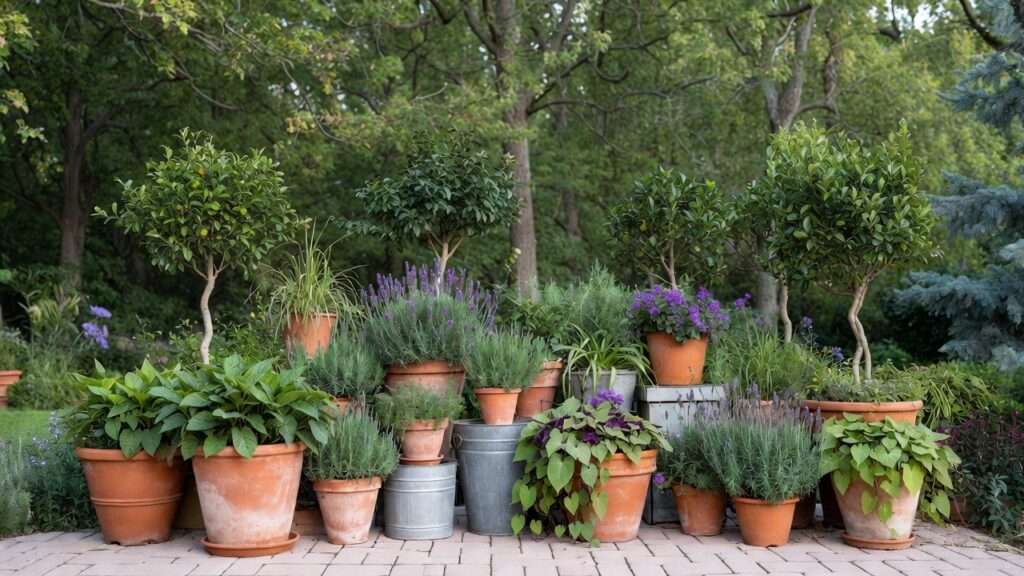
Imagine stepping onto your patio and feeling like you’ve entered a lush, professionally designed garden oasis — all without turning a single shovel of soil or battling poor ground conditions. Many plant enthusiasts, especially those passionate about tree care and plant nurturing, end up with scattered pots that feel disjointed and uninspiring. The good news? By mastering the art of arranging multiple containers for landscape effect (often called potscaping), you can create depth, balance, focal points, and seamless flow that rivals any in-ground landscape. This guide draws from years of horticultural experience to help you solve common frustrations like limited space, seasonal blandness, or random-looking displays. Whether you have a small balcony in a tropical climate like Bangladesh or a larger patio, these practical, expert-backed strategies will elevate your outdoor space into a year-round haven of beauty and plant health. 🌱💚
Why Arranging Containers Beats Traditional Planting 🌳
Container gardening isn’t just a workaround — it’s often superior for modern lifestyles. Here’s why grouping pots strategically delivers real landscape-level impact:
- Overcomes challenging conditions — Poor soil drainage, compacted earth, or urban concrete? Pots let you control soil quality perfectly with premium mixes.
- Maximum flexibility — Move containers to chase sun, protect tender trees from wind, or refresh seasonal displays instantly.
- Instant layering and structure — Mimic natural garden depth with tall trees/shrubs as anchors, bushy fillers, and cascading spillers — creating privacy screens, borders, or cozy nooks.
- Year-round interest — Rotate plants for continuous color, texture, and even edibles, enhancing your tree care efforts by integrating potted dwarfs or companions.
- Boosts enjoyment and curb appeal — Well-grouped pots turn bland patios into inviting outdoor rooms, perfect for relaxation or entertaining.
From my experience working with countless home gardeners, intentional groupings transform “just pots” into cohesive “potscapes” that feel intentional and professional — far more satisfying than isolated containers. 🌸
:strip_icc()/mix-and-match-container-garden-d26db11167834a45af793a3f445083fa.jpg)
Understanding Core Design Principles for Stunning Groupings 🎨
Great potscaping relies on timeless principles borrowed from landscape design. Apply these to make your arrangements look effortless and polished.
The Power of Height, Layering, and Depth 📏
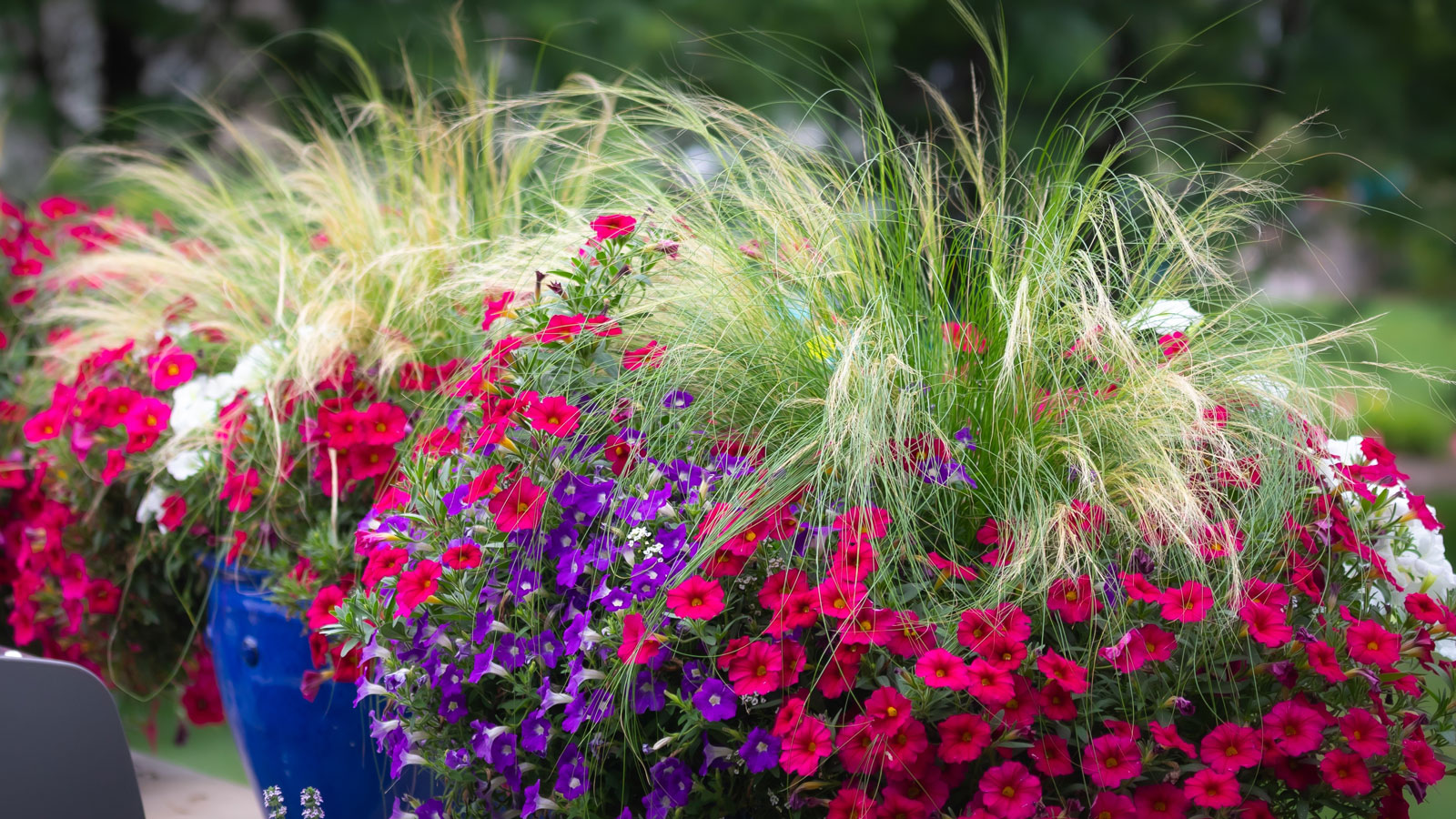
Create visual drama by varying heights — think thriller (tall focal plants), filler (medium bushy), and spiller (trailing over edges). This mimics natural garden layering:
- Place tallest pots at the back or center.
- Medium in front/middle for smooth transitions.
- Low spillers soften edges and guide the eye forward.
This technique adds perceived depth, making small spaces feel larger and expansive areas more intimate.
Odd-Number Grouping Rule (3, 5, 7+) 🔢
Odd numbers create natural, dynamic asymmetry that’s more pleasing to the eye than rigid even groupings. Start with three pots for beginners — one tall thriller flanked by two complementary ones — then scale up for bigger impact.
Balance and Focal Points ⚖️
- Symmetrical balance suits formal entries (matching pairs framing doors).
- Asymmetrical balance feels casual and organic (perfect for patios). Always designate a dominant focal point — a striking tall pot or colorful plant — to anchor the group.
Color, Texture, and Repetition Harmony 🎨
- Repeat 2–3 key colors or plants across pots for unity.
- Mix textures: fine grasses vs. bold foliage for contrast.
- Coordinate pot materials (terracotta for warmth, modern ceramics for sleekness) with your home’s style.
These principles ensure your display feels cohesive, not chaotic.
Step-by-Step: How to Arrange Your Containers Like a Pro 🛠️
Follow this proven process for foolproof, beautiful results every time.
- Assess Your Space and Needs Measure the area, note sun exposure (full sun, partial shade?), wind, and purpose — privacy screen, colorful focal point, edible herbs near seating, or tree companion planting?
- Select the Right Containers Vary sizes for interest but keep materials cohesive (e.g., all terracotta or glazed). Always include drainage holes + saucers to prevent root rot. Opt for weather-resistant pots in hot, humid climates.
- Choose Plants for Long-Lasting Impact Use the thriller-filler-spiller formula:
- Thrillers — Upright stars like dwarf Japanese maple, bay laurel, or canna for height and drama.
- Fillers — Bushy mid-level plants like lavender, geraniums, coleus, or calibrachoa.
- Spillers — Trailing beauties like ivy, petunias, sweet potato vine, or lobelia to cascade softly.
- Create Your Layout Start with the tallest/back pots, build forward in layers. Step back frequently to check viewing angles from seating areas or pathways.
- Plant and Position Fill with high-quality potting mix + slow-release fertilizer. Group pots closely at first for instant fullness, then adjust as plants grow. Elevate smaller ones on bricks for added height variation.
This method ensures healthy roots, good airflow, and stunning visual flow.
Popular Arrangement Styles and Ideas for Every Space 🌟
Once you understand the core principles, it’s time to get inspired! Here are proven styles tailored to different spaces and lifestyles. These draw from real garden designs I’ve observed and helped implement over the years — each one solves a specific pain point while delivering maximum landscape effect.
Patio and Deck Groupings 🏡
Patios often feel flat and empty. Create cozy “outdoor rooms” by clustering pots in corners or along railings:
- Form a triangular vignette: one tall thriller (like a potted olive or dwarf citrus tree) at the back, two medium fillers on either side, and spillers draping forward.
- Use odd-number clusters (5 or 7 pots) near seating areas to frame conversation zones.
- Pro tip: Position groups so the tallest elements align with doorways or windows — this visually connects indoor and outdoor living.
Real example: A client in a humid subtropical climate turned a bare concrete patio into a lush retreat by grouping terracotta pots with bird of paradise (thriller), calibrachoa (spiller), and coleus (filler). The result? A private, tropical-feeling nook that felt twice as large.
Balcony and Small-Space Magic 🌆
Limited square footage? Vertical thinking is key.
- Tiered plant stands or stepped risers create instant height variation without taking floor space.
- Combine wall-mounted planters, hanging baskets, and floor pots for multi-level interest.
- Corner groupings work wonders: place the tallest pot in the corner, angle medium pots outward, and let spillers cascade over railings.
In tiny urban balconies (common in cities across Bangladesh and beyond), repeating the same plant variety in different-sized pots creates a unified look that feels intentional rather than cramped.
Entryway and Pathway Drama 🚪
Make a memorable first impression.
- Symmetrical pairs of matching large pots with structured evergreens (boxwood spirals or standard bay trees) flank front doors.
- Line pathways with graduated groupings — tallest at the entrance, gradually lowering toward the house.
- Add a single dramatic focal pot (perhaps a colorful ceramic with a striking agave or phormium) at path ends to draw the eye.
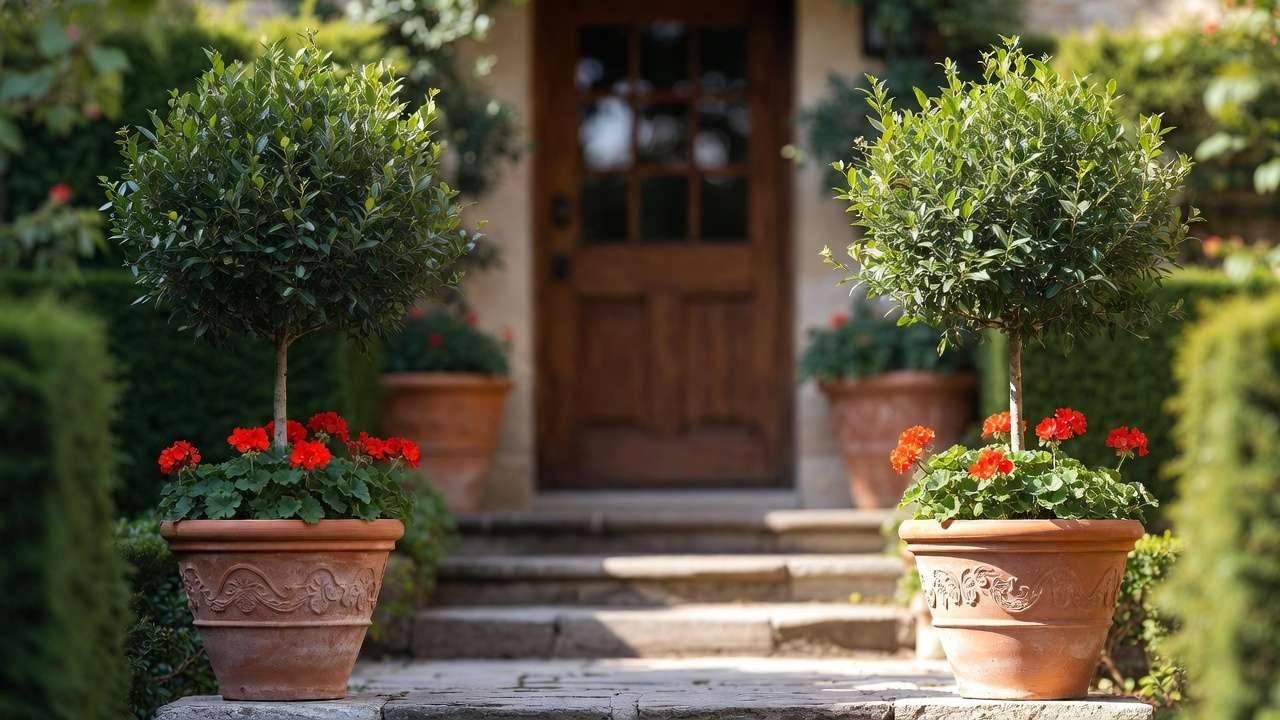
This style instantly boosts curb appeal and gives even modest homes a polished, landscaped feel.
Hiding Eyesores or Creating Privacy 🛡️
Containers excel at strategic screening.
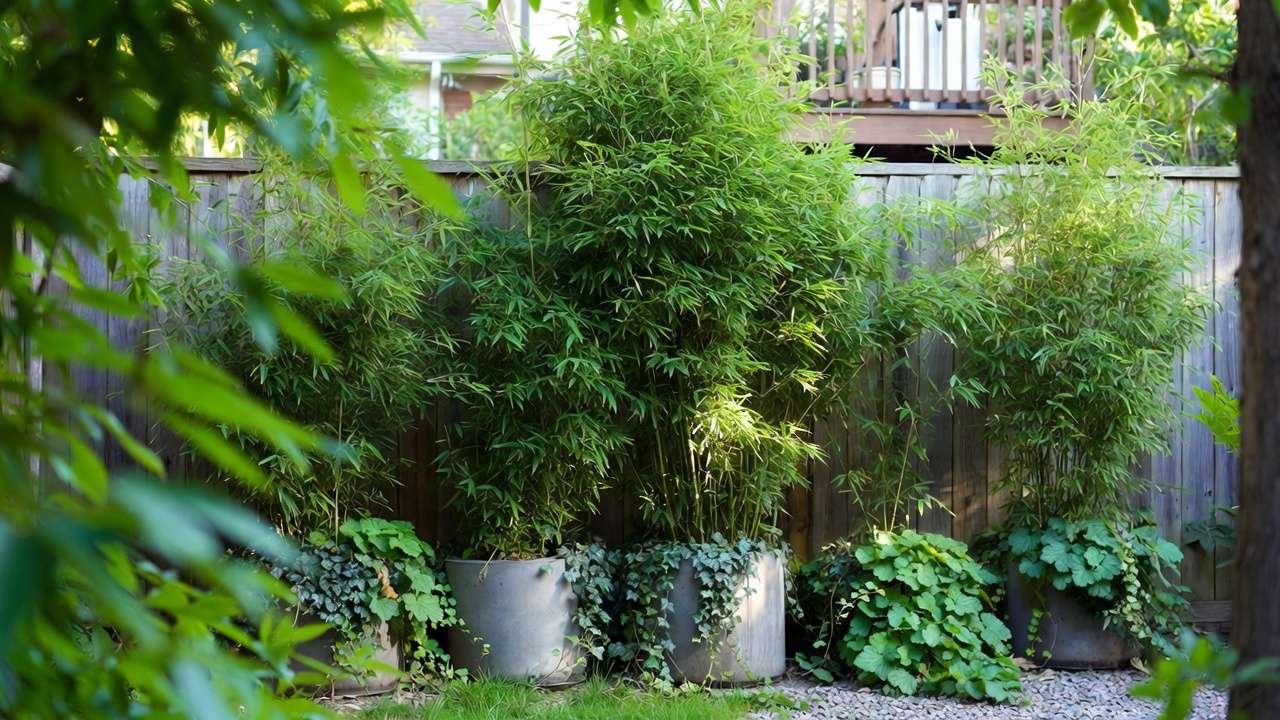
- Line fences or neighboring view lines with tall, narrow pots containing bamboo (Fargesia for non-invasive clumping), arborvitae, or skyrocket juniper.
- Layer 3–5 pots of varying heights in front of utility boxes, AC units, or bare walls — the staggered heights hide imperfections while adding greenery.
- Combine with trellised vines (clematis, jasmine) in medium pots for added height and fragrance.
Many gardeners use this technique to transform “problem corners” into assets rather than eyesores.
Seasonal Showcase Ideas 🍂❄️
Keep your display dynamic all year:
- Spring 🌷 — Early bulbs (tulips, daffodils) mixed with pansies and emerging perennials.
- Summer ☀️ — Vibrant tropicals (canna, mandevilla), heat-loving annuals, and bold foliage.
- Fall 🍁 — Ornamental grasses, chrysanthemums, dwarf maples for fiery color.
- Winter ❄️ — Evergreen structure (dwarf conifers, holly), berries (skimmia, winterberry), and textured bark interest.
Rotate pots seasonally or swap out annuals while keeping woody perennials and small trees as anchors — this keeps maintenance manageable and interest high.
Plant Recommendations for Tree and Plant Care Lovers 🌲
As someone deeply passionate about tree and plant health, I always recommend selections that thrive in containers long-term and complement in-ground trees and shrubs.
Thriller Anchors (Height & Structure):
- Dwarf fruit trees: Meyer lemon, fig ‘Little Ruby’, or olive — edible and sculptural.
- Small ornamental trees: Japanese maple (Acer palmatum ‘Sharps Pygmy’), crepe myrtle dwarf varieties.
- Columnar evergreens: ‘Emerald Green’ arborvitae, Italian cypress (for narrow spaces).
Filler Plants (Mid-Level Fullness):
- Lavender, rosemary, salvia — fragrant and pollinator-friendly.
- Geraniums, pentas, lantana — long-blooming color in sunny spots.
- Hostas, heuchera, ferns — lush texture for shade.
Spiller & Trailing Stars:
- Sweet potato vine, million bells (calibrachoa), bacopa.
- English ivy, vinca, creeping Jenny — excellent for softening edges.
- Strawberries or alpine strawberries — edible spillers for fun!
Pro Expert Insight: Repeat 2–3 signature plants across multiple groupings (e.g., the same lavender variety in three pots) to tie the entire space together visually — a trick professional landscape designers use constantly. Choose natives or well-adapted varieties for your region to reduce water and maintenance needs while supporting local pollinators.
Maintenance Tips to Keep Your Display Thriving 💧🪴
Healthy, vibrant container groupings don’t happen by accident — they require thoughtful, consistent care tailored to the unique challenges of potted plants. Here are the most important practices I share with clients to ensure long-term success.
Watering Wisely Containers dry out much faster than ground soil, especially in warm, windy, or sunny conditions common in regions like Barisal Division.
- Water deeply until it runs out the drainage holes — this encourages strong root growth.
- Check soil moisture daily in summer (stick your finger 2–3 inches down); water when the top inch feels dry.
- Use the “lift test”: a pot feels noticeably lighter when it needs water.
- Morning watering is best — it gives foliage time to dry and reduces fungal risk.
- Consider self-watering pots or ollas (buried clay vessels) for vacation-proofing or very hot spells.
Fertilizing for Container Success Nutrients leach quickly from pots, so regular feeding is non-negotiable.
- Apply a balanced, slow-release granular fertilizer at planting (follow label rates).
- Supplement with liquid fertilizer (half-strength) every 2–4 weeks during active growth (spring–fall).
- For edible plants and fruiting trees, choose formulas higher in potassium and phosphorus (e.g., bloom boosters).
- Flush pots with plain water monthly to prevent salt buildup, especially if using tap water.
Pruning, Deadheading & Shaping Regular grooming keeps plants compact, encourages reblooming, and maintains the layered look.
- Pinch back annuals and perennials early for bushier growth.
- Deadhead spent flowers (geraniums, petunias, calibrachoa) to promote continuous blooming.
- Prune small trees and shrubs lightly in late winter/early spring to maintain shape and size suitable for containers.
- Remove yellowing or diseased leaves promptly to prevent spread.
Pest & Disease Prevention in Close Groupings Tight groupings improve aesthetics but can increase humidity and pest pressure.
- Inspect weekly — look for aphids, spider mites, whiteflies, or fungal spots.
- Promote airflow by not overcrowding pots too tightly once plants mature.
- Use neem oil, insecticidal soap, or horticultural oil as first-line organic treatments.
- Avoid overhead watering in the evening to reduce powdery mildew risk.
- Introduce beneficial insects (ladybugs, lacewings) if you notice aphid outbreaks.
Winter Protection Strategies (Especially Relevant for Mild-Winter Climates) Even in areas with light frosts, containers are more vulnerable because roots are exposed above ground.
- Move tender plants (citrus, tropicals) to a sheltered spot or indoors near bright light.
- Group pots together against a south-facing wall for shared warmth.
- Wrap pots in bubble wrap, burlap, or horticultural fleece; mulch the soil surface heavily.
- Elevate pots slightly off the ground (on pot feet or bricks) to improve drainage and reduce freezing risk.
Following these routines turns container gardening from high-maintenance to surprisingly sustainable — many of my clients report their potscapes looking better in year 3 than in year 1.
Common Mistakes to Avoid ❌
Even experienced gardeners slip up sometimes. Here are the pitfalls I see most often — and how to sidestep them:
- Overcrowding without airflow → Leads to fungal diseases and weak growth. Leave breathing room between mature plants.
- Ignoring individual light needs → Sun-lovers next to shade-lovers = one thrives, one suffers. Group by similar requirements.
- Flat, uniform heights → Creates a boring, one-dimensional look. Always vary height dramatically.
- Skipping drainage → Root rot is the #1 killer of container plants. Never plant in pots without holes.
- Random, unplanned placement → Results in a “thrown-together” appearance. Always design with viewing angles in mind.
- Forgetting to rotate pots → Plants lean toward light; give them a quarter-turn every week or two for even growth.
Avoid these, and your groupings will stay healthy and gorgeous season after season.
Real-Life Examples and Inspiration 📸
- The “Cozy Corner Retreat” Before: Empty patio corner collecting leaves. After: Five terracotta pots arranged in an arc — tall potted fig tree as thriller, lavender and rosemary fillers, trailing sweet potato vine spillers. Added solar string lights woven through. Result: A private reading nook that feels like a secret garden.
- The “Tiny Balcony Transformation” Before: Three mismatched pots scattered haphazardly. After: Tiered metal stand with matching black glazed pots — columnar juniper at the top, cascading petunias and calibrachoa below, dwarf lemon in the middle. Instant vertical jungle vibe in under 4 square feet.
- The “Privacy Screen Solution” Before: Neighbor’s view directly into seating area. After: Seven large fiberglass pots along the fence line with clumping bamboo, underplanted with heuchera and ivy. Created a lush green wall that blocks sightlines while adding soft rustling sounds.
- The “Four-Season Entryway” Before: Bare concrete steps. After: Symmetrical pairs of large pots — winter: dwarf Alberta spruce + red-berried skimmia; spring: tulips + violas; summer: standard bay trees + geraniums; fall: ornamental grasses + mums. Always elegant, never boring.
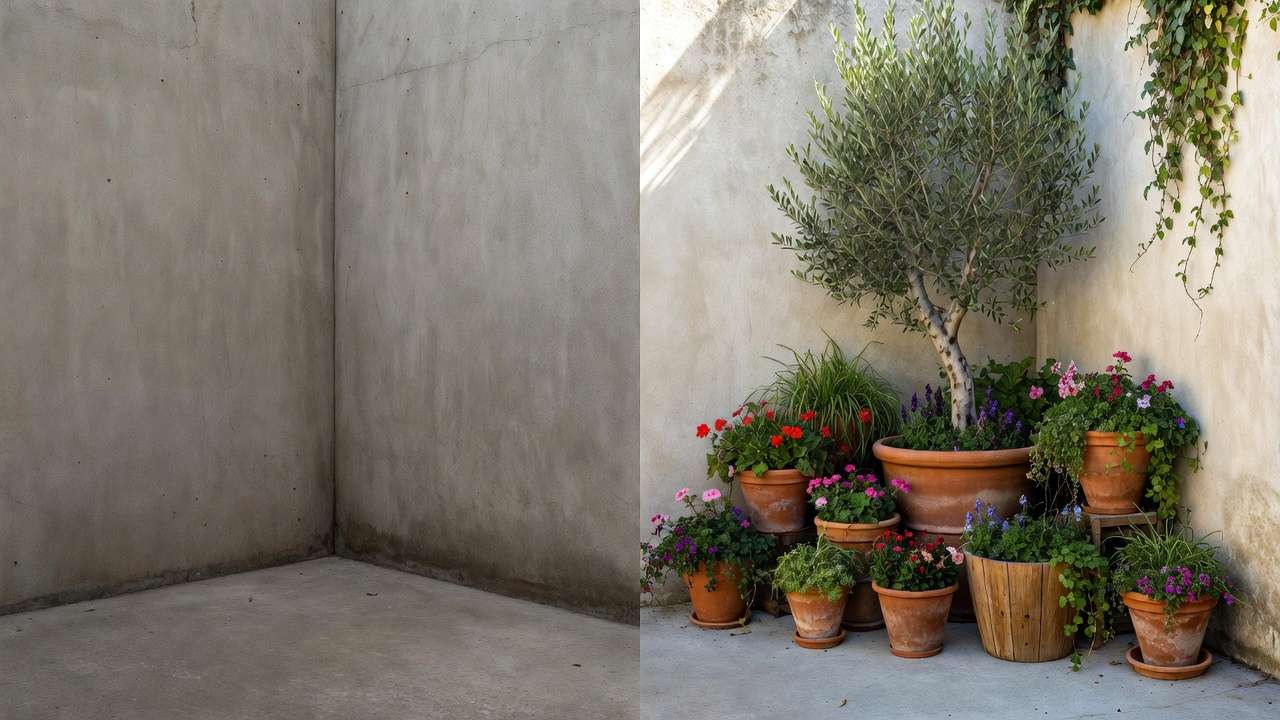
These real transformations prove that thoughtful container arrangements can solve almost any outdoor space challenge.
Frequently Asked Questions ❓
How many pots should I start with? Three is perfect for beginners — one thriller, two supporting pots. Scale to five or seven once you’re comfortable.
Can I mix edibles with ornamentals? Absolutely! Dwarf citrus, herbs (basil, thyme), strawberries, and leafy greens blend beautifully with flowers and foliage for both beauty and harvest.
What if my space is very shady? Focus on shade-tolerant thrillers (Japanese maple, tree fern), fillers (hostas, heuchera, impatiens), and spillers (torenia, begonias, ivy). Texture and foliage color become your stars.
How do I transition arrangements seasonally? Keep woody perennials and small trees as anchors. Swap out annuals and tender perennials twice a year (spring and fall). Store bulbs and tubers for reuse.
Best pots for hot, humid climates? Light-colored glazed or fiberglass pots reflect heat better than dark terracotta. Ensure excellent drainage and consider self-watering options.
Conclusion: Start Your Potscaping Journey Today! 🚀
Arranging multiple containers for landscape effect is one of the most rewarding ways to enjoy gardening — especially when space, soil, or time is limited. You gain design flexibility, healthier plants through better control, and an ever-evolving outdoor canvas that reflects your personal style and love for trees and plants.
Start small: pick a corner, gather three pots, apply the thriller-filler-spiller formula, and watch the magic happen. Then expand, experiment, and refine. Your patio, balcony, or garden will thank you with beauty, tranquility, and fresh joy every single day.
I’d love to hear about your own potscaping projects — drop a comment with your before/after story or your biggest takeaway from this guide. Happy arranging! 🌿💚🌱











