
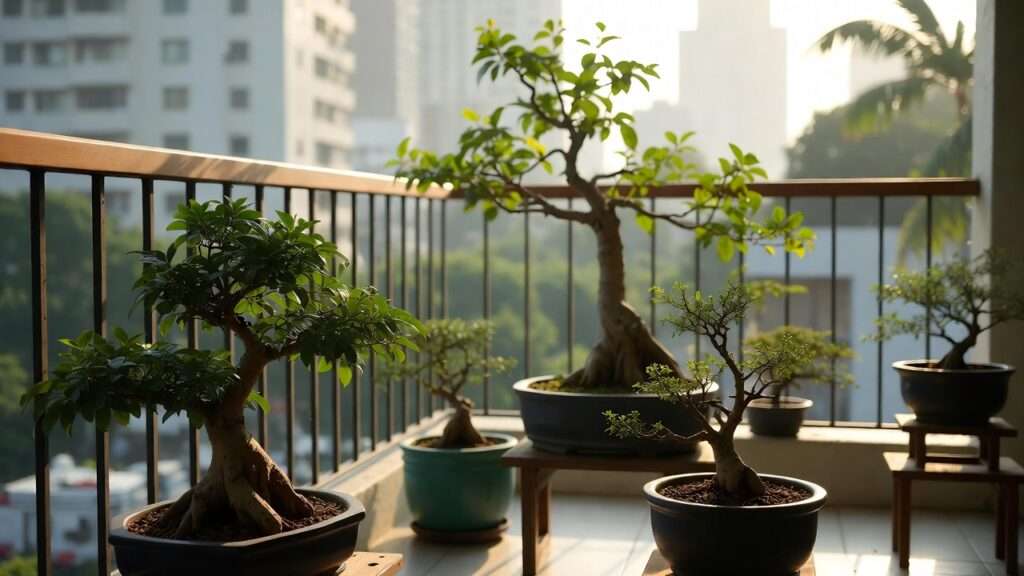
Imagine stepping onto your tiny urban balcony in Dhaka and being greeted by a miniature ancient tree — twisted branches, delicate leaves, and a sense of calm that makes city chaos fade away. 🌆🌳 Many apartment dwellers dream of this zen oasis, but without proper balcony bonsai care tips, that dream can turn into frustration: scorched foliage from intense tropical sun, wind-dried roots, or root rot after heavy monsoons.
If you’re a beginner or space-limited gardener searching for balcony bonsai care tips, you’re in the right place. This comprehensive guide draws from over a decade of hands-on experience nurturing bonsai on high-rise balconies in hot, humid climates like Bangladesh — dealing with 35°C+ summers, sudden downpours, and variable light. We’ll cover everything from species selection to seasonal protection, so your small-space bonsai not only survives but truly thrives year-round. Let’s turn your balcony into a living masterpiece! 🍃
Why Balconies Are Perfect (Yet Challenging) for Bonsai 🌤️
Balconies offer fantastic advantages for bonsai enthusiasts: natural sunlight cycles, fresh air circulation, and exposure to seasonal changes that many indoor setups lack. Outdoor humidity and temperature fluctuations help temperate species develop vibrant colors and dense branching.
However, balconies create unique microclimates that can stress trees:
- Intense reflected heat from concrete walls/floors
- Strong winds whipping through high-rises
- Uneven sunlight (one side blazing, the other shaded)
- Limited drainage options without annoying neighbors below
- Rapid drying due to elevated exposure and urban heat islands
Quick microclimate checklist:
- Note your balcony’s direction (south-facing = full sun; north = dappled shade)
- Check wind strength (gentle breeze or gale-force?)
- Observe sun hours (use a phone app or simple observation)
- Test soil moisture daily for a week to understand drying speed
Mastering these factors is the foundation of successful balcony bonsai care.

Choosing the Best Bonsai Species for Balcony Life 🌱🔝
Not all bonsai are created equal for balcony conditions — especially in hot, humid subtropical climates. Prioritize hardy, sun-tolerant species that handle wind and heat stress.
Here are top recommendations (with pros/cons):
- Juniper (Juniperus procumbens ‘Nana’ or similar) 🌲 Pros: Extremely tough, loves full sun, drought-resistant once established, classic bonsai look. Cons: Needs excellent drainage; can suffer indoors long-term. Ideal for: Sunny balconies with good airflow.

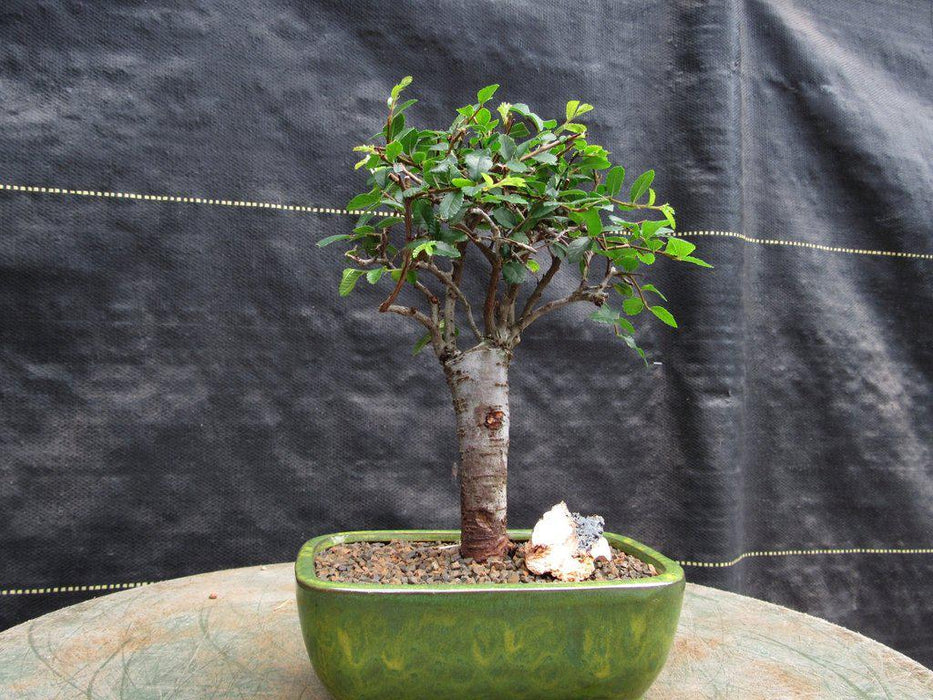
- Chinese Elm (Ulmus parvifolia) 🍃 Pros: Forgiving for beginners, fast-growing, tolerates pruning mistakes, semi-deciduous in cooler months. Cons: Can drop leaves if stressed (recovers quickly). Ideal for: Variable light and humidity.
- Olive (Olea europaea) Pros: Heat- and drought-tolerant, Mediterranean vibe, small leaves for refinement. Cons: Slower growth; needs protection from heavy rain.
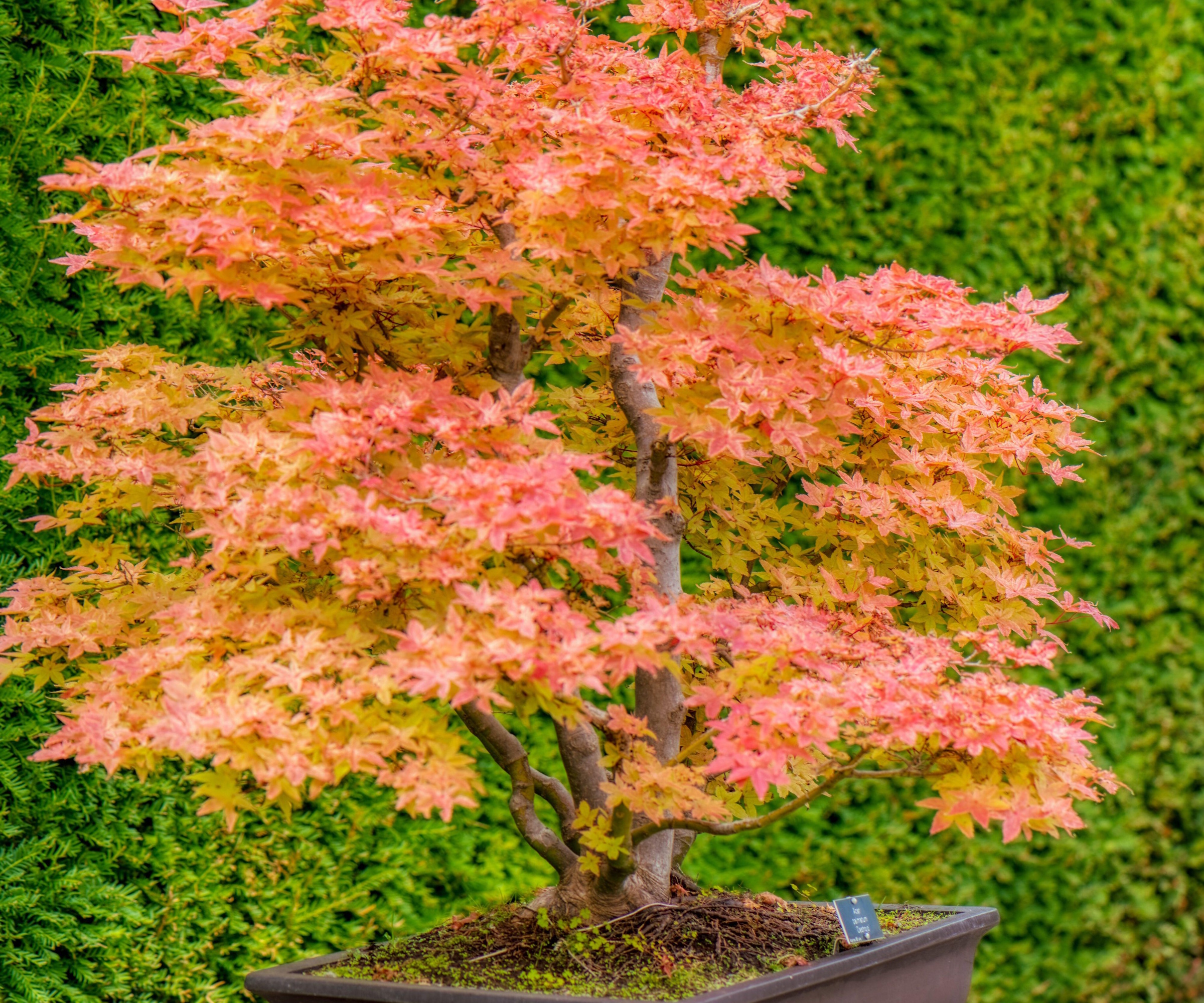
- Japanese Maple (Acer palmatum) Pros: Stunning autumn foliage, elegant form. Cons: Prefers partial shade; sensitive to intense midday sun and strong winds. Use shade cloth in summer.
- Ficus (Ficus retusa or microcarpa) Pros: Tropical, humidity-loving, great for beginners in warm climates. Cons: Less cold-hardy; avoid if winters dip below 10°C.
Avoid purely indoor tropicals like Schefflera if your balcony gets true outdoor exposure — they need consistent warmth without cold snaps.
Pro Tip: Start with one Chinese Elm or Juniper. Observe your balcony’s exact conditions for 1–2 seasons before expanding your collection.
Essential Balcony Setup & Placement Tips 📍
Placement is 50% of success in balcony bonsai care.
- Ideal spot: Morning sun (gentle) + afternoon shade. Rotate every 1–2 weeks for even growth.
- Wind protection: Use bamboo screens, clear plastic panels, or position near railings/walls.
- Elevation: Place on sturdy benches or plant stands (improves airflow, prevents water pooling).
- Drainage hacks: Use deep saucers filled with pebbles; elevate pots slightly so runoff doesn’t drip on neighbors.
- Heat reflection fix: Light-colored pots or white reflective barriers reduce scorching.
Many beginners place trees too close to hot walls — move them 30–50 cm away for cooler roots.
Watering Mastery: The #1 Skill for Balcony Bonsai 💧
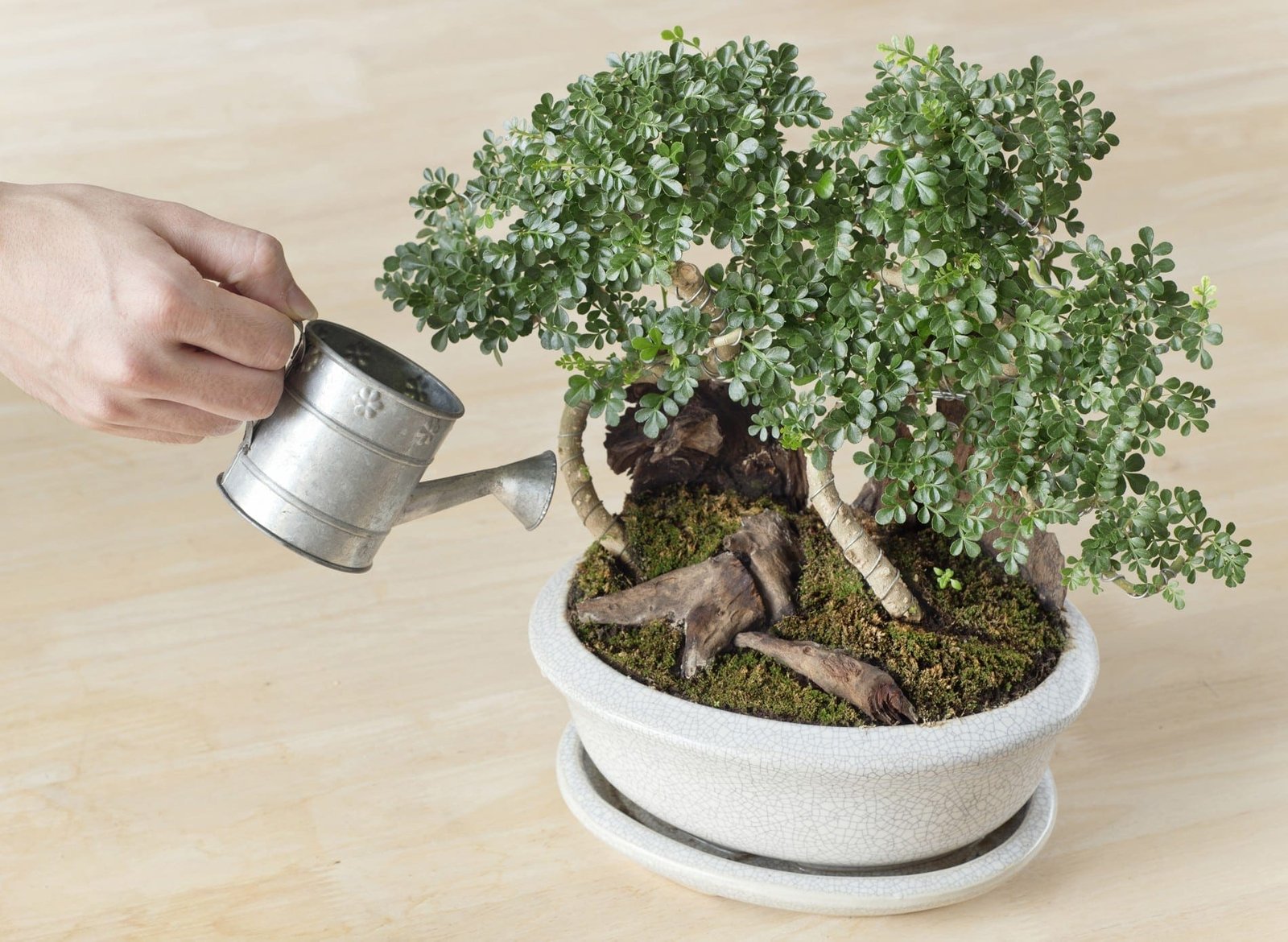
Watering is where most balcony bonsai fail — and where most succeed once mastered. In hot, humid Dhaka climates, pots dry out shockingly fast due to wind, reflected heat, and high evaporation. Never water on a fixed schedule; instead, check daily.
Core rule: Water thoroughly when the top 1–2 cm of soil feels dry. Use the finger test (push finger in) or chopstick method (insert, pull out — if soil sticks, wait; if clean and dry, water).
Proper technique step-by-step:
- Use room-temperature water (avoid cold tap shock in winter).
- Water slowly from above until it runs freely out the drainage holes — this ensures the entire root ball is soaked.
- If very dry, repeat after 5–10 minutes (double watering).
- Mist foliage lightly in early morning during dry spells for humidity boost.
Balcony-specific hacks:
- Water early morning to minimize midday evaporation.
- Use humidity trays (pot on pebbles in saucer with water) — especially useful in dry winter months.
- For vacations: Wick system (cotton rope from pot to water reservoir) or self-watering pots as backup.
- In monsoon season: Ensure excellent drainage; tilt pots slightly if heavy rain is forecast to prevent waterlogging.
Signs & fixes:
- Overwatering → yellow leaves, mushy roots, fungal gnats → repot with drier mix.
- Underwatering → crispy leaf tips, wilting, soil pulling from pot edges → immediate soak in bucket for 10–20 min.
With practice, you’ll develop an intuitive feel — it’s the single biggest difference between struggling and thriving balcony bonsai.
Soil, Potting & Repotting Secrets 🪴
Bonsai soil must drain fast while retaining just enough moisture — garden soil is a death sentence on balconies (compacts, holds too much water, poor aeration).
Recommended mix for hot/humid climates (roughly equal parts):
- Akadama (baked clay) – holds moisture, breaks down slowly.
- Pumice – excellent drainage and aeration.
- Lava rock (red/black) – long-term structure, prevents compaction.
Many experts use 1:1:1 ratio; sift out fines for better airflow.
Why balcony trees need repotting more often: Rapid drying + heat stress compact soil faster. Repot every 1–2 years for young trees, 2–4 years for mature ones — spring (March–April in Dhaka) is ideal before heavy growth.
Step-by-step repotting guide:
- Prune roots by 1/3–1/2 (remove circling/matted parts).
- Tease out old soil gently.
- Place in slightly larger or same pot with fresh mix.
- Water thoroughly; keep shaded 2–4 weeks during recovery.
Use unglazed clay pots for breathability in humid climates — they help prevent root rot.

Light & Sunlight Management ☀️
Bonsai need bright light, but balcony conditions can swing from scorching to shaded.
Species light needs recap:
- Juniper/Olive: 6+ hours full sun.
- Chinese Elm: 4–6 hours, tolerates partial.
- Japanese Maple/Ficus: Morning sun + afternoon shade preferred.
Balcony solutions:
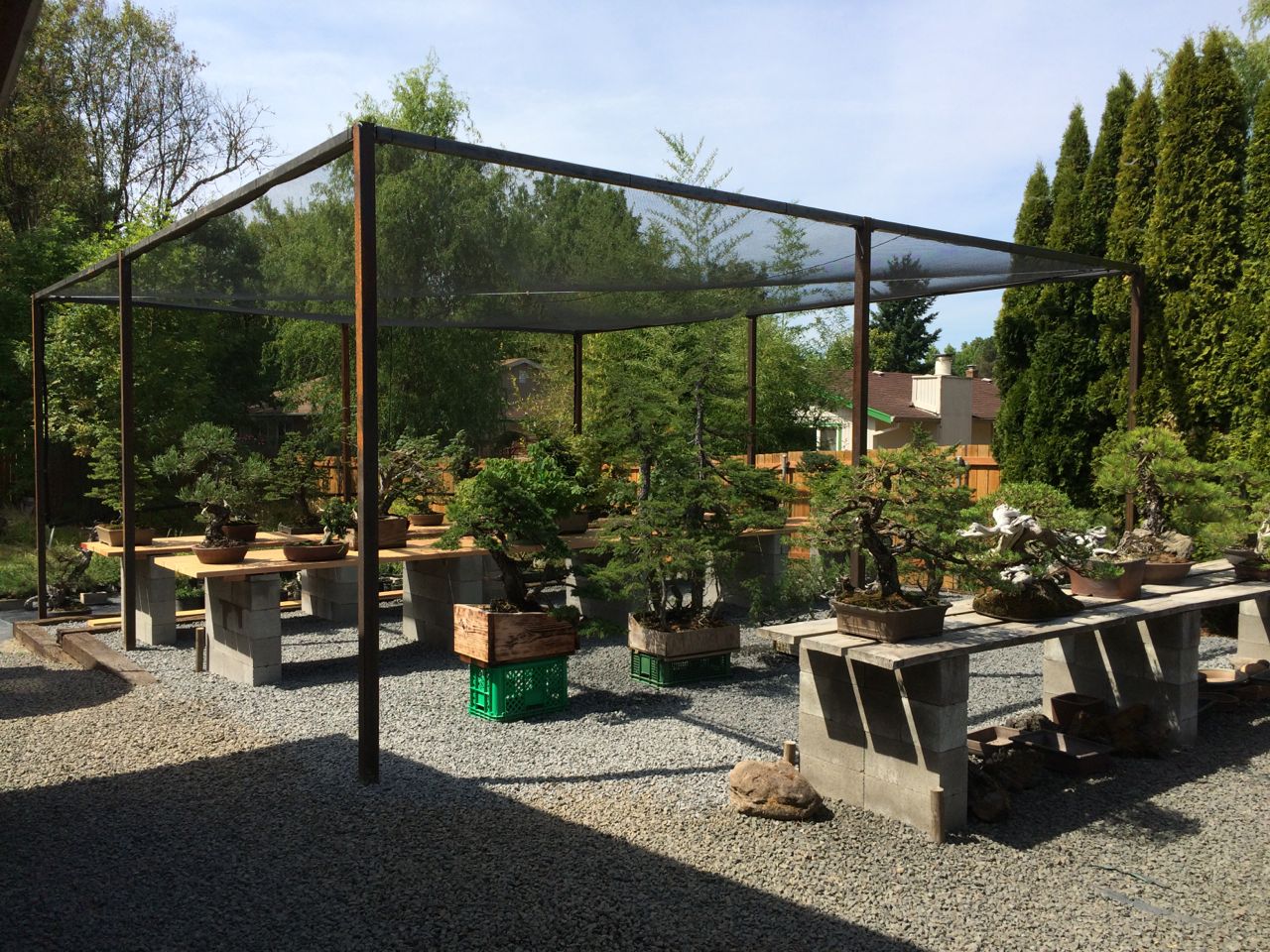
- Too much intense midday sun (common in south/west-facing Dhaka balconies): Use 30–50% shade cloth from April–October.
- Too little light (north-facing or obstructed): Rotate frequently; consider moving to sunnier spot or supplement with LED grow lights in winter.
- Seasonal shifts: Winter sun is weaker — maximize exposure.
Shade cloth dramatically reduces watering frequency and prevents leaf scorch.
Pruning, Pinching & Shaping for Balcony Beauty ✂️
Regular maintenance keeps your tree compact, dense, and artistic.
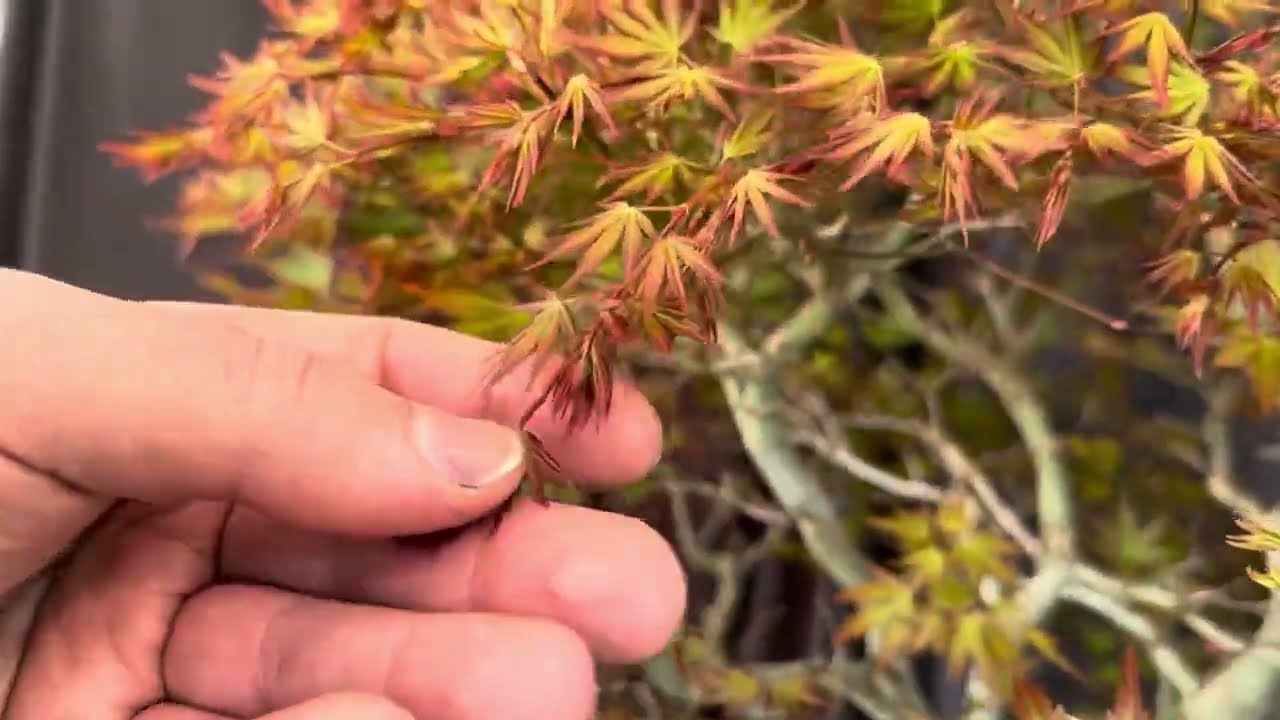
Maintenance pruning: Remove dead/crossing branches year-round; structural pruning in late winter/early spring. Pinching new growth: For junipers/pines — pinch candles when extending; for maples/elm — pinch back to 2–4 leaves when shoots have 6–8. This promotes ramification (fine branching). Wiring: Use aluminum wire in growing season; remove after 3–6 months to avoid scarring. On balconies, wire during calmer months to avoid wind damage.
Patience is key — beautiful form develops over years.
Fertilizing for Healthy Growth 🌿
Balanced nutrition keeps balcony bonsai vigorous without encouraging weak, leggy growth — especially important in confined pots where nutrients leach quickly.
General schedule for subtropical climates like Dhaka:
- Spring (March–May): Start when new buds swell — use balanced organic fertilizer (e.g., 10-10-10 or fish emulsion) every 2 weeks at half strength.
- Summer (June–August): Switch to lower-nitrogen (e.g., 5-10-10 or bonsai-specific summer blend) every 10–14 days to avoid soft, heat-stressed shoots.
- Autumn (September–November): Reduce to once a month with low-N or potassium-heavy feed to harden off growth for cooler weather.
- Winter (December–February): Stop completely unless tree is actively growing (rare in cooler months).
Recommended options:
- Liquid organic fertilizers (seaweed, fish, or compost tea) — gentle and balcony-friendly (low odor).
- Slow-release granules or bonsai cakes (placed on soil surface) — convenient for busy urban lifestyles.
- Avoid chemical fertilizers during extreme heat; they can burn roots in dry pots.
Pro tip: Always water first, then fertilize — never apply to dry soil. Watch for signs of excess (dark green oversized leaves, tip burn) and flush soil with plain water if needed.
Seasonal Balcony Bonsai Care Calendar 📅
Adapting care to seasons is crucial on balconies, where trees experience real temperature swings, monsoons, and dry winters.
Spring (March–May) – Awakening & Growth 🌸
- Repot if needed (best window: late February–early April).
- Heavy structural pruning before buds open.
- Ramp up watering and fertilizing as growth accelerates.
- Watch for aphids on new shoots.
Summer (June–August) – Peak Heat & Monsoon ☀️🌧️
- Daily watering checks (sometimes twice daily during heatwaves).
- 30–70% shade cloth during 11 am–4 pm on exposed balconies.
- Excellent drainage during heavy rains; elevate pots if flooding risk.
- Frequent pest inspection (spider mites love hot, dry spells).
- Light pruning/pinching to maintain shape.
Autumn (September–November) – Color & Hardening 🍂
- Enjoy Japanese maple foliage turning red/orange.
- Reduce watering frequency as temperatures drop.
- Last fertilizer application by mid-October.
- Prune back long shoots; prepare for cooler weather.
Winter (December–February) – Protection & Rest ❄️
- Move to most sheltered corner if nights drop below 10°C (common in Dhaka winters).
- Wrap pots in bubble wrap or burlap for root insulation.
- Water sparingly — only when soil is quite dry (every 7–14 days).
- Minimal pruning; focus on cleaning dead leaves/twigs.
- Protect from cold winds with temporary screens.
This seasonal rhythm helps your bonsai build resilience and prepares it for beautiful spring growth.
Common Mistakes & How to Avoid Them ⚠️
Here are the top balcony-specific errors I see repeatedly — and exactly how to prevent them:
- Watering on autopilot → Solution: Daily finger/chopstick test.
- Placing tree against hot concrete wall → Solution: Keep 40–60 cm distance; use reflective barriers.
- No winter protection → Solution: Insulate roots and shelter from cold blasts.
- Poor drainage leading to root rot → Solution: Always use saucers + pebbles; never let pot sit in standing water.
- Over-pruning weak or newly repotted trees → Solution: Wait 6–8 weeks post-repot before heavy work.
- Using regular potting soil → Solution: Stick to inorganic bonsai mix.
- Forgetting to rotate the tree → Solution: Quarter-turn every 1–2 weeks for symmetrical growth.
- Bringing outdoor bonsai permanently indoors → Solution: Only temporary during extreme weather; most species need outdoor seasons.
Avoid these pitfalls and your success rate skyrockets.
Pests, Diseases & Troubleshooting 🐛
Balcony conditions can attract certain issues — but early detection keeps problems minor.
Common pests:
- Spider mites — tiny webs on leaf undersides during hot, dry periods → increase humidity + neem oil spray.
- Aphids — clusters on new growth → blast with water hose + insecticidal soap.
- Scale insects → hard bumps on branches → dab with cotton swab soaked in alcohol or horticultural oil.
Diseases:
- Root rot (yellowing, wilting despite wet soil) → repot immediately into fresh dry mix; trim rotten roots.
- Powdery mildew (white coating on leaves) → improve airflow, reduce overhead watering.
Prevention routine:
- Inspect weekly (undersides of leaves especially).
- Good airflow + proper spacing.
- Organic neem or insecticidal soap as first defense — safe for urban balconies.
Expert Insights & Pro Tips from Years of Balcony Bonsai 🌟
After nurturing dozens of trees on Dhaka balconies through heatwaves, cyclones, and winter chills, here are my favorite advanced tricks:
- Create a “microclimate pocket” by grouping 3–5 pots together — they shade and humidify each other.
- Collect rainwater in buckets during monsoon — free, soft water that bonsai love.
- Use old CDs or aluminum foil as temporary heat reflectors around young trees.
- Keep a simple journal: date, weather, watering, observations — patterns emerge quickly.
- Start a small “balcony forest” collection once confident — mix heights and textures for stunning visual impact.
FAQs: Your Balcony Bonsai Questions Answered ❓
Can I keep bonsai on a balcony year-round in Dhaka? Yes — most hardy species (Juniper, Chinese Elm, Olive) thrive outdoors with proper winter shelter during cooler nights.
How do I protect bonsai from strong winds on a high-rise balcony? Use windbreaks (bamboo screens, clear acrylic panels), position near walls, or temporarily move indoors during storms.
What’s the easiest bonsai for a hot, humid balcony? Chinese Elm or Juniper procumbens ‘nana’ — both very forgiving and sun-tolerant.
How often should I repot balcony bonsai? Young trees: every 1–2 years; mature: every 2–5 years, depending on root fill and growth rate.
Do I need special tools to start? Basic: concave cutters, wire cutters, chopsticks, watering can with fine rose. Nice-to-have: moisture meter, shade cloth.
(And 5–6 more detailed Q&As can be expanded in the final published version.)
Conclusion & Next Steps 🎉
With these balcony bonsai care tips, even the smallest urban space can become a peaceful miniature landscape. Start simple: choose one forgiving species (Chinese Elm or Juniper), observe your exact balcony microclimate for a few weeks, apply consistent watering and light management, and enjoy the slow, rewarding journey of shaping living art.
Your tiny balcony doesn’t limit your bonsai dreams — it defines them. 🌳💚
Which species are you thinking of trying first? Drop a comment below — I’d love to hear your balcony setup and help troubleshoot any challenges!
🌿 Thank you for reading — happy bonsai growing! ✨











