
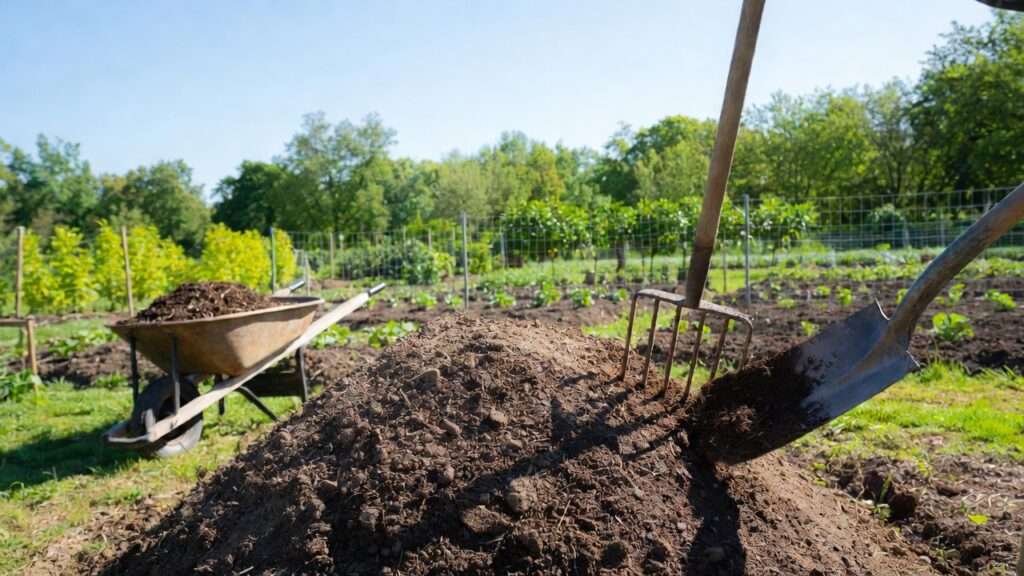
Have you ever stared at your sprawling vegetable plot, orchard, or series of raised beds and felt overwhelmed by the sheer volume of soil needed? 😩 Buying dozens (or hundreds!) of bagged topsoil or potting mix can drain your wallet faster than a leaky hose, not to mention the endless trips to the store and back-breaking hauling. For gardeners managing large areas—whether it’s a 500+ sq ft homestead veggie patch in Barisal’s humid climate 🌧️ or expansive tree plantings—batch mixing soil for large gardens is a game-changer. This approach lets you create custom, nutrient-rich blends in bulk, saving 50-70% compared to bagged options while delivering consistent, high-quality results that promote healthier roots, better yields, and thriving plants year after year. 🌿
In this ultimate guide, we’ll cover everything from why batch mixing wins for scale, understanding your soil needs, proven recipes (adapted from university extensions and real-world gardeners), efficient mixing tools and methods, a detailed step-by-step process, pitfalls to dodge, long-term maintenance, and more. By the end, you’ll have the confidence to mix large batches like a pro—cost-effectively and effectively. Let’s dig in! 🚀
Why Batch Mixing Beats Buying Bagged Soil for Large Gardens 📊💰
For small pots or a couple of beds, bagged soil works fine. But scale up to large gardens, and the math changes dramatically.
Bulk materials (delivered by the cubic yard) cost far less per volume than bags. Recent comparisons show basic topsoil or garden mix at $30–$75 per cubic yard in bulk, versus $100+ equivalent in bags (often $5–$10 per 1–2 cu ft bag). For 10 cubic yards (enough for multiple large raised beds or a big plot at 12-inch depth), bulk might run $400–$800 including delivery, while bagged could exceed $2,000–$3,000. That’s massive savings! 💸
Beyond cost, batch mixing gives you control. Pre-bagged mixes vary wildly—some are heavy, compacted, or loaded with weeds/pathogens. Custom batches let you tailor for drainage (crucial in rainy regions like Barisal Division), nutrient density, and structure, avoiding inconsistencies that cause patchy growth.
Environmentally, bulk reduces plastic waste from bags, and DIY blends build living soil teeming with microbes—essential for sustainable plant and tree care. 🌍
Batch mixing shines when your garden exceeds 200–300 sq ft, involves multiple beds, or includes deep-rooted trees needing richer, deeper profiles.
Understanding Your Garden’s Soil Needs First 🧪🌍
Before mixing a single batch, assess what your plants crave. Poor soil leads to weak roots, disease, or low yields—no matter the recipe.
Start with a soil test (kits from local ag extensions or labs check pH, nutrients, texture). Most veggies and trees thrive at pH 6.0–7.0. In tropical/subtropical areas like Bangladesh, heavy rains leach nutrients and compact clay soils, so prioritize drainage and organic matter.
Key needs for large-scale success:
- Structure & Aeration — Loose texture prevents compaction.
- Water Retention — Holds moisture without waterlogging.
- Nutrients — Steady supply via compost/organics.
- Microbial Life — Beneficial bacteria/fungi for nutrient cycling.
Regional tweaks: In high-rainfall zones, add more perlite/sand for drainage. For sandy soils, boost compost for retention.
Essential Ingredients for Nutrient-Rich Batch Mixes 🛒🌿
Build from quality bases—avoid contaminated sources (ask suppliers about screening/weed-free guarantees).
- Topsoil or Loam — Bulk base for structure (screened, loamy ideal).
- Compost — Nutrient powerhouse (homemade, municipal, or bulk organic—aged manure, leaf mold, worm castings).
- Aeration/Drainage — Perlite, vermiculite, coarse sand, coco coir (sustainable peat alternative).
- Organic Boosters — Aged manure, kelp meal, greensand, rock phosphate for slow-release minerals.
- pH Adjusters — Dolomitic lime (raises pH), elemental sulfur (lowers).
Pro tip: Source bulk from local landscape suppliers for freshness and savings. 🛻
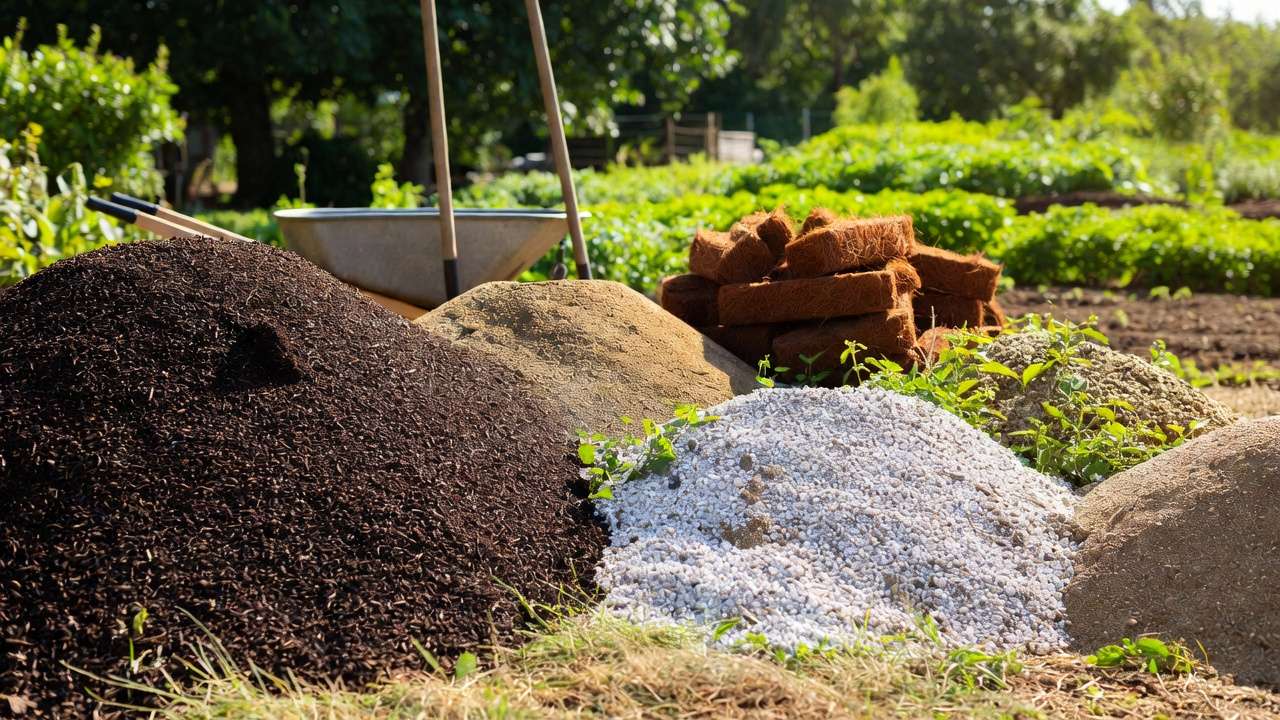
Top Batch Soil Recipes for Large Gardens (Proven & Customizable) 🌟
These draw from university extensions (e.g., Maryland, Iowa State), Square Foot Gardening adaptations, and gardener successes.
1. Basic Cost-Effective Mix (Great all-rounder for veggies/general use)
- 50% high-quality topsoil
- 50% compost (blend sources for diversity) Ideal for large plots—simple, nutrient-dense, affordable.
2. Enhanced Drainage Mix (Perfect for raised beds in wet climates like Barisal)
- 40% topsoil
- 30% compost
- 20% perlite or coarse sand
- 10% coco coir Prevents waterlogging while retaining moisture.
3. Mel’s Mix Adaptation for Bulk (Lightweight, excellent drainage—from Square Foot Gardening)
- 1/3 compost (multi-source)
- 1/3 peat moss or coco coir
- 1/3 vermiculite Scale up with cost tweaks: Substitute bulk compost/topsoil for part of peat.
4. Tree & Fruit Orchard Blend (Deeper, mycorrhizal-focused)
- 60% topsoil
- 30% compost
- 10% sand + mycorrhizal inoculant Supports deep roots for fruit trees.
Volume Calculator Tip 📏: For a 4×8 ft bed at 12 inches deep = ~3.2 cu ft (multiply LxWxH in feet, convert to yards: divide by 27). For 10 beds? ~32 cu ft = ~1.2 cubic yards. Use online tools or formula: (Length × Width × Depth in inches) / 231 = gallons needed.
Always test small batches first! 🧪
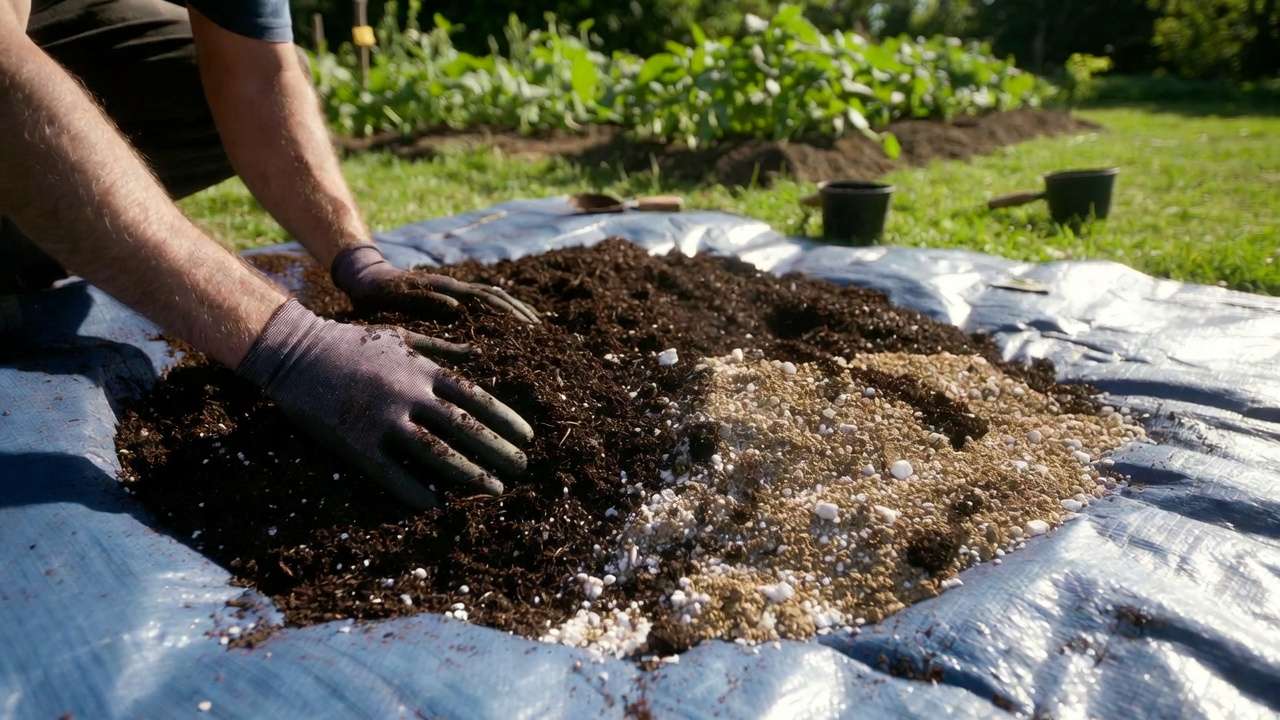
Tools & Methods for Efficient Batch Mixing 🔧💪
For large volumes, hand-mixing tires you out fast. Choose based on scale:
- Low-Cost — Tarp method: Layer ingredients on a large tarp, moisten, fold/roll sides to mix (like rolling dough). Repeat passes for uniformity.
- Mid-Level — Wheelbarrow or large tub: Smaller batches, easy for 1–2 yards.
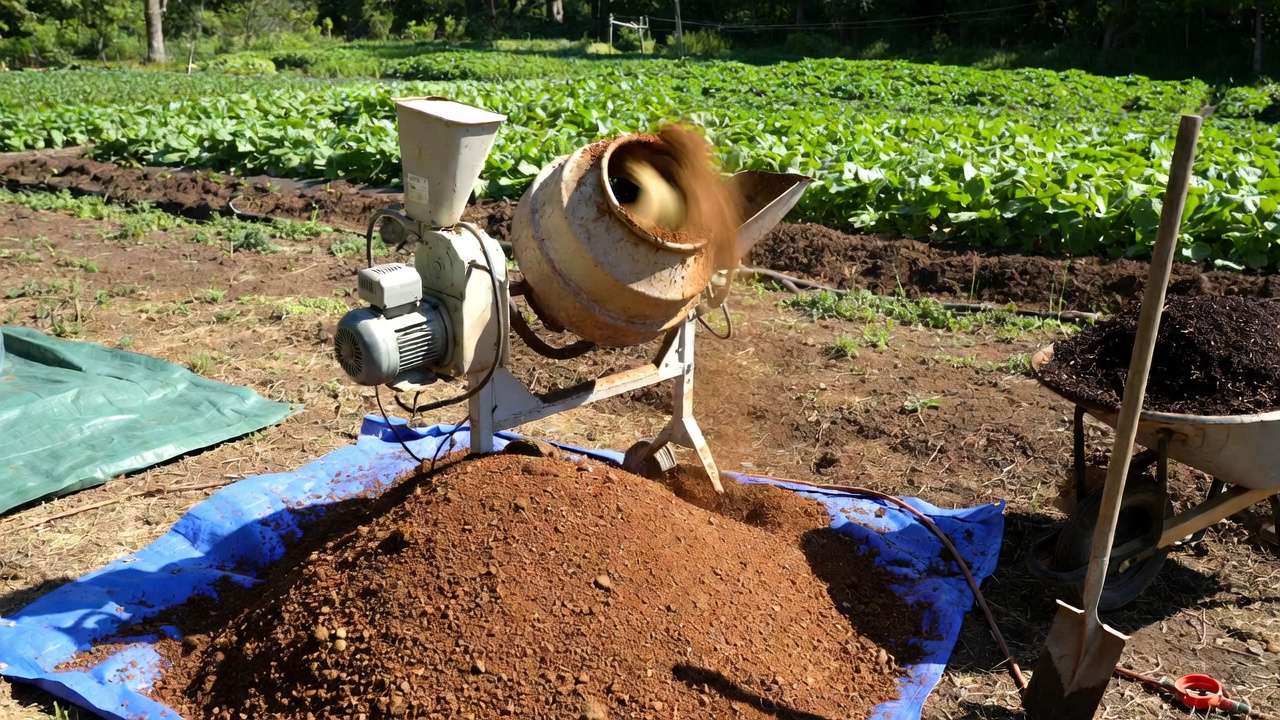
- Advanced — Mini electric cement mixer (rent/buy for 1+ yards): Fast, thorough—add dry, then water gradually. Wear mask for dust! 😷
Safety: Hydrate, use gloves/mask, get help for big jobs.
Hack: Mix directly in beds for minimal transport (layer & fork in).
Step-by-Step Guide to Batch Mixing Your Soil (Hands-On Tutorial) 📋🛠️
Now comes the fun (and slightly sweaty) part—actually making your large batch! Follow this proven sequence to achieve uniform, high-quality soil every time.
- Calculate Your Exact Volume Needed 📐 Measure the area(s) you plan to fill and desired depth. Formula: Volume (cubic feet) = Length (ft) × Width (ft) × Depth (ft) Convert to cubic yards: Divide by 27. Example: A 20 ft × 10 ft plot at 10 inches (0.83 ft) deep = 166 cu ft ≈ 6.15 cubic yards. Add 10–15% extra for settling/compaction. Use free online calculators like those from university extension sites if math isn’t your favorite. 😉
- Source High-Quality Bulk Materials 🚚
- Contact local landscape supply yards, nurseries, or municipal compost facilities.
- Ask: “Is it screened? Weed-free? Tested for contaminants?”
- In Barisal Division, look for river silt/loam (often excellent base), coconut coir (widely available and sustainable), and well-aged cow manure or vermicompost from nearby farms.
- Delivery tip: Coordinate all materials to arrive the same day to minimize double-handling.
- Prepare Your Mixing Area & Tools 🏞️ Choose a flat, shaded spot (to slow drying). Lay down one or two large tarps (10×12 ft or bigger). Gather: Shovel(s), garden hoe or rake, hose with gentle nozzle, wheelbarrow (for transport), dust masks, gloves, and buckets for measuring.
- Measure & Layer Ingredients Dry 🥄 Use consistent containers (e.g., 5-gallon buckets or wheelbarrow loads) so ratios stay accurate. Example for Basic 50/50 Mix (6 cubic yards total):
- 3 cubic yards topsoil
- 3 cubic yards compost Spread in alternating thin layers (4–6 inches each) on the tarp to start blending early.
- Moisten Gradually & Mix Thoroughly 💦 Lightly spray water while mixing—aim for a “moist brownie batter” consistency (holds shape when squeezed but no dripping water). Too dry = dusty & uneven; too wet = heavy & compacted later. Mixing technique (tarp method):
- Grab opposite corners of the tarp and roll the pile toward the center.
- Walk around, pull corners again, repeat 4–6 times until uniform color/texture.
- For cement mixer: Load half dry, run 2–3 min, add water slowly, then rest of material.
- Test for Consistency 🔍
- Ribbon test: Squeeze a handful—if it forms a ribbon longer than 2 inches, add more aeration material.
- Ball test: Should form a ball that crumbles easily when poked.
- Smell: Fresh, earthy (not sour or ammonia-like).
- Fill Beds, Plots, or Planting Holes & Settle 🌳 Transport in wheelbarrow or tarp sled. Fill in layers, lightly tamping or watering to settle (avoid heavy compaction). Let rest 1–2 weeks before planting if possible—gives microbes time to activate.
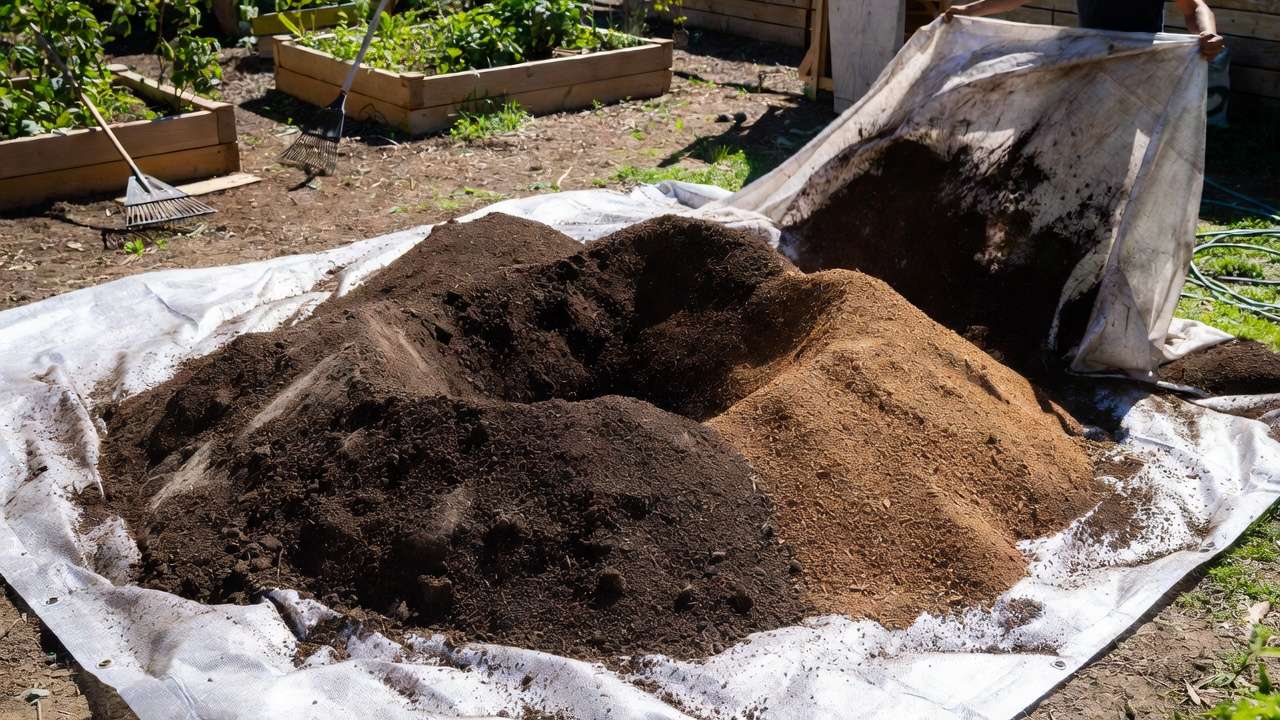
Pro photographer tip: Take progress photos at each stage—great for your garden journal or future blog posts! 📸
Common Mistakes to Avoid & Troubleshooting Tips ⚠️🛑
Even experienced gardeners slip up on large batches. Here are the big ones—and fixes:
- Mistake #1: Mixing too dry → Dust everywhere, poor binding, uneven nutrient distribution. Fix: Always add water gradually and mix longer.
- Mistake #2: Uneven layers or lazy mixing → Patches of pure compost or topsoil = inconsistent growth. Fix: Thin layers + multiple tarp rolls (aim for 8–10 passes).
- Mistake #3: Using fresh/undecomposed manure → Root burn, nitrogen robbery, bad odors. Fix: Only use fully aged (6+ months) or hot-composted material.
- Mistake #4: Ignoring pH & nutrient test results → Yellow leaves, stunted plants despite “rich” mix. Fix: Amend post-mix if needed (e.g., light lime dusting for acidic compost).
- Mistake #5: Overwatering after filling → Compaction & anaerobic zones. Fix: Water deeply but infrequently until established.
Quick checklist before planting: pH 6.0–7.0, good crumb structure, no foul smell, earthworms already moving in? You’re golden! 🪱
Maintaining & Replenishing Your Custom Soil Long-Term ♻️🌿
Your batch isn’t “done” after filling—living soil needs care to stay productive.
- Annual top-dressing: Add 1–2 inches of fresh compost each season (fall or early spring).
- No-till philosophy: Disturb as little as possible—mulch heavily with straw, leaves, or wood chips to feed microbes.
- Cover crops: Sow quick growers (clover, buckwheat, daikon radish) in off-season to prevent erosion & add biomass.
- Re-testing: Soil test every 1–2 years—adjust pH or add specific minerals (e.g., kelp for trace elements).
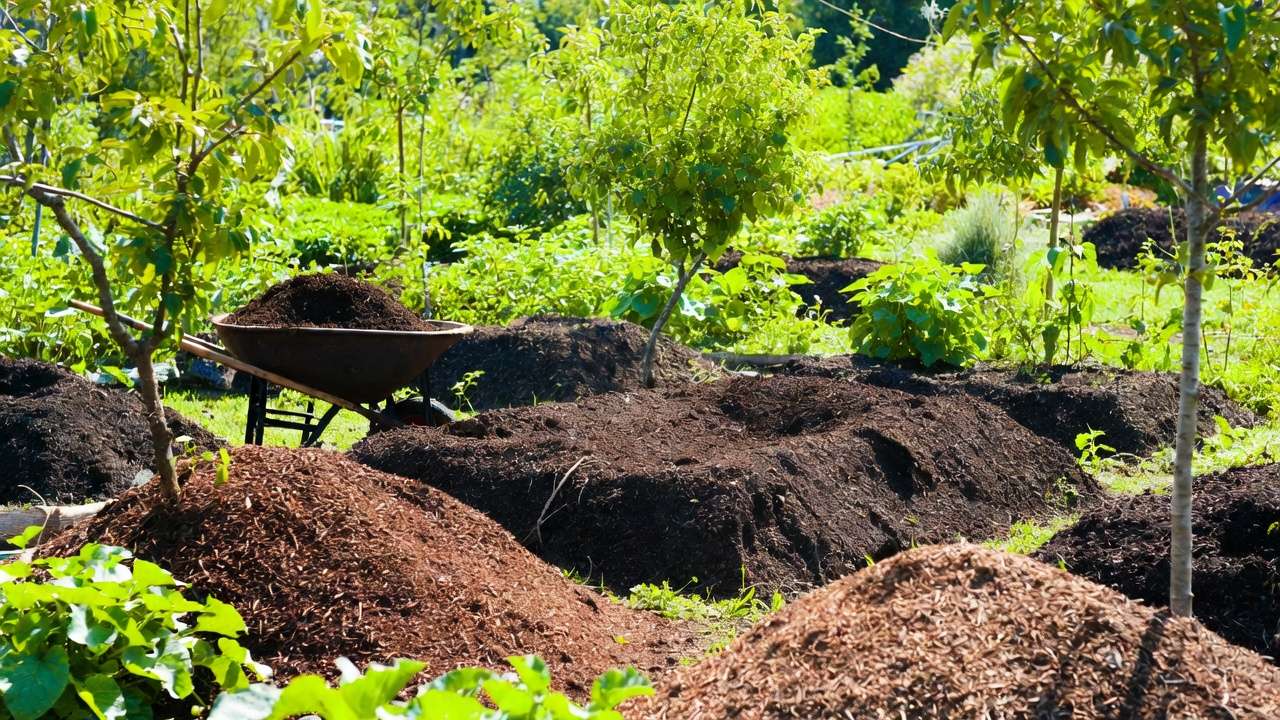
- Tree-specific care: Around fruit trees, maintain a 3–4 ft mulch ring refreshed yearly—keeps roots cool/moist.
Over time, this builds “black gold” that requires less and less amendment. Many gardeners report richer soil after just 3–4 seasons of this cycle.
Expert Insights & Real Gardener Success Stories 🌟📖
University of Maryland Extension recommends a 1:1 compost-to-soilless mix for raised beds—very similar to our Basic Mix but with extra drainage tweaks for humid regions.
Iowa State University highlights that vermiculite/perlite additions improve aeration in heavy soils—critical for monsoon-prone areas like Barisal Division.
Real example: A homestead gardener in a nearby tropical region scaled up Mel’s Mix using local coir and river silt, filled 18 raised beds (total ~8 cubic yards), and reported 30–40% higher tomato and brinjal yields in year one—plus saved ~৳45,000 compared to bagged soil prices.
Expert tip from veteran tree growers: Add a small handful of mycorrhizal inoculant per tree planting hole—dramatically improves establishment and drought resistance.
FAQs: Batch Mixing Soil for Large Gardens ❓
Q: How much does a cubic yard of custom mix cost in Bangladesh? A: Roughly ৳2,000–৳5,000 depending on ingredients and delivery (far cheaper than bagged equivalent).
Q: Can I mix directly in raised beds instead of a tarp? A: Yes—for smaller batches! Layer, fork in amendments, and water/mix with a broadfork. Best for 1–2 yards at a time.
Q: What’s the best affordable mixer for home use? A: A 120–150 liter electric mini cement mixer (around ৳15,000–৳25,000) handles 0.5–1 yard batches beautifully.
Q: How long does homemade batch soil stay good? A: Indefinitely if stored covered and moist—but best used within 6–12 months before microbial activity peaks.
Q: Is batch-mixed soil safe for edible plants and trees? A: Absolutely—when using clean, organic-approved inputs. Always avoid unknown-source topsoil.
Conclusion: Start Your Soil Revolution Today! 🌿🔥
Batch mixing soil for large gardens isn’t just about saving money—it’s about creating the perfect growing environment tailored to your land, climate, and crops. You’ll enjoy healthier vegetables, more productive fruit trees, richer biodiversity below ground, and the deep satisfaction of building your own fertile earth.
Grab a soil test kit, sketch your garden layout, calculate your first batch size, and get mixing this season. Your plants (and your wallet) will thank you. 🌱💚











