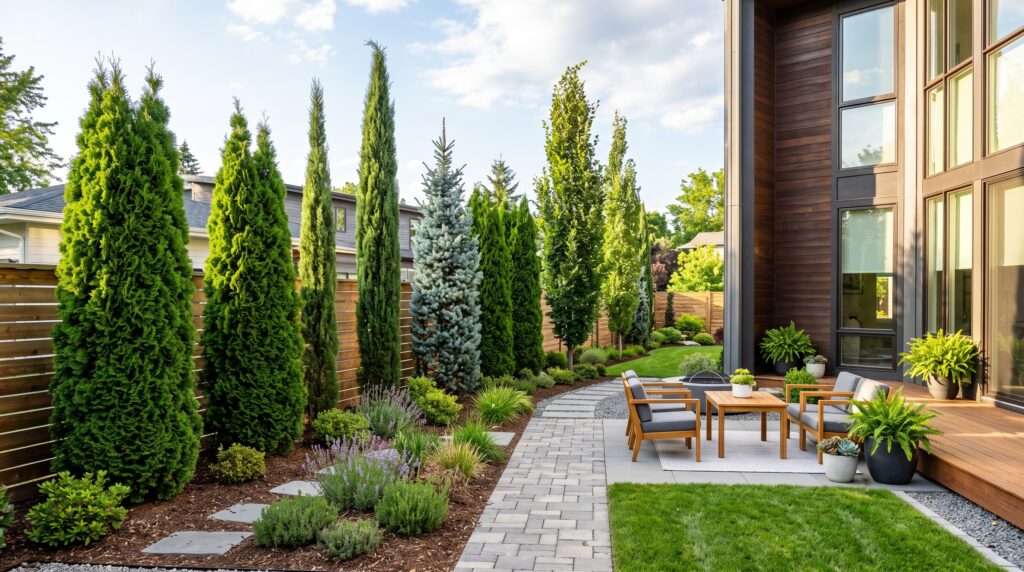
Having a small yard or a narrow property line shouldn’t mean sacrificing lush landscaping, shade, or natural privacy. However, planting traditional wide-canopy trees in restricted spaces often leads to damaged foundations, blocked pathways, and the need for constant, expensive pruning. Homeowners desperately need vertical impact and privacy screens that won’t encroach on a neighbor’s yard or driveway. The solution? Discovering the best 10 columnar trees.
Also known as fastigiate trees, these tall, slender growers deliver stunning foliage, seasonal color, and dense year-round screening with a remarkably minimal footprint.
In this comprehensive guide, we provide a data-driven breakdown of the top-rated narrow trees available for convenient home delivery. By analyzing growth habits, non-invasive root systems, and verified customer reviews, we have curated a selection designed to help you make a fully informed investment in your landscape. Complete with pricing, pros and cons, and highly specific use cases, this review provides everything you need to confidently choose the right tree and transform your outdoor space without buyer’s remorse.
Methodology: Why Trust This Guide?
Choosing a tree is a decades-long commitment, and buying live plants online can feel daunting. To build this list, we modeled our approach after top-tier consumer testing sites. We didn’t just look for “skinny trees.” We rigorously analyzed:
- Height-to-Width Ratios: Ensuring these trees truly stay narrow as they mature.
- Root System Safety: Prioritizing non-invasive taproots or compact fibrous roots safe for foundations, sidewalks, and utility lines.
- Verified Amazon Reviews: Checking for consistent positive feedback regarding shipping reliability, packaging quality, and plant health upon arrival.
- Climate Versatility: Categorizing picks by use case and hardiness zone to ensure there is a perfect match for your specific regional climate.
At a Glance: Our Top Picks Summarized
For the best viewing experience on mobile devices, this table has been streamlined to the three most important decision-making factors.
| Tree Name | Primary Benefit | USDA Hardiness Zones |
| Emerald Green Arborvitae | Best Overall for Privacy | Zones 3 – 8 |
| Italian Cypress | Best Mediterranean Aesthetic | Zones 7 – 10 |
| Sky Pencil Holly | Best for Ultra-Tight Walkways | Zones 5 – 9 |
| Slender Silhouette Sweetgum | Best Dramatic Fall Color | Zones 5 – 9 |
| Blue Arrow Juniper | Best for Drought Tolerance | Zones 4 – 9 |
| Crimson Pointe Flowering Plum | Best Flowering Narrow Tree | Zones 4 – 9 |
| Slender Hinoki Cypress | Best for Modern/Zen Gardens | Zones 4 – 8 |
| Blushing Delight Columnar Apple | Best Edible/Fruit Option | Zones 4 – 8 |
| Columnar Blue Spruce | Best for Cold Climates | Zones 2 – 8 |
| Frans Fontaine Hornbeam | Best Deciduous Architecture | Zones 4 – 8 |
The Best 10 Columnar Trees: Detailed Product Reviews
1. Emerald Green Arborvitae (Thuja occidentalis ‘Smaragd’)
The Best Overall for Natural Privacy Fences
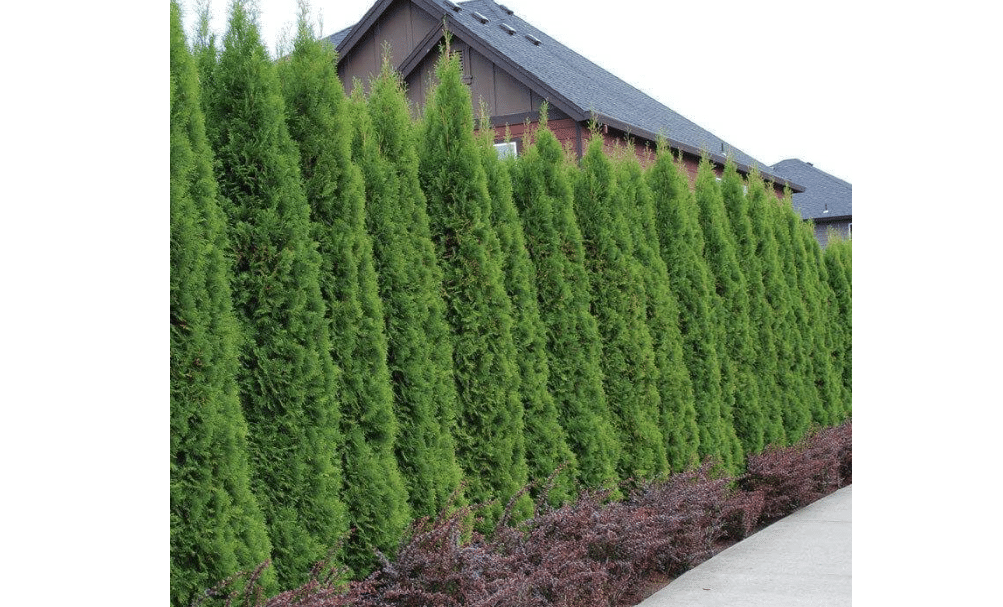
Product Description: The Emerald Green Arborvitae is the undisputed gold standard for residential privacy screens. It is a dense, evergreen conifer that naturally maintains a tight, pyramidal shape without the need for constant trimming. Its foliage is flat, spray-like, and remains a vibrant, glossy green even through the dead of winter, resisting the winter burn that plagues other evergreens.
Estimated Price:
Key Features & Benefits:
- Mature Size: 12-15 feet tall, but strictly stays 3-4 feet wide.
- Growth Rate: Moderate (approx. 1-2 feet per year once established).
- Maintenance: Exceptionally low; requires virtually no pruning to maintain its formal shape.
Pros and Cons:
- Pros: Creates an instant, gap-free privacy hedge; incredibly cold-hardy; fantastic for reducing street noise.
- Cons: Susceptible to bagworms if not monitored; not highly drought-tolerant in the first year of planting.
Amazon Customer Ratings & Reviews: ~4.6/5 Stars. Reviewers frequently praise the secure, heavy-duty packaging from top Amazon nursery sellers. Many users note that the plants arrived slightly smaller than expected but established rapidly in the soil with vigorous first-year growth.
Why It’s a Good Choice: It offers the most reliable, lush living fence that won’t overwhelm a small backyard or cast massive, unwanted shadows over a neighbor’s property. It is highly predictable in its growth habit.
Ideal Use Case / Who Should Buy It: Homeowners wanting to block a neighbor’s view, dampen suburban street noise, or cover an unsightly chain-link fence along a narrow property edge.
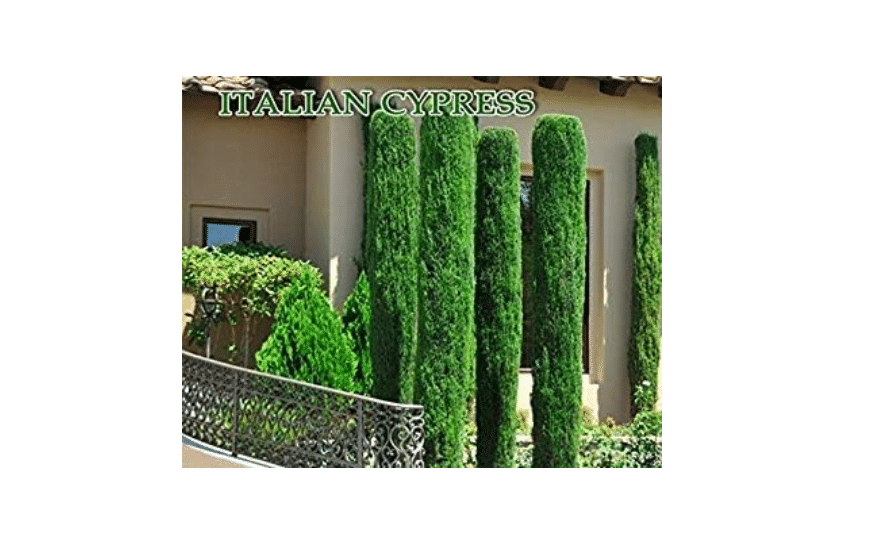
2. Italian Cypress (Cupressus sempervirens)
The Best for Mediterranean Aesthetics & High-End Appeal
Product Description: If you want to evoke the feeling of a Tuscan villa or a formal European estate, the Italian Cypress is unmatched. These towering, arrow-straight evergreens shoot up towards the sky in a tight column of dark, blue-green foliage. They are highly architectural, adding immediate dramatic verticality to flat landscapes.
Estimated Price:
Key Features & Benefits:
- Mature Size: Can reach 40+ feet tall but rarely exceeds 3-4 feet in width.
- Drought Tolerance: Exceptional. Once established, they thrive in hot, dry climates.
- Lifespan: Very long-lived, capable of surviving for centuries in optimal conditions.
Pros and Cons:
- Pros: Unmatched elegant aesthetic; zero pruning required for shape; highly drought-resistant.
- Cons: Not cold hardy (struggles below Zone 7); susceptible to spider mites in very dusty, dry conditions.
Amazon Customer Ratings & Reviews: ~4.4/5 Stars. Buyers love the “instant curb appeal” these trees provide. Some negative reviews mention shipping shock, so following the unboxing instructions immediately is crucial.
Why It’s a Good Choice: It delivers maximum height with an absolute minimum footprint. It is the perfect framing tree for large architecture.
Ideal Use Case / Who Should Buy It: Homeowners in warmer climates (Zones 7-10) looking to frame a driveway, flank a grand entryway, or create a high-end visual barrier along a swimming pool.
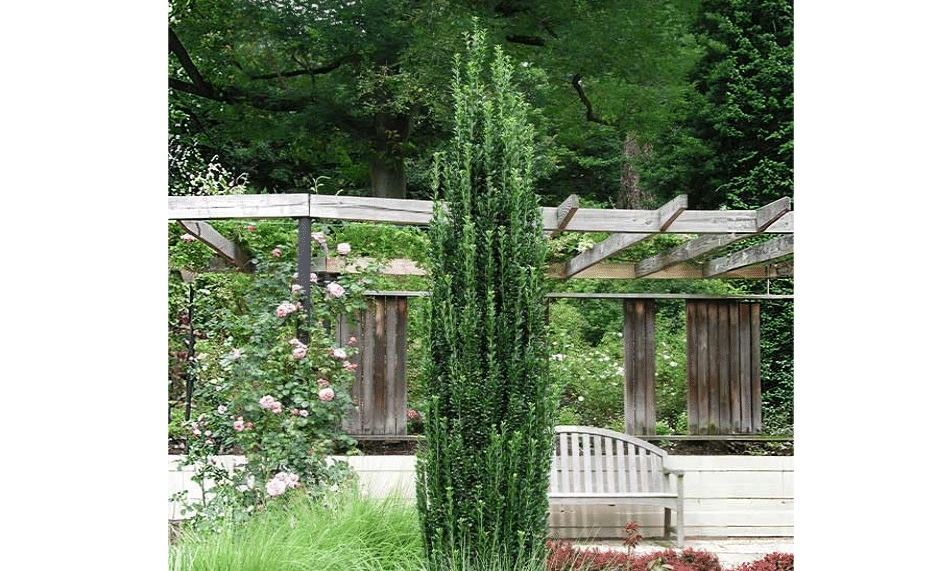
3. Sky Pencil Holly (Ilex crenata ‘Sky Pencil’)
The Best for Ultra-Tight Walkways & Containers
Product Description: The Sky Pencil Holly looks exactly like its name implies—a living green pencil. This unique Japanese holly grows strictly straight up, featuring small, dark green, glossy leaves that look similar to boxwood. It is one of the narrowest evergreens available on the market today.
Estimated Price:
Key Features & Benefits:
- Mature Size: 6-8 feet tall (sometimes up to 10 feet), but an astonishingly narrow 1-2 feet wide.
- Berries: Female plants produce small, dark purple berries in the fall (birds love them).
- Versatility: Excellent for container planting on patios.
Pros and Cons:
- Pros: Fits in the tightest of spaces; great boxwood alternative; thrives in large pots.
- Cons: Growth rate is relatively slow; branches can sometimes splay outward under heavy snow loads (may require light winter wrapping).
Amazon Customer Ratings & Reviews: ~4.5/5 Stars. Amazon shoppers are consistently surprised by how perfectly columnar these plants are right out of the box. Highly rated for urban balconies.
Why It’s a Good Choice: It is the ultimate problem-solver for corners and gaps where literally nothing else will fit.
Ideal Use Case / Who Should Buy It: Urban gardeners with limited square footage, apartment dwellers looking for balcony privacy in pots, or homeowners wanting to soften the hard edges of a house foundation.
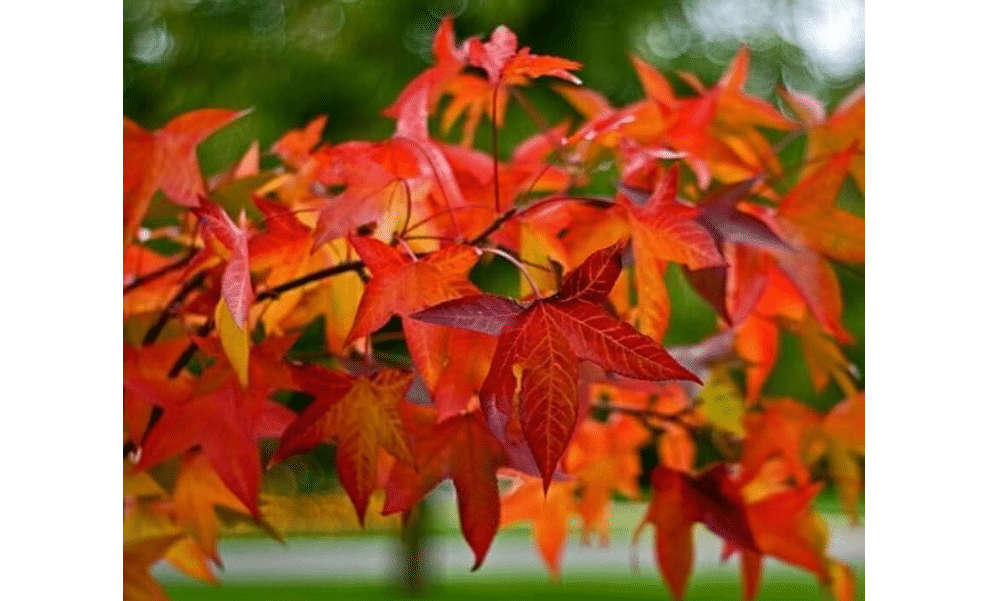
4. Slender Silhouette Sweetgum (Liquidambar styraciflua ‘Slender Silhouette’)
The Best for Dramatic Fall Color
Product Description: Many columnar trees are evergreens, which means sacrificing the beauty of autumn foliage. The Slender Silhouette Sweetgum fixes that. It features star-shaped leaves that turn a breathtaking mix of yellow, vibrant orange, and deep red in the fall, all while growing in a remarkably tight column.
Estimated Price: $38.99
Key Features & Benefits:
- Mature Size: 40-50 feet tall and only 4-5 feet wide.
- Speed: Fast-growing (can easily put on 2-3 feet per year).
- Fruit: Produces far fewer “gumballs” (seed pods) than standard sweetgums.
Pros and Cons:
- Pros: Stunning seasonal color; incredibly fast vertical growth; unique architectural shape.
- Cons: Deciduous (loses leaves in winter, meaning no winter privacy); shallow roots can sometimes compete with nearby turf.
Amazon Customer Ratings & Reviews: ~4.7/5 Stars. Customers rave about the fall colors and the sheer speed at which this tree grows. Reviews often highlight how well it anchors the corners of a property.
Why It’s a Good Choice: You get the majestic height and seasonal drama of a massive shade tree without taking up your entire lawn.
Ideal Use Case / Who Should Buy It: Landscapers looking to create a striking vertical focal point in a front yard, or homeowners wanting a tall summer privacy screen that lets winter sunlight through.
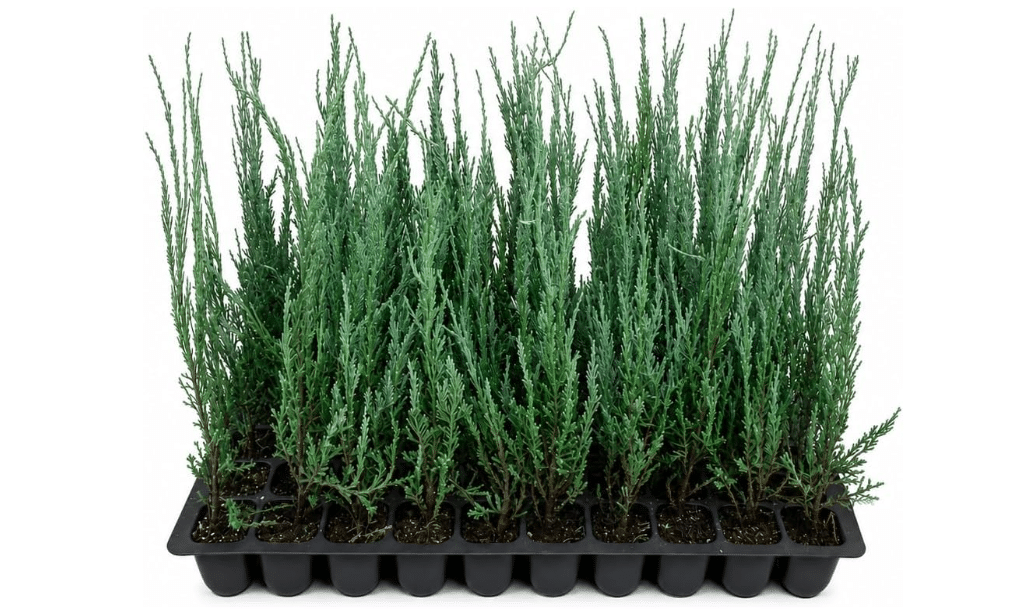
5. Blue Arrow Juniper (Juniperus scopulorum ‘Blue Arrow’)
The Best for Drought Tolerance & Color Contrast
Product Description: The Blue Arrow Juniper features stunning, icy blue-green foliage that provides a striking contrast against traditional green lawns and shrubs. It is an improved, tighter, and more disease-resistant alternative to the popular Skyrocket Juniper.
Estimated Price:$39.97
Key Features & Benefits:
- Mature Size: 12-15 feet tall and 2-3 feet wide.
- Foliage: Non-prickly, bright silvery-blue needles.
- Toughness: Highly resistant to deer, drought, and poor soil conditions.
Pros and Cons:
- Pros: Gorgeous color contrast; practically indestructible once established; very low maintenance.
- Cons: Does not tolerate wet, boggy soil (needs excellent drainage); can suffer in extremely humid, deep-south climates.
Amazon Customer Ratings & Reviews: ~4.5/5 Stars. Buyers frequently note the vivid color upon arrival. Highly rated for being truly deer-resistant, a major plus for rural Amazon shoppers.
Why It’s a Good Choice: It brings unique color texture to the garden while thriving on neglect. It’s perfect for low-water “xeriscape” gardens.
Ideal Use Case / Who Should Buy It: Homeowners with dry, rocky soil, those living in high-deer-population areas, or anyone wanting to break up a monotonous green landscape with a pop of silvery-blue.
6. Crimson Pointe Flowering Plum (Prunus cerasifera ‘Crimson Pointe’)
The Best Flowering Narrow Tree
Product Description: Who says you can’t have gorgeous spring blossoms in a tight space? The Crimson Pointe Flowering Plum bursts into a cloud of delicate white and pink flowers in early spring. As the flowers fade, stunning, rich burgundy-purple leaves emerge, holding their dramatic color throughout the summer.

Estimated Price:
Key Features & Benefits:
- Mature Size: 20-25 feet tall and 5-6 feet wide.
- Double-Appeal: Spring flowers followed by striking purple summer foliage.
- Form: A slightly broader columnar shape, creating a robust, stately presence.
Pros and Cons:
- Pros: Exceptional multi-season interest; attracts pollinators; rich foliage color.
- Cons: Can be susceptible to Japanese beetles in certain regions; drops small, messy fruits in late summer.
Amazon Customer Ratings & Reviews: ~4.3/5 Stars. Users love the deep purple foliage but advise future buyers to wrap the trunk in winter for the first two years to protect the young bark from splitting.
Why It’s a Good Choice: It acts as a standalone ornamental masterpiece. It draws the eye and elevates the entire design of a front garden.
Ideal Use Case / Who Should Buy It: Anyone wanting a spectacular ornamental focal point near a front door or framing a decorative driveway gate.
7. Slender Hinoki Cypress (Chamaecyparis obtusa ‘Slender’)
The Best for Modern, Asian, or Zen Gardens
Product Description: This tree looks like a living sculpture. The Slender Hinoki Cypress features rich, deep green foliage arranged in unique, fern-like, softly drooping layers. It has an open, graceful habit that feels incredibly calming and refined, making it a staple in Japanese garden design.
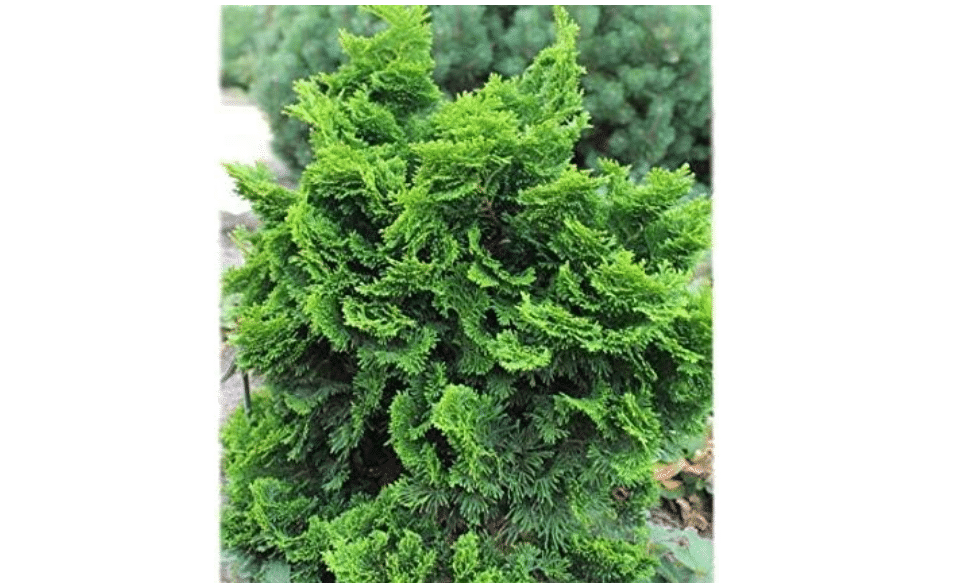
Estimated Price: $49.99
Key Features & Benefits:
- Mature Size: 10-15 feet tall and 3-4 feet wide.
- Texture: Soft, weeping branchlets that flutter in the breeze.
- Growth: Slow and deliberate, making it very easy to manage.
Pros and Cons:
- Pros: Highly unique, graceful texture; very slow-growing (won’t outgrow its space quickly); shade tolerant.
- Cons: Too slow-growing if you need privacy immediately; intolerant of dry, harsh winds.
Amazon Customer Ratings & Reviews: ~4.6/5 Stars. A favorite among gardening enthusiasts. Reviewers consistently praise the health of the root balls upon delivery from Amazon garden centers.
Why It’s a Good Choice: It offers a premium, high-end look. It doesn’t just block a view; it adds an element of living art to your landscape.
Ideal Use Case / Who Should Buy It: Homeowners designing a Zen garden, flanking a backyard water feature, or planting in a partially shaded courtyard.
8. Blushing Delight™ Columnar Apple Tree (Malus domestica ‘Blushing Delight’)
The Best Edible/Fruit Option
Product Description: Urban homesteading is booming, and columnar fruit trees make it possible to grow an orchard in an alleyway. The Blushing Delight grows straight up, producing fruit on short spurs right along the main trunk. It yields surprisingly large, sweet, red-green apples.
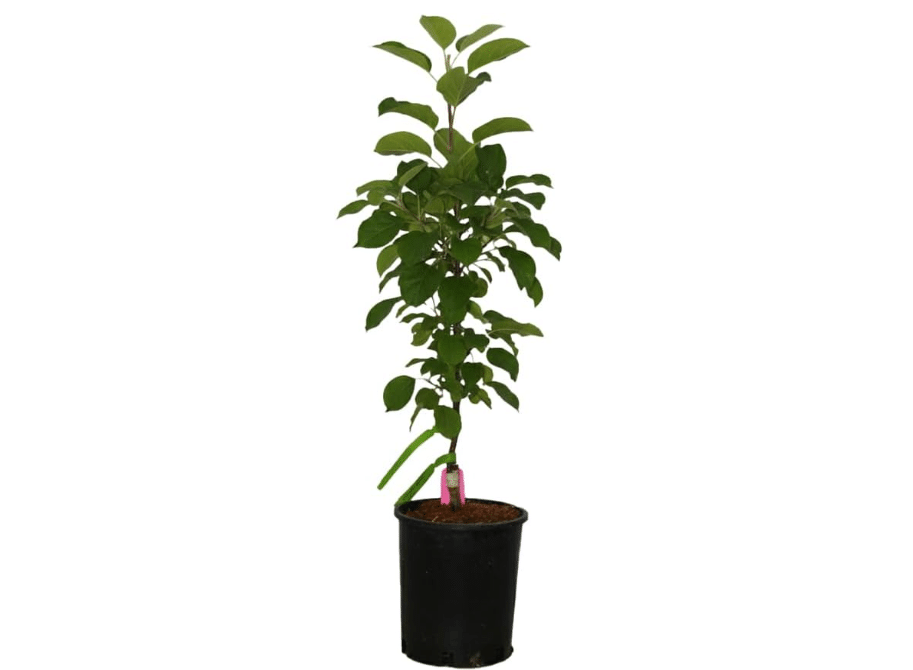
Estimated Price: .
Key Features & Benefits:
- Mature Size: 8-10 feet tall and only 2 feet wide.
- Harvest: Produces full-sized, sweet eating apples in late summer.
- Pollination: Requires a different apple variety nearby to cross-pollinate and produce fruit.
Pros and Cons:
- Pros: Allows for fruit production in tiny spaces; beautiful spring apple blossoms; easy to harvest without a tall ladder.
- Cons: Requires a second pollinator tree; prone to common apple pests (requires fruit tree netting or spraying).
Amazon Customer Ratings & Reviews: ~4.2/5 Stars. Buyers are thrilled when the tree fruits in its second year. The main complaint is from buyers who didn’t realize they needed to buy two different trees for pollination.
Why It’s a Good Choice: It marries high utility (food production) with incredible space efficiency.
Ideal Use Case / Who Should Buy It: Urban homesteaders, patio gardeners, or families wanting to teach kids about growing food without taking up the whole lawn.
9. Columnar Colorado Blue Spruce (Picea pungens ‘Fastigiata’)
The Best for Extreme Cold Climates
Product Description: The classic Colorado Blue Spruce is a majestic giant, but it’s too massive for modern residential lots. The ‘Fastigiata’ variety offers the exact same icy-blue, stiff needles and rugged evergreen hardiness but in a strict, cigar-shaped column.
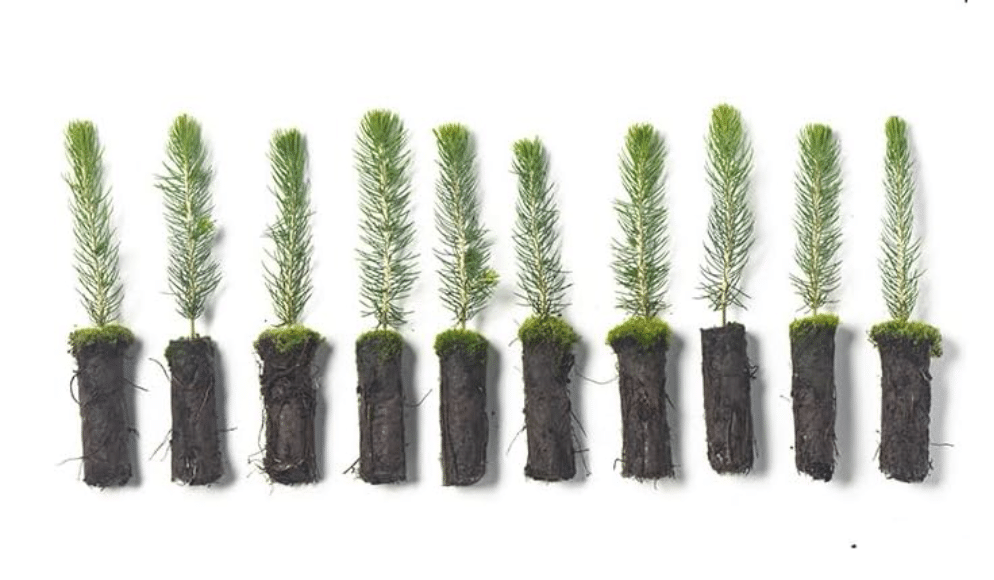
Estimated Price:
Key Features & Benefits:
- Mature Size: 15-20 feet tall and 4-5 feet wide.
- Hardiness: Incredibly tough; survives down to Zone 2 (-50°F).
- Wildlife: Excellent habitat and winter shelter for songbirds.
Pros and Cons:
- Pros: Thrives in harsh, freezing winters; striking blue color; highly deer resistant (needles are sharp).
- Cons: Slower growth rate; can suffer needle drop in intensely hot and humid southern climates.
Amazon Customer Ratings & Reviews: ~4.5/5 Stars. Northern buyers love this tree. Reviews frequently mention how well it handles heavy snow without the branches breaking or bending out of shape.
Why It’s a Good Choice: It provides the rugged, mountainous aesthetic of a traditional spruce but fits perfectly beside a suburban driveway.
Ideal Use Case / Who Should Buy It: Homeowners in the Midwest, Northeast, or mountainous regions who need a bulletproof, cold-weather privacy screen.
10. Frans Fontaine Hornbeam (Carpinus betulus ‘Frans Fontaine’)
The Best Deciduous Architectural Tree
Product Description: The Frans Fontaine Hornbeam is a deciduous tree that is highly prized by landscape architects for urban street planting. It maintains a crisp, uniform teardrop/columnar shape as it ages. Even when it loses its leaves in winter, its dense, intricate branch structure looks highly sculptural.
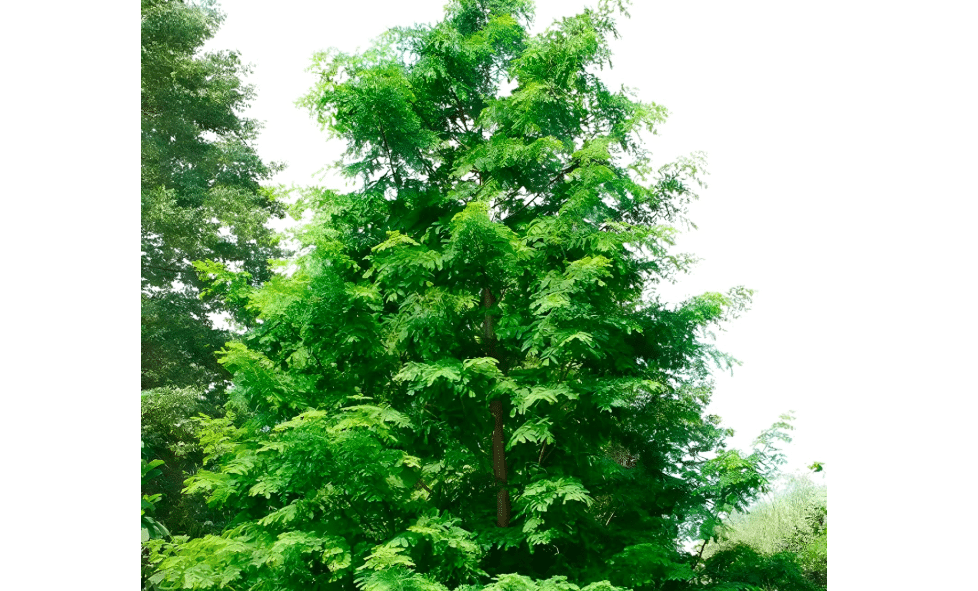
Estimated Price:
Key Features & Benefits:
- Mature Size: 30-40 feet tall and 15 feet wide (broader than others on this list, but narrow for a shade tree).
- Foliage: Deeply ribbed, dark green leaves that turn golden-yellow in autumn.
- Structure: Exceptionally strong wood; rarely suffers from storm damage.
Pros and Cons:
- Pros: Very low maintenance; tolerates urban pollution and poor soils well; beautiful winter silhouette.
- Cons: Widest tree on this list (needs about 6-8 feet of clearance); loses leaves in winter.
Amazon Customer Ratings & Reviews: ~4.4/5 Stars. Buyers respect this tree for its neat, tidy appearance. It is often praised as the perfect “street tree.”
Why It’s a Good Choice: It brings the scale and shade of a traditional hardwood tree but keeps its branches neatly tucked in, keeping sidewalks and roads clear.
Ideal Use Case / Who Should Buy It: Homeowners looking to line a long driveway, plant between a sidewalk and street, or create a tall, leafy summer wall between properties.
The Ultimate Buying Guide: Choosing the Right Tree for Your Yard
Buying a tree is an investment. Before adding any of these best 10 columnar trees to your Amazon cart, consider these crucial factors to ensure your new tree thrives.
1. Understanding Your Hardiness Zone
This is the single most critical factor. The USDA Hardiness Zone map dictates which plants can survive your local winters.
- If you live in Zone 3-5 (Cold): Opt for the Emerald Green Arborvitae or Columnar Blue Spruce.
- If you live in Zone 8-10 (Hot): The Italian Cypress or Blue Arrow Juniper will thrive in the heat.
- Never buy a tree rated for a warmer zone than you live in, as it will likely die in its first winter.
2. Purpose-Driven Selection: Evergreen vs. Deciduous
- For Year-Round Privacy: You must choose an evergreen (Arborvitae, Juniper, Holly). They keep their foliage in winter, ensuring your neighbors can’t see into your hot tub in December.
- For Shade & Seasonal Aesthetics: Choose deciduous trees (Sweetgum, Hornbeam, Plum). They lose their leaves, but offer stunning spring flowers or fall color in exchange.
3. Root Systems and Foundation Safety
One of the primary reasons to buy a columnar tree is to plant it in a tight space. Fortunately, the narrow above-ground canopy usually correlates to a more contained, fibrous root system.
- Foundation Safety: Trees like the Sky Pencil Holly and Arborvitae are generally safe to plant within 3 to 4 feet of a house foundation, patio, or retaining wall without causing structural cracking.
4. Growth Rate vs. Longevity
There is often a tradeoff in landscaping: fast growth usually means weaker, brittle wood.
- If you need a screen yesterday, fast-growers like the Slender Silhouette Sweetgum are great.
- If you want a tree that will outlive you and require zero storm cleanup, slow-and-steady growers like the Hinoki Cypress are the superior choice.
Planting & Care Tips for Narrow Spaces
Getting your tree delivered safely from Amazon is only half the battle. How you plant it dictates its success.
Spacing Guidelines for Hedges
If you are buying multiples to create a privacy screen, do not plant them too close together! Overcrowding cuts off airflow, leading to fungal diseases.
- Arborvitaes & Junipers: Plant 2.5 to 3 feet apart (measuring from the trunk of one tree to the trunk of the next).
- Sky Pencils: Can be planted as close as 2 feet apart.
Unboxing and Acclimation
When your live plant arrives in a cardboard box, it has been in the dark for days.
- Unbox it immediately in a shaded area of your yard.
- Water the soil heavily until water runs out the bottom of the nursery pot.
- Let it rest in the shade for 24-48 hours before planting it in direct sunlight to prevent “transplant shock.”
Soil Preparation and Watering
Urban soils near fences and foundations are often compacted and terrible.
- Dig a hole twice as wide as the nursery pot, but exactly the same depth.
- Do not bury the trunk deeper than it was in the pot.
- Watering: Narrow spaces often suffer from heat reflection off fences and brick walls. Water your new tree deeply (a slow trickle from a hose for 20 minutes) twice a week for the first full year to establish deep roots.
Frequently Asked Questions (FAQ)
What is the fastest-growing columnar tree for privacy? The Slender Silhouette Sweetgum is incredibly fast for a deciduous tree, putting on up to 3 feet a year. For evergreens, the Emerald Green Arborvitae and Green Giant (though wider) are the fastest, reliable options, growing 1-2 feet per year.
Can I grow columnar trees in large pots or containers? Yes! The Sky Pencil Holly, Slender Hinoki Cypress, and Blushing Delight Apple Tree all perform wonderfully in large, well-draining planters on patios and balconies.
Do tall, skinny trees fall over easily in high winds? Generally, no. Their slender profile actually allows wind to pass around them more easily than a wide-canopy tree that catches the wind like a sail. However, in extreme wind corridors, newly planted trees should be staked for the first 12 months while roots establish.
How close to my house or fence can I safely plant a fastigiate tree? As a general rule of thumb, take the mature width of the tree and divide it in half. For example, if an Emerald Green Arborvitae gets 4 feet wide, you can plant the trunk 2 to 2.5 feet away from your fence or house foundation safely