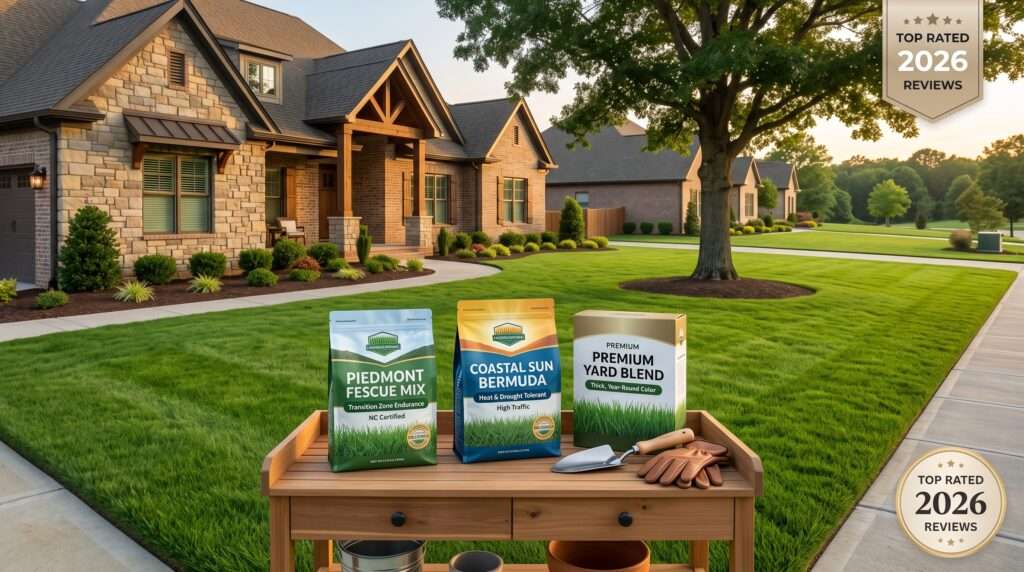
North Carolina is notorious for having some of the most challenging lawn-growing conditions in the country. If you’ve ever watched a vibrant spring lawn turn into a crispy, brown wasteland by August, you are not alone. Sitting squarely in the agricultural “Transition Zone,” the state’s climate unleashes scorching, humid summers and freezing winter nights. Combine those extremes with heavy Piedmont red clay or sandy Coastal soils, and generic hardware store mixes are guaranteed to fail. To solve this, we researched the best 10 grass seed for nc to help you finally achieve a resilient, barefoot-worthy yard.
We analyzed top-rated products and cross-referenced them with university turfgrass extension data to pinpoint the seeds that actually survive and thrive in North Carolina’s unique environment. Proper soil health management and selecting the correct grass type for your specific microclimate are the absolute keys to success. Whether you need deep-rooting cool-season varieties to penetrate compacted clay in the Mountains and Piedmont, or heat-loving warm-season runners for the sunny Coastal Plain, this comprehensive guide will help you confidently choose the right seed for a thick, lasting lawn.
II. Buying Guide: How to Choose the Right Grass Seed for North Carolina
Before investing time and money into a massive lawn renovation, you need to understand the three primary factors that dictate turfgrass success in North Carolina. Planting the wrong seed in the wrong region is the number one reason homeowners struggle with their lawns.
1. Understanding Your Specific NC Region
-
The Mountains (Cool-Season Dominant): With cooler summers and harsh winters, Western NC is prime territory for cool-season grasses. Tall Fescue and Kentucky Bluegrass blends are the undisputed champions here.
-
The Piedmont (The True Transition Zone): Raleigh, Durham, Greensboro, and Charlotte sit in the hardest zone of all. Summers are brutally hot, and winters bring hard freezes. Turf-Type Tall Fescue is the most popular choice due to its year-round green color, but warm-season grasses like Zoysia and Bermuda are excellent alternatives if your yard bakes in full sun all day.
-
The Coastal Plain (Warm-Season Dominant): East of I-95, including Wilmington and the Outer Banks, sandy soil and relentless heat are the norm. You must rely on warm-season grasses like Bermuda, Centipede, or Zoysia, which thrive in the heat but go dormant (turn brown) during the winter.
2. Soil Health & Preparation A picture-perfect yard that looks ready for a magazine cover starts below the surface. North Carolina is famous for acidic red clay that suffocates roots. Prioritizing soil health by aerating compacted ground, adding organic matter, and testing your pH levels ensures that whichever seed you choose actually has a fighting chance to establish deep roots.
3. Sun vs. Shade Exposure Grass seed is highly sensitive to sunlight. Bermuda grass will completely thin out and die in the shade of a large oak tree. Conversely, Fescue struggles to survive on a southern-facing slope with zero shade in mid-July. Assess your yard’s canopy before making a purchase.
III. The Best 10 Grass Seed for NC (Detailed Reviews) – Part 1
1. Best Overall for the NC Piedmont: Scotts Turf Builder Southern Gold Mix for Tall Fescue
Product Description: Scotts Turf Builder Southern Gold is practically tailor-made for the brutal conditions of the lower transition zone. Unlike standard fescues that surrender at the first sign of an August drought, this premium mix is bred specifically for high heat and drought resistance. The seeds are coated with Scotts’ proprietary WaterSmart PLUS technology, which absorbs twice as much water as uncoated seed, feeds the grass to jumpstart growth, and protects the seedlings against deadly fungal diseases that plague humid Southern lawns.
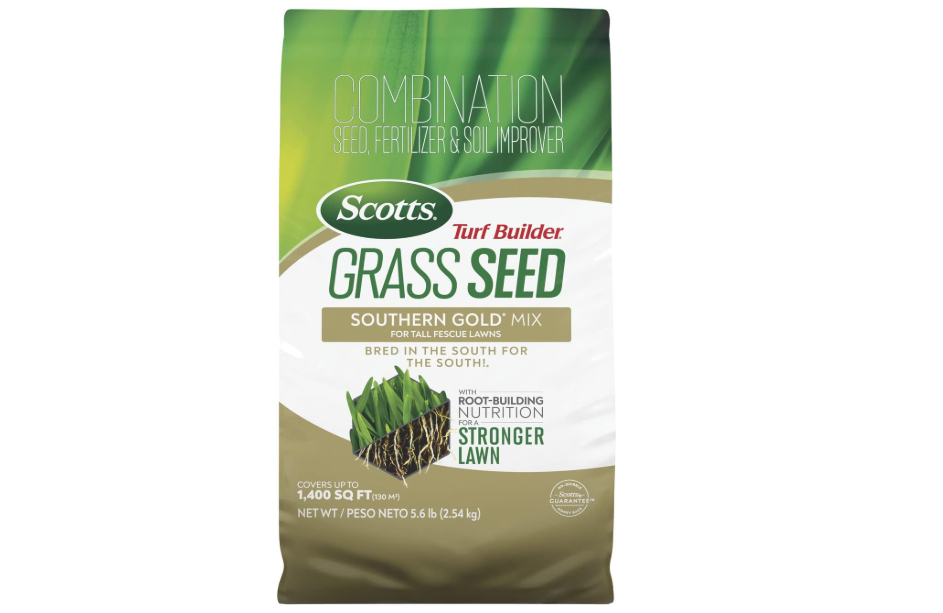
Price: $44.52
Key Features & Benefits:
-
WaterSmart PLUS Coating: Retains vital moisture during the critical germination phase.
-
Deep Rooting Technology: Encourages roots to dive deep into tough clay soils to access subsurface water.
-
Weed-Free Guarantee: 99.9% weed-free to ensure you aren’t planting crabgrass alongside your turf.
Pros and Cons:
-
Pros: Exceptional heat tolerance; stays green year-round; sprouts quickly (usually within 10-14 days).
-
Cons: Like all fescues, it still requires supplemental watering during the peak heat waves of July and August.
Amazon Customer Ratings: Boasting an impressive 4.5/5 stars from over 12,000 reviews, buyers consistently praise its rapid germination rate and its ability to hold its rich green color much longer into the summer than competing brands.
Why it’s a good choice for NC: It perfectly bridges the gap of the Piedmont climate, surviving the relentless humidity and heat of summer while remaining cold-hardy enough to stay beautifully green through a snowy January.
Ideal Use Case / Who Should Buy It: Homeowners in the Raleigh, Charlotte, or Triad areas with moderately sunny to partially shaded yards who want a classic, green lawn all year long.
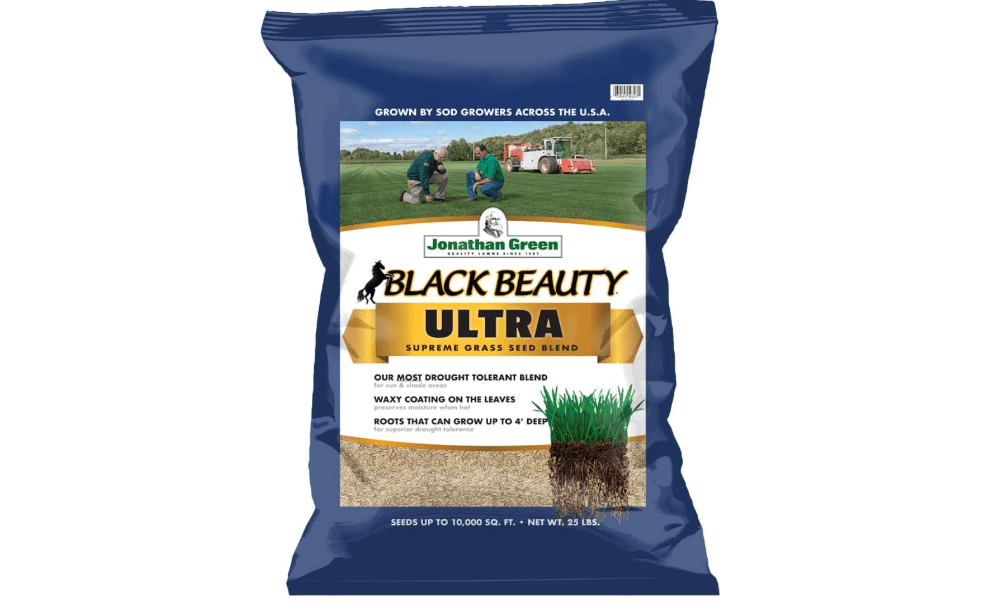
2. Best Premium Cool-Season Seed: Jonathan Green Black Beauty Ultra
Product Description: If your goal is to cultivate a lawn so visually striking it looks like a roll of professional sod, Jonathan Green’s Black Beauty Ultra is the gold standard. This high-end blend combines elite Turf-Type Tall Fescues, Kentucky Bluegrass for self-repairing capabilities, and Perennial Ryegrass for rapid color. What sets Black Beauty apart is an invisible waxy coating on the grass leaves—similar to the skin of an apple—that locks in moisture and fends off drought.
Price: $106.17
Key Features & Benefits:
-
Waxy Leaf Coating: Preserves moisture inside the plant, significantly reducing the need for irrigation.
-
Incredible Root Depth: Capable of growing roots up to 4 feet deep in well-prepared soil.
-
Self-Repairing: The addition of Kentucky Bluegrass helps fill in bare spots naturally.
Pros and Cons:
-
Pros: Produces an incredibly rich, dark-green color; highly drought-resistant once established; excellent disease resistance.
-
Cons: Comes at a premium price point compared to big-box store brands.
Amazon Customer Ratings: With an average rating of 4.6/5 stars across 8,000+ reviews, users frequently post photos of their dramatic lawn transformations, noting that it out-competes weeds beautifully.
Why it’s a good choice for NC: The deep root system is a massive advantage in North Carolina’s hard clay. Once those roots penetrate the soil, the lawn becomes highly insulated against top-level drought conditions.
Ideal Use Case / Who Should Buy It: Lawn enthusiasts and homeowners who are willing to properly aerate and amend their soil to support a “golf-course quality” cool-season turf.
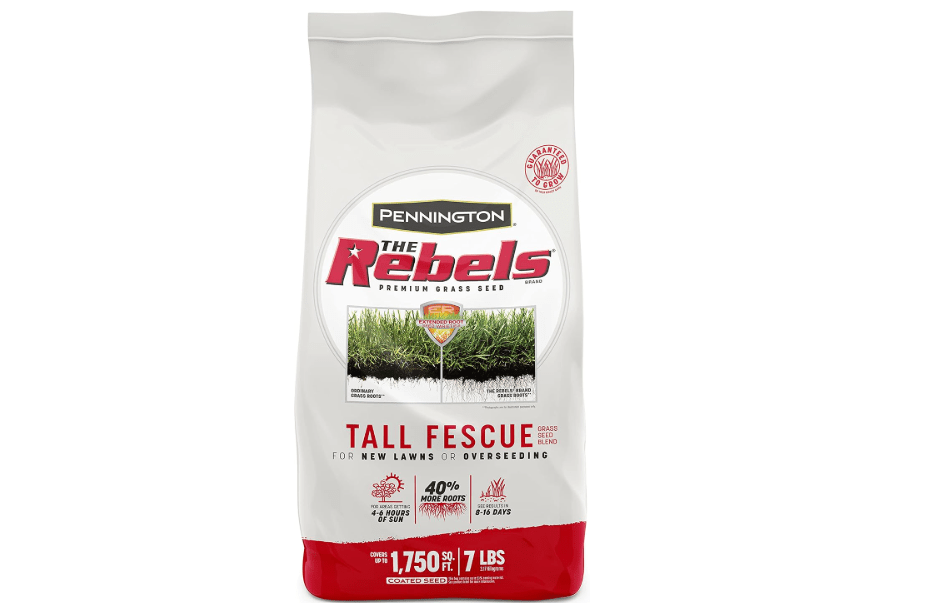
3. Best for Heavy NC Clay: Pennington The Rebels Tall Fescue
Product Description: Pennington’s “The Rebels” line is legendary in the turfgrass industry. As the original turf-type tall fescue, it has decades of selective breeding behind it to produce a thick, durable, and rugged lawn. The seed is enhanced with Penkoted technology, which provides a layer of fungicide to protect the vulnerable seeds during the damp, humid conditions typical of early fall in North Carolina.
Price: $25.48
Key Features & Benefits:
-
Penkoted Protection: Shields seeds from rot and fungus to guarantee a higher germination rate.
-
Aggressive Density: Grows exceptionally thick to naturally choke out invasive weeds.
-
Guaranteed to Grow: Backed by Pennington’s quality assurance.
Pros and Cons:
-
Pros: Extremely rugged and durable under heavy foot traffic; excellent resistance to Brown Patch disease.
-
Cons: It grows in clumps and is not self-repairing; you will likely need to overseed bare patches in the fall.
Amazon Customer Ratings: Sitting comfortably at 4.4/5 stars with over 10,000 reviews. Customers rave about its toughness and how well it stands up to dogs and active children.
Why it’s a good choice for NC: North Carolina’s humid late summers are prime breeding grounds for fungal diseases like Brown Patch, which can decimate a lawn overnight. The Rebels blend is specifically bred for maximum disease resistance in these exact conditions.
Ideal Use Case / Who Should Buy It: Active families with children and pets who need a highly durable, high-traffic lawn that won’t easily get trampled into the mud.
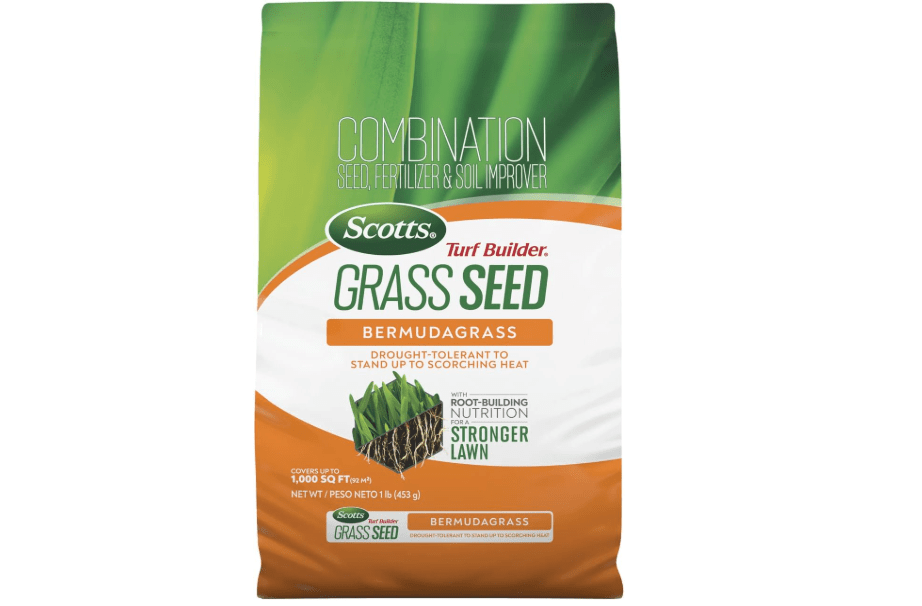
4. Best for Coastal Full Sun: Scotts Turf Builder Grass Seed Bermudagrass
Product Description: For yards that bake in 90-degree heat with absolutely no shade, tall fescue is a losing battle. Enter Scotts Turf Builder Bermudagrass. This is a tough, aggressive, warm-season grass that thrives in blistering heat and full sun. It spreads rapidly via above-ground stolons and below-ground rhizomes, creating a dense, self-healing mat of turf that easily recovers from wear and tear.
Price: $21.40
Key Features & Benefits:
-
Aggressive Spread: Quickly fills in bare patches and repairs itself.
-
WaterSmart PLUS Coating: Helps the seeds retain moisture in fast-draining, sandy soils.
-
Extreme Heat Tolerance: Will not wilt under the direct, unshaded summer sun.
Pros and Cons:
-
Pros: Unbeatable heat and drought tolerance; repairs its own damage; requires less water than fescue.
-
Cons: It will go completely dormant (turn yellow/brown) after the first frost in winter; it will absolutely refuse to grow in shaded areas.
Amazon Customer Ratings: A solid 4.3/5 stars. Many reviewers emphasize that while it takes patience to establish from seed (usually 14-21 days), the resulting lawn is nearly indestructible.
Why it’s a good choice for NC: It is the ultimate survivor for the sandy soils and relentless summer heat of the NC Coastal Plain, as well as unshaded lots in the Piedmont.
Ideal Use Case / Who Should Buy It: Homeowners located east of I-95, or anyone with a wide-open, tree-less property who wants a lawn that thrives when the temperatures soar.
5. Best Low-Maintenance Warm Season: Zenith Zoysia Grass Seed
Product Description: Zoysia is often considered the luxury warm-season grass. Zenith Zoysia produces a premium, dense, carpet-like turf that feels incredible under bare feet. Because it grows so densely, it naturally chokes out almost all weeds. It is also slower-growing than Bermuda, which means you won’t have to mow it nearly as often.

Price:
Key Features & Benefits:
-
100% Pure Seed: No fillers or excessive coatings.
-
Cold Tolerant: One of the most cold-tolerant warm-season grasses available.
-
Shade Adaptable: Tolerates partial shade significantly better than Bermuda grass.
Pros and Cons:
-
Pros: Extremely soft and visually stunning; requires less fertilizer and mowing; highly weed-resistant once established.
-
Cons: Very slow to germinate and establish from seed (can take a full growing season to completely fill in).
Amazon Customer Ratings: Rated 4.2/5 stars. Reviewers caution that you must be patient during the germination phase, but agree that the final result is the best-looking lawn on the block.
Why it’s a good choice for NC: Zenith Zoysia perfectly bridges the NC climate gap—it effortlessly handles Coastal and Piedmont heat while possessing enough cold tolerance to survive winter freezes without dying off.
Ideal Use Case / Who Should Buy It: Patient homeowners who want a luxurious, high-end lawn aesthetic with lower long-term maintenance requirements.
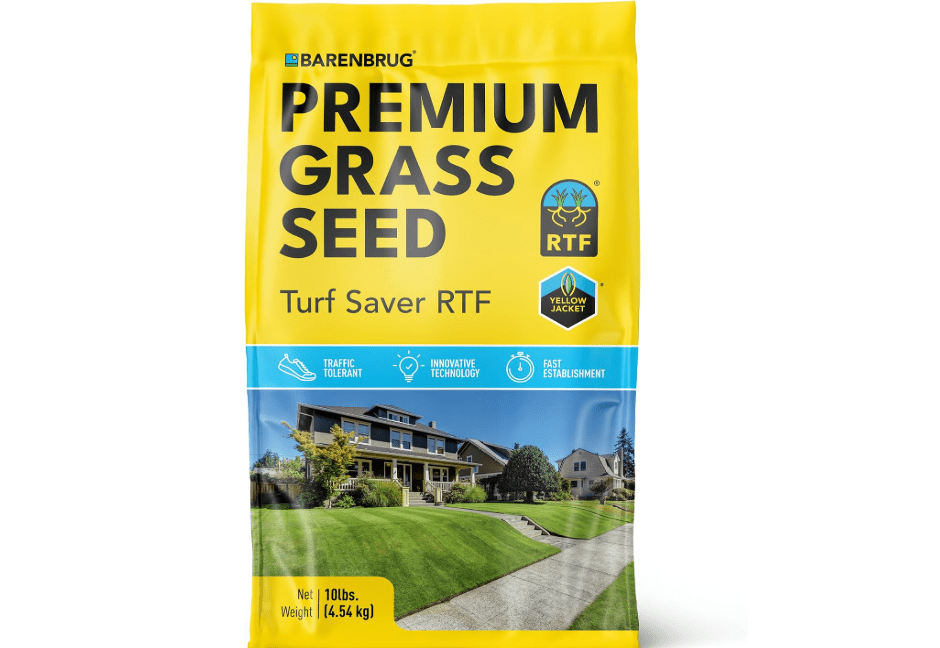
6. Best for Self-Repairing Fescue: Barenbrug Turf Saver RTF (Rhizomatous Tall Fescue)
Product Description: Historically, if a tall fescue lawn sustained damage from drought or heavy traffic, that bare spot remained bare until you manually reseeded it. Barenbrug’s Turf Saver RTF changes the game completely. It is a revolutionary Turf-Type Tall Fescue that spreads via underground rhizomes. This means the grass naturally sends out lateral shoots to fill in bare spots and repair itself, much like Kentucky Bluegrass or Bermuda, but with the shade tolerance and year-round green of a fescue.
Price:
Key Features & Benefits:
-
Self-Repairing Technology: Rhizomes automatically fill in damaged areas and thin spots.
-
Deep Rooting System: Highly drought-tolerant once established.
-
Sun and Shade Adaptable: Performs well in diverse light conditions across mixed canopies.
Pros and Cons:
-
Pros: Drastically reduces the need for annual fall overseeding; excellent wear tolerance for yards with pets.
-
Cons: Slightly slower germination time compared to standard tall fescue blends.
Amazon Customer Ratings: Sitting at 4.4/5 stars with over 3,000 reviews, buyers are thrilled with the dense, carpet-like feel and the money saved by not having to buy overseed every single autumn.
Why it’s a good choice for NC: North Carolina summers inevitably cause die-off patches in fescue lawns. RTF’s ability to patch its own gaps when temperatures cool down in the fall makes it a massive time and money saver for Piedmont homeowners.
Ideal Use Case / Who Should Buy It: Piedmont and Mountain homeowners who love the evergreen look of Fescue but despise the annual chore of heavy fall overseeding.
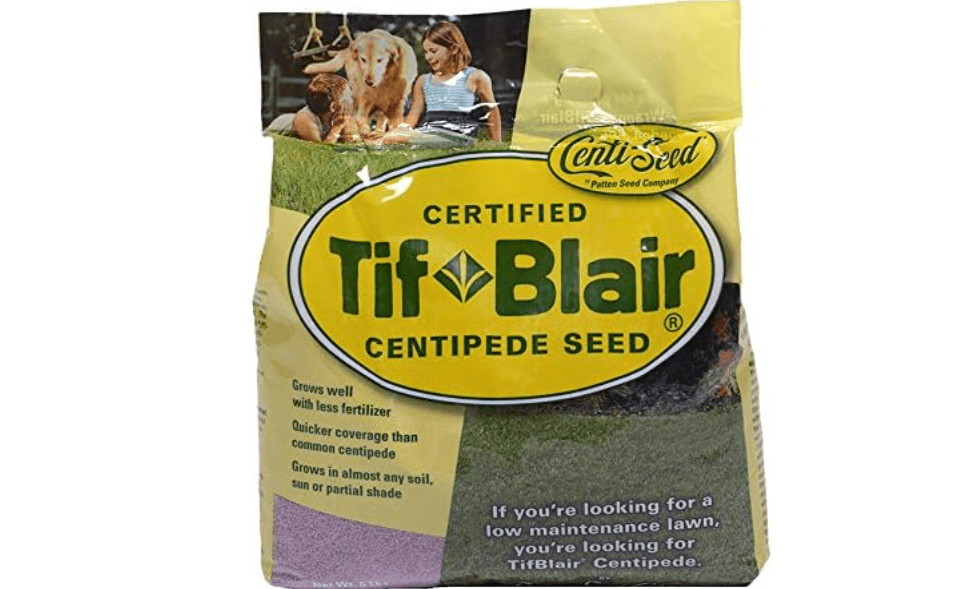
7. Best for Poor, Acidic Coastal Soil: TifBlair Centipede Grass Seed
Product Description: Fondly known as the “lazy man’s grass,” Centipede grass is incredibly low maintenance. TifBlair Centipede is the industry-leading seed for this variety, engineered to thrive where other grasses simply give up. It establishes a thick, apple-green turf that grows very slowly, meaning you will spend significantly fewer weekend hours pushing a lawnmower.
Price: $267.77
Key Features & Benefits:
-
Low Nutrient Requirements: Thrives in poor, sandy, and highly acidic soils.
-
Slow Growth Habit: Requires less frequent mowing than Bermuda or Fescue.
-
Cold Tolerant: TifBlair is specifically bred to handle unexpected cold snaps better than generic centipede seed.
Pros and Cons:
-
Pros: Extremely low maintenance; minimal fertilizer required; chokes out weeds efficiently.
-
Cons: Very sensitive to over-fertilizing (which can kill it); poor traffic tolerance (not ideal for heavy dog traffic).
Amazon Customer Ratings: A solid 4.3/5 stars. Reviewers highlight that once established, it is almost entirely hands-off.
Why it’s a good choice for NC: Much of eastern North Carolina features sandy, acidic soils naturally produced by dense pine forests. TifBlair Centipede loves this exact soil profile and requires minimal chemical amendments to survive.
Ideal Use Case / Who Should Buy It: Retirees, busy professionals, or hands-off homeowners in the Coastal Plain who want a green, functional yard with the absolute minimum amount of yard work.
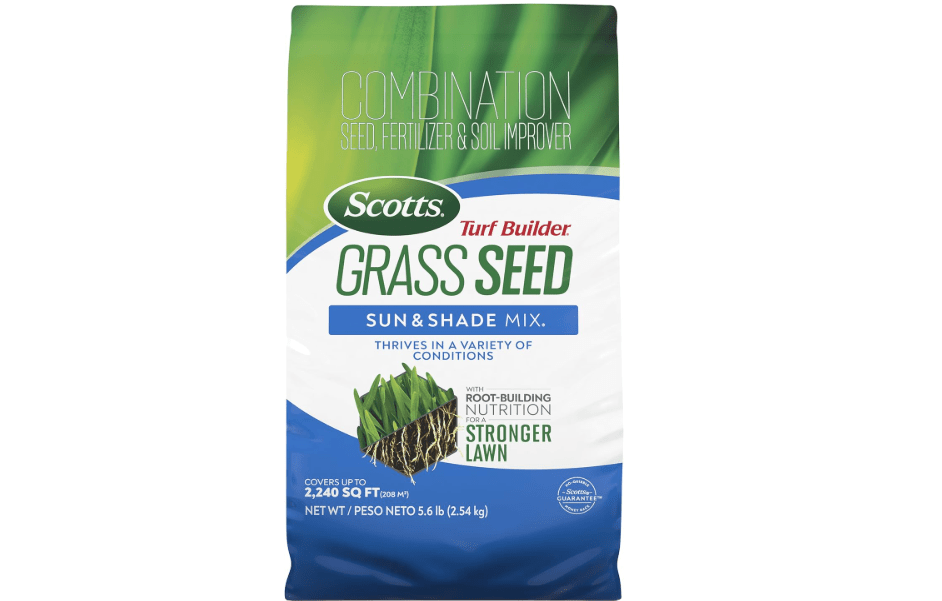
8. Best for Shady Lots: Scotts Turf Builder Sun & Shade Mix
Product Description: If your yard is a patchwork of glaring sun and deep shade cast by houses, fences, and mature oak trees, planting a single grass type will result in patchy, uneven growth. Scotts Sun & Shade Mix solves this by blending Turf-Type Tall Fescue, Kentucky Bluegrass, and Fine Fescues. The sun-loving grasses thrive in the open patches, while the shade-tolerant Fine Fescues dominate under the tree canopies, providing a uniform look across varying microclimates.
Price:
Key Features & Benefits:
-
Multi-Seed Blend: Automatically adapts to the light conditions of your specific yard.
-
WaterSmart PLUS Coating: Enhances seed survival in dry, root-choked soil under large trees.
-
Fine Fescue Inclusion: Specially selected for high performance in low-light conditions.
Pros and Cons:
-
Pros: Takes the guesswork out of mixed-light yards; establishes quickly.
-
Cons: Fine fescues are delicate and cannot handle heavy foot traffic or aggressive dog play.
Amazon Customer Ratings: With over 25,000 reviews and a 4.4/5 star rating, it is one of the most popular and trusted residential grass seeds on the market for older, tree-heavy neighborhoods.
Why it’s a good choice for NC: Historic NC neighborhoods in cities like Raleigh, Winston-Salem, and Charlotte are famous for their massive, mature tree canopies. This mix survives directly under those trees where Bermuda and standard Fescue thin out and die.
Ideal Use Case / Who Should Buy It: Homeowners with heavily wooded lots, partial sun exposure, or yards blocked by large architectural structures.
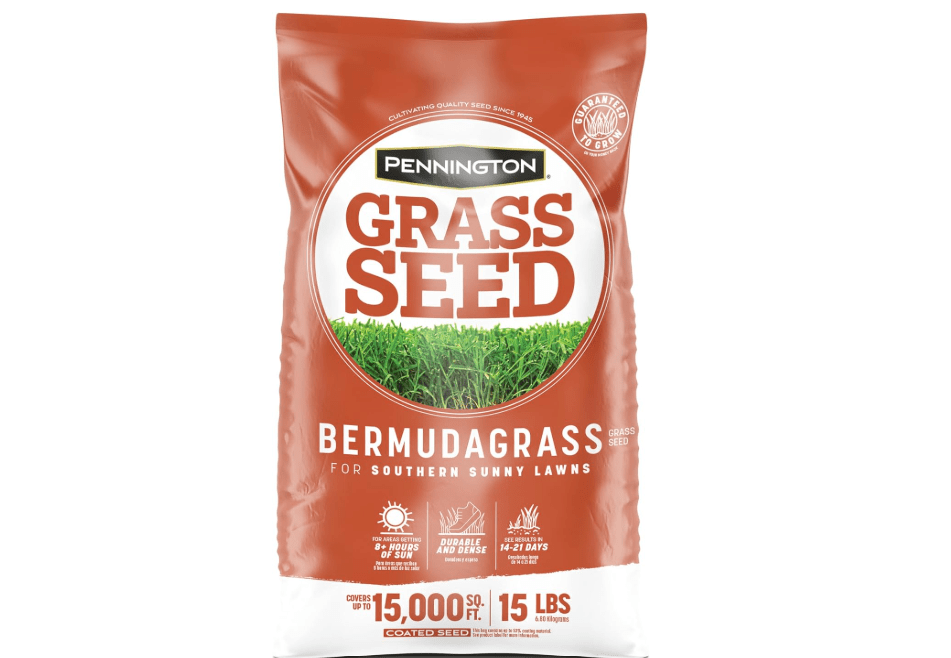
9. Best for Extreme Drought: Pennington Smart Seed Texas Bermuda
Product Description: Do not let the “Texas” in the name fool you—this seed is an absolute powerhouse in the Carolinas. Pennington Smart Seed Texas Bermuda is an elite warm-season blend engineered specifically for maximum drought tolerance and water conservation. It establishes a deep, extensive root system that finds water deep within the soil profile, ensuring survival during severe municipal watering bans.
Price: $79.80
Key Features & Benefits:
-
Smart Seed Technology: Requires up to 30% less water year over year compared to ordinary grass seed.
-
High Traffic Tolerance: Withstands intense wear and tear.
-
Exceptional Heat Resistance: Thrives in 90+ degree temperatures.
Pros and Cons:
-
Pros: Massive water savings; almost impossible to kill with heat; very aggressive recovery.
-
Cons: Its aggressive spreading habit means it will invade your flower beds and driveways if not edged regularly.
Amazon Customer Ratings: Rated 4.2/5 stars, with buyers emphasizing its aggressive, rapid growth and its ability to turn completely neglected dirt patches into lush lawns.
Why it’s a good choice for NC: Ideal for the hottest, driest micro-climates in NC, particularly during the late-summer droughts that frequently trigger county-wide irrigation restrictions.
Ideal Use Case / Who Should Buy It: Eco-conscious homeowners wanting to reduce their water bill, or those with large, un-irrigated full-sun properties that get battered by the summer sun.
10. Best for Quick Winter Color: Outsidepride Gulf Annual Ryegrass
Product Description: Warm-season grasses like Bermuda and Zoysia are fantastic for NC summers, but they turn completely brown and dormant from November through April. If you hate looking at a dead-looking lawn all winter, Outsidepride Gulf Annual Ryegrass is the solution. This seed germinates incredibly fast in cool weather, providing a lush, bright green carpet over your dormant warm-season turf.
Price: $124.99
Key Features & Benefits:
-
Lightning-Fast Germination: Sprouts in as little as 5 to 7 days.
-
Cold Weather Growth: Thrives in the cool temperatures of late fall and winter.
-
Annual Life Cycle: Naturally dies off in the late spring, allowing your primary warm-season grass to wake up and take over unhindered.
Pros and Cons:
-
Pros: Provides instant green color for winter; excellent for temporary winter erosion control.
-
Cons: It is strictly temporary; you must reseed every single fall if you want winter color.
Amazon Customer Ratings: A highly rated 4.5/5 stars with 4,500+ reviews. Customers love how easily it takes root simply by tossing it over their existing dormant lawn.
Why it’s a good choice for NC: It provides the perfect transitional cover for NC homeowners who want the durability of Bermuda in July but the aesthetic of a green lawn in December.
Ideal Use Case / Who Should Buy It: Coastal and Piedmont homeowners with warm-season lawns who want temporary, vibrant green color during the winter months.
IV. Summary & Comparison Table
Use this quick-reference guide to narrow down the right choice for your specific yard layout and region.
V. Expert NC Lawn Care Tips for Success
Buying the highest-quality seed is only half the battle. How and when you put it in the ground dictates your success.
-
Timing is Everything: In North Carolina, Cool-Season grasses (like Fescue and Kentucky Bluegrass) must be planted in early Fall (September to mid-October) while the soil is still warm but the air is cooling. Warm-Season grasses (Bermuda, Zoysia, Centipede) should be planted in late Spring (May to June) once the danger of the last frost has completely passed.
-
Utilize Free Soil Testing: North Carolina’s heavy clay is notoriously acidic. Between April and November, the NC Department of Agriculture offers free soil testing for residents. Getting a soil report will tell you exactly how much lime you need to apply to fix your pH, ensuring your expensive grass seed doesn’t die from nutrient lockout.
-
Water Deeply, Not Daily: Once your new seed has germinated and matured (after the first few mowings), transition from watering lightly every day to watering deeply (about 1 inch of water) just once or twice a week. This forces the grass roots to dive deeper into the soil searching for moisture, creating a highly drought-resistant lawn.
VI. Conclusion & Final Verdict
Achieving a pristine lawn in the Transition Zone doesn’t have to be an exercise in frustration. By assessing your soil type, understanding your region’s unique climate constraints, and being honest about your yard’s sun exposure, you can easily select a seed that will thrive.
If you live in the Piedmont and want a lush, durable lawn year-round that can handle the summer heat, grab a bag of Scotts Turf Builder Southern Gold or Barenbrug Turf Saver RTF. If you are out east on the coast battling sandy soil and full sun, you simply cannot beat the aggressive durability of Scotts Bermudagrass.
Don’t let another summer ruin your curb appeal. Click the links above to check current Amazon pricing, read real customer reviews, and have the right seed delivered directly to your door in time for the planting season.