
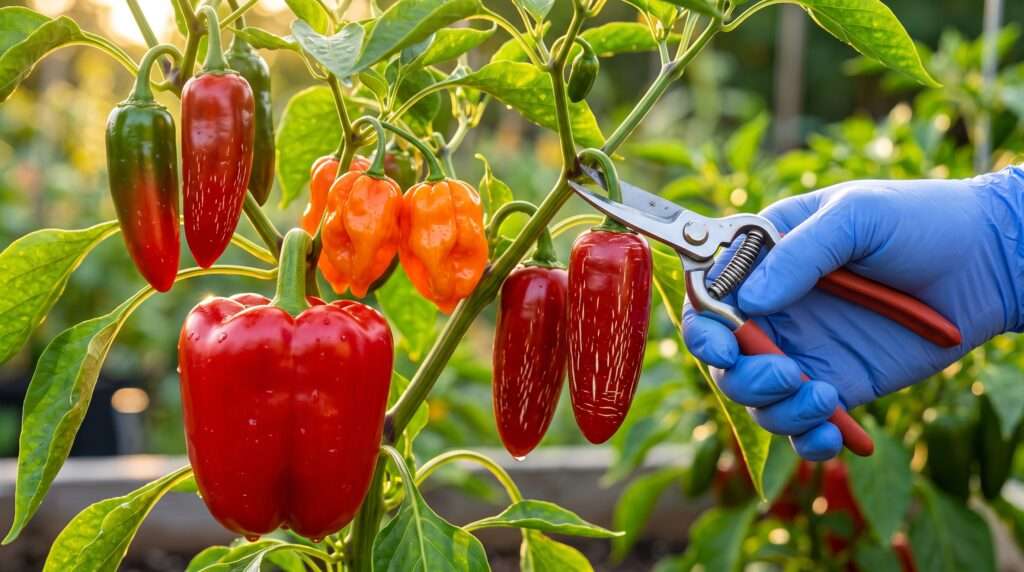
Every gardener knows the agonizing wait of watching a pepper hang on the vine, silently debating whether it is finally time to grab the pruners. Pick too early, and you are left with a grassy, under-spiced vegetable lacking in complex sugars. Wait too long, and you risk sunscald, fungal rot, or a mushy texture that ruins your salsa. Mastering the art of timing pepper harvest at peak ripeness is the single most critical skill for transforming an average garden yield into a culinary masterpiece. Whether you are growing sweet bell peppers for roasting, jalapeños for pickling, or blisteringly hot super-hots for fermented hot sauce, understanding the precise botanical cues of maturation will dictate your final flavor, heat, and harvest volume.
🌱 The Golden Rule of Pepper Harvesting (Quick Tip): A pepper is truly ripe when it has fully transitioned to its final color (red, yellow, orange, or chocolate) without any lingering green patches, feels firm and heavy for its size, and easily snaps off the plant at the stem’s natural joint.
🔬 The Science of Ripening: Why Timing Dictates Flavor, Heat, and Yield
To truly master your garden, you have to look beyond the surface of the fruit and understand the biological engine driving its development. Ripening is not just a change in color; it is a complex chemical transformation that dramatically alters the culinary profile of your peppers.
Capsaicin vs. Sugar Accumulation: What Happens on the Vine? 🧬
When a pepper is green, its cells are packed with chloroplasts—the same chlorophyll-rich structures that allow the leaves to photosynthesize. During this immature stage, the pepper tastes highly vegetative or “grassy.”
As the pepper approaches peak maturity, these chloroplasts undergo a biological metamorphosis, transforming into chromoplasts. This transition dismantles the green chlorophyll and replaces it with vibrant carotenoids and anthocyanins (the pigments responsible for vivid reds, oranges, and purples).
Simultaneously, two critical chemical processes occur depending on the Capsicum species you are growing:
-
Sweet Peppers (Capsicum annuum): The breakdown of complex starches accelerates, resulting in a massive spike in Brix levels (sugar content). A fully red bell pepper contains nearly twice the vitamin C and significantly more beta-carotene and natural sugars than its green counterpart.
-
Hot Peppers (Capsicum chinense, C. baccatum, etc.): The placental tissue—the spongy white membrane holding the seeds—goes into overdrive synthesizing capsaicinoids. While green hot peppers carry heat, leaving them on the vine until full color maturation ensures the essential oils reach their absolute maximum Scoville potential, accompanied by deep, fruity, and floral undertones.

The Yield Dilemma: Picking Early vs. Letting Fruit Fully Mature ⚖️
Gardeners often face a biological trade-off between maximizing the flavor of individual pods and maximizing the total yield of the plant. Pepper plants are genetically driven to reproduce. Once a pepper reaches full physiological maturity (when the seeds inside are fully viable), the plant receives a hormonal signal that its evolutionary job is done, causing it to slow down or halt new flower production.
If your goal is an endless supply of green peppers, frequent early harvesting tricks the plant into aggressively producing more flowers. However, if your priority is timing pepper harvest at peak ripeness for maximum culinary quality, you must accept a slightly lower total pod count in exchange for vastly superior flavor and heat.
🔍🌶️ 5 Definitive Signs Your Peppers Are at Peak Ripeness
Forget the guesswork. By observing these five specific visual and tactile markers, you can pinpoint the exact day your peppers reach their absolute peak.
Sign 1: The True-Color Shift (Beyond the “Muddy” Stage) 🎨
The most obvious indicator of ripeness is a complete color change, but the transition can be confusing for novice growers.
When a pepper begins to turn, it enters the “breaker stage.” During this time, the bright green skin may develop muddy brown, purplish, or black streaks. Many gardeners panic, assuming this dark discoloration is blossom end rot or disease. In reality, it is simply the natural overlapping of breaking-down green chlorophyll and developing red/orange pigments.
-
The Actionable Cue: Wait until the dark, muddy colors completely clear. A pepper is at peak ripeness when the color is vivid, uniform, and extends all the way up to the “shoulders” (the top curve of the fruit near the stem).
-
Note: There are exceptions for specific cultivars explicitly bred to remain green at maturity (like the ‘Permagreen’ bell) or deep purple (like the ‘Oda’ pepper). Always check your seed packet!
Sign 2: The Firmness & Skin Tightness “Squeeze Test” 🫑
Visuals can occasionally be deceiving, so you must rely on tactile feedback. The cellular turgor pressure inside the fruit dictates its crunch and shelf life.
Gently squeeze the pepper between your thumb and forefinger.
-
Immature: Feels thin-walled, slightly rubbery, or yields too easily to pressure.
-
Peak Ripeness: The skin is taut, exceptionally glossy, and the walls feel dense and rigid. It should feel heavy for its size, indicating maximum water and sugar retention.
-
Overripe: The skin begins to wrinkle, loses its waxy sheen, and feels slightly spongy or soft.
Sign 3: “Corking” Striations (The Secret Sweetness & Heat Cue) ⚡
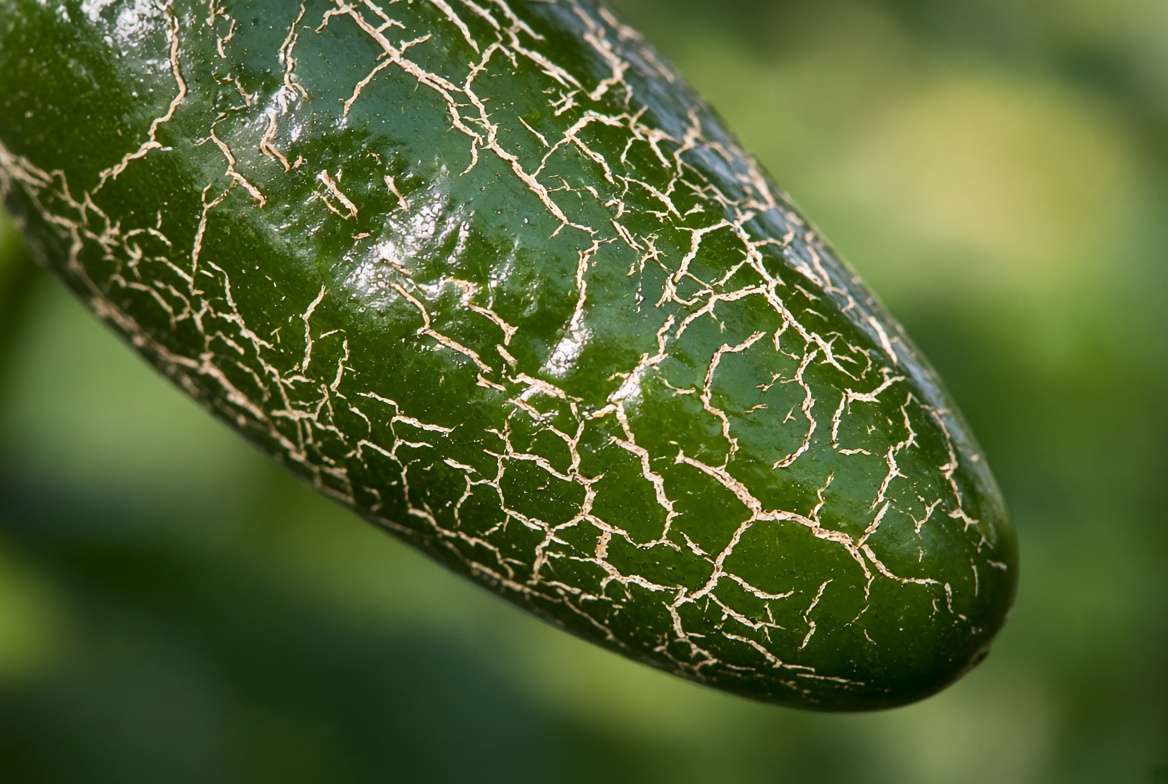
If you grow jalapeños, serranos, or certain Eastern European varieties, you might notice pale, tan-colored lines running vertically down the skin of the fruit. This is called corking.
Supermarket aesthetics have conditioned consumers to view smooth, blemish-free skin as the ideal. However, master gardeners and hot sauce artisans actively look for corking. These micro-cracks in the pepper’s cuticle layer occur when the interior flesh of the fruit expands faster than the skin can stretch—often triggered by rapid sugar accumulation and heavy watering during the late ripening phase.
Corking is the ultimate insider sign that a jalapeño has reached its absolute peak of sweetness and heat.
Sign 4: Stem Separation at the Natural Abscission Layer ✂️
Just like autumn leaves falling from a tree, mature peppers develop a natural separation point where the fruit’s stem (pedicel) meets the main branch. This is called the abscission zone.
When a pepper is fully ripe, the plant physically prepares to drop it.
-
The “Lift and Snap” Test: Gently hold the pepper and tilt it upward at a 45-degree angle. If it is perfectly ripe, the stem will often snap cleanly and effortlessly at the abscission knuckle. If you have to twist, yank, or wrestle with the fruit, it is still tethered to the plant’s nutrient system and needs more time.
Sign 5: Days to Maturity (DTM) Alignment with Seasonal Weather 📅
While the seed packet’s “Days to Maturity” (DTM) is an excellent baseline, it is rarely an exact schedule. DTM typically measures the time from transplanting into the garden (not from seed germination) until the first harvest.
However, late-season weather drastically alters this timeline. As nighttime temperatures drop into the low 60s Fahrenheit (15°C) in late summer or early fall, fruit expansion slows down, but color transition accelerates. Use your DTM as a reminder to start inspecting daily, but always let the physical signs (color, firmness, corking, and abscission) overrule the calendar.
📊 Harvest Timing by Pepper Category (Sweet, Hot, and Superhot)
Not all peppers are created equal, and the rules of the harvest shift depending on the cultivar. Below is a quick-reference comparison matrix to help you identify the ideal stage for the most popular botanical classes in your garden.
| Pepper Variety | Botanical Class | Ideal Harvest Stage | Key Ripeness Marker |
| Bell / Sweet | C. annuum | Full Color (Red, Yellow, Orange) | Glossy, thick walls, absolute lack of green shoulders |
| Jalapeño / Serrano | C. annuum | Deep Red (or Deep Green with Corking) | Prominent white striations (corking) |
| Habanero / Scotch Bonnet | C. chinense | Full Orange / Red | Waxy sheen, slight give to a gentle pinch |
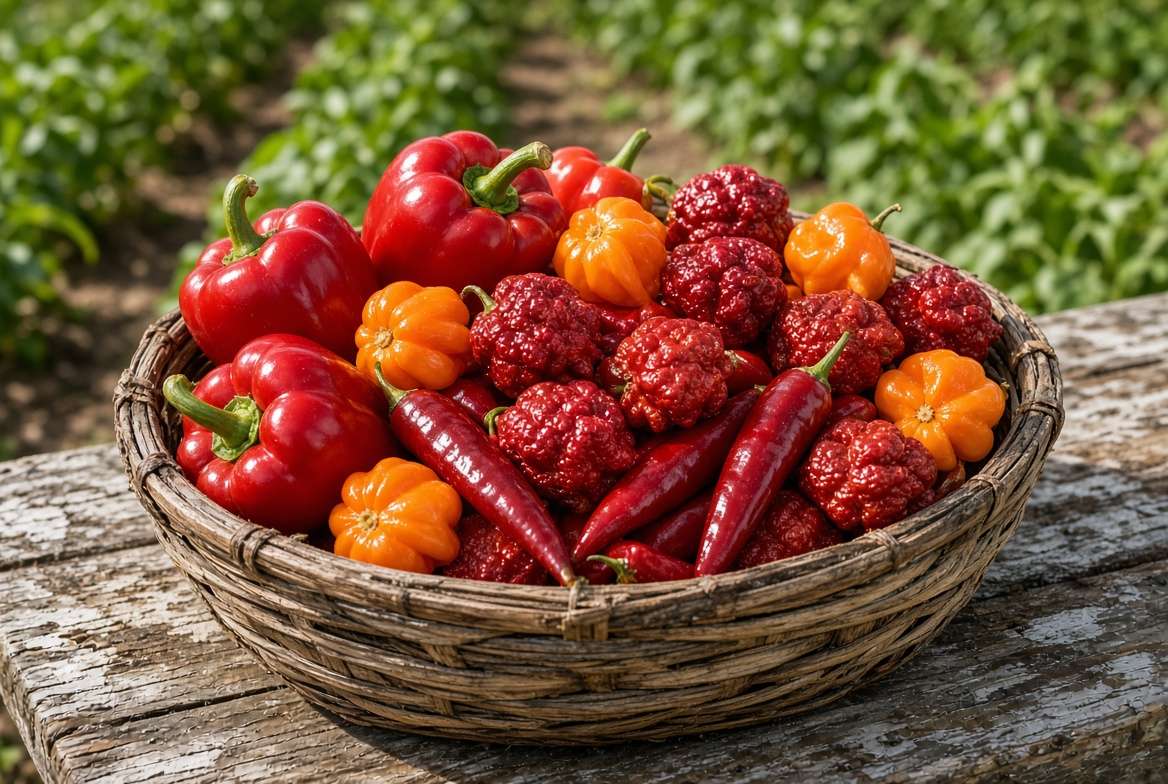
| Superhots (Ghost, Reaper) | C. chinense | Deep Crimson / Wrinkled | Distinct bumpy texture, intense floral aroma |
Sweet & Bell Peppers: Maximizing Brix (Sugar) & Crisp Texture 🥗
For sweet varieties like bell peppers, Corno di Toro, and mini snacking peppers, patience is your greatest virtue. While supermarkets sell green bell peppers in abundance (mostly because they ship better and take less time to grow), a green bell pepper is essentially an unripe fruit.
To maximize the Brix levels (the measure of dissolved sugars), you must leave them on the vine until they are fully colored. The wait is worth it: a fully ripened red bell pepper boasts a dramatically sweeter, fruitier flavor profile and a satisfying, crisp snap that a green pepper simply cannot match. Ensure the pepper feels dense; a lightweight colored pepper may have begun to dehydrate on the vine.
Hot Peppers (Jalapeño, Serrano, Cayenne): Balancing Pungency with Flavor 🔥
The harvest window for standard hot peppers offers a bit more culinary flexibility. A bright green jalapeño offers a bright, vegetal, and snappy bite, perfect for fresh pico de gallo. However, if you leave that same jalapeño on the plant until it blushes into a deep, crimson red, the flavor profile completely transforms.
Red jalapeños and serranos develop a complex “sweet-heat.” The sugars rise to balance out the capsaicin, making them the absolute best choice for roasting, drying into chipotles, or brewing up a batch of homemade sriracha sauce. Look for the aforementioned “corking” lines as your green light for harvest.
Superhots (Ghost, Scorpion, Reaper): Maximum Scoville & Safety 🧪🧤
When dealing with superhots belonging to the Capsicum chinense family, timing pepper harvest at peak ripeness requires a careful eye and a healthy dose of respect. These extreme varieties are harvested strictly for maximum Scoville heat units (SHU) and their unique, fruity-floral undertones.
Superhots generally take much longer to ripen—often 100 to 120 days from transplant. You will know they are ready when they develop a dangerously vibrant color (usually blistering red, peach, or chocolate, depending on the genetics). The skin will often look wicked, blistered, and heavily wrinkled. Crucial warning: When inspecting and harvesting superhots, always wear nitrile gloves and avoid touching your face. The volatile capsaicin oils present on the stems and skin can cause severe skin irritation.
✂️🧤 Step-by-Step Harvesting Protocol: Protect the Plant & Fruit
Once you have identified that your peppers are perfectly ripe, the physical act of harvesting requires precision. Careless picking can damage the plant, invite disease, and drastically reduce your late-season yields.
Bypass Pruners vs. Hand Snapping: Why Pulling Destroys Yields 🚫
While the “lift and snap” method works wonderfully for peppers that are fully ready to drop at the abscission layer, it carries a risk for slightly stubborn fruits. Yanking or twisting a pepper can easily strip the fragile bark away from the main branch.
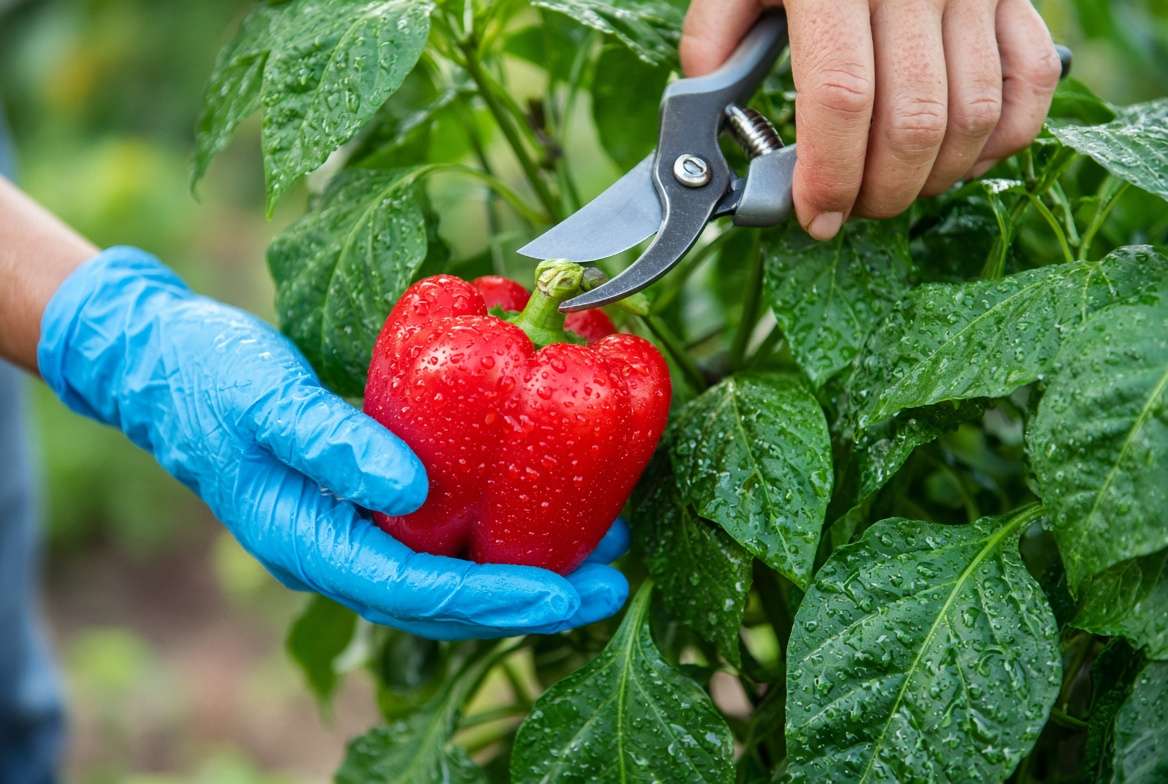
These open wounds are an open invitation for bacterial pathogens like Xanthomonas (bacterial spot) or fungal infections. To guarantee plant safety, always use a pair of sharp, clean bypass pruners or micro-snips. Cut the pedicel (stem) cleanly, leaving about 1/2 to 1 inch of the stem attached to the fruit. This intact stem extends the pepper’s shelf life and prevents rot from entering the top of the fruit.
The Ideal Time of Day to Harvest (Turgor Pressure Rules) ☀️
When you pick your peppers matters just as much as how you pick them. The ultimate time to harvest is early in the morning, just after the morning dew has dried but before the intense midday heat sets in.
During the cool night, pepper plants draw up water, maximizing their internal turgor pressure. This leaves the fruit incredibly crisp, hydrated, and plump. If you wait until 3:00 PM on a scorching August afternoon to harvest, the plant is actively losing moisture to transpiration, resulting in peppers that may feel slightly limp and will have a shorter shelf life in your kitchen.
Tool Sanitation Best Practices 🧼
Peppers are highly susceptible to viral loads, particularly the Tobacco Mosaic Virus (TMV) and Cucumber Mosaic Virus (CMV), which can be easily spread from plant to plant via dirty pruners. Keep a small spray bottle of 70% isopropyl alcohol or a mild bleach solution in your garden caddy. Give your pruners a quick spritz and wipe down when moving between different raised beds or rows to keep your garden strictly sanitary.
🧺❄️ Post-Harvest Handling & Storage: Lock In Peak Quality
You’ve successfully harvested at peak ripeness; now you must protect that perfection. Poor storage can ruin a beautiful harvest in a matter of days.
Counter vs. Refrigerator Storage Guidelines 🧊
-
Short-Term (1-3 Days): If you plan to eat the peppers immediately, keep them on the kitchen counter at room temperature in a breathable basket. This preserves their ideal texture and aroma.
-
Mid-Term (Up to 2 Weeks): Place dry, unwashed peppers in the crisper drawer of your refrigerator. Moisture is the enemy of stored peppers, so line the drawer or storage bag with a dry paper towel to absorb ambient humidity. Avoid extreme cold; temperatures below 45°F (7°C) can cause chilling injury, leading to soft, sunken, water-soaked pits on the pepper’s skin.
Will Peppers Ripen Off the Vine? (The Ethylene Reality) 🍅
Unlike tomatoes, which are climacteric fruits that respond heavily to ethylene gas and easily ripen on a windowsill, peppers are non-climacteric.
The hard truth: A completely green pepper picked too early will never turn red, sweeten up, or increase in capsaicin off the vine. It will just slowly rot. However, if a pepper has already entered the “breaker stage” (showing at least 10-20% of its final color), you can place it in a paper bag on the counter. The color will continue to transition to red or orange, though the sugar content will remain exactly what it was the moment you cut it from the plant.
Quick Preservation Pathways 🌶️
If you have a bumper crop, don’t let them go bad!
-
Freezing: Chop them up, lay them flat on a baking sheet to flash-freeze, and then bag them. Perfect for winter chili and stir-fries.
-
Dehydrating: Slice thin and use a food dehydrator at 125°F (52°C) until brittle. Grind into custom paprika or chili flakes.
-
Fermenting: Submerge whole or halved hot peppers in a 3% saltwater brine to create complex, probiotic-rich homemade hot sauces.
⚠️🛠️ Troubleshooting Ripening Roadblocks
Sometimes, despite your best efforts, your peppers stubbornly refuse to cooperate. Here are the two most common ripening issues and how to fix them.
Why Are My Peppers Stuck on Green? 🟢
If it feels like your peppers have been green for a month, you are likely dealing with a temperature stall. The biological synthesis of lycopene and beta-carotene (the red and orange pigments) physically halts when daytime temperatures consistently exceed 90°F (32°C). Ironically, high heat prevents hot peppers from ripening! Once the heatwave breaks and temperatures dip back into the 75°F–85°F range, you will see a rapid, almost overnight explosion of color.
Alternatively, excessive nitrogen fertilizer will encourage the plant to push out massive amounts of green foliage at the expense of ripening fruit. Switch to a phosphorus and potassium-heavy fertilizer (like bone meal or kelp) once flowers appear.
Avoiding Late-Season Cold Snap Casualties ❄️
As autumn approaches, a sudden frost warning can threaten an entire crop of unripe peppers. If a hard freeze is imminent:
-
Cover Up: Use frost blankets or plastic cloches to trap soil heat at night.
-
Top the Plant: Two weeks before your first expected frost date, snip off all new flowers and tiny, immature peppers. This forces the plant to redirect all its remaining autumn energy into ripening the existing, full-sized green fruits.
-
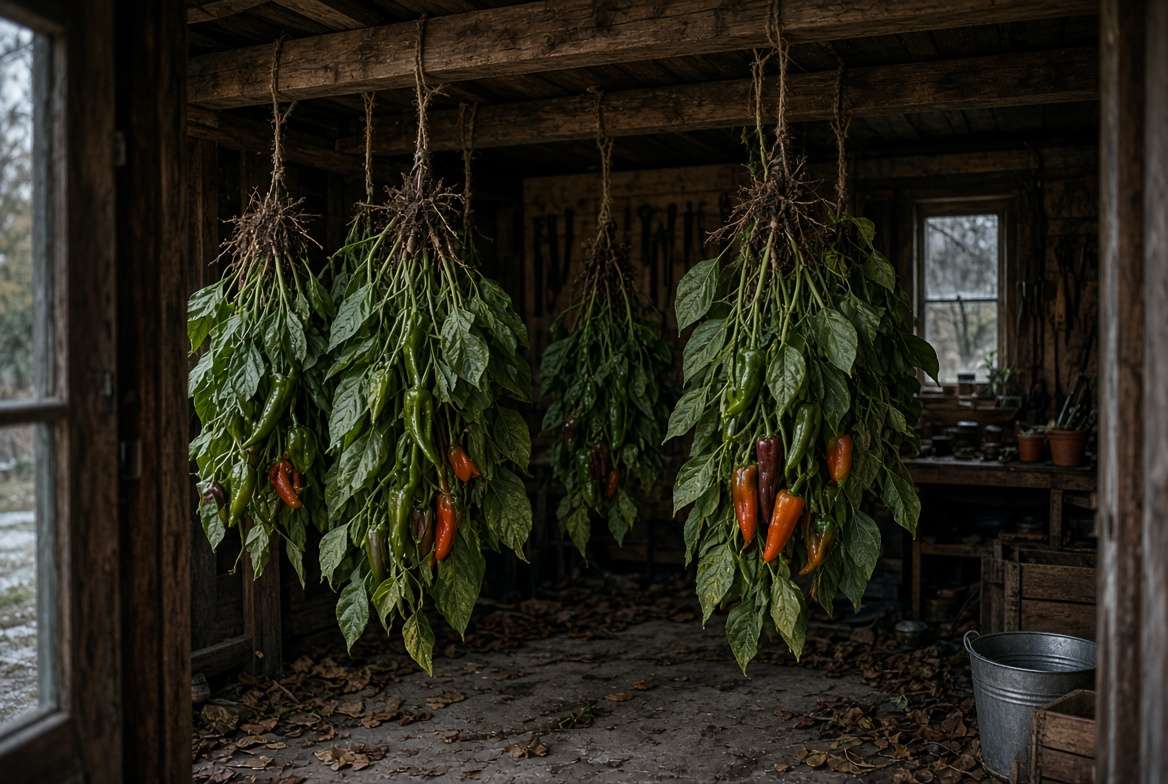
Emergency Harvest: If a killing frost is unavoidable, pull the entire plant out of the ground by the roots and hang it upside down in a warm garage or basement. The lingering energy in the stem will help breaker-stage peppers finish their color transition.
💬 Frequently Asked Questions (FAQ)
Q: Can I eat peppers that have black or dark purple patches on one side?
A: Yes! As long as the patch isn’t soft, sunken, or fuzzy (which indicates blossom end rot or sunscald damage), dark purple or black patches are simply a buildup of anthocyanins. This is a natural “sunscreen” the pepper produces to protect itself from intense UV light. It is completely safe and harmless to eat.
Q: Does harvesting early force the plant to produce more peppers?
A: Yes. Because the plant’s ultimate goal is mature seed production, picking green peppers intercepts this goal. The plant will rapidly produce new flushes of flowers to try again, significantly increasing your overall yield (albeit with green, less flavorful pods).
Q: Why are my harvested hot peppers not spicy at all?
A: Lack of heat usually stems from three issues: harvesting too early before capsaicin oils fully develop, over-watering the plant (which dilutes the oils), or simply growing a mild genetic cross by mistake. Stressing hot pepper plants slightly by letting the soil dry out between waterings can concentrate their heat.
Q: How can I tell if a pepper is overripe and going bad on the vine?
A: An overripe pepper will lose its vibrant, waxy shine and begin to look dull. You will notice the skin wrinkling (unless it is a superhot variety that is naturally wrinkled), and the flesh will feel soft, spongy, or slightly mushy when squeezed.
📋 🎁 Bonus Value: Printable “Peak Harvest” Cheat Sheet
Save this quick checklist to your phone or pin it up in your garden shed so you never second-guess your harvest timing again!
-
[ ] 1. Color Check: The pepper has fully transitioned to a uniform color with absolutely zero muddy or green patches remaining.
-
[ ] 2. The Squeeze Test: The flesh feels incredibly dense, taut, and firm under gentle thumb pressure.
-
[ ] 3. The Corking Rule: (For jalapeños/serranos) Fine, tan-colored striations are visible on the skin, signaling peak sugar and heat.
-
[ ] 4. The Stem Snap: The fruit angles cleanly upward and wants to naturally release at the stem knuckle with minimal effort.
-
[ ] 5. The Clean Cut: You are using sanitized bypass pruners, leaving at least 1/2 inch of the stem attached to the fruit to prevent rot.
Happy harvesting! May your sweet peppers be exceptionally crisp and your hot peppers pack the perfect punch. 🌶️✨











