Keeping a lush, green lawn in Pennsylvania is an uphill battle. Between brutal winter freezes, oppressive, humid summer heatwaves, and notoriously dense clay soils that suffocate new root growth, average yards are often left looking patchy, thin, and brown by late August. You cannot simply grab a generic, cheap bag of seed from the local hardware store and hope for the best. To survive this demanding climate, you need premium, cool-season turfgrass explicitly bred for these extremes. To save you from a failed overseeding project, we’ve researched and ranked the best 10 grass seed for pa.
This comprehensive, data-backed guide will save you time, money, and the headache of trial-and-error lawn care. By focusing on top-tier cool-season varieties—like elite Tall Fescues, Fine Fescues, Kentucky Bluegrass, and Perennial Ryegrass—we will help you make a highly informed buying decision tailored to your specific yard. Whether you are battling deep shade, baked clay, or heavy foot traffic, the perfect seed is on this list.
The Bottom Line: Our Top Picks at a Glance
In a rush to get your seed down before the weather turns? Here are the top performers from our analysis that you can purchase right now:
-
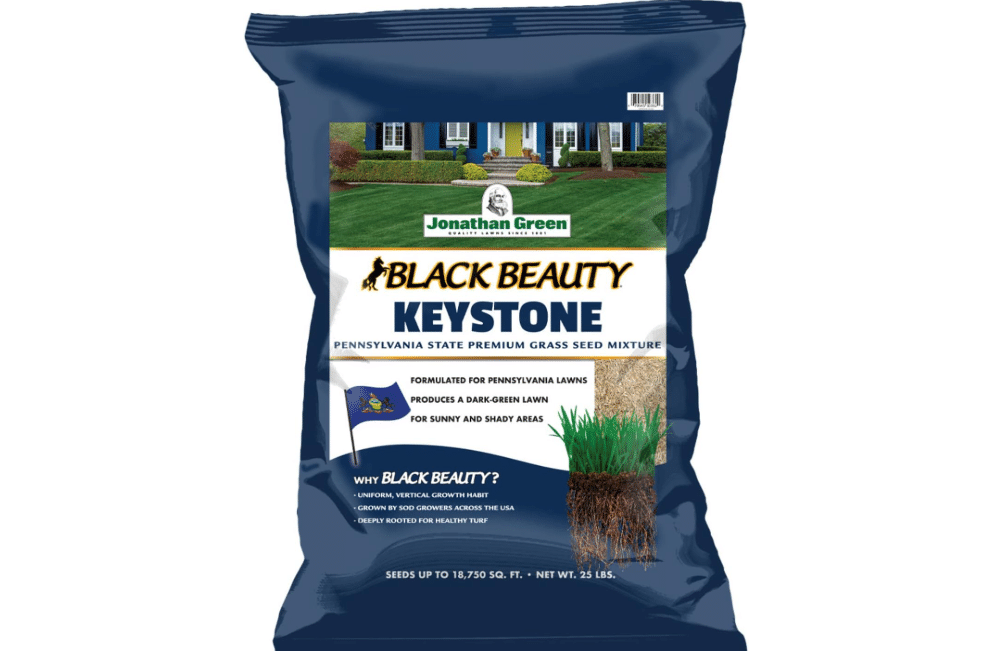
Best Overall for PA: Jonathan Green Black Beauty Keystone Pennsylvania Grass Seed – The ultimate drought-resistant, deep-rooting blend formulated specifically for the state.
-
Best for Shady Yards: Scotts Turf Builder Grass Seed Sun & Shade Mix – A foolproof, coated seed mix perfect for neighborhoods with mature, shifting tree canopies.
-
Best for Heat & Heavy Clay: Pennington The Rebels Tall Fescue – An aggressive, tough-as-nails option that punches through compacted PA soil and survives summer droughts.
How We Evaluated and Ranked the Seed
To build a trustworthy list of recommendations, we didn’t just look at the most popular brands. We analyzed the specific agronomic needs of the Northeast and Mid-Atlantic transition zones. Our selection criteria prioritized:
-
Zero Weed and Crop Seed: We penalized blends with high weed seed percentages or filler crop seeds. You are paying for grass, not agricultural weeds.
-
Drought Tolerance & Root Depth: Pennsylvania summers are getting hotter. We prioritized seeds capable of growing deep root systems (up to 4 feet) to reach subterranean moisture during July and August dry spells.
-
Endophyte Enhancement: We favored blends containing natural endophytes—beneficial fungi that naturally repel surface-feeding insects like chinch bugs and sod webworms without the need for harsh chemical pesticides.
-
Real User Data: We cross-referenced independent turfgrass research from agricultural extensions with thousands of Amazon customer reviews to verify real-world germination rates and long-term survival in PA soils.
At a Glance: Top Grass Seed Comparison
Detailed Product Reviews & Comparisons
1. Best Overall: Jonathan Green Black Beauty Keystone Pennsylvania Grass Seed
Product Description: When it comes to dominating the unpredictable Pennsylvania climate, Jonathan Green’s Black Beauty Keystone blend stands in a league of its own. This premium, all-purpose mixture was engineered specifically for the state of Pennsylvania. It features a proprietary blend of Tall Fescues, Perennial Ryegrass, and Kentucky Bluegrass that grow a naturally dark green, thick canopy. What makes Black Beauty unique is its waxy leaf coating—similar to the skin of an apple—which locks in moisture and fends off diseases.
Do it Best+ 1
Price: $107.44
Key Features and Benefits:
-
Massive Root System: Can grow roots up to 4 feet deep, tapping into moisture far below the dry summer surface.
-
Invisible Waxy Coating: Preserves cellular moisture, making it highly drought-resistant.
-
Broad Coverage: A 7 lb bag covers up to 5,250 sq. ft. for overseeding.
Pros and Cons:
-
Pros: Specially formulated for the PA climate; exceptional drought tolerance; rich, dark color.
-
Cons: Premium price point compared to standard hardware store blends.
Amazon Customer Ratings and Reviews: Boasting an overwhelmingly positive consensus, users frequently highlight the seed’s rapid germination and the stunningly rich, dark green color it produces. Many PA homeowners noted it was the only seed that survived their summer watering restrictions.
Why It’s a Good Choice for PA: It is explicitly formulated to thrive in both the humid, sweltering summers of Southeast Pennsylvania and the colder, freezing winters of the Western half of the state.
Ideal Use Case / Who Should Buy It: PA homeowners looking for a premium, all-around resilient lawn who want a golf-course look without having to micro-manage sun and shade ratios.
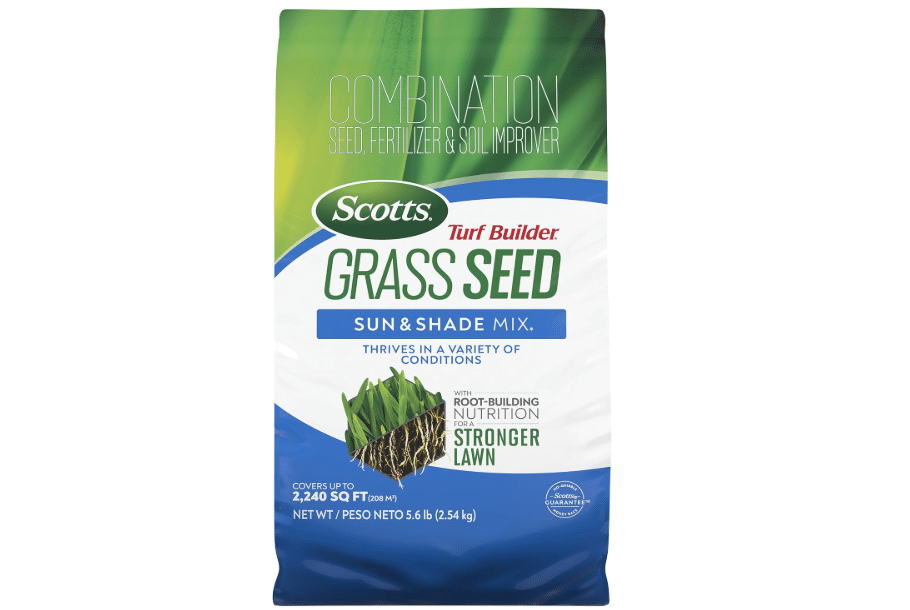
2. Best for Mixed Light: Scotts Turf Builder Grass Seed Sun & Shade Mix
Product Description: If your yard features a patchwork of mature trees, buildings, and wide-open sunny spots, you need a versatile seed that can handle shifting light. Scotts Turf Builder Sun & Shade Mix is an incredibly popular, user-friendly blend of Bluegrass, Ryegrass, and Fescue. The standout feature is Scotts’ proprietary WaterSmart PLUS coating, which absorbs 2x more water than uncoated seed, feeds the sprout with essential nutrients, and protects against common seedling diseases.
Price:
Key Features and Benefits:
-
4-in-1 Coating Technology: Keeps the seed moist, feeds it, protects it, and promotes faster establishment.
-
Versatile Blend: Automatically adapts to the sunlight available—bluegrass takes over in the sun, while fescues thrive in the shadows.
-
Self-Repairing: Spreads to fill in bare spots dynamically.
Pros and Cons:
-
Pros: Extremely reliable germination; highly forgiving for beginners; easy to spread.
-
Cons: The heavy coating means you get fewer actual seeds per pound compared to raw seed bags.
Amazon Customer Ratings and Reviews: Reviewers consistently praise how foolproof the application is. Many users note that as long as it receives consistent watering during the first two weeks, the germination rate is explosive, filling in bare patches beautifully.
Why It’s a Good Choice for PA: Perfect for established, older Pennsylvania neighborhoods where towering oaks and maples create moving shadows across the yard throughout the day.
Ideal Use Case / Who Should Buy It: Beginners, busy homeowners, or anyone patching a yard with highly unpredictable or varied sunlight exposure.
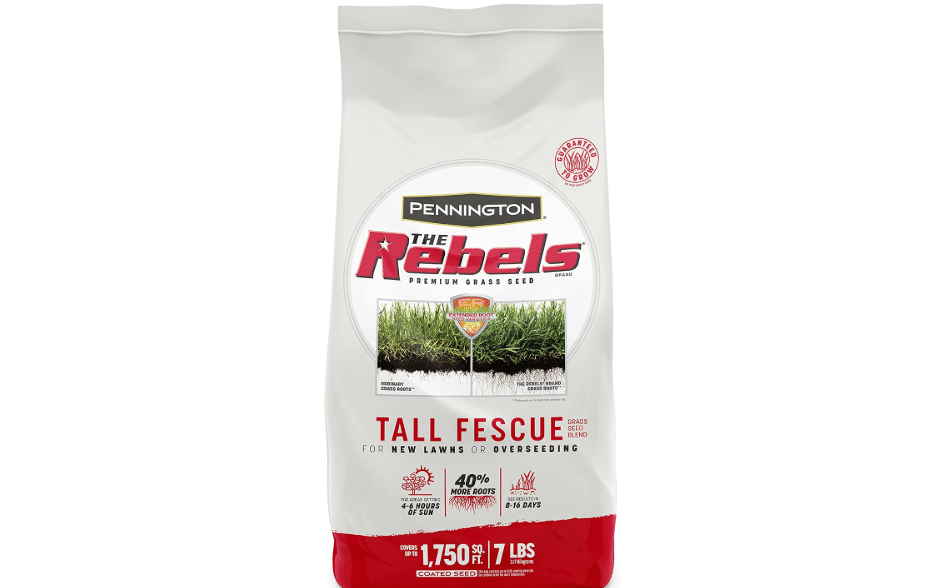
3. Best for Heat and Drought: Pennington The Rebels Tall Fescue Grass Seed Mix
Product Description: When July hits and the rain stops, weak grasses go dormant and turn brown. Pennington’s The Rebels Tall Fescue is bred to laugh in the face of heatwaves. This is a tough, aggressive, deep-rooted Tall Fescue blend known for creating an incredibly dense, resilient turf. It is specifically engineered for exceptional heat, drought, and heavy traffic tolerance.
Price:
Key Features and Benefits:
-
Extended Drought Resistance: Deep, aggressive roots seek out subterranean water.
-
Tough-as-Nails Durability: Stands up to heavy foot traffic, pets, and neighborhood kids.
-
Disease Resistance: Highly resistant to brown patch, a common mid-summer fungal issue.
Pros and Cons:
-
Pros: Chokes out weeds naturally due to its dense growth; survives severe heat waves with minimal irrigation.
-
Cons: Has a slightly wider, coarser blade texture than delicate fine fescues or premium bluegrass.
Amazon Customer Ratings and Reviews: Buyers frequently post photos of their lawns staying green in late August while their neighbors’ yards turn yellow. Reviewers highlight its incredible survival rate during droughts and its ability to withstand heavy dog traffic.
Why It’s a Good Choice for PA: Turfgrass specialists routinely recommend Tall Fescue for Pennsylvania because it is uniquely equipped to survive the state’s increasingly hot summers while pushing its roots aggressively through heavy clay soils.
Ideal Use Case / Who Should Buy It: Families with active kids, households with large dogs, or homeowners living in townships with strict summer watering restrictions.
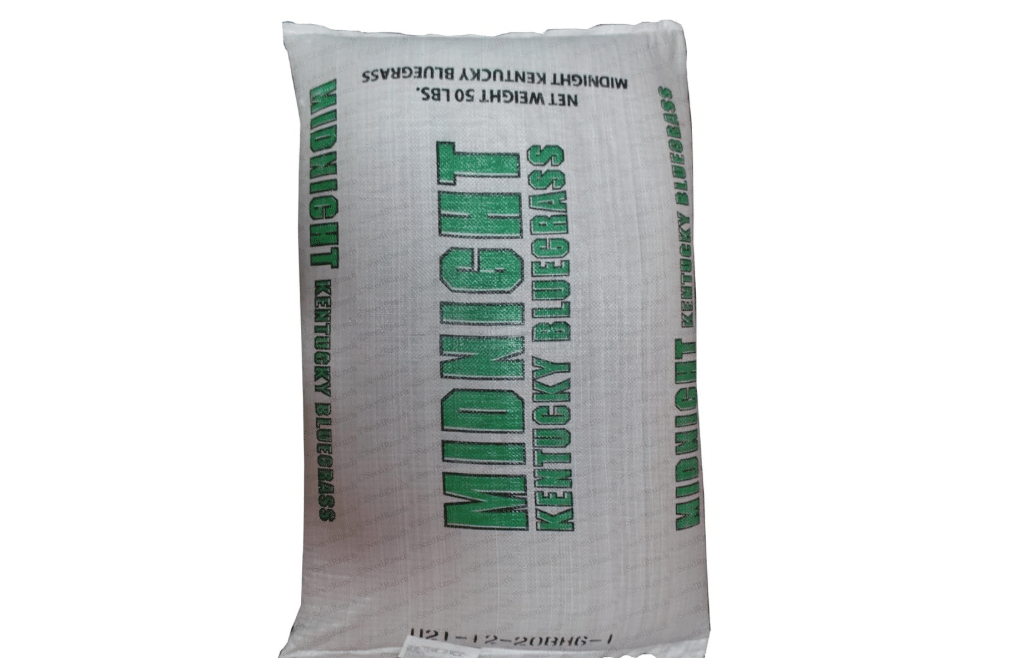
4. Best Premium Appearance: SeedRanch Midnight Kentucky Bluegrass Seed
Product Description:
SeedRanch Midnight Kentucky Bluegrass is a legendary, sod-quality single cultivar renowned across North America for delivering an impossibly dark blue-green hue. Midnight is widely considered the gold standard of luxury turfgrasses. Unlike bunch-type varieties, it spreads through underground horizontal stems called rhizomes, creating a tightly woven, dense living carpet that naturally repairs its own bare spots.
Price: $187.77
Key Features and Benefits:
-
Self-Healing Rhizomes: Naturally knits over bare spots, foot trails, and minor winter freeze damage without requiring annual reseeding.
-
Dense Canopy Architecture: Grows tightly packed blades that naturally crowd out crabgrass and dandelion seeds before they take root.
-
Superb Cold Hardiness: Holds exceptional cold tolerance, maintaining cellular integrity through sub-zero winter freezes.
Pros and Cons:
-
Pros: Delivers a golf-course-quality aesthetic; self-repairing habit; stunning deep blue-green color.
-
Cons: Very slow germination window (14 to 28 days); requires full, unobstructed sun and regular feeding to maintain elite color.
Amazon Customer Ratings and Reviews:
Verified buyers frequently remark that the patience required during the long germination window pays off with the best-looking yard on the street. Reviewers emphasize that consistent, light watering for three full weeks is non-negotiable for success.
Why It’s a Good Choice for PA:
Northern and Western Pennsylvania experience sustained winter freezes that thin out weaker fescues; Midnight Kentucky Bluegrass is bred to thrive through deep frost and bounce back early in the spring.
Ideal Use Case / Who Should Buy It:
Lawn enthusiasts and dedicated DIYers with full-sun properties who want an immaculate, magazine-cover lawn and are willing to invest the patience to let it establish.
5. Best for Fast Results: Outsidepride Perennial Ryegrass Seed
Product Description:
Outsidepride Perennial Ryegrass is engineered for speed, durability, and immediate impact. While Kentucky Bluegrass can take almost a month to show green sprouts, this cold-hardy Perennial Ryegrass breaks through the soil in under a week. It produces a lush, fine-textured leaf blade with a high-end, upright growth habit, making it the top choice for emergency slope stabilization, post-drought recovery, or late-season renovations.
Price: $189.99
Key Features and Benefits:
-
Rapid Germination: Sprouts in as few as 5 to 7 days under standard early-fall soil moisture conditions.
-
High Wear Tolerance: Handles regular foot traffic and mowing better than fine fescues.
-
Uniform Upright Foliage: Mows cleanly, leaving crisp striping lines.
Pros and Cons:
-
Pros: Near-instant visual gratification; excellent cold weather performance; exceptional erosion control on slopes.
-
Cons: Bunch-type growth habit means it will not self-spread into bare spots if damaged.
Amazon Customer Ratings and Reviews:
Amazon reviewers praise this seed for saving them when fall temperatures began dropping faster than expected. Customers report visible green fuzz in backyard patches within six days of broadcast seeding.
Why It’s a Good Choice for PA:
In Pennsylvania, the window between summer heat dropping off and the first hard frost can be brief. This seed establishes roots rapidly, ensuring a secure turf base before winter ground freezes take hold.
Ideal Use Case / Who Should Buy It:
Homeowners needing fast bare-spot repairs, slope erosion fixes, or anyone starting their fall lawn project late into October.
6. Best for Deep Shade: Outsidepride Legacy Fine Fescue Grass Seed
Product Description:
Growing grass in deep tree shade is a common failure point for Pennsylvania yards. Outsidepride Legacy Fine Fescue solves this by combining the hardiest low-light cultivars: creeping red fescue, hard fescue, and chewings fescue. These varieties evolved in forest floor ecosystems, allowing them to produce chlorophyll and build root structures with only a fraction of the sunlight required by standard fescues or bluegrass.

Price: $69.99
Key Features and Benefits:
-
Extreme Low-Light Adaptation: Performs well with as little as 3 to 4 hours of dappled or filtered light daily.
-
Low Nitrogen Demand: Requires substantially less fertilizer than high-maintenance blends, reducing maintenance costs.
-
Drought Adaptability in Shade: Tolerates dry soil under thirsty mature tree root networks.
Pros and Cons:
-
Pros: Solves the stubborn issue of bare, mossy patches under mature deciduous trees; minimal fertilizer requirements.
-
Cons: Thin, delicate blades that cannot handle high-impact sports, rough pet play, or vehicle parking.
Amazon Customer Ratings and Reviews:
Homeowners on Amazon frequently report success after failing for years with standard big-box mixes under large oak, pine, and maple canopies. Reviewers highlight its delicate, soft texture underfoot.
Why It’s a Good Choice for PA:
The Commonwealth’s rolling, heavily wooded terrain leaves countless suburban properties shaded for the majority of the day. This blend is built directly for those low-light settings.
Ideal Use Case / Who Should Buy It:
Properties shaded by dense, mature tree canopies or north-facing walls where standard seeds sprout and promptly die off.
7. Best Heavy Clay Performer: Triple-Play Tall Fescue Grass Seed Blend
Product Description:
Compact, dense clay soil is a hallmark of Pennsylvania properties, often choking out fragile root systems before they can establish. Triple-Play Tall Fescue is an agricultural-grade blend of three top-performing turf-type tall fescues, specifically chosen for their ability to force roots deep through heavy, un-aerated earth.
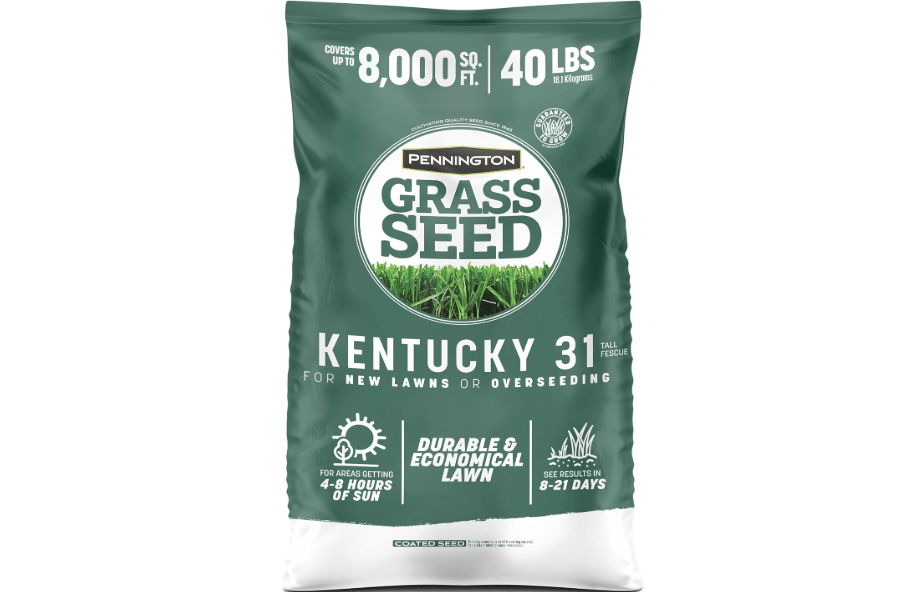
Price: $67.00
Key Features and Benefits:
-
Aggressive Taproot Drive: Penetrates compacted subsoil layers to pull up nutrients and moisture.
-
Brown Patch Immunity: High genetic resistance to rhizoctonia (brown patch), which runs rampant during humid PA summer nights.
-
Dark Green Coloration: Matches the appearance of premium residential lawns without yellowing during minor dry periods.
Pros and Cons:
-
Pros: Handles heavy clay soils effortlessly; resistant to common summer fungi; long-term durability.
-
Cons: Best maintained at higher cutting heights (3.5 to 4 inches), requiring disciplined mowing.
Amazon Customer Ratings and Reviews:
Lawn renovators highlight its resilience in newly built subdivisions where topsoil was stripped during construction, leaving only dense subsoil clay behind.
Why It’s a Good Choice for PA:
From the Piedmont region to the Allegheny Plateau, heavy clay soils dominate the state. Triple-Play’s root vigor is designed to navigate that exact ground composition.
Ideal Use Case / Who Should Buy It:
Homeowners dealing with compacted red or gray clay soils, particularly in newer developments where topsoil quality is poor.
8. Best Natural/Eco-Friendly: Jonathan Green Blue Panther Kentucky Bluegrass
Product Description:
Jonathan Green Blue Panther is a specialized blend of elite Kentucky Bluegrass varieties that incorporates natural endophyte enhancements. These naturally occurring, beneficial microscopic fungi live inside the plant tissues, serving as a built-in defense mechanism that repels destructive lawn insects while bolstering the grass’s immune response against environmental stress.

Price: $28.45
Key Features and Benefits:
-
Endophyte-Fortified: Naturally repels chinch bugs, sod webworms, and billbugs, cutting down on the need for chemical sprays.
-
Deep Sward Density: Fills in tightly to keep soil temps cool and suppress surface weed germination.
-
High Purity Standards: Contains 0.0% other crop seed and minimal inert matter, ensuring you are paying strictly for viable turf.
Pros and Cons:
-
Pros: Dramatically reduces the need for chemical pest applications; safe for wildlife, children, and pets; sod-farm-level finish.
-
Cons: Takes several weeks to establish; demands consistent, measured watering during early growth.
Amazon Customer Ratings and Reviews:
Verified purchasers praise the seed for bouncing back quickly after seasonal insect pressure that left neighboring lawns damaged.
Why It’s a Good Choice for PA:
Humid Mid-Atlantic summers create prime breeding grounds for turf-chewing insects. Blue Panther protects your investment naturally through biological resistance.
Ideal Use Case / Who Should Buy It:
Eco-conscious homeowners, organic lawn care advocates, and families with young children or free-roaming pets who want a clean lawn without synthetic chemical treatments.
9. Best Dense Shade Alternative: Scotts Turf Builder Dense Shade Mix
Product Description:
For problem sections receiving minimal direct sunlight each day, Scotts Turf Builder Dense Shade Mix offers an approachable, high-germination retail solution. This mix combines creeping red fescue, chewings fescue, and shade-tolerant tall fescue, pre-treated with Scotts’ moisture-retention coating to help seeds germinate evenly across dim, damp soil patches.

Price: $18.62
Key Features and Benefits:
-
Low Sun Threshold: Thrives in areas receiving as little as 3 hours of direct sunlight.
-
Protective Seed Shield: Seed coating keeps moisture locked around the kernel, preventing damp-off mold common in dim corners.
-
Widely Accessible: Readily available with consistent batch-to-batch quality control.
Pros and Cons:
-
Pros: Highly effective for problem spots along fences and sheds; cost-effective; clear spreading directions.
-
Cons: The heavy seed coating reduces total raw seed count per bag; will scorch if planted in full, intense afternoon sun.
Amazon Customer Ratings and Reviews:
Customers award high marks for its ability to grow along north-facing foundations and narrow corridors between houses where previous seeds failed to take.
Why It’s a Good Choice for PA:
Many Pennsylvania yards feature tight side yards and wooded perimeter lines that stay perpetually shaded; this mix is purpose-built to tackle those exact problem zones.
Ideal Use Case / Who Should Buy It:
Homeowners looking to quickly fix narrow, dark side-alleys, shaded north foundations, or thin zones beneath dense hedges.
10. Best Regional Budget Pick: Mountain View Seeds Pennsylvania State Mix
Product Description:
Mountain View Seeds Pennsylvania State Mix is an economical, agricultural-grade turf formulation blended to match Pennsylvania agricultural extension standards. By balancing Kentucky Bluegrass, Perennial Ryegrass, and fine-textured fescues, this mix provides an adaptable, cost-effective seed choice designed to establish quickly and balance out season-long stress.

Price: $39.88
Key Features and Benefits:
-
Triple-Species Balance: Contains fast-germinating ryegrass, durable fescue, and spreading bluegrass to adapt to mixed yard conditions.
-
High Value per Pound: Uncoated seed format provides a higher raw seed count per dollar compared to heavily coated consumer brands.
-
Mid-Atlantic Formulation: Selected specifically to withstand PA winter frosts and summer humidity.
Pros and Cons:
-
Pros: Exceptional coverage area per dollar spent; uncoated seed means high kernel density; balanced seasonal performance.
-
Cons: May show minor textural differences across the lawn as different grass varieties take hold in different areas.
Amazon Customer Ratings and Reviews:
Reviewers consistently note its value proposition for large-scale lawn repairs, clearing out broad patchy spots across half-acre lots without ballooning their budget.
Why It’s a Good Choice for PA:
It follows proven agricultural guidelines for the state’s transitional climate without the premium branding markup, making large overseeding projects affordable.
Ideal Use Case / Who Should Buy It:
Property owners managing large suburban lots, rural acreages, or commercial grounds who need reliable performance on a budget.
The Ultimate PA Grass Seed Buying Guide
Understanding Pennsylvania’s Climate Zones
Pennsylvania straddles the agricultural transition zone, stretching from USDA Hardiness Zone 5b in the northern mountains down to Zone 7b in the southeastern suburbs of Philadelphia.
-
Northern & Western PA (Zones 5b – 6b): Winters are prolonged and severe, with deep soil freezing. Kentucky Bluegrass and Perennial Ryegrass excel here because of their cold hardiness.
-
Southeastern PA (Zones 7a – 7b): Summers bring intense heat and sustained humidity. Turf-Type Tall Fescues (TTTF) are the primary choice here due to their drought resistance and tolerance to fungal diseases like brown patch.
Cool-Season vs. Warm-Season Grasses
A common mistake among first-time buyers is purchasing popular warm-season turfgrasses like Bermuda, Zoysia, or St. Augustine. Warm-season grasses go completely brown and dormant with the first autumn frost and can suffer extensive winter-kill in Pennsylvania. You must plant cool-season varieties:
-
Kentucky Bluegrass (KBG): Spreading habit via rhizomes, rich dark green color, cold-hardy, slow to germinate (14–28 days).
-
Tall Fescue (TTTF): Deep rooting, drought- and heat-tolerant, bunch-type, handles heavy clay soils.
-
Fine Fescues: Very fine leaf texture, low fertilizer needs, the premier choice for shaded settings.
-
Perennial Ryegrass: Rapid establishment (5–7 days), upright habit, excellent wear resistance, bunch-type growth.
Soil Testing & PA Clay Realities
Pennsylvania soils lean naturally acidic (typically pH 5.5 to 6.2) and often feature heavy clay layers that restrict drainage.
-
Test Your pH: Most cool-season grasses thrive in a pH range of 6.2 to 7.0. Submit a test sample through your local Penn State Extension office or use an at-home soil test kit. If your soil is too acidic, apply agricultural limestone to unlock soil nutrients for your seed.
-
Aerate Heavily: Core aeration pulls 2- to 3-inch plugs of clay out of your lawn, relieving compaction and creating channels for new seed to make direct contact with the soil.
Frequently Asked Questions
When is the best time to plant grass seed in PA?
Late summer to early fall—specifically between August 15 and September 30—is the best window to seed in Pennsylvania. Soil temperatures remain warm enough for rapid seed germination, while cooling daytime air reduces seedling stress. Fall rains support steady moisture, and weed competition drops significantly compared to the spring.
Will Kentucky Bluegrass grow well in Pennsylvania?
Yes, Kentucky Bluegrass grows exceptionally well across Pennsylvania, particularly in central, northern, and western parts of the state where winters are cold. However, it requires at least 6 to 8 hours of direct daily sunlight, higher amounts of nitrogen fertilizer, and regular watering during hot July and August stretches.
Should I aerate my PA lawn before seeding?
Yes. Core aeration is critical for PA lawns due to the high clay content found throughout the state. Pulling soil cores breaks up compaction, opens pathways for moisture and air, and ensures direct seed-to-soil contact, which drives higher germination rates.
How often should I water new grass seed in PA?
During the first two to three weeks, water 2 to 3 times per day in light, short cycles (roughly 5 to 10 minutes per zone). The goal is to keep the top half-inch of soil continuously moist without washing the seeds away. Once the grass reaches 2 inches in height, transition to deeper, less frequent watering (1 inch of water per week applied over 2 to 3 mornings) to encourage deep root growth.
Selecting the right turfgrass is the difference between a lawn that thrives through August heat and one that thins into patches by mid-summer. Whether you opt for the specialized regional blend in Jonathan Green Keystone or the quick establishment of Perennial Ryegrass, prioritize early-fall timing and thorough soil prep to get the most out of your seeding project.