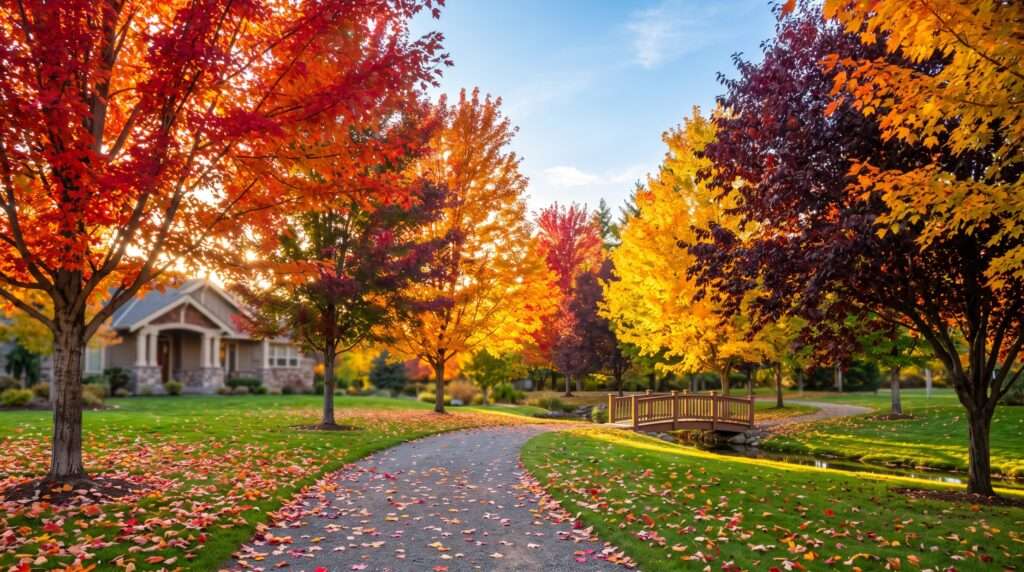
Imagine stepping out your front door to a crisp morning breeze, coffee in hand, and being greeted by a yard ablaze in fiery reds, burnt oranges, and brilliant golds. Nothing captures the magic of autumn quite like a majestic maple. Whether you’re curating a picturesque garden that looks stunning in seasonal photography or simply wanting to boost your home’s curb appeal, transforming your landscape into a seasonal showpiece requires more than just digging a hole.
To achieve that breathtaking display, you need to select exactly the right variety. That’s why we’ve researched and ranked the best 10 maple tree for fall color available to order online today.
Let’s be honest: choosing a tree is a decades-long commitment, and making the wrong choice can be costly. Plant the wrong maple, and you might end up with an overgrown canopy dominating your space, aggressive roots cracking your sidewalks, or dull foliage because the tree wasn’t suited for your local climate or soil health profile. Furthermore, buying live trees online can feel like a gamble. How do you know which sellers are reliable, or which varieties consistently survive the shipping process and thrive once in the ground?
We’ve taken the guesswork out of your landscaping project. By analyzing climate data, growth habits, and hundreds of verified customer reviews, we’ve created a curated, data-backed guide. Whether you need a compact ornamental centerpiece for a small garden, a fast-growing shade tree for a sprawling lawn, or a heat-tolerant variety for the South, this guide matches your specific yard size and climate with top-rated live trees.
Quick Comparison: Top Maples at a Glance
For the best mobile viewing experience, we’ve condensed the essential data into three quick-reference columns.
In-Depth Reviews: The Best 10 Maple Tree for Fall Color
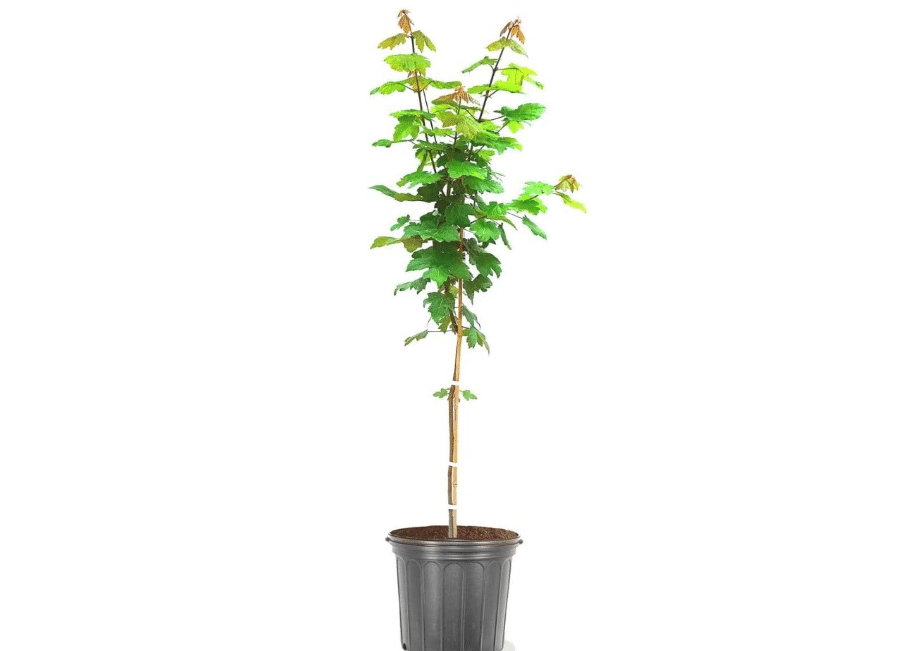
1. Autumn Blaze Red Maple (Best Overall for Fast Growth)
Product Description: The Autumn Blaze Red Maple is a landscaping powerhouse. A brilliant hybrid cross between the Red Maple and the Silver Maple, it inherits the stunning, traffic-stopping crimson foliage of the former and the explosive growth rate of the latter. When you want a mature-looking landscape without waiting two decades, this is your tree. It rapidly establishes a strong, uniform, upright oval canopy that provides excellent cooling shade during the summer before putting on an unforgettable show in the autumn.
Expected Price: $34.99
Key Features & Benefits:
-
Rapid Growth Rate: Capable of growing 3 to 5 feet per year under optimal conditions.
-
Highly Adaptable: Exceptionally tolerant of poor soil health, including heavy clay, and highly disease resistant.
-
Mature Size: Reaches a commanding 40–50 feet tall and 30–40 feet wide.
Pros & Cons:
-
Pros: Delivers instant landscape gratification; pollution tolerant; stunning, photogenic color.
-
Cons: Its incredibly fast growth can occasionally lead to weaker branch crotches that may require structural pruning to prevent damage in heavy ice storms.
Amazon Customer Ratings & Reviews: Sitting comfortably at ~4.5/5 stars, buyers continually highlight the exceptional packaging from top Amazon nurseries. Many reviews note their shock at how quickly the tree establishes itself and pushes out new growth within the first few months of planting.
Why It’s a Good Choice: It outpaces almost every other shade tree on the market. You get the classic, highly sought-after red autumn foliage years ahead of schedule.
Ideal Use Case: Impatient homeowners with medium-to-large yards who need quick shade, high curb appeal, and a photogenic centerpiece for their property.
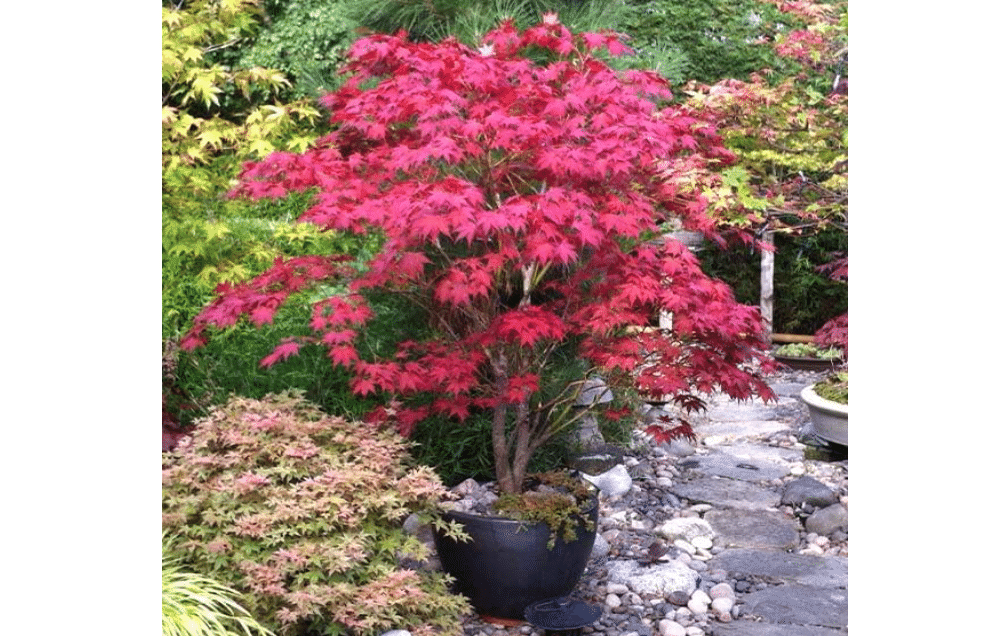
2. Bloodgood Japanese Maple (Best for Small Spaces & Sun)
Product Description: The Bloodgood Japanese Maple is the gold standard for ornamental landscaping. While many trees blend into the background during the summer, the Bloodgood holds its deep, rich burgundy foliage from the moment it buds in spring all the way through the summer heat. Once autumn hits, those dark leaves erupt into a brilliant, fiery, almost luminescent red. Its sculptural, multi-stemmed growth habit makes it look like a living piece of art.
Expected Price:
Key Features & Benefits:
-
Compact Size: Maxes out at around 15–20 feet tall and wide, making it highly manageable.
-
Sun Tolerance: Unlike many delicate Japanese maples, the Bloodgood retains its leaf color well in full sun without scorching easily.
-
Low Maintenance: Requires very little pruning to maintain its naturally beautiful, rounded shape.
Pros & Cons:
-
Pros: Perfect for urban yards; offers striking year-round visual interest and contrast.
-
Cons: Slower growth rate (1-2 feet per year); demands well-drained soil to prevent root rot—it will not tolerate boggy conditions.
Amazon Customer Ratings & Reviews: Rating around 4.4/5 stars. Buyers praise the vibrant, consistent color that looks incredible in garden photography. Some users note that trees ship on the smaller side, which is standard for grafted Japanese maples ordered online.
Why It’s a Good Choice: Its non-invasive root system and compact canopy won’t overwhelm small properties, threaten home foundations, or interfere with overhead power lines.
Ideal Use Case: Front yard focal points, Zen or Japanese-style gardens, tight urban spaces, or large patio container planting.
3. Sugar Maple (Best for Classic Fall Color & Sap)
Product Description: The quintessential North American shade tree. If you close your eyes and picture a classic autumn day in New England, you are picturing a Sugar Maple. Known worldwide for providing the sweetest sap for authentic maple syrup, its greatest landscape asset is its multi-colored fall canopy. A single Sugar Maple can simultaneously display leaves of golden yellow, bright orange, and deep red, creating a breathtaking, multi-dimensional color palette.

Expected Price:
Key Features & Benefits:
-
Tri-Color Display: Unrivaled autumn color variation, often transitioning through three colors on the same branch.
-
Extreme Hardiness: Thrives in cold climates (USDA Zones 3-8).
-
Longevity: This is a legacy tree that can live for hundreds of years.
Pros & Cons:
-
Pros: Offers the most varied and iconic fall color; potential for tapping your own syrup; incredibly strong, storm-resistant wood.
-
Cons: Intolerant of heavy road salt and extreme urban pollution; can struggle with compacted soil.
Amazon Customer Ratings & Reviews: Averaging 4.3/5 stars. Highly rated by Northern growers for its cold-climate survival. Customers appreciate the robust root systems upon delivery, though some note it requires a year of settling in before pushing major vertical growth.
Why It’s a Good Choice: It’s a durable, historic shade tree that becomes a generational centerpiece for a property. It’s the ultimate investment in your land’s future ecosystem and beauty.
Ideal Use Case: Large suburban or rural properties, expansive front lawns, and families interested in the hobby of syrup tapping and sustainable living.
4. October Glory Red Maple (Best for Warmer Climates)
Product Description: For homeowners in milder climates who feel left out of the autumn color season, the October Glory Red Maple is the ultimate solution. This phenomenal cultivar is famous for holding its leaves late into the season. Long after other deciduous trees are completely bare, the October Glory puts on a brilliant display of intense, glowing orange-red foliage. It has a beautifully uniform, dense, oval-shaped canopy that looks highly manicured.

Expected Price:
Key Features & Benefits:
-
Heat Tolerance: Thrives in warmer climates (up to Zone 9) where other maples struggle.
-
Late-Season Color: Delivers a delayed but intense autumn show, extending the seasonal beauty of your yard.
-
Dependable Shape: Naturally grows into a pleasing oval shape (40 ft tall by 35 ft wide) with minimal pruning.
Pros & Cons:
-
Pros: Reliable, vibrant fall color even in milder Southern winters; excellent shade provider.
-
Cons: Like many red maples, its shallow root system can occasionally breach the surface as the tree ages if the topsoil is too thin.
Amazon Customer Ratings & Reviews: Sitting highly at 4.6/5 stars. Southern buyers specifically rave about this tree, leaving glowing reviews about finally getting “northern-style” fall color in states like Georgia, Texas, and Florida.
Why It’s a Good Choice: Most maples require a hard freeze to trigger the chemical changes that produce fall colors. October Glory doesn’t; it reliably colors up even when winters are mild and delayed.
Ideal Use Case: Homeowners in USDA Zones 7-9 looking for dependable autumn aesthetics and dense summer shade.
5. Coral Bark Japanese Maple / ‘Sango Kaku’ (Best for Winter Interest)
Product Description: When evaluating the best 10 maple tree for fall color, the Coral Bark Japanese Maple (often sold under its cultivar name ‘Sango Kaku’) stands out as a true multi-season performer. In spring, it pushes out delicate, pale chartreuse leaves. By autumn, the canopy transforms into a glowing, light-catching golden-yellow. But its real magic happens after the leaves drop. The younger branches turn a striking, neon-coral red that shines brilliantly against gray winter skies and white snow, ensuring your landscape is never dull.

Expected Price:
Key Features & Benefits:
-
Four-Season Beauty: Bright red bark in winter, delicate green summer leaves, and golden fall foliage.
-
Moderate Size: Grows in a vase-like shape to about 15–20 feet tall and 15 feet wide.
-
Disease Resistant: Generally free of major pests when planted in the right conditions.
Pros & Cons:
-
Pros: Offers unparalleled winter visual interest; beautiful contrasting yellow fall foliage.
-
Cons: The delicate spring foliage can be sensitive to late frosts, and the tree can suffer from windburn if exposed to harsh afternoon winter winds.
Amazon Customer Ratings & Reviews: Consistently rated ~4.5/5 stars. Reviewers love the intense winter contrast but frequently advise new buyers to carefully select a planting location sheltered from extreme wind to keep the delicate bark and leaves healthy.
Why It’s a Good Choice: When the rest of the garden looks barren and dead in January, the Sango Kaku becomes the brightest, most captivating plant in your yard.
Ideal Use Case: Specimen planting near windows, entryways, or positioned against dark exterior house walls where the red bark can provide high-end architectural contrast.
6. Red Sunset Maple (Best Early Fall Bloomer)
Product Description: If you want to be the first house on the block to kick off the autumn season, plant a Red Sunset. Known for initiating the fall color change, the Red Sunset transitions from a lush, dark green to a brilliant, uniform crimson well before many other trees begin to turn. Beyond its color, it is celebrated for its incredibly strong wood and sturdy branch angles, making it a highly reliable landscape investment.

Expected Price:
Key Features & Benefits:
-
Early Color Change: Highly dependable, vivid color that lasts for weeks.
-
Structural Integrity: Features strong branching that resists wind and ice damage better than faster-growing hybrids.
-
Cold Hardy: Excellent winter hardiness (Zones 4-8).
Pros & Cons:
-
Pros: Sturdier wood than the Autumn Blaze; highly drought-tolerant once established; fantastic symmetry.
-
Cons: Can struggle and show yellowing leaves (chlorosis) in highly alkaline soils.
Amazon Customer Ratings & Reviews: Achieving a stellar ~4.7/5 stars. It is frequently praised by buyers for arriving with thick, healthy trunks and easily surviving tough, unpredictable winters immediately after planting.
Why It’s a Good Choice: It offers the classic, highly desired red maple aesthetic but with superior structural integrity, meaning you won’t have to worry as much about snapping branches during severe weather.
Ideal Use Case: Street planting, open lawns exposed to wind, or regions that experience heavy winter ice loads.
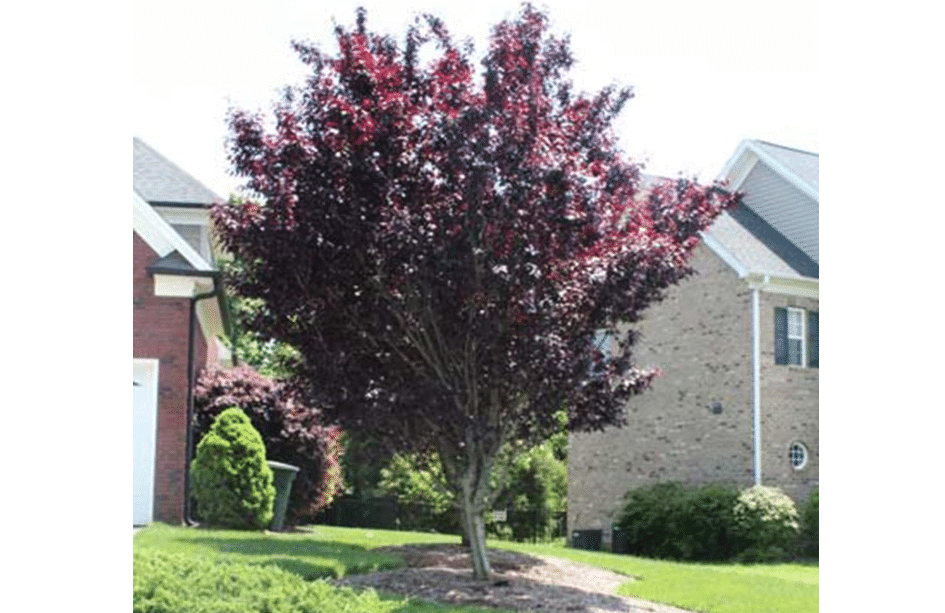
7. Crimson King Maple (Best for Purple Summer Foliage)
Product Description: The Crimson King is a Norway Maple cultivar designed to stand out 365 days a year. While most trees on this list are green during the summer, the Crimson King features deep maroon, almost purple leaves from spring through late summer. In the fall, this dramatic foliage transitions into a rich bronze-brown. It creates an incredibly dense canopy that provides some of the deepest, coolest shade of any landscape tree.
Expected Price: $140.00
Key Features & Benefits:
-
Unique Summer Color: Dark purple foliage provides a striking break from typical green landscapes.
-
Dense Canopy: Excellent for blocking out harsh sun or creating privacy.
-
Urban Tolerant: Highly adaptable to poor soils, pollution, and urban heat.
Pros & Cons:
-
Pros: Striking color contrast against green lawns; extremely tough and forgiving of poor planting sites.
-
Cons: The fall color is muted (bronze) compared to the fiery reds of other maples; its dense shade and shallow roots can make it difficult to grow grass directly beneath it. (Note: Check local regulations, as Norway Maples can be invasive in some specific woodland regions).
Amazon Customer Ratings & Reviews: Averaging ~4.4/5 stars. Customers rave about the dark “gothic” summer aesthetic and appreciate how quickly it establishes itself in less-than-ideal suburban dirt.
Why It’s a Good Choice: It aggressively breaks up the monotonous sea of green in standard summer landscaping, acting as a bold anchor for your yard design.
Ideal Use Case: Urban environments, heavily polluted areas near busy roads, or wide-open yards needing dense, cooling summer shade.
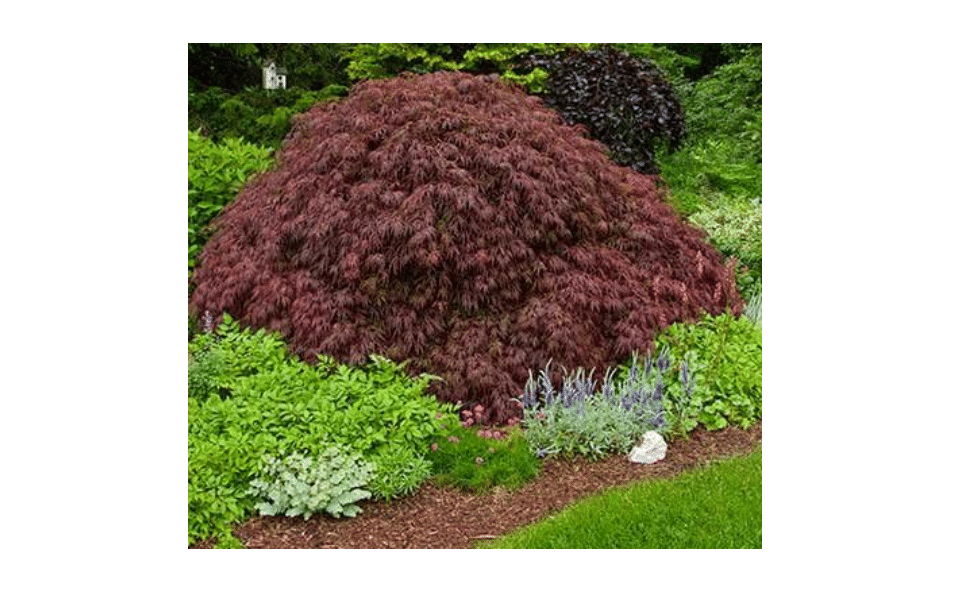
8. Crimson Queen Japanese Maple (Best Weeping / Laceleaf Form)
Product Description: For pure elegance, nothing beats the Crimson Queen. This is a low-growing, cascading dwarf tree featuring heavily dissected, feathery “laceleaf” foliage. It maintains a beautiful, deep crimson-red color throughout the summer before popping with an even brighter, fiery red in autumn. Its branches weep and cascade like a waterfall, creating a highly architectural, sculptural mound.
Expected Price:
Key Features & Benefits:
-
Weeping Form: Cascading umbrella shape adds immense elegance to any space.
-
Dwarf Size: Rarely exceeds 8–10 feet tall, spreading wider than it is tall.
-
Intricate Foliage: Delicate, lace-like leaves provide incredible texture.
Pros & Cons:
-
Pros: Perfect for small spaces and containers; offers a high-end, botanical-garden aesthetic.
-
Cons: The delicate, thin leaves can scorch if exposed to intense, direct Southern afternoon sun without adequate moisture.
Amazon Customer Ratings & Reviews: Highly rated at ~4.6/5 stars. Reviewers are consistently thrilled with the graceful weeping form right out of the box and note how well it ships due to its compact size.
Why It’s a Good Choice: The cascading branches create a sculptural, premium look that instantly elevates the perceived value and design of your landscaping.
Ideal Use Case: Planting near water features, nestled in rock gardens, or displayed in large, decorative patio planters.
9. Paperbark Maple / Acer griseum (Best for Unique Texture)
Product Description: The Paperbark Maple is a highly sought-after, somewhat rare tree famous for its incredible texture. As the tree grows, its copper-orange bark naturally exfoliates, peeling back in striking paper-like curls down the trunk and main branches. In the fall, its unique trifoliate (three-part) leaves turn a brilliant scarlet and bronze. It is a slow, deliberate grower that maxes out at a very manageable size.

Expected Price: $150.00
Key Features & Benefits:
-
Exfoliating Bark: Peeling cinnamon-colored bark provides unmatched visual and tactile interest.
-
Manageable Size: Slowly reaches 20–30 feet tall.
-
Low Maintenance: Naturally grows with a neat silhouette and rarely requires pruning.
Pros & Cons:
-
Pros: Unrivaled textural interest for winter landscapes; very low maintenance.
-
Cons: Slow grower; can be harder to find in stock online compared to red maples.
Amazon Customer Ratings & Reviews: Averaging ~4.5/5 stars. Buyers often consider this a “collector’s tree” and highly praise its health upon arrival, noting that the peeling bark is evident even on young saplings.
Why It’s a Good Choice: It provides tactile, visual interest that literally no other maple on this list offers, making your yard entirely unique.
Ideal Use Case: Front walkway borders, courtyard plantings, or prominent viewing areas (like outside a living room window) where the bark can be appreciated up close.
10. American Red Maple (Best Native & Adaptable Tree)
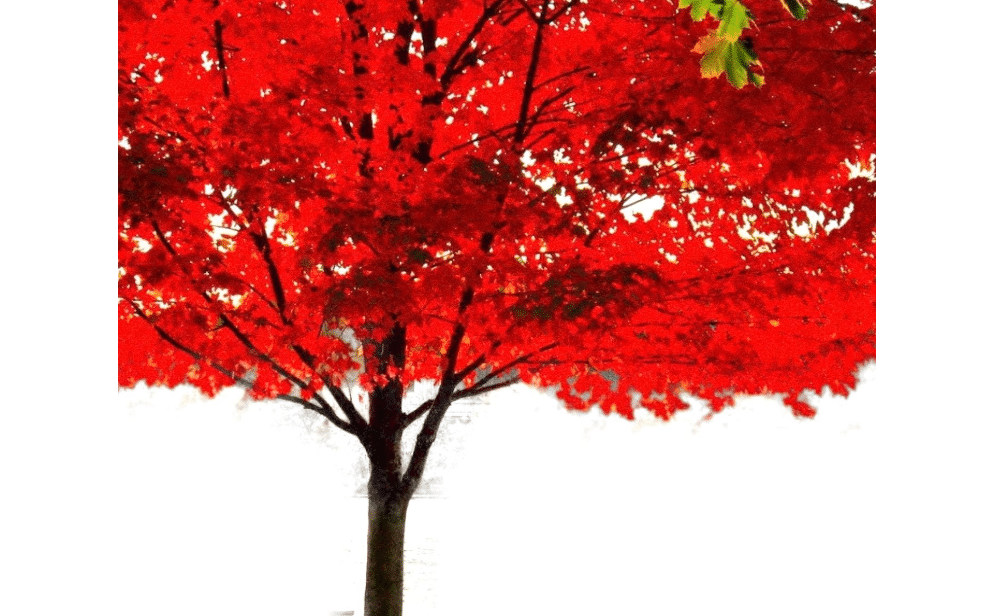
Product Description: The tough, highly adaptable native species that started it all. The Acer rubrum (American Red Maple) is a staple of the North American landscape. It signals the end of winter with beautiful clusters of small red flowers in early spring, provides excellent summer shade, and finishes the year with a reliable, fiery red autumn display. It is arguably the most adaptable tree on this list regarding soil conditions.
Expected Price:
Key Features & Benefits:
-
Native Species: Great for supporting local wildlife and ecosystems.
-
Moisture Tolerant: Thrives in wet, boggy soils where other trees would drown.
-
Solid Growth Rate: Dependably grows 2–3 feet per year.
Pros & Cons:
-
Pros: Can survive in swampy or poorly draining yards; highly affordable; benefits native ecosystems.
-
Cons: Can be aggressive with its surface roots if planted too close to pavement or foundations.
Amazon Customer Ratings & Reviews: Solidly rated at ~4.3/5 stars. Highly valued by reviewers for its affordability and impressive survival rate when planted in difficult, wet clay soil.
Why It’s a Good Choice: Unlike most maples that demand perfectly well-drained soil to survive, the American Red can handle standing water and heavy rain runoff.
Ideal Use Case: Low-lying properties, rain gardens, areas near ponds or streams, or wildlife-friendly native landscapes.
The Ultimate Buying Guide: How to Choose the Perfect Maple on Amazon
Purchasing a live tree online is incredibly convenient, but it requires a bit of preparation to ensure success. Use this guide to make an informed decision.
1. Understand Your USDA Hardiness Zone
Before clicking “Add to Cart,” you must know your USDA Hardiness Zone. This zone dictates the extreme low temperatures your area experiences. Buying a tree rated for your specific climate is the only way to prevent winter die-off. For example, a Sugar Maple (Zones 3-8) thrives in freezing Northern winters, while an October Glory (Zones 4-9) is better suited to handle the heat of the Deep South.
2. Plan for Sizing and Spacing
A common landscaping mistake is planting a tree based on its current sapling size rather than its mature width. A 3-foot Autumn Blaze sapling will eventually have a 40-foot canopy.
-
Keep Away from Structures: Plant large shade maples at least 15 to 20 feet away from your home’s foundation, driveways, and underground plumbing.
-
Look Up: Ensure there are no overhead power lines where you intend to plant. If space is tight, opt for a smaller variety like the Bloodgood or Paperbark Maple.
3. Balance Sun vs. Shade
Maples have different light requirements to produce their best color:
-
Full Sun Seekers: Red Maples (like Autumn Blaze and Red Sunset) need at least 6 hours of direct, full sun daily to trigger their brightest red fall foliage.
-
Afternoon Shade Lovers: Delicate Japanese Maples (like the Crimson Queen) prefer morning sun but benefit from dappled afternoon shade to prevent their thin leaves from scorching in the summer heat.
4. What to Expect When Buying Live Plants Online
-
Dormant Shipping: If you order in late fall, winter, or early spring, your tree will likely arrive dormant (without leaves). It might look like a bare stick—this is normal and actually reduces shipping shock.
-
Inspect the Root Ball: Upon delivery, immediately unbox the tree. The root ball should be damp. If it’s dry, soak it in water for a few hours before planting.
-
Return Policies: Amazon and its vetted third-party nurseries typically offer guarantees on live plants (often 30 days). Document the unboxing process with photos just in case the tree was damaged in transit.
Frequently Asked Questions
How fast do maple trees grow? Growth rates vary wildly by species. Hybrid varieties like the Autumn Blaze can grow an impressive 3 to 5 feet per year. Native Red Maples grow about 2 feet per year, while ornamental Japanese Maples are much slower, growing only a few inches to a foot annually.
When is the best time of year to plant a maple tree? The best times to plant are during the dormant seasons: early spring (after the ground thaws but before buds open) or early to mid-fall (allowing roots to establish before winter freezes).
Why did my maple tree not turn red this fall? Fall color is triggered by a combination of shortening days, bright sunny afternoons, and crisp, cool nights. If you experience an unseasonably warm autumn, heavy cloud cover, or a severe summer drought, the colors may be muted. Soil pH can also play a role.
Can I grow a maple tree in a pot? Yes, but you must choose the right variety. Standard shade trees will quickly outgrow a pot and become rootbound. However, dwarf Japanese Maples like the Crimson Queen or Bloodgood thrive in large, well-draining decorative containers.
Conclusion
Choosing the best 10 maple tree for fall color comes down to understanding your specific landscape needs. If you want a massive canopy and vibrant reds in record time, the Autumn Blaze is unmatched. If you are dealing with a small urban yard or want an elegant focal point, the Bloodgood or Crimson Queen Japanese Maple will provide high-end, sculptural beauty. And if you live in a warmer climate where fall color is usually a disappointment, the October Glory will finally give you the autumn aesthetic you’ve been craving.
Now that you know exactly what to look for—from USDA zones to mature canopy sizing—you are ready to make a confident purchase. Measure your yard, verify your hardiness zone, and order your tree today to get it in the ground just in time for the optimal planting season.