
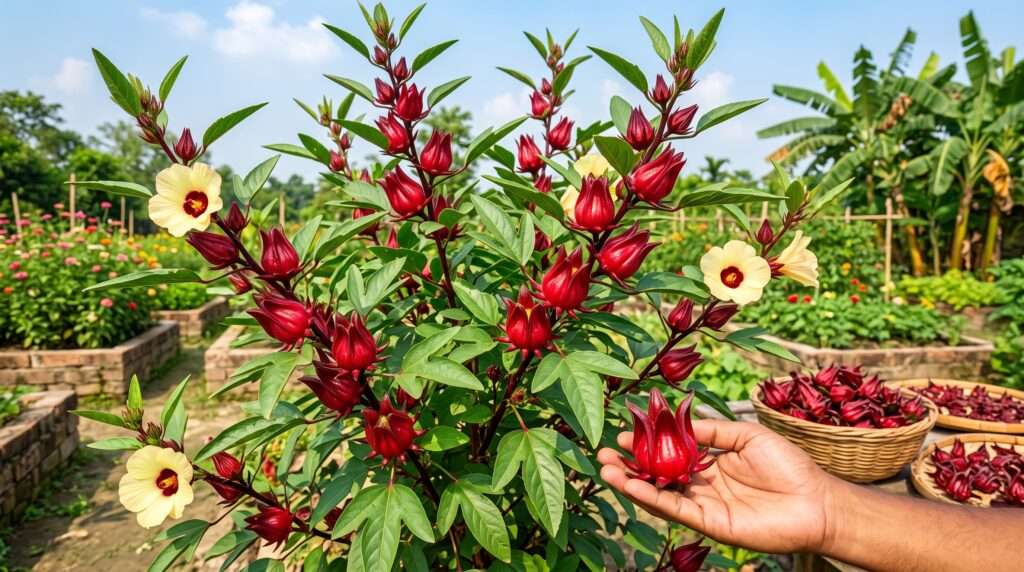
Imagine stepping into your backyard on a crisp autumn afternoon, harvesting a basket full of vibrant, ruby-red pods, and brewing a fresh, delightfully tart cup of herbal tea sourced entirely from your own garden. This is the distinct joy of growing a roselle hibiscus plant, a true superstar of the edible landscape. However, many enthusiastic home gardeners plant this tropical beauty only to be met with leggy stems, sparse foliage, and a disappointingly small harvest. The issue? They treat it just like any other standard ornamental flower.
Over years of cultivating tropical edibles, optimizing soil mechanics, and refining organic container and raised bed strategies, I’ve found that unlocking the full potential of Hibiscus sabdariffa requires a specific, intentional approach. When grown correctly, this plant is not just a garden novelty; it is a highly productive, drought-tolerant workhorse that yields massive amounts of edible calyxes. In this comprehensive masterclass, we will cover the exact soil requirements, strategic pruning techniques, and timing secrets you need to maximize your harvest and keep your roselle thriving from seed to cup.
🌿 What is a Roselle Hibiscus Plant? (And Why You Need One)
Before you put a trowel in the dirt, it is crucial to understand exactly what you are growing. The roselle hibiscus plant (Hibiscus sabdariffa) is a tropical shrub belonging to the Malvaceae family. It is fundamentally different from the tropical ornamental hibiscus (Hibiscus rosa-sinensis) you might see decorating a lanai, or the hardy hibiscus grown purely for its dinner-plate-sized blooms.
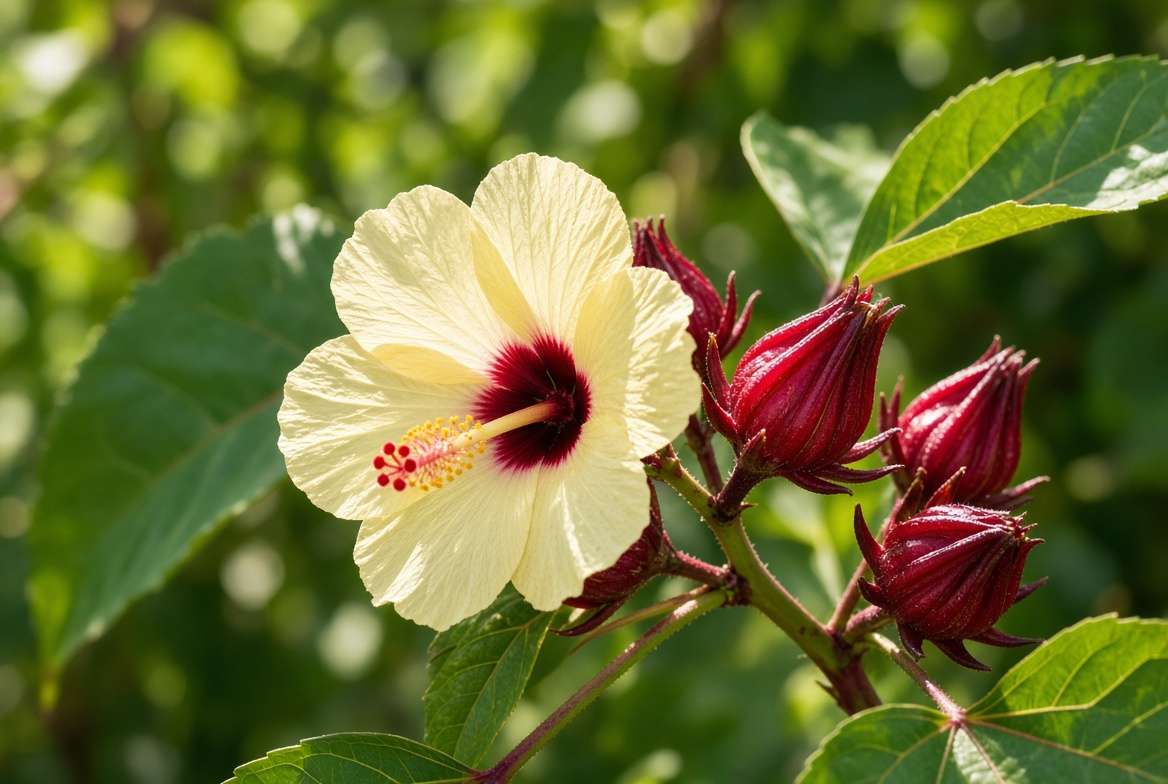
While roselle does produce lovely, pale yellow flowers with striking dark burgundy throats, the flower petals themselves are not the main event. The true prize is the calyx—the fleshy, deep red cup-like structure that supports the flower. After the flower blooms for a single day and drops off, the calyx closes up and swells, encasing the developing seed pod. This crisp, tart, cranberry-flavored calyx is what you harvest to make teas, jams, and syrups.
Depending on where you live, you might hear this plant referred to by several common names, including Florida Cranberry, Jamaican Sorrel, Karkadé, or Red Sorrel. Regardless of what you call it, roselle features a vigorously bushy, upright growth habit. In optimal conditions, a single plant can reach a towering 5 to 8 feet in height and 4 feet in width, making it a spectacular architectural focal point for your garden design.
☀️️ Ideal Growing Conditions for Maximum Yield
To achieve a skyscraper-level yield of plump red calyxes, you have to mimic the roselle’s native tropical environment as closely as possible.
🌡️ Climate & Hardiness Zones
Roselle is inherently a heat-loving, humidity-craving perennial. In USDA Hardiness Zones 9 through 11, it will happily grow year-round as a short-lived perennial shrub, producing heavy yields for several years.
However, if you live in cooler climates (USDA Zones 4 through 8), you can still absolutely experience a massive harvest by growing it as a fast-growing annual. The key is starting your seeds indoors well before the last spring frost.
A Crucial Warning: The roselle hibiscus plant has zero tolerance for frost. Even a light, unexpected cold snap can instantly defoliate and kill a mature plant. If you live in a transition zone, always monitor late autumn forecasts and be prepared to harvest your calyxes immediately if a freeze is threatening.
🌤️ Sun Requirements
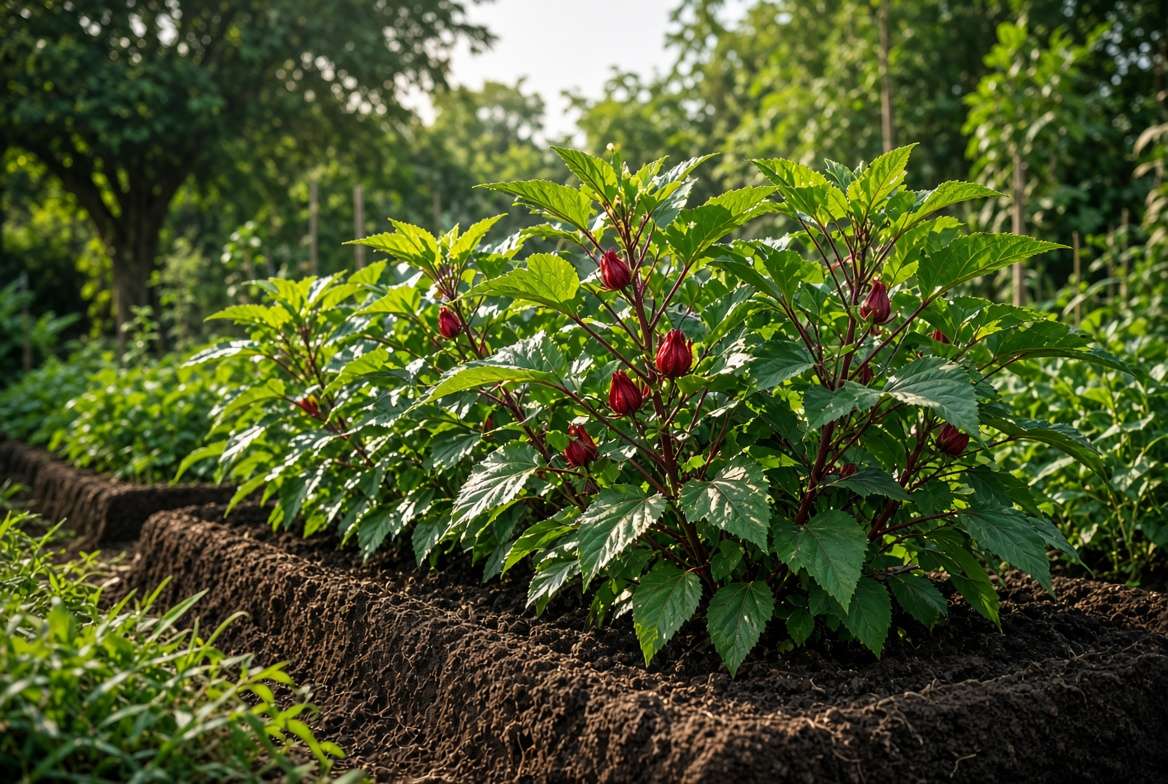
If you want sturdy, thick stems capable of holding up dozens of heavy seed pods without snapping, full sun is non-negotiable. Your roselle requires a minimum of 6 to 8 hours of direct, unfiltered sunlight every single day. Planting it in partial shade will result in “stretching” (where the plant becomes tall and weak reaching for light) and a drastically reduced flower count.
Expert Tip 💡: Roselle is a photoperiodic plant, meaning it is highly sensitive to day length. Its flowering cycle is naturally triggered as the daylight hours begin to shorten in late summer and early autumn. If you plant it near an artificial light source, such as a bright streetlamp or a security spotlight, the plant may become confused by the extended light exposure and refuse to flower at all. Always position it in a spot that experiences natural, uninterrupted nighttime darkness.
💧 Soil Preparation and Watering Mastery
The foundation of any thriving plant is its root system. Roselle is incredibly vigorous, but it is highly susceptible to root rot if its basic soil preferences are ignored.
🪨 The Perfect Soil Mix
Drainage is the absolute most critical factor in your soil preparation. A roselle hibiscus plant will quickly suffocate and succumb to fungal pathogens if left sitting in dense, heavy clay or boggy, waterlogged depressions.
Ideally, aim for a loamy, well-aerated soil profile with a slightly acidic to neutral pH ranging from 5.5 to 7.5. Whether you are planting in the ground, in a raised bed, or in a large container, you must ensure the growing medium allows water to pass through freely.
-
For in-ground beds: Amend heavy soils by deeply incorporating coarse horticultural sand and rich, aged compost.
-
For raised beds and pots: Create a custom blend using high-quality potting soil, plenty of perlite or pumice for aeration, and a generous helping of worm castings to provide a steady, slow release of organic nutrients.
🚿 Watering Schedule
While roselle boasts excellent drought tolerance once fully established, getting it to that mature stage requires attentive watering.
-
Establishment Phase: During the first month after transplanting seedlings outdoors, keep the soil consistently, evenly moist (but never muddy). This encourages the taproot to drive downward.
-
Maturation Phase: Once the plant is knee-high and vigorously pushing out lateral branches, transition to deep, infrequent watering. This forces the root system to expand deeper into the soil in search of moisture, resulting in a significantly more resilient plant.
Pro Tip 🛑: Master the “wilt test.” To prevent the dreaded root rot, allow the top two to three inches of your soil to dry out completely before watering again. On the hottest summer days, the large leaves of the roselle plant may slightly droop or wilt in the midday sun—this is a natural moisture-conservation response. If they perk back up in the evening shade, do not water. Only water if the leaves remain wilted after the sun goes down.
🌱 How to Plant & Propagate Roselle
Whether you are starting fresh each spring in a northern climate or multiplying your tropical perennial stock, propagating roselle is highly rewarding.
🌰 Starting from Seed (Best for Annual Growers)
For growers outside of Zones 9-11, starting seeds is the most reliable method. Begin this process 6 to 8 weeks before your region’s last projected spring frost date.
-
Scarification: Roselle seeds have a notoriously tough, hard outer shell designed to survive harsh dry seasons. To drastically improve and speed up your germination rates, you need to penetrate this seed coat. Gently nick the very edge of the seed with a metal file or sandpaper, or soak the seeds in a cup of warm water for 12 to 24 hours until they swell.
-
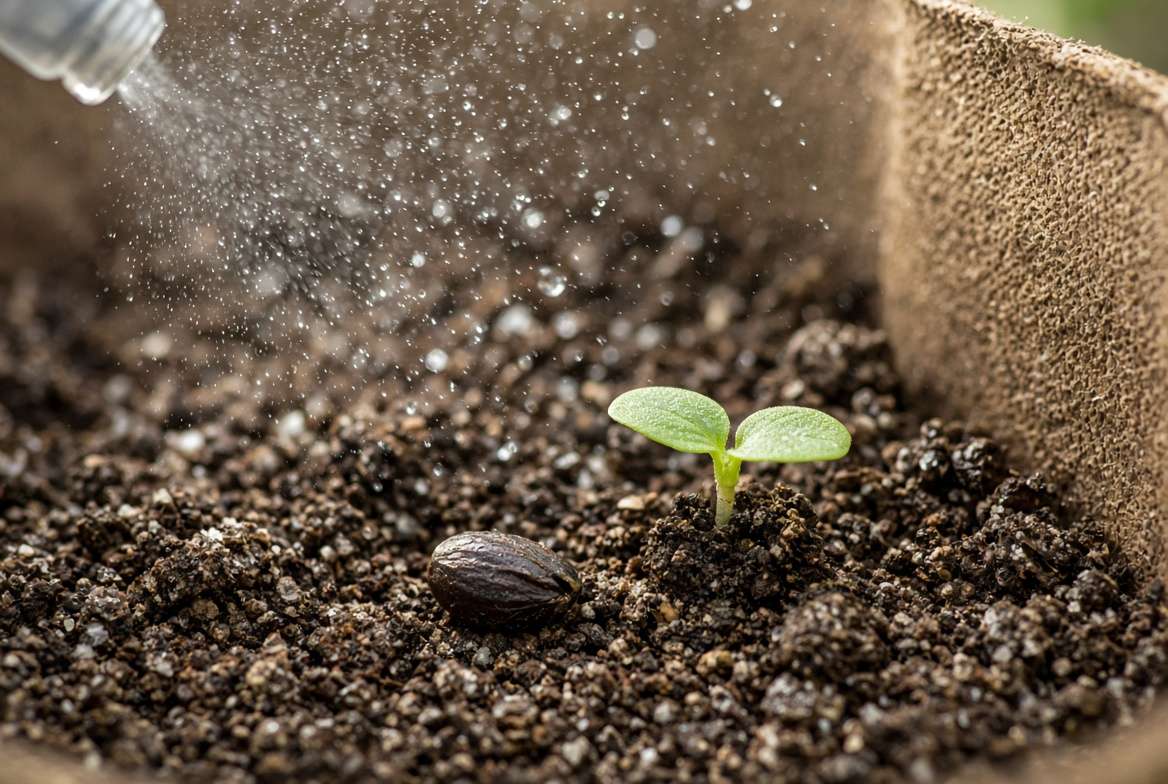
Sowing: Plant the seeds ½ inch deep in a sterile seed-starting mix. Keep them on a seedling heat mat set to 75°F–85°F (24°C–29°C), as tropical seeds require high soil temperatures to wake up.
-
Transplanting & Hardening Off: Never rush your seedlings outside. Wait until all danger of frost has entirely passed and nighttime temperatures are consistently hovering above 60°F (15°C). Expose them to outdoor conditions gradually over a period of 7 to 10 days to prevent transplant shock, which can severely stunt their growth for weeks.
✂️ Growing from Cuttings (Best for Warm Climates)
If you already have access to a mature roselle hibiscus plant, or if you live in a tropical zone where the plant acts as a perennial, propagating from cuttings is a fantastic way to clone your best-producing shrubs.
-
Take the Cutting: During the active growing season (early to mid-summer), use sterilized pruning shears to take a 4-to-6-inch softwood cutting from a healthy, vigorous branch. Avoid older, woody stems, as they struggle to push out new roots.
-
Prep the Stem: Strip away the lower leaves, leaving only two or three leaves at the very top. This reduces the energy the cutting spends on maintaining foliage, redirecting its focus entirely toward root development.
-
Rooting: Dip the cut end into a high-quality rooting hormone powder. While roselle can technically root in a jar of water, placing the cutting directly into a small pot filled with moist, sterile seed-starting mix drastically reduces the risk of root rot. Keep the soil humid and place the pot in bright, indirect light until you feel resistance when giving the stem a gentle tug—a clear sign that strong roots have formed.
🛠️ Plant Care & Maintenance for a Bushy Canopy
Once your roselle hibiscus plant is successfully established in the garden, the difference between a mediocre yield and a show-stopping, abundant harvest comes down to how you manage its structural growth and its nutritional intake.
✂️ The Art of Pruning (Crucial for High Yields)
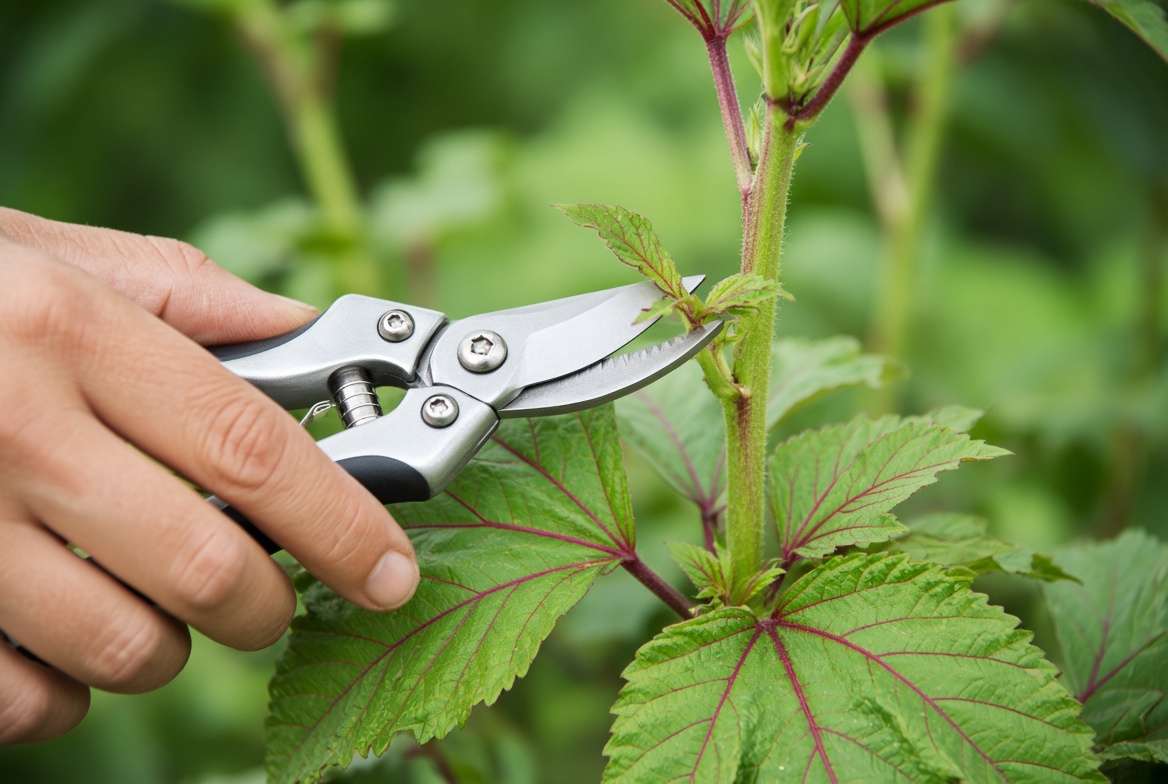
Many novice growers make the mistake of letting their roselle grow straight up like a singular, towering sunflower. While impressive in height, a single central stalk will only produce a fraction of the calyxes a bushy plant would. The secret to maximizing your harvest is a technique called “pinching back.”
When your young plant reaches about 18 to 24 inches in height, take your pruning snips and cut off the top 2 to 3 inches of the central growing tip just above a leaf node.
Why this works: Removing the apical meristem (the dominant top growth) interrupts the plant’s natural vertical climbing hormone. In response, the plant will violently push out lateral branches from the lower nodes. A bushy, wide plant with eight lateral branches will produce significantly more flowering sites—and therefore a massively larger calyx harvest—than a plant with only one or two main stems.
🌿 Feeding Your Roselle
Understanding the nutritional phases of your roselle hibiscus plant is essential. The most common pitfall is over-applying high-nitrogen fertilizers (like synthetic lawn turf food or raw poultry manure). Nitrogen fuels leafy, green growth. If you feed your roselle too much nitrogen, you will cultivate a massive, beautiful green bush that produces absolutely zero flowers.
-
Early Growth Stage: Shortly after transplanting, apply a balanced, slow-release organic fertilizer (such as a 5-5-5 ratio) to help the plant establish a strong structural frame.
-
Pre-Bloom Stage: As late summer approaches and the days begin to subtly shorten, switch your feeding strategy. Introduce a phosphorus-heavy bloom booster, such as bone meal, liquid kelp, or a specialized organic flower fertilizer. Phosphorus is the key nutrient responsible for prolific flower production and robust, heavy calyx development.
🐛 Pest Control & Disease Management (Organic Solutions)
Even the most resilient plants face environmental pressures. Keeping a close eye on your roselle ensures pests and pathogens do not derail your autumn harvest.
🕷️ Common Pests
-
Aphids & Spider Mites: These sap-sucking insects love to hide under the broad leaves and cluster around tender new growth, causing the foliage to curl and yellow.
-
Treatment: For minor infestations, a strong blast from the garden hose is often enough to dislodge them. For persistent issues, apply organic cold-pressed neem oil or an insecticidal soap in the early evening to avoid sunburning the leaves. Introducing beneficial predatory insects, like ladybugs and lacewings, creates a fantastic natural defense system.
-
-
Root-Knot Nematodes: These microscopic soil pests attack the root system, causing the plant to slowly wilt and stunt despite adequate watering.
-
Prevention: Nematodes are a known enemy of roselle. Utilize companion planting by surrounding your roselle with French marigolds. Marigolds naturally exude a compound into the soil that repels and actively suppresses nematode populations.
-
🍂 Disease Prevention
Because roselle requires heat and humidity, it can occasionally fall victim to fungal issues like powdery mildew and root rot. Always water at the base of the plant (bottom-watering) rather than overhead, keeping the large leaves dry. Ensure proper spacing between plants—at least 3 feet apart—to guarantee adequate airflow through the canopy, which acts as a natural preventative against airborne fungal spores.
🧺 The Harvest: How and When to Pick Roselle Calyxes
The moment you have been waiting for arrives in early autumn when the daylight hours wane. The harvesting process requires specific timing to ensure the calyxes are tender and perfectly tart.
Timing the Bloom: The beautiful, pale yellow flower of the roselle hibiscus plant opens in the morning and drops off by nightfall. Once the flower falls, the deep red calyx left behind will begin to swell and close over the hidden seed pod.
The Sweet Spot: Do not harvest immediately! Allow the calyx to mature on the stem for exactly 7 to 10 days after the flower drops. At this stage, the calyx will be roughly the size of a large plum—plump, crisp, and deep ruby red. If you wait too long, the calyx will become tough, woody, and stringy.
The Technique: Never pull or tear the calyx off by hand, as this can easily strip the bark down the main branch, exposing the plant to disease. Instead, use clean, sharp pruning snips to snip the short stem just below the base of the calyx.
Expert Insight 🏆: Harvesting is a continuous process. Plucking the mature calyxes actually stimulates the plant to push out even more blooms. The more diligently you pick, the longer and heavier your roselle hibiscus plant will produce!
🍵 What to Do With Your Roselle Harvest
Once your basket is overflowing with brilliant red calyxes, the culinary fun begins.
-
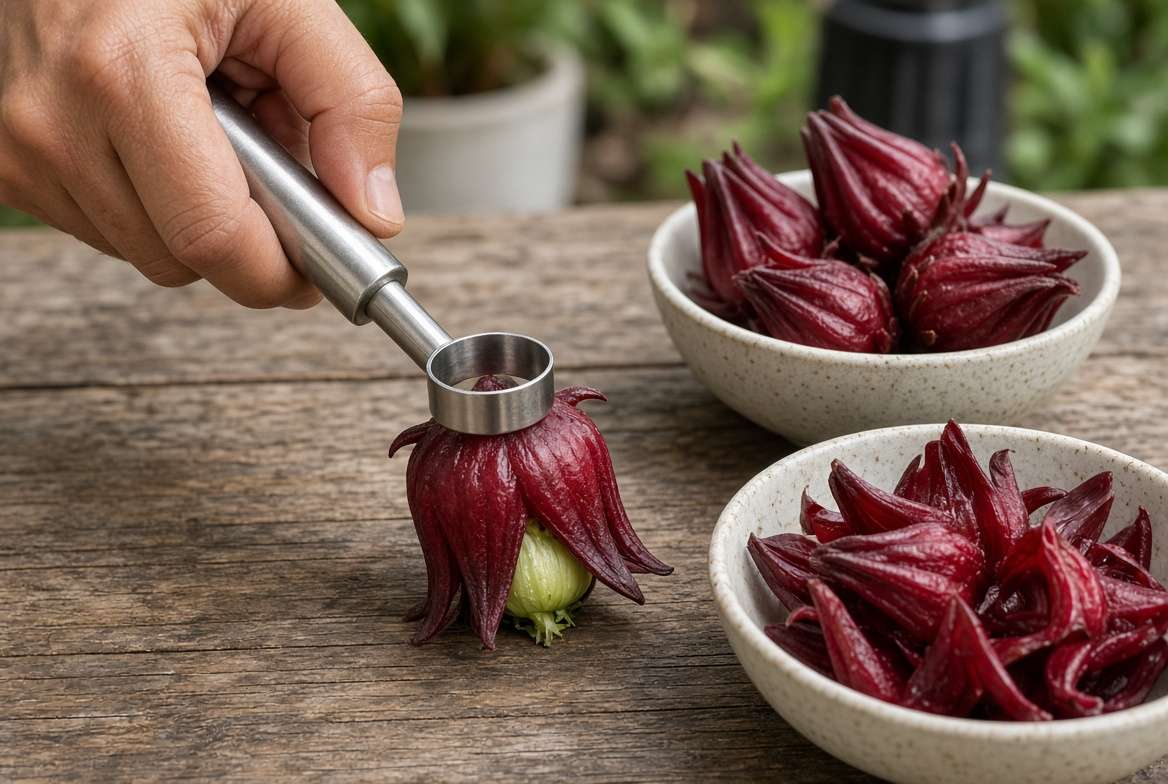
Processing: Before you can cook or dry them, you must remove the internal seed pod, which is bitter and inedible. You can use a specialized roselle corer, but a simple metal straw or an apple corer pushed through the bottom base of the calyx easily pops the seed pod right out, leaving you with the pure red petals.
-
Culinary Uses: Steep the fresh red calyxes in boiling water with a touch of ginger and honey for a remarkably tart, vitamin C-rich tea that tastes strikingly similar to cranberry juice. Toss them into a saucepan with sugar and pectin to create a brilliant red, tangy jam. You can even chop the tender, young leaves of the plant to add a spicy, sour kick to fresh garden salads.
-
Drying & Storing: To enjoy hibiscus tea year-round, dehydrate your harvested calyxes. Spread the cored calyxes on a screen in a cool, dry, well-ventilated room, or run them through a food dehydrator on a low setting until they are crispy and brittle. Store them in an airtight glass mason jar in a dark pantry, and they will retain their vibrant color and flavor for up to a year.
❓ Frequently Asked Questions (FAQ)
Can I grow a roselle hibiscus plant in a pot? Absolutely! Because roselle grows quite large and has a vigorous root system, you must select an appropriately sized container. A 7-to-10-gallon pot is the absolute minimum size required to support a mature, producing plant. Ensure the pot has large drainage holes.
Are roselle leaves edible? Yes, they are highly nutritious and entirely edible. The younger leaves have a tart, lemony flavor profile very similar to garden sorrel. They are a fantastic addition to stir-fries, curries, and fresh summer salads.
Why is my roselle plant not flowering? The two most common culprits are light pollution and excess nitrogen. Because roselle requires shortening days to trigger its blooming cycle, a nearby porch light or street lamp can easily disrupt this process. Alternatively, if you have heavily fertilized with nitrogen, the plant will prioritize creating massive green leaves at the absolute expense of producing flowers.
Do deer eat roselle? Unfortunately, yes. The tender foliage and tart calyxes are highly attractive to local wildlife. If you live in an area with high deer pressure, you will need to utilize physical barriers like tall fencing, or apply organic deer repellents consistently throughout the growing season to protect your harvest.
Taking a tiny, hard-shelled seed and guiding it into a towering, sprawling shrub dripping with brilliant red calyxes is one of the most rewarding projects a home gardener can undertake. While the roselle hibiscus plant requires a bit of specific attention regarding its soil drainage, pruning structure, and sensitivity to frost, the resulting harvest heavily outweighs the initial effort. By respecting its tropical nature and aggressively pinching back its early growth, you can easily transform a bare patch of dirt into a highly productive, eye-catching focal point that will supply your pantry with delicious, tart teas and jams for the entire year.











