
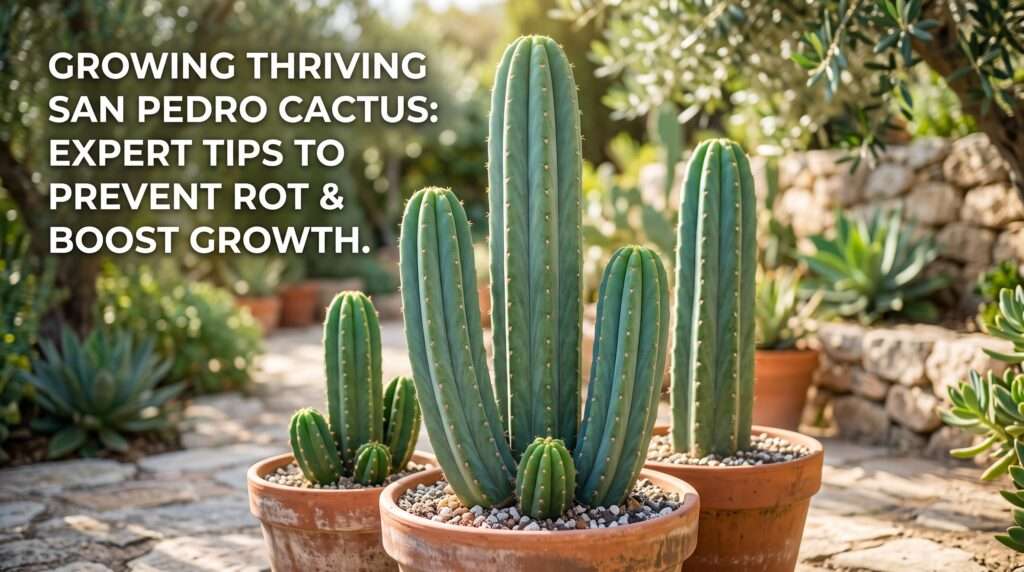
Most succulent enthusiasts eventually make the exact same mistake: treating a high-altitude Andean mountain giant like a low-desert dweller. If you want to grow thriving san pedro cactus plants, the very first rule you must break is the standard “ignore it in a hot, dry corner” cactus advice. Trichocereus pachanoi (often classified as Echinopsis pachanoi) is an incredibly fast-growing columnar cactus that can easily pack on 12 to 24 inches of new growth in a single season—but only if you understand its unique environmental demands.
As a grower who has navigated the heartbreaking realities of squishy black root rot and the frustration of skinny, pencil-like etiolated growth, I can tell you that mastering San Pedro care comes down to three mechanics: aggressive soil drainage, maximum light exposure, and seasonal watering rhythms.
Whether you are growing a single cutting on a sunny windowsill or managing a massive outdoor stand, this comprehensive guide will give you the exact horticultural blueprints needed to prevent fatal fungal decay, maximize stem girth, and keep your plants vibrant and healthy year-round. 🌿
1. Botanical Identity: Why Andean Origins Matter for Cultivation 🏔️
To truly understand how to care for this species, you have to look at where it comes from. San Pedro does not originate in the scorching, bone-dry lowlands of the Mojave or Sonoran deserts. Instead, it is native to the high-elevation Andes mountains of Ecuador and Peru, thriving at altitudes between 6,500 and 9,800 feet.
Trichocereus pachanoi vs. Traditional Desert Cacti
Because of its mountainous origins, San Pedro has evolved to handle significantly more rainfall, cooler nighttime temperatures, and richer mineral soils than a typical desert barrel cactus. This is the secret to its massive growth potential.
Visually, healthy specimens are characterized by 6 to 8 rounded vertical ribs, very short yellowish-brown spines (often less than half an inch long), and a stunning glaucous blue-green epidermis. When these plants are stressed by poor soil or inadequate light, that blue-green skin often fades to a pale, sickly yellow.

Growth Rate Expectations & Realistic Milestones
Under optimal outdoor conditions with full sun and proper feeding, an established San Pedro can grow up to two feet per year, pushing out massive, thick columns. Indoors, growth is naturally slower, but a healthy plant under high-quality grow lights should still achieve 6 to 12 inches of robust, thick growth annually. The key indicator of health isn’t just height; it is girth. A skinny, stretching cactus is a crying out for environmental correction.
2. Lighting Blueprint: Avoiding Sunburn and “Pencil” Tips ☀️
Light is the engine that drives the massive vegetative growth of San Pedro. The most common indoor growing issue is etiolation—when the cactus stretches toward a weak light source, resulting in skinny, tapered, pale green new growth. Once a cactus etiolates, that skinny section will never thicken up, creating a permanent weak point in the column.
Outdoor Light Requirements
San Pedro thrives in full, direct sunlight. Outdoors, they need a minimum of 6 to 8 hours of direct sun daily. However, acclimatization is critical. If you move a greenhouse-grown or indoor San Pedro directly into the harsh mid-summer sun, the epidermis will scorch, leaving permanent, irreversible white or yellow sunburn scars.
-
The Hardening Protocol: Introduce your cactus to full sun gradually. Start with morning sun and afternoon shade for a week, slowly increasing the hours of direct midday exposure over a 14 to 21-day period.
Indoor Growing: Lux, PPFD, and Grow Light Positioning
A standard living room window is rarely enough to sustain thick growth. If you are growing San Pedro indoors, a south-facing window is mandatory, but supplemental LED grow lights are highly recommended.
-
Target PPFD: Aim for for basic maintenance, and to encourage thick, vigorous stem girth.
-
Hang high-output full-spectrum LEDs 12 to 18 inches above the tip of the cactus. Monitor the tip closely; if it begins to pale or bleach, raise the light slightly to prevent heat stress.

3. The Anti-Rot Substrate Formula: Soil & Container Selection 🪴
If there is one absolute rule in San Pedro cultivation, it is this: commercial “cactus and succulent soil” straight from the bag will eventually kill your plant.
These commercial mixes are heavily reliant on peat moss. While peat is cheap, it retains too much moisture and inevitably compacts. When dry, peat becomes hydrophobic, repelling water. When wet, it turns into a dense sludge that chokes oxygen from the root zone, creating the perfect anaerobic breeding ground for root rot pathogens like Pythium and Fusarium.
The Proven 60/40 Mineral-to-Organic Ratio
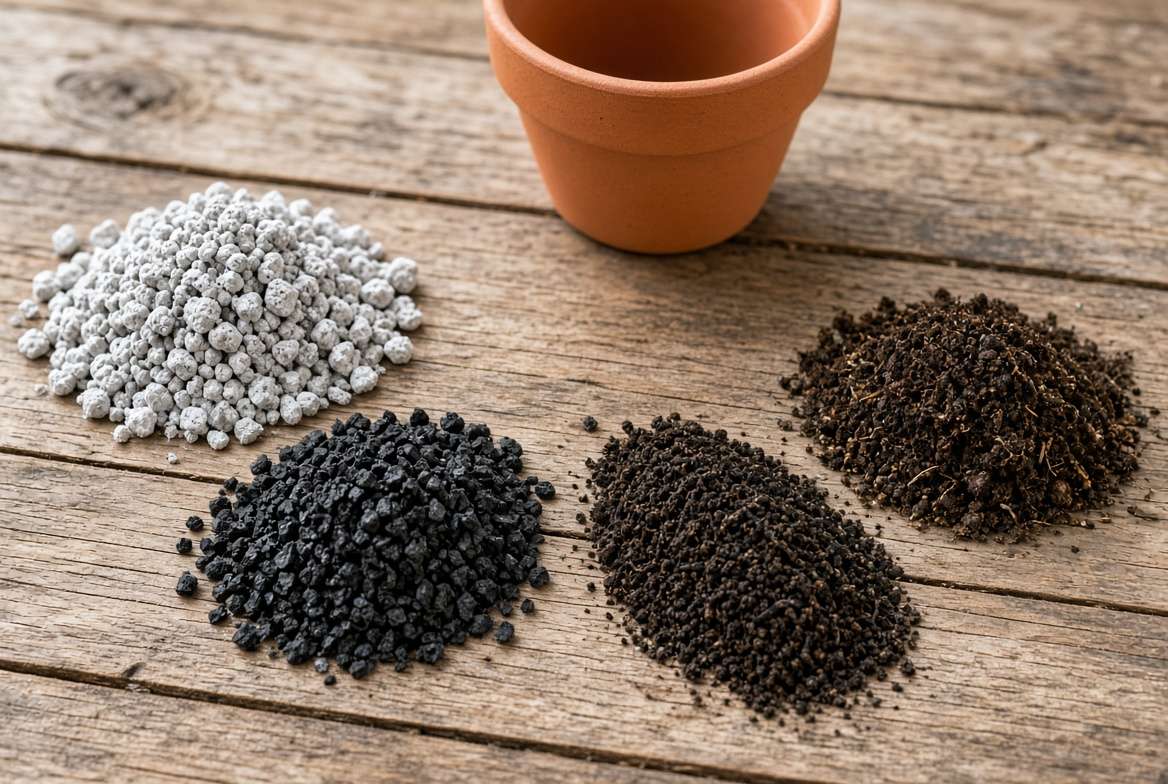
To mimic the rocky, well-draining slopes of the Andes, you need a highly porous substrate. Water should pour through the pot and out the drainage holes within seconds.
| Substrate Component | Percentage | Purpose & Benefits |
|---|---|---|
| Pumice (1/4 inch) | 40% | Provides extreme aeration, prevents compaction, and holds microscopic moisture without rot. |
| Coarse Perlite / Turface | 20% | Additional drainage and inorganic structure. |
| Worm Castings | 15% | Gentle, slow-release organic nitrogen and beneficial microbes. |
| Screened Compost / Coir | 20% | Moisture retention and nutrient binding. |
| Horticultural Biochar | 5% | Prevents anaerobic bacterial spikes and filters soil impurities. |
Pot Mechanics: Terracotta vs. Plastic
The container you choose dictates your watering frequency.
-
Terracotta: The undisputed champion for cacti. Unglazed terracotta breathes, allowing water to evaporate through the sidewalls, which cools the roots and drastically reduces the risk of rot.
-
Plastic/Nursery Pots: If you must use plastic (such as clear plastic pots to monitor root health), you must drill additional drainage holes in the bottom and sides. Because plastic does not breathe, your soil mix must lean heavier on the inorganic side (up to 75% pumice/perlite) to compensate.
4. Precision Watering: The “Soak-and-Dry” Protocol 💧
San Pedro cactus watering schedules are not based on a calendar; they are dictated by the active growing season, temperature, and soil moisture levels.
Active Season vs. Dormancy Schedules
-
Spring & Summer (Active Growth): When temperatures are high and the plant is actively growing, San Pedro loves water. Soak the soil completely until water runs out the bottom. Then, do not water again until the soil is 100% dry all the way to the bottom of the pot. Depending on your climate, this could be every 5 to 10 days.
-
Autumn Slowdown: As daylight hours wane and temperatures drop, taper off your watering frequency.
-
Winter Rest: If overwintering in cold conditions, cease watering entirely. A cold, wet San Pedro is a dead San Pedro.
Diagnostic Tools: Taking the Guesswork Out
Never guess if your cactus needs water. Use the lift test: lift the pot immediately after watering to feel its heavy, saturated weight. Check it a week later—when it feels incredibly light, it’s time to water again. For deeper pots, insert a bare wooden dowel all the way to the bottom. If it comes out with dark, moist soil clinging to it, wait. If it comes out bone dry, drench it.
(Note: San Pedro roots prefer a slightly acidic environment. If your tap water is highly alkaline, consider pH-balancing it to around 6.0–6.5, or rely on collected rainwater for the best nutrient uptake).
5. Nutrient Strategies for Fast, Thick Stem Growth 🧪
While San Pedro can survive in poor soil, it requires heavy feeding to achieve maximum growth potential. However, the wrong fertilizer will cause structural nightmares.
Selecting the Right N-P-K Ratios
Avoid high-nitrogen fertilizers (like typical lawn or houseplant foods). Too much nitrogen causes the cactus to pump itself full of water, resulting in weak, bloated, dark green tissue that is highly susceptible to splitting open or succumbing to fungal attacks.
Instead, look for a low-nitrogen, high-potassium, and high-phosphorus ratio. A classic 5-10-10 or a 3-1-2 organic kelp formula works perfectly.
Micronutrients, Calcium, and Silica
To build strong epidermal cell walls that naturally resist pests and physical damage, supplement with micronutrients:
-
Potassium Silicate: Liquid silica acts like armor for the plant’s cells, thickening the skin and deterring biting insects.
-
Gypsum & Epsom Salts: Occasional top-dressings of gypsum (calcium sulfate) and a flush of Epsom salts (magnesium sulfate) support robust spine development and deep, healthy green coloration.
-
Feeding Cadence: Apply a half-strength liquid fertilizer every second or third watering during the peak summer growing months. Stop feeding entirely by late summer to let the plant harden off before winter dormancy.
6. Troubleshooting & Disease Diagnostics 🩺
Even with the best soil and lighting, growing San Pedro cactus indoors or outdoors comes with occasional challenges. Early detection is the difference between a minor cosmetic blemish and losing an entire plant.
Etiolation: The Telltale Sign of Light Starvation
If the thick, robust crown of your cactus suddenly begins to taper, turning pale green and stretching upwards into a skinny “pencil” shape, it is suffering from etiolation. This is the plant desperately reaching for more sunlight.
-
The Fix: You cannot reverse etiolation; that thin section will never thicken up. If caught early, immediately introduce stronger light (gradually) to normalize the new growth on top. If the stretching is severe, your best option is the “chop and prop” method—cutting the cactus below the skinny growth, letting it pup (sprout new branches), and replanting the tip once it calluses.
Natural Basal Corking vs. Fatal Fungal Rot
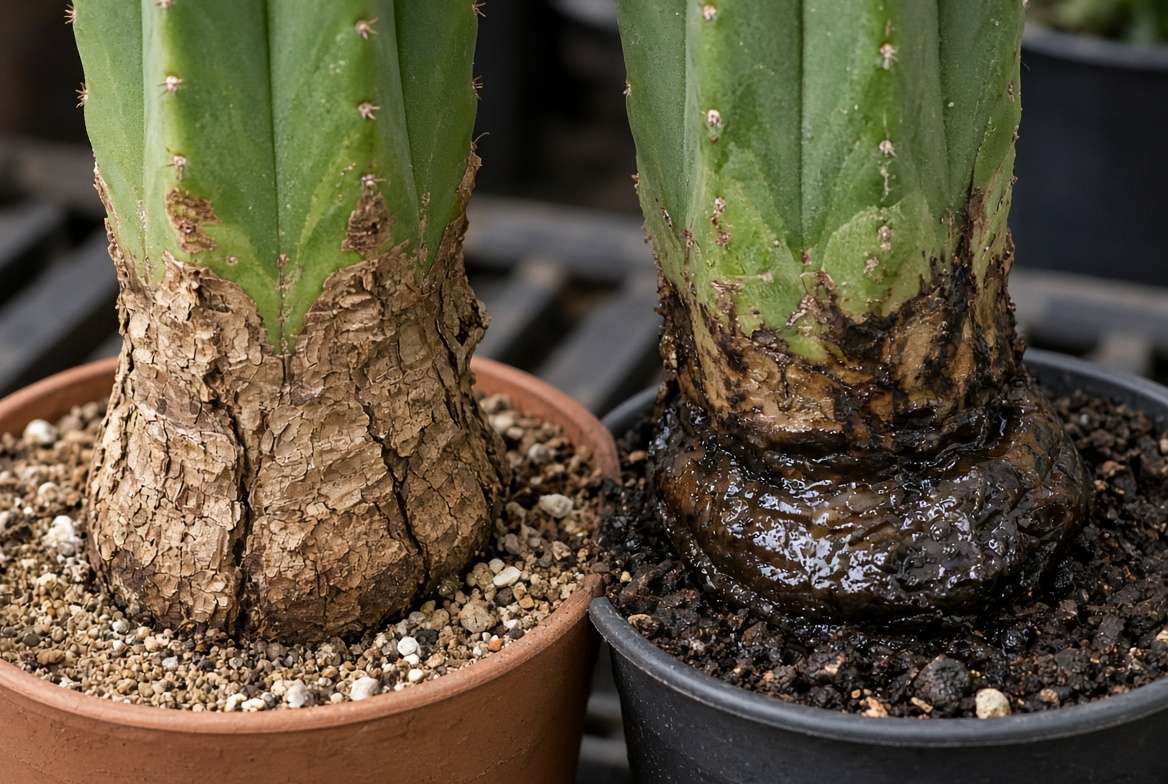
Many new growers panic when the base of their San Pedro turns brown. You must perform a tactile test to determine the cause:
-
Basal Corking (Harmless): As columnar cacti age and bear heavy weight, their lower stem turns into a hard, woody, tan-colored bark. If the brown area is firm to the touch, it is a healthy, natural stabilization process.
-
Root Rot (Fatal): If the brown or black discoloration at the base is soft, mushy, and gives way when lightly pressed, you are dealing with systemic rot caused by overwatering or compacted soil. Immediate surgical intervention is required. Using clear plastic plant pots is a fantastic, expert-level strategy for indoor growers to visually monitor root health and catch damp, stagnant soil zones before rot sets in.
Black Spot & Bipolaris Fungal Lesions
Sometimes, perfectly healthy San Pedro plants will suddenly develop raised, weeping black or oozing brown spots. This is often a fungal reaction (like Bipolaris) triggered by sudden spikes in humidity paired with stagnant airflow or cold, damp nights.
-
Treatment: Move the plant to a well-ventilated area with oscillating fans. Treat the lesions topically with a copper octanoate fungicidal spray or dust them with organic sulfur powder. Do not water the plant until the spots dry into hard, crusty scabs.
Common Pest Infestations
-
Spider Mites: These microscopic pests thrive in hot, dry, stagnant indoor conditions. They attack the growing tip, leaving behind fine webbing and rusted, hardened brown scars on the skin.
-
Mealybugs & Scale: Look for fuzzy, cotton-like deposits in the crevices between the ribs or hard, dome-like bumps clinging to the epidermis.
-
Control Protocol: For small infestations, spot-treat with a Q-tip dipped in 70% isopropyl alcohol to melt the pests on contact. For larger outbreaks, use regular evening applications of horticultural soap (never apply in direct sunlight to avoid chemical burns).
7. Emergency Rescue: Surgical Protocol for a Rotting Cactus ✂️
If your San Pedro cactus watering schedule was too aggressive and you discover mushy black rot at the base, the roots are likely already dead. To save the healthy upper column, you must act as a surgeon.
-
Unpot and Inspect: Remove the cactus from the wet soil. If the roots are slimy, black, and smell like a swamp, the root system is compromised.
-
The Clean Cut Method: Sterilize a sharp, non-serrated knife with rubbing alcohol. Slice horizontally through the cactus, at least one to two inches above any visible brown or mushy tissue. Look at the vascular ring in the center of the fresh cut; if there is any orange, brown, or red discoloration, the fungal infection has traveled higher. Clean the blade and cut higher until the flesh and vascular ring are perfectly pristine and crisp green/white.
-
Beveling: Slice the outer green rib edges at a 45-degree angle pointing downward. As the core dries, it shrinks upward; beveling prevents the woody core from sinking into a bowl shape that traps moisture.
-
Disinfection: Heavily dust the fresh wound with horticultural sulfur powder to prevent airborne pathogens from entering.
-
Callusing: Place the cutting in a warm, dry, heavily shaded area with excellent airflow. Leave it completely alone for 7 to 21 days until the wound forms a hard, dry, impenetrable seal.
-
Re-rooting: Place the callused cutting upright into a pot of 100% dry pumice or coarse perlite. Do not water it. A cactus without roots cannot absorb moisture; watering now will only restart the rot. Check every few weeks until robust white roots emerge, then transition it back to your 60/40 mineral soil mix.

8. Winter Dormancy & Cold Hardiness Management ❄️
Understanding the cold tolerance of Trichocereus pachanoi care is vital for growers in four-season climates.
Temperature Limits & USDA Hardiness
San Pedro can tolerate brief, overnight dips down to 25°F (-4°C) without sustaining freeze damage, but only if the soil is 100% bone dry. If the roots are wet when freezing temperatures hit, the plant’s cell walls will rupture, turning the cactus to mush. They are typically safe outdoors year-round in USDA Zones 8b through 11.
Storing Plants Indoors During Winter
If you live in a cold climate, bring your potted cacti indoors before the first frost. The goal here is to force them into total dormancy so they don’t etiolate in the weak winter sunlight.
-
Place them in a cool, unheated garage, basement, or drafty room where temperatures hover between 45°F and 55°F (7°C to 13°C).
-
Withhold all water from late fall until spring. The plant will physically shrink and wrinkle slightly—this is completely normal.
-
Spring Wake-Up: When outdoor night temperatures safely stay above 50°F (10°C), move them back outside into the shade. Wait a week before providing their first deep spring soaking and gently ease them back into full sun.
9. Propagation 101: Mid-Cuts, Tip-Cuts, and Pups 🌱
San Pedro cactus plants are incredibly generous propagators, allowing you to multiply your collection rapidly.
-
Tip-Cuts: The top growing apex of the cactus. Once callused and rooted, these resume vertical growth seamlessly and beautifully.
-
Mid-Cuts: A cylindrical section of the middle stem with no growing tip. Once rooted, a mid-cut will push out new offsets (called “pups”) from the upper areoles (spine nodes) to continue growing.
-
Log-Style vs. Vertical Planting: Mid-cuts can be planted vertically (making sure the original downward-facing side goes into the soil) or laid horizontally like a log on the soil surface. Log planting mimics natural fallen branches and often results in a wider cluster of lateral pups, though it takes longer to root.
-
Encouraging Pups: Applying a specialized rooting hormone or kelp extract can stimulate basal pups (sprouting from the root line) for a bushier stand.
10. Frequently Asked Questions ❓
How fast do San Pedro cactus plants grow per year? Under optimal conditions—full sun, high temperatures, well-draining mineral soil, and regular summer watering—they can grow 12 to 24 inches annually. Indoor plants or those in sub-optimal conditions typically average 6 to 8 inches a year.
Can I leave my San Pedro cactus outside in the rain? Yes, provided they are planted in a highly porous, 60%+ inorganic soil mixture (pumice/perlite) and are actively growing in hot summer temperatures. If it is cold or they are sitting in dense, peaty soil, prolonged rain will cause fatal root rot.
Why is my San Pedro cactus turning soft at the base? If the base is soft, mushy, and dark, it is suffering from root rot caused by overwatering or poor drainage. You must immediately uproot the plant, cut away all rotting tissue until you reach clean green flesh, let it callus for a few weeks, and re-root it in dry pumice.
Do San Pedro cactus plants need direct sunlight? Absolutely. They require 6 to 8+ hours of direct sunlight daily to grow thick and healthy. If grown indoors, they require a south-facing window paired with high-output LED grow lights to prevent them from stretching and becoming thin.
What pot size is best for a 12-inch cutting? Cacti prefer to be slightly root-bound. A 1-gallon pot (about 6 to 8 inches in diameter) is ideal for a fresh 12-inch cutting. Oversized pots hold too much wet soil around the fragile new root system, drastically increasing the risk of rot.
11. Final Takeaway & Actionable Care Checklist ✅
Growing massive, breathtaking San Pedro cactus plants is an immensely rewarding experience once you stop treating them like desert rocks and start treating them like the high-altitude, fast-growing giants they are.
Your Quick-Start Success Checklist:
-
Soil: Ditch the commercial bags; mix 60% pumice/perlite with 40% organic compost. Consider using clear plastic plant pots with extra drainage to monitor root health visually.
-
Light: Provide absolute maximum full sun, but acclimatize them slowly to prevent irreversible sunburn. Use high-PPFD grow lights if keeping them indoors.
-
Water: Soak deeply during the hot summer months, but allow the soil to reach 100% dry status before watering again.
-
Winter: Keep them bone-dry and cool to trigger healthy dormancy and prevent thin, weak winter stretching.
-
Nutrition: Feed with a low-nitrogen, high-potassium liquid fertilizer during active summer growth to build thick, disease-resistant stems.
By mastering this soak-and-dry rhythm and prioritizing maximum root aeration, you will completely eliminate root rot from your garden and watch your San Pedro collection explode with vibrant, vigorous growth year after year. 🌵✨











