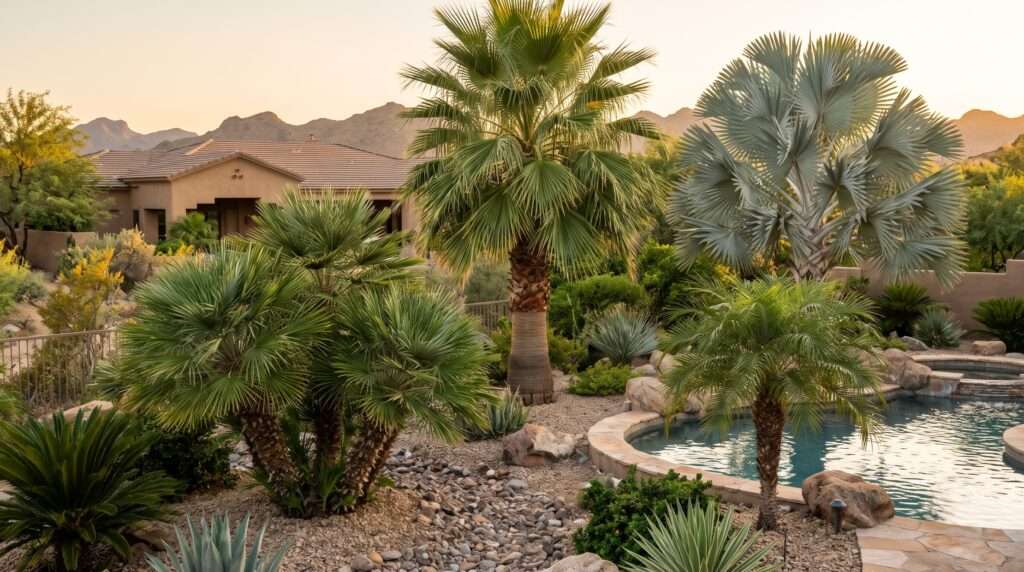
Picture this: You spend hundreds of dollars turning your yard into a resort-style oasis, only to watch your new palms scorch in 115°F Phoenix heat, struggle in rock-hard alkaline caliche soil, or snap during July monsoon winds. The harsh truth is that most tropical palms aren’t built for the Sonoran Desert—some guzzle far too much water, others freeze on crisp desert winter nights, and many drop messy fruit right next to your swimming pool. To save you from costly trial and error, we researched and vetted the best 10 palm trees for Arizona that actually thrive in harsh desert conditions.
Why Trust Us?
Every palm on this list was selected using University of Arizona Cooperative Extension climate data, strict USDA Hardiness Zone matching (Zones 7b–10a), and proven drought-tolerance ratings. Beyond horticultural specs, we also analyzed hundreds of verified Amazon live-plant buyer reviews to ensure each tree ships safely, establishes strong roots, and survives real-world Arizona backyards.
Whether you are designing a zero-water xeriscape in Tucson, framing a poolside patio in Scottsdale, or hunting for a cold-hardy specimen that can handle Sedona’s winter frosts, this guide breaks down everything you need to know. Below, you’ll find quick-decision picks, a side-by-side comparison, and in-depth reviews to help you confidently match the right palm to your yard size, water budget, and elevation.
Quick Picks & Comparison Table 📊
If you want to skip straight to the winners, these three palms stand out for reliability, desert resilience, and buyer satisfaction:
-
🏆 Best Overall: Mediterranean Fan Palm — Unbeatable blend of heat tolerance, cold hardiness, and compact size.
-
🌵 Best Native & Drought-Proof: California Fan Palm — Arizona’s only native palm; built to survive 120°F+ summers with minimal water.
-
🏊 Best for Pools & Small Patios: Pygmy Date Palm — Clean, compact, and non-invasive with lush, tropical fronds.
Side-by-Side Comparison: Best 10 Palm Trees for Arizona
In-Depth Reviews: The Best 10 Palm Trees for Arizona 🌴
1. Mediterranean Fan Palm (Chamaerops humilis) — Best Overall for Arizona Yards
Product Description
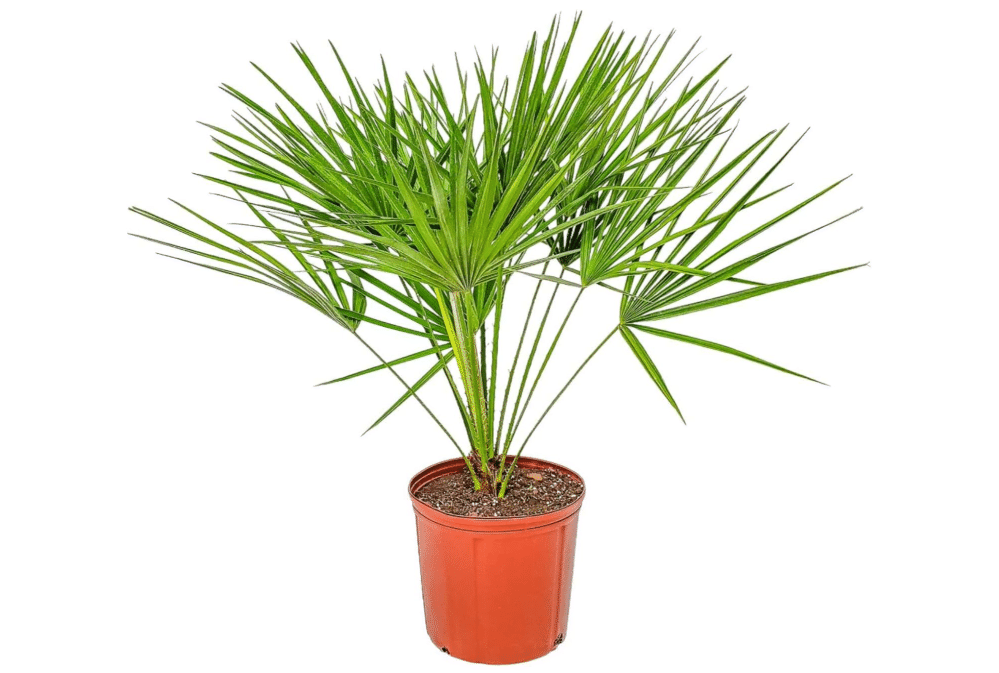
The Mediterranean Fan Palm is the Swiss Army knife of Arizona landscaping. Unlike towering sky-scrapers that eventually outgrow residential lots and cost hundreds of dollars to trim, this slow-growing, multi-trunked beauty stays at a manageable 8 to 15 feet tall. Its stiff, fan-shaped fronds range from deep emerald to silvery blue-green, giving your yard an instant Tuscan or Southwestern courtyard aesthetic. Because it naturally grows in dense, sculptural clusters, it looks extraordinary when paired with landscape uplighting against stucco walls or boulder groupings.
-
Price:
Key Features & Benefits
-
Extreme Temperature Range: Handles blistering 115°F+ Phoenix summers and winter cold snaps down to 10°F–15°F without leaf burn.
-
Compact & HOA-Friendly: Slow growth rate (6–12 inches per year) means it won’t crowd rooflines, power lines, or neighbor fences.
-
Alkaline Soil Tolerant: Thrives in Arizona’s sandy, rocky, and high-pH caliche soils as long as drainage is solid.
-
Drought-Resistant: Once its root system establishes after year one, it requires very little supplemental drip irrigation.
Pros & Cons
-
Pros:
-
Virtually indestructible in both low and mid-desert Arizona climates
-
Multi-trunk habit creates a lush, full silhouette at eye level
-
Very low maintenance and minimal litter drop
-
-
Cons:
-
Petioles (leaf stems) carry sharp, woody teeth—keep away from narrow walkways
-
Slow growth means buying a larger pot upfront if you want immediate impact
-
Amazon Customer Ratings & Reviews
Live Mediterranean Fan Palms on Amazon consistently average 4.4 to 4.6 out of 5 stars. Verified buyers frequently praise the sturdy packaging and healthy, moist root balls upon arrival. Several Southwest reviewers note that even 1-gallon starter plants handled triple-digit afternoon sun within their first season after a brief acclimation period.
Why It’s a Good Choice for Arizona
Arizona’s biggest challenge isn’t just summer heat—it’s the wild swing between 115°F July afternoons and 25°F January nights. The Mediterranean Fan Palm shrugs off both extremes while sipping a fraction of the water required by tropical palms.
Ideal Use Case / Who Should Buy It
Homeowners in Phoenix, Mesa, Scottsdale, and Tucson looking for a low-maintenance, water-wise front-yard focal point or courtyard accent that fits comfortably within HOA size guidelines.
2. California Fan Palm (Washingtonia filifera) — Best Native Desert Palm
Product Description
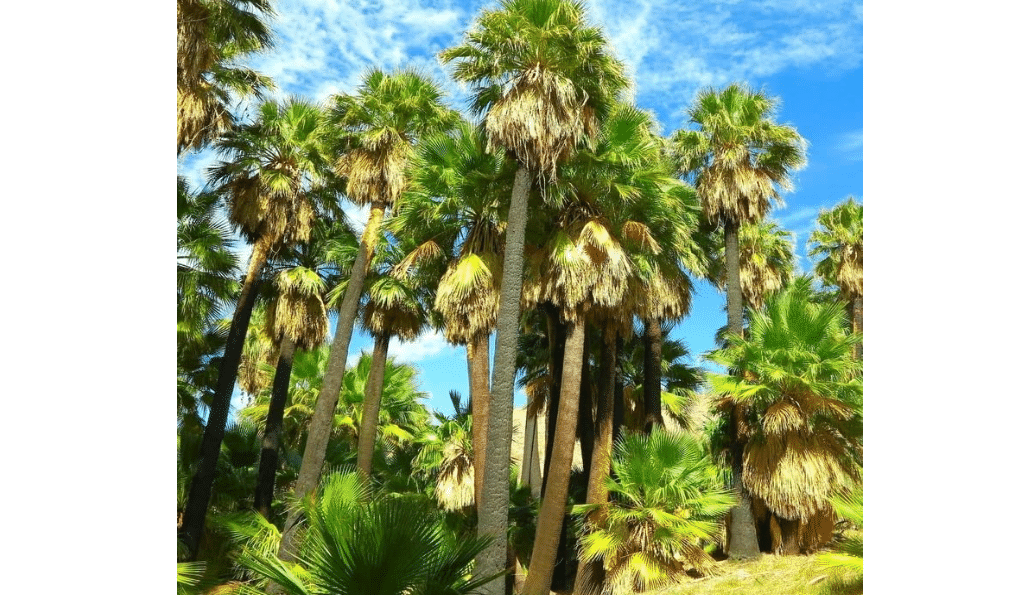
If you want a tree that was literally forged by the Sonoran Desert, the California Fan Palm is Arizona’s only native palm species. You’ve seen its stout, columnar trunk and massive 15- to 20-foot crown of dusty-green fronds anchoring desert oases and historic boulevards across the Southwest. Unlike its skinnier cousin (the Mexican Fan Palm), Washingtonia filifera builds a thick, sturdy trunk that stands up to fierce summer monsoon gusts without bending or snapping.
-
Price: $22.99
Key Features & Benefits
-
Unmatched Heat & Cold Resilience: Survives temperatures from 18°F up to 130°F with zero cold-protection wrapping.
-
Deep-Rooted Drought Survivor: Naturally adapted to tap deep moisture reserves, making it one of the most drought-tolerant palms on earth.
-
Classic Desert Skirt: Older fronds fold down into a natural thatched “petticoat” that insulates the trunk (or can be trimmed clean for a polished look).
-
Wildlife Friendly: Provides shelter for native desert birds and pollinators.
Pros & Cons
-
Pros:
-
Native to Arizona—zero guesswork regarding climate compatibility
-
Extremely wind-resistant during July/August monsoon storms
-
Thrives in poor, rocky, low-nutrient desert soil
-
-
Cons:
-
Grows massive (up to 50–60 feet tall) and needs plenty of horizontal and vertical space
-
Mature trees eventually require professional tree-trimming services
-
Amazon Customer Ratings & Reviews
Averaging 4.3 to 4.5 out of 5 stars, buyers highlight how quickly these palms root into native soil once transplanted. Desert gardeners report high survival rates even when planted as affordable 1-gallon saplings in late spring.
Why It’s a Good Choice for Arizona
You cannot beat millions of years of desert evolution. It requires zero pampering, handles alkaline soil effortlessly, and thrives in the driest, hottest pockets of the state.
Ideal Use Case / Who Should Buy It
Owners of larger properties, ranch-style homes, or desert-native purists who want an authentic, towering Sonoran silhouette with minimal water bills.
3. Mexican Blue Palm (Brahea armata) — Best for True Xeriscaping
Product Description
The Mexican Blue Palm is a living desert sculpture. Native to the arid canyons of Baja California and Sonora, this breathtaking fan palm is coated in a natural, chalky silver-blue wax that acts like built-in sunscreen against intense desert UV rays. Against Arizona’s terracotta stucco, red rock gravel, and dark green agaves, its icy blue fronds create an unforgettable color contrast. In summer, it sends out dramatic, feathery flower stalks up to 15 feet long that arch gracefully past the canopy.
-
Price: $8.75
Key Features & Benefits
-
Built-In UV Protection: Waxy silvery-blue foliage reflects harsh sunlight, preventing the yellow scorch common on greener palms.
-
True Xeriscape Champion: Once established, it can survive on natural desert rainfall plus occasional deep summer soaking.
-
High Cold Tolerance: Hardy down to 12°F–15°F, making it reliable across both low and mid-elevation Arizona yards.
-
Wind-Proof Crown: Stiff, rigid fronds hold their shape even in 50+ mph desert dust storms.
Pros & Cons
-
Pros:
-
Show-stopping silver-blue color that elevates modern desert landscaping
-
Virtually immune to drought and sunscald
-
Slow growth keeps it looking neat for decades
-
-
Cons:
-
Very slow-growing—requires patience or a bigger upfront budget
-
Dislikes soggy, poorly drained soil (must have fast drainage)
-
Amazon Customer Ratings & Reviews
Specialty nursery listings on Amazon maintain 4.4 to 4.7 out of 5 stars. Buyers rave about the unmistakable blue hue even on young plants, noting that the fronds intensify in silver color once exposed to full Arizona sun.
Why It’s a Good Choice for Arizona
Its native habitat is virtually identical to southern and central Arizona. If you are converting a water-hungry lawn into a desert xeriscape to qualify for municipal water rebates, this is your centerpiece tree.
Ideal Use Case / Who Should Buy It
Water-conscious homeowners in Phoenix, Tucson, and Gilbert designing modern rock gardens, xeriscapes, or minimalist desert courtyards.
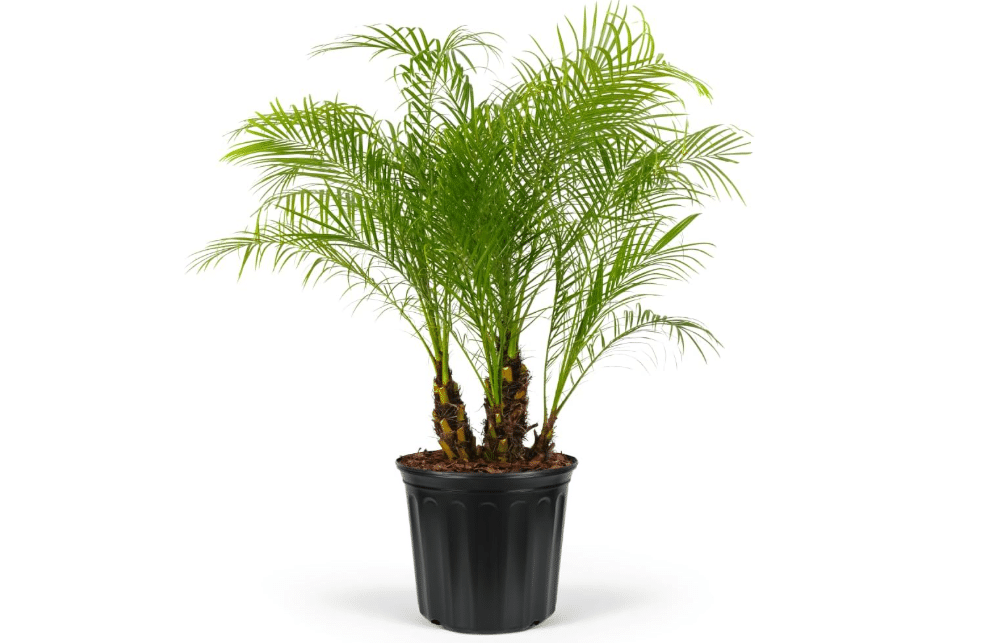
4. Pygmy Date Palm (Phoenix roebelenii) — Best for Small Yards, Patios & Poolsides
Product Description
If your dream is a lush, tropical resort vibe right beside your swimming pool, the Pygmy Date Palm is the gold standard. Topping out at a polite 6 to 10 feet tall, this graceful feather palm features soft, arching, bright-green fronds and slender, textured trunks—often sold in stylish double or triple-trunk clusters. Best of all, it is one of the cleanest palms you can buy, producing almost no messy fruit or heavy frond drop to clog your pool skimmer.
-
Price: $149.25
Key Features & Benefits
-
Pool-Safe & Non-Invasive: Compact, fibrous root ball won’t crack pool decks, pavers, or underground plumbing lines.
-
Container & Courtyard Ready: Thrives equally well in large decorative pots on covered patios or planted directly in garden beds.
-
Soft, Tropical Texture: Delicate feather fronds soften harsh concrete walls and desert boulders.
-
Shade-Tolerant: Unlike most desert palms, it actually prefers filtered light or afternoon shade.
Pros & Cons
-
Pros:
-
Ideal compact scale for tight backyards, townhouses, and poolside planters
-
Very clean—minimal leaf and fruit litter
-
Easy to move indoors or cover with frost cloth if grown in containers
-
-
Cons:
-
Sensitive to frost (needs protection below 28°F)
-
Requires afternoon shade in Phoenix/Yuma to prevent frond tip burn in 110°F+ heat
-
Amazon Customer Ratings & Reviews
One of Amazon’s best-selling live palms, averaging 4.5 out of 5 stars across thousands of reviews. Customers consistently praise its lush, full appearance straight out of the box and its ability to transition seamlessly between shaded patios and bright indoor sunrooms.
Why It’s a Good Choice for Arizona
While it isn’t a blazing-sun xeriscape palm, Arizona homes almost always have shaded east-facing patios, covered ramadas, and poolside alcoves where desert cacti struggle—and that is exactly where the Pygmy Date Palm shines.
Ideal Use Case / Who Should Buy It
Pool owners, patio gardeners, and homeowners with small yards who want a clean, lush tropical accent in partial shade.
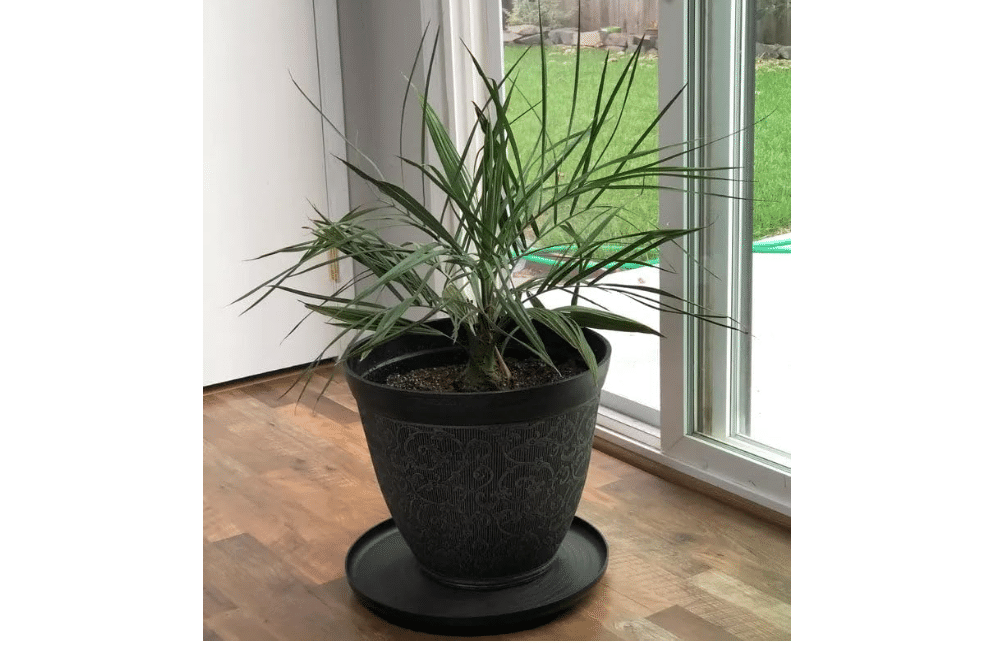
5. Pindo Palm (Butia capitata) — Best Cold-Hardy & Edible Fruit Palm
Product Description
Commonly known as the Jelly Palm, the Pindo Palm brings a rare combination of grace, cold hardiness, and edible fruit to Arizona landscapes. Its cascading, blue-green feather fronds arch dramatically back toward a stout, diamond-patterned trunk, creating a soft, weeping silhouette that stands out from stiff desert fan palms. In late summer, mature trees produce clusters of golden-orange fruit with a sweet, tangy flavor reminiscent of pineapple and apricot—perfect for homemade desert jams and jellies.
-
Price:
Key Features & Benefits
-
Serious Cold Hardiness: Survives freezing desert nights down to 10°F–15°F without frost cloth.
-
Edible, Fragrant Fruit: Produces abundant sweet-tart dates that attract songbirds and can be harvested for the kitchen.
-
Manageable Height: Reaches a neighbor-friendly 15 to 20 feet tall, making it easy to maintain without heavy crane equipment.
-
Drought-Adapted: Handles dry desert air and moderate-to-low irrigation once established.
Pros & Cons
-
Pros:
-
One of the most cold-hardy feather palms available
-
Dual-purpose ornamental and edible landscape tree
-
Soft, arching blue-green fronds add movement in desert breezes
-
-
Cons:
-
Dropped fruit can stain concrete driveways or attract wasps if not harvested
-
Sensitive to iron and manganese deficiency in highly alkaline soil (needs annual palm fertilizer)
-
Amazon Customer Ratings & Reviews
Live Pindo Palms on Amazon average 4.4 to 4.6 out of 5 stars. Buyers frequently commend the thick, healthy root systems and note that these palms bounce back quickly after winter cold snaps that damage more tropical varieties.
Why It’s a Good Choice for Arizona
Many Arizona homeowners want the soft, feathery look of a tropical palm without the risk of losing it during a 20°F January freeze. The Pindo Palm delivers that lush feather-frond aesthetic while handling both scorching summers and brisk winter lows in Tucson, Sedona, and the Phoenix outskirts.
Ideal Use Case / Who Should Buy It
Edible-landscape enthusiasts and homeowners in frost-prone Arizona microclimates who want a mid-sized, low-stress feather palm.
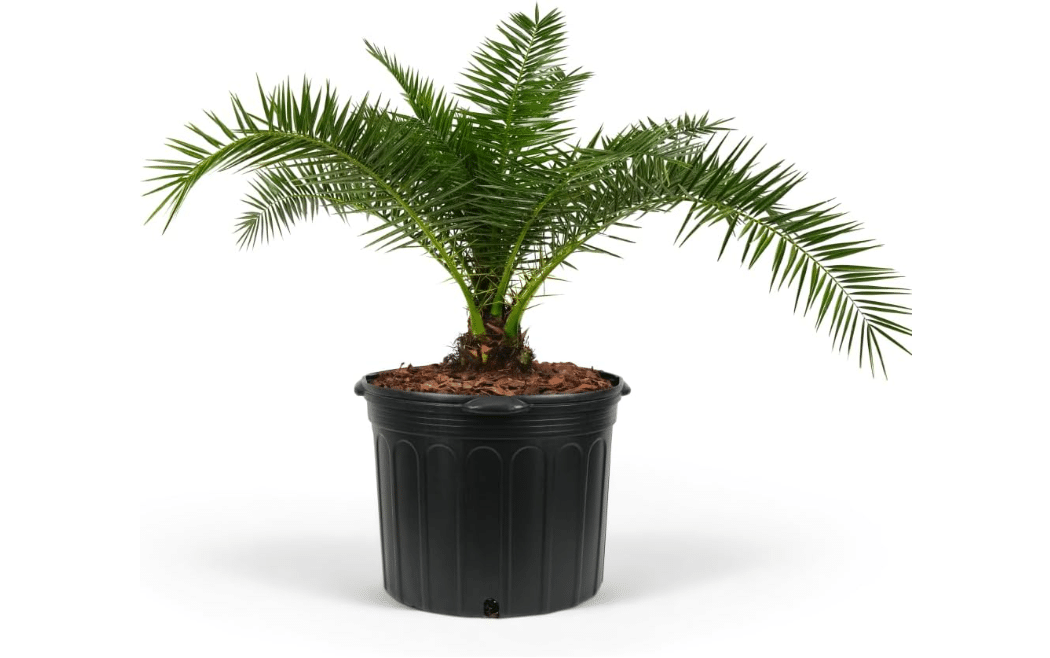
6. Canary Island Date Palm (Phoenix canariensis) — Best Resort-Style Statement Palm
Product Description
Often called the “Pineapple Palm” because of its sculpted, diamond-cut trunk crown, the Canary Island Date Palm is the undisputed king of luxury resort landscaping. You’ll spot its massive, stout trunk and sweeping 8- to 12-foot arching emerald fronds framing five-star resorts across Scottsdale and Paradise Valley. It commands instant architectural authority and transforms an ordinary front yard into a grand desert estate.
-
Price:
Key Features & Benefits
-
Iconic Resort Silhouette: Massive, symmetrical crown creates an unmistakable luxury aesthetic and boosts curb appeal.
-
Heat & Drought Tough: Thrives in full, unobstructed Arizona sun and tolerates extended dry spells once rooted.
-
Cold Tolerant: Handles winter lows down to 18°F–20°F with minimal frond damage.
-
Dramatic Nighttime Presence: Its sculpted trunk and wide canopy are tailor-made for architectural LED uplighting.
Pros & Cons
-
Pros:
-
Unmatched visual prestige and property-value appeal
-
Extremely wind-resistant thanks to its thick, heavy trunk
-
Thrives in full desert sun with low-to-moderate water
-
-
Cons:
-
Requires a massive footprint (up to 30 feet wide and 50+ feet tall at maturity)
-
Sharp, needle-like spines near the base of each frond require cautious pruning
-
Amazon Customer Ratings & Reviews
Averaging 4.3 to 4.6 out of 5 stars, Amazon buyers love the affordability of starting with young 1- to 3-gallon trees compared to paying thousands for mature specimen installations. Reviewers report vigorous root establishment when planted in warm spring soil.
Why It’s a Good Choice for Arizona
Native to the arid Canary Islands off the coast of Morocco, this palm is naturally conditioned for blazing sun, dry air, and rocky volcanic or alkaline soils—a near-perfect match for central and southern Arizona.
Ideal Use Case / Who Should Buy It
Homeowners with wide driveways, spacious front lawns, or corner lots who want a bold, luxury-resort centerpiece.
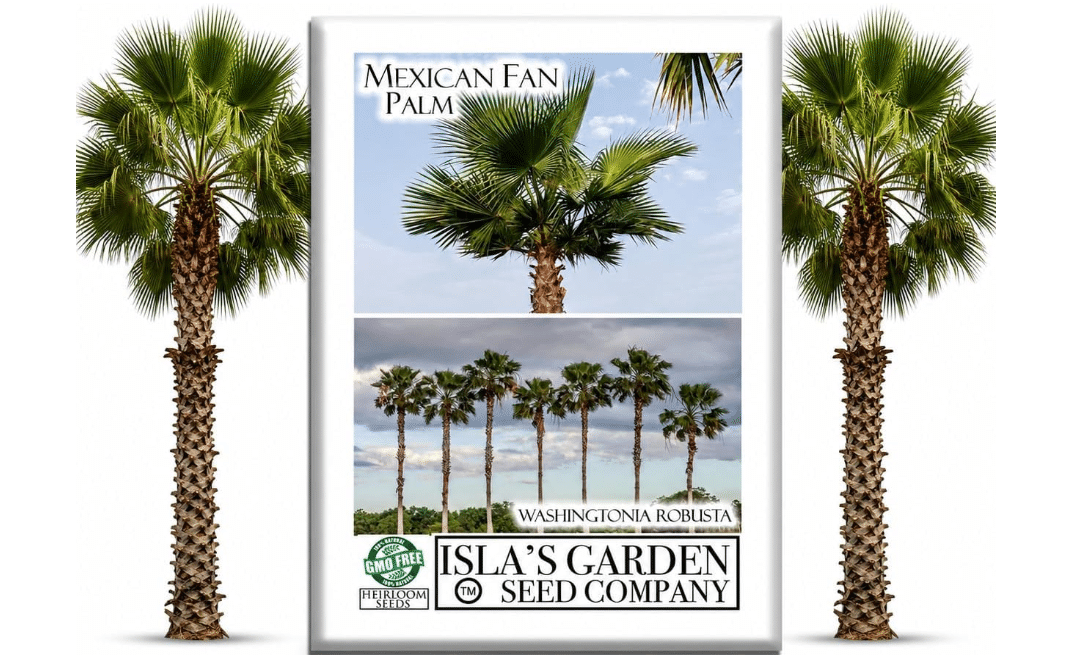
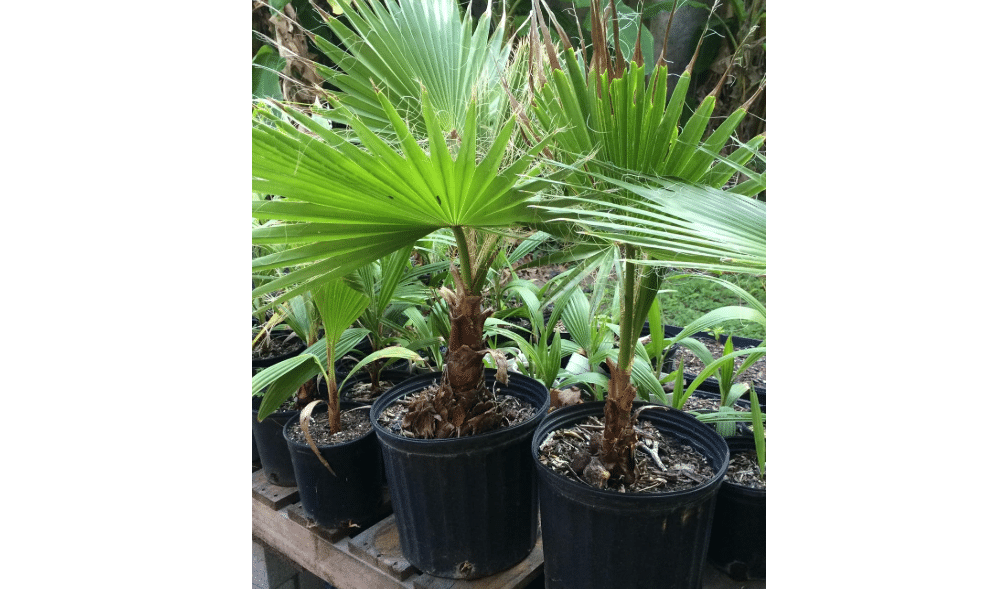
7. Mexican Fan Palm (Washingtonia robusta) — Best Fast-Growing Tall Palm
Product Description
If you picture the iconic, towering skyline of Phoenix or Palm Springs silhouetted against a fiery desert sunset, you’re looking at the Mexican Fan Palm. Known for its slender, tapering trunk and rapid vertical growth, this classic Southwestern palm shoots skyward at 2 to 3+ feet per year when given regular summer water. It’s the go-to choice for creating dramatic vertical symmetry along driveways, property lines, and pool perimeters without breaking the bank.
-
Price: $70.00
Key Features & Benefits
-
Rapid Vertical Growth: One of the fastest-growing desert palms, delivering quick height and skyline presence.
-
Budget-Friendly: Widely available and affordable, making it easy to buy in groupings of 3, 5, or 7.
-
Extreme Heat Tolerance: Laughs off 120°F summer afternoons and reflected heat from concrete walls.
-
Soil Forgiving: Grows vigorously even in lean, rocky, low-organic desert soils.
Pros & Cons
-
Pros:
-
Fast growth rate and low upfront cost
-
Slender trunk fits into narrower planting strips than the California Fan Palm
-
Classic, timeless Southwestern aesthetic
-
-
Cons:
-
Can reach 70–100 feet tall, eventually requiring professional high-reach trimming
-
Can self-seed in nearby gravel beds if flower stalks aren’t removed
-
Amazon Customer Ratings & Reviews
Consistently rated 4.4 to 4.6 out of 5 stars, buyers highlight how quickly these young palms put out new fronds during their first summer. Many reviewers note that even small starter plants double in size within a single growing season.
Why It’s a Good Choice for Arizona
It is a proven workhorse across the entire Sonoran Desert. It handles scorching heat, dry winds, and alkaline water with almost zero fuss.
Ideal Use Case / Who Should Buy It
Budget-conscious homeowners wanting fast vertical height, perimeter framing, or a classic multi-palm desert boulevard look.
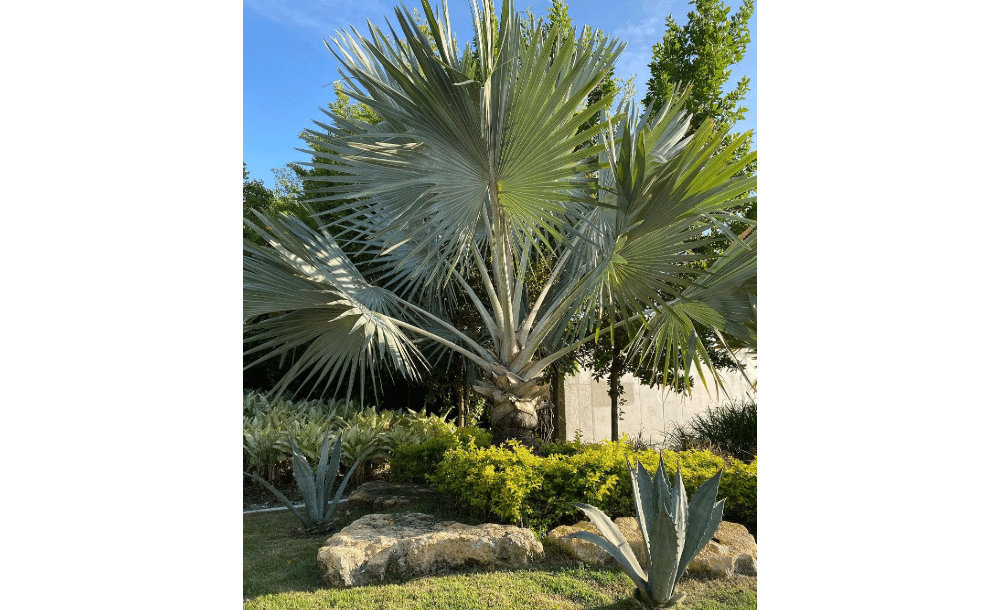
8. Bismarck Palm (Bismarckia nobilis) — Best Dramatic Architectural Focal Point
Product Description
The Bismarck Palm is a jaw-dropping showstopper that stops neighbors in their tracks. Native to the arid plains of Madagascar, this regal fan palm produces enormous, stiff, silvery-blue leaves spanning up to 10 feet across. Its bold, geometric symmetry looks like modern desert art, pairing effortlessly with minimalist concrete, corten steel, and desert boulder landscapes.
-
Price: $149.00
Key Features & Benefits
-
Massive Silver-Blue Foliage: Produces some of the largest, most striking metallic-blue fan fronds in the palm world.
-
Full-Sun Thrivers: Requires intense, direct sunlight to develop its signature icy silver coloration.
-
Low Water Needs: Deep, wide root system makes it highly drought-resistant once established.
-
Pest & Disease Resistant: Rarely bothered by common desert insects or fungal issues in Arizona’s dry air.
Pros & Cons
-
Pros:
-
Unrivaled architectural impact—one tree anchors an entire yard
-
Thrives in scorching full sun and dry desert heat
-
Very low maintenance once rooted
-
-
Cons:
-
Sensitive to root disturbance—must be unpotted and planted carefully without breaking the root ball
-
Needs generous open space (15–20 ft clearance) to showcase its massive crown
-
Amazon Customer Ratings & Reviews
Averaging 4.3 to 4.5 out of 5 stars, specialty plant buyers rave about the vivid silver-blue tint right out of the shipping box. Experienced reviewers recommend cutting the nursery pot away carefully rather than pulling the plant out to protect its sensitive roots.
Why It’s a Good Choice for Arizona
Unlike humid-climate palms that crisp up in dry desert air, the Bismarck Palm thrives in low humidity and intense UV radiation—making Phoenix, Mesa, and Yuma ideal habitats.
Ideal Use Case / Who Should Buy It
Owners of modern, mid-century, or desert-contemporary homes who want a single, unforgettable centerpiece specimen with plenty of breathing room.
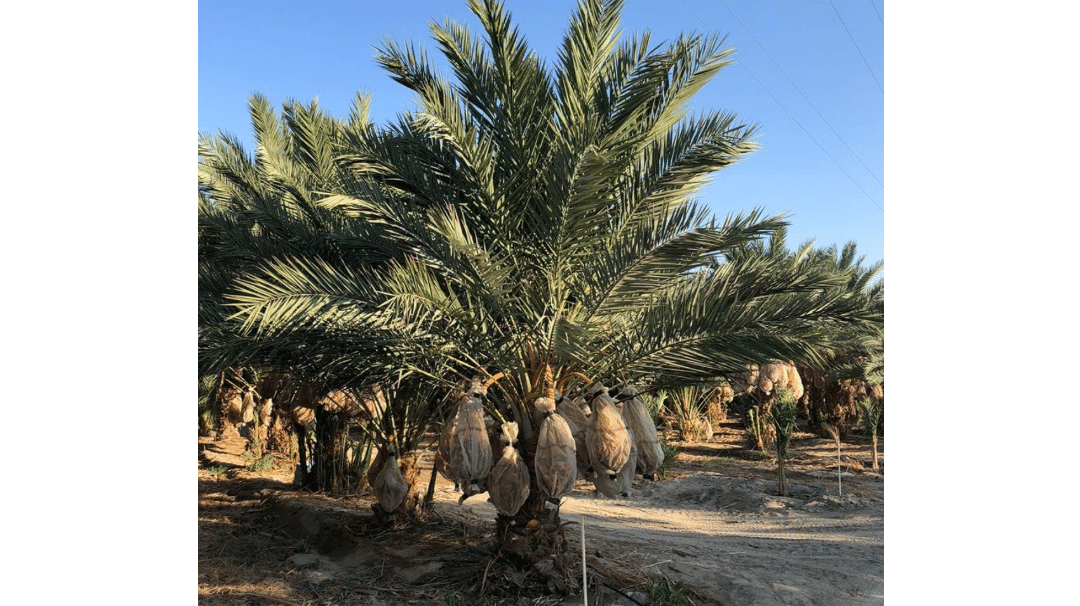
9. True Date Palm (Phoenix dactylifera) — Best for Shade & Authentic Oasis Vibes
Product Description
The True Date Palm is the tree that gave desert oases their name. Rising 50 to 75 feet on a slender, textured trunk topped with an airy umbrella of silvery-green feather fronds, it casts dappled, cooling shade over patios, pools, and cactus gardens. If you plant both a male and female tree (or hand-pollinate), it even rewards you with clusters of sweet, gourmet Medjool or Deglet Noor dates.
-
Price:
Key Features & Benefits
-
Built for Extreme Heat: Evolved in the scorching deserts of North Africa and the Middle East—thrives in 115°F–125°F heat.
-
Cooling Filtered Shade: High, arching canopy lowers patio temperatures without blocking desert breezes.
-
Drought-Hardy: Tolerates dry desert conditions well, though deep summer watering boosts vigor and fruit production.
-
Edible Harvest Potential: Female trees produce delicious, energy-rich dates in hot Arizona summers.
Pros & Cons
-
Pros:
-
Authentic desert-oasis elegance that blends seamlessly with cacti and agaves
-
Provides genuine overhead shade in harsh afternoon sun
-
Cold-hardy down to 15°F–20°F
-
-
Cons:
-
Requires both male and female trees for edible date production
-
Tall mature height requires professional trimming as it ages
-
Amazon Customer Ratings & Reviews
Rated 4.3 to 4.5 out of 5 stars, buyers appreciate the vigor of young date palm saplings and their high survival rate in hot, dry climates where other trees stall out.
Why It’s a Good Choice for Arizona
Arizona’s Yuma and Phoenix valleys are already commercial date-growing capitals of the United States. The climate here mirrors the True Date Palm’s ancestral home almost to the degree.
Ideal Use Case / Who Should Buy It
Homeowners planting in clusters of 3 or 5 to create a shaded desert oasis, or lining long, sun-baked driveways.
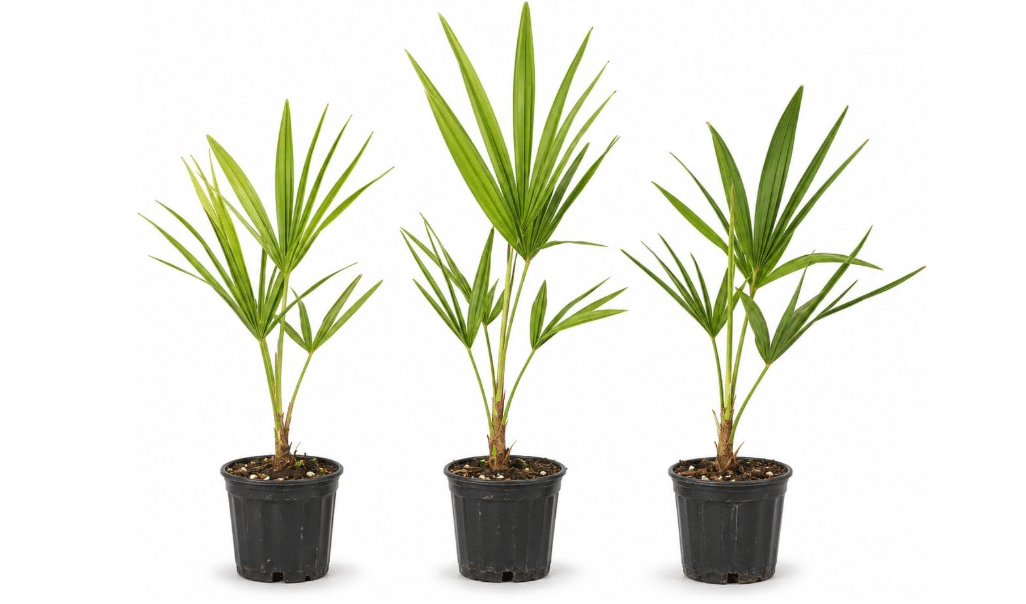
10. Windmill Palm (Trachycarpus fortunei) — Best for Northern & High-Elevation Arizona
Product Description
Think you live too far north in Arizona to grow a real palm tree? Meet the Windmill Palm. Wrapped in a rugged, fibrous, hair-like trunk that acts like a built-in winter coat, this compact fan palm is one of the most cold-hardy palms on the planet. Its neat, deep-green, windmill-shaped fronds stay tidy and compact, making it a reliable choice for cooler elevations where desert palms freeze solid.
-
Price:
Key Features & Benefits
-
Extreme Cold Hardiness: Survives snow, ice, and hard freezes down to 5°F–10°F (USDA Zones 7–11).
-
Compact Footprint: Slender trunk and 6- to 8-foot crown fit easily into smaller courtyards and side yards.
-
Low Litter: Neat, well-behaved canopy drops very little debris.
-
Shade Friendly: Performs beautifully in morning sun with afternoon shade.
Pros & Cons
-
Pros:
-
Survives winter freezes in Sedona, Prescott, Payson, and high-desert yards
-
Compact, clean, and easy to manage
-
Consistently high shipping and transplant survival rates
-
-
Cons:
-
Struggles in blazing, all-day 115°F low-desert sun—needs afternoon shade in Phoenix/Yuma
-
Requires slightly more consistent moisture than native desert fan palms
-
Amazon Customer Ratings & Reviews
One of the highest-rated live palms on Amazon at 4.5 to 4.7 out of 5 stars. Buyers across cold-winter states consistently praise its toughness, fast recovery after shipping, and ability to shrug off freezing nights.
Why It’s a Good Choice for Arizona
Arizona isn’t all low desert. For homeowners in northern and central-highland communities—or low-desert yards with shaded north- and east-facing courtyards—the Windmill Palm brings tropical charm without winter heartache.
Ideal Use Case / Who Should Buy It
High-elevation Arizona residents (Zones 7b–8b) and low-desert homeowners with shaded patios or protected alcoves.
I have reached the optimal stopping point for Part 2. Please respond with Continue generating and I will finish the article with the Arizona Palm Tree Buyer’s Guide, Desert Planting & Care Tips, FAQs, and Final Verdict.