Stand in any garden center on a warm spring morning, and you will notice something magnetic about the fig tree. Long before its broad, lobed leaves cast their first patch of shade, the tree carries an unmistakable sense of permanence. That feeling isn’t accidental. Archaeologists have discovered fossilized figs in the Jordan Valley dating back to roughly 9400 BCE—making the fig one of the very first plants humans ever deliberately cultivated, predating even wheat and barley.
For over 11,000 years, fig tree symbolism has been woven into the fabric of human homes, sacred texts, and backyard sanctuaries. At its core, planting a fig tree symbolizes abundance, peace, wisdom, protection, and deep-rooted longevity. Whether you are digging a hole for a fruiting Ficus carica in your backyard or styling a towering Fiddle Leaf Fig in your living room corner, you are inviting one of history’s most meaningful living emblems into your space.
In this guide, we are going beyond surface-level folklore. We will explore the ancient meanings behind the fig tree, decode what its placement means for your home in Feng Shui, and bridge those timeless traditions with practical horticultural advice—so you know both what you are welcoming into your home and how to help it thrive for decades. 🏡✨
✨ The 5 Core Meanings of Fig Tree Symbolism
Across continents and centuries, cultures that never met one another arrived at remarkably similar conclusions about the fig tree. When you plant one on your property, these are the five universal energies it represents.
1. Abundance & Prosperity 🍯
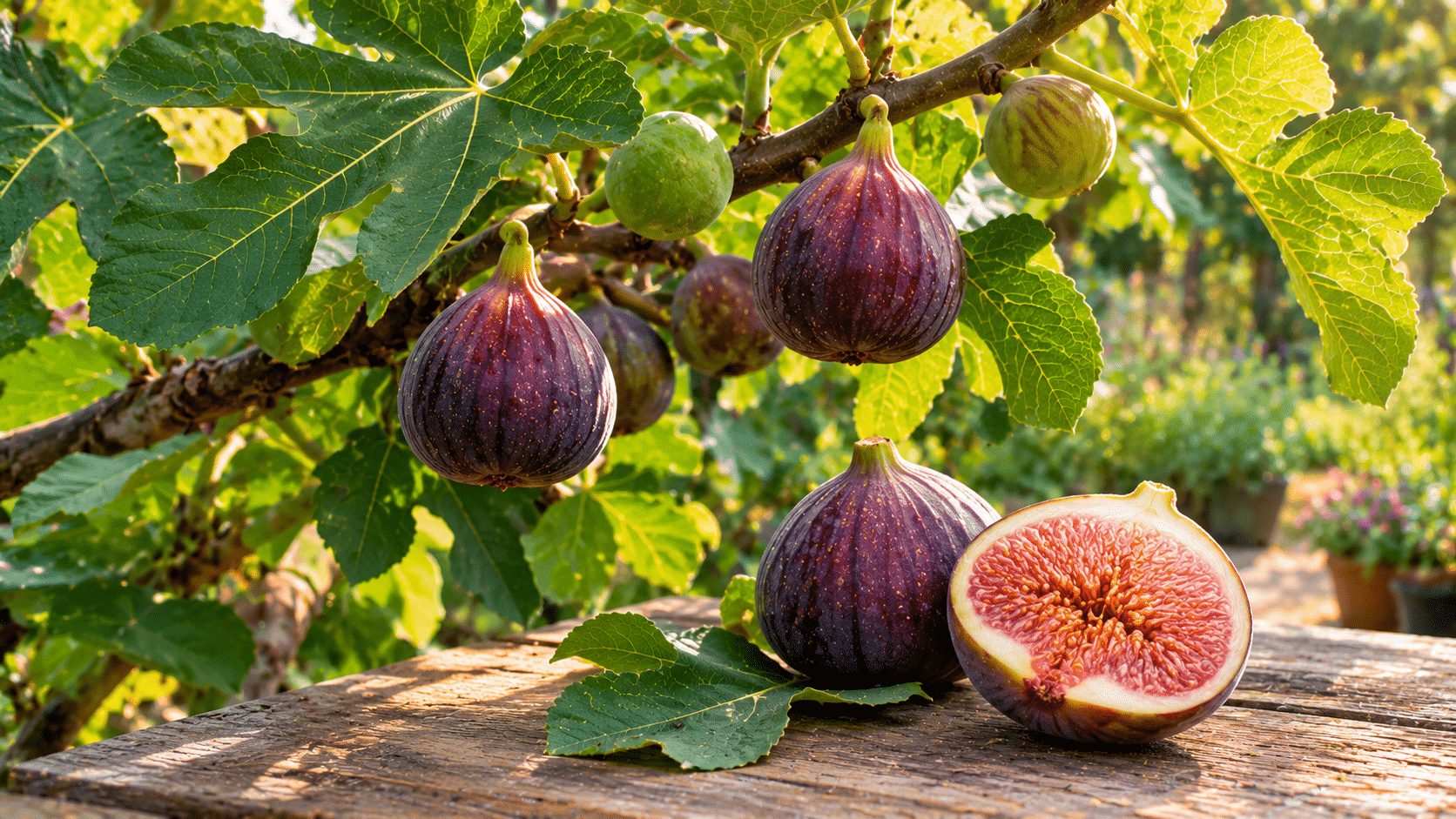
Few trees in the home orchard are as visibly generous as the common fig. In warm climates, a single mature Ficus carica can produce two bountiful harvests in a single year—an early summer “breba” crop grown on the previous year’s wood, followed by a heavy main crop in late summer and autumn.
Because it yields so much sweetness with relatively little fuss, the fig tree became a timeless emblem of material comfort, overflowing hospitality, and steady prosperity. Planting one signals a desire for a home where there is always enough to share.
2. Peace & Sanctuary 🕊️
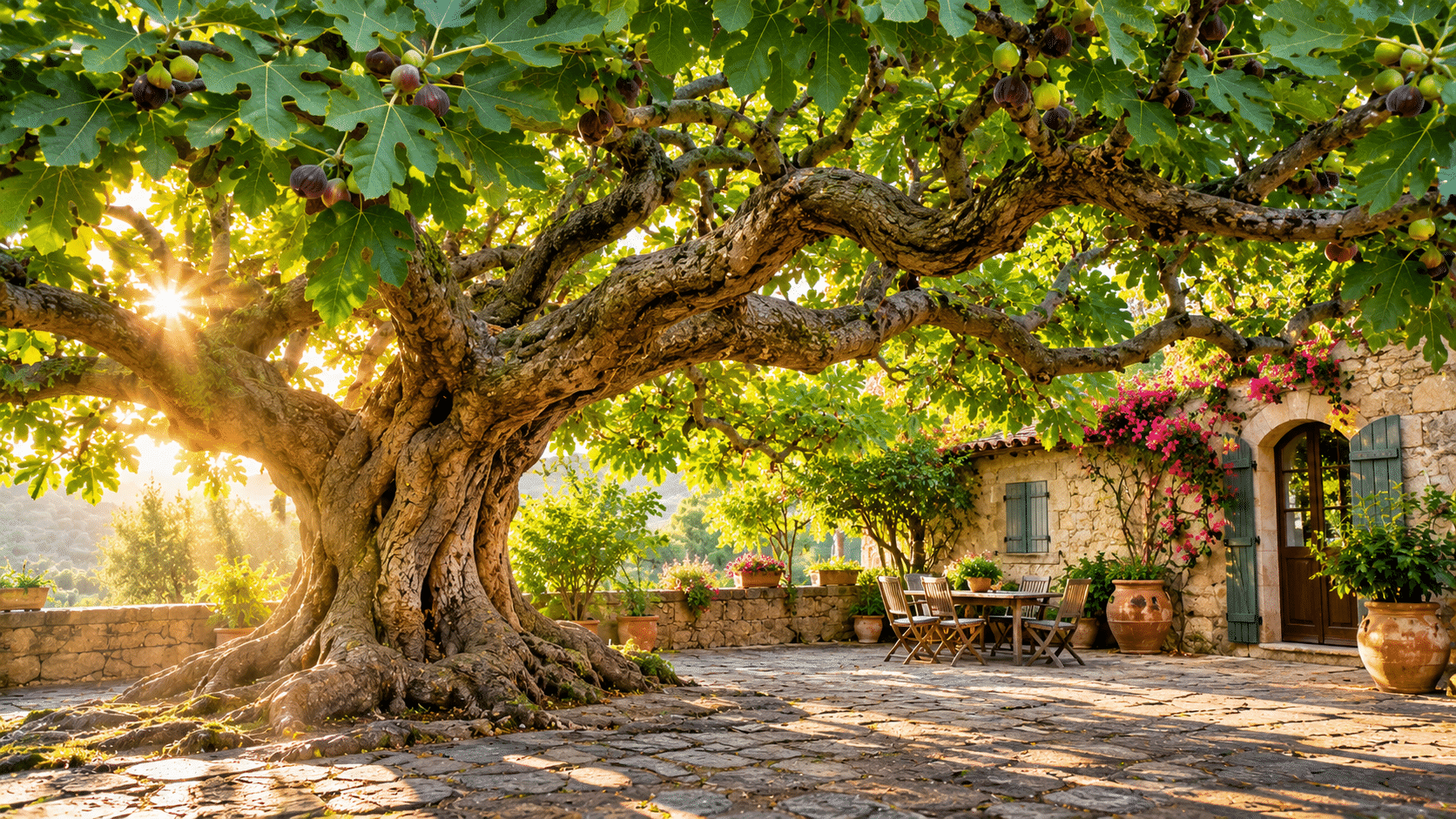
In the ancient world, planting a fig tree was an act of optimism. You did not plant a fig if you expected to flee your land in a year or two; you planted it when you intended to stay, build a life, and enjoy the shade.
This is why the classic proverb of sitting “under your own vine and fig tree” (Micah 4:4) became shorthand for ultimate domestic tranquility. In modern home design, a fig tree still carries that exact spiritual meaning: it marks your property as a safe, settled refuge from the noise of the outside world.
3. Wisdom & Enlightenment 🧘
With their wide, sculptural canopies, mature fig trees naturally create cool, dappled pockets of shade—the ideal setting for quiet reflection, reading, and conversation. Across Eastern and Western traditions alike, the fig became closely tied to mental clarity, deep contemplation, and spiritual awakening. Keeping a fig tree near a patio, study, or reading nook subtly encourages you to slow down and think clearly.
4. Fertility & New Beginnings 🌸
From a botanical perspective, the fig is a quiet miracle. If you have ever wondered why you never see blossoms on a fig tree, it is because figs bloom on the inside. What we eat as a “fruit” is actually a syconium—an inverted, hollow stem lined with hundreds of tiny, hidden flowers.
Ancient observers recognized this hidden richness immediately. Packed with hundreds of tiny seeds inside a single lush skin, the fig became a potent symbol of fertility, creative energy, and the quiet, unseen growth that happens right before a major new chapter begins.
5. Resilience & Longevity 🌳
Any experienced arborist will tell you that figs are astonishingly tough. In the Mediterranean, wild fig trees are famous for sprouting straight out of dry limestone cliffs and rocky stone walls, thriving where more delicate fruit trees would quickly perish. Even if a harsh winter freezes a fig tree back to the ground, its deep root system often pushes up vigorous new shoots the very next spring. For a homeowner, it symbolizes a household that bends without breaking and endures through every season.
📊 Fig Tree Symbolism at a Glance
🌍 Fig Tree Symbolism Across Cultures & Religions
To truly appreciate the weight of planting a fig tree, it helps to look at how deeply it is rooted in global heritage. Very few plants hold sacred status across so many major world traditions simultaneously.
Biblical & Abrahamic Traditions 📖
In Judaism, Christianity, and Islam, the fig tree is among the most frequently mentioned and revered plants.
-
Awareness & Shelter: In the Book of Genesis, fig leaves are the very first plant mentioned by name, used by Adam and Eve for covering—linking the tree to human awareness and protection.
-
The Promised Land: In Deuteronomy, figs are listed among the “Seven Species” of the Promised Land, representing a settled, blessed life of security and nourishment.
-
Patience & Pruning: In the New Testament, fig trees appear in parables teaching gardeners and believers alike about patience, tending to what you have, and the importance of bearing good fruit in the right season.
-
Sacred Reverence in Islam: In the Qur’an, an entire chapter (Surah At-Tin, “The Fig”) opens with an oath by the fig and the olive, elevating the tree as a symbol of divine blessing, purity, and paradise.
Eastern Spirituality (Hinduism & Buddhism) 🪷
While backyard gardeners in the West usually grow the edible Ficus carica, the fig family (Ficus) is vast—and its most famous spiritual relative is the sacred fig, Ficus religiosa.
-
Buddhism: Known as the Bodhi Tree (“Tree of Awakening”), it was beneath the sweeping branches of a sacred fig in Bodh Gaya, India, that Siddhartha Gautama meditated and attained enlightenment, becoming the Buddha. To this day, cuttings from that original lineage are revered worldwide as living symbols of compassion and awakening.
-
Hinduism: Referred to as the Asvattha or Peepal tree, the sacred fig is viewed as a cosmic bridge between earth and the divine, associated with the trinity of Brahma, Vishnu, and Shiva. Devotees often tie threads around its trunk to honor longevity, protection, and ancestral roots.
Ancient Greek & Mediterranean Folklore 🏛️
Move westward to the sun-drenched shores of Greece and Italy, and the fig tree takes on a joyful, celebratory, and fiercely protective personality.
-
Ancient Greece: The fig was sacred to Dionysus, the god of wine, harvest, and festivity. In fact, early Olympic victors were sometimes gifted figs alongside their olive wreaths as a token of vitality and triumph.
-
Roman Foundation Myths: According to Roman legend, the twin founders of Rome, Romulus and Remus, were sheltered beneath a wild fig tree (the Ficus Ruminalis) along the Tiber River—cementing the tree as a symbol of nurture and destiny.
-
Italian & Mediterranean Homes: For generations, Italian families have planted fig trees near their homes as a natural talisman. Traditional folklore holds that a thriving fig tree wards off negative energy and envy while ensuring the family table is never empty.
🏡 What Planting a Fig Tree Means for Your Home (Feng Shui & Placement)
Knowing the ancient history of the fig tree is inspiring, but most homeowners have a much more practical question: What does planting one actually mean for my house, and where should it go?
Where you position your tree shapes both the energetic feel of your property and the long-term health of the plant itself.
Front Yard vs. Backyard Placement 🚪
-
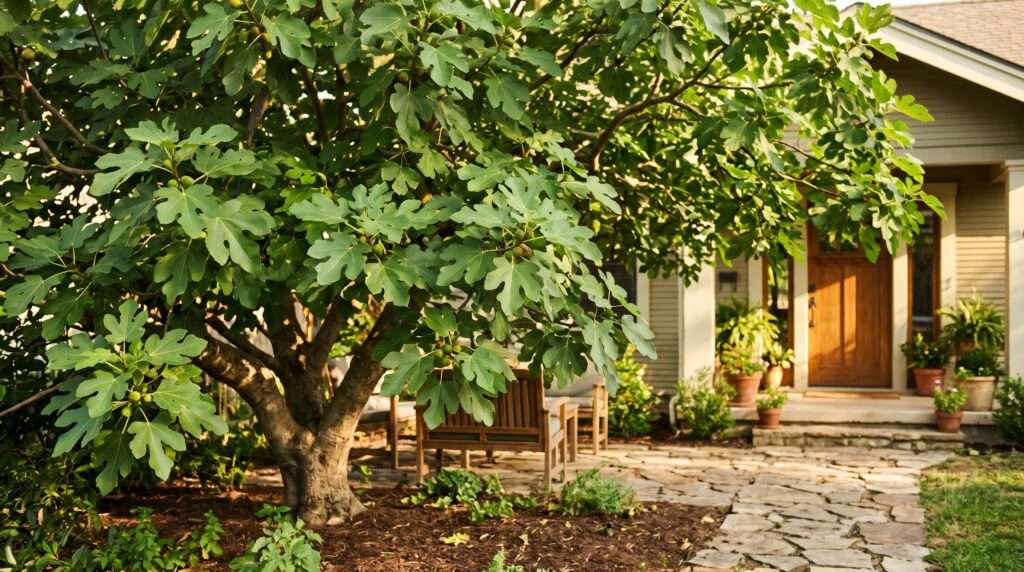
Planting a Fig Tree in the Front Yard: Historically, placing a fig tree near the front of a home is a gesture of open-hearted hospitality and quiet protection. It tells guests they are entering a warm, generous household, while folklore views its dense canopy as a natural buffer that filters out outside stress and negative energy before it reaches your front door.
-
Planting a Fig Tree in the Backyard: A backyard or courtyard fig shifts the symbolism inward. Here, the tree becomes the anchor of your private sanctuary—a living umbrella for family dinners, slow Sunday mornings, and personal grounding. If you want to enjoy the harvest barefoot in your pajamas, the backyard is the place to be.
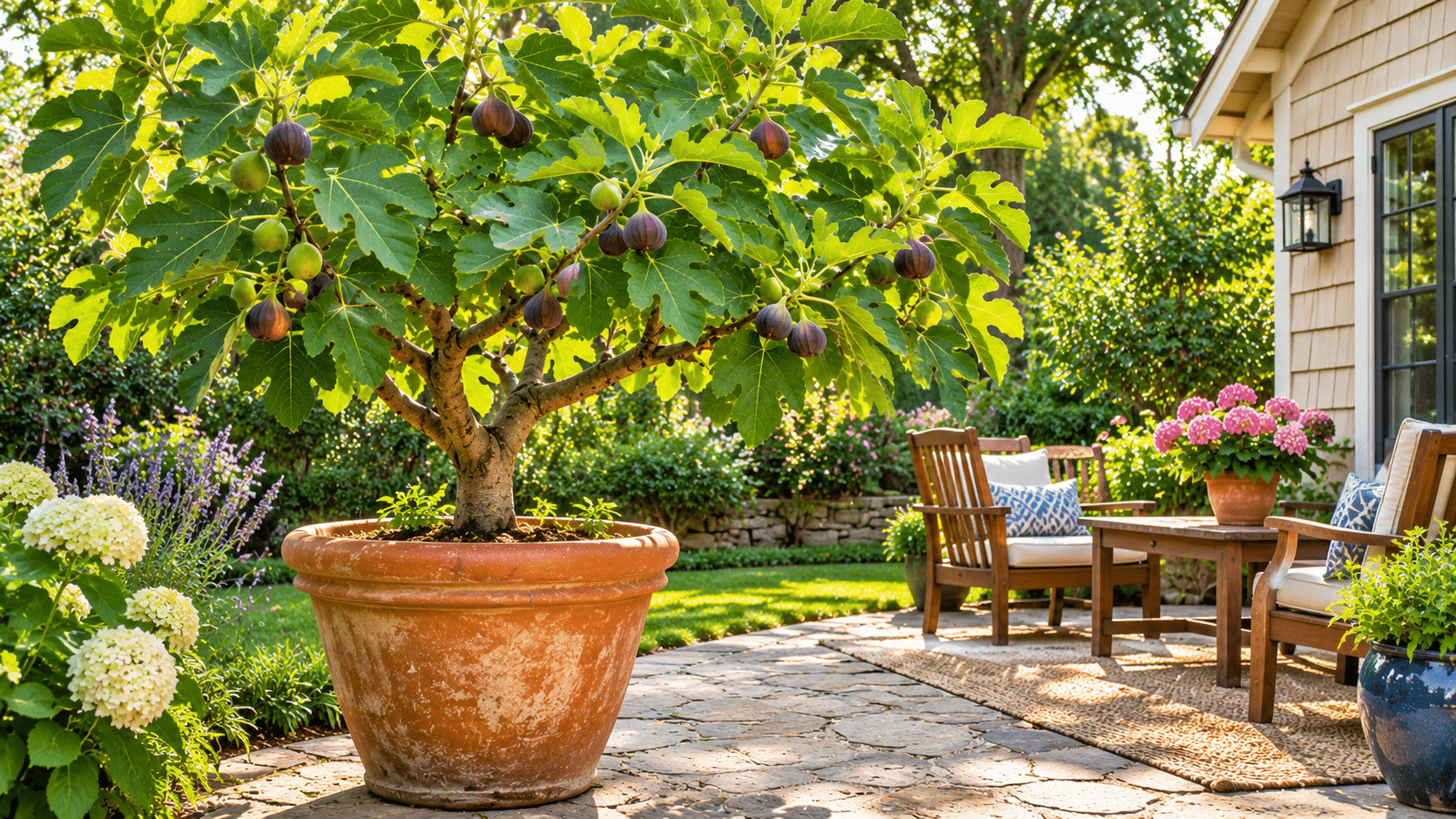
Fig Trees in Feng Shui 🧭
In traditional Feng Shui, healthy, broad-leaved trees are prized for generating vibrant Wood element energy. Wood energy governs growth, vitality, family harmony, and upward momentum. Because fig trees (both outdoor fruiting varieties and indoor houseplants) have lush, rounded or gently lobed foliage rather than sharp, spiky needles, they circulate Chi (life force energy) smoothly and gently.
To maximize positive Feng Shui fig tree energy, consider placing your tree in one of these Bagua zones:
-
East (Health & Family): Supports physical vitality, emotional resilience, and strong family bonds.
-
Southeast (Wealth & Abundance): Amplifies the fig’s natural association with prosperity, steady income, and generous living.
-
South (Fame & Recognition): Because Wood feeds Fire in the five-element cycle, a thriving fig in the South sector can gently boost career visibility and personal passion.
The Botanical Reality Check (Expert Tree Care Insight) 👩🌾
Here is where real-world horticultural experience must step in alongside symbolism: while a fig tree symbolizes stability, its root system does not symbolize foundation safety.
Mature Ficus carica trees develop vigorous, shallow, and wide-spreading roots in search of moisture. If you plant an in-ground fig tree right next to your porch, driveway, or septic line, those determined roots can eventually lift pavers or infiltrate older plumbing.
The Golden Rule for Homeowners: Plant in-ground outdoor fig trees at least 15 to 20 feet away from your home’s foundation, underground pipes, and paved walkways. Have a small patio or a tight urban yard? Grow your fig in a large, heavy-duty container (15 to 25 gallons). Figs actually love being slightly root-bound—it often encourages them to fruit earlier—and you can easily move the pot to a sheltered garage or sunroom if you live in a cold winter climate. 🪴
🪴 Indoor vs. Outdoor Figs: Does the Symbolism Change?
Not everyone has a sprawling backyard, and you don’t need one to enjoy fig tree symbolism. The Ficus genus includes over 800 species, and several of the world’s most beloved houseplants are true figs. While they share the same core DNA of abundance and longevity, each variety brings its own distinct flavor to your home.
Common Fig (Ficus carica) — The Harvest & Hearth Tree 🍇
This is the classic outdoor (or sunny patio) fruiting fig. Its symbolism is deeply earthy, nostalgic, and tangible. Growing a Ficus carica is about nourishment, family legacy, and enjoying the literal fruits of your patience. It is the ultimate tree for gardeners who want to connect their home to the rhythm of the seasons.
Fiddle Leaf Fig (Ficus lyrata) — Modern Abundance & Focus 🎻
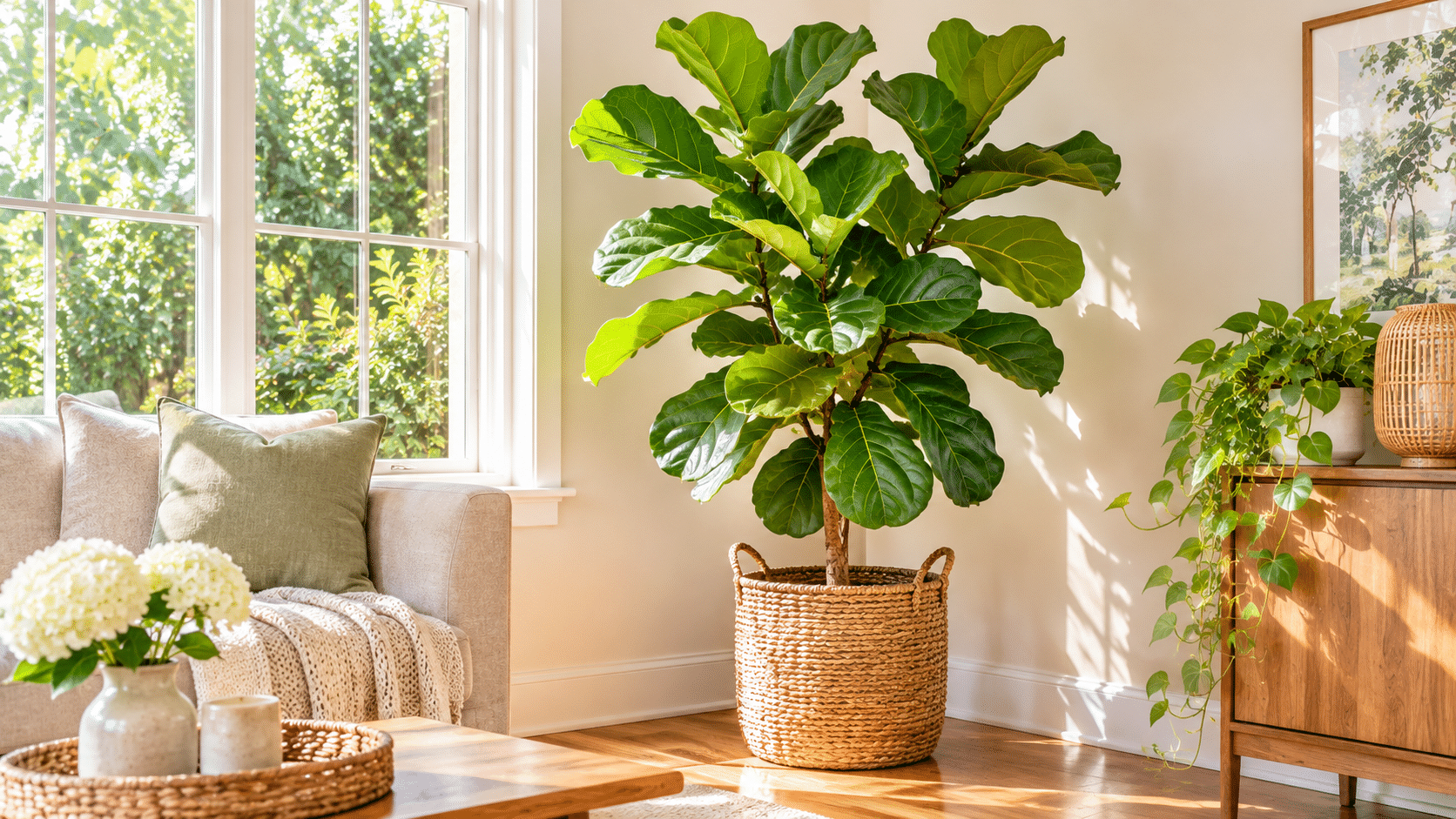
The undisputed star of modern interior design, the Fiddle Leaf Fig trades edible fruit for dramatic, violin-shaped leaves that stretch proudly toward the ceiling. In a living room or home office, Fiddle Leaf Fig meaning centers on upward growth, ambition, and mental clarity. Because it thrives on consistency and hates being moved around, it also serves as a gentle daily reminder to establish healthy, grounded routines.
Weeping Fig (Ficus benjamina) — Harmony & Adaptability 🍃
With its graceful, arching branches and cascading canopy of glossy green leaves, the Weeping Fig brings a softer, more flowing energy indoors. It symbolizes emotional balance, adaptability, and peaceful communication, making it a wonderful companion for shared living spaces, bedrooms, or busy home offices that need a calming visual anchor.
🎁 Gifting a Fig Tree: Occasions & Hidden Messages
Because a living tree grows alongside the people who care for it, gifting a potted fig tree is far more memorable than a bouquet of cut flowers. Depending on the occasion, your gift carries a thoughtful, unspoken blessing:
-
Housewarming Gifts 🔑: Giving a fig tree to new homeowners is one of the oldest and sweetest traditions in the world. It wishes them peace, security, and a home filled with warmth and good food.
-
Weddings & Anniversaries 💍: Symbolizing fertility, deep roots, and enduring partnership, a young fig tree planted by a newlywed couple becomes a living milestone they can watch mature year after year.
-
New Business or Career Milestones 🚀: A potted Fiddle Leaf Fig or dwarf patio fig sends a message of steady, sustainable prosperity—reminding the recipient that the best success grows from strong roots rather than overnight burnout.
✨ Pro-Tip: Ready-to-Use Gift Note Template
“May your new home always be a place of peace, laughter, and sweet abundance—just like the shade of a thriving fig tree. Wishing you deep roots and bright seasons ahead!” 🌿💛
✂️ How to Honor the Symbolism Through Proper Care
In plant care, symbolism and horticulture go hand in hand. A neglected, struggling tree rarely feels abundant—but tending to a fig tree with a little know-how turns everyday maintenance into a rewarding ritual.
-
Sunlight = Clarity ☀️: Outdoor Ficus carica trees are sun-worshippers that need 6 to 8 hours of direct sunlight daily to ripen sweet fruit. Indoor figs (Ficus lyrata and Ficus benjamina) prefer bright, indirect light near an east- or south-facing window. Good light keeps their energy—and their foliage—vibrant.
-
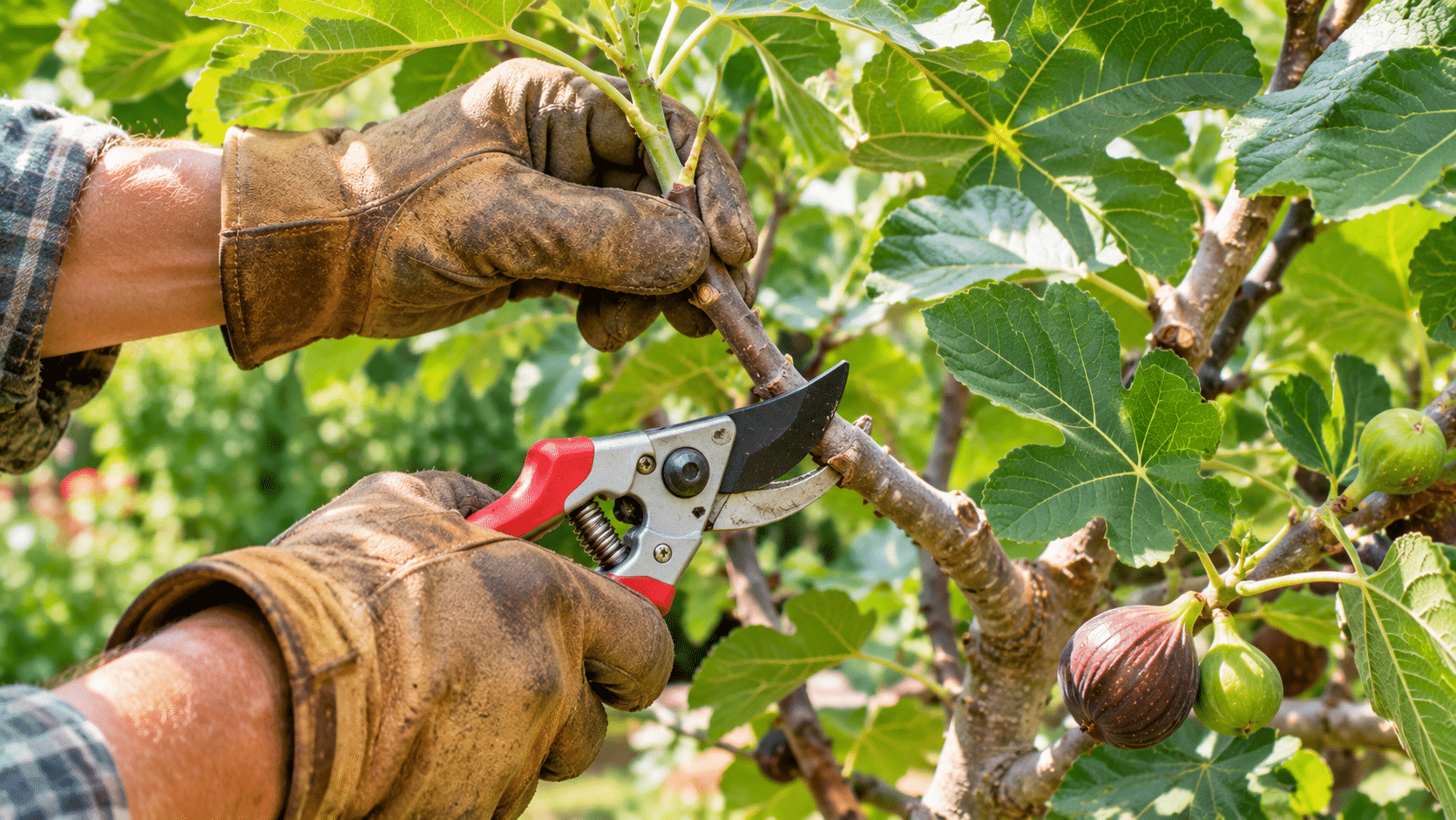
Pruning = Intentional Growth ✂️: One of the most powerful lessons a fig tree teaches is that letting go creates room for abundance. Pruning your outdoor fig in late winter while it is dormant removes dead, crossing, or leggy branches, directing the tree’s energy into sturdy limbs and a richer summer harvest.
-
Patience = The Ultimate Lesson ⏳: While a newly planted fig tree may set a handful of fruit in its first or second year, most trees take 3 to 5 years to establish deep roots and deliver a truly generous harvest. Caring for a fig rewards steady, unhurried attention—the exact resilience it has symbolized for millennia.
❓ Frequently Asked Questions About Fig Tree Symbolism
Is it good luck to have a fig tree in your yard? 🍀
Yes! Across Mediterranean, Middle Eastern, and Italian traditions, a healthy fig tree in the yard is considered a strong bringer of good luck, hospitality, and household prosperity. It is widely viewed as a protective guardian that invites warmth and abundance into the home.
Is it bad luck to cut down a fig tree? 🪓
In some older folklore traditions, cutting down a healthy fig tree was considered bad luck because of its sacred status as a tree of life and shelter. Practically speaking, however, removing a dead, diseased, or structurally hazardous tree is simply responsible home care—and you can always honor the tradition by rooting a cutting from it first.
What does it mean if a fig tree grows spontaneously in your yard? 🌱
Ecologically, a volunteer fig tree usually means a local bird dropped a seed in a sunny, fertile spot. Symbolically, many gardeners interpret a spontaneous fig sprout as a sign of unexpected blessings, natural resilience, and exciting new beginnings taking root on your property.
What does a barren or dying fig tree symbolize? 🍂
Don’t let old superstitions cause unnecessary stress! Symbolically, a struggling tree is simply a gentle nudge toward rest, renewal, or a change of pace. Botanically, a barren fig almost always comes down to a fixable care issue—such as too much nitrogen fertilizer, not enough sunlight, or irregular watering.
🌟 Planting Your Own Story
Few plants bridge the gap between ancient history and modern everyday life quite like the fig tree. Whether you are harvesting sun-warmed fruit from your backyard Ficus carica or wiping the dust off a glossy Fiddle Leaf Fig in your living room, you are participating in a tradition that stretches back to the very dawn of human homes. Plant one with care, give it plenty of light, and it will reward you with shade, beauty, and meaning for decades to come. 🌿🏡
We’d love to hear from you: Do you have a fig tree growing in your yard or living room? Tell us what variety you’re growing—and what it means to your home—in the comments below! 💬👇