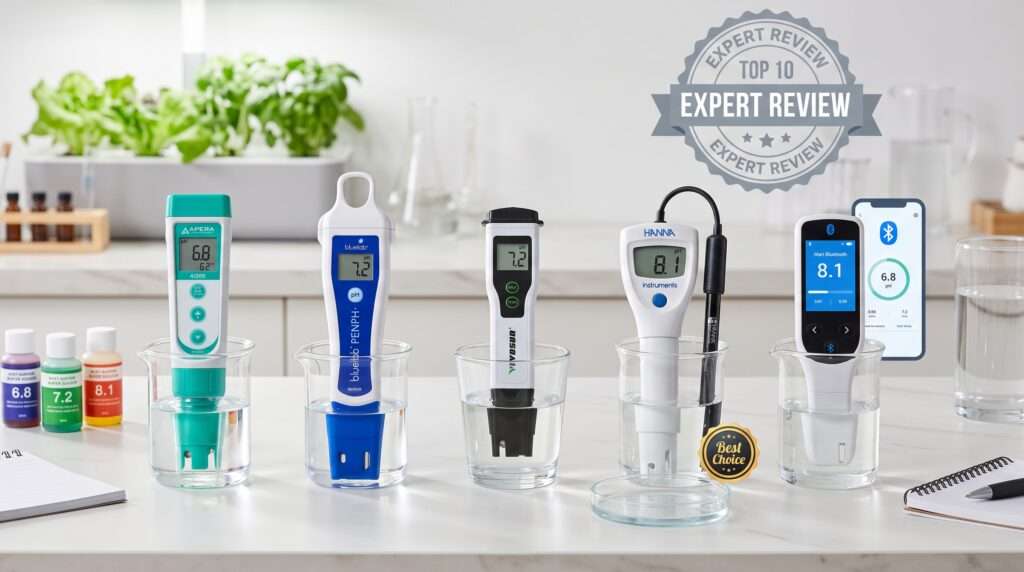
Did you know that using water with the wrong pH balance can silently ruin your hydroponic yields, harm your delicate aquarium fish, or even impact the safety and taste of your daily drinking water? To achieve pinpoint precision, you need to find the best 10 ph tester for water on the market.
For years, homeowners and hobbyists have relied on messy liquid drop kits or cheap, inaccurate paper test strips that leave you squinting and guessing at vague colors. When it comes to managing the exact water chemistry for your swimming pool, home brewing setup, spa, or indoor garden, “close enough” simply doesn’t cut it. You need absolute accuracy to ensure optimal results and complete peace of mind.
Fortunately, navigating the endless sea of digital meters doesn’t have to be confusing or overwhelming. After extensive research, hands-on evaluation, and analyzing thousands of verified customer reviews, we have compiled the ultimate guide to the best 10 ph tester for water available on Amazon today. Whether you need a highly sensitive laboratory-grade instrument for professional use or a budget-friendly pocket pen for casual home testing, our comprehensive rankings will help you confidently choose the exact tool for your specific needs and budget.
Quick Comparison Guide
If you are in a hurry, use this quick comparison table to find the perfect pH meter for your specific needs.
The Best 10 pH Tester for Water: Detailed Reviews
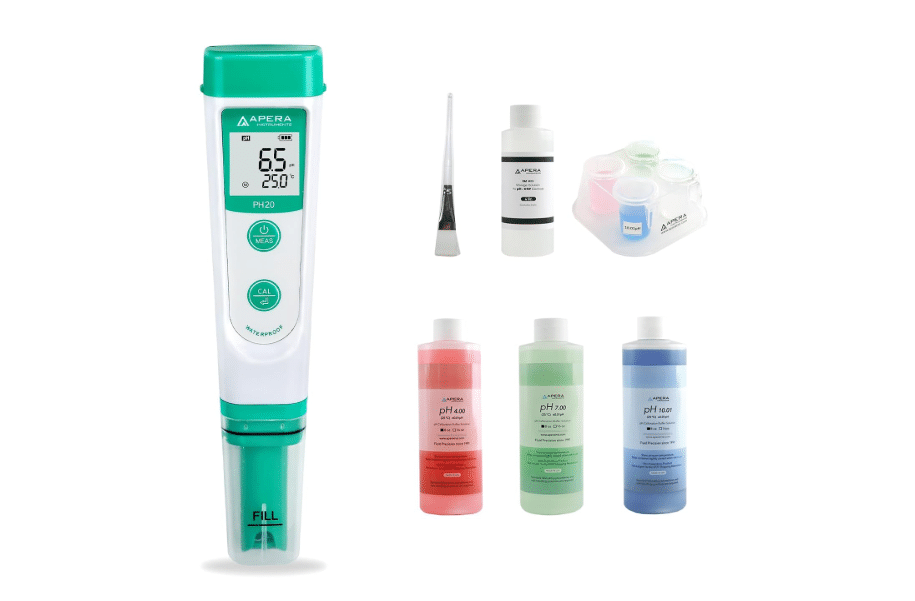
1. Apera Instruments AI209 Value Series PH20 (Best Overall)
Product Description: The Apera Instruments AI209 (often known as the PH20) is widely considered the gold standard for everyday users, brilliantly combining laboratory-grade accuracy with a beginner-friendly interface. Unlike cheap knock-offs that drift out of calibration within days, the AI209 features a high-quality glass bulb sensor equipped with low impedance, ensuring a lightning-fast response rate. It arrives as a complete kit inside a rugged carrying case, complete with pH 4 and 7 buffer solutions and a lanyard.
Approximate Price:
Key Features and Benefits:
-
Auto-Calibration: Simple 1 to 3 point automatic calibration with auto-recognition of stable values, so you don’t have to guess when to manually log the measurement.
-
Waterproof Design: IP67 waterproof and dustproof rating—it even floats if you drop it in your pool or reservoir.
-
Automatic Temperature Compensation (ATC): Ensures readings remain highly accurate (±0.1 pH) in fluctuating liquid temperatures (32 to 122°F).
Pros and Cons:
-
Pros: Extremely reliable and consistent sensor, durable waterproof body, fantastic 2000-hour battery life (AAA batteries), and includes a premium carrying case.
-
Cons: Slightly pricier than entry-level budget pens, and you must purchase probe storage solution (3M KCl) separately once the included sponge dries out.
Amazon Customer Ratings & Reviews: Consistently hovering around 4.7 out of 5 Stars. Verified buyers rave about how it holds its calibration for weeks without drifting, and frequently praise Apera’s responsive customer service.
Why It’s a Good Choice: It strikes the absolute perfect balance between professional accuracy and consumer affordability. You are paying for a sensor that will last years instead of months.
Ideal Use Case: Perfect for home hydroponics, brewing beer, managing pool/spa chemistry, and routine drinking water testing.
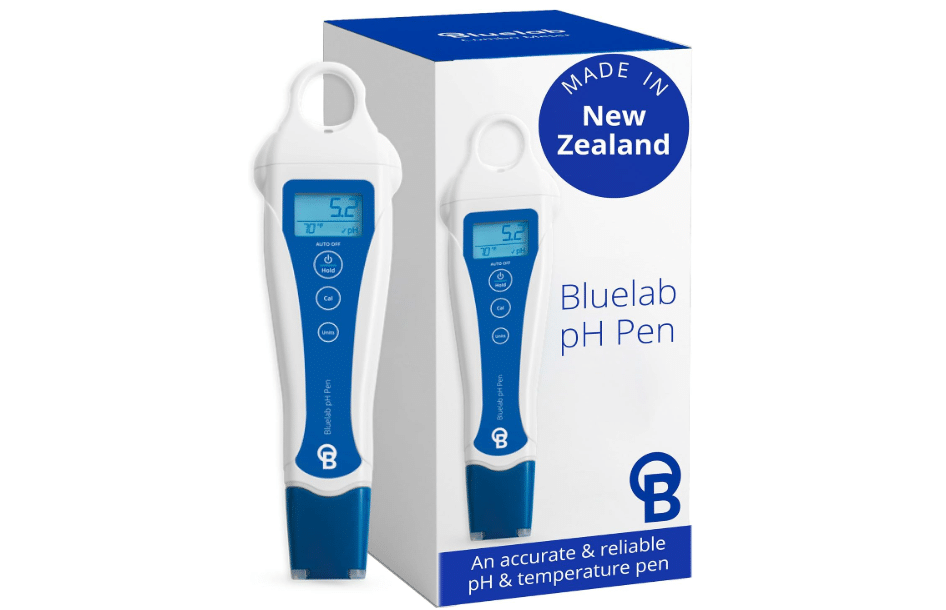
2. Bluelab PENPH pH Pen (Best Premium/Professional Pick)
Product Description: If you are tired of replacing cheap meters every growing season, the Bluelab PENPH is the heavyweight champion built for serious growers, aquarists, and commercial setups. Based in New Zealand, Bluelab is legendary for manufacturing bulletproof meters that can survive harsh agricultural environments. This pen boasts a double-junction probe which drastically reduces the risk of contamination, significantly extending the life of the tool.
Approximate Price:
Key Features and Benefits:
-
Double-Junction Probe: Protects the internal reference from contamination, resulting in longer lifespan and sustained accuracy (±0.1 pH).
-
Fully Waterproof: Safe from accidental submersions in nutrient reservoirs.
-
Smart Indicators: Features a backlit LCD with a hold function, a 30-day calibration reminder, and a low battery warning.
Pros and Cons:
-
Pros: Industrial-grade build quality, effortless to read, highly accurate, and acts as a “buy-it-for-life” investment if properly maintained.
-
Cons: Higher upfront cost compared to basic pens, and requires strict adherence to probe care (cleaning and hydrating the glass bulb).
Amazon Customer Ratings & Reviews: Strongly rated at 4.6 out of 5 Stars. Professional indoor gardeners and marine biologists frequently cite it as the most reliable handheld unit on the market.
Why It’s a Good Choice: While the initial investment is higher, it drastically reduces the need to constantly buy replacement budget pens, ultimately saving you money and frustration over the long haul.
Ideal Use Case: Commercial hydroponics, serious reef aquarium hobbyists, and professional laboratory environments.
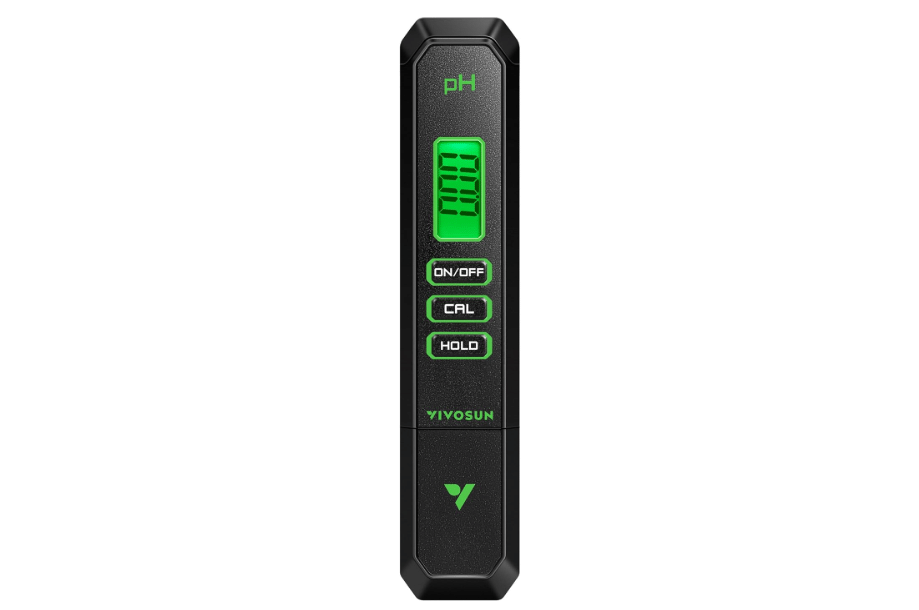
3. VIVOSUN pH and TDS Meter Combo (Best Budget Starter Kit)
Product Description: For those testing the waters of a new hobby, the VIVOSUN pH and TDS Meter Combo is the ultimate 2-in-1 value pack. Instead of squeezing multiple sensors into one device, VIVOSUN provides two separate, lightweight pocket pens—one dedicated to measuring pH and one for Total Dissolved Solids (TDS) and Electrical Conductivity (EC). It is a highly accessible kit that gives you a complete overview of your water quality straight out of the box.
Approximate Price:
Key Features and Benefits:
-
Comprehensive Testing: Includes a high-accuracy pH tester and a 3-in-1 TDS/EC/Temperature tester.
-
User-Friendly: Large backlit LCD screens and a hold function for easily locking and reading results.
-
Wide Range: Measures the full 0-14 pH scale with one-touch automatic calibration using the included buffer powder packs.
Pros and Cons:
-
Pros: Unbeatable price point for two distinct tools, incredibly lightweight and portable, and fantastic for absolute beginners.
-
Cons: The glass sensor is somewhat fragile, the pen is not fully waterproof (don’t drop it in the tank!), and it requires recalibration much more frequently than premium models.
Amazon Customer Ratings & Reviews: Sitting comfortably at 4.4 out of 5 Stars. Budget-conscious buyers love the undeniable value, though experienced users note it serves best as a stepping-stone to professional equipment.
Why It’s a Good Choice: It provides an incredibly inexpensive entry point. For the price of a few cups of coffee, you get a full snapshot of your water’s chemical makeup.
Ideal Use Case: Beginners checking household tap water, basic houseplant care, or casual checks of home reverse osmosis (RO) filters.
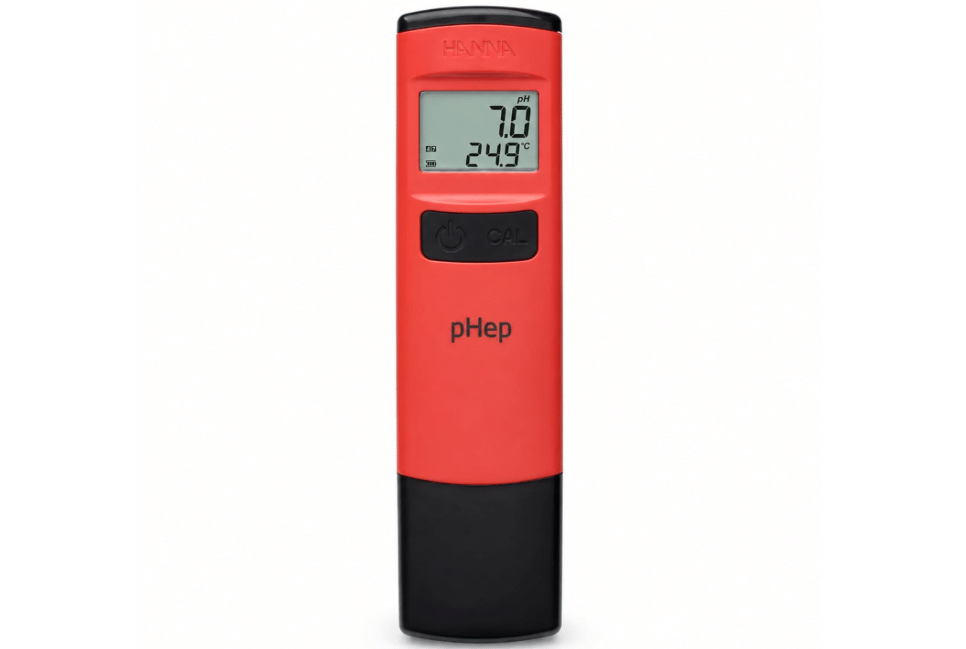
4. Hanna Instruments HI98107 pHep Everyday pH Tester (Best Trusted Lab Brand)
Product Description: Hanna Instruments is a globally recognized name in analytical testing, and they’ve brought their decades of laboratory expertise into a consumer-friendly pocket pen with the HI98107 pHep. Its standout feature is an extractable cloth junction. When the junction becomes clogged or contaminated (which is the leading cause of meter death), you simply pull out 1-2 mm of the cloth to expose a fresh, clean junction. This ingenious design dramatically extends the life of the tester.
Approximate Price: $45.00
Key Features and Benefits:
-
Extractable Cloth Junction: Renews the sensor and extends the life of the unit, saving you money on replacements.
-
Exposed Temperature Sensor: Delivers rapid Automatic Temperature Compensation (ATC) without any lag.
-
Ergonomic & Simple: Two-button operation makes calibrating and measuring straightforward.
Pros and Cons:
-
Pros: Outstanding brand reputation, highly accurate (±0.2 pH), slim design fits into narrow test tubes or flasks, and the renewable junction is a game-changer.
-
Cons: The calibration process requires entering a specific mode, which can feel slightly more tedious than one-touch Apera models.
Amazon Customer Ratings & Reviews: Consistently rated around 4.5 out of 5 Stars. Lab technicians and educators highly recommend it for its fast readout times and durability.
Why It’s a Good Choice: You get genuine laboratory pedigree in a rugged, everyday-use package that is designed to be maintained rather than thrown away.
Ideal Use Case: Education settings, environmental field monitoring, and home aquariums.
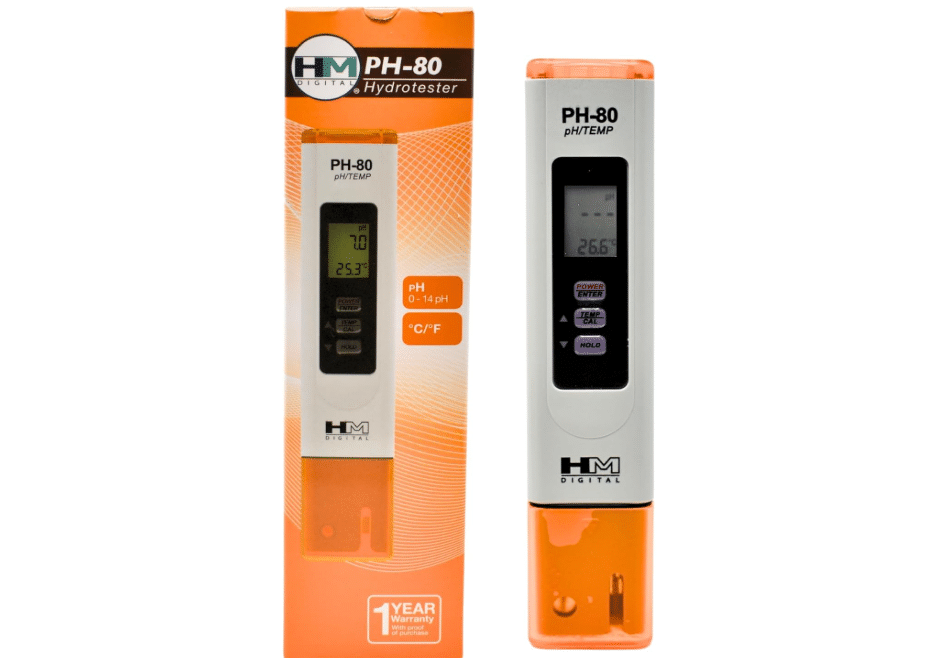
5. HM Digital PH-80 HydroTester (Best for Water Filtration Systems)
Product Description: HM Digital is the go-to brand for the water purification industry, and the PH-80 is a sleek, highly functional meter tailored specifically for testing reverse osmosis (RO) systems and hydroponic reservoirs. It arrives factory calibrated and features a clever translucent cap containing a tiny sponge to keep the glass sensor properly hydrated during storage.
Approximate Price:
Key Features and Benefits:
-
Simultaneous Display: Measures both pH and temperature at the same time on a large, easy-to-read LCD screen.
-
One-Touch Auto-Calibration: Effortlessly calibrates to pH 4.0, 7.0, or 10.0 with a single button press.
-
Built-in Data Hold: Allows you to freeze the reading on the screen if you are testing at an awkward angle.
Pros and Cons:
-
Pros: Very fast reading stabilization, factory calibrated out of the box, and excellent battery life.
-
Cons: It is highly water-resistant, but not fully submersible. Dropping it completely into a deep tank can cause water damage.
Amazon Customer Ratings & Reviews: Holding steady at 4.5 out of 5 Stars. It is heavily praised by the RO water filter community and frequently recommended in hydroponics forums as a highly reliable mid-range option.
Why It’s a Good Choice: It is ready to go straight out of the box with minimal fuss, taking the intimidation factor out of water testing.
Ideal Use Case: Checking under-sink reverse osmosis (RO) drinking water systems and maintaining aquaponics setups.
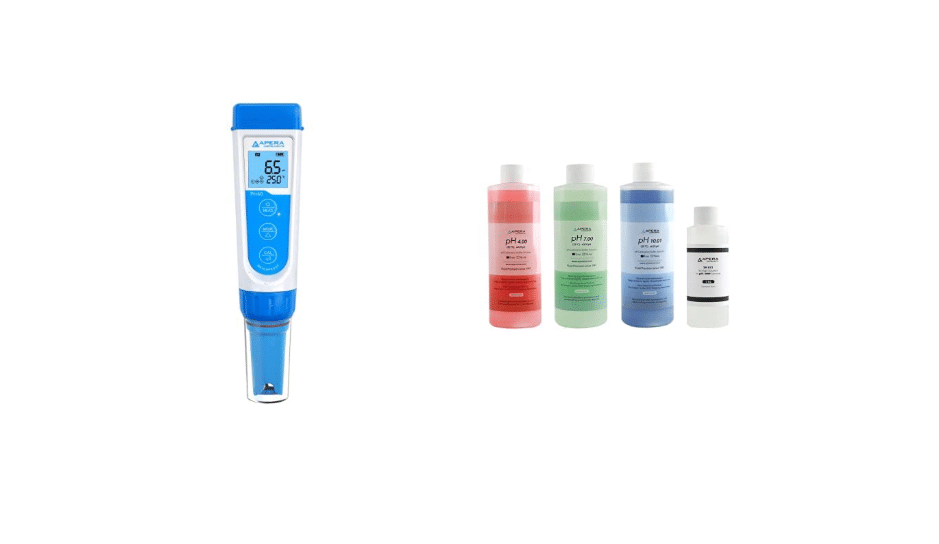
6. Apera Instruments PH60 Premium Waterproof pH Tester (Best for Heavy Duty/Pro Use)
Product Description: As the upgraded older sibling to our top pick, the Apera PH60 is for users who take water testing incredibly seriously. Instead of replacing the entire meter when the glass bulb eventually wears out, the PH60 features replaceable probes. It also boasts a stunning multi-color backlit screen that changes color based on what mode you are in (blue for measuring, green for calibration).
Approximate Price:
Key Features and Benefits:
-
Replaceable Glass Bulb Sensor: Swap out old probes for a fraction of the cost of a new premium meter.
-
Unmatched Precision: Offers a staggering ±0.01 pH accuracy (two decimal places) for highly sensitive environments.
-
Multi-Color Backlit Display: Gives visual confirmation that your calibration is successful and stable.
Pros and Cons:
-
Pros: Incredible accuracy to the hundredth decimal, cost-effective long-term maintenance, and an incredibly rugged IP67 waterproof build.
-
Cons: The menu settings (which allow you to customize calibration parameters) might be overly complex for a casual weekend user.
Amazon Customer Ratings & Reviews: Boasting an impressive 4.7 out of 5 Stars. Power users love the color-changing screen and the peace of mind that comes with replaceable parts.
Why It’s a Good Choice: If you test water daily, replacing a $40 probe every couple of years is vastly cheaper than buying a brand-new $100 meter.
Ideal Use Case: Professional pool servicing routes, microbreweries, and delicate cosmetic formulation.
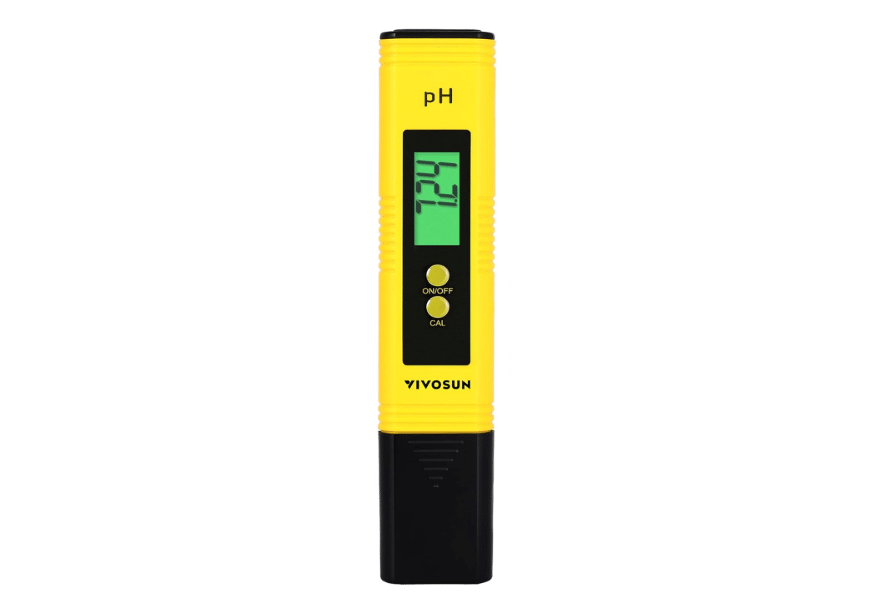
7. Dr.meter PH100 0.01 Resolution High Accuracy pH Meter (Best Mid-Range Accuracy)
Product Description: Not everyone who needs two-decimal accuracy (0.01 resolution) has the budget for a professional Apera or Bluelab device. The Dr.meter PH100 fills this exact gap, offering an affordable precision tool that delivers high-resolution data without the premium price tag. It comes nestled in a protective handheld carrying case alongside six calibration packets.
Approximate Price: $8.12
Key Features and Benefits:
-
0.01 High Resolution: Reads pH levels to the hundredth decimal for meticulous water balancing.
-
Automatic Temperature Compensation: Ensures ambient temperature changes don’t skew your delicate results.
-
Generous Kit: Includes an organized carrying case and plenty of calibration powder.
Pros and Cons:
-
Pros: Excellent precision-to-price ratio, compact pocket design, and fast readout times.
-
Cons: The included calibration packets are single-use; you will eventually need to purchase bottled liquid buffer solutions.
Amazon Customer Ratings & Reviews: A solid 4.3 out of 5 Stars. Buyers appreciate it as the perfect bridge between cheap, disposable pens and expensive lab gear.
Why It’s a Good Choice: It delivers the high-resolution data required for sensitive water environments while keeping you strictly on budget.
Ideal Use Case: Managing delicate saltwater reef aquariums and sensitive plant cloning.
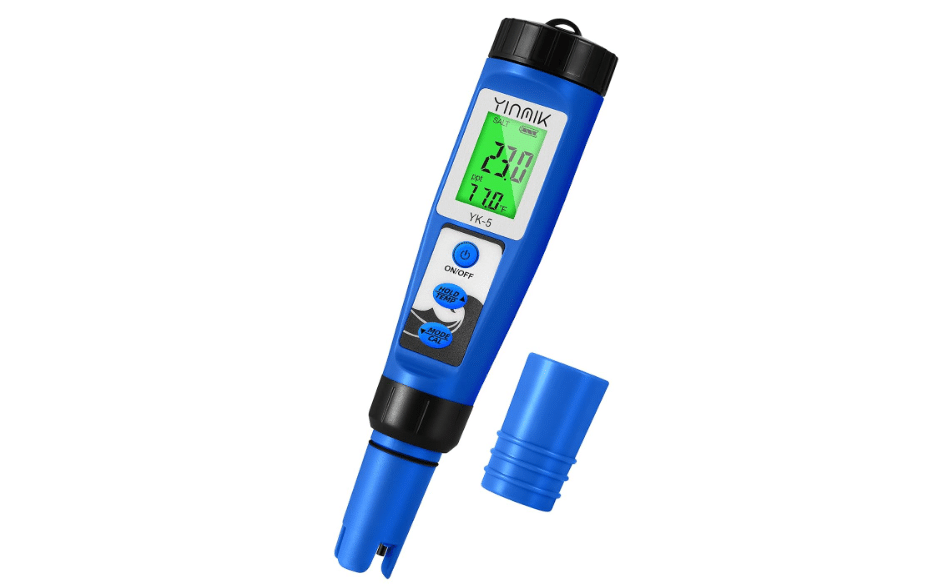
8. YINMIK BLE-9909 Bluetooth pH/TDS Meter (Best Smart/App-Enabled Tester)
Product Description: Welcome to the future of water testing. The YINMIK BLE-9909 replaces pen-and-paper tracking by connecting directly to your smartphone via Bluetooth. This 5-in-1 multi-parameter tester logs your water parameters over time, allowing you to view historical trends, set customizable high/low alerts, and even export your data straight to an Excel sheet for deeper analysis.
Approximate Price:
Key Features and Benefits:
-
5-in-1 Functionality: Measures pH, TDS, EC, Salinity, and Temperature all from a single probe.
-
Bluetooth App Integration: Automatically saves and charts your data via the Yinmik smartphone app.
-
Cloud Storage & Sharing: Export your water parameter history to share with a pool professional or fellow hobbyist.
Pros and Cons:
-
Pros: Effortless digital data logging, measures multiple critical water quality metrics at once, and customizable alarm settings if pH drops too low.
-
Cons: Like many smart devices, the accompanying app can occasionally experience minor bugs following iOS or Android OS updates.
Amazon Customer Ratings & Reviews: Trending at 4.4 out of 5 Stars. Tech-savvy users are obsessed with the ability to graph their pool chemistry throughout the summer.
Why It’s a Good Choice: It entirely eliminates the need to write down test results in a notebook, automating your water chemistry management.
Ideal Use Case: Tech-loving hobbyists, long-term pool and spa maintenance, and smart-home enthusiasts.
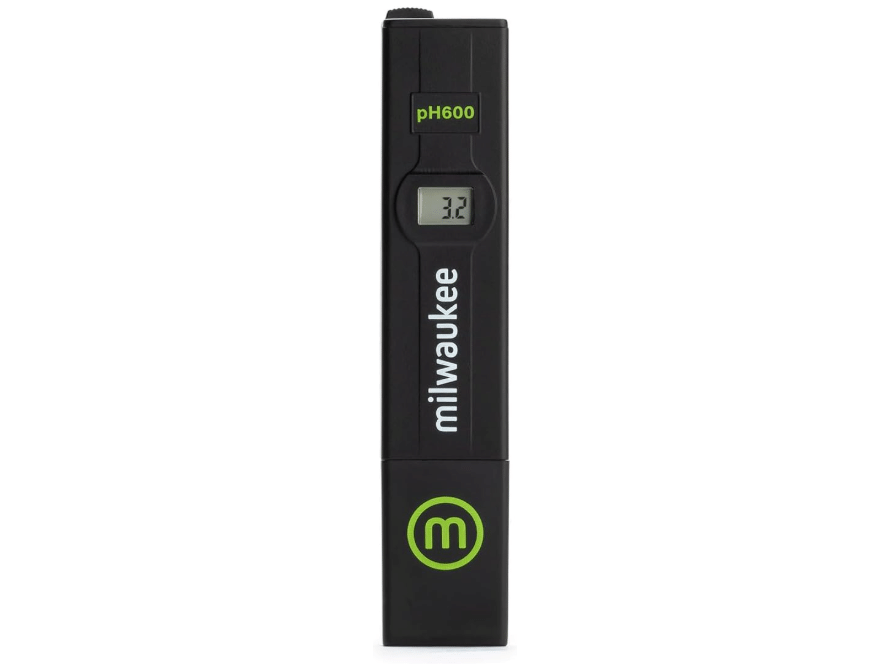
9. Milwaukee Instruments pH600AQ Economy pH Pen (Best Simple/No-Frills Pick)
Product Description: Before screens had multiple colors and apps tracked our every move, meters were manually calibrated using a tiny screwdriver. If you prefer the old-school, analog-style reliability of manually dialing in your calibration, the Milwaukee Instruments pH600AQ is the perfect choice. Milwaukee is a highly respected name in instrumentation, and this simple pen is built like a tank.
Approximate Price:
Key Features and Benefits:
-
Manual 1-Point Calibration: Use the included mini-screwdriver to perfectly match the meter to your pH 7.0 buffer solution.
-
Incredible Battery Life: Offers up to 300 hours of continuous use on a single set of batteries.
-
Clear Display: A simple, high-contrast LCD screen with ±0.1 pH accuracy.
Pros and Cons:
-
Pros: Very simple to use, fewer complex electronic parts to break or glitch, and backed by a highly trusted brand.
-
Cons: Manual calibration takes slightly longer than auto-calibration, and it lacks Automatic Temperature Compensation (ATC).
Amazon Customer Ratings & Reviews: Sitting firmly at 4.3 out of 5 Stars. It is heavily favored by old-school growers who want a meter that “just works” without confusing error codes.
Why It’s a Good Choice: There are no confusing button-press sequences to memorize. Just turn the trimmerscrew until the screen matches your calibration fluid, and you are ready to test.
Ideal Use Case: Basic freshwater aquariums, standard soil gardening, and general liquid testing.
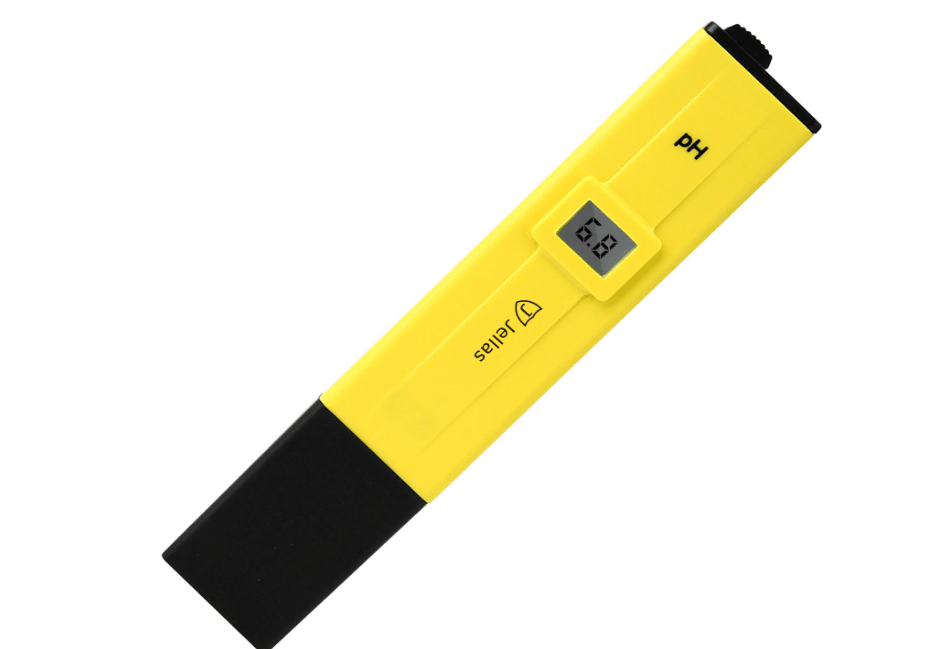
10. Jellas Pocket Size pH Meter (Best Ultra-Budget/Backup Tester)
Product Description: Sometimes you don’t need a heavy-duty lab instrument; you just need a cheap, quick verification tool. The Jellas Pocket Size pH Meter is a highly popular, incredibly cheap digital pen that makes a perfect backup meter or a fun stocking stuffer for a new hobbyist. It includes calibration powders and a hard plastic case, offering shocking value for the price.
Approximate Price: $15.00
Key Features and Benefits:
-
Ultra-Portable: Fits easily into any pocket or toolbox.
-
Full Range: 0-14 pH measurement range with automatic temperature compensation (ATC).
-
Complete Kit: Comes with 3 packets of calibration buffer powder.
Pros and Cons:
-
Pros: Ridiculously affordable, easy to read, and great to keep as an emergency backup.
-
Cons: Calibration drift happens much quicker than premium brands, and the overall lifespan is typically shorter.
Amazon Customer Ratings & Reviews: Holding a respectable 4.2 out of 5 Stars. It is almost universally reviewed by buyers as being “surprisingly accurate for the price.”
Why It’s a Good Choice: It is the perfect low-risk purchase if you only need to test your water once or twice a year, or if you need an emergency backup while your main meter is being serviced.
Ideal Use Case: Kids’ science fair projects, casual home drinking water testing, and as a backup meter.
Buying Guide: How to Choose the Best pH Tester for Water
If you are still on the fence about which model to choose, here are the most critical factors to consider before adding a meter to your cart.
1. Understand ATC (Automatic Temperature Compensation)
The temperature of your water directly alters its pH level. A high-quality tester with ATC will automatically sense the water’s temperature and adjust the pH reading mathematically to reflect true accuracy. Unless you are testing in a tightly controlled lab environment where liquids are always exactly 77°F (25°C), buying a meter with ATC is practically non-negotiable.
2. Calibration is King
A pH meter is only as accurate as its last calibration. Over time, the glass sensor drifts.
-
Auto vs. Manual: Auto-calibration (like the Apera AI209) recognizes the buffer fluid and calibrates with a button press. Manual calibration (like the Milwaukee) requires turning a tiny screw.
-
Multi-Point Calibration: A 2-point or 3-point calibration is drastically better than a 1-point calibration, as it ensures accuracy across the entire 0-14 scale.
-
Note: No meter works properly without calibration solutions. Always add pH 4.0 and 7.0 buffer solutions to your order!
3. Storage and Probe Care
The number one reason pH pens break is that users let the glass bulb dry out. The glass sensor must stay wet. If you buy a premium meter like a Bluelab or Apera, you must purchase a bottle of 3M KCl Storage Solution. Pour a few drops into the cap sponge after every use. Never store your probe in distilled or RO water, as it will degrade the sensor glass.
4. Waterproof vs. Water-Resistant
Be careful reading product descriptions. “Water-resistant” means it can handle a splash, but dropping it into your pool will fry the electronics. If you test over large, deep bodies of water (like a 50-gallon hydroponic reservoir or a swimming pool), invest in an IP67 waterproof model that will float if accidentally dropped.
Frequently Asked Questions
Can I use a pH meter for both pool water and drinking water? Yes. A high-quality digital meter can accurately test the pH of almost any aqueous (water-based) solution. However, to prevent cross-contamination, you must thoroughly rinse the probe with distilled water when switching between pool water (which contains chlorine) and your drinking water.
How often do I need to calibrate my digital pH tester? For professional or daily use (like commercial hydroponics), calibrate once a week. For casual home use, calibrating once a month is generally sufficient. If you haven’t used the meter in several months, always recalibrate it before taking a reading.
Are digital pH testers better than liquid drop test kits and strips? Absolutely. Paper test strips degrade when exposed to humidity, and liquid drops require you to subjectively match colors on a chart—which is incredibly difficult if the water is slightly cloudy or if you are colorblind. A digital meter provides an exact, objective numerical reading, removing all the guesswork.
Final Verdict & Conclusion
Managing your water chemistry shouldn’t feel like a guessing game. Finding the best 10 ph tester for water ultimately comes down to your budget and how frequently you plan to use it.
If you are an absolute beginner checking house plants or tap water, the budget-friendly VIVOSUN Combo Kit offers fantastic introductory value. However, if you want to avoid the frustration of constant recalibration and frequent replacement, investing a little more in our top overall pick, the Apera Instruments AI209, or the commercial-grade Bluelab PENPH will save you immense time and money in the long run.
Don’t leave your water quality up to chance. Be sure to click the links above to check current Amazon prices, clip any available discount coupons, and read verified user reviews before making your final purchase.