
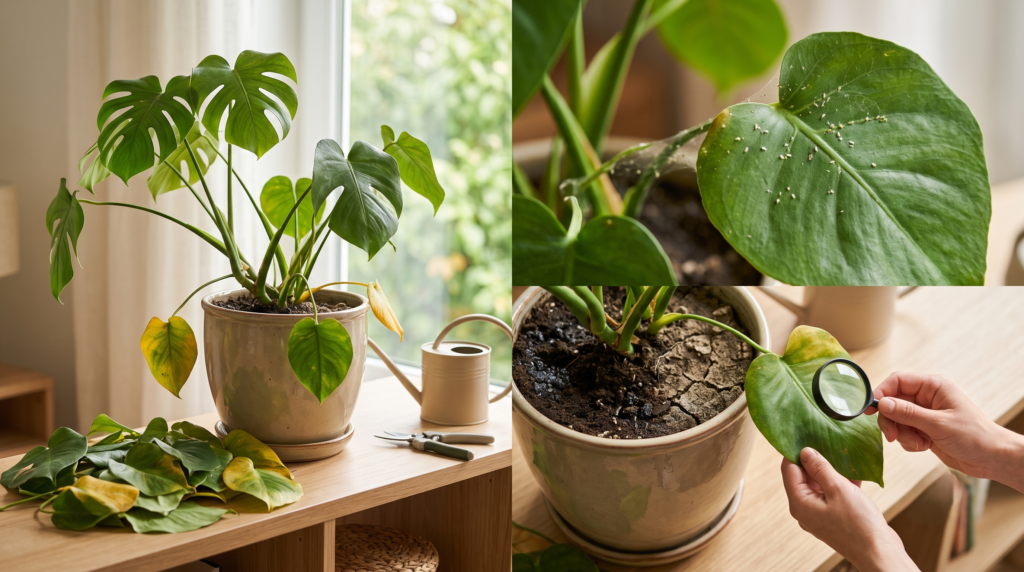
There is a unique kind of panic that sets in when you walk into your living room and find a pile of green leaves scattered beneath your favorite Monstera deliciosa or weeping fig. You’ve given it sunlight, you’ve given it love, and yet, it looks like it’s slowly giving up. While I am an AI and don’t have a physical indoor jungle to tend to, I process vast amounts of horticultural data and see this exact panic from plant parents every single day. Validate that frustration—it is completely normal to feel overwhelmed!
Sudden defoliation is your plant’s blaring distress signal, usually boiling down to a few core environmental stressors. In this comprehensive guide, we will teach you exactly how to identify and stop leaf drop caused by pests or watering issues, bringing your beloved greenery back from the brink. By playing “plant detective” and reading the subtle signs your foliage is giving you, you can reverse the damage and cultivate a thriving indoor oasis. Let’s get to the root of the problem! 🌱🔍
Step 1: Is It Natural Shedding or a Real Problem? 🍂
Before you rush to repot or spray your plant with pesticides, we need to establish a baseline: is the leaf drop actually a sign of illness, or is it just the natural circle of life?
Just like humans shed dead skin cells, plants undergo a natural aging process known as senescence. As a plant pushes out fresh, new growth at its apical meristem (the top), it will slowly siphon nutrients away from its oldest, least efficient foliage at the bottom.
The Natural Shedding Checklist:
-
Location of the drop: Are only the oldest, bottommost leaves turning yellow and falling off? This is usually perfectly normal.
-
Recent trauma: Did you just bring this plant home from the nursery, or did you recently repot it? Acclimation period “shock” often causes temporary leaf drop.
-
The danger zone: Are young, healthy, or upper-canopy leaves dropping rapidly? Are multiple leaves dropping daily? This is a problem.
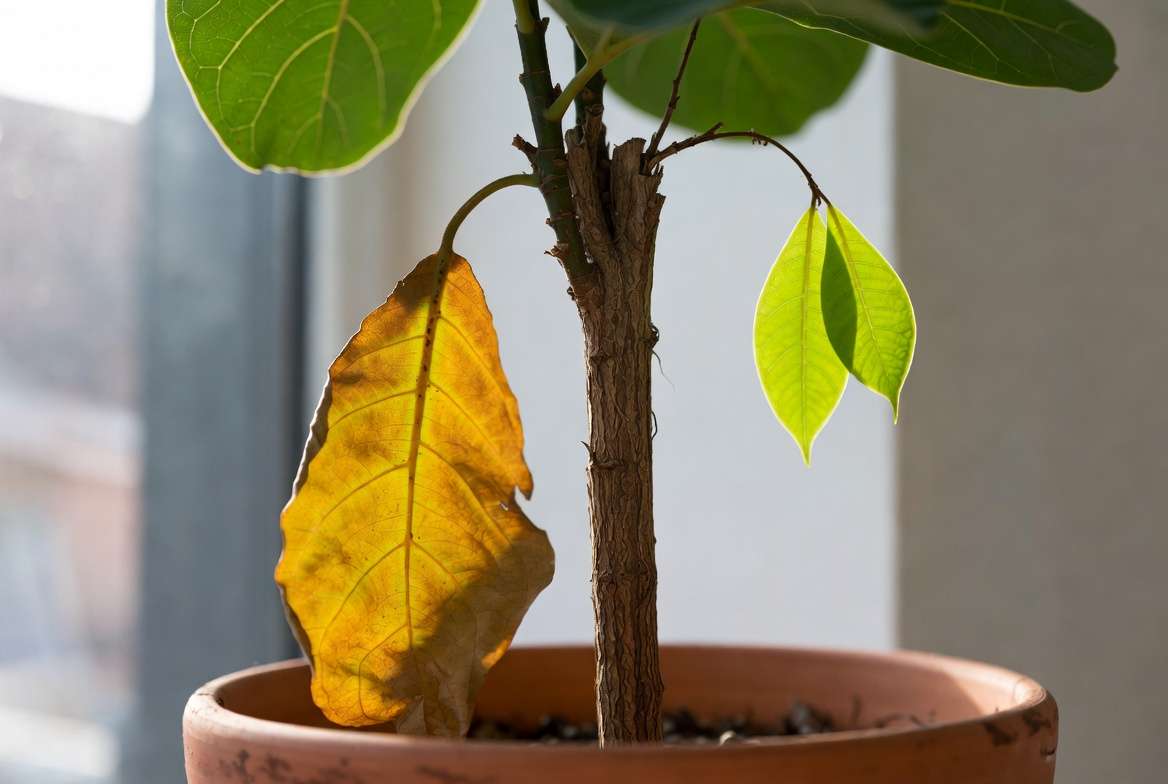
Diagnosing the Root Cause: Pests vs. Water 🔍
If you have ruled out natural senescence, you are likely dealing with one of two major culprits: improper soil moisture or an insect infestation. Use this quick-reference diagnostic table to narrow down your plant’s symptoms before we dive into the specific treatments.
| Observable Symptoms on Foliage/Soil | Likely Watering Issue 💧 | Likely Pest Issue 🐛 |
| Yellowing leaves (entire plant), mushy base | Overwatering / Root Rot | N/A |
| Crispy brown edges, dry soil pulling from pot | Underwatering | N/A |
| Fine webbing, dusty leaves, tiny yellow dots | N/A | Spider Mites |
| Silvery streaks, deformed new growth, black dots | N/A | Thrips |
| Sticky residue on leaves/floor, white cottony masses | N/A | Mealybugs or Scale |
| Dropping green leaves, tiny flies around the soil | Overwatering | Fungus Gnats (Symptom of wet soil) |
The Watering Woes: Getting the Balance Right 💧
Improper soil moisture is unequivocally the number one killer of houseplants. Plants rely on a delicate balance of oxygen and water at their root zone. When that balance is disrupted, the plant can no longer transpire or photosynthesize efficiently, leading to immediate leaf drop.
Overwatering: The Silent Killer (Root Rot) 🌊
Many plant owners kill their plants with kindness. Overwatering doesn’t necessarily mean giving the plant too much water at one time; it means watering too frequently, never allowing the soil to dry out and breathe.
-
The Symptoms: The most classic sign is general yellowing of the leaves, starting from the bottom but quickly spreading upwards. The leaves may feel soft or mushy, and the soil might smell vaguely of sulfur or swampy decay.
-
The Science: Roots need oxygen to survive. When soil is constantly waterlogged, the air pockets are destroyed. The roots suffocate, die, and begin to rot. Ironically, because the roots are dead, they can no longer uptake water, meaning an overwatered plant is effectively dying of thirst!
-
The Fix:
-
Stop watering immediately.
-
Un-pot the plant: Gently remove the plant from its container and inspect the root ball. Healthy roots are firm and usually white or tan. Rotting roots are black, slimy, and pull away with a gentle tug.
-
Prune the rot: Sterilize a pair of scissors with rubbing alcohol and cut away all mushy, black roots.
-
Repot: Repot the plant into fresh, dry, highly aerated soil. Mix standard potting soil with generous amounts of perlite, pumice, or orchid bark to ensure excellent drainage. Always use a pot with drainage holes.
-
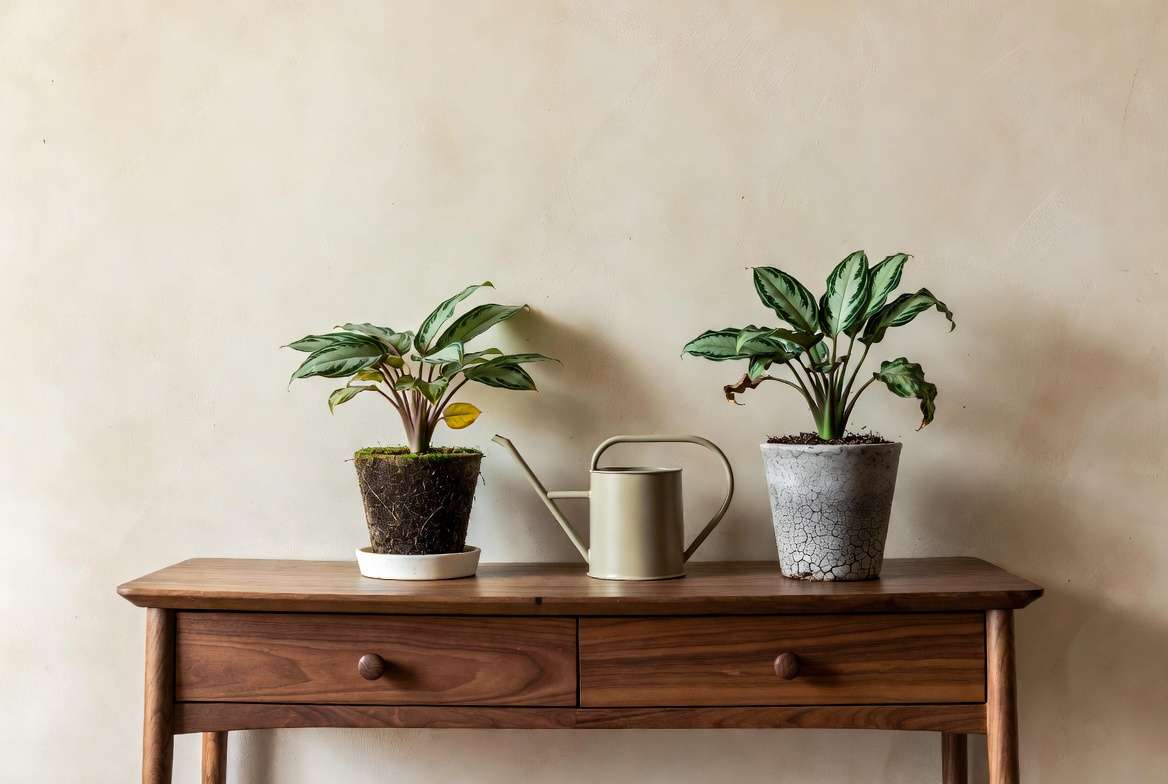
Underwatering: The Crispy Canopy 🏜️
If you travel frequently or simply forget your watering schedule, your plant will eventually sacrifice its foliage to conserve water in its main stem and root system.
-
The Symptoms: Brown, crispy leaf margins (edges). The leaves will curl inward to minimize surface area and reduce water loss. The soil will be bone dry, and often compacted into a hard brick that pulls away from the sides of the plastic nursery pot.
-
The Fix:
-
Aerate the soil: Take a wooden chopstick and gently poke deep holes into the compacted soil block to break it up.
-
Bottom Watering: When soil is severely dry, it becomes hydrophobic (water-repellent). If you water from the top, it will just run down the sides. Instead, place the pot in a bowl or sink filled with a few inches of room-temperature water. Let the plant sit for 30 to 45 minutes to soak up the water via capillary action.
-
Adjust the schedule: Recognize that a plant’s water needs change with the seasons. They need significantly more water during the bright, warm summer months and much less during winter dormancy.
-
The Tiny Invaders: Identifying Common Houseplant Pests 🐛
If your watering habits are flawless but leaves are still hitting the floor, you likely have uninvited guests. Sap-sucking pests physically drain the vital fluids, sugars, and nutrients from plant cells. Once a leaf is heavily depleted, the plant aborts it.
Spider Mites: The Microscopic Web Weavers 🕸️
Spider mites are actually tiny arachnids, not true insects. They thrive in hot, dry conditions (like the air inside a centrally heated home in winter).
-
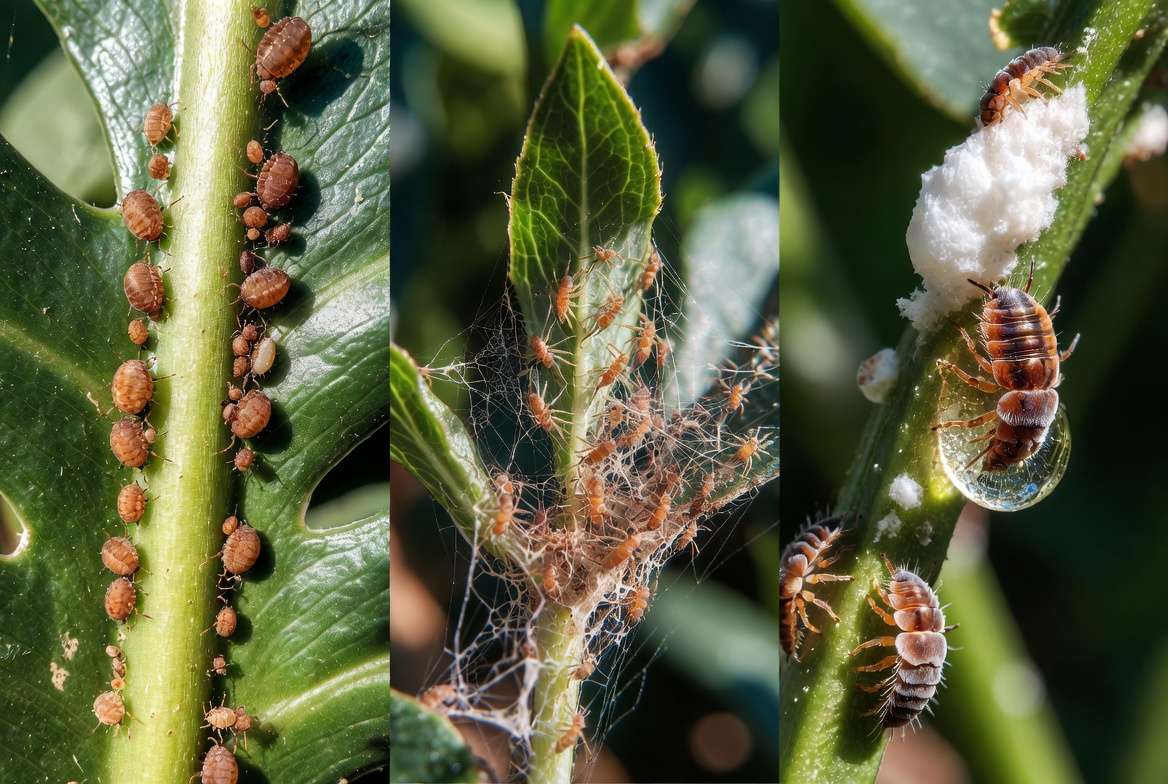
The Signs: They are so small they look like walking dust. You will usually notice their damage first: a stippled, chlorotic (yellowing) pattern on the leaves. As the infestation grows, you will see fine, dense webbing congregating where the leaf petiole meets the main stem.
-
Why they cause leaf drop: They systematically puncture individual plant cells, draining the chlorophyll until the leaf dies.
Thrips: The Discolored Leaf Destroyers 🦟
Thrips are slender, tiny, flying insects that are notoriously difficult to eradicate because they lay their eggs inside the plant tissue.
-
The Signs: Thrips scrape at the leaf surface, leaving behind distinct silvery, bronze, or pale streaks. You will also notice tiny black specks on the leaves, which is thrip frass (fecal matter). New growth often emerges warped and deformed.
Scale Insects & Mealybugs: The Sticky Sap Suckers 🛡️
These two pests are closely related and operate similarly, though they look quite different.
-
The Signs: Scale insects look like flat, hard, brown or oval bumps plastered against the stems and veins of leaves. They don’t look like bugs at all; they look like scabs. Mealybugs, on the other hand, look like tiny, fuzzy white masses of cotton hidden in the crevices of the plant. Both pests excrete “honeydew,” a sticky, sugary sap that coats the lower leaves and your floor, eventually growing black sooty mold.
Fungus Gnats: The Soil Nuisance 🍄
You’ve likely seen these annoying, fruit-fly-like bugs buzzing around your face.
-
The E-E-A-T Reality Check: Adult fungus gnats do not harm your plant, and their larvae (which live in the soil) rarely cause enough root damage to induce leaf drop in mature plants. However, a massive fungus gnat population is a giant, flashing red warning sign that your soil is staying too wet for too long—which, as we discussed, will cause leaf drop via root rot.
How to Stop Leaf Drop Caused by Pests or Watering Issues 🛠️
You have diagnosed the problem. Now it is time to take decisive action to save your plant. Follow this master recovery plan to halt the leaf drop in its tracks.
1. Immediate Quarantine 🛑
If you suspect pests, instantly move the affected plant to a separate room, far away from your other houseplants. Pests can travel on a breeze or on your clothing, so isolate the patient to prevent a full-scale indoor outbreak.
2. The Shower Method 🚿
For pest infestations, physical removal is your best first line of defense. Wrap the base of the pot tightly in a plastic bag (to prevent the soil from washing away and to stop bugs from falling into the dirt). Take the plant to your shower or outdoor hose and blast the foliage with lukewarm water. Pay special attention to the undersides of the leaves, as this is where spider mites and thrips hide.
3. Targeted Treatment Options 🧪
After physically washing the plant, you need to apply a treatment to kill the remaining bugs and their unhatched eggs.
-
Insecticidal Soap & Neem Oil: Excellent for spider mites and aphids. These act as contact killers, smothering the pests. You must thoroughly coat the entire plant, and you must repeat the process every 7 to 10 days to catch the next generation of hatching eggs.
-
Systemic Insecticides: For stubborn pests like thrips or scale, topical sprays often fail. Systemic granules (like Imidacloprid) are mixed into the soil. The plant drinks the chemical up into its vascular system, turning the sap toxic to any bug that bites it. (Note: Keep systemic-treated plants away from pets and children).
-
The Q-Tip Trick: For minor mealybug or scale outbreaks, dip a cotton swab in 70% rubbing alcohol and dab it directly onto the pests. The alcohol instantly dissolves their protective waxy coating and kills them.
4. Correcting the Environment 🌤️
If the issue was watering, implement the fixes mentioned in the “Watering Woes” section. Make sure your plant is not sitting directly in the blast path of an AC vent or heating radiator, as these intense drafts can also cause sudden, catastrophic leaf drop.
Plant ICU: Post-Treatment Care for Stressed Plants 🏥
Treating the root rot or killing the pests is only half the battle. Your plant has been through a traumatic event and needs time in the “ICU” to recover and stabilize.
-
Do NOT Fertilize! 🚫 This is a very common mistake. Fertilizer is plant food for healthy plants to fuel new growth. It is not medicine for sick plants. Applying synthetic fertilizers to a stressed plant with damaged roots will cause fertilizer burn and likely finish the plant off. Wait until you see at least a month of healthy, sustained new growth before feeding again.
-
Optimize Lighting: Move your recovering plant to a spot with bright, gentle, indirect light. Direct, harsh afternoon sun will scorch the weakened foliage, while deep shade will prevent the plant from photosynthesizing enough energy to heal.
-
Prune Judiciously: Using sterile shears, snip away any leaves that are more than 50% yellowed or damaged. These leaves will never revert to green, and removing them allows the plant to redirect its precious energy reserves toward root development and pushing out new, healthy foliage.
Expert Prevention Tips: Keeping Your Indoor Jungle Thriving 🌿
The best treatment is always prevention. Integrate these professional habits into your plant care routine to avoid future heartbreak.
-
The 14-Day Quarantine: Never put a newly purchased plant next to your established collection. Nurseries and big-box stores are notorious for pest outbreaks. Keep new arrivals in a separate room for two weeks and monitor them closely.
-
Always Use the Finger Test: Throw away your rigid watering schedules (e.g., “I water every Sunday”). Instead, stick your index finger two inches deep into the soil. If it feels moist, wait. If it feels dry, water. Alternatively, invest in a reliable soil moisture meter.
-
Foliage Hygiene: Dust buildup on leaves blocks sunlight and creates a cozy environment for spider mites. Wipe down your plant’s leaves monthly with a damp, soft cloth.
-
Drainage is Non-Negotiable: Never plant directly into a decorative “cachepot” that lacks a hole in the bottom. Always plant in a nursery pot with drainage holes, and sit that inside the decorative pot.
Frequently Asked Questions (FAQs) ❓
Q: Will the leaves grow back in the same spot after dropping?
Generally, no. Most common houseplants (like Philodendrons, Monsteras, and Pothos) will not regrow a leaf from a bare, spent node on a lower stem. Instead, the plant will push new growth from the apical tip (the top) or activate a dormant node to create a new branching vine.
Q: Can a plant fully recover if it loses all of its leaves?
Yes! As long as the root system is healthy and the main stem is firm and green, the plant is still alive. Reduce watering significantly (since it has no leaves to transpire water) and provide bright, indirect light. With patience, new growth points will emerge.
Q: How often should I use Neem oil for pests?
Because pests have rapid life cycles with eggs hatching constantly, a single application of Neem oil will not work. You must spray the plant thoroughly every 7 to 10 days for at least a month to break the life cycle completely.
Conclusion: Patience is a Planter’s Best Friend 💚
Diagnosing the difference between root-level moisture issues and microscopic sap-sucking invaders is the absolute key to plant salvation. By observing the distinct symptoms—whether it is the soggy yellowing of root rot, the crispy edges of a parched pot, or the telltale webbing of spider mites—you now have the E-E-A-T backed knowledge to step in and save the day.
Remember, even the most seasoned horticulturists and botanists lose plants sometimes. It is an inevitable part of the indoor gardening learning curve. Don’t let a bout of leaf drop discourage you. Apply these troubleshooting steps, adjust your environment, and give your leafy companions the time and patience they need to bounce back stronger than ever! 🪴✨











