
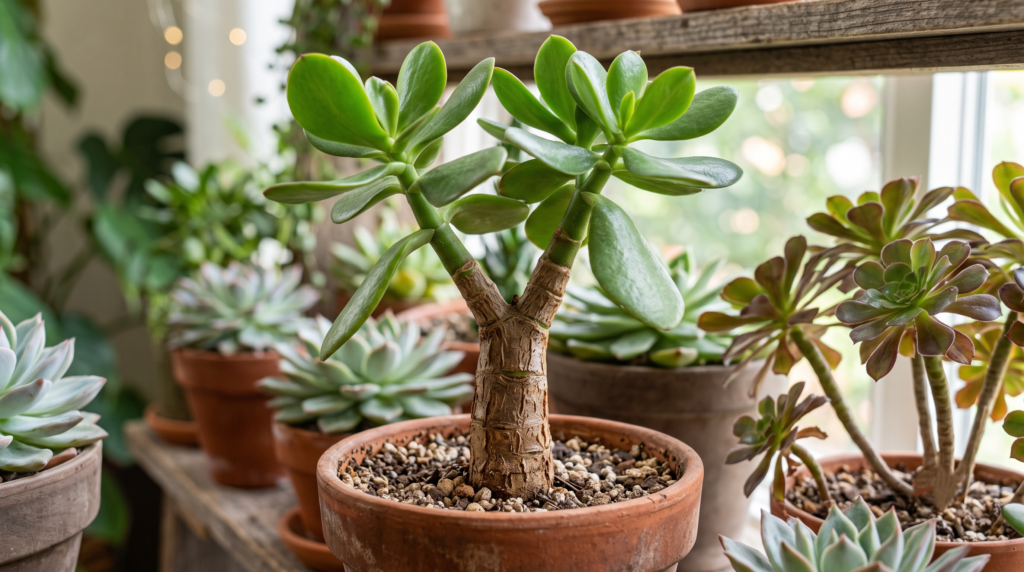
You’re admiring your beloved, years-old Jade plant or a beautifully mature Echeveria. You check its plump, sun-kissed leaves, and then your eyes drift downward. The base of the stem has turned brown, rough, and crusty. It looks exactly like dead wood. Cue the instant plant-parent panic. Did you overwater it? Is a deadly fungal infection taking over? Should you throw it out before it spreads to your other houseplants?
If you’re staring at a woody stem and wondering if your plant’s days are numbered, take a deep, calming breath. As a plant care specialist who has diagnosed and treated countless aging houseplants over the years, I can assure you that this is most likely a completely harmless, natural process.
Welcome to the ultimate guide on managing corking in older succulents. In this comprehensive, skyscraper-level article, we are going to demystify this scary-looking transformation. We’ll dive deep into how to definitively spot the difference between deadly rot and harmless aging, the fascinating botany behind why your plants build bark, and the exact expert strategies you need to keep your mature succulents thriving for decades to come.
Let’s turn that plant panic into plant mastery! ✨
🪵 What Exactly is Succulent Corking? (The Science Made Simple)
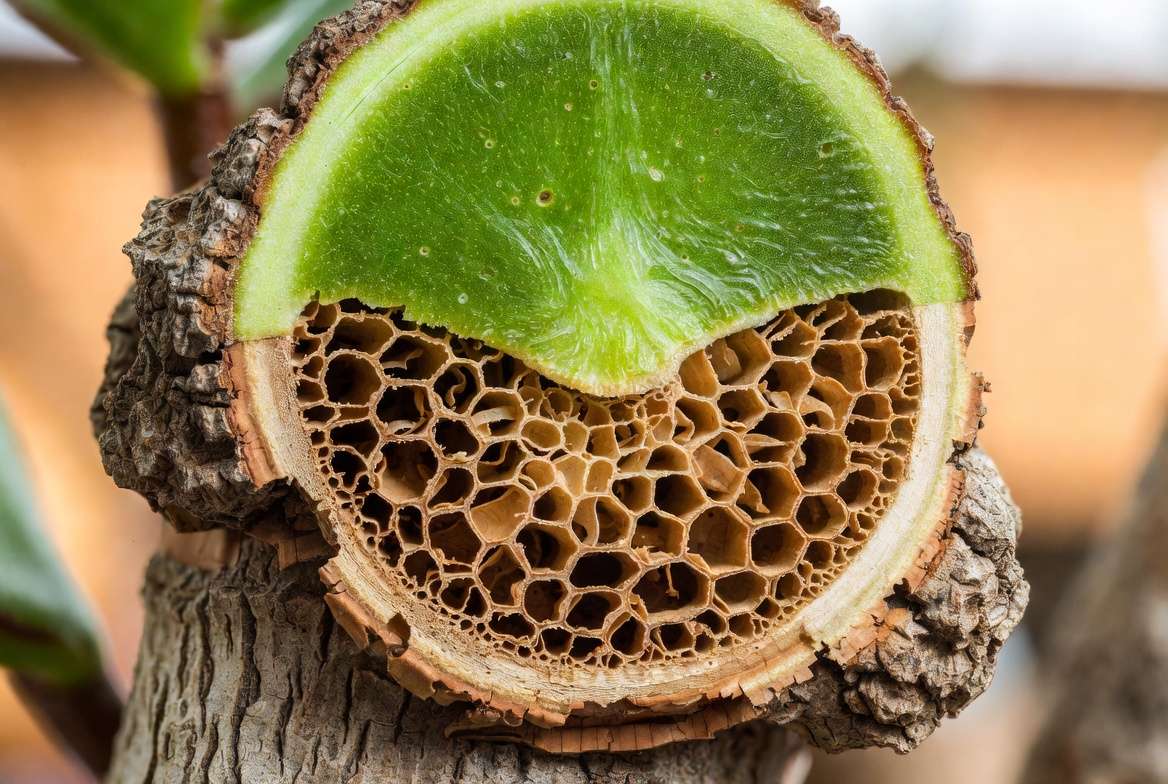
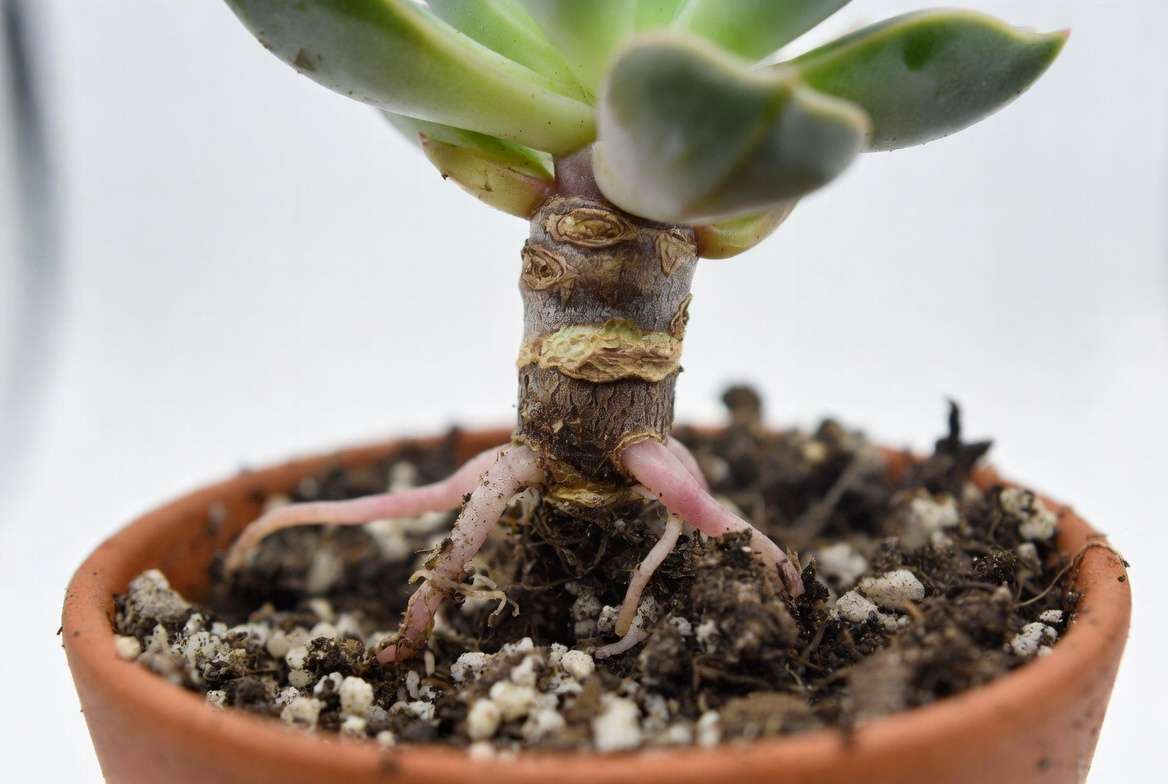
To understand how to care for your plant, we first need to understand what it is actively doing. “Corking” is the colloquial term for a very natural botanical process where the soft, green, fleshy tissue on the lower stems of a succulent slowly hardens and transforms into bark.
Scientifically, this tissue is called the periderm.
When a succulent is young, its stem is bright green and capable of photosynthesis. However, as the plant ages, it grows taller, wider, and significantly heavier. Succulent leaves store a massive amount of water, making the top of the plant quite dense. If the stem remained soft and fleshy, the plant would eventually snap under its own weight or easily topple over in strong winds in its natural habitat.
Corking is the plant’s ingenious way of building a skeleton. By converting that soft lower tissue into rigid, woody bark, it creates a robust, structural foundation capable of supporting a massive canopy of fleshy leaves.
🪴 Which Plants Do It Most?
While almost any succulent can cork over time, it is most prominent and noticeable in species that grow vertically or have tree-like habits. You will most frequently encounter corking in:
-
Jade Plants (Crassula ovata): These are famous for turning into mini-trees with thick, woody trunks.
-
Euphorbias: Many tall-growing Euphorbias will develop extensive corking at their base.
-
Mature Echeverias: As they lose their bottom leaves over the years, the exposed stem often corks.
-
Aeoniums: Known for their long, leggy stems, Aeoniums rely heavily on corking for structural integrity.
🔍 Corking vs. Stem Rot vs. Pests: How to Tell the Difference
This is the most critical juncture in your succulent care journey. Misdiagnosing natural corking as stem rot can lead you to unnecessarily chop up a perfectly healthy, ancient plant. Conversely, misdiagnosing stem rot as corking will result in a dead succulent.
Here is how you can expertly tell the difference using visual, tactile, and chronological clues.
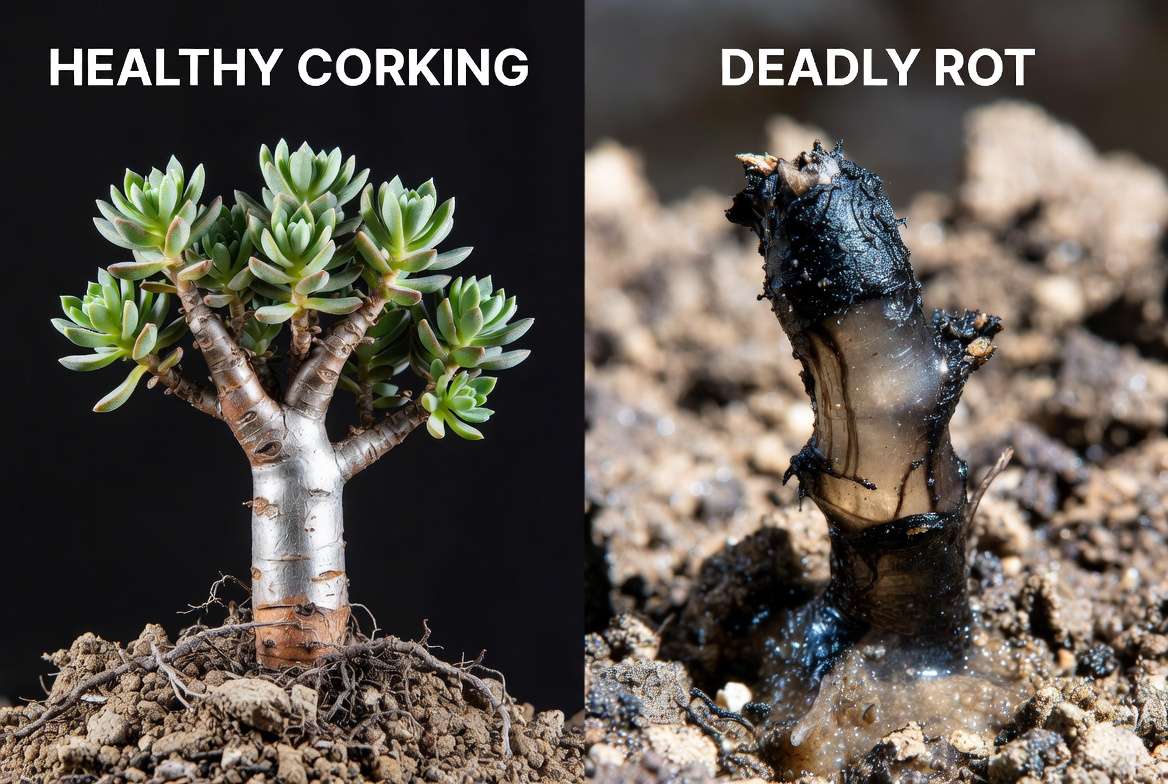
🟢 Signs of Healthy Corking (Natural Aging)
When a plant is going through normal, healthy corking, you will notice the following characteristics:
-
Texture: The golden rule of corking is that it feels exactly like tree bark. It is firm, hard, and dry to the touch. It will not yield under gentle pressure.
-
Color: The color is typically a light, earthy brown, tan, or sometimes a silvery-grey, depending on the species.
-
Progression: Corking is incredibly slow. It always begins at the very base of the plant right above the soil line and creeps upward over a period of months or years.
-
Overall Plant Health: The top rosettes, upper leaves, and new growth look plump, vibrant, and perfectly healthy.
🔴 Signs of Deadly Stem Rot (Overwatering/Fungus)
Stem rot is a fungal or bacterial infection usually brought on by overly saturated soil or poor drainage. It is a death sentence if not caught early.
-
Texture: Rot is mushy, squishy, and sometimes slimy. If you squeeze the stem, it feels like a rotten grape.
-
Color & Smell: The stem will look dark brown, black, or sickly yellow. Unlike corking, rot often emits a foul, swampy, or moldy odor.
-
Progression: Rot moves incredibly fast. A plant can succumb in a matter of days. Furthermore, the leaves directly above the rot will turn a translucent yellow and drop off at the slightest touch.
💡 Expert Pro Tip: The “Poke Test” If you are still unsure, gently poke the brown section of the stem with the blunt end of a pencil, a wooden skewer, or your fingernail. If the stem resists the pressure like a piece of wood, you are dealing with healthy corking. If the tool easily breaks the surface, yields, or causes the stem to ooze liquid, you are dealing with rot.
🟠 Pest Damage Masquerading as Corking
Sometimes, beginners confuse pest damage with corking.
-
Spider Mites: These microscopic pests suck the sap from the plant, causing the tissue to scar and scab over in rust-colored patches. Unlike corking, which starts at the bottom and is uniform, mite damage often appears in patchy, irregular spots higher up on the stem or under the leaves.
-
Scale Insects: Scale bugs attach themselves to stems and look like little brown bumps. While they might look like woody growths, you can easily scrape a scale bug off with your fingernail. Corking cannot be scraped off.
⏳ Why Do Succulents Cork? The Natural Lifecycle
Aside from structural support, why else do our fleshy friends turn to wood?
1. Age and Time First and foremost, corking is a badge of honor. It means you have successfully kept your plant alive for a long time! Just like humans get wrinkles and grey hair, succulents get bark. It is an unavoidable, beautiful part of their natural lifecycle.
2. Environmental Stressors While age is the primary factor, certain environmental conditions can trigger a plant to cork earlier or more aggressively as a defense mechanism:
-
Intense Sun Exposure: Sunburn or consistently harsh UV rays can cause the delicate epidermis to harden and scar over to protect the inner vascular tissue.
-
Temperature Fluctuations: Extreme heat or surprising cold snaps can stress the epidermal cells, prompting the plant to generate a protective periderm shield.
-
Physical Damage: If a stem is scratched, bumped, or nibbled on by a pet, the plant will cork over the wound to seal it, much like a human forming a scab.
🛠️ The Best Strategies for Managing Corking in Older Succulents
When a succulent transitions from a youthful, entirely green plant to a mature, woody specimen, its care requirements subtly shift. Managing corking in older succulents isn’t about “curing” the plant—it’s about adapting to its new, mature physiology. Here is how expert growers adjust their care routines to support aging succulents.
💧 Adjusting Your Watering Schedule for Mature Roots
Older succulents with thick, woody stems possess different root systems than young pups. Their extensive root networks and large, fleshy canopies mean they are generally more drought-tolerant.
However, because the lower stem has turned to bark, it is no longer pliable. If you overwater a mature plant, it cannot easily swell to accommodate the excess moisture, making the roots highly susceptible to rot.
-
The Golden Rule: Always wait for the soil to dry out completely—100% to the bottom of the pot—before watering again.
-
The “Taco Test”: Instead of watering on a strict schedule, gently squeeze the uppermost leaves. If they feel firm and plump, do not water. If they feel soft, slightly wrinkled, and fold inward like a taco, it is time for a deep, thorough soaking.
🪴 Upgrading the Potting Mix
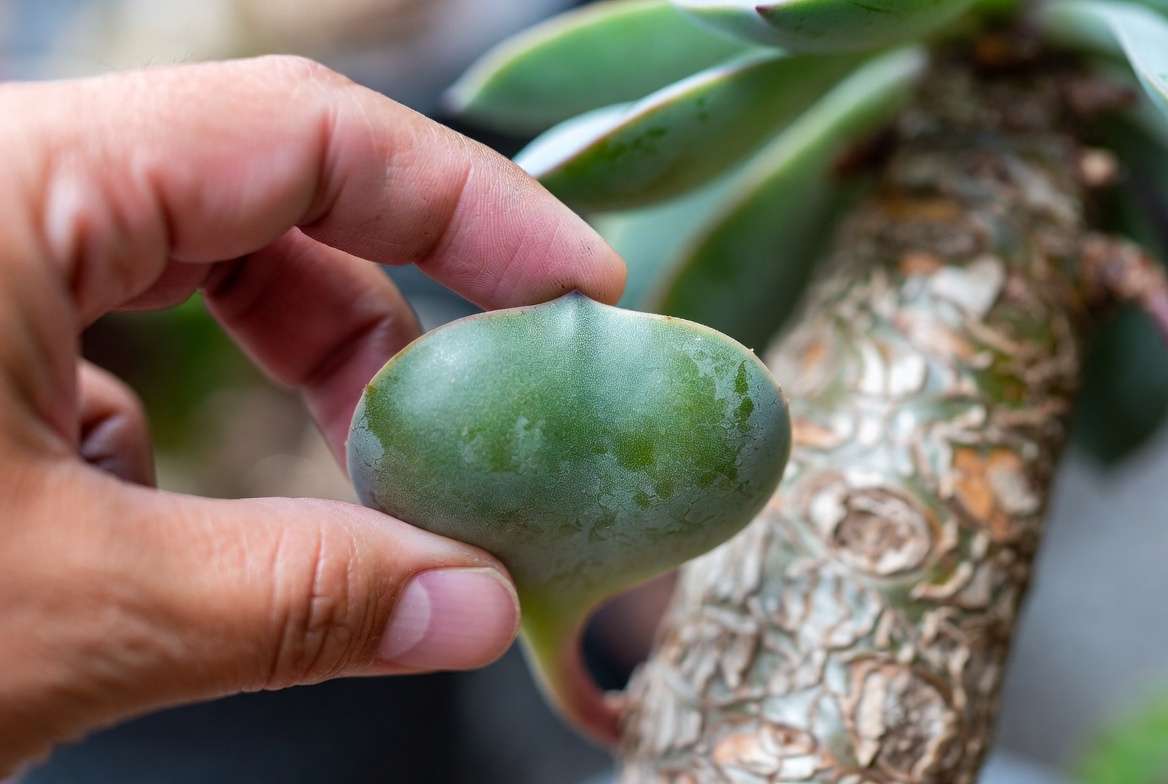
Over the years, the organic matter in standard potting soil breaks down and compacts. Compacted soil chokes mature root systems and traps moisture against that delicate, corked base. Managing older succulents requires periodically refreshing their environment.
-
The Ideal Mix: Transition your aging plants to a highly gritty, well-draining succulent soil. A mix of 50% organic matter (like standard potting soil or coconut coir) and 50% inorganic grit (like pumice, perlite, crushed granite, or coarse sand) is perfect. This ensures rapid drainage and excellent airflow to the mature root system.
🪵 Providing Adequate Support
Even with the strength of a newly corked, woody stem, mature succulents can become incredibly top-heavy. As Echeverias and Graptopetalums grow, their dense rosettes can cause the plant to lean or eventually snap.
-
Staking: Use bamboo stakes or elegant metal plant supports. Gently tie the stem to the stake using soft plant twine—never use tight zip ties, which can cut into the bark.
-
Top Dressing: Add a heavy layer of decorative rocks (like river stones or lava rock) to the top of the soil. This not only looks beautiful but acts as a heavy anchor for the base of the plant.
☀️ Light Requirements for Aging Plants
If an older succulent isn’t getting enough bright, indirect sunlight, it will stretch toward the nearest light source—a process called etiolation. A leggy succulent is a weak succulent. Stretching puts immense physical stress on the hardened, corked base, often leading to the stem snapping in half.
-
Ensure your mature plants are placed in a south-facing or west-facing window, or under a high-quality LED grow light, to keep their growth compact and centered over their woody base.
🛑 Can You Reverse or Stop Succulent Corking?
If you are hoping for a magic potion to turn your woody stems green again, I have to give you the honest truth: You cannot reverse corking.
Once the epidermal tissue has transformed into periderm (bark), it is a permanent structural change. It will never turn green or photosynthesize again.
🚫 Myth Busting: What NOT to Do
The internet is full of terrible advice for plant parents. Please avoid these common, dangerous myths:
-
Never Peel the Bark: Do not try to scratch, peel, or cut the brown corking off your succulent! Peeling it removes the plant’s structural support and opens up massive, raw wounds that are highly susceptible to deadly bacterial and fungal infections.
-
Do Not Apply Oils: Rubbing neem oil, olive oil, or mayonnaise on the stem to “soften” it will only suffocate the plant’s pores and invite pests.
-
Do Not Over-Fertilize: Dumping excess fertilizer on a corked stem will not rejuvenate it; it will only burn the roots.
✂️ Should You Behead a Corked Succulent? A Step-by-Step Guide
So, what happens if you simply hate the way corking looks? If you prefer the look of a compact, stemless rosette and despise the “leggy, woody tree” aesthetic, you have one ultimate management technique available: Beheading.
Beheading (or stem cutting) is a form of succulent propagation that allows you to start fresh. Here is the step-by-step expert guide to doing it safely:
🔪 Step 1: Sterilize Your Tools
Always use a sharp, clean pair of pruning shears, a bonsai scissor, or a craft knife. Wipe the blade with rubbing alcohol to ensure you aren’t introducing bacteria into the fresh cut.
🔪 Step 2: The Cut
Examine your succulent. You want to leave about 1 to 2 inches of bare, relatively green stem directly below the bottom leaves of the rosette. Make a clean, horizontal cut through the stem.
🔪 Step 3: Callousing (Crucial Step!)
Do not immediately plant the fresh cutting in soil! The open wound will absorb moisture and rot instantly. Instead, place the beheaded rosette in a dry, shady spot indoors for 3 to 7 days. Wait until the cut end forms a hard, white/pink scab (a callous).
🔪 Step 4: Replanting
Once calloused, plant the bare stem into dry, gritty succulent soil. Do not water it! A plant without roots cannot absorb water. Wait 2 to 3 weeks for the cutting to push out new, pink roots, and then begin watering normally.
🪴 Don’t Toss the Base!
What about that old, woody, corked stump left in the original pot? Keep it! If you continue to water it sparingly and give it good sunlight, that ugly stump will often push out dozens of brand-new baby succulents (called “pups”) along the woody stem.
🌟 Expert Tips for Keeping Older Succulents Thriving
-
Go Easy on the Fertilizer: Older, slow-growing succulents need significantly less food than young pups. Feed them with a highly diluted (half-strength), low-nitrogen liquid succulent fertilizer only once or twice during their active growing season (usually spring or early summer).
-
Keep Them Root-Bound: When repotting an older succulent, only go up one pot size (about 1 to 2 inches wider in diameter). A pot that is too large will hold excess wet soil, leading to root rot. Mature succulents actually prefer to be slightly snug in their pots.
-
Gentle Cleaning: Dust settles on older indoor plants, blocking sunlight. However, many succulents (like Echeverias and Graptopetalums) have a powdery white coating on their leaves called farina, which acts as a natural sunscreen. Never wipe the leaves with a wet cloth! Instead, use a soft, dry makeup brush to gently sweep away dust without ruining their protective coating.
❓ Frequently Asked Questions (FAQs)
Does corking mean my succulent is dying? Not at all! In fact, it means the exact opposite. Corking is a sign of a mature, robust plant that is reinforcing its stem to support further growth. If the top leaves are green and plump, your plant is perfectly healthy.
How long does it take for a succulent to start corking? This depends heavily on the species and the environment, but you generally won’t see noticeable corking until a succulent is at least 2 to 3 years old. For slow-growing varieties, it can take up to 5 or 10 years.
Can a corked stem absorb water? No. The corked, woody part of the stem no longer has the capacity to absorb water or nutrients. All water absorption happens beneath the soil via the root system.
Why is my succulent stem turning woody AND dropping its bottom leaves? This is a classic sign of natural aging. Succulents constantly grow from the center of the rosette. As they produce new leaves on top, they absorb the nutrients and water from their oldest, bottommost leaves. Those bottom leaves will shrivel up, turn crispy, and fall off, exposing the stem, which then begins the corking process to strengthen itself.
💚 Conclusion: Embrace the Aging Process
At the end of the day, managing corking in older succulents requires a simple shift in perspective. Instead of viewing a brown, woody stem as an eyesore or a symptom of disease, recognize it for what it truly is: a remarkable feat of botanical engineering.
That crusty bark is a testament to your excellent plant care. It proves that you have provided the right environment, the right watering schedule, and the right light for your succulent to survive and thrive for years. Embrace the unique, bonsai-like character of your aging plants.
Have a photo of an incredibly old, beautifully corked Jade or Echeveria? I would love to see it! Share your photos in the comments below, and don’t forget to subscribe to our newsletter for more deep dives into advanced houseplant care! 🌿🪴











