
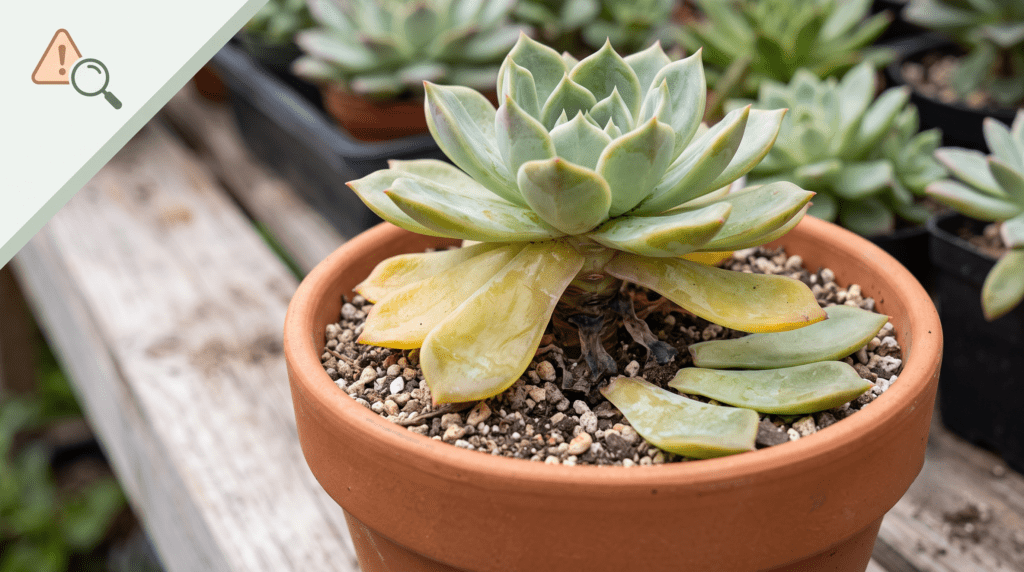
Every dedicated plant parent knows the sinking feeling of checking on a once-thriving succulent, only to realize something is fundamentally wrong. One day your beloved Echeveria or Aloe looks vibrant, and the next, it appears sickly, weak, or discolored. While many gardeners immediately assume they have simply overwatered their plant, there is often a far more sinister and fast-moving culprit at play. Spotting the early signs of succulent bacterial infection is absolutely critical because, unlike a minor watering mistake, a bacterial pathogen will rapidly consume your plant from the inside out.
As a plant care specialist who has spent years deep-diving into plant diagnostics, soil health ecosystems, and succulent cultivation, I can tell you that time is of the essence. Succulents are remarkably resilient survivors in the wild, but in our homes, bacterial infections act as silent, swift killers. Most owners misdiagnose the issue until the vascular tissue is entirely compromised.
But don’t panic just yet! If you are reading this, you still have a crucial window of opportunity. By learning how to identify these early red flags, you can step in, perform emergency plant surgery, and rescue your plant before it’s too late. Let’s dive into the science of what is happening inside your pot and exactly how to fix it. 🌱✨
What Causes Bacterial Infections in Succulents? 🦠🔍
To defeat the enemy, you first have to understand how it operates. Succulents are designed to store massive amounts of water in their fleshy leaves and stems. While this makes them incredibly drought-tolerant, it also turns them into an all-you-can-eat buffet for opportunistic bacteria if their defenses are breached.
The Perfect Storm for Pathogens 🌧️
Bacterial infections in succulents are most commonly caused by pathogens like Erwinia carotovora or various Pectobacterium species. These microscopic invaders cannot pierce the tough outer cuticle of a healthy succulent leaf on their own. They require an entry point—a micro-wound.
How do these wounds happen?
-
Pest Damage: Sap-sucking insects like mealybugs or spider mites puncture the plant tissue, leaving microscopic holes.
-
Mechanical Damage: Scrapes from recent repotting, accidental bumps, or using unsterilized pruning shears.
-
Root Suffocation: When roots are left in dense, waterlogged soil, they begin to die back and decay, creating an open doorway for soil-borne bacteria to enter the vascular system.
Once the bacteria find a wound, they need specific environmental triggers to multiply rapidly. High ambient humidity, poor indoor airflow, and heavy, moisture-retentive potting mixes create the ultimate breeding ground for these pathogens to thrive and spread.
Bacterial Infection vs. Fungal Rot: Spotting the Difference 🔬
It is highly common to confuse bacterial infections with fungal issues (like powdery mildew or fungal root rot). Knowing the difference dictates your treatment plan.
-
Bacterial Infection: Moves incredibly fast (sometimes destroying a plant in 48 hours). The decay is usually “wet,” turning the plant tissue into slimy, watery mush. It almost always emits a foul, rotting stench due to the bacteria breaking down the plant’s cellular structure.
-
Fungal Infection: Typically moves slower. The damage is often “dry,” presenting as black spots, white powdery films on the leaves, or rusty patches. Fungal rot does not usually produce a strong, swampy odor.
(Pro-Tip for Plant Influencers: If you are documenting your plant rescue journey for your audience, taking macro photos comparing healthy tissue to bacterial decay makes for an incredibly high-value Pinterest pin or YouTube thumbnail! 📌)
The 5 Early Signs of Succulent Bacterial Infection ⚠️
Catching a bacterial pathogen requires keen observation. Because bacteria attack the internal cellular structure of the succulent, the outward symptoms are a reflection of internal collapse. Here are the five definitive early warning signs you must look out for.
1. Sudden Translucent or “Jelly-Like” Leaves 💧
One of the very first indicators of a bacterial issue is a radical change in leaf texture and opacity. A healthy succulent leaf should be firm, plump, and completely opaque.
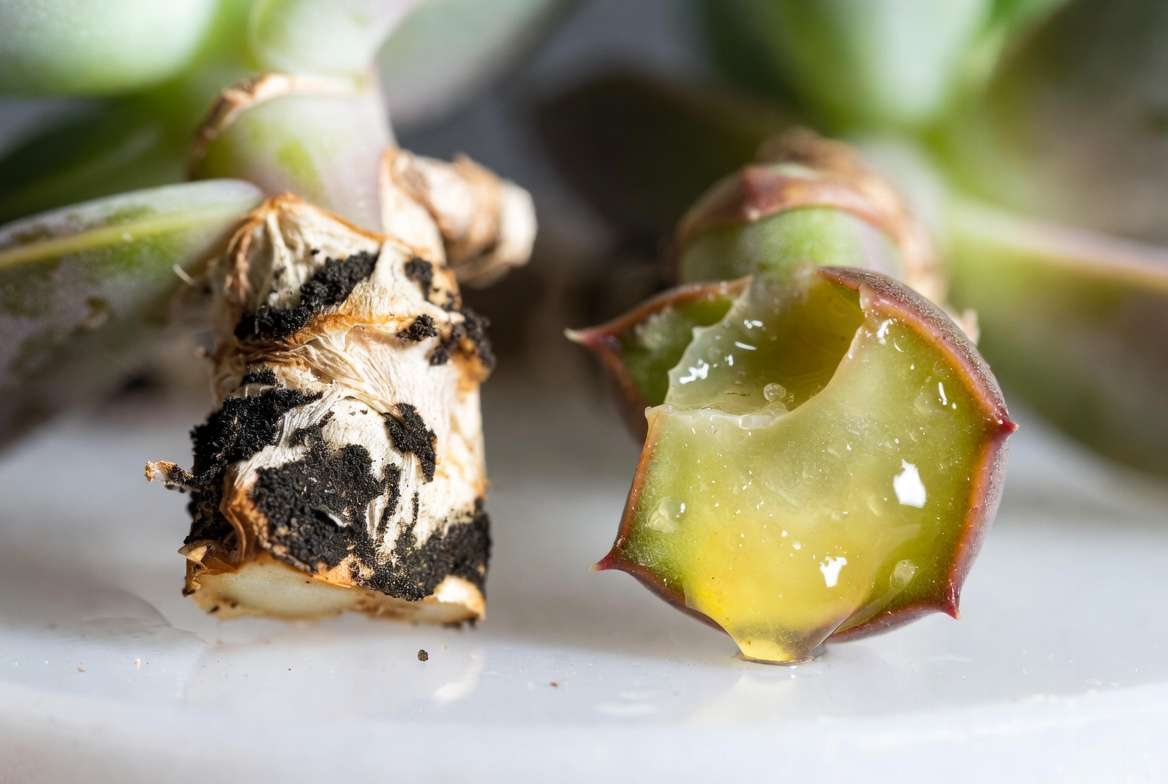
If you notice that the leaves—particularly the lower ones near the soil line—are suddenly turning slightly yellow and translucent, almost like a water balloon or gummy candy, bacteria have breached the cell walls.
The Science Behind It: As the bacterial enzymes digest the pectin holding the plant cells together, the internal cell walls collapse. The water stored inside the cells leaks into the surrounding tissue spaces. This internal flooding is what gives the leaf that sickly, jelly-like, transparent appearance. By the time the leaf looks translucent, the tissue is already dead.

2. Mushy, Blackening Stems Near the Soil Line 🖤
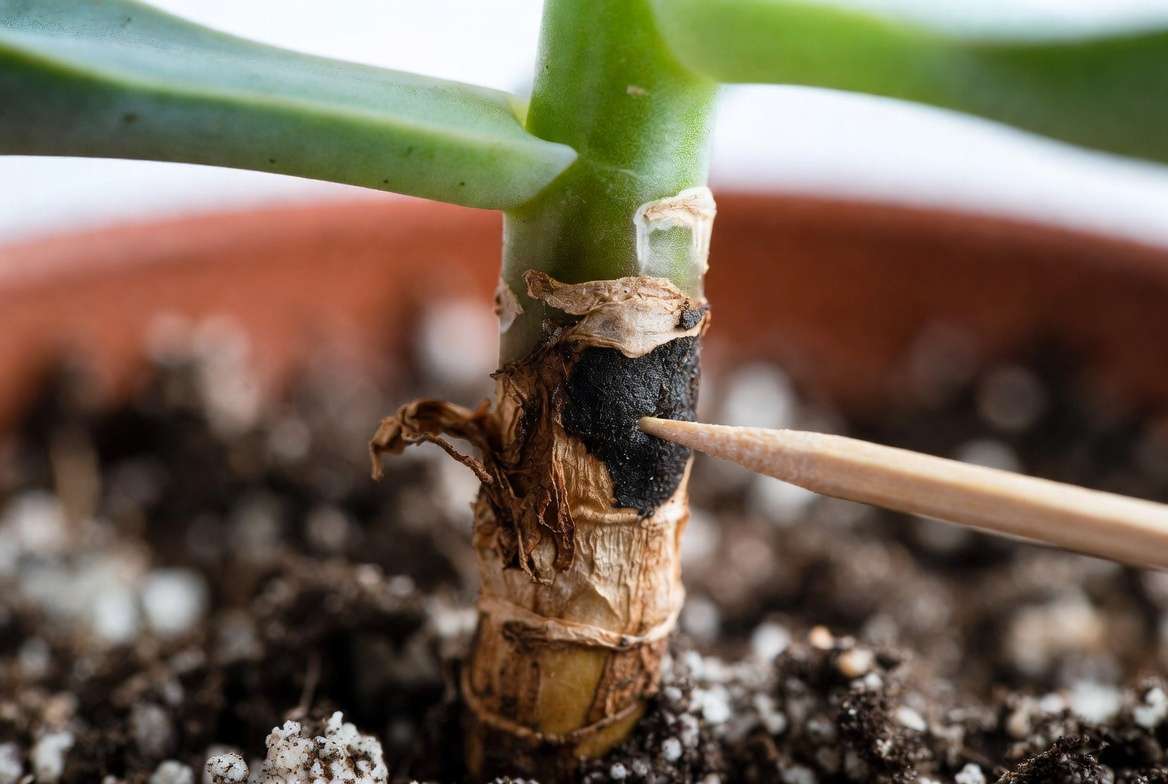
While translucent leaves are a warning, a blackening stem is a siren. Because many bacterial infections begin at the root level (often spurred by poor soil health and overwatering), the bacteria travel upward through the stem’s vascular tissue.
Look closely at the base of your succulent where the stem meets the soil. Is it turning a bruised, dark brown, or black color? Does it look slightly shriveled or bruised?
The Toothpick Test: If you are unsure whether the dark discoloration is natural corking (a harmless aging process) or bacterial rot, use the toothpick test. Take a sterilized toothpick and gently press it against the dark patch on the stem.
-
If the stem is hard and woody, it is likely just corking.
-
If the toothpick easily pierces the flesh and the stem feels squishy, wet, or hollow, you are dealing with active bacterial rot.
3. Leaves Dropping at the Slightest Touch 🍂
It is entirely normal for a succulent to reabsorb and drop its oldest, lowest leaves as it grows. These natural leaf drops will look completely dried out, crispy, and paper-thin.
However, if your succulent is dropping green, plump, seemingly healthy leaves, you have a severe problem on your hands. If you barely brush past the pot or gently nudge the plant and multiple leaves pop off the stem, the infection is spreading quickly.
The Science Behind It: When bacteria infect the main stem, the rot destroys the vascular pathways (the xylem and phloem) that transport water and nutrients. To try and save itself, the plant will abruptly sever the connection to its leaves, causing them to fall off while still full of water.
4. Foul, “Fishy” or Rotting Odor 👃
Healthy houseplants generally smell like fresh earth, or they have no discernible scent at all. If you lean in close to your succulent and detect a pungent, swampy, or somewhat “fishy” odor, you are dealing with a severe bacterial issue.
The Sensory Cue: This unpleasant smell is the direct result of anaerobic bacteria multiplying rapidly and decomposing the plant matter. As the plant’s internal tissues literally turn to mush, they release sulfurous gases. If your succulent smells like rotting vegetables left in the fridge too long, skip the toothpick test—the diagnosis is confirmed, and immediate action is required.
5. Strange Oozing or “Weeping” Lesions 💦
Sometimes, bacterial rot doesn’t start at the roots; it starts on the leaves due to a pest bite or high surface humidity. In these cases, you might notice strange, weeping lesions on the plant.
The Visual: Look for sunken, soft spots on the leaves or stem that seem to be “sweating” brown, yellow, or murky droplets. This is not condensation from watering. This phenomenon is called bacterial exudate. The bacteria are multiplying so rapidly within the plant tissue that the resulting pressure forces a bacteria-filled ooze out through the plant’s pores or micro-wounds.
Plant Surgery: How to Save a Succulent with a Bacterial Infection 🩺🪴
If you have identified one or more of the early signs of succulent bacterial infection, you must shift from a caretaker to a surgeon. There is no chemical spray, systemic pesticide, or miracle fertilizer that can reverse bacterial rot once it has taken hold inside the plant.
The only way to save your succulent is through amputation—physically removing the infected tissue before the bacteria can spread to the apical meristem (the very top growing point of the plant).
Step 1: Isolate the Patient 🛑
Bacterial pathogens are highly contagious among plants. A single splash of water hitting an infected leaf can carry bacteria to neighboring pots. The moment you suspect an infection, remove the sick plant from your collection and place it in a quarantine zone.
Step 2: The “Beheading” Technique (Stem Cutting) ✂️
To save the uninfected top portion of your succulent, you must perform a stem cutting, commonly referred to in the plant community as “beheading.”
Crucial Expert Tip: You must sterilize your pruning shears or a sharp knife with 70% isopropyl alcohol before you make a cut. If you cut through infected tissue and then use the same dirty blade to cut higher up, you will instantly inject the healthy tissue with the lethal bacteria.
Make a clean, horizontal cut on the stem at least an inch above the highest visible point of the mushy, rotting black tissue.
Step 3: Inspecting the Vascular Tissue 🔬
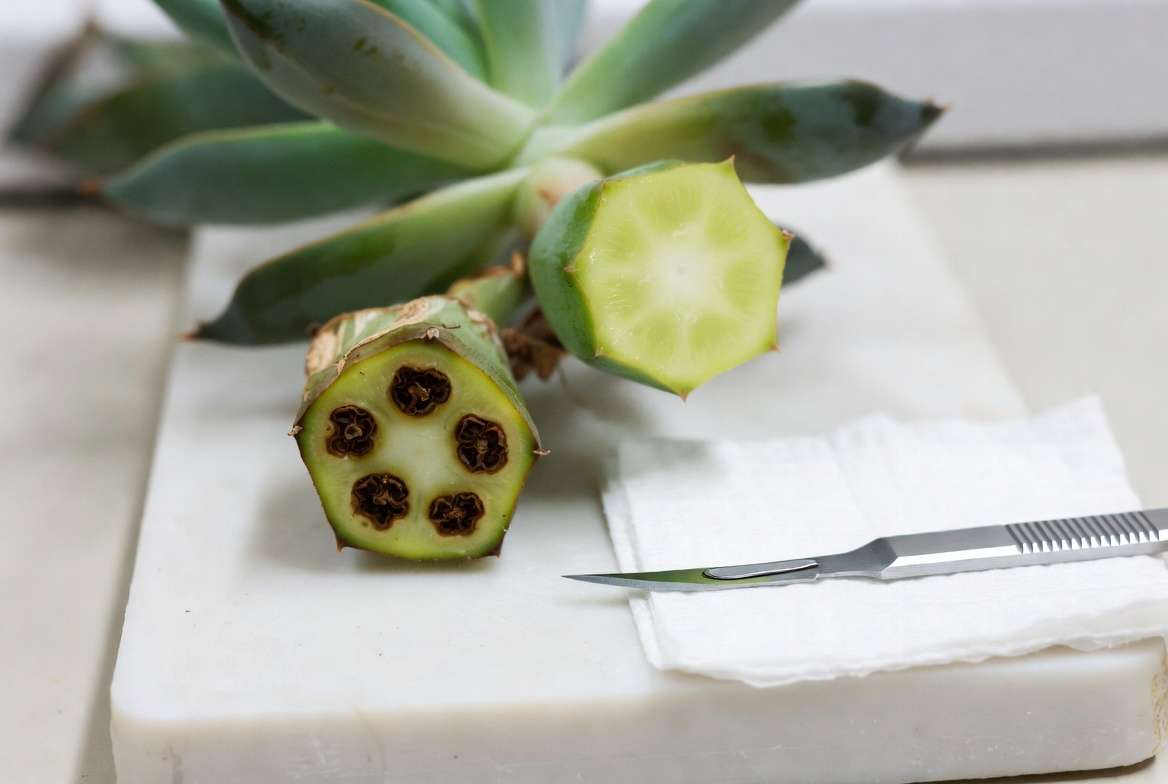
Once you have made your cut, you must meticulously inspect the cross-section of the newly exposed stem.
-
Healthy Tissue: The inside of the stem should be firm, a solid light green or white, and completely clear of any dark markings.
-
Infected Tissue: If you see a brown ring around the edges, dark streaks running through the center, or tiny black dots, the bacteria have already traveled up that high.
If you see any brown or black inside the stem, sterilize your blade again (do not skip this!), and slice off another half-inch. Repeat this process until the cross-section is 100% clean and pristine.
Step 4: Callusing and Propagation ⏳
The biggest mistake anxious plant parents make is immediately shoving their newly saved cutting back into moist soil. If you do this, the open wound will instantly invite soil-borne pathogens inside, and your plant will rot all over again.
Instead, place the healthy cutting in a dry, bright spot (out of direct sunlight) for 3 to 7 days. This allows the open wound to “callus” or form a hard, protective scab. Once a thick, dry callus has formed, you can place the cutting on top of dry, gritty succulent soil. Over the next few weeks, the cutting will send out fresh, pink roots, and your plant will have a brand-new lease on life!
The Secret to Prevention: Soil Health and Airflow 🌬️🌱
As an experienced plant care specialist, I always emphasize that true plant mastery lies in prevention, not just treatment. Bacterial infections are almost entirely preventable if you mimic the succulent’s harsh, arid native environment.
Formulating a Gritty, Fast-Draining Soil Mix 🪨
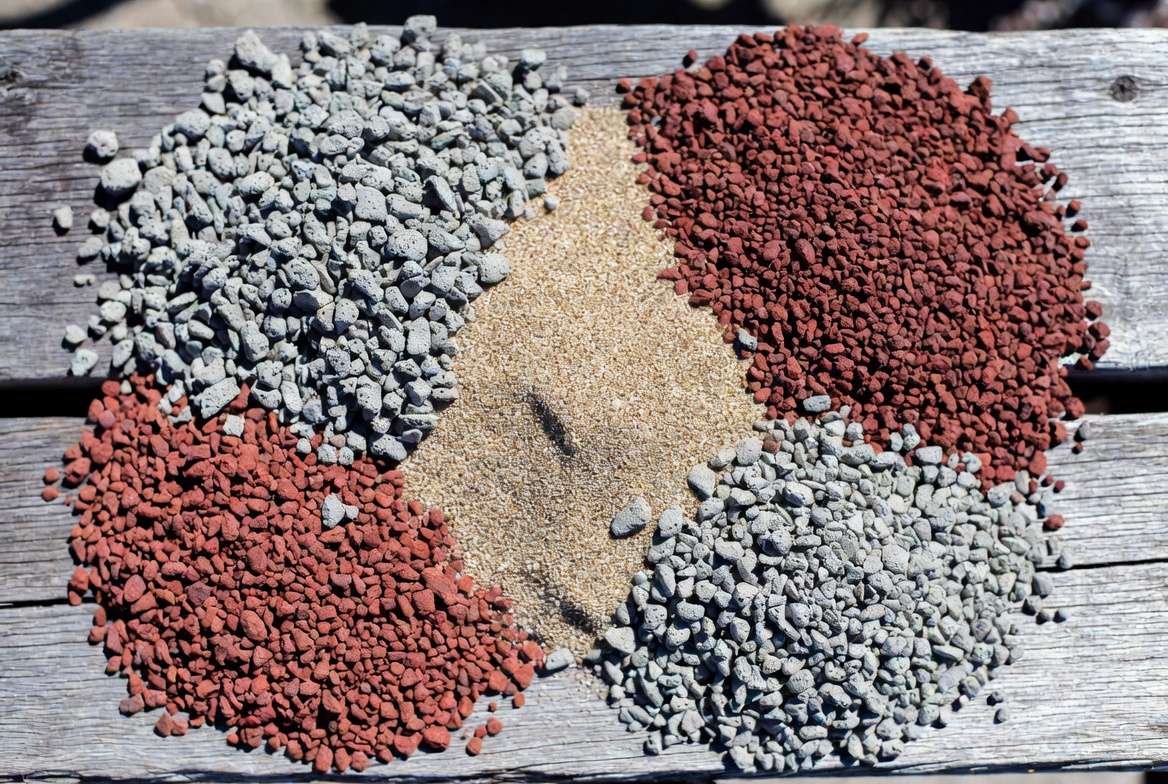
The number one catalyst for bacterial rot is standard, commercial potting soil. Most generic potting mixes are heavily peat-based, designed to act like a sponge and hold moisture for moisture-loving tropical plants. For a succulent, this suffocates the roots and creates the anaerobic (oxygen-starved) conditions where rot bacteria thrive.
To promote robust soil health, mix your own gritty substrate. A professional-grade recipe includes:
-
40% Pumice or Perlite: For exceptional aeration.
-
30% Calcined Clay (like Turface): To absorb just enough moisture without getting muddy.
-
20% Coarse Horticultural Sand or Gravel: To ensure rapid drainage.
-
10% Organic Compost or Worm Castings: For minimal nutrients.
This highly aerated, inorganic-heavy structure ensures water runs straight through the pot, allowing roots to breathe and naturally deterring harmful pathogens.
Mastering the “Soak and Dry” Watering Method 🚰
Throw away your watering schedule. Watering succulents on a strict weekly basis is a guaranteed path to bacterial infection. Instead, use the “Soak and Dry” method:
-
Wait until the soil is completely bone-dry all the way to the bottom of the pot. (You can test this with a wooden skewer).
-
Observe the plant. Wait until the lowest leaves look slightly wrinkled or feel slightly soft. This means the plant has used up its water reserves and is truly thirsty.
-
Water deeply until water pours out of the drainage holes.
-
Do not water again until the cycle repeats.
Pot Selection Matters 🪴
Ditch the trendy glass terrariums and plastic pots without drainage holes. These are death traps for desert plants. Always opt for unglazed terracotta pots. Terracotta is porous, meaning it “breathes,” allowing excess moisture in the soil to evaporate through the walls of the pot. This dramatically reduces the risk of waterlogged roots and subsequent bacterial attacks.
Expert Q&A / FAQs 💬
To further support your journey, here are the most common questions I receive regarding succulent pathology and disease management.
Can a succulent recover from bacterial rot without cutting it? No. Unlike mild fungal infections that might be treated with a topical fungicide, bacterial rot is systemic and moves rapidly through the plant’s vascular system. It is terminal if the infected tissue is not physically amputated.
Is succulent bacterial infection contagious to humans or pets? No need to worry! The specific plant pathogens that cause soft rot in succulents (such as Erwinia or Pectobacterium) only feed on plant tissue. They are entirely harmless to mammals, including humans, cats, and dogs.
Can I reuse the soil from a rotting succulent? Absolutely not. The soil is now heavily contaminated with the bacteria that killed your plant’s roots. Discard the soil immediately (do not put it in your outdoor compost bin). Before reusing the pot for a new plant, scrub it thoroughly with a 10% bleach solution to kill any lingering pathogens.
Why did my succulent rot even though I barely watered it? If you haven’t overwatered, there are three likely culprits:
-
High Ambient Humidity: If you live in a very humid environment or keep your succulent in a damp bathroom, the plant absorbs moisture from the air, making it susceptible to rot.
-
Poor Airflow: Stagnant air allows bacteria and fungi to settle and multiply. Ensure good ventilation in your plant room.
-
Pre-existing Nursery Infection: Unfortunately, many big-box stores chronically overwater their succulents. Your plant may have already been harboring a bacterial infection in its root system when you brought it home.
Conclusion: Don’t Give Up on Your Succulent Journey 💚
Losing a beloved plant to rot can be incredibly discouraging, but it is a rite of passage for every gardener. Learning to identify the early signs of succulent bacterial infection—from those ominous translucent leaves to a softening stem—elevates you from a casual plant owner to a true, observant horticulturist.
Remember, succulents are fierce survivors. Even if you have to chop your plant down to a tiny, two-inch healthy rosette, the process of callusing and propagating that rescued cutting is one of the most rewarding experiences in indoor gardening. You get to watch life triumph over decay.
Have you ever had to perform emergency surgery on a rotting succulent? I want to hear about your rescues! Drop a comment below with a description of your struggling plant, or tag me in your photos on Pinterest and YouTube. Don’t forget to bookmark this guide for your next plant triage!











