Have you noticed the skyrocketing prices of organic pomegranates at the grocery store lately? Paying a premium for fruit that has been sitting on a shelf for weeks is frustrating, especially when you can experience the unmatched satisfaction of harvesting your own fresh, antioxidant-rich fruit right from your backyard. To help you achieve this, we have researched the best 10 pomegranate tree live plants you can buy on Amazon to start your home orchard today.
But let’s face it—shopping for live plants online can be intimidating. Most buyers are plagued by a common set of worries: Will the plant survive transit without severe shipping damage? Am I choosing the correct USDA hardiness zone? What if I buy a tree that never produces fruit in my specific climate? These are entirely valid concerns. Picking the wrong variety for your environment or buying from an unreliable seller often leads to wasted money and barren branches.
That is exactly why we created this comprehensive guide. We have eliminated the guesswork and done the heavy lifting to bring you the ultimate resource for finding the best 10 pomegranate tree varieties available for online delivery. Every option on this list has been rigorously vetted based on verified Amazon customer data for shipping health, rapid root establishment, and reliable fruit yield.
II. How to Choose the Perfect Pomegranate Tree (Buying Guide)
Before you add a live plant to your cart, it’s crucial to understand that not all pomegranate trees are created equal. Here are the key factors to consider to ensure you make an informed buying decision:
-
USDA Hardiness Zones: This is the most critical factor. Most pomegranates thrive in hot, arid climates (Zones 8-11). However, cold-hardy Russian varieties like the Salavatski can survive freezing northern winters down to Zone 6. Always check your zone before buying.
-
Tree Size & Space Requirements: A standard tree can grow 10 to 15 feet tall with a 10-foot spread. If you have limited space, look for semi-dwarf varieties (6-8 feet) or true dwarfs like the ‘Nana’, which thrives in patio containers.
-
Taste Profiles & Seed Hardiness: Do you want the traditional tart-sweet juice, or do you prefer eating the seeds fresh? Varieties like ‘Parfianka’ are famous for their melt-in-your-mouth soft seeds and wine-like sweetness, while others have a sharp, acidic bite.
-
Bare-Root vs. Potted Live Plants: Amazon sellers ship plants in two ways. Potted plants arrive with soil around the roots, while bare-root trees are shipped dormant without soil. Both are healthy, but bare-root plants should be planted immediately upon arrival.
III. Quick Product Comparison Matrix
For a fast decision, here is a clear and skimmable breakdown of our top picks.
Key insight: An interactive filter helps isolate the exact tree for your specific climate. If you are in Zone 6 or 7, your options are heavily restricted to cold-hardy varieties.
IV. Detailed Product Comparison & Reviews (The Top 10)
1. “Wonderful” Pomegranate Live Tree
The Best Overall & Most Popular Choice
If you have ever purchased a pomegranate at the grocery store, chances are you were eating a “Wonderful.” This industry-standard variety is renowned for its vigorous growth, stunning orange-red spring blossoms, and massive, ruby-red fruits.

-
Price:
-
Key Features & Benefits: Self-fruitful, produces exceptionally high volumes of antioxidant-rich juice, and is highly drought-tolerant once established in the landscape. It can reach up to 15 feet in height.
-
Pros: Huge, reliable yields; classic sweet-tart flavor; iconic deep red arils.
-
Cons: Requires long, hot summers to ripen fully; not suited for cold northern winters.
-
Amazon Customer Ratings: Consistently rated highly for healthy root systems upon delivery and fast adaptation to native soil.
-
Why it’s a good choice: It is the traditionalist’s dream, providing the exact flavor profile you expect for fresh eating, juicing, and making jellies.
-
Ideal for: Homeowners in Zones 8-11 with plenty of backyard space and full, unobstructed sun exposure.
2. “Parfianka” Russian Pomegranate Tree
The Best Tasting Variety with Soft Seeds
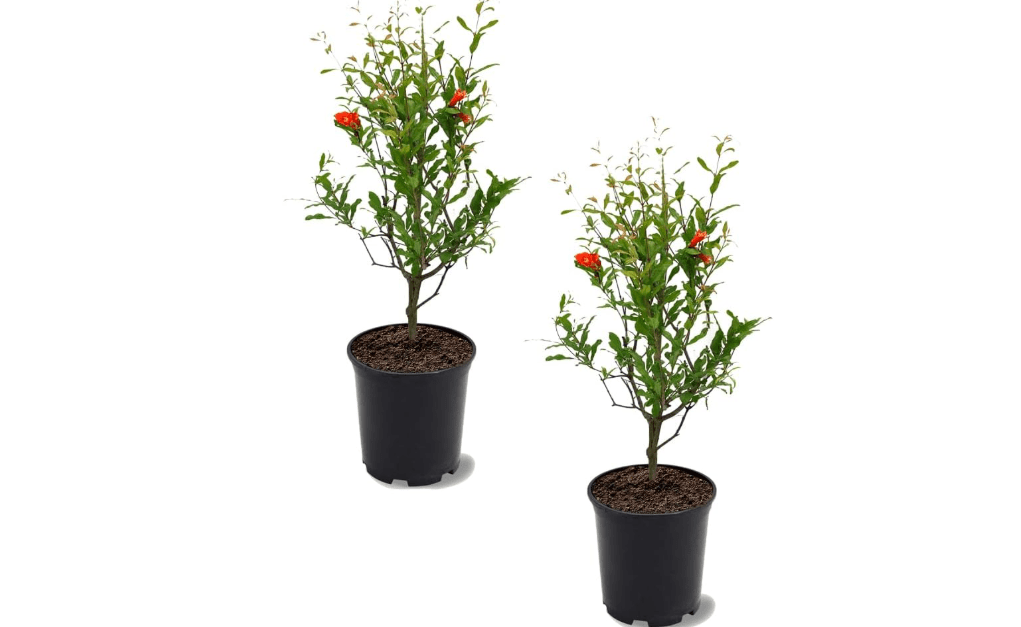
The Parfianka is widely considered the crown jewel of pomegranate cultivars for home gardeners. In numerous taste tests, it consistently ranks as the number one variety due to its perfectly balanced sweet-tart flavor profile and melt-in-your-mouth soft seeds.
-
Price: $52.99
-
Key Features & Benefits: Yields large fruit with a bright red exterior and pinkish arils. The seeds are entirely edible and non-gritty, and the tree is highly productive even in poor soil conditions.
-
Pros: Superior gourmet taste; highly disease resistant; the softest seeds of any red variety.
-
Cons: Can develop a slightly sprawling growth habit, requiring a bit more structural pruning.
-
Amazon Customer Ratings: Buyers frequently praise the soft seeds and report that the plant bounces back quickly from shipping shock.
-
Why it’s a good choice: It delivers premium, dessert-quality fruit straight off the branch that is sweet as wine with a hint of acidity.
-
Ideal for: Culinary enthusiasts, families with children who dislike hard seeds, and growers in Zones 7-10.
3. “Eversweet” Pomegranate Starter Plant
The Best for Coastal & Mild Climates
Not everyone lives in a scorching desert, which is where the Eversweet shines. This unique variety produces incredibly sweet, virtually seedless fruit even in cooler, coastal climates where traditional pomegranates fail to ripen fully.

-
Price: $113.99
-
Key Features & Benefits: Produces very sweet, non-staining clear/pink juice. It requires significantly fewer heat-hours to mature compared to standard varieties.
-
Pros: Guaranteed sweet fruit; absolutely no tart bite; excellent performance for coastal gardeners.
-
Cons: The pale pink arils don’t have the classic dark red look; the skin is thinner and can bruise easily.
-
Amazon Customer Ratings: High satisfaction rates from users who successfully grew fruiting trees in non-desert environments.
-
Why it’s a good choice: It is perfect for people who love pure, unadulterated sweetness without any sour or tart aftertaste.
-
Ideal for: Gardeners in mild coastal areas (like the Pacific Northwest or coastal California) where summer heat is moderate (Zones 8-10).
4. “Salavatski” Pomegranate Tree
The Best Cold-Hardy Variety
For a long time, northern gardeners could only dream of growing pomegranates. Enter the Salavatski (also known as the Russian Red)—the toughest tree on this list. This robust Russian cultivar is capable of surviving freezing temperatures that would easily kill standard varieties.

-
Price:
-
Key Features & Benefits: Can withstand winter temperatures as low as zero degrees Fahrenheit. It produces large, pale-red to orange-reddish fruit with deep red, hard-textured arils.
-
Pros: Unmatched cold tolerance; large fruit size; very vigorous grower.
-
Cons: The seeds are noticeably harder than varieties like the Parfianka.
-
Amazon Customer Ratings: Raves from northern gardeners who finally successfully overwintered and fruited a pomegranate tree.
-
Why it’s a good choice: It pushes the boundaries of where pomegranates can be grown, bringing tropical flair to cooler zones.
-
Ideal for: Growers in USDA Zones 6 and 7 (such as parts of the Midwest or Northeast) who experience harsh, freezing winters.
5. “Nana” Dwarf Pomegranate Tree
The Best for Indoors, Patios & Bonsai
If you live in an apartment or only have a small balcony, you can still grow pomegranates! The ‘Nana’ is a charming, compact miniature tree that produces abundant, trumpet-shaped orange flowers and tiny, golf-ball-sized fruits.

-
Price:
-
Key Features & Benefits: Reaches a maximum height of only 3 to 4 feet. It is an excellent container plant that offers nearly year-round blooming if kept in a warm indoor environment.
-
Pros: Perfect for tiny spaces; highly ornamental; extremely easy to overwinter indoors.
-
Cons: The fruit is very small and mostly decorative (while technically edible, it is very tart).
-
Amazon Customer Ratings: Highly rated for its aesthetic value as a striking houseplant or bonsai subject.
-
Why it’s a good choice: It brings the beauty of a fruiting orchard into an urban setting with minimal maintenance.
-
Ideal for: Apartment dwellers, patio gardeners, and bonsai enthusiasts.
6. “Angel Red” Pomegranate Tree
The Best for High Yields & Early Harvest
If you are eager to harvest and want to beat the autumn frosts, the patented Angel Red is a spectacular choice. This variety is famous for maturing several weeks earlier than the standard “Wonderful” tree and for producing an extraordinarily high volume of bright, vividly red juice.

-
Price:
-
Key Features & Benefits: Ripens in late August to early September. It yields exceptionally juicy fruits with very soft seeds and an incredibly vibrant color that looks stunning in a bowl or photographed for a garden blog or Pinterest board.
-
Pros: Early harvest window; heavy producer; brilliant red juice with a very high liquid content per fruit.
-
Cons: Often carries a higher price tag due to patenting; can be susceptible to fruit splitting if overwatered during the ripening phase.
-
Amazon Customer Ratings: Buyers consistently rave about the striking, vibrant color of both the blossoms and the harvested fruit, as well as the sheer weight of the heavy fruit set.
-
Why it’s a good choice: It maximizes juicing efficiency and provides a stunning, picture-perfect harvest before the weather turns cold.
-
Ideal for: Warm-climate growers (Zones 8-11) who want an early seasonal harvest and a highly photogenic, heavy-yielding tree.
7. “Red Silk” Semi-Dwarf Pomegranate
The Best for Small Yards
The Red Silk is the ultimate middle-ground tree. It naturally maintains a compact footprint while still producing full-sized, delicious fruit with a flavor profile often compared to classic grenadine syrup.

-
Price: $59.87
-
Key Features & Benefits: Grows to a highly manageable 6 to 8 feet tall. Despite its smaller stature, it produces large crops of medium-to-large fruit with an excellent balance of sweetness and tartness.
-
Pros: No ladder needed for harvesting; fits perfectly in tight suburban garden beds or large containers; visually appealing form.
-
Cons: The branch structure can become quite dense, requiring careful thinning to maintain proper airflow and prevent fungal issues.
-
Amazon Customer Ratings: Highly reviewed by buyers who successfully cultivated this variety in large whiskey barrels or along tight property lines.
-
Why it’s a good choice: It delivers full-sized fruit yields without allowing a massive tree to take over your entire yard.
-
Ideal for: Suburban homeowners in Zones 7-10 looking to create an edible landscape or a dense, fruiting privacy hedge.
8. “Kashmir Blend” Pomegranate Tree
The Best for Gourmet & Cooking
For the culinary gardener, the Kashmir Blend is a standout. This unique variety features a complex, slightly spicy, and intense berry flavor that chefs and home cooks absolutely adore for making reductions, marinades, and artisanal pomegranate molasses.

-
Price:
-
Key Features & Benefits: Produces distinct ruby-red arils with an intense depth of flavor. The exterior skin is an attractive, mottled greenish-red, making it a unique addition to the orchard.
-
Pros: Phenomenal, rich flavor profile; unbeatable for culinary use and savory dishes.
-
Cons: The seeds are on the harder side; the fruit’s exterior appearance is less uniformly red, which might surprise first-time growers.
-
Amazon Customer Ratings: Foodies and home chefs frequently leave reviews praising its unique, spicy-tart flavor compared to generic grocery store varieties.
-
Why it’s a good choice: It brings a gourmet, complex flavor to the kitchen that simply cannot be bought in a standard supermarket.
-
Ideal for: Experimental home chefs and culinary gardeners in Zones 8-10.
9. “Ambrosia” Pomegranate Tree
The Best for Largest Fruit Size
If you are looking for bragging rights and show-stopping harvests, the Ambrosia is your tree. This colossal variety is known for yielding some of the largest pomegranates available, often producing massive pale-pink fruits up to three times the size of standard varieties.

-
Price:
-
Key Features & Benefits: Enormous fruit size; very sweet juice with just a hint of tartness; surprisingly soft seeds for such a large fruit.
-
Pros: A true conversation starter; massive yields by weight; deliciously sweet flavor.
-
Cons: The sheer weight of the massive fruit can easily bow and break thin branches if they are not properly pruned and supported.
-
Amazon Customer Ratings: User reviews frequently highlight sheer amazement at the size and weight of the harvested fruit.
-
Why it’s a good choice: It provides the ultimate visual impact for your garden and massive quantities of sweet arils from a single fruit.
-
Ideal for: Enthusiasts in Zones 7-10 who are willing to proactively stake or trellis branches to support heavyweight yields.
10. “Afganski” Pomegranate Tree
The Best for Fast Growth
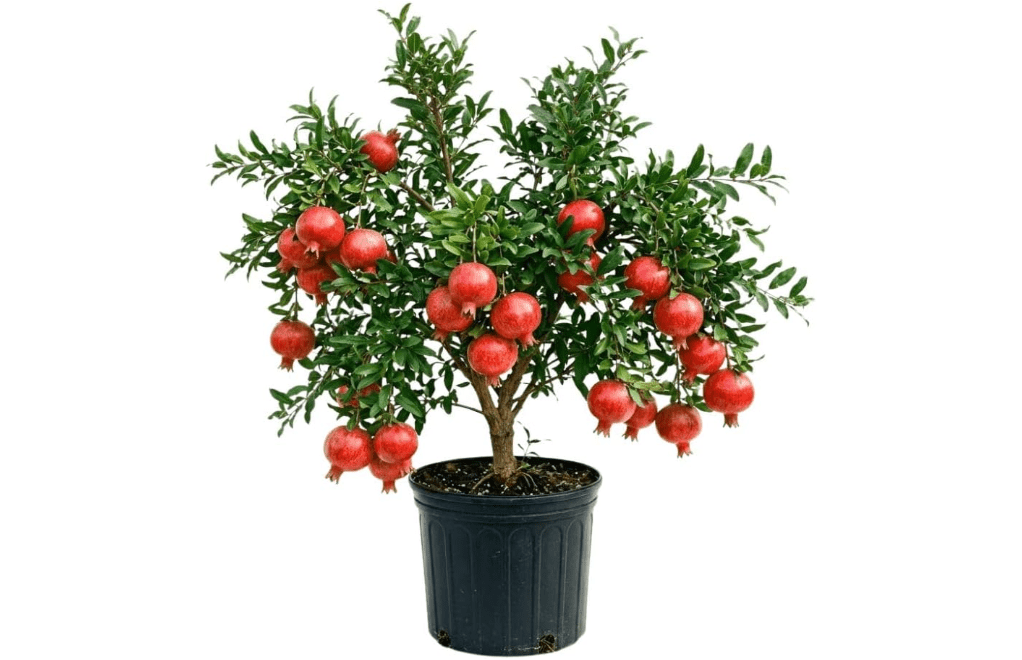
When you want to establish an edible landscape quickly, the Afganski is the undisputed champion. This robust, fast-growing cultivar establishes itself rapidly, offering beautiful dark-red blooms and deeply colored, flavorful fruit in record time.
-
Price:
-
Key Features & Benefits: Boasts a highly vigorous root system that takes hold quickly. Cold hardy down to Zone 7, it produces dark, rich, tart-sweet juice.
-
Pros: Rapid establishment; excellent cold tolerance; high juice yield with intense color.
-
Cons: Because it grows so aggressively, it requires strict, regular pruning to keep the tree manageable and properly shaped.
-
Amazon Customer Ratings: Customers often note their satisfaction with how incredibly fast the tree pushed out new growth after being planted in the ground.
-
Why it’s a good choice: It skips the long waiting period, providing a mature-looking shrub or tree faster than almost any other variety.
-
Ideal for: Impatient landscapers and growers in variable climates (Zones 7-10) who want a hardy, fast-establishing edible ornamental.
V. Expert Tips for Unboxing and Planting Your Amazon Live Tree
To ensure your investment thrives long after the delivery box is opened, follow these critical steps for unboxing and planting your new pomegranate tree:
-
The Unboxing Protocol: Live plants can experience stress during shipping. Immediately upon arrival, unbox your tree in a shaded area. If it arrived bare-root, soak the roots in a bucket of water for 2 to 4 hours to gently rehydrate them before planting.
-
Prioritize Soil Health: Pomegranates are notoriously intolerant of “wet feet” (waterlogged roots). They thrive in loose, well-draining soil. Amending your native soil with perlite or coarse sand can drastically improve drainage. Fostering a healthy soil microbiome with high-quality compost will give your tree the nutrients it needs to establish a robust root system.
-
Sunlight Needs: For optimal fruit production and vibrant blossom colors, plant your tree in a location that receives a minimum of 6 to 8 hours of direct, unfiltered sunlight daily.
-
Watering the First Year: While mature pomegranates are highly drought-tolerant, young, newly shipped plants are not. Establish a deep-watering routine—watering deeply once a week at the base of the plant—to encourage the roots to grow downward rather than shallowly along the surface.
VI. Conclusion & Final Verdict
Growing your own fruit is one of the most rewarding backyard projects you can undertake, and ordering a live plant online has never been easier or more reliable.
To recap our top picks for the best 10 pomegranate tree varieties:
-
For the Best Overall Experience: You cannot go wrong with the classic Wonderful tree for its legendary taste and high yields.
-
For Cold Climates (Zones 6-7): You must choose the Salavatski to survive freezing winter temperatures.
-
For Indoor/Patio Living: The miniature Nana Dwarf is the perfect, beautiful solution for small-space growers.
Don’t wait for the prime planting window to pass! Click through to Amazon using the links above to check current seasonal availability, read the latest customer reviews, and secure your live plant before spring shipping closes.