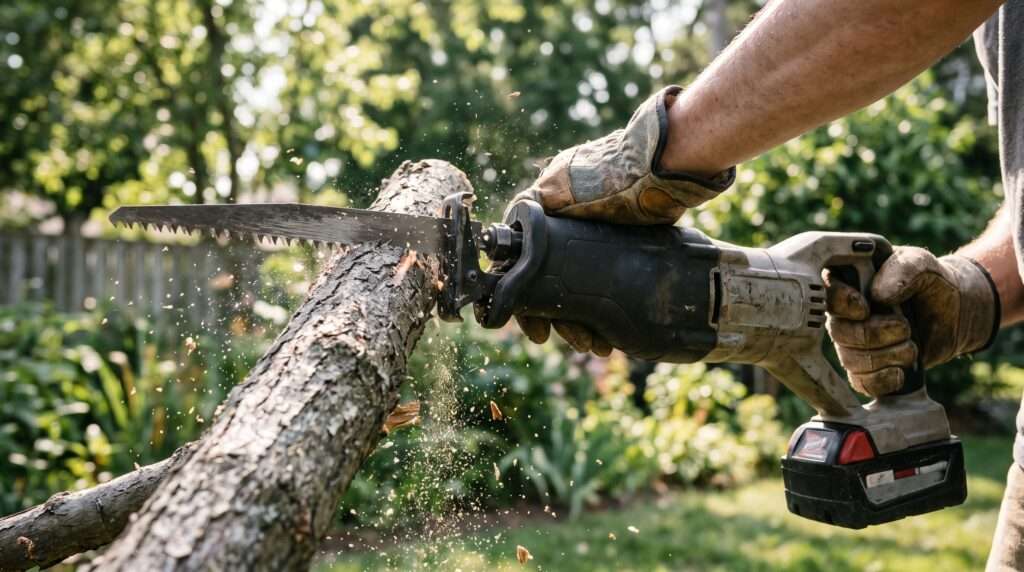
If you have ever tried cutting a live tree branch with a standard construction wood blade, you already know how fast things go wrong. Within seconds, sticky green sap clogs the fine teeth, the blade starts smoking, the saw bucks violently in your hands, and the cut stalls halfway through. Upgrading to one of the best 10 reciprocating saw blades for trees turns that frustrating chore into a fast, controlled cut—without ever needing to fire up a chainsaw.
For everyday yard maintenance, hauling out a chainsaw just to trim overhanging limbs or clear storm debris is often overkill. Chainsaws are heavy, loud, intimidating in tight spaces, and demand constant chain tensioning, sharpening, and bar oil. On the flip side, hacking away at 4-inch branches with a manual pruning saw leaves your arm exhausted before you finish a single tree. A reciprocating saw fitted with a dedicated pruning blade bridges that gap—giving you lightweight, one- or two-handed control with enough aggressive cutting power to slice through wet timber, dense shrubs, and even underground roots.
Of course, not every “wood blade” on the shelf can handle live, sap-heavy wood. To save you from buying flimsy packs that bend or dull on the first limb, we analyzed blade engineering specs alongside thousands of verified Amazon customer reviews to identify the best 10 reciprocating saw blades for trees on the market today. Every pick in this guide was vetted against the factors that matter most outdoors: tooth geometry (Japanese triple-ground, TiCo carbide-tipped, and fleam-ground), coarse TPI ratings (3 to 6 TPI) with deep gullets that clear wet sawdust fast, practical blade lengths (from nimble 6-inch shrub blades to 15-inch root slicers), and universal 1/2-inch shank compatibility across DeWalt, Milwaukee, Ryobi, Makita, and Bosch saws.
⚡ Quick Verdict: Our Top 3 Picks at a Glance
Best Overall: Diablo 9″ Carbide Pruning & Clean Wood Blade (DS0903CP3) — Built with carbide teeth that outlast standard blades by up to 50x, chewing through thick green limbs and dirty roots without dulling.
Best Value: EZARC 9-Inch Japanese Teeth Pruning Blades (5-Pack) — Razor-sharp, triple-ground Chrome Vanadium teeth that deliver fast, clean, tree-friendly cuts for just a few dollars per blade.
Best for Tree Roots & Stumps: EZARC 15-Inch Japanese Teeth Reciprocating Saw Blades (3-Pack) — Extra-long 15-inch reach engineered to plunge deep into soil and sever stubborn underground roots where chainsaws cannot safely go.
Quick Comparison Table: Best 10 Reciprocating Saw Blades for Trees
How We Chose the Best Reciprocating Saw Blades for Trees
Cutting live trees is mechanically very different from cutting kiln-dried 2×4 lumber. Green wood is dense, fibrous, and loaded with moisture and sap. To ensure every recommendation in this guide actually performs in the yard, we evaluated dozens of top-selling blades against four strict criteria:
-
Tooth Geometry & Gullet Depth: Fine-toothed blades (10+ TPI) immediately gum up in wet wood. We prioritized coarse 3 to 6 TPI blades with deep, wide gullets—the valleys between teeth—that scoop out wet wood chips before they can bind the blade.
-
Blade Material & Longevity: We tested and compared four core metallurgies: Carbide-tipped (unbeatable lifespan and dirt resistance), Chrome Vanadium / CrV (holds a razor-sharp Japanese tooth edge), Bi-Metal (survives accidental nails, fencing, or stones), and High Carbon Steel / HCS (affordable and flexible for light pruning).
-
Universal Compatibility: Every blade on this list uses the standard 1/2-inch universal tang (shank), meaning they lock seamlessly into DeWalt, Milwaukee, Ryobi, Makita, Bosch, Craftsman, and Bauer reciprocating saws.
-
Verified Buyer Sentiment: We filtered thousands of real-world Amazon reviews to spot long-term failure points—specifically eliminating blades known for snapping at the tang, losing teeth on hardwoods, or whipping uncontrollably at high speeds.
In-Depth Reviews: The Best 10 Reciprocating Saw Blades for Trees
1. Diablo 9″ Carbide Pruning & Clean Wood Blade (DS0903CP3) — Best Overall
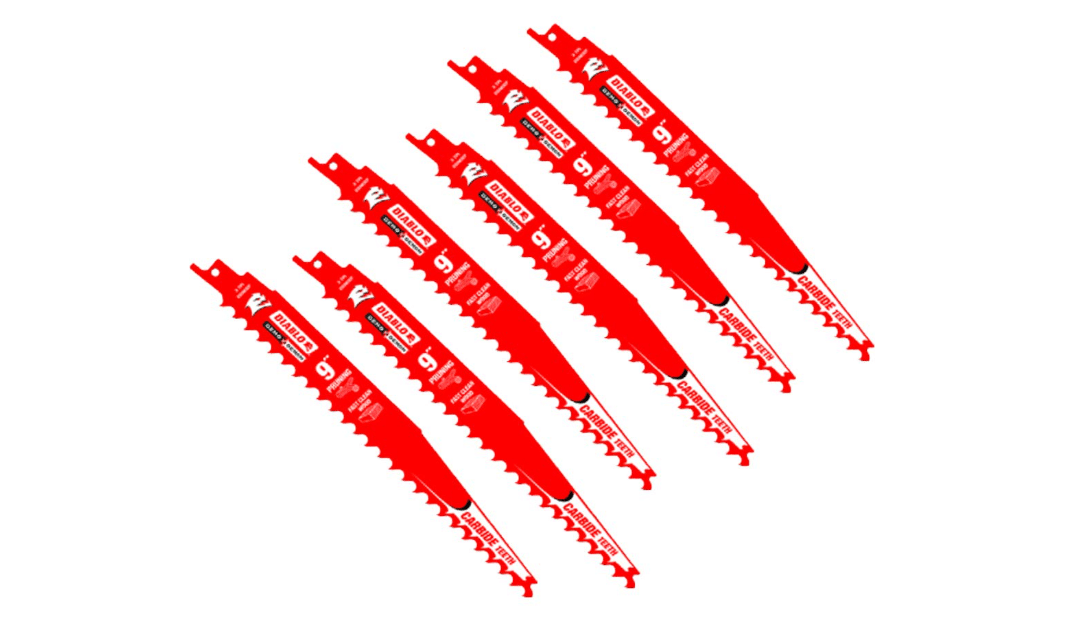
If you only keep one pack of pruning blades in your garage, make it the Diablo 9″ Carbide Pruning & Clean Wood Blade (DS0903CP3). While most pruning blades are stamped from soft carbon steel that dulls after a single afternoon of heavy oak or maple limbs, Diablo welds industrial-grade TiCo carbide tips directly onto an oversized, reinforced blade body. The result is a blade that cuts with the ferocity of a mini-chainsaw and lasts up to 50 times longer than standard pruning blades.
-
Price:
-
Key Features & Benefits:
-
3 TPI Aggressive Carbide Teeth: Massive tooth spacing takes huge bites out of dense hardwoods and wet sapwood without bogging down.
-
Deep Chip-Clearing Gullets: Rapidly ejects wet, stringy sawdust so the blade stays cool and never binds mid-cut.
-
Perma-SHIELD Non-Stick Coating: Reduces friction, heat buildup, and sticky pine/maple sap adhesion.
-
Oversized Rigid Body: Resists flexing and bending, giving you straighter, more controlled cuts on thick branches.
-
-
Pros:
-
Unmatched lifespan—one blade easily outlasts an entire 5-pack of standard HCS blades.
-
Shrugs off dirt and grit when trimming low branches or surface roots.
-
Cuts significantly faster than traditional fleam-ground blades.
-
-
Cons:
-
Higher upfront cost per blade (~$8 each).
-
Leaves a slightly rougher cut surface than fine Japanese-tooth blades.
-
-
Amazon Customer Ratings & Reviews: Consistently holds a stellar 4.8 out of 5 stars across thousands of reviews. Homeowners and professional landscapers repeatedly note that they stopped pulling out their gas chainsaws for branches under 6 inches after switching to this Diablo carbide blade.
-
Why It’s a Good Choice for Cutting Trees: Tree work is unpredictable—you might start by pruning a clean maple limb and end up severing a dirty surface root. Carbide teeth handle both effortlessly without losing their edge.
-
Ideal Use Case / Who Should Buy It: Homeowners, landscapers, and arborists who want the fastest, most durable “buy-it-once” blade for heavy pruning, storm cleanup, and root cutting.
2. EZARC 9-Inch Japanese Teeth Pruning Blades (5-Pack) — Best Value
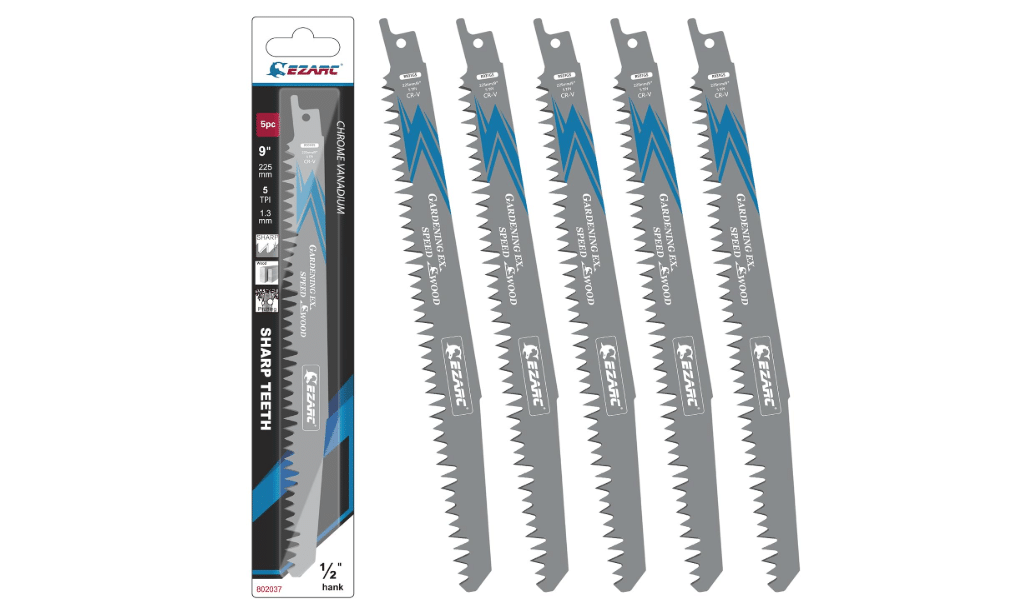
The EZARC 9-Inch Japanese Teeth Pruning Blades have become a runaway Amazon favorite for one simple reason: they borrow the razor-sharp, triple-ground tooth geometry of high-end Japanese hand saws (like Silky) and put it on a reciprocating saw. Made from heat-treated Chrome Vanadium (CrV) steel, these blades slice through live wood fibers rather than tearing them—resulting in blazing-fast cuts with noticeably less vibration in your hands.
-
Price: $10.38
-
Key Features & Benefits:
-
Triple-Ground Japanese Teeth: Three-sided bevels act like miniature knives, shearing cleanly through green wood on both the push and pull strokes.
-
Chrome Vanadium (CrV) Steel: Significantly harder and more wear-resistant than standard High Carbon Steel (HCS) pruning blades.
-
Arc-Edge Profile: Subtle curved cutting edge optimizes the attack angle on round tree branches.
-
5-Pack Value: Costs roughly $3 per blade, making it painless to swap in a fresh blade whenever needed.
-
-
Pros:
-
Leaves remarkably clean, smooth cuts that help live fruit and ornamental trees heal faster.
-
Exceptional price-to-performance ratio.
-
Very low vibration, even on smaller cordless reciprocating saws.
-
-
Cons:
-
CrV steel will dull quickly if you accidentally hit rocks, nails, or abrasive soil.
-
Slightly more flexible than Diablo’s heavy-duty carbide body.
-
-
Amazon Customer Ratings & Reviews: Boasts a 4.7 out of 5-star average with thousands of verified ratings. Reviewers frequently highlight how smoothly these blades glide through live apple, oak, and crape myrtle branches “like butter”.
-
Why It’s a Good Choice for Cutting Trees: When pruning live trees you want to keep healthy, ragged tears invite disease and pests. The Japanese tooth profile produces a clean, arborist-grade cut in seconds.
-
Ideal Use Case / Who Should Buy It: Budget-conscious homeowners, orchard growers, and backyard gardeners doing seasonal tree trimming and firewood prep.
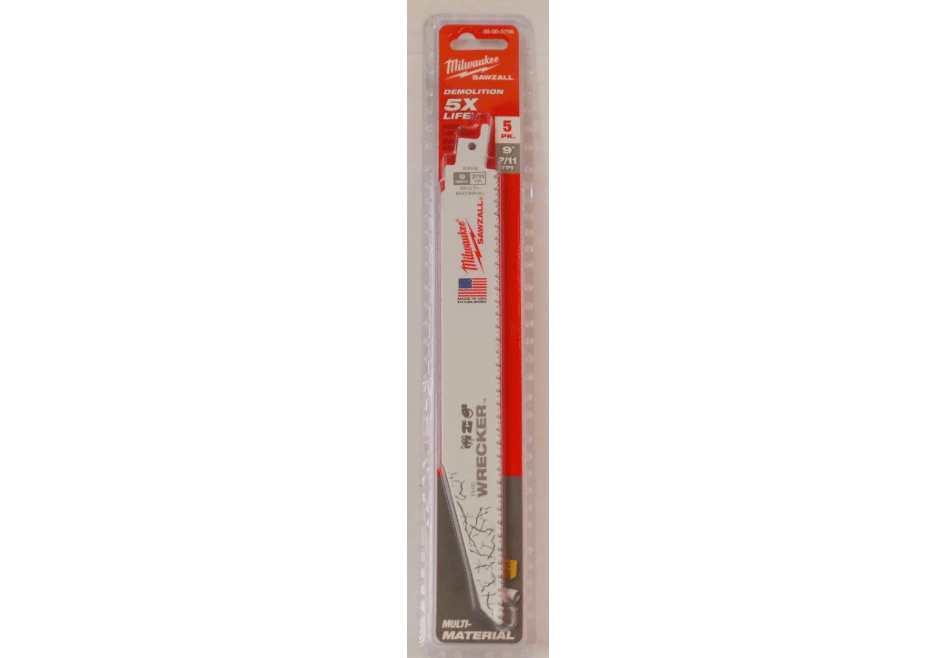
3. Milwaukee 9″ 5 TPI Pruning SAWZALL Blades (48-00-1301) — Best for Heavy-Duty & Wet Wood
Milwaukee invented the Sawzall, and their dedicated 9″ 5 TPI Pruning Blades (48-00-1301) show that legacy in action. Engineered specifically for outdoor yard work rather than indoor framing, these blades feature aggressive fleam-ground teeth designed to cut in both directions. If you are tackling sap-heavy pines, wet post-rain limbs, or dense hardwood brush, this blade clears chips relentlessly without stalling.
-
Price:
-
Key Features & Benefits:
-
5 TPI Fleam-Ground Teeth: Sharp, symmetrical teeth bite aggressively on both the forward and return stroke for faster pruning.
-
Deep Gullet Design: Prevents wet, gummy sawdust from packing between the teeth.
-
Stiff 0.049″ Blade Thickness: Offers a solid balance of rigidity for straight cuts and enough flex to avoid snapping in tight spots.
-
1/2-Inch Universal Tang: Fits Milwaukee M18/M12 Hackzalls as well as all competing reciprocating saws.
-
-
Pros:
-
Fast, smooth bi-directional cutting in wet, green timber.
-
Widely available and consistently high quality control.
-
Resists clogging better than standard 6 TPI wood blades.
-
-
Cons:
-
Slightly pricier per pack than budget brands like EZARC or WORKPRO.
-
High Carbon Steel construction isn’t meant for nail-embedded wood or rocky dirt.
-
-
Amazon Customer Ratings & Reviews: Holds a strong 4.7 to 4.8 out of 5 stars across major tool retailers. Users love pairing these with compact one-handed saws (like the Milwaukee Hackzall) for overhead limb trimming.
-
Why It’s a Good Choice for Cutting Trees: It is purpose-built for the exact moisture and sap conditions found in live backyard trees, delivering predictable, low-chatter control.
-
Ideal Use Case / Who Should Buy It: Homeowners and landscapers who already trust Milwaukee accessories and want a dependable, fast-cutting blade for regular green-wood maintenance.
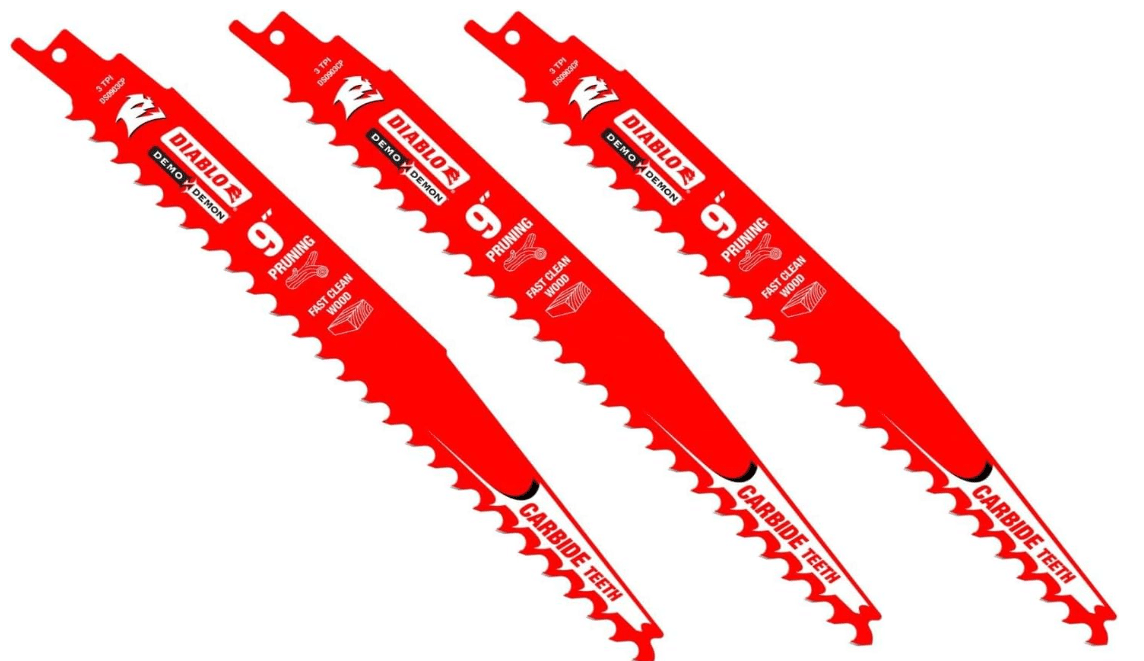
4. Diablo 12″ Carbide Teeth Pruning Blade (DS1203CP3) — Best for Thick Limbs & Small Tree Felling
When a 9-inch blade isn’t long enough to clear the diameter of a fallen oak limb or a thick backyard sapling, stepping up to the Diablo 12″ Carbide Teeth Pruning Blade (DS1203CP3) gives you chainsaw-level reach with reciprocating-saw safety. Built with the same industrial TiCo carbide teeth and Perma-SHIELD non-stick coating as its 9-inch sibling, this 12-inch powerhouse lets you cut through branches up to 8 to 10 inches thick without the blade binding or stalling mid-stroke.
-
Price: $26.97
-
Key Features & Benefits:
-
12-Inch Extended Reach: Provides ample stroke clearance for thick trunks, heavy storm fall, and deep pruning cuts.
-
3 TPI Carbide-Tipped Teeth: Delivers extreme cutting speed and up to 50x longer cutting life compared to standard carbon steel blades.
-
Reinforced Oversized Blade Body: Minimizes blade whip and flex—a common hazard with cheaper, thinner 12-inch blades.
-
Non-Stick Perma-SHIELD Coating: Protects against heat, gumming, and corrosion from wet wood sap.
-
-
Pros:
-
Easily replaces a chainsaw for bucking medium-sized logs and clearing heavy storm debris.
-
Stays straight and rigid even under heavy downward pressure.
-
Cuts through dirty bark and soil-caked logs without instantly dulling.
-
-
Cons:
-
Premium price per blade (~$10–$12 each).
-
Requires a full-size, high-torque corded or 18V/20V brushless saw to perform at its best (compact 12V saws may bog down).
-
-
Amazon Customer Ratings & Reviews: Maintains an impressive 4.8 out of 5 stars across thousands of buyer reviews. Property owners frequently share stories of felling 6- to 8-inch invasive trees and bucking entire cords of firewood on a single blade.
-
Why It’s a Good Choice for Cutting Trees: Longer blades normally suffer from violent whipping when they hit dense hardwood knots. Diablo’s thick, stabilized body keeps the cut straight while the 3 TPI carbide teeth tear through green timber effortlessly.
-
Ideal Use Case / Who Should Buy It: Homeowners with mature trees, wooded lots, or frequent storm cleanup who want maximum cutting capacity without maintaining a gas chainsaw.
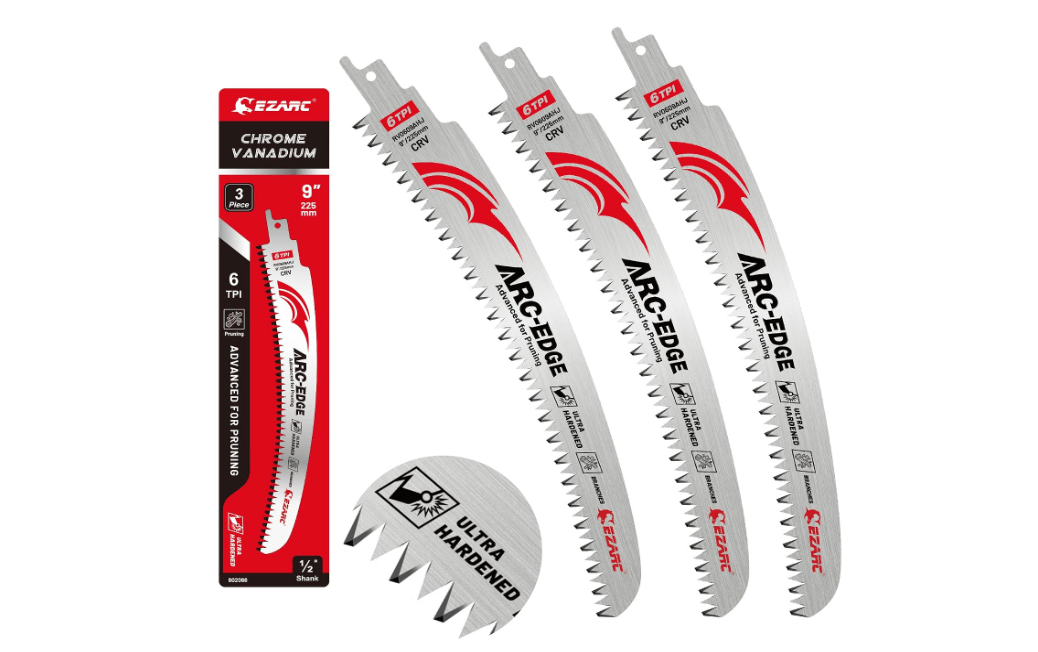
5. EZARC 15-Inch Japanese Teeth Reciprocating Saw Blades (3-Pack) — Best for Deep Tree Roots & Stumps
Digging out an old tree stump, overgrown bamboo, or a stubborn shrub root ball is one of the most grueling yard projects you can tackle. A chainsaw is completely unusable in dirt—one second in the soil ruins the chain. The EZARC 15-Inch Japanese Teeth Reciprocating Saw Blade solves this problem completely. Its massive 15-inch length lets you plunge directly into the soil around a root ball and sever thick underground roots in seconds.
-
Price: $25.97
-
Key Features & Benefits:
-
15-Inch Extra-Long Profile: Reaches deep beneath stumps and wide across thick horizontal logs (handles wood up to 12 inches in diameter).
-
6 TPI Triple-Ground Japanese Teeth: Aggressive, three-sided ground teeth slice rapidly through fibrous, wet underground roots.
-
Heat-Treated Chrome Vanadium (CrV) Steel: Tough enough to handle root excavation while remaining affordable enough to treat as a sacrificial dirt-cutting blade.
-
Deep Gullets: Clears wet soil and root fibers simultaneously so the blade doesn’t lock up underground.
-
-
Pros:
-
Unbeatable reach for stump removal, bush excavation, and oversized logs.
-
Saves hours of backbreaking work with a mattock, axe, or trenching shovel.
-
Budget-friendly 3-pack means you won’t hesitate to plunge it straight into the dirt.
-
-
Cons:
-
Because it is 15 inches long, it can bend or whip if you don’t keep the saw shoe planted or if you hit a buried rock.
-
CrV steel will eventually dull in rocky, abrasive soil (though it lasts far longer than cheap HCS blades).
-
-
Amazon Customer Ratings & Reviews: Consistently rated 4.6 to 4.7 out of 5 stars. Countless reviewers call this blade a “lifesaver” for removing deeply rooted holly bushes, palm roots, and backyard tree stumps in a fraction of the usual time.
-
Why It’s a Good Choice for Cutting Trees: Half of a tree’s mass is underground. When you need to remove a tree or shrub completely, a 15-inch pruning blade is the safest, fastest tool for severing taproots and lateral roots.
-
Ideal Use Case / Who Should Buy It: DIYers and landscapers digging out stumps, removing established shrubs, or clearing thick fallen timber.
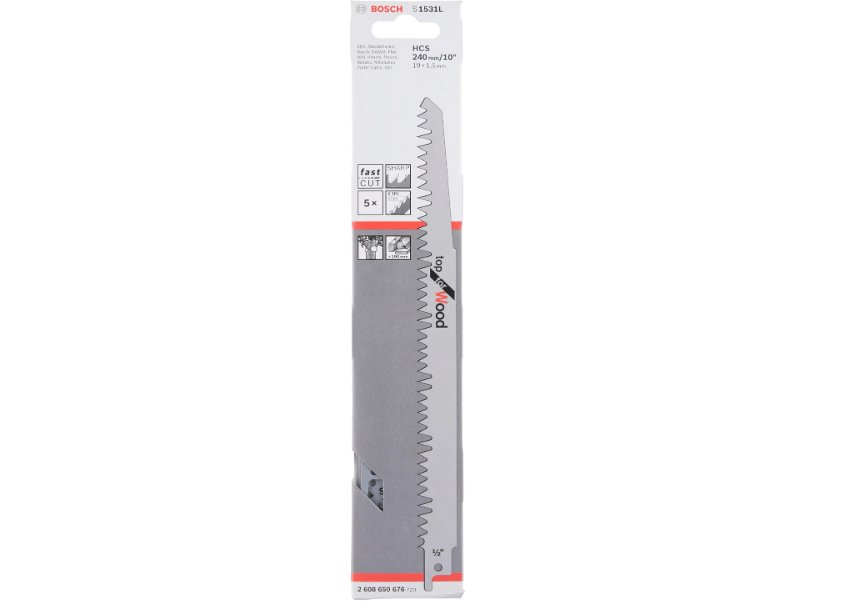
6. Bosch S1531L 9-Inch Top for Wood Pruning Blades (5-Pack) — Best for Clean, Fast Cuts in Green Wood
Swiss-engineered for precision, the Bosch S1531L Top for Wood Pruning Blade is a staple among European arborists and American gardeners alike. Measuring roughly 9.5 inches (240mm) long with 5 TPI pointed ground teeth, this High Carbon Steel (HCS) blade is purpose-built for fast, clean, coarse cuts in live, green wood up to 7.5 inches (190mm) thick.
-
Price: $21.01
-
Key Features & Benefits:
-
Pointed, Ground 5 TPI Teeth: Side-set and ground specifically to shear through live wood fibers cleanly without tearing bark.
-
9.5-Inch Working Length: Gives you slightly more reach than standard 9-inch blades without sacrificing stiffness.
-
High Carbon Steel (HCS) Construction: Engineered for high-speed cutting in softwood, green wood, and damp branches.
-
Swiss-Made Quality Control: Consistent tooth sharpness and reliable tang fitment across every blade in the pack.
-
-
Pros:
-
Very affordable—often under $3 per blade.
-
Delivers remarkably smooth, controlled cuts on live ornamental and fruit trees.
-
Low vibration makes it comfortable for extended pruning sessions.
-
-
Cons:
-
Pure HCS steel dulls faster than carbide or bi-metal if used on dry, seasoned hardwood or dirty wood.
-
Not suitable for nail-embedded lumber or rocky root cutting.
-
-
Amazon Customer Ratings & Reviews: Earns a strong 4.7 out of 5 stars from thousands of buyers who praise its “effortless” slicing action and dependable Bosch build quality.
-
Why It’s a Good Choice for Cutting Trees: If your primary goal is healthy, routine tree pruning rather than rough demolition, the Bosch S1531L produces clean cuts that promote rapid tree healing.
-
Ideal Use Case / Who Should Buy It: Home gardeners, orchard owners, and landscapers who prioritize clean, affordable green-wood pruning.
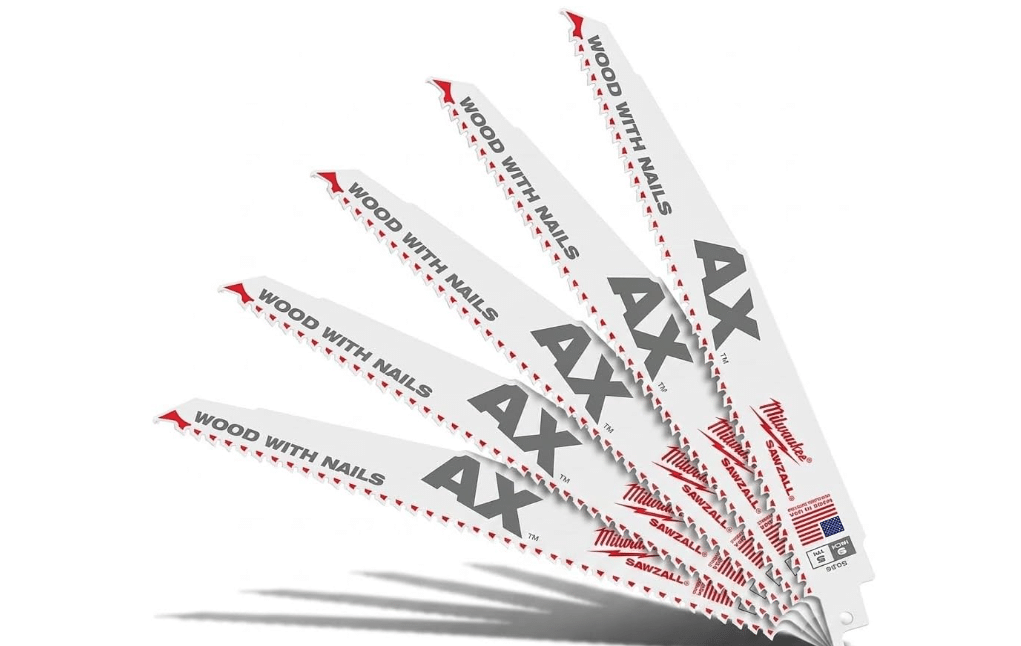
7. Milwaukee THE AX 9″ 5 TPI Nail-Embedded Wood Blades (48-00-5026) — Best for Storm Cleanup & Mixed Wood
While technically marketed as a demolition blade, Milwaukee THE AX (48-00-5026) has earned a massive cult following for rough outdoor tree work—specifically post-storm cleanup and overgrown property clearing. When a storm knocks a tree onto a wooden fence, deck, or old wire trellis, standard pruning blades will snap or strip their teeth the moment they touch a hidden nail or fence staple. THE AX powers straight through wood, roots, and embedded metal without flinching.
-
Price: $21.47
-
Key Features & Benefits:
-
Bi-Metal Construction with Matrix II Teeth: Combines a flexible, shatter-resistant body with hardened teeth that survive nails, wire, and gravel.
-
Extra-Thick 0.062-Inch Body: Virtually eliminates bending and twisting during aggressive, awkward cuts.
-
Fang Tip Design: Allows for fast plunge cutting directly into dense brush piles or tangled branches.
-
Nail Guard Tooth Geometry: Protects teeth from fracturing upon unexpected metal or stone impact.
-
-
Pros:
-
Nearly indestructible—won’t bend or snap under heavy pressure.
-
Handles dirty bark, rocky soil, and fence-entangled trees effortlessly.
-
Doubles as a top-tier indoor renovation and demolition blade.
-
-
Cons:
-
Cuts slightly slower in pure, wet green wood than a dedicated Japanese-tooth blade.
-
Leaves a rougher, demolition-style cut edge.
-
-
Amazon Customer Ratings & Reviews: One of the highest-rated blades on Amazon with a 4.8 out of 5-star average across thousands of reviews. Contractors and homeowners alike praise its sheer toughness in messy yard cleanups.
-
Why It’s a Good Choice for Cutting Trees: Real-world tree cleanup isn’t always clean. For deadfall, rotten trunks, fence-line brush, and rocky roots, bi-metal toughness beats delicate sharpness every time.
-
Ideal Use Case / Who Should Buy It: Homeowners clearing storm damage, reclaiming overgrown fence lines, or wanting a heavy-duty blade that works both in the yard and the workshop.
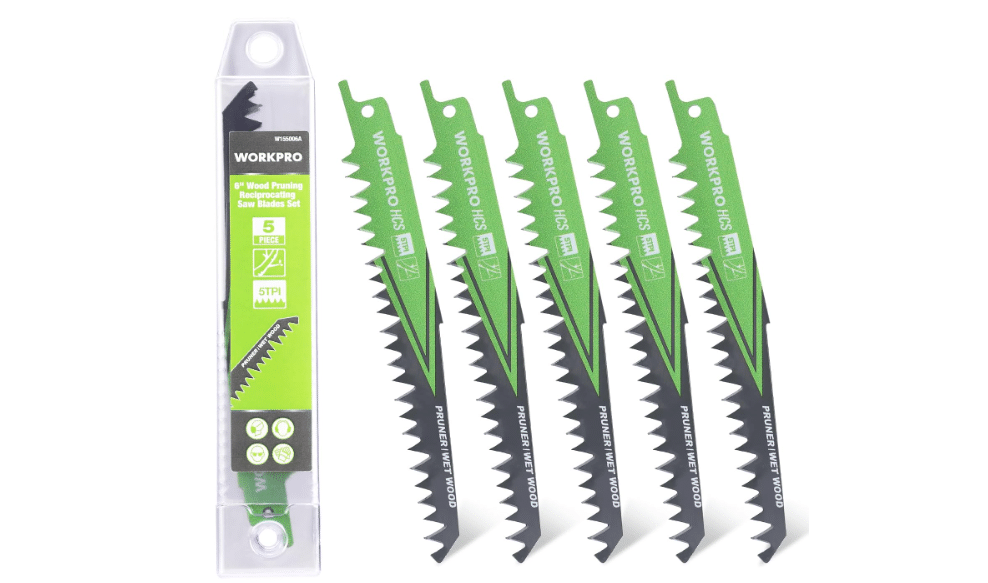
8. WORKPRO 6-Inch Pruning Reciprocating Saw Blade Set (5-Pack) — Best Compact Blade for Tight Spaces
Long 9- and 12-inch blades are great for thick limbs, but they are a liability when you are reaching inside a dense rose bush, crape myrtle, or tight hedge canopy—the extended tip can easily scar or accidentally slice healthy neighboring branches. The WORKPRO 6-Inch Pruning Blade Set gives you surgical, zero-whip control in cramped spaces, especially when paired with a compact 12V or 18V one-handed reciprocating saw.
-
Price: $7.19
-
Key Features & Benefits:
-
Compact 6-Inch Length: Maximizes maneuverability inside tight shrubs, hedges, and dense tree canopies.
-
5 TPI Aggressive Pruning Teeth: Coarse enough to clear wet sap quickly on branches up to 3–4 inches thick.
-
High Carbon Steel (HCS): Lightweight, flexible, and sharp out of the package for light-to-medium yard work.
-
Universal 1/2-Inch Shank: Fits mini one-handed saws (like DeWalt Atomic, Milwaukee M12 Hackzall, and Ryobi One+) as well as full-size models.
-
-
Pros:
-
Zero blade whip—extremely easy to control with one hand.
-
Ultra-affordable 5-pack.
-
Compact enough to toss in a camping pack or garden tote.
-
-
Cons:
-
Strictly limited to smaller branches (under 4 inches in diameter).
-
HCS teeth wear down faster than carbide or CrV on dense hardwoods.
-
-
Amazon Customer Ratings & Reviews: Holds a solid 4.6 out of 5 stars, with gardeners and campers praising it as an ideal, inexpensive companion for compact cordless saws.
-
Why It’s a Good Choice for Cutting Trees: Prevents accidental collateral damage when selectively pruning young trees, fruit tree suckers, and thick ornamental shrubs.
-
Ideal Use Case / Who Should Buy It: Owners of compact one-handed reciprocating saws, campers cutting kindling, and gardeners maintaining dense bushes and saplings.
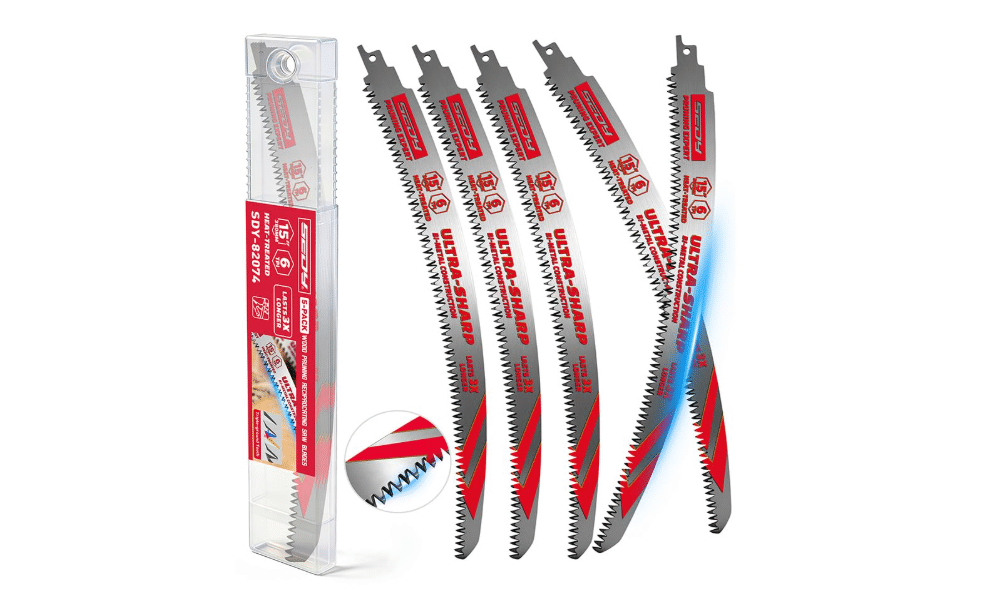
9. EZARC 12-Inch Japanese Teeth Reciprocating Saw Blades (3-Pack) — Best Long-Reach Budget Option
If you love the cutting capacity of a 12-inch blade for thick limbs and firewood but don’t want to spend $30+ on Diablo’s carbide version, the EZARC 12-Inch Japanese Teeth 3-Pack hits the sweet spot. It delivers the same razor-sharp, triple-ground Chrome Vanadium cutting action as EZARC’s 9-inch bestseller, stretched to a full 12 inches for tackling branches up to 8–9 inches wide at roughly half the price of carbide.
-
Price:
-
Key Features & Benefits:
-
12-Inch Chrome Vanadium (CrV) Body: Polished, rust-resistant finish glides smoothly through wet timber.
-
6 TPI Triple-Ground Japanese Teeth: Delivers fast, low-vibration cuts with a noticeably cleaner finish than 3 TPI carbide blades.
-
Deep Chip-Clearing Gullets: Keeps wet sawdust moving out of the kerf on deep cuts.
-
3-Pack Convenience: Gives you multiple backups for big weekend yard projects without breaking the bank.
-
-
Pros:
-
Outstanding reach-to-price value (~$5 per blade).
-
Cuts green wood and wet firewood rapidly with minimal arm fatigue.
-
Cleaner cut surface than coarse demolition or carbide blades.
-
-
Cons:
-
More prone to bending than Diablo’s heavy-gauge 12-inch carbide blade if forced through tight knots.
-
Avoid contact with rocks, dirt, or metal to preserve the CrV edge.
-
-
Amazon Customer Ratings & Reviews: Consistently earns 4.7 out of 5 stars, with buyers frequently noting that it outperforms much more expensive big-box store blades on green wood.
-
Why It’s a Good Choice for Cutting Trees: Gives occasional yard workers the reach to handle major limbs and small fallen trees cleanly without paying a premium for carbide longevity they may not need.
-
Ideal Use Case / Who Should Buy It: Homeowners who need a 12-inch blade for annual tree trimming, storm cleanup, or firewood bucking on a budget.
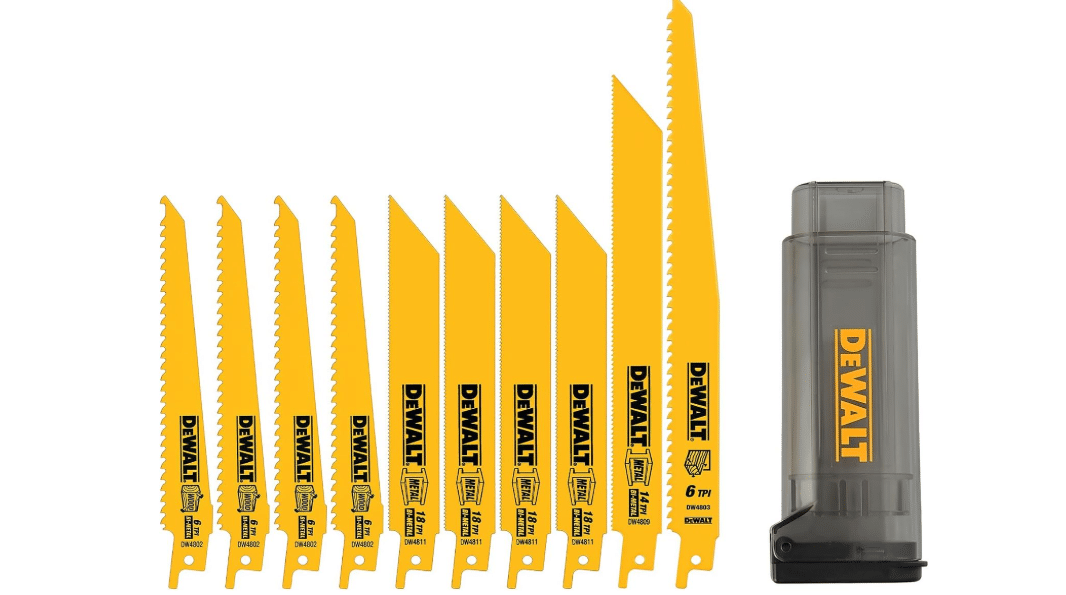
10. DEWALT 10-Piece Reciprocating Saw Blade Combo Set (DW4898) — Best Multi-Purpose Kit for Homeowners
Not everyone wants to buy a specialized pack of blades exclusively for trees. If you just bought your first reciprocating saw and want one organized kit that handles backyard tree branches and everyday indoor DIY projects (like cutting PVC pipe, old lumber, or rusty bolts), the DEWALT 10-Piece Reciprocating Saw Blade Combo Set (DW4898) is the smartest all-in-one starter pack on Amazon.
-
Price: $14.47
-
Key Features & Benefits:
-
Bi-Metal Construction: Tough, shatter-resistant blades designed to flex without breaking.
-
Includes 6 TPI Wood-Cutting Blades: Features dedicated 6-inch and 9-inch coarse wood blades capable of slicing through dry and green tree limbs.
-
Patented ToughCase Storage: Keeps all 10 blades organized, dry, and safe from dulling in your toolbox.
-
Multi-Material Versatility: Also includes 10 TPI, 14 TPI, and 18 TPI blades for metal, plastic, and general demolition.
-
-
Pros:
-
Covers light-to-medium tree trimming plus virtually every household DIY task.
-
Durable bi-metal teeth handle occasional nails or dry, dead wood easily.
-
Comes with a sturdy, reusable storage case.
-
-
Cons:
-
Not a dedicated pruning pack—only a portion of the 10 blades are meant for tree limbs.
-
6 TPI bi-metal blades cut slightly slower in wet, sappy green wood than dedicated 3–5 TPI Japanese-tooth or carbide pruning blades.
-
-
Amazon Customer Ratings & Reviews: A perennial Amazon bestseller holding 4.8 out of 5 stars across tens of thousands of reviews, loved for its reliability and handy ToughCase.
-
Why It’s a Good Choice for Cutting Trees: Gives casual homeowners durable 6 TPI wood blades ready for occasional fallen branches without requiring a separate specialized purchase.
-
Ideal Use Case / Who Should Buy It: First-time reciprocating saw owners and general DIYers who want one versatile kit for light yard work and home repairs.
Comprehensive Buyer’s Guide: How to Choose the Right Reciprocating Saw Blade for Trees
Picking the right blade comes down to matching four technical specs to the actual wood in your yard. Get these right, and even a modest cordless saw will slice through limbs effortlessly.
1. TPI (Teeth Per Inch) Explained
TPI measures how many teeth sit in a single inch of blade. For live trees and wet wood, fewer teeth are always better.
-
3 to 5 TPI (The Sweet Spot): Coarse teeth create deep, wide gullets (the valleys between teeth) that scoop out wet, sticky sawdust before it can pack up and bind the blade. Choose 3 TPI for maximum speed on thick limbs and 5 TPI for slightly smoother pruning cuts.
-
6 TPI: A great middle ground for mixed green wood, dry firewood, and Japanese-tooth blades.
-
10+ TPI (Avoid for Trees): Fine-toothed blades designed for framing lumber or metal will immediately clog with sap, overheat, and burn the wood.
2. Blade Material Breakdown
The steel on the package determines both cutting speed and how long the blade survives outdoor abuse:
-
Carbide-Tipped (Best Overall Lifespan): Industrial carbide tips are welded onto a steel body. They cost more upfront but last up to 50x longer, power through dense hardwoods, and survive dirt and grit without instantly dulling.
-
Chrome Vanadium / CrV (Best for Clean Green Cuts): Harder and more edge-retentive than standard carbon steel. Used in most Japanese triple-ground pruning blades for fast, low-vibration cuts that help live trees heal cleanly.
-
Bi-Metal (Best for Storm Cleanup & Mixed Debris): Combines a flexible body with hardened teeth. If you are cutting fallen branches tangled in old fencing, wire, or hidden nails, bi-metal won’t snap or strip its teeth.
-
High Carbon Steel / HCS (Best Budget Option): Soft, flexible, and inexpensive. Ideal for occasional, clean green-wood trimming, though it dulls quickly in dry hardwood or soil.
3. Choosing the Right Blade Length
A simple rule of thumb: choose a blade at least 2 to 3 inches longer than the diameter of the branch you are cutting. This ensures the blade tip stays outside the far side of the limb during the full reciprocating stroke, preventing violent kickback.
-
6-Inch Blades: Best for dense shrubs, hedges, saplings, and tight canopies (branches under 3–4 inches).
-
9-Inch Blades: The all-around sweet spot for 90% of backyard pruning (branches up to 6 inches).
-
12-Inch Blades: Built for thick limbs, small tree felling, and bucking firewood (branches up to 8–9 inches).
-
15-Inch Blades: Specialty length for plunging into soil to sever deep underground roots and stumps.
4. Shank Compatibility
Virtually every modern reciprocating saw—including DeWalt, Milwaukee, Ryobi, Makita, Bosch, Craftsman, Ridgid, and Bauer—uses the 1/2-inch universal shank (tang). Every blade on our list features this universal fit, so you can mix and match brands freely regardless of which saw you own.
Pro Tips for Cutting Trees with a Reciprocating Saw
Even the sharpest blade can bend or bind if used with the wrong technique. Follow these four habits to get cleaner cuts and longer blade life:
-
Keep the Pivoting Shoe Planted Firmly: Always press the metal shoe (foot) of the saw tightly against the tree branch before pulling the trigger. If there is a gap between the shoe and the wood, the branch will shake violently with the blade instead of being cut—causing arm fatigue and bent blades.
-
Use the 3-Cut Pruning Method on Heavy Limbs: Never make a single top-down cut on a heavy branch, or its weight will snap the wood halfway through and tear a long strip of bark down the tree trunk.
-
Make a shallow undercut about 6–12 inches out from the trunk (a quarter of the way through).
-
Make a top cut slightly further out from the undercut to drop the heavy weight of the limb safely.
-
Make your final clean cut just outside the branch collar (the swollen ring where the limb meets the trunk).
-
-
Let the Blade Do the Work: Avoid leaning your full body weight onto the saw. Excessive downward force overheats the teeth, drains cordless batteries twice as fast, and causes long blades to bow inside the cut.
-
Clean Sap Off After Use: Pine, maple, and fruit tree sap dries like glue, trapping moisture against the steel and causing rust. Wipe your blades down with a rag dampened with mineral spirits, rubbing alcohol, or WD-40 after a big pruning session to keep them gliding smoothly.
Frequently Asked Questions (FAQs)
Can a reciprocating saw replace a chainsaw for cutting trees?
For everyday backyard maintenance—trimming limbs up to 6–8 inches thick, clearing brush, and cutting roots—yes. A reciprocating saw is lighter, quieter, safer in tight spaces, and requires zero bar oil or chain sharpening. However, for felling large mature trees or bucking thick hardwood trunks over 10 inches wide, a dedicated chainsaw is still faster and more practical.
What is the best TPI reciprocating saw blade for cutting tree branches?
The ideal range is 3 to 6 TPI. A 3 TPI carbide blade delivers the fastest, most aggressive cut through thick limbs, while a 5 to 6 TPI Japanese-tooth or fleam-ground blade offers a slightly smoother, cleaner finish on live branches.
Can I use a regular wood blade to cut live tree limbs?
You can in a pinch on very small dry twigs, but it is not recommended for live branches. Standard construction wood blades (typically 6–10 TPI with shallow gullets) are designed for dry dimensional lumber. In wet, sappy green wood, they clog almost instantly, overheat, and stall.
What is the best reciprocating saw blade for cutting tree roots in dirt?
For underground roots, you have two smart strategies: use a carbide-tipped blade (like the Diablo 9″ or 12″ Carbide) that resists abrasive soil wear, or use an affordable, extra-long 15-inch CrV blade (like the EZARC 15-Inch Japanese Teeth) that reaches deep beneath the root ball and can be treated as a sacrificial dirt blade.
Do Diablo and EZARC blades fit DeWalt, Milwaukee, and Ryobi saws?
Yes. Both Diablo and EZARC—along with every other blade in this guide—use the industry-standard 1/2-inch universal shank. They lock directly into all major full-size and compact one-handed reciprocating saws.
Final Verdict
Choosing from the best 10 reciprocating saw blades for trees comes down to what is actually growing in your yard:
-
For Maximum Durability & Speed: Go with the Diablo 9″ Carbide Pruning Blade (DS0903CP3) (or the 12″ DS1203CP3 for thick limbs). It is the toughest, longest-lasting blade on the market and shrugs off dirt and hardwood alike.
-
For Clean Cuts & Best Value: Pick up the EZARC 9-Inch Japanese Teeth 5-Pack. It slices through live green wood smoothly, keeps your trees healthy, and costs just a few dollars per blade.
-
For Stumps & Underground Roots: Grab the EZARC 15-Inch Japanese Teeth 3-Pack to sever deep roots where a chainsaw can’t safely go.
-
For Messy Storm Cleanup: Keep a pack of Milwaukee THE AX (48-00-5026) on hand so hidden nails, fencing, or rocky soil never slow you down.
Measure the thickest branch you plan to cut, pick a blade at least 2–3 inches longer, and keep a multi-pack in your tool bag so a dull or bent blade never stalls your weekend yard work.