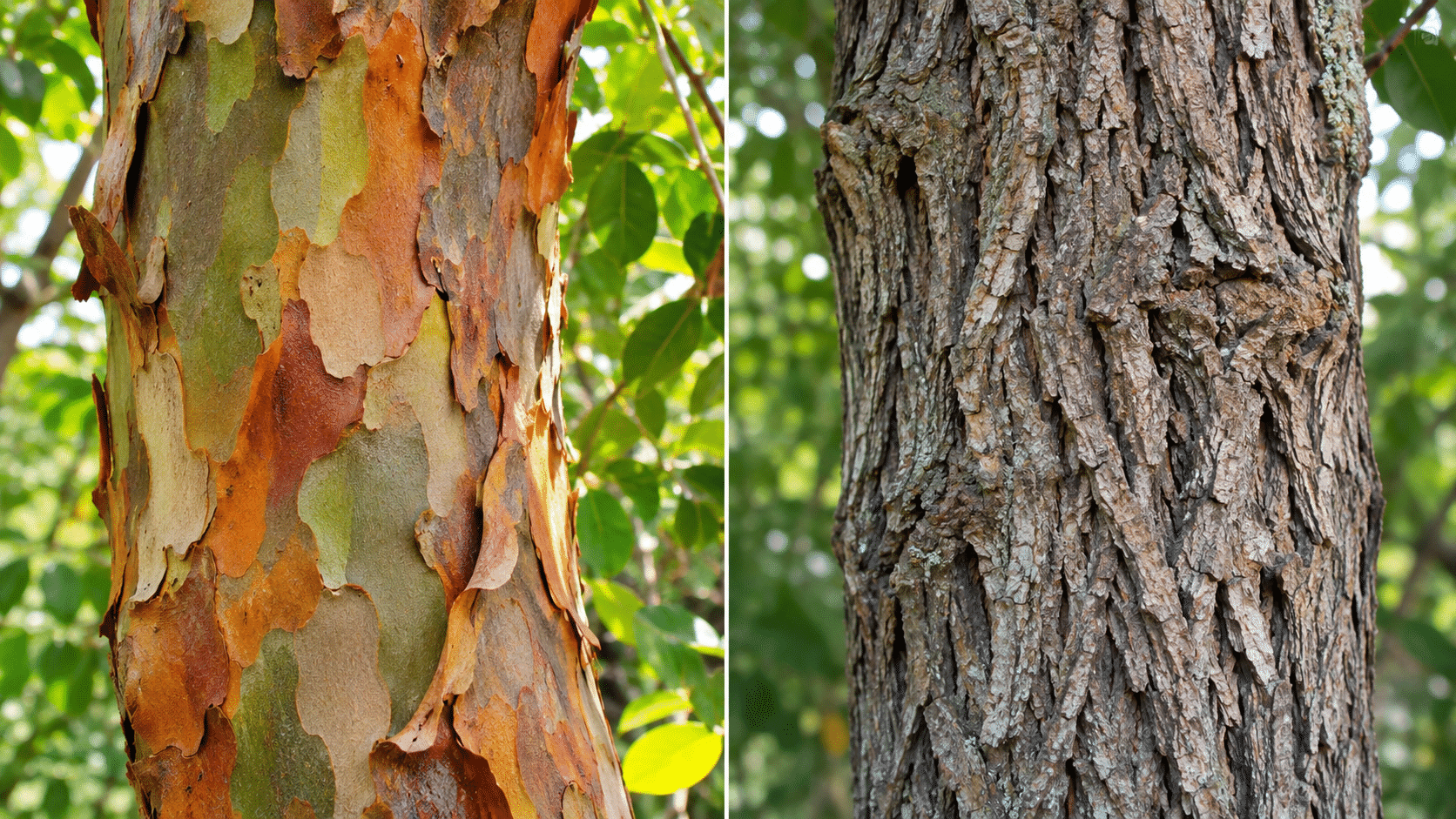
Few shade trees can turn heads in the dead of winter quite like the lacebark elm tree (Ulmus parvifolia). While most deciduous trees fade into a dull gray silhouette once their leaves drop, the lacebark elm puts on a four-season show. Its signature exfoliating bark peels away in puzzle-like patches, revealing a stunning patchwork of mottled gray, olive green, warm orange, and cinnamon brown. Add in a graceful, arching canopy and legendary toughness against urban heat, drought, and Dutch Elm Disease, and it is easy to see why landscapers and homeowners love it.
Yet, even a resilient tree can turn into an expensive headache if it is planted or managed poorly. Every year, well-meaning homeowners plant lacebark elms too close to concrete driveways, accidentally buy the invasive Siberian elm instead, or skip early structural pruning—leading to split limbs during the first major ice storm.
Whether you are deciding if this tree belongs in your yard or you already have one growing, this complete guide covers everything you need to know. From proper planting depth and watering schedules to cultivar selection and avoiding the most common care mistakes, you will have the exact blueprint to grow a healthy, structurally sound lacebark elm for decades. 🌿
Lacebark Elm Tree at a Glance 📋
Before diving into the details, here is a quick reference snapshot of what to expect when growing Ulmus parvifolia:
Lacebark Elm vs. Siberian Elm: Don’t Make This Costly Mistake 🔍
One of the biggest—and most expensive—mistakes homeowners make happens before the tree even goes into the ground: confusing the lacebark elm (Ulmus parvifolia) with the Siberian elm (Ulmus pumila). Because both are sometimes loosely sold as “Chinese elm” at big-box stores or older nurseries, mix-ups happen far more often than they should.
While they share a genus, they behave very differently in a residential landscape:
-
Wood Strength: Lacebark elms have strong, flexible wood that holds up well in wind and ice when properly pruned. Siberian elms have notoriously brittle wood that drops branches constantly during storms.
-
Bark Texture: Mature lacebark elms develop smooth, flaking, multi-colored bark. Siberian elms have coarse, deeply furrowed gray-brown bark.
-
Blooming & Seeding Time: Lacebark elms flower and set seed in late summer to autumn. Siberian elms flower and drop papery seeds in spring.
-
Invasive Potential: Siberian elms are aggressively invasive across much of North America, sprouting everywhere and crowding out native plants. Lacebark elms are far better behaved, though they can still self-seed in certain warm, moist climates (more on that later).
💡 Arborist Tip: Never rely on common names alone. Always check the nursery tag for the exact botanical name—Ulmus parvifolia—before you buy.
How to Plant a Lacebark Elm Tree for Long-Term Success 🌱
A lacebark elm can live 60 to 100+ years, so giving it the right start is the single best investment you can make.
Choosing the Best Location ☀️
Because lacebark elms develop a wide, spreading canopy and vigorous root system, spacing is non-negotiable.
-
Hardscapes & Foundations: Plant your tree at least 15 to 20 feet away from house foundations, driveways, sidewalks, patios, and septic lines. Mature lacebark elms often develop surface roots that can heave concrete if cramped.
-
Overhead Utilities: Avoid planting directly under power lines. At 40 to 50 feet tall, utility crews will eventually have to butcher the canopy to keep lines clear.

Best Time to Plant 🗓️
The ideal window to plant a lacebark elm is autumn (after the summer heat breaks) or early spring while the tree is still dormant. Planting during cooler months allows the roots to establish in the surrounding soil before the stress of summer heatwaves arrives.
Step-by-Step Planting Guide 🪴
-
Dig a Wide, Shallow Hole: Dig the planting hole 2 to 3 times wider than the root ball, but no deeper than the height of the root ball. Wide, loosened soil encourages horizontal root expansion.
-
Locate the Root Flare: Before setting the tree in the hole, gently brush away excess nursery soil from the base of the trunk until you see the root flare—the point where the trunk widens and the first major roots branch outward.
-
Set the Right Depth: Place the tree in the hole so the root flare sits level with or 1 inch above the surrounding soil grade. Planting too deep suffocates roots and causes fatal girdling roots years later.
-
Inspect and Loosen Roots: If the tree came in a plastic container, check for circling roots. Use a clean hori-hori knife or pruners to gently score or untangle tightly bound roots so they grow outward instead of choking the trunk.
-
Backfill with Native Soil: Fill the hole back in with the original native soil you dug out. Skip the temptation to load the hole with rich bagged compost—creating a “luxury pocket” of amended soil can cause roots to stay trapped inside the planting hole rather than spreading into your yard.
-
Water Deeply and Stake Only If Needed: Water thoroughly to eliminate air pockets. Only stake the tree if it is in a very windy site or cannot stand upright on its own. If you do stake, use wide, flexible straps and remove them after one full growing season so the trunk can build natural wind strength.
Essential Lacebark Elm Tree Care Guide 💧
Once established, the lacebark elm is one of the easiest shade trees to maintain. However, its needs change significantly between its first two years and maturity.
Sunlight Requirements ☀️
Lacebark elms thrive in full sun—at least 6 hours of direct, unfiltered sunlight per day. Full sun produces a dense, symmetrical crown, stronger branch unions, and the richest autumn foliage color. While they can survive in partial shade, trees grown in low light tend to stretch upward, develop sparse canopies, and lean awkwardly toward the nearest light source.
Watering Schedule 🚿
-
Years 1–2 (Establishment Phase): Newly planted trees need consistent moisture to push roots into the surrounding landscape. Water deeply and slowly 1 to 2 times per week during dry spells, applying roughly 10–15 gallons per watering. A slow trickle from a garden hose or a soaker hose works far better than quick surface sprinkling.
-
Mature Trees (Year 3+): Once established, lacebark elms are impressively drought-tolerant. In most climates, natural rainfall is enough. Only provide supplemental deep watering during prolonged summer droughts (3+ weeks without rain).
Soil Preferences & Drainage 🪨
Few shade trees match the lacebark elm’s soil adaptability. It handles heavy clay, sandy soils, compacted urban sites, and both slightly acidic and alkaline pH levels (5.5 to 8.0). Its only true weakness is constantly waterlogged soil. Avoid planting in low-lying swales where standing water pools for days after a storm, as soggy conditions invite root rot.
Fertilizing: When to Feed (and When to Skip) 🧪
Healthy, established lacebark elms rarely need routine fertilizing. In fact, over-fertilizing with high-nitrogen lawn fertilizers forces weak, spindly water sprouts that are prone to storm damage and pest infestations.
-
When to fertilize: Only feed your tree if a soil test reveals a nutrient deficiency, or if a young tree shows stunted growth and pale yellowing leaves.
-
How to apply: Use a balanced, slow-release granular tree fertilizer (such as 10-10-10) in early spring before new growth emerges, following the package rates carefully.
Mulching the Right Way 🍂
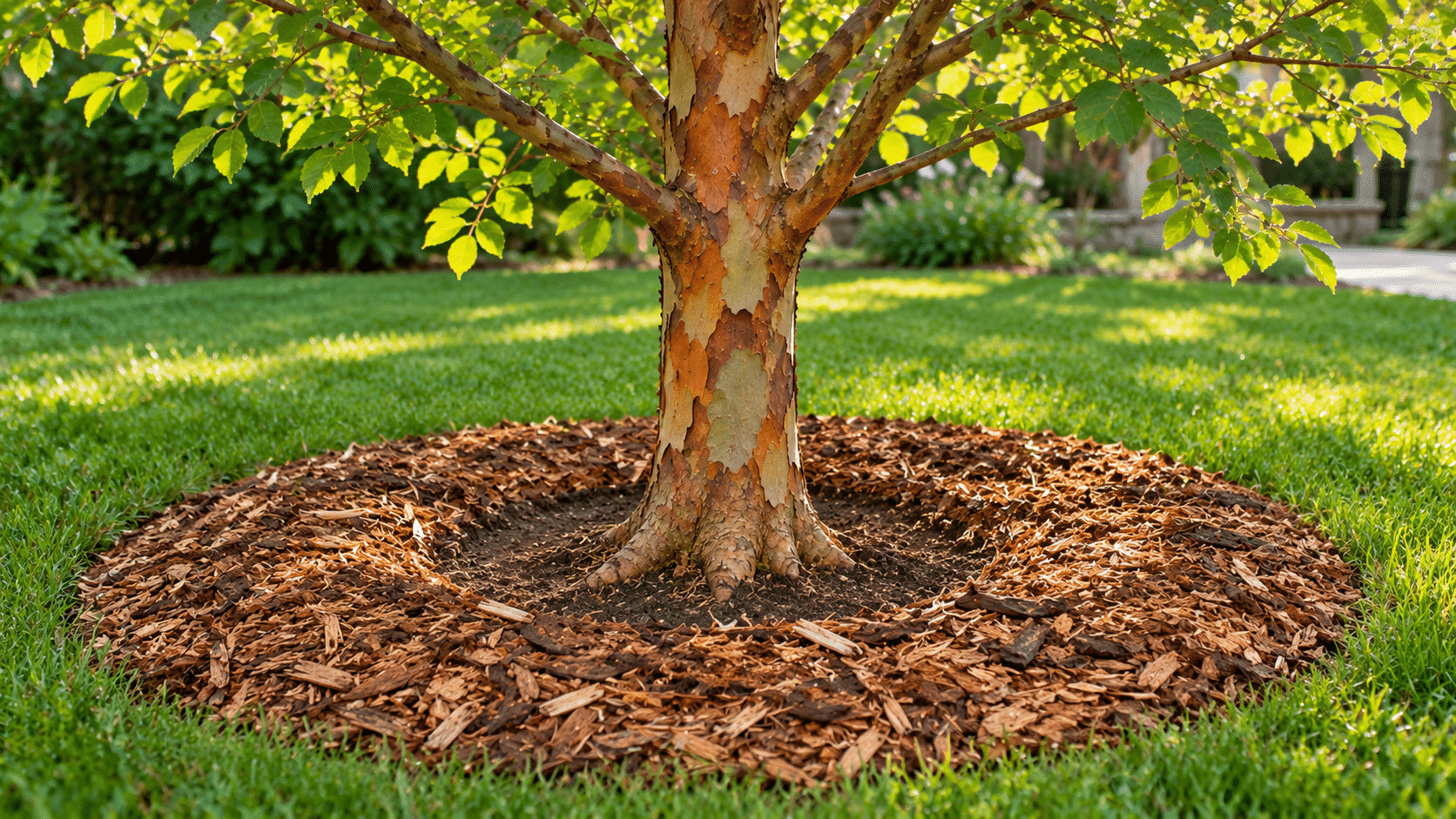
Mulch is one of the best things you can do for a young lacebark elm. Spread a 2- to 3-inch layer of organic wood chips or shredded bark in a wide ring extending at least 3 to 4 feet around the base of the tree. Mulch moderates soil temperature, locks in moisture, and keeps lawnmowers and string trimmers away from the delicate bark.
⚠️ Avoid “Volcano Mulching”: Never pile mulch directly against the trunk. Always pull mulch back 2 to 3 inches from the bark to create a flat “donut” shape. Wet mulch against the trunk traps moisture, causes collar rot, and gives voles a cozy place to chew the bark in winter.
Pruning a Lacebark Elm: Building a Strong Structure ✂️
If there is one maintenance task that separates a magnificent, storm-proof lacebark elm from a problem tree, it is early structural pruning. Lacebark elms grow vigorously when young and naturally tend to form narrow, V-shaped branch angles and multiple competing trunks. Without guidance, those narrow unions trap bark inside the joint (known as included bark), creating weak points that can split apart under heavy wind or ice.
When to Prune ❄️
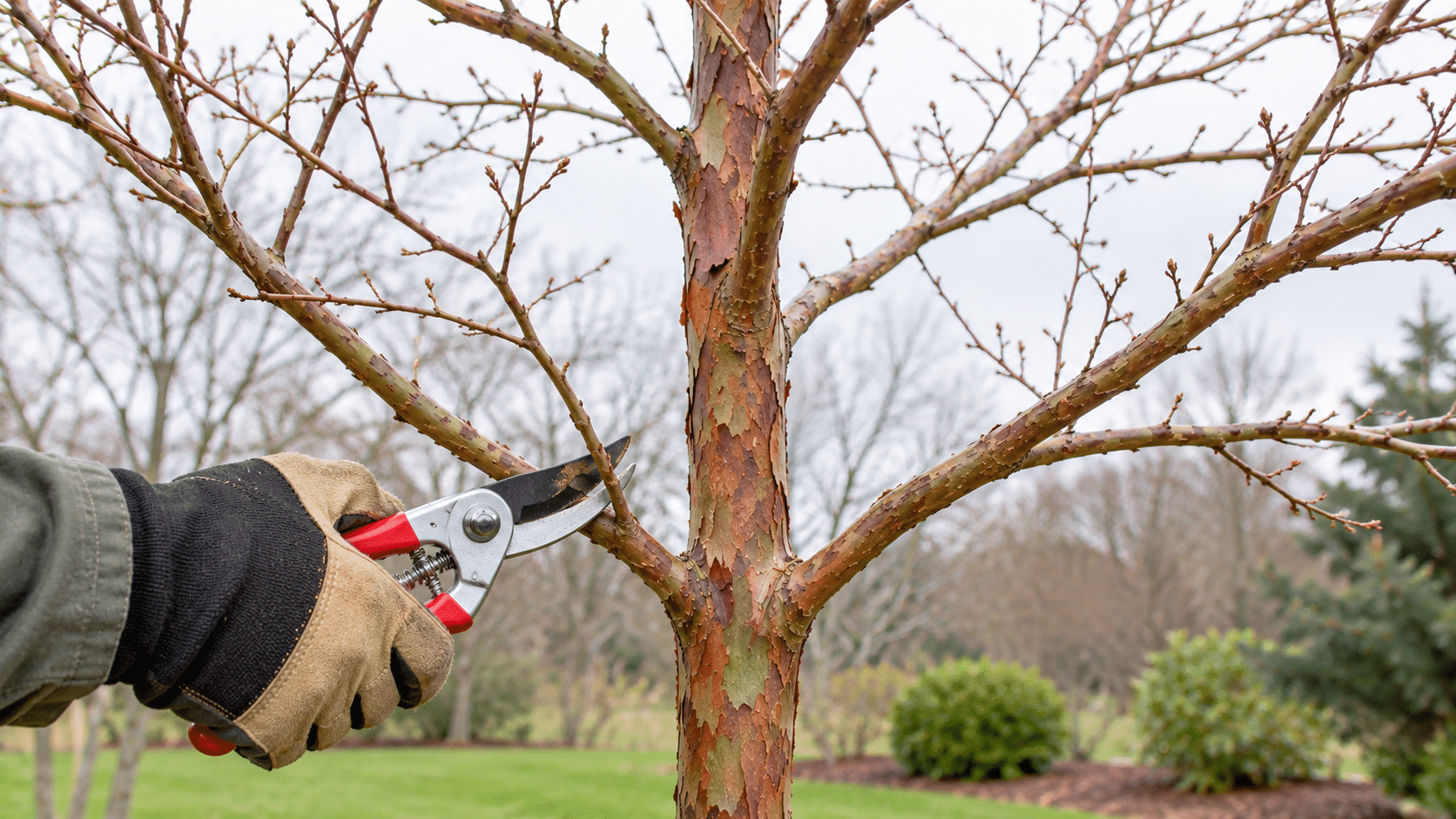
The best time to prune a lacebark elm is late winter to very early spring while the tree is fully dormant. Without leaves blocking your view, it is much easier to see the branch architecture. Dormant pruning also minimizes sap bleeding and reduces the risk of attracting bark beetles or fungal pathogens.
Structural Pruning for Young Trees (Years 1–5) 🌿
During the first five years after planting, spend 15 minutes each winter shaping the tree’s permanent framework:
-
Establish a Central Leader: Choose one strong, straight main trunk and subordinate (shorten) any competing vertical stems trying to race it to the top.
-
Select Wide Branch Angles: Keep lateral branches that attach to the trunk at wide, U-shaped angles (ideally 45 to 60 degrees). Remove branches with tight, narrow V-shaped attachments.
-
Eliminate Crossing Branches: Prune away any limbs that rub against each other, grow inward toward the center of the canopy, or show signs of damage.
-
Follow the 25% Rule: Never remove more than 25% of the live canopy in a single year. Over-pruning stresses the tree and triggers a burst of weak water sprouts.
Maintaining Mature Trees 🌳
Once your tree has a solid framework, pruning becomes minimal. Every 3 to 5 years, remove dead, diseased, or broken limbs (“deadwooding”) and gradually lift the lower canopy by removing low-hanging branches so you can comfortably walk or mow underneath.
🚫 Never “Top” Your Elm: Cutting back the main upper branches to stubs—a practice called topping—ruins the natural vase shape, invites internal decay, and forces weakly attached shoots that break easily in storms.
5 Common Lacebark Elm Mistakes (and How to Avoid Them) ⚠️
Even experienced gardeners can stumble with Ulmus parvifolia. Avoiding these five common pitfalls will save you thousands of dollars in future repairs or tree removal:
1. Planting Too Close to Hardscapes 🧱
Lacebark elms are famous for developing strong, spreading surface roots as they mature. Planting one 5 feet from a sidewalk, driveway, or patio is a recipe for cracked concrete. The Fix: Always give the tree a minimum 15- to 20-foot buffer from paved surfaces and underground pipes.
2. Skipping Early Structural Pruning ✂️
Many homeowners assume “low-maintenance” means “zero pruning.” Leaving a young lacebark elm completely untouched often results in heavy, low-hanging limbs and weak co-dominant trunks. The Fix: Invest a little time in dormant structural pruning during the first 3 to 5 years—it sets the tree up for a lifetime of storm resistance.
3. Ignoring Volunteer Seedlings 🌱
In the right conditions (especially warm, moist climates), a mature lacebark elm can drop thousands of papery seeds in autumn. Many of those seeds will happily germinate in nearby mulch beds, shrub borders, and lawns. The Fix: Mow over lawn seedlings regularly, and hand-pull young sprouts in garden beds while they are still small and easy to yank out.
4. Overwatering Mature Trees 💧
Running automatic turf sprinklers every day right next to an established lacebark elm keeps the top few inches of soil constantly soggy. This encourages shallow roots (worsening surface root issues) and can trigger root rot. The Fix: Adjust irrigation heads so they don’t spray the trunk, and rely on deep, infrequent watering only during severe droughts.
5. Picking the Wrong Cultivar for a Small Yard 📏
A standard seedling lacebark elm can easily reach 50 feet tall and 50 feet wide. Squeezing a full-sized tree into a tiny urban courtyard leads to constant pruning battles. The Fix: Choose a compact or columnar cultivar bred specifically for tighter spaces.
Best Lacebark Elm Cultivars to Consider 🏅
Buying a named cultivar rather than a generic seed-grown tree gives you predictable size, superior bark color, and better branch structure. Here are five standout varieties recommended by arborists:
-
‘Allee’ (Emer II): Widely considered the gold standard. It features a classic, upright vase shape (similar to the historic American elm), spectacular exfoliating bark, and golden-yellow fall color. Size: 45–50 ft tall × 35–40 ft wide.
-
‘Athena’ (Emer I): Slightly more compact with a rounded, dense crown and dark green, glossy leaves. Ideal for medium-sized residential yards. Size: 30–35 ft tall × 30–35 ft wide.
-
‘Bosque’: Prized for its uniform, upright oval form and strong central leader, which requires less corrective pruning when young. Offers vibrant yellow-to-orange autumn color. Size: 40–50 ft tall × 30–35 ft wide.
-
‘Drake’: A favorite in warmer climates (USDA Zones 7–9). It has a graceful, slightly weeping habit and remains semi-evergreen in mild winters. Size: 35–45 ft tall × 35–45 ft wide.
-
‘Everclear’: The ultimate narrow-space solution. Its tight, columnar silhouette fits effortlessly into narrow side yards, streetscapes, and tight urban lots. Size: 40–45 ft tall × 12–15 ft wide.
Pests, Diseases, and Troubleshooting 🐛
One of the biggest reasons homeowners plant a lacebark elm tree is its high natural resistance to Dutch Elm Disease (DED) and elm yellows—the two devastating diseases that wiped out millions of native American elms. While no tree is 100% immune, Ulmus parvifolia rarely suffers fatal outbreaks.
Still, a few minor pests and environmental stresses can show up:
-
Elm Leaf Beetle: Small yellowish-green beetles and their larvae skeletonize leaves by chewing the tissue between the veins. Healthy mature trees can tolerate minor feeding, but heavy infestations can be managed with neem oil, horticultural oil, or biological controls like Bacillus thuringiensis (Bt) targeted at larvae.
-
Japanese Beetles: In mid-summer, these metallic green beetles may nibble on foliage. Hand-pick them into soapy water in the early morning when they are sluggish, or use targeted organic sprays if damage becomes severe.
-
Scale Insects: Look for small, waxy bumps along twigs and sticky “honeydew” residue on leaves. Apply dormant horticultural oil in late winter to smother overwintering scales before they hatch.
Quick Troubleshooting Guide 🩺
-
Yellowing Leaves (Chlorosis): Often caused by overwatering, poor drainage, or iron deficiency in high-pH alkaline soils. Check soil moisture first before reaching for an iron chelate supplement.
-
Premature Leaf Drop in Summer: Usually a sign of acute drought stress on a newly planted tree. Give it a slow, deep soaking and refresh the mulch ring.
-
Twig Dieback: Can occur after a late spring freeze or harsh winter in Zone 4–5. Prune dead tips back to healthy green wood once new growth begins in spring.
Frequently Asked Questions (FAQs) ❓
Is the lacebark elm tree invasive?
The lacebark elm is far less aggressive than the notorious Siberian elm, but it can self-seed in certain regions—particularly in the southeastern and mid-Atlantic United States where warm, moist conditions favor germination. Before planting, check your local state extension office or invasive plant council list to see if Ulmus parvifolia is restricted or discouraged in your area.
Are lacebark elm roots invasive?
Lacebark elms have vigorous, spreading root systems that often grow close to the soil surface, especially in compacted clay soils or lawns that receive frequent shallow watering. While they won’t typically break intact modern PVC pipes, they can lift sidewalks and driveways if planted too close. Keep at least 15–20 feet between the trunk and any hardscapes.
How fast does a lacebark elm grow?
Under full sun and decent soil, a lacebark elm grows at a moderate to fast rate of 1 to 2+ feet per year. Expect it to provide meaningful backyard shade within 5 to 8 years of planting.
Do lacebark elms lose their leaves in winter?
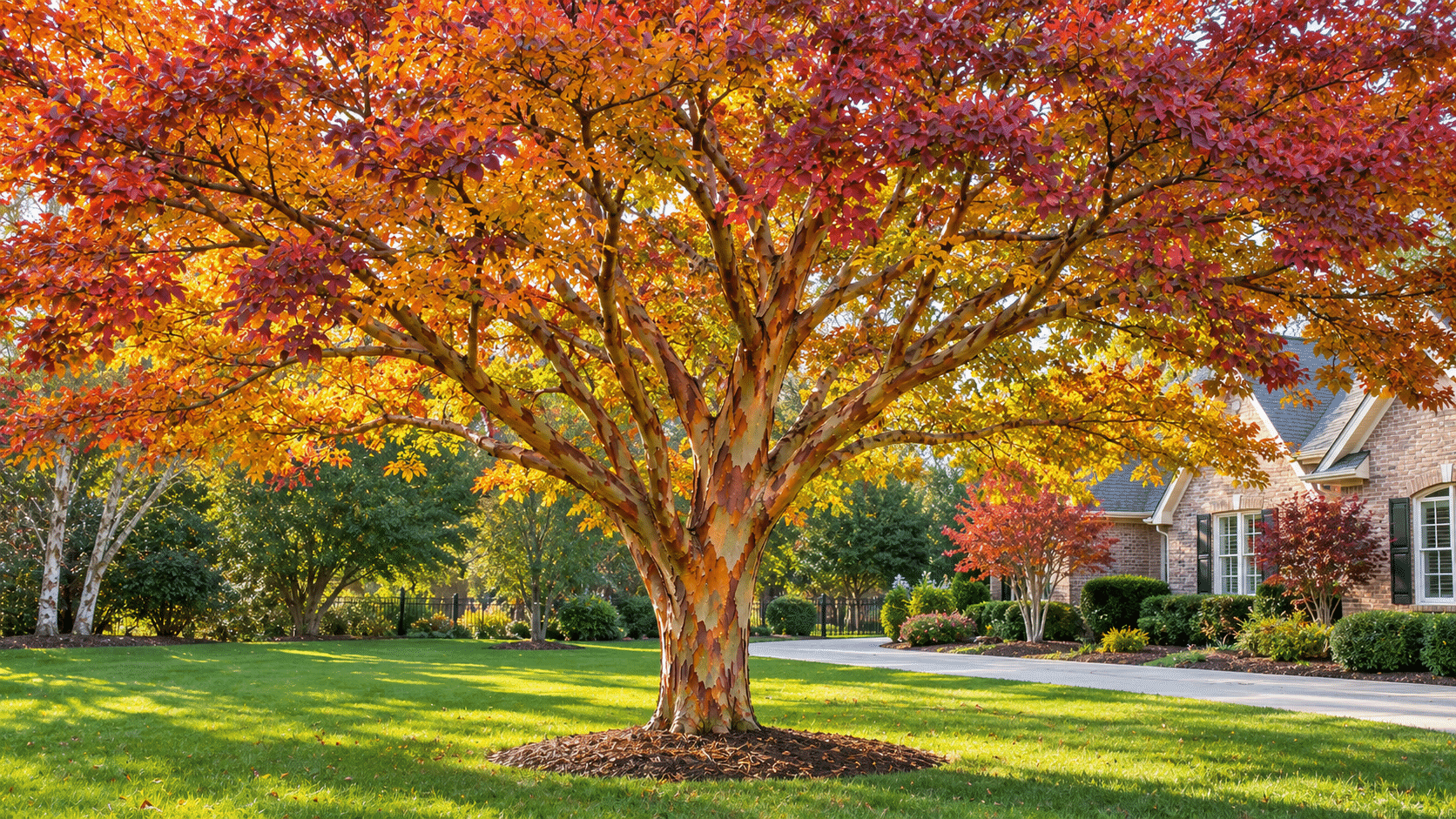
In cooler climates (USDA Zones 4–7), lacebark elms are deciduous, dropping their leaves in late autumn after turning yellow or burgundy. In warmer regions (Zones 8–9), they often act as semi-evergreen trees, holding onto much of their foliage until new growth pushes the old leaves off in early spring.
Are lacebark elm trees messy?
Compared to sweetgums, oaks, or magnolias, lacebark elms are relatively tidy. Their leaves are very small (only 1–2 inches long) and break down quickly when mulched with a lawnmower. The main cleanup involves their small papery seeds (samaras) in autumn, which can collect in gutters or sprout in flower beds if left unchecked.
Final Thoughts: Is a Lacebark Elm Right for Your Yard? ✨
If you want a resilient, fast-growing shade tree that thrives in tough urban soil, shrugs off Dutch Elm Disease, and delivers jaw-dropping bark texture all winter long, the lacebark elm tree is hard to beat. Give it plenty of room away from concrete, plant the root flare at the right depth, and invest a few minutes in structural pruning during its early years. Do those simple things right, and you will be rewarded with a strong, graceful centerpiece that elevates your landscape for generations. 🌳💚