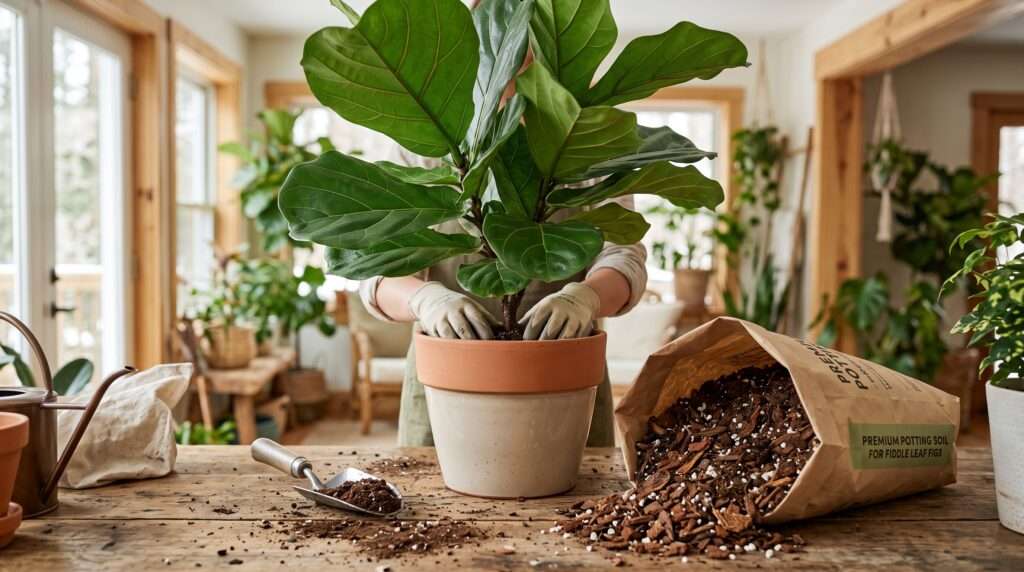
If you own a Fiddle Leaf Fig (Ficus lyrata), you already know they have a notorious reputation. One day your gorgeous indoor tree is thriving, and the next, it’s developing unsightly brown spots and dropping leaves seemingly overnight. If you are searching for the best 10 soil for fiddle leaf fig tree recovery and growth, you are taking the absolute most important step to save it.
Before you start blaming your lighting conditions or watering schedule, look down. The unfortunate reality is that 90% of Fiddle Leaf Fig failures stem from one hidden issue: suffocated roots caused by dense, water-logged commercial dirt. Standard potting soils hold on to far too much water, trapping your plant in a deadly cycle of root rot that slowly starves the foliage above.
Consider this guide your definitive resource for upgrading your plant’s foundational health. We have meticulously evaluated the market to bring you expertly vetted soils that provide the exact balance of rapid aeration, heavy structural support, and precise moisture retention your plant needs to thrive. Whether you are rescuing a sick cutting or repotting a mature, top-heavy tree, these expert-approved mixes will keep your roots breathing and your leaves shining.
Buyer’s Guide: How to Make an Informed Decision
Fiddle Leaf Figs originate from the tropical rainforests of West Africa, where they grow in rich, well-draining ground under a humid canopy. To replicate this environment in a living room container, you need a potting medium that meets four specific criteria:
-
Drainage vs. Moisture Retention: These trees require a chunky, fast-draining aroid mix. Ingredients like pine bark and perlite create essential air pockets so roots can breathe, while a small amount of coco coir or peat provides a moisture buffer so the plant doesn’t dry out completely. If the soil stays wet for a week, it’s too dense; if water runs straight through without absorbing, it’s too lean.
-
Structural Support: Unlike pothos or philodendrons, mature Ficus lyrata grow into massive, top-heavy indoor trees. Your soil needs physical weight—often provided by coarse sand, heavy bark, or pumice—to anchor the taproot and prevent the planter from tipping over.
-
Nutrient Profile: Fast-growing, large-leafed trees are heavy feeders. Look for mixes infused with natural, slow-release fertilizers like worm castings, biochar, or aged compost. These provide a steady drip of nitrogen without the risk of chemical fertilizer burn.
-
Pest Prevention: Standard outdoor garden soils often harbor fungus gnat larvae, which hatch when brought into a warm indoor environment. Specialized, sterile indoor potting mixes drastically reduce the likelihood of pest infestations.
Top Picks at a Glance
Product Reviews: Detailed Breakdown
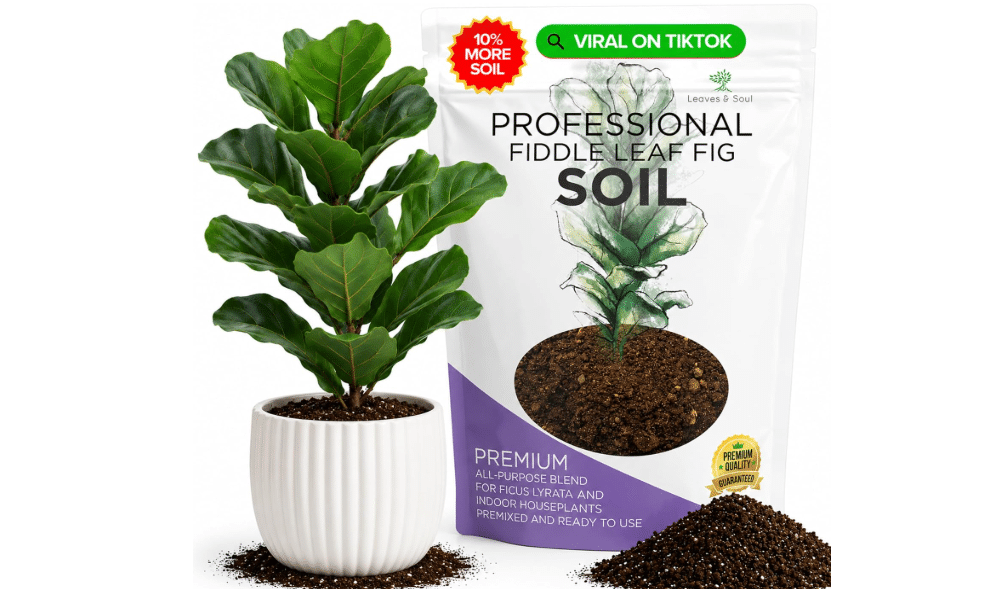
1. Fiddle Leaf Fig Plant Resource Premium Potting Soil
-
Product Description: A premium, sustainably sourced, biochar-infused mix crafted by Ficus lyrata specialists. This boutique soil is designed to replicate the plant’s natural environment while actively fighting common indoor diseases.
-
Price:
-
Key Features & Benefits: Contains aged bark, coco coir, and IBI-certified wood biochar. The biochar acts as a sponge, trapping vital nutrients and regulating moisture to protect against both over-watering and under-watering.
-
Pros and Cons:
-
Pros: Tailor-made formulation, excellent drainage, eco-friendly recycled materials.
-
Cons: Higher cost per ounce; smaller bag sizes mean you may need to buy multiples for a large pot.
-
-
Amazon Customer Ratings & Reviews: 4.7/5 stars. Reviewers consistently praise the rapid cessation of leaf drop and the immediate appearance of new green growth after repotting.
-
Why It’s a Good Choice: The specific biochar nutrient retention prevents the infamous brown spots associated with fluctuating moisture levels. It takes the guesswork out of watering.
-
Ideal Use Case: Plant parents rehabilitating a sick, brown-spotted tree that needs immediate, stress-free root recovery.
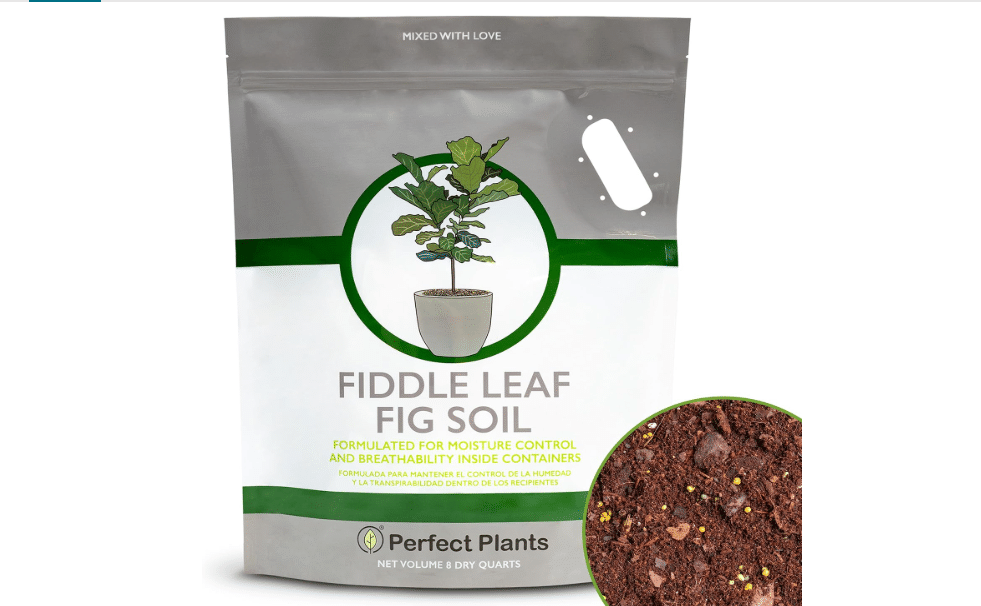
2. Perfect Plants Fiddle Leaf Fig Soil Mix
-
Product Description: A heavy-duty, nursery-grade mix designed to support massive root systems and tall, top-heavy indoor trees. It comes in a convenient, heavy-duty resealable bag.
-
Price: $19.99
-
Key Features & Benefits: Enriched with pine bark, perlite, coir, and nutrient-rich sand. This combination provides vital structural integrity while maintaining exceptional porosity.
-
Pros and Cons:
-
Pros: Great physical anchoring, pre-mixed with slow-release fertilizer, highly porous.
-
Cons: Because of the sand content, the pot can be quite heavy to lift when fully saturated with water.
-
-
Amazon Customer Ratings & Reviews: 4.6/5 stars. Users highlight how effectively this soil anchors 6-foot+ trees that previously leaned or wobbled in their pots.
-
Why It’s a Good Choice: The inclusion of coarse sand mimics the natural weight of outdoor earth, giving the thick taproot something firm to grab onto without compromising drainage.
-
Ideal Use Case: Owners of mature, tall trees (over 5 feet) that require repotting into heavy floor planters.
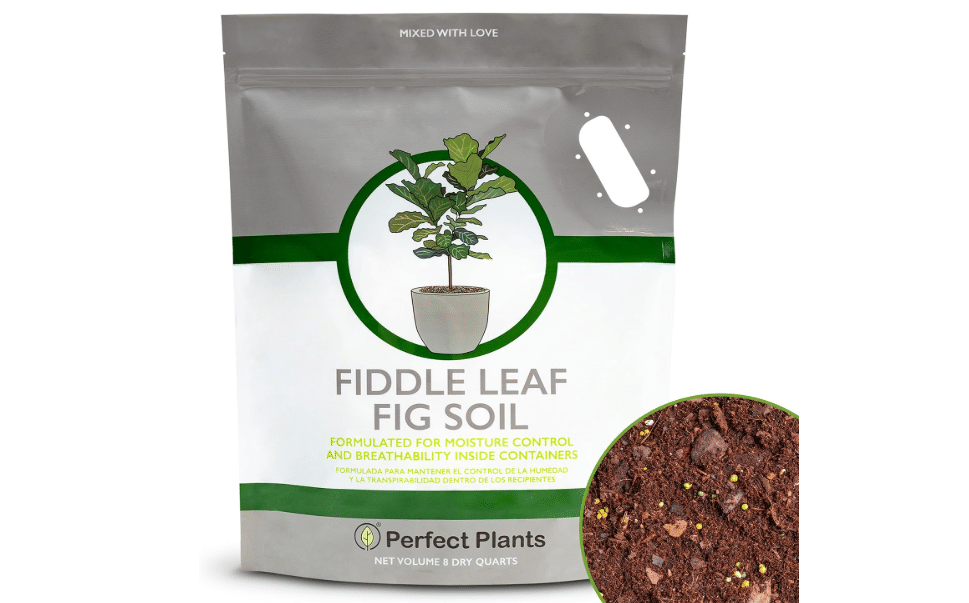
3. Leaves and Soul Fiddle Leaf Fig House Plant Soil
-
Product Description: A boutique, highly aerated blend focused on maximum root oxygenation and rapid water flow. This mix ensures your plant’s “feet” never stay wet.
-
Price: $19.99
-
Key Features & Benefits: Features a unique, chunky blend of pine bark, sawdust, sand, and sphagnum peat moss. Water runs completely through the pot, leaving behind just the right amount of ambient moisture.
-
Pros and Cons:
-
Pros: Virtually eliminates the risk of root rot; beautifully textured and visually appealing.
-
Cons: Requires a more frequent, disciplined watering schedule due to the extremely fast drainage.
-
-
Amazon Customer Ratings & Reviews: 4.5/5 stars. Customers love the earthy smell and the immediate boost in leaf shine and posture.
-
Why It’s a Good Choice: It provides the exact chunky texture that prevents soil compaction over time, keeping the root zone highly oxygenated.
-
Ideal Use Case: Chronic over-waterers who need a foolproof soil that forgives a heavy hand with the watering can.
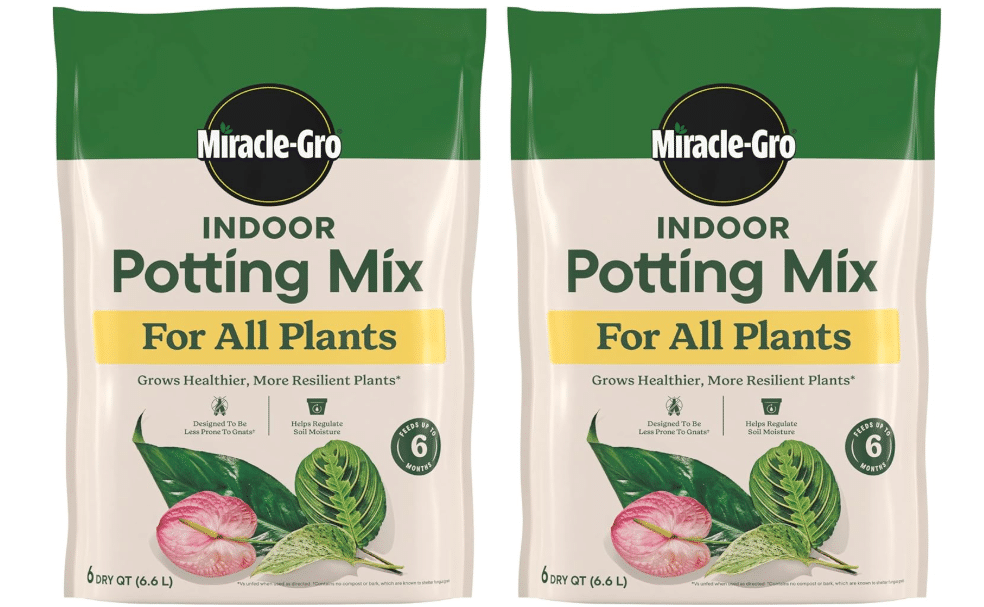
4. Miracle-Gro Indoor Houseplant Potting Mix
-
Product Description: A widely accessible, budget-friendly commercial mix formulated to keep indoor plants hydrated and pest-free.
-
Price: $10.49
-
Key Features & Benefits: Blends sphagnum peat moss, coconut coir, and perlite. It is specifically formulated to be less prone to fungus gnats than standard outdoor garden soil.
-
Pros and Cons:
-
Pros: Highly affordable, available everywhere, provides good basic moisture retention.
-
Cons: Lacks coarse structural materials (like bark or sand) and can compact over time; advanced growers often need to cut it with extra perlite.
-
-
Amazon Customer Ratings & Reviews: 4.5/5 stars. Praised for its unmatched value, though seasoned growers recommend modifying it for larger tropicals.
-
Why It’s a Good Choice: It serves as an excellent, moisture-retentive base that provides the necessary hydration to keep leaf edges from turning crispy and dry.
-
Ideal Use Case: Plant owners on a budget or those potting small, juvenile plants (under 3 feet) in desktop containers.
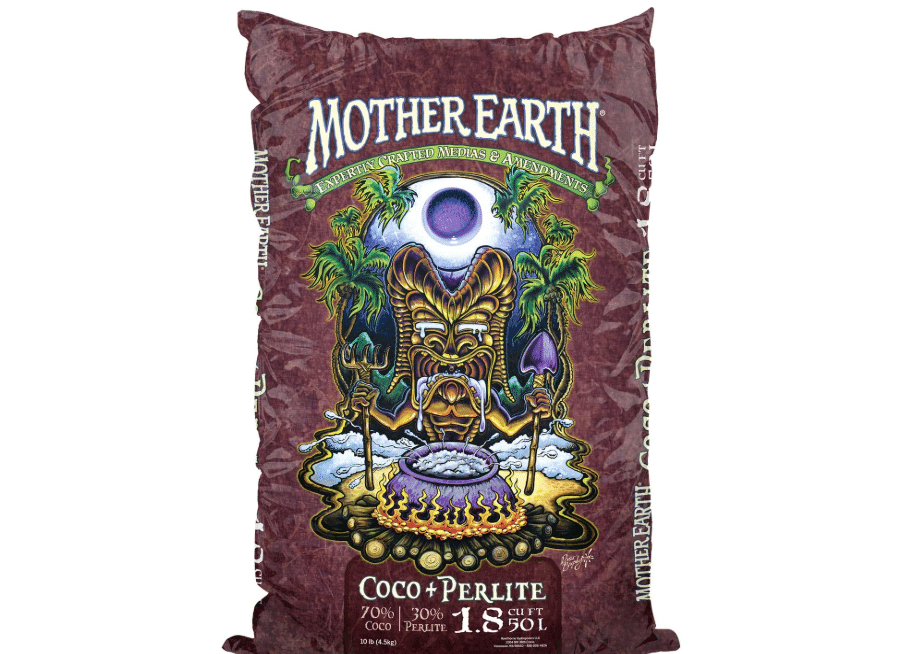
5. Mother Earth Coco Plus Perlite Mix
-
Product Description: A pure, 70/30 blend of washed coconut coir and perlite, entirely free of synthetic fertilizers, heavy garden dirt, or pests.
-
Price: $41.20
-
Key Features & Benefits: Delivers exceptional aeration and a neutral pH. It ships in bulk 50-liter bags, making it perfect for large-scale indoor gardening projects.
-
Pros and Cons:
-
Pros: Complete control over fertilizer application; massive volume for the price; excellent for aeration.
-
Cons: Contains zero inherent nutrients; you must begin a liquid feeding schedule immediately after planting.
-
-
Amazon Customer Ratings & Reviews: 4.8/5 stars. Indoor horticulturists rave about the incredibly clean, consistent texture and the absolute absence of debris or pests.
-
Why It’s a Good Choice: It allows advanced growers to completely customize their tree’s nutrient intake while guaranteeing perfect, uncompromised drainage.
-
Ideal Use Case: Advanced indoor gardeners, hydroponic enthusiasts, and DIY soil mixers looking for a flawless, sterile base medium.
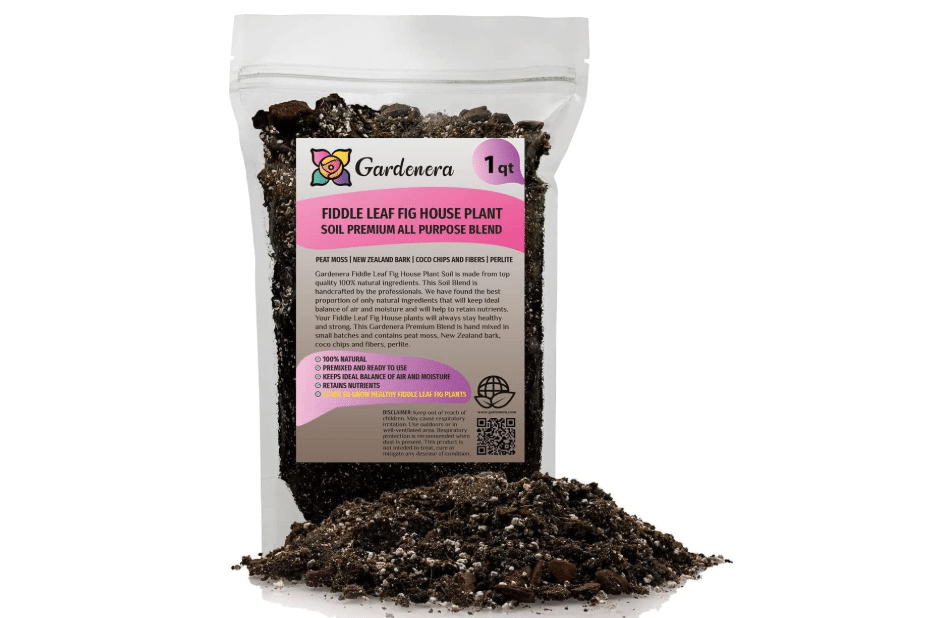
6. Gardenera Fiddle Leaf Fig Houseplant Soil
-
Product Description: A handcrafted, small-batch soil mix formulated by horticulturists designed to mimic the rich, biological floor of a tropical rainforest.
-
Price:
-
Key Features & Benefits: Contains Canadian sphagnum peat moss, coarse perlite, and worm castings. The addition of worm castings provides a gentle, organic nitrogen boost that feeds the plant naturally without the risk of chemical root burn.
-
Pros and Cons:
-
Pros: Exceptionally rich in organic matter, extremely gentle on young or recovering roots, and offers excellent moisture buffering.
-
Cons: Because it contains peat moss, it can become hydrophobic (repelling water) if you allow the pot to dry out completely.
-
-
Amazon Customer Ratings & Reviews: 4.6/5 stars. Reviewers frequently mention how quickly lush, new leaves sprout after repotting their struggling plants.
-
Why It’s a Good Choice: The worm castings provide a slow, steady drip of nitrogen, fueling the development of the massive, dark green, violin-shaped leaves that make this plant so iconic.
-
Ideal Use Case: Owners of slow-growing, stunted, or newly propagated trees that need an organic nutrient jumpstart to trigger their next growth phase.
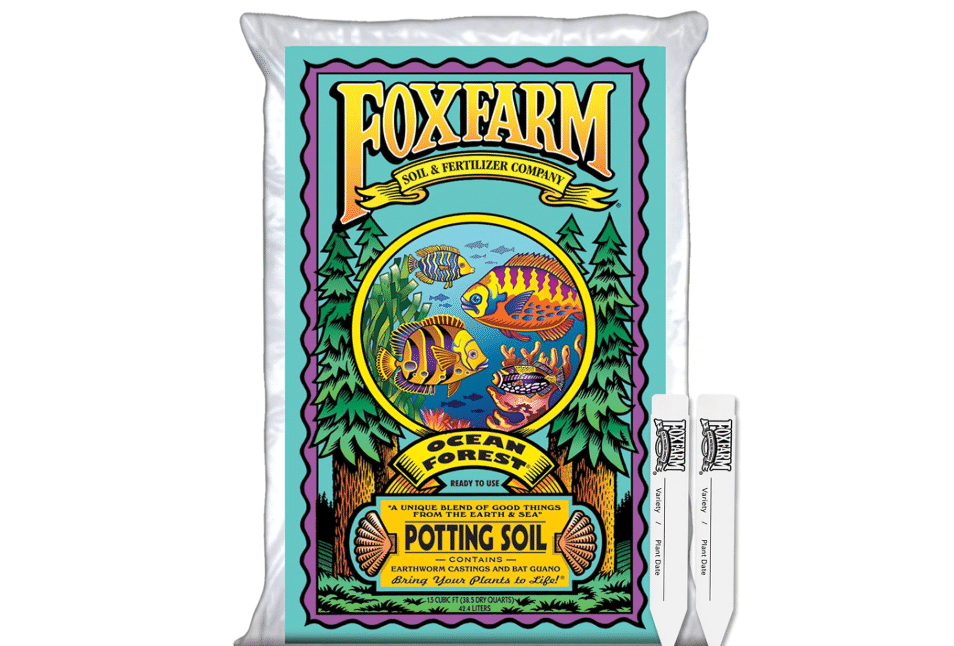
7. FoxFarm Ocean Forest Potting Soil
-
Product Description: A legendary, incredibly nutrient-dense potting soil originally designed for high-yield indoor botanical cultivation, easily adapted to supercharge large houseplants.
-
Price: $35.63
-
Key Features & Benefits: A powerhouse blend of earthworm castings, bat guano, Pacific Northwest sea-going fish, and crab meal. Its pH is adjusted at 6.3 to 6.8 to allow for optimum fertilizer uptake.
-
Pros and Cons:
-
Pros: Incredible nutrient density; provides explosive growth potential during the active growing season.
-
Cons: Can be slightly “hot” (too nutrient-rich) for very young cuttings or severely stressed plants; it also has a strong organic earthy smell initially.
-
-
Amazon Customer Ratings & Reviews: 4.8/5 stars. Widely considered the absolute gold standard for robust, aggressive plant growth by thousands of highly experienced reviewers.
-
Why It’s a Good Choice: It provides the intense macro-nutrients and complex soil chemistry required to sustain a massive canopy of foliage on a fully mature tree.
-
Ideal Use Case: Experienced growers with healthy, established trees looking to maximize vertical growth and canopy spread during the spring and summer seasons.
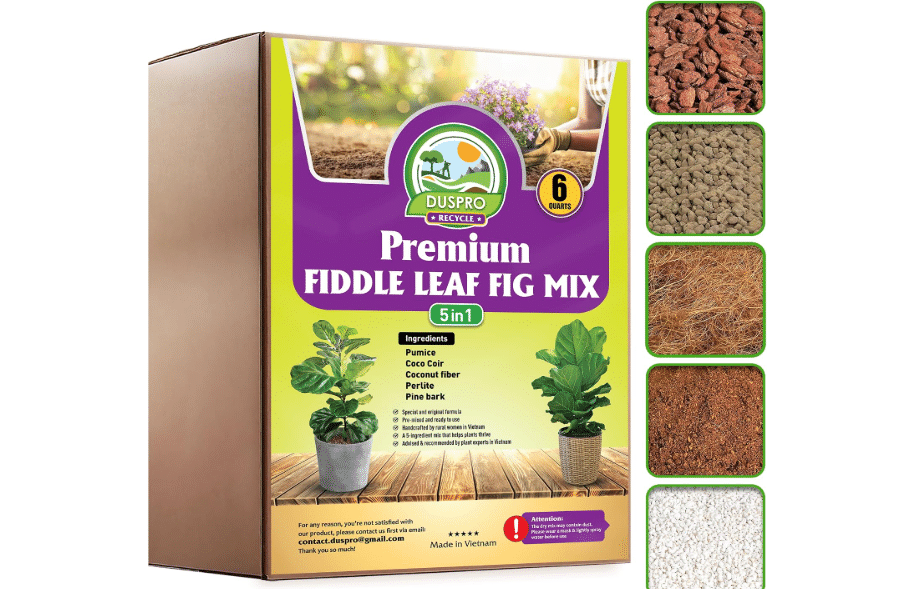
8. Rio Hamza Trading Fiddle Leaf Fig Potting Mix
-
Product Description: A specialized, coarse-textured blend focused heavily on premium drainage, container gardening stability, and root breathability.
-
Price:
-
Key Features & Benefits: Features large chunks of natural pine bark, large-grade perlite, and sand. The minimal use of peat ensures the soil won’t break down into a muddy sludge over time.
-
Pros and Cons:
-
Pros: Nearly impossible to compact; promotes incredibly thick, healthy root systems that resist rot.
-
Cons: The exceptionally chunky texture can make it difficult to stabilize very small or delicate water-propagated cuttings.
-
-
Amazon Customer Ratings & Reviews: 4.4/5 stars. Highly appreciated for its clean, debris-free consistency and incredibly fast drainage speed.
-
Why It’s a Good Choice: The chunky bark creates large air pockets within the pot, which Ficus lyrata roots naturally seek out and grab onto, mimicking their structural growth in nature.
-
Ideal Use Case: Plant owners living in humid environments where soil naturally takes a long time to dry out, or those using plastic pots that lack natural evaporation.
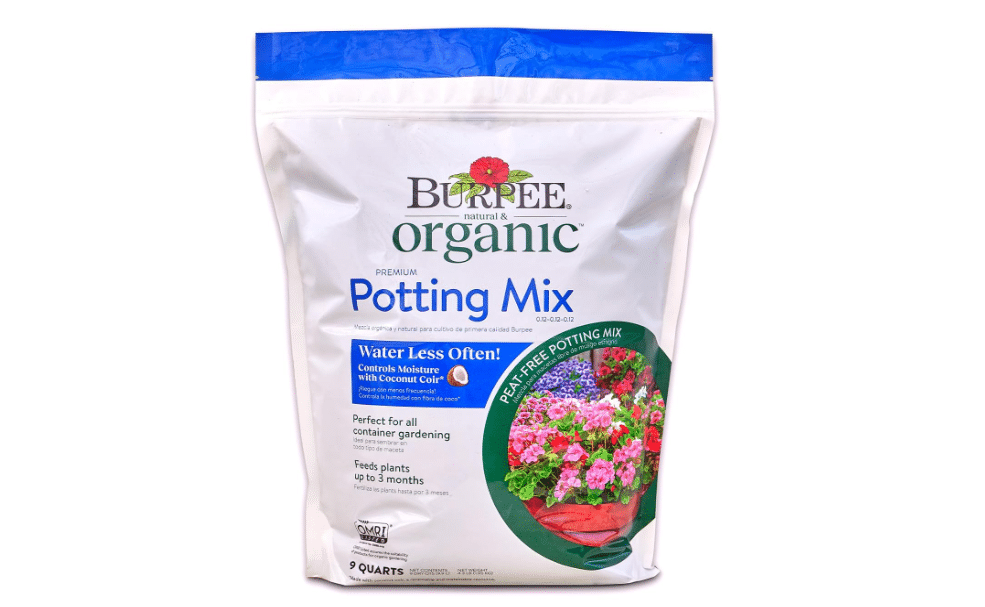
9. Burpee Organic Premium Potting Mix
-
Product Description: A highly reliable, OMRI-listed organic all-purpose mix enhanced with an integrated slow-release plant food.
-
Price: $20.69
-
Key Features & Benefits: Formulated predominantly with coconut coir to hold moisture, and enriched with Burpee’s proprietary organic plant food that promises to feed your tree continuously for up to 3 months.
-
Pros and Cons:
-
Pros: Fantastic value for the volume, certified organic, and serves as an excellent general-purpose baseline.
-
Cons: Retains a bit too much water right out of the bag; for Fiddle Leaf Figs, it generally needs to be heavily amended with extra perlite.
-
-
Amazon Customer Ratings & Reviews: 4.6/5 stars. Users love the peace of mind that comes with the organic certification and the immediate feeding benefits.
-
Why It’s a Good Choice: The high coir content prevents the dry, crispy leaf edges that plague neglected Fiddle Leaf Figs by acting as a highly efficient moisture reservoir.
-
Ideal Use Case: Environmentally conscious buyers who want an affordable, organic base soil to mix 50/50 with extra bark or pumice for a custom blend.
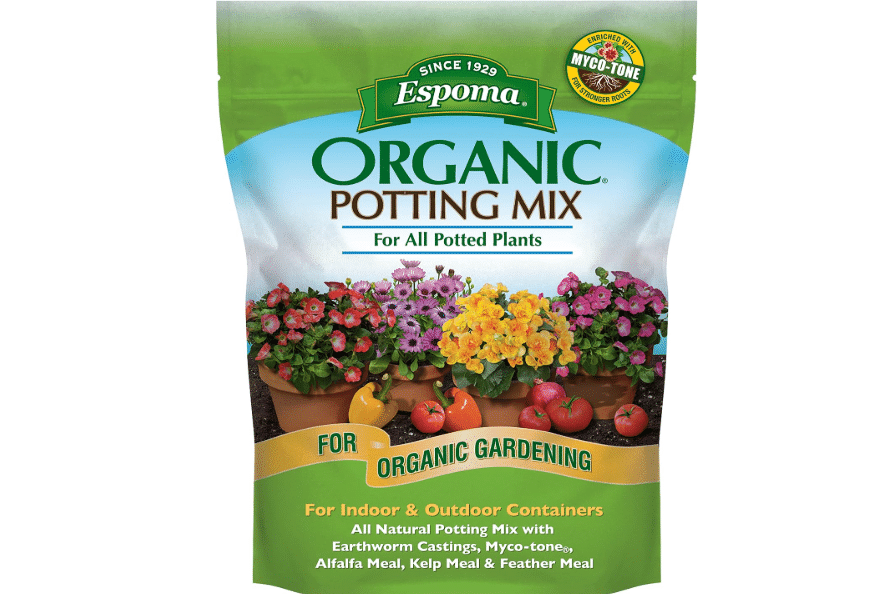
10. Espoma Organic Potting Soil Mix
-
Product Description: A biologically active potting mix explicitly enhanced with mycorrhizal fungi to promote ultimate root health and prevent transplant shock.
-
Price:
-
Key Features & Benefits: Features Espoma’s exclusive “Myco-tone” water-saving formula. The beneficial fungi physically attach to the plant’s roots to exponentially improve water and nutrient uptake.
-
Pros and Cons:
-
Pros: Biologically active, significantly improves long-term root efficiency, entirely organic.
-
Cons: The biological benefits of the fungi can be neutralized if harsh synthetic liquid fertilizers are applied later on.
-
-
Amazon Customer Ratings & Reviews: 4.7/5 stars. Consistently and highly rated by users for dramatically preventing droop and transplant shock during the repotting process.
-
Why It’s a Good Choice: Ficus lyrata are notoriously dramatic when their roots are disturbed. The mycorrhizal fungi drastically reduce this root stress, ensuring the plant bounces back quickly.
-
Ideal Use Case: Plant owners who need to aggressively untangle, separate, or root-prune a severely rootbound Fiddle Leaf Fig and want to guarantee its survival post-surgery.
Conclusion & Final Recommendations
Choosing the right soil is the ultimate foundation of Fiddle Leaf Fig care. If you are struggling with brown spots or dropping leaves, standard garden dirt is likely the culprit.
The Verdict: If you are rehabilitating a sick plant and want a foolproof, specialized formula, the Fiddle Leaf Fig Plant Resource Premium Soil is unparalleled in its biochar-driven recovery properties. For chronic over-waterers who need to guarantee proper drainage, the highly aerated Leaves and Soul Mix is your best defense against root rot. Finally, if you are a DIY mixer looking to customize your own botanical blend, the Mother Earth Coco Plus Perlite provides the ultimate sterile base.
Take Action: Before choosing, quickly assess your current watering habits, the humidity of your home, and the size of your plant’s container. A heavier hand with the watering can requires a chunkier, faster-draining mix. Click through the links above to check current Amazon prices, read detailed customer reviews, and secure the exact soil your tree desperately needs to thrive.
Next Steps: Remember, upgrading your soil is step one. Once your plant is repotted, ensure you are pairing its healthy new root system with bright, indirect sunlight and a consistent watering schedule. Check out our comprehensive guides on mastering Fiddle Leaf Fig lighting requirements and seasonal watering to keep your canopy lush year-round.