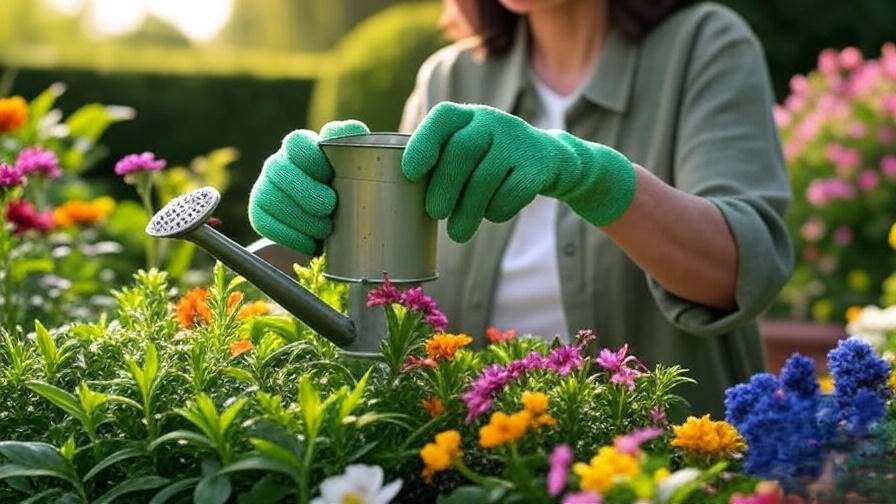
Every pond owner knows the dread of walking outside only to find their once-pristine water feature has morphed into a murky bowl of green “pea soup.” Your filters are constantly clogged, your fish are gasping at the surface, and despite your best maintenance efforts, the water quality keeps plummeting. Before you resort to harsh, expensive chemical algaecides, consider nature’s biological fix. Incorporating the best 10 water plants for ponds is the most effective, long-term way to permanently clear your water, starve out toxic algae, and restore balance to your backyard ecosystem.
The root cause of this green water nightmare is a massive nutrient overload. When fish waste, decaying autumn leaves, and uneaten food break down, they release heavy concentrations of phosphorus and nitrogen into the water column. Without intervention, these excess nutrients serve as an all-you-can-eat buffet that fuels aggressive algae blooms.
Live aquatic plants serve as nature’s ultimate filtration system. They actively starve algae by outcompeting it for those exact same nutrients, using the nitrogen and phosphorus to fuel their own root and leaf growth. Broad-leaf varieties provide vital shade that blocks the intense sunlight algae needs to photosynthesize, while submerged plants pump fresh dissolved oxygen directly into the water.
To save you time, money, and the headache of trial and error, we spent hours analyzing hundreds of Amazon listings, reading thousands of buyer reviews, and cross-referencing expert aquatic botanical data. We have curated a definitive guide to the top-rated aquatic plants to ensure you can choose the exact right combination of floating, submerged, and marginal varieties to build a self-sustaining water garden.
Buying Guide: How to Choose the Right Pond Plants
Before you start adding greenery, it is crucial to understand how a balanced pond ecosystem works. Over-planting one type of plant while neglecting another will leave gaps in your biological filtration.
-
Understanding Plant Zones: A healthy pond utilizes the “Rule of Thirds” for plant zones. You need Submerged/Oxygenating plants at the bottom to process deep nutrients, Floating plants on the surface to block sunlight and provide fish cover, and Marginal/Bog plants around the edges to filter runoff water and soften the hardscape.
-
Sizing Your Pond: To effectively stop algae from photosynthesizing, you need to shade the water. Aim for 50% to 70% surface coverage during the peak heat of summer.
-
Invasive Species Warning: Aquatic plants are incredibly efficient growers. Because of this, some fast-multiplying floating plants (like Water Hyacinth or Water Lettuce) are restricted in warm-weather states (e.g., California, Florida, Texas) because they can overtake natural waterways. Always check your local Department of Agriculture restrictions before buying.
Quick Comparison Table
Detailed Product Reviews & Breakdowns
1. Hornwort (Ceratophyllum Demersum) Live Submerged Bunches
Hornwort is widely considered the undisputed king of water clarification. This is a rootless, fast-growing submerged plant featuring dense, needle-like foliage that creates lush underwater forests. Because it doesn’t rely on a root system buried in soil, it draws 100% of its required nutrients directly from the water column, making it a highly aggressive competitor against green water algae.

-
Average Price:
-
Key Features and Benefits: Acts as a massive biological sponge for nitrates and ammonia; pumps immense amounts of oxygen into the water; provides dense hiding spaces for newly hatched fish fry.
-
Pros: Requires absolutely no planting or aquatic soil (just drop it in); winter-hardy in most climates; grows rapidly in both high and low light.
-
Cons: Can shed its brittle needles during rough shipping; requires periodic trimming and thinning so it doesn’t overtake the swimming space.
-
Amazon Ratings and Reviews: 4.4/5 Stars. Buyers consistently highlight how quickly it clears up green, murky water, often noticing a drastic difference within 7 to 10 days of introduction.
-
Why it’s a good choice: It is a pure utility plant. If your water is cloudy, Hornwort acts like a natural vacuum.
-
Ideal use case or who should buy it: Anyone fighting severe algae blooms or keeping heavy-waste fish like Koi and large goldfish.
2. Amazon Frogbit (Limnobium Laevigatum) Floating Rosettes
If you want the lily pad look without the hassle of planting tubers, Amazon Frogbit is a stellar choice. This stunning floating plant features smooth, perfectly round green pads on top and long, feathery purple-hued roots that dangle inches down into the water. It multiplies by sending out runners across the surface, creating a beautiful geometric web of greenery.

-
Average Price:
-
Key Features and Benefits: The broad leaves provide instant shade to cool the water temperature, while the trailing root systems act as a biological filter that traps suspended organic waste.
-
Pros: Easier to manage and scoop out than tiny floating plants (like duckweed); gorgeous root aesthetics; highly effective at blocking sunlight.
-
Cons: Snails and large Koi may snack on the roots; the tops of the leaves will rot if they are constantly splashed by a heavy waterfall.
-
Amazon Ratings and Reviews: 4.5/5 Stars. Reviewers love the root aesthetics and boast a high survival rate upon delivery. Many note that their smaller fish love swimming through the hanging roots.
-
Why it’s a good choice: It provides the perfect balance of visual appeal and practical shade coverage.
-
Ideal use case or who should buy it: Pond owners needing quick surface shade to cool their water without committing to heavy, potted marginal plants.
3. Hardy Water Lily (Nymphaea spp.) Bare Root Tubers
The Hardy Water Lily is the classic pond centerpiece. Delivering massive, flat floating leaves and stunning, multi-petaled blooms that open in the sunlight, these plants transform a basic puddle into a true water garden. Unlike tropical lilies that die off in the cold, hardy lilies will go dormant in the winter and faithfully return every spring.

-
Average Price:
-
Key Features and Benefits: Offers the highest surface shade-to-plant ratio available; creates a vital visual barrier and hiding spot for fish to escape aerial predators like herons or raccoons.
-
Pros: Survives freezing winters (as long as the tuber is below the ice line); produces gorgeous, sweet-smelling summer flowers; lives for many years.
-
Cons: Requires planting in aquatic soil and heavy feeding with fertilizer tabs; takes a few weeks to establish and send pads to the surface.
-
Amazon Ratings and Reviews: 4.2/5 Stars. Users note that while the bare-root tubers look like “dead potatoes” upon arrival, they sprout vigorously within weeks if fertilized correctly.
-
Why it’s a good choice: Unmatched long-term ecosystem stability and premium visual aesthetics.
-
Ideal use case or who should buy it: Owners of medium-to-large ponds looking for a permanent, beautiful focal point that protects their expensive fish.
4. Water Hyacinth (Eichhornia Crassipes) Live Floating Plants
Water Hyacinth is an absolute powerhouse of filtration. This bulbous, free-floating plant is famous for its striking lavender flowers and thick, spongy, air-filled leaves that keep it highly buoyant. Its dense, black, brush-like root system hangs deep into the water, stripping out toxins at an unbelievable rate.

-
Average Price: $21.50
-
Key Features and Benefits: One of the most aggressive nutrient-absorbers on the planet; capable of filtering out heavy metals, excess nitrogen, and fish waste almost instantly.
-
Pros: Unbeatable biological filtration; spectacular, orchid-like blooms; multiplies incredibly fast.
-
Cons: Highly invasive and strictly restricted in warm states (CA, FL, TX, etc.); tropical nature means it will die off completely in cold winter climates.
-
Amazon Ratings and Reviews: 4.6/5 Stars. Customers frequently rave about its exponential growth and water-polishing abilities, calling it a “miracle worker” for overstocked ponds.
-
Why it’s a good choice: It acts as a rapid chemical corrector. If your water parameters are out of whack, Hyacinth will fix them faster than a mechanical filter.
-
Ideal use case or who should buy it: Those in legal, permitted states who need heavy-duty, fast-acting biological filtration to handle high bioloads.
5. Anacharis (Egeria Densa) Oxygenating Weeds
Anacharis is a staple in the water garden hobby for good reason. This vibrant green, leafy stem plant is incredibly versatile—it can be bundled with lead weights and dropped to the pond bottom to root naturally, or simply left to float freely beneath the surface. It is a workhorse for maintaining balanced water chemistry.

-
Average Price:
-
Key Features and Benefits: A prolific oxygenator that rapidly absorbs the excess nutrients that cause string algae and blanket weed. As it grows, it forms dense underwater thickets that provide crucial shelter for spawning fish and vulnerable fry.
-
Pros: Incredibly cheap; incredibly easy to propagate (just snap a stem in half and you have two plants); excellent for cold water and overwinters well.
-
Cons: Highly palatable to goldfish and Koi. If you have large, hungry fish, they may devour the Anacharis faster than it can grow.
-
Amazon Ratings and Reviews: 4.3/5 Stars. Buyers appreciate its resilience and how much their fish love swimming through (and snacking on) it.
-
Why it’s a good choice: It provides exceptional baseline oxygenation, ensuring your fish have plenty of dissolved oxygen during hot, stagnant summer months.
-
Ideal use case or who should buy it: Beginner pond keepers needing a foolproof, low-maintenance submerged plant that practically grows itself.
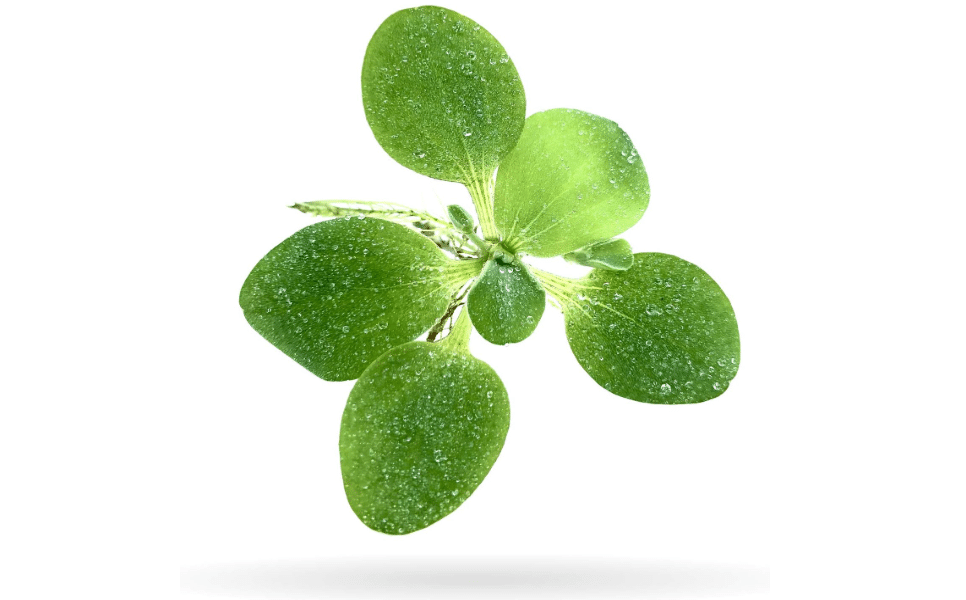
6. Water Lettuce (Pistia Stratiotes) Floating Rosettes
Resembling floating heads of loose cabbage, Water Lettuce features velvety, deeply ribbed leaves covered in tiny, water-repellent hairs. Beneath the surface, it boasts a massive, feathery white root system that acts as a highly effective mechanical and biological filter.
-
Average Price:
-
Key Features and Benefits: Creates massive shade umbrellas on the water’s surface, lowering water temperatures and stopping algae photosynthesis dead in its tracks. The dense roots trap floating debris and suspended particles, physically polishing the water.
-
Pros: Unique, tropical texture; incredible shade coverage; exceptional at trapping physical waste.
-
Cons: Highly frost-sensitive (will turn to mush at the first freeze); restricted or illegal in several southern US states due to its aggressive growth rate.
-
Amazon Ratings and Reviews: 4.5/5 Stars. Users often mention how fast the rosettes multiply in full sun, easily covering a small pond in a matter of weeks.
-
Why it’s a good choice: If your pond lacks surrounding trees, Water Lettuce creates a protective, cooling canopy.
-
Ideal use case or who should buy it: Unshaded, full-sun pond owners looking for fast, aggressive surface coverage to combat extreme summer heat.
7. Duckweed (Lemna Minor) Live Culture
Duckweed is a tiny, clover-like floating plant that can quickly blanket a water’s surface in a vibrant, velvety green mat. While each individual plant is only a few millimeters wide, they work together as nature’s fastest water purifiers, stripping heavy metals and ammonia out of the water column with startling efficiency.

-
Average Price: $10.99
-
Key Features and Benefits: Doubles its biomass every few days under optimal conditions. More importantly, it provides a highly nutritious, protein-rich, natural food source for your fish.
-
Pros: Provides free, continuous fish food; unmatched nutrient export capabilities.
-
Cons: Can completely cover a small pond and block gas exchange if your fish don’t eat it fast enough; notoriously hard to eradicate once introduced into a system.
-
Amazon Ratings and Reviews: 4.1/5 Stars. Reviews are highly polarized—people either love it for feeding their Koi or despise it because it grows entirely too well.
-
Why it’s a good choice: It drops toxic nitrate levels to zero while creating a self-sustaining food web.
-
Ideal use case or who should buy it: Koi and goldfish keepers who want to supplement their fish’s diet naturally and cut down on commercial food costs.
8. Pickerel Weed (Pontederia Cordata) Marginal Potted Plant
To seamlessly blend your pond into the surrounding landscape, marginal plants are a must. Pickerel Weed is a premier shallow-water bog plant featuring glossy, upright, heart-shaped leaves and tall spikes of vibrant purple-blue flowers that bloom from mid-summer to early fall.

-
Average Price: $30.00
-
Key Features and Benefits: Thrives on pond shelves (the shallow edges). Its deep, aggressive root systems stabilize pond banks and act as a crucial buffer, filtering out toxic fertilizer runoff from your lawn before it can enter the pond.
-
Pros: Highly attractive to pollinators like butterflies and bees; very winter hardy; adds stunning structural height and architectural interest.
-
Cons: Requires a specific water depth (2 to 6 inches over the crown) to thrive; must be planted in an aquatic basket with specialized pond soil.
-
Amazon Ratings and Reviews: 4.4/5 Stars. Buyers love the vertical height it adds to flat ponds and frequently praise its long-lasting, pollinator-friendly blooms.
-
Why it’s a good choice: It softens the harsh, artificial edges of a pond while acting as a vital first line of defense against external lawn runoff.
-
Ideal use case or who should buy it: Landscapers and pond owners looking to build a natural, marshy transition zone around their water feature.
9. Red Root Floater (Phyllanthus Fluitans)
For pond owners who are tired of a purely green aesthetic, the Red Root Floater offers a breathtaking alternative. This delicate floating plant features round, water-repellent leaves that transform from bright green to a deep, striking blood-red when exposed to high-intensity sunlight. Even the dangling roots showcase a beautiful red hue.

-
Average Price:
-
Key Features and Benefits: Adds a unique pop of warm autumn color to the pond surface while performing the exact same nutrient-absorbing and shading duties as traditional green floaters.
-
Pros: Stunning visual contrast; stays relatively small and manageable; produces tiny, delicate white flowers.
-
Cons: Can be fragile during shipping; prefers stagnant or slower-moving water and will struggle if caught in the heavy currents of a waterfall or skimmer.
-
Amazon Ratings and Reviews: 4.2/5 Stars. Reviewers consistently praise the beautiful red hues but caution that the plants can melt if shipped during extreme summer heatwaves.
-
Why it’s a good choice: It elevates the visual design of your water feature, adding a premium aesthetic touch that most standard ponds lack.
-
Ideal use case or who should buy it: Enthusiasts with gentle water flow (such as patio ponds, whiskey barrel water gardens, or low-flow Koi ponds) who want vibrant color variety.
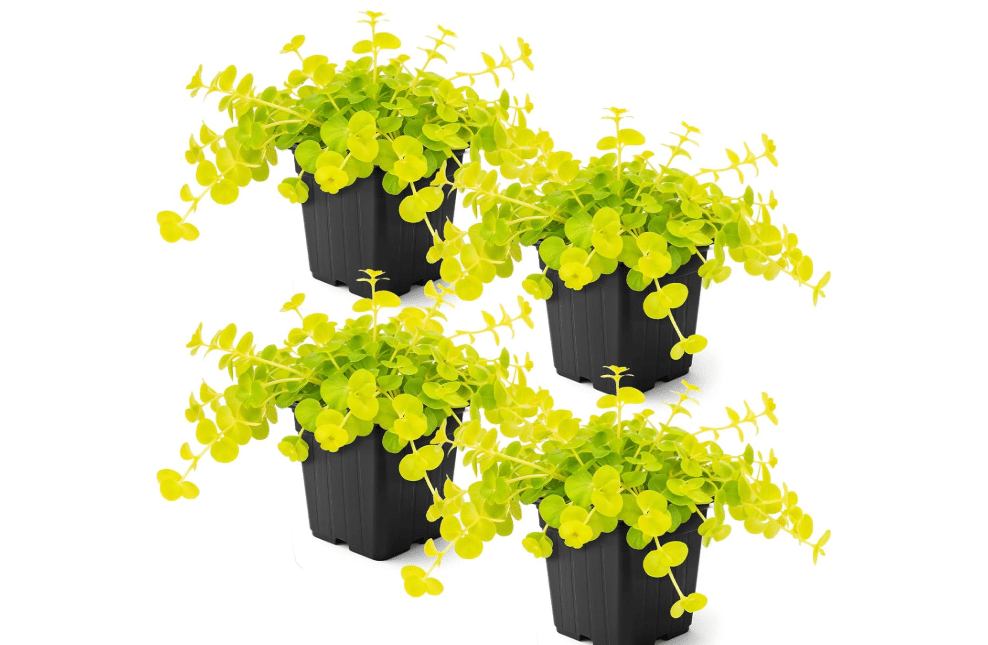
10. Creeping Jenny (Lysimachia Nummularia) Bare Root/Potted Vines
Creeping Jenny is the ultimate problem-solver plant. It is a vibrant, lime-green trailing vine that happily grows in shallow water, thick mud, or cascading dry over wet pond rocks. Its coin-shaped leaves form a dense mat that softens harsh rockwork.
-
Average Price: $26.67
-
Key Features and Benefits: Rapidly covers exposed, ugly black pond liners and hides tubing. Because it can grow half in and half out of the water, it acts as a natural biological filter directly at the water’s edge.
-
Pros: Extremely versatile (can be fully submerged or grown terrestrially); brightly colored foliage pops against dark stone; highly winter resilient.
-
Cons: An aggressive spreader that can creep into your surrounding garden beds if not routinely trimmed back.
-
Amazon Ratings and Reviews: 4.6/5 Stars. Highly rated for its extreme hardiness and unparalleled ability to quickly hide unsightly pond hardware and bare liners.
-
Why it’s a good choice: Pure camouflage. It perfectly blends the artificial elements of a man-made pond into the natural landscape.
-
Ideal use case or who should buy it: Anyone building a waterfall, dealing with an exposed rubber liner around the perimeter, or looking to soften the look of their rockwork.
Frequently Asked Questions (FAQ)
How do I quarantine Amazon pond plants before adding them to my water? When buying plants online, they can sometimes carry hitchhikers like pest snails, leeches, or parasites. To protect your pond, perform a quick dip. Mix 1 part hydrogen peroxide (3%) with 3 parts pond water. Submerge the plant for 10-15 minutes, then rinse it thoroughly with clean water before introducing it to your pond.
Will my Koi eat all these plants? Koi are notoriously destructive omnivores. Delicate, leafy plants like Duckweed and Anacharis will absolutely be treated as an all-you-can-eat salad bar. However, mature plants with thick stalks and large root masses—like Hardy Water Lilies, Pickerel Weed, and Water Hyacinth—are generally safe, especially if you protect the root baskets with a layer of river rock.
What do I do with pond plants in the winter? It depends on the species. Tropical floaters like Water Hyacinth and Water Lettuce are treated as annuals in cold climates; they will die off and must be composted and replaced the following spring. Hardy plants, like Water Lilies and Pickerel Weed, can survive the winter as long as you trim back the dead foliage and sink their pots to the deepest part of the pond, below the freeze line.
Conclusion & The Final Verdict
Achieving a crystal-clear, algae-free water garden isn’t about dumping in expensive chemicals—it is about establishing a balanced biological ecosystem. The secret to success lies in mixing different plant zones. By combining floating plants for shade, submerged plants for oxygen, and marginal plants for runoff filtration, you create an environment where toxic algae simply cannot survive.
-
Top Utility Pick: Hornwort is our undisputed champion for instant water clarity. Its rapid growth and aggressive nutrient absorption will clear up green water faster than any other plant on this list.
-
Top Aesthetic Pick: Hardy Water Lilies remain the ultimate investment for long-term beauty, providing massive shade and stunning blooms year after year.
Don’t wait for a severe algae bloom to ruin your summer. Measure your pond’s surface area, determine your USDA hardiness zone, and head over to Amazon to start building nature’s ultimate filtration system today.