
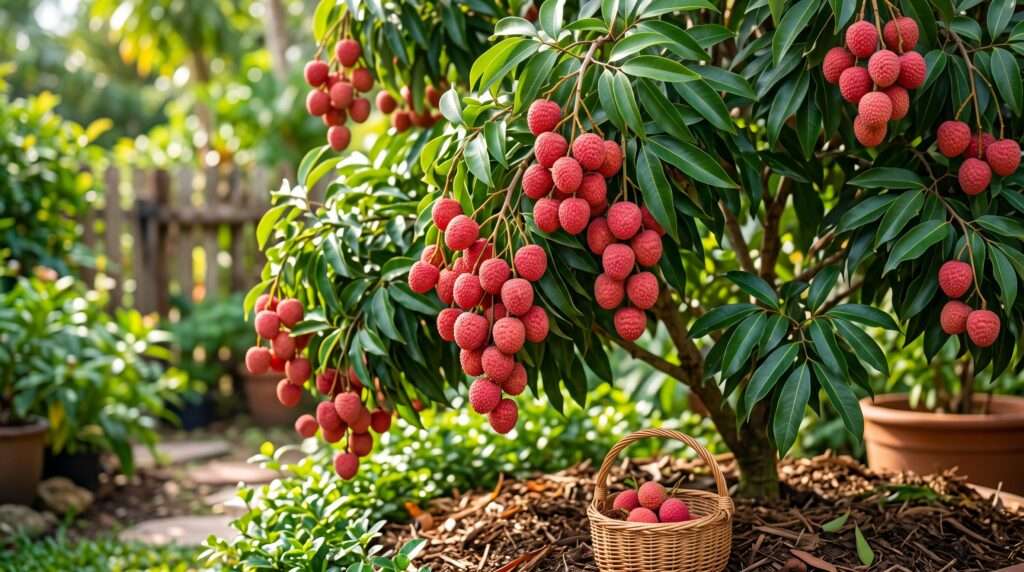
Let’s address the most common frustration right out of the gate. You visit a nursery, fall in love with the idea of plucking sweet, floral, translucent fruits from your very own backyard, and proudly bring a lychee plant home. For the first few years, it grows beautifully. It flushes with gorgeous reddish-bronze leaves that harden into a lush, dark evergreen canopy. You water it, you feed it, you coddle it—and yet, year after year, it refuses to produce a single piece of fruit. You are left with a beautiful, albeit barren, evergreen bush.
If your tropical fruit tree is suffering from “lychee not fruiting” syndrome, you are not alone.
The harsh reality of lychee tree care is that keeping the tree alive is relatively easy, but triggering it to flower and fruit requires a very specific set of environmental cues. Lychees originate from the subtropical regions of Southern China, which means they are accustomed to distinct seasonal shifts: wet, hot summers and cool, dry winters. When we coddle them too much with year-round watering and high-nitrogen fertilizers, we accidentally tell the tree to prioritize leaf growth over reproduction.
As a grower with years of experience navigating the temperamental nature of tropical fruit trees, I can tell you that the generic “water and sun” advice simply won’t cut it here. This comprehensive skyscraper guide is designed to take you beyond the basics. We are going to dive deep into arborist-level insights, covering chill hours, micro-nutrient deficiencies, structural pruning techniques, and drought-stressing methods.
By the end of this guide, you will have a clear, actionable roadmap to transform your stubborn ornamental plant into a heavy-yielding fruit producer. Let’s unlock the secrets to your sweetest harvest yet! 🍓✨
1. Selecting the Right Lychee Plant: Set Yourself Up for Success 🌱
Before we even talk about soil and water, we have to talk about genetics. The biggest mistake novice growers make happens on day one: choosing the wrong type of tree. If you start with a genetic disadvantage, no amount of perfect lychee tree care will save your harvest.
Why You Should Never Grow from Seed (For Fruit) 🚫🥑
It is incredibly tempting to eat a delicious store-bought lychee, save the pit, and plant it in a pot. While this is a fun science experiment for kids, it is a terrible strategy for a home orchard.
First, seed-grown lychees are notoriously slow to mature. A tree grown from seed can take anywhere from 10 to 15 years to produce its first flowers—if it ever fruits at all. Second, lychees are highly genetically variable. The fruit produced by a seed-grown tree will almost certainly not taste like the parent fruit you ate. It could be sour, possess a massive seed with very little flesh, or fail to thrive entirely.
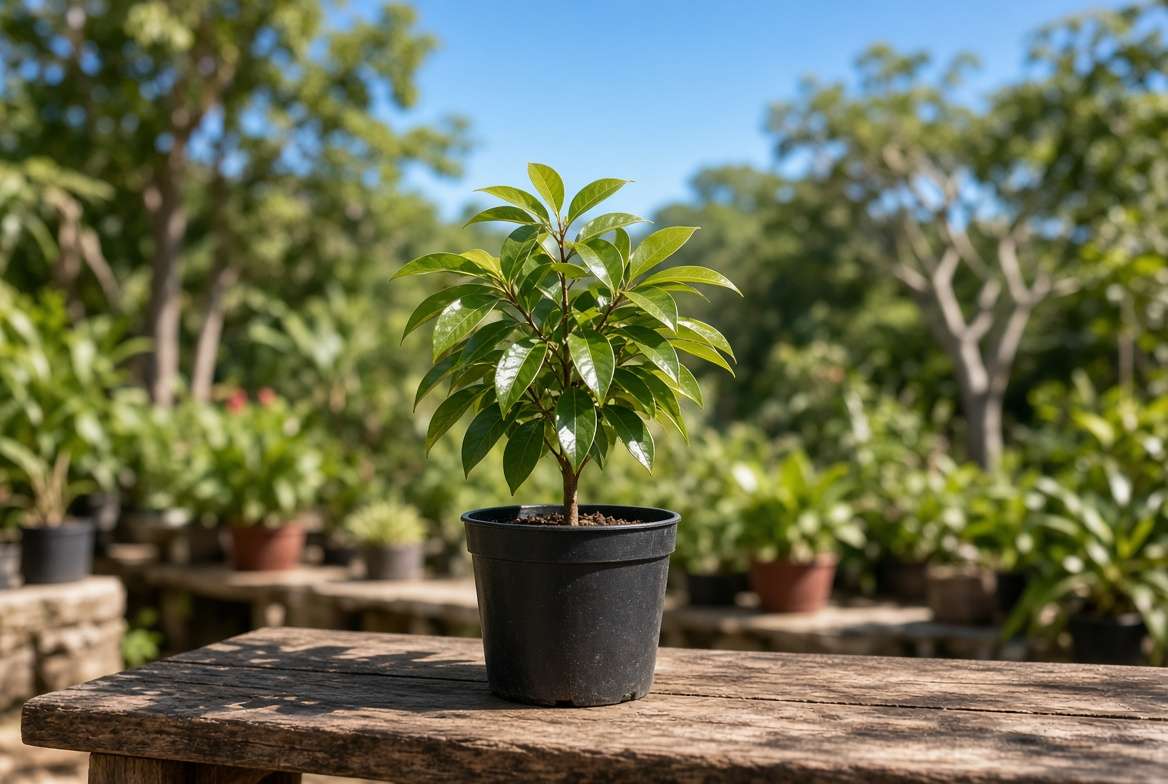
🏆 Expert Tip: Always purchase an air-layered (also known as marcotted) or grafted lychee plant from a certified, reputable nursery. Air-layering is a propagation technique where a branch of a mature, already-fruiting tree is encouraged to grow roots while still attached to the mother plant. Once rooted, it is cut off and potted. Because it is a genetic clone of mature wood, an air-layered lychee can begin fruiting in just 1 to 3 years!
Top Cultivars for Home Growers 🥇
Not all lychee varieties perform the same way in every climate. Selecting a cultivar that matches your local environment is crucial for how to grow lychee successfully. Here are the top three varieties for home growers:
-
Mauritius: If you want reliability, this is your tree. Originating from South Africa, the Mauritius is the most dependable producer for home gardeners. It requires fewer “chill hours” than other varieties, making it ideal for warmer subtropical zones (like South Florida or Southern California). The fruit is slightly tart but incredibly juicy with a medium-sized seed.
-
Brewster: Known for its large, exceptionally sweet, and juicy fruit, the Brewster is a commercial favorite. However, it is a vigorous grower that can become quite large, and it demands strict winter chill hours to trigger blooming. If you live in a climate that stays uniformly hot all winter, a Brewster may struggle to fruit.
-
Emperor: This is the ultimate container-friendly variety. The Emperor is a naturally slow-growing dwarf cultivar that produces absolutely massive fruits (sometimes the size of a golf ball!). Because of its compact size, it is highly recommended for patio growers or those who need to bring their plants indoors during hard freezes. 🏡🪴
2. Perfecting the Environment: Climate, Light, and Soil ☀️
To get a lychee plant to thrive, you must mimic its natural habitat. It wants a rich, well-draining forest floor, abundant sunlight, and protection from harsh elements.
Sunlight Requirements for Maximum Yield 🌞
For maximum fruit production, a mature lychee tree requires full sun—meaning a minimum of 6 to 8 hours of direct, unobstructed sunlight every day. Sunlight is the energy source the tree uses to synthesize the sugars that will eventually sweeten your fruit.
However, a word of caution for young saplings: baby lychee trees evolved as understory plants in tropical forests. If you buy a young, nursery-grown lychee and immediately plant it in the blazing mid-summer sun, its delicate leaves will sunburn, turn crispy, and drop. Pro-Tip: Acclimate young trees slowly. Use a 30% shade cloth for the first few months after transplanting, or plant them in a spot that receives morning sun and dappled afternoon shade until they are established.
Getting the Soil pH Just Right 🪨
If you want to know how to grow lychee trees that are vigorously healthy, look at your dirt. Lychees absolutely despise alkaline soils. They demand a slightly acidic soil environment, ideally with a pH hovering between 5.0 and 5.5.
When the soil pH rises above 6.5, the tree loses its ability to absorb vital micronutrients like iron and zinc from the soil, leading to a condition called chlorosis (which we will cover in the fertilizer section).
-
Drainage is Non-Negotiable: Lychee roots are highly susceptible to root rot. If you plant your tree in heavy clay soil that pools water after a rainstorm, it will literally suffocate.
-
The Fix: If you have poor drainage, plant your lychee on a raised mound (about 2 to 3 feet high) composed of rich organic compost, peat moss (which naturally lowers pH), and perlite or coarse sand. Mulch heavily with pine bark to retain moisture and slowly acidify the soil as it breaks down. 🌲

Wind Protection: The Overlooked Necessity 🌬️
One of the least discussed but most critical aspects of lychee tree care is wind management. Lychee wood is surprisingly brittle. A strong gust can easily snap branches laden with developing fruit.
Furthermore, dry winds are the enemy of lychee flowers. In the spring, when your tree pushes out delicate panicles (flower spikes), a dry wind can desiccate the blooms before pollination occurs, completely wiping out your harvest for the year. If you live in a windy area, plant your lychee near a windbreak—like a sturdy fence, a wall of your house, or a dense hedge of robust trees. 🧱🍃
3. The Watering Protocol: Balancing Moisture and Drought 💧
Watering a lychee tree is not a “set it and forget it” task. To achieve a sweet harvest, your watering schedule must dynamically shift with the seasons. Misunderstanding this cycle is the number one reason growers complain about their lychee not fruiting.
Spring and Summer (The Growth Phase) 🌧️
From the moment you see flower spikes forming in early spring, through the fruit-swelling stage of early summer, your lychee plant needs abundant, consistent moisture. The tree is expending massive amounts of energy to produce juicy fruits, and a drought during this period will cause the tree to panic and drop its fruit prematurely. During this phase, water deeply 2 to 3 times a week (depending on rainfall and soil drainage). The soil should stay evenly moist, like a wrung-out sponge, but never swampy.
Fall and Winter (The Dormancy Phase) 🏜️
🚨 THIS IS THE SECRET TO FRUITING 🚨 As late fall and winter approach, you must drastically reduce your watering. In their native habitat, winters are very dry. By deliberately withholding water and inducing mild drought stress during the cooler months, you signal to the plant that it is time to stop growing leaves and start preparing to reproduce.
If you continue to water heavily in the winter, the tree will produce a “winter flush” of new red leaves. If a branch flushes with leaves in December or January, it will not produce flowers in the spring. You want the tree to look quiet and dormant during the winter. Only water it if it hasn’t rained for several weeks and the leaves are visibly drooping.
I have reached a natural stopping point to ensure the highest quality generation without truncation.
4. Feeding for Yield: The Best Fertilizer Strategy for Lychee Trees 🪴
If watering is the steering wheel of lychee tree care, fertilizer is the accelerator. However, applying the wrong type of fertilizer at the wrong time is a guaranteed recipe for “lychee not fruiting” syndrome.
The N-P-K Ratio for Fruit Production 🧪
A common mistake is treating a tropical fruit tree like a lawn. Standard, off-the-shelf fertilizers are often packed with high levels of nitrogen (the first number in the N-P-K ratio). While nitrogen is essential for young saplings to establish their canopy, feeding a mature lychee high nitrogen will result in massive, beautiful vegetative growth—and zero flowers.
Once your lychee plant is old enough to fruit (typically year 3 for an air-layered tree), you must transition to a bloom-boosting regimen. Look for a balanced, organic mix with lower nitrogen and higher potassium and phosphorus (something akin to a 4-8-6 or 0-0-22 blend). Potassium is particularly vital; it thickens the stems, improves fruit size, and increases the sugar content (Brix level) of the aril (the edible flesh).
📅 The 3-Part Expert Feeding Schedule:
-
Post-Harvest (Late Summer): Apply a balanced organic fertilizer immediately after harvesting to help the tree recover and push one final flush of leaves before fall.
-
Early Spring (Pre-Bloom): Once you see the very first signs of flower spikes emerging, apply a high-potassium fertilizer or a foliar spray of kelp extract to support massive blossom development.
-
Fruit Set (Early Summer): When the flowers drop and tiny, pea-sized green fruits appear, give the tree a light feeding of an organic fruit-tree blend to sustain the rapid cellular expansion of the fruit. (Crucial Note: Absolutely ZERO fertilizer from late fall through mid-winter. You want the tree dormant, not feeding!)
Essential Micronutrients: Iron, Zinc, and Magnesium 🧲
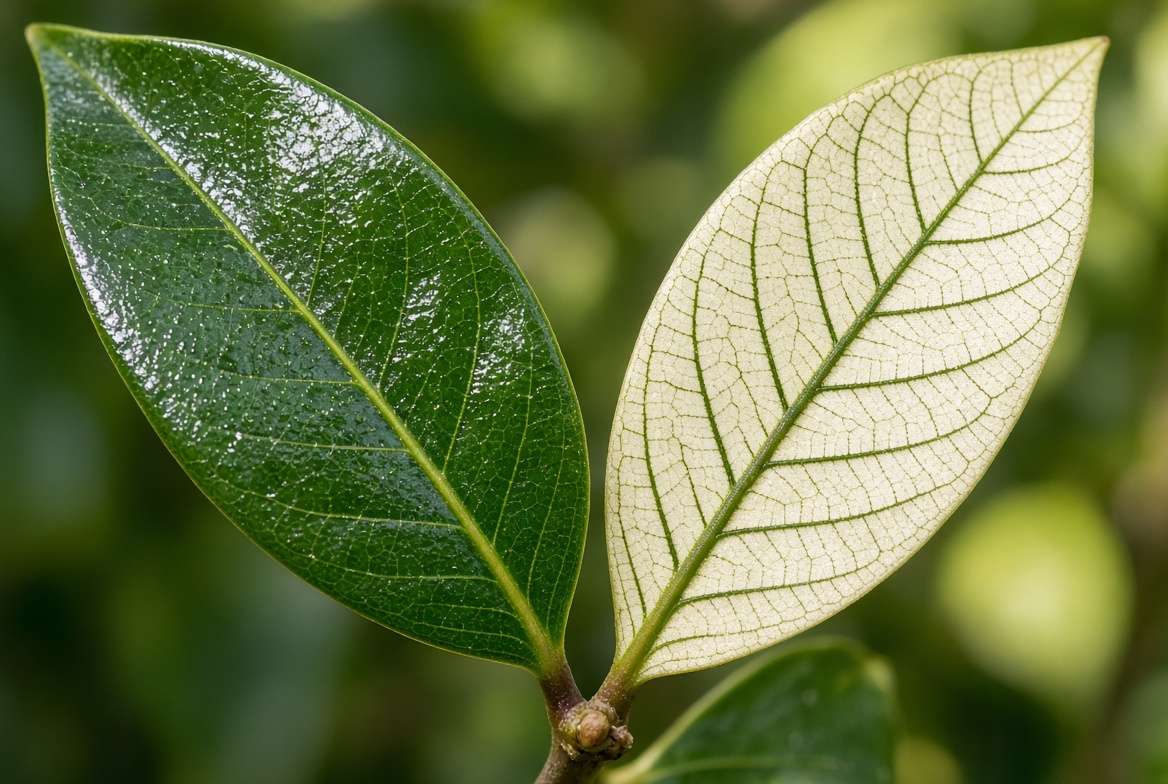
Lychees are notorious micronutrient hogs. If your soil pH creeps above 6.5, the tree will quickly show signs of chlorosis. You will notice the newer leaves turning a sickly pale yellow or white, while the veins remain starkly dark green. This is almost always an iron or zinc deficiency.
[Expert Tip]: Don’t just throw iron nails in the dirt. You need to apply chelated iron (specifically EDDHA iron for alkaline soils) as a soil drench. For faster absorption, use a chelated iron and zinc foliar spray applied directly to the leaves during the early morning hours. Magnesium deficiency (older leaves turning bronze or yellow at the edges) can be easily fixed with a light top-dressing of Epsom salts in the spring.
5. The “Magic” Ingredient: Chill Hours and Pruning ✂️❄️
This section separates the amateurs from the master growers. If your mature lychee plant is in full sun, correctly watered, perfectly fertilized, but still not fruiting, the missing puzzle piece is almost certainly chill hours and canopy management.
What Are “Chill Hours” and Why Do Lychees Need Them? 🌡️
A “chill hour” is exactly what it sounds like: one hour of time where the ambient temperature drops into a specific cold range. For a lychee, that magic window is between 32°F and 45°F (0°C–7°C). Depending on the cultivar, your tree needs between 100 and 200 cumulative chill hours during the winter to trigger the physiological shift from producing leaves to producing flower panicles.
-
For Optimal Climates: If you live in USDA Zones 9b to 10b, nature will likely provide these chill hours for you between December and February.
-
For Borderline Tropical Climates: If you live in a zone that stays extremely hot all winter (like Deep South Florida or tropical greenhouses), you have to get creative. Growers will sometimes withhold all water starting in November, creating drought stress that mimics the halting effect of winter chill. Some arborists even use shade cloth over the root zone to keep the soil temperature significantly cooler than the ambient air, tricking the roots into dormancy.
Expert Pruning Techniques for Better Airflow 🌿
Lychees are terminal bloomers, meaning they only produce flowers at the very tips of their branches. Therefore, structurally speaking: more branch tips = more potential flower spikes = more fruit.
How to “Tip Prune” for Yield: The best time to prune your tree is simultaneously with your harvest or immediately after (mid-to-late summer). When you harvest, snip off the branch about 2 to 3 inches below the fruit cluster. This cut forces the branch to bifurcate (split into two or three new branches) as it heals. By strategically tip-pruning the entire canopy, you double the number of terminal ends available for next spring’s bloom.
When NOT to Prune: Never, ever prune your tree in the late fall or winter. The tree is actively forming microscopic floral buds during this time. If you trim the tree in December to make it look tidy, you are literally cutting off your entire spring harvest.
6. Pest and Disease Management: Protecting Your Harvest 🐛
Nothing is more heartbreaking than getting your lychee to finally set fruit, only to lose the crop to invaders. Because lychees produce such sugary sap and fruit, they are a magnet for specific pests.
The Lychee Erinose Mite (The #1 Enemy) 🕷️
If you see raised, blister-like bumps on the tops of your lychee leaves, and a dense, reddish-brown, velvety fuzz on the undersides, you have the Lychee Erinose Mite (LEM). Novice growers often mistake this for a rust fungus, but it is actually a microscopic mite that injects toxins into the leaf, causing the leaf hairs to grow out of control to create a protective home for the colony.
Severe LEM infestations will attack flowers and destroy the fruit set.
-
The Fix: Minor infestations can be managed by aggressively pruning and bagging the infected leaves (do not compost them). For persistent issues, spray the canopy with wettable sulfur. Warning: Never apply sulfur if the temperature is over 85°F, as it will scorch the leaves.
Stink Bugs and Webworms 🪲
During the bloom phase, webworms may attempt to weave your delicate flower panicles together, eating the blossoms from the inside out. Later in the season, Southern Green Stink Bugs may pierce the ripening fruit, causing it to rot and drop prematurely.
-
The Fix: Manual removal and daily inspections are your best first line of defense. If you must spray, use organic, cold-pressed Neem oil applied at dusk. Never spray pesticides—even organic ones—while the flowers are actively open during the day, as you will kill the bees and pollinators required to set your fruit!
7. Harvesting and Enjoying Your Sweet Reward 🧺
After months of careful cultivation, late spring arrives, and your tree is finally laden with clusters of vibrant fruit.
How to Know They Are Ripe: Lychees do not ripen off the tree. If you pick them green, they will stay sour forever. Wait until the skin turns a uniform, vibrant red or deep pink (depending on the cultivar). The small spikes or bumps on the skin (tubercles) will noticeably flatten and spread out as the fruit swells with juice. A fully ripe lychee will also emit a distinctly sweet, floral fragrance.
[Pro Tip for Harvesting]: Never grab a single lychee and pull it off the tree. The stem is firmly attached to the flesh; pulling it will tear the delicate skin at the top of the fruit, causing it to spoil and ferment within 24 hours. Instead, use sterilized pruning snips to cut the entire panicle (branchlet) off the tree. Keep the fruits attached to their stems until you are ready to peel and eat them to maximize their shelf life.
8. Frequently Asked Questions (FAQs) ❓
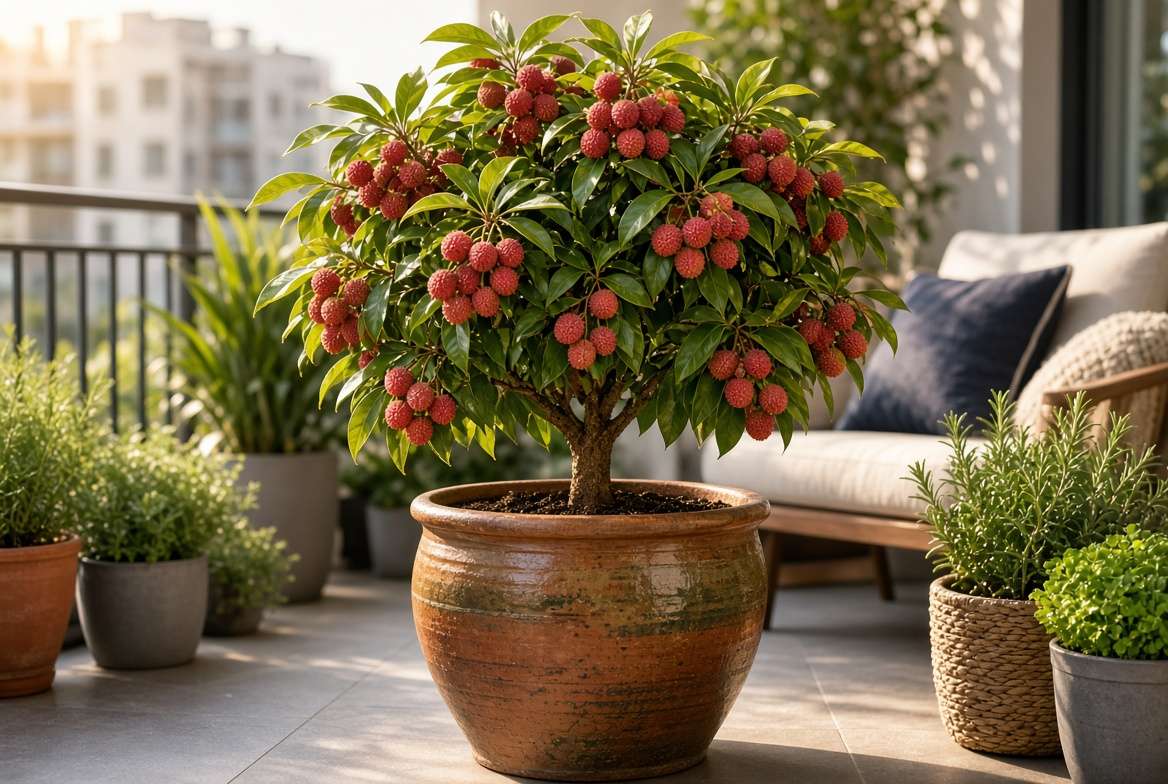
Can you grow a lychee plant in a pot? Absolutely. If you are a patio gardener or live in a cold climate, choose a dwarf variety like the Emperor. Plant it in a 15 to 20-gallon container using a lightweight, well-draining, slightly acidic potting mix. Potted lychees require much stricter moisture monitoring, as containers dry out exponentially faster than ground soil. You will also need to bring the pot indoors to a sunny window before the first winter frost.
Why are the leaves on my lychee plant turning brown and crispy at the tips? Brown, crispy leaf tips are almost always a sign of salt accumulation or moisture stress. This can be caused by watering with hard tap water, over-fertilizing (which burns the roots with chemical salts), or exposure to dry, harsh winds. To fix this, thoroughly flush the root zone with heavy, deep watering to wash the salts away, and ensure your tree has adequate wind protection.
Do you need two lychee trees to get fruit? No! Lychee trees are monoecious and completely self-pollinating. A single tree produces both male and female flowers on the same panicle. However, because the male and female flowers sometimes open on slightly different days, having a second tree nearby, or actively planting companion flowers (like lavender or marigolds) to attract native bees, will dramatically increase cross-pollination and double your overall fruit yield.
Growing a fruit-bearing lychee plant is a masterclass in patience and observation. By starting with a genetically superior air-layered plant, respecting the crucial winter chill and drought cycles, feeding precisely for fruit rather than foliage, and implementing strategic pruning, you can break the frustrating cycle of empty branches. The journey from a stubborn evergreen bush to a heavy-yielding tropical centerpiece requires dedication, but the first time you peel back the rough, crimson skin of a perfectly ripe lychee grown in your own backyard, you will know every ounce of effort was worth it.
If you are ready to take your tropical gardening to the next level, drop a comment below with your growing zone and let us know which cultivar you are planting this season! 🍒🌿











