
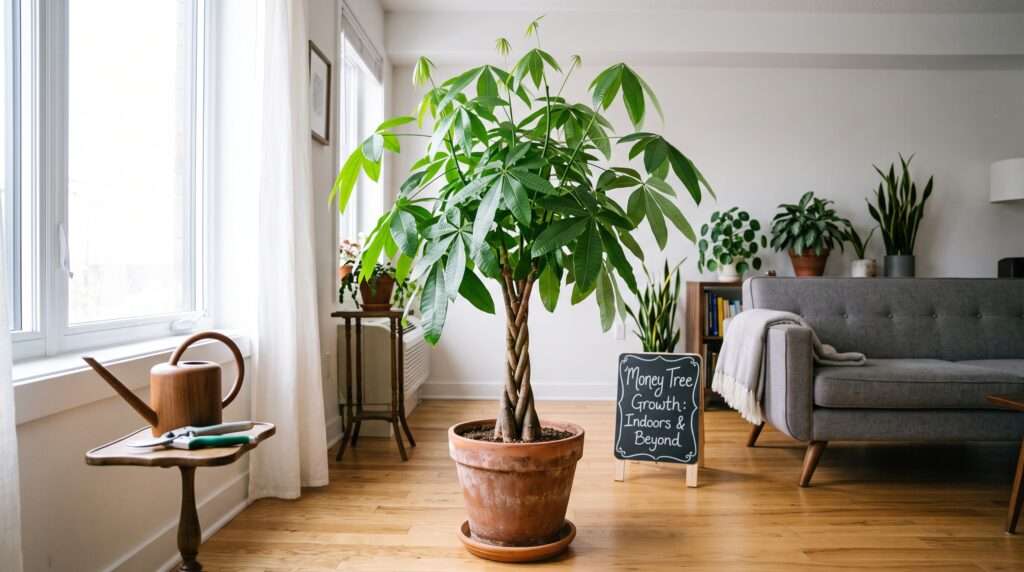
Bringing home a tiny, beautifully braided Pachira aquatica for your office desk or windowsill is a rite of passage for indoor plant lovers. But as weeks turn into months, that little tabletop companion often starts pushing out massive, umbrella-like green leaves at an astonishing rate. If you are watching your plant stretch toward the ceiling, you are likely facing a sudden moment of botanical panic: exactly how big do money trees get?
The short answer is that your indoor space and your pruning shears dictate its final size. Having cultivated, rescued, and propagated Money Trees for over a decade, I’ve seen firsthand how drastically their growth habits shift depending on their environment. There is a massive difference between the controlled, optimal conditions of a commercial nursery, the wild swamps of their native habitat, and the corner of your living room.
In this comprehensive guide, we will break down the true growth potential of your Money Tree, the environmental factors that fuel (or restrict) its height, and the exact step-by-step pruning techniques you need to keep this beautiful houseplant thriving within your space. 🪴
The Quick Answer: Indoor vs. Outdoor Size Limits 📏
To understand your plant’s potential, you have to look at its genetics and contrast them with your living room’s limitations.
Indoor Houseplants (The Reality Check) 🏡
Under standard indoor conditions, a potted Money Tree will generally reach a maximum height of 6 to 8 feet (1.8 to 2.4 meters). Several factors naturally stunt their growth indoors:
-
Container Constraints: Root expansion directly correlates with canopy expansion. A standard indoor plant pot limits the root ball, effectively capping the tree’s vertical growth.
-
The Braided Trunk: Most commercially sold Money Trees feature three to five saplings braided together. While visually stunning, this artificial structure slows down the nutrient uptake and overall vertical momentum compared to a single, thick trunk.
-
Ceiling Height & Light: Standard residential ceilings are 8 to 9 feet tall. As the tree approaches the ceiling, the light angle changes, and the micro-climate (heat near light fixtures or ceilings) often naturally limits further upward stretching.
In the Wild (The Native Habitat) 🌴
If you were to release your houseplant into its native environment, it would be unrecognizable. Pachira aquatica originates in the tropical wetlands and swamps of Central and South America. In these nutrient-rich, hyper-humid environments, a wild Money Tree can reach a staggering 60 feet (18 meters) tall.
In the wild, they don’t have braided trunks; they develop massive, singular woody bases that produce stunning, large white flowers and edible chestnut-like seed pods—features you will almost never see in an indoor, potted specimen.

Growth Rate Expectations 📈
If you are wondering how fast your plant will go from a tabletop decoration to a floor-standing centerpiece, expect rapid momentum. During the active growing seasons (spring and summer), a healthy Money Tree can grow up to 24 inches (2 feet) per year.
-
Spring/Summer: Explosive growth, frequent new leaf unfurling, and rapid vertical stretching.
-
Fall/Winter: Dormancy period. Growth slows to a near halt as the plant conserves energy due to lower light levels and cooler temperatures.
Environmental Factors Dictating Growth 🌱
Your Money Tree doesn’t just grow on autopilot; its ultimate size is entirely dictated by the environment you provide. If you want a massive indoor tree, you need to optimize the following elements. If you want to keep it small, restricting these elements (safely) is your best strategy.
Light Exposure (The Engine) ☀️
Light is the biological engine driving your Money Tree’s growth rate.
-
Bright, Indirect Light: This is the sweet spot. Placing your tree near an east-facing or a sheer-curtained south-facing window provides the energy needed for fast, lush, dense foliage.
-
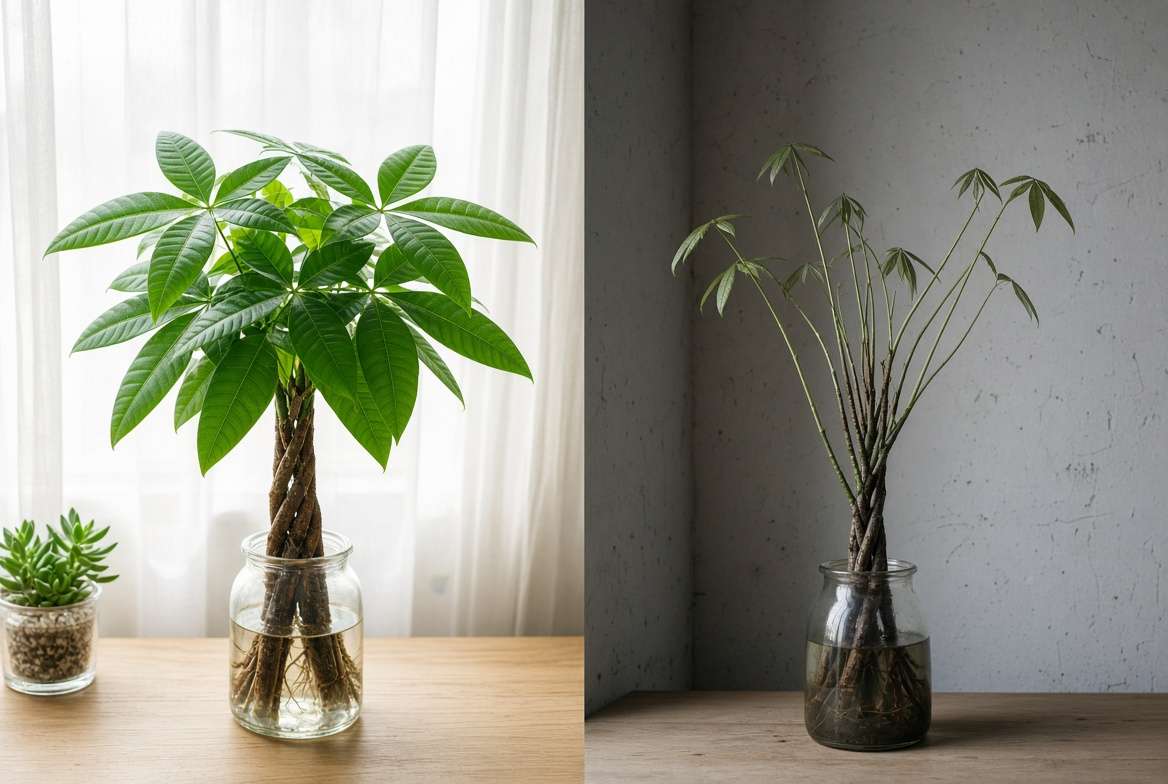
Low Light (The Leggy Trap): If placed in a dark corner, the plant won’t necessarily stop growing—but it will grow poorly. The tree will stretch out desperately looking for sunlight, resulting in “leggy” growth (long, weak stems with huge gaps between the leaves). It may get taller, but it will look sparse and sickly.
-
Direct Sun: Harsh, direct midday sun will scorch the leaves, causing brown, crispy edges and stunting the plant’s overall health.
Pot Size & Root Binding 🏺
There is a direct botanical correlation between the size of a plant’s root ball and the volume of its canopy.
-
Keeping it Small: If you want your Money Tree to remain a compact desk plant, keep it lightly root-bound. A tight pot restricts the root system’s ability to pull in massive amounts of water and nutrients, slowing upward growth.
-
Encouraging a Giant: If you want an 8-foot statement piece, you must systematically “up-pot” the plant. Moving the tree to a pot that is 2 inches wider in diameter every one to two years gives the roots room to spread, triggering a massive surge in canopy growth.
Fertilization Schedules 💧
Consistent moisture (without waterlogging) and proper nutrition dictate the size of individual leaves and the thickness of new stems.
-
The N-P-K Boost: During spring and summer, applying a balanced, water-soluble houseplant fertilizer (like a 20-20-20 or 10-10-10 ratio) diluted to half-strength once a month fuels rapid cellular expansion.
-
Winter Fasting: Never fertilize during the winter dormancy period. The plant cannot utilize the nutrients, leading to root burn from mineral buildup in the soil.
[Pro Tip Box] The Quarter-Turn Rule 🔄 Money Trees exhibit strong phototropism, meaning they aggressively grow toward their light source. If you don’t intervene, the tree will become lopsided and heavy on one side, which can cause the braided trunk to snap or the pot to tip over as it gets larger. Rotate your plant 90 degrees every time you water it to ensure straight, balanced, and sturdy vertical growth.
Step-by-Step Pruning & Repotting for Size Control ✂️
If your Pachira aquatica is threatening to take over your living room, do not panic. Money Trees are incredibly resilient and actually respond beautifully to aggressive pruning. In fact, regular maintenance is the secret to keeping that lush, compact, “umbrella” canopy look that made you fall in love with the plant in the first place.
As a houseplant owner, you are the architect of your plant’s final size. Here is exactly how to manage its footprint safely and effectively.
Recognizing When to Prune 🚨
Pruning shouldn’t just be a reaction to a plant hitting the ceiling. To maintain a healthy houseplant, you should proactively look for these clear indicators that your Money Tree is ready for a haircut:
-
Loss of Shape: The classic, dense, rounded canopy has turned into long, wild, spindly branches shooting off in random directions.
-
Ceiling Proximity: The topmost leaves are within 6 inches of your ceiling or light fixtures (which can cause heat damage or leaf scorching).
-
Lower Leaf Drop: The plant is shedding its lower foliage while aggressively pushing new growth at the top. This happens because the plant is redirecting all its energy toward vertical stretching.
-
Top-Heavy Instability: The canopy has become so large and heavy that the braided trunk is bending, or the pot feels like it might tip over.
The Pruning Process (Height Control) 📉
Pruning a houseplant can feel intimidating, but Money Trees are very forgiving. The best time to do this is in early spring, right as the plant exits winter dormancy and enters its active growing phase.
-
Disinfect Your Tools 🧽: Never skip this step. Wipe down your bypass pruning shears with rubbing alcohol (isopropyl alcohol). Unclean shears can introduce fungal spores or bacterial blight directly into the plant’s vascular system.
-
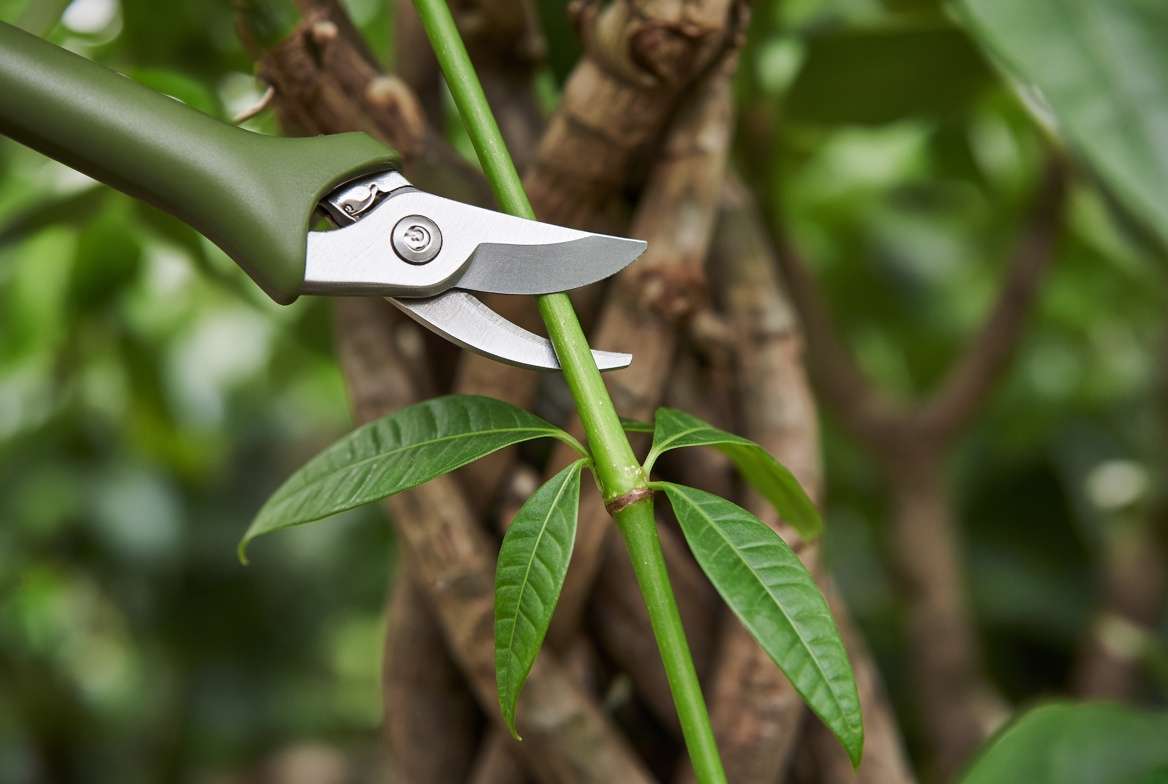
Identify the “V” Nodes 🌿: Look closely at the stem. You will see small bumps or joints where leaves emerge—these are called nodes. Just above these nodes are axillary buds, which contain the dormant cells waiting to push out new branches.
-
Make the Cut ✂️: To restrict height, trace the tallest, most overgrown branches down to the canopy line you wish to maintain. Make your cut exactly half an inch above a node, cutting at a clean 45-degree angle. The angled cut prevents water from pooling on the open wound, which prevents rot.
-
Redirecting the Energy 🔄: When you cut off the top of a branch (the apical meristem), you remove the growth hormone (auxin) that tells the plant to grow straight up. The plant will automatically redistribute its energy to the nodes below the cut, encouraging lateral, bushy growth instead of vertical height.
Bonsai vs. Behemoth Repotting 🔄
Pruning the top of the plant is only half the battle. What you do beneath the soil dictates the long-term size of your Money Tree.
The Bonsai Technique (Keeping it Small): If you want to permanently limit your Money Tree to a desktop or corner-table size, you must practice root pruning. Every two to three years, gently remove the plant from its container. Using sterile shears, trim away up to 25% of the outer root ball, focusing on the thickest taproots while leaving the fine, hair-like feeder roots intact. Repot the tree in the exact same pot using a fresh, well-draining potting mix (a blend of peat moss, perlite, and coarse sand). This refreshes the soil nutrients without giving the plant room to expand.
The Behemoth Technique (Encouraging Maximum Growth): If your goal is to grow a towering, 8-foot indoor tree, you must upgrade its home. Wait until roots are visibly circling the bottom of the pot or poking out of the drainage holes. Choose a new container that is 2 to 4 inches wider in diameter than the current one. Gently tease the root ball to loosen tightly wound roots, and repot using a nutrient-rich, well-aerated soil. This sudden availability of space and fresh nutrients will trigger a massive upward growth spurt.
Frequently Asked Questions (FAQs) 💬
Over the years, I’ve received countless questions from indoor gardeners trying to tame their Money Trees. Here are the most common concerns regarding their growth habits:
Does braiding the trunk stop it from growing? 🌿
No, braiding does not stop a Money Tree from growing, though it does slow down its vertical momentum compared to a single-trunk tree in the wild. The braid acts as a slight restriction on the vascular system. As the plant grows taller, the green, pliable new stems at the top will continue to grow straight up. If you want to maintain the braided look all the way up, you must gently weave these new, flexible green stems together and loosely tie them with soft garden twine before they harden into woody bark.
Why is my money tree growing so fast? 🚀
If your plant is exploding with new growth, congratulations! You have provided it with a perfect micro-climate. Rapid growth is usually the result of hitting the “sweet spot” of bright, indirect sunlight, warm ambient temperatures (between 65°F and 80°F), and a properly balanced watering schedule. If you recently applied a nitrogen-rich fertilizer, this will also cause a rapid flush of large green leaves. If it’s growing too fast for your space, simply scale back on the fertilizer and follow the pruning steps outlined above.
Can you safely top a money tree? 🪚
Yes! “Topping” refers to cutting off the central, main leader trunk of a tree to drastically reduce its height. While this can shock or kill more delicate houseplants, Pachira aquatica is tough. If your tree has completely outgrown your home, you can take a sterile saw or heavy-duty loppers and cut the main trunks down by a third or even half of their total height. Within a few weeks, you will see new green shoots emerging from the woody stumps just below your cuts.
How wide do money trees get indoors? ↔️
While we talk a lot about height, canopy width is just as important for space planning. Indoors, a mature Money Tree can develop a canopy spread of 3 to 4 feet wide. Regular pruning of lateral branches is necessary if you are keeping the plant in a narrow corner or a tight hallway to prevent it from brushing against walls (which can damage the foliage).
Conclusion: You Are in Control 🏁
So, exactly how big do money trees get? If you plant them in a tropical swamp, they will become 60-foot giants. But in your living room, they will comfortably peak around 6 to 8 feet tall—and only if you allow them to!
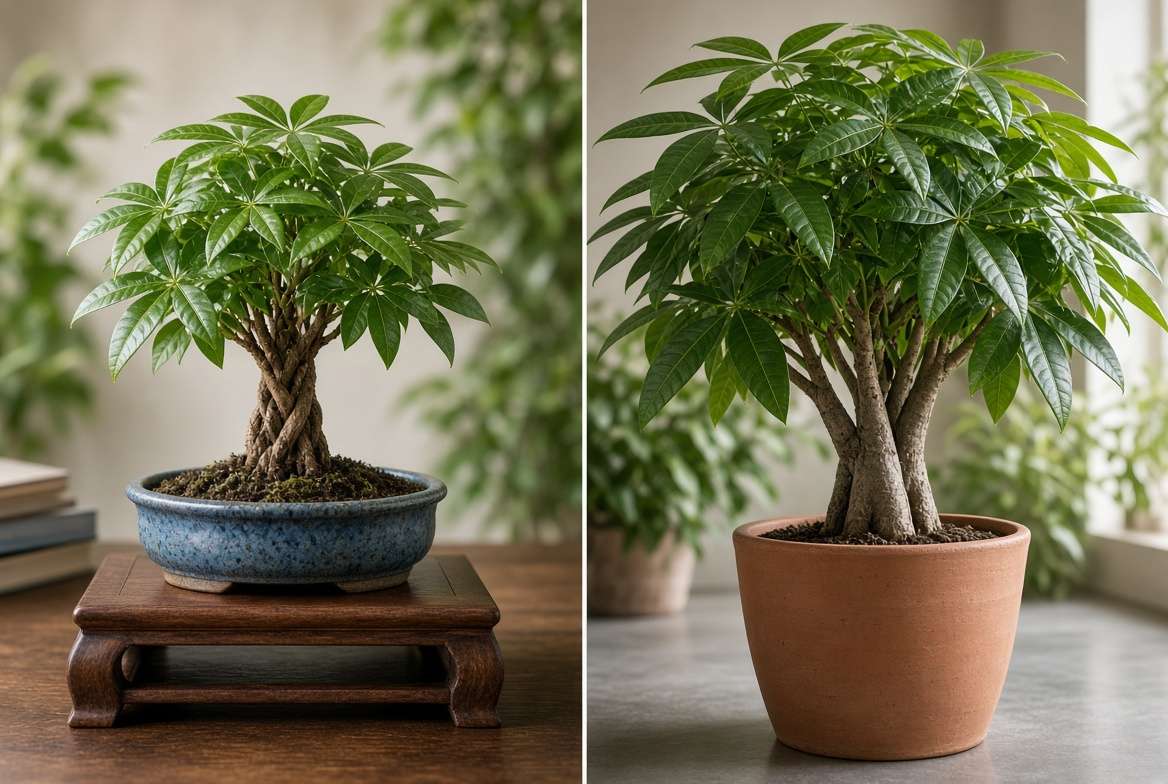
The true beauty of the Pachira aquatica is its adaptability. Whether you want a compact, braided bonsai for your office desk or a towering green focal point for your sunroom, the plant will happily oblige. By mastering the balance of pot size, light exposure, and confident pruning, you hold the power to shape your Money Tree perfectly to your space.
We would love to hear from you! How tall is your Money Tree right now, and what is your ultimate goal for its size? Drop your plant’s current measurements and any pruning questions you have in the comments below! 👇🌿











