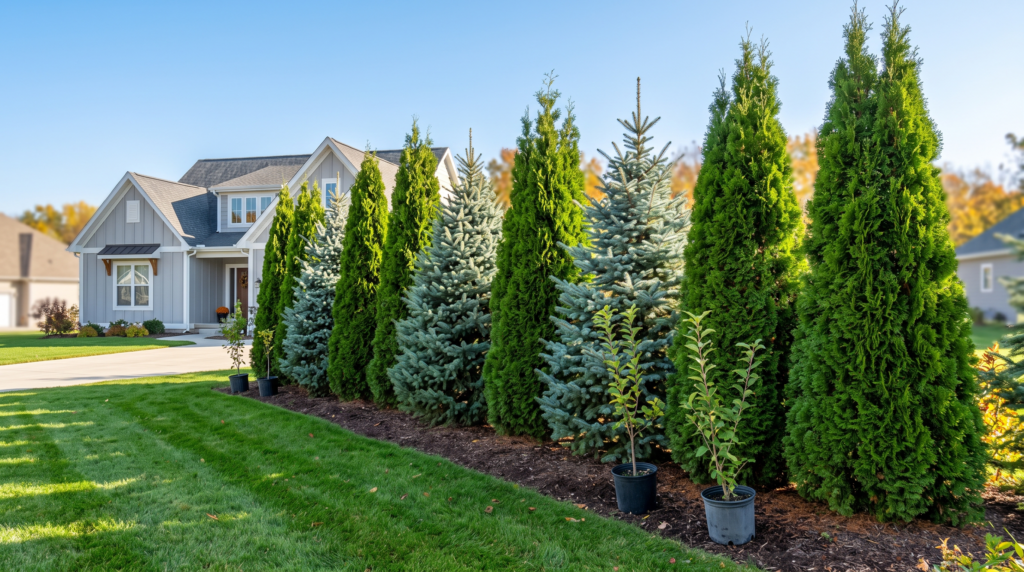
Imagine waking up to the sound of relentless winter winds rattling your windows, driving up your heating bills, and wreaking havoc on your patio furniture. Or perhaps you’re simply tired of the lack of privacy from a busy road right outside your property. If you want a permanent, natural solution, planting one of the best 10 wind barrier trees is the smartest investment you can make for your yard.
Unlike standard wooden or vinyl fences that eventually rot, lean, or blow over in severe storms, a living windbreak grows stronger and more effective year after year. It is a dual-purpose landscape upgrade: a well-placed, dense tree line deflects howling gusts far better than synthetic barriers, instantly increases your overall property value, and can even reduce your home heating and cooling costs by up to 30%.
Best of all, you don’t need a degree in horticulture or an expensive landscaping crew to create your own sheltered sanctuary. We have done the heavy lifting for you, analyzing current growth performance, structural integrity, and verified customer reviews. In this guide, we will review exactly which trees offer the fastest growth, the strongest wind protection, and the best value—all of which you can order directly to your door from Amazon to get planting immediately.
Buying Guide: How to Choose the Right Windbreak Tree
Before diving into the specific trees, it is crucial to understand that a successful windbreak relies on pairing the right tree with your specific landscape conditions. A tree that thrives in a loamy, well-draining soil in Georgia might struggle in the heavy clay of Ohio.
-
Growth Rate vs. Wood Strength: It is tempting to choose the fastest-growing tree available. However, trees that shoot up incredibly fast sometimes have softer wood or shallower root systems, making them vulnerable in hurricane-force winds. A good windbreak balances rapid growth with structural integrity.
-
Evergreen vs. Deciduous: For a wind barrier, evergreens (conifers) are the gold standard. They retain their dense needles year-round, providing crucial friction against harsh winter winds when deciduous trees have dropped their leaves and are effectively useless for screening.
-
Soil Health and Drainage: Even the most robust saplings need a healthy foundation. Pay attention to your soil’s drainage. Trees like the Redcedar tolerate poor, rocky soil, while others require rich, well-drained loam to establish deep, wind-resistant taproots.
-
Spacing and Staggering: For maximum wind deflection, arborists recommend planting your trees in a “staggered double row” (a zigzag pattern). This prevents wind from tunneling straight through the gaps between trunks.
Quick Comparison: Top Windbreak Trees
To keep things simple, here is a quick-reference guide to our top picks.
| Tree Species | Ideal Use Case | Growth Speed |
| 1. Thuja Green Giant | Best Overall All-Rounder | Very Fast (3-5 ft/yr) |
| 2. Leyland Cypress | Coastal Areas & Rapid Screening | Extremely Fast (3-4 ft/yr) |
| 3. Norway Spruce | Severe Freezing Winter Climates | Medium (1-2 ft/yr) |
| 4. Emerald Green Arborvitae | Small Yards & Tight Spaces | Slow (6-9 in/yr) |
| 5. Colorado Blue Spruce | High-Impact Visual Curb Appeal | Medium (1-2 ft/yr) |
| 6. Eastern Redcedar | Drought & Poor Soil Conditions | Medium (1-2 ft/yr) |
| 7. Douglas Fir | Slopes & Erosion Control | Medium (1-2 ft/yr) |
| 8. Japanese Cedar | High Heat & Humid Climates | Fast (2-3 ft/yr) |
| 9. Black Hills Spruce | Impenetrable Snowdrift Defense | Slow (6-12 in/yr) |
| 10. Nellie Stevens Holly | Broadleaf Alternative (No Needles) | Fast (2-3 ft/yr) |
Detailed Product Comparison & Reviews
1. Thuja Green Giant Arborvitae (The Best Overall Windbreak)
Product Description:
The Thuja Green Giant is a vigorous, incredibly resilient hybrid evergreen that forms a dense, dark-green pyramidal shape. Because of its uniform growth habit, it creates a striking, photogenic living wall that looks professionally manicured with almost no effort. It establishes deep, stabilizing roots quickly, making it a formidable opponent against high winds.
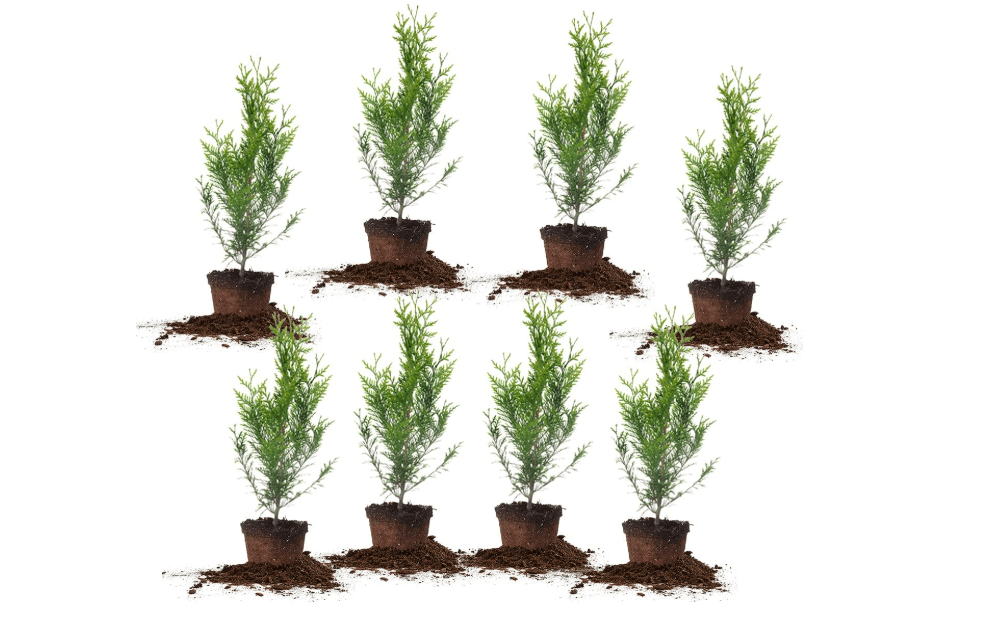
Price Tier: $86.64
Key Features & Benefits:
-
Hardiness Zones: 5-9
-
Growth Rate: Up to 3 to 5 feet per year once established.
-
Mature Height: 40-60 feet.
-
Highly resistant to deer, bagworms, and most common arborvitae diseases.
Pros & Cons:
-
Pros: Exceptional growth speed; adapts well to both heavy clay and sandy soils; requires practically no pruning.
-
Cons: Can easily outgrow small urban yards; requires consistent watering during its first summer.
Amazon Customer Ratings and Reviews:
Buyers frequently praise the secure packaging from certified Amazon nursery vendors. Many reviews highlight that even small 1-to-2-foot saplings take off rapidly in their second year, forming a solid visual and wind barrier much faster than anticipated.
Why it’s a Good Choice:
It perfectly balances sheer vertical speed with a robust, wind-resistant structure. Unlike weaker fast-growing trees, the Green Giant’s trunk remains flexible yet strong.
Ideal Use Case:
Large suburban lots or rural properties needing a fast, tall screen to block sweeping winds across open land.
2. Leyland Cypress (The Fastest Growing Option)
Product Description:
If you need a windbreak right now, the Leyland Cypress is the industry standard for speed. It features soft, feathery, bluish-green foliage that grows so rapidly it can form a complete wall of privacy in just a few seasons.
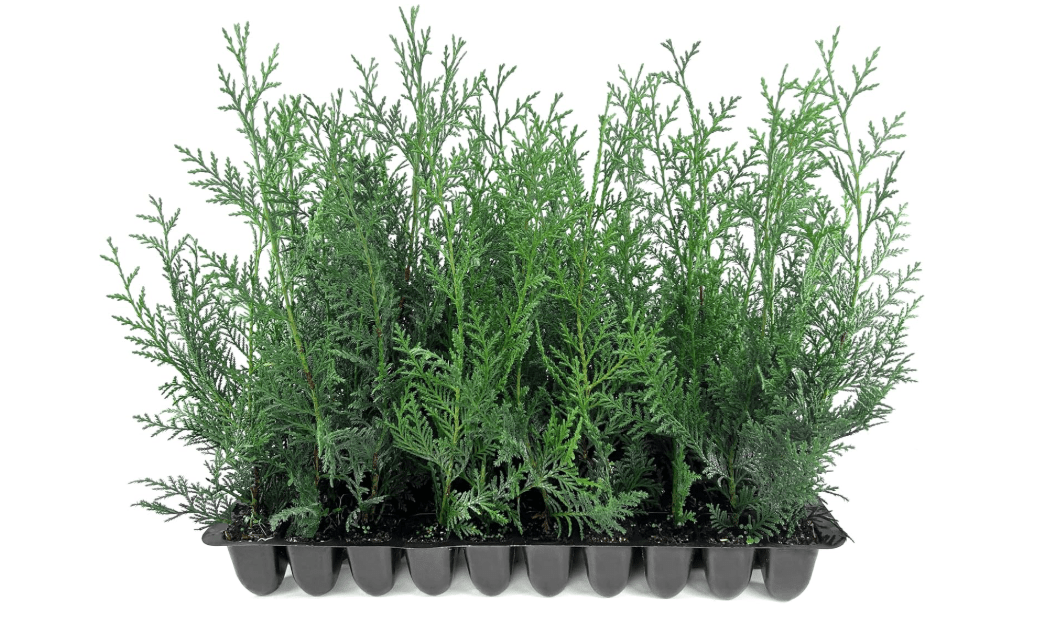
Price Tier: $69.97
Key Features & Benefits:
-
Hardiness Zones: 6-10
-
Growth Rate: 3 to 4 feet per year.
-
Mature Height: 60-70 feet.
-
Excellent tolerance to salt spray, making it great for coastal properties.
Pros & Cons:
-
Pros: Unbeatable for instant gratification; fills in horizontal gaps quickly; beautiful soft texture.
-
Cons: Has a relatively shallow root system, making it susceptible to uprooting in highly saturated soils during hurricanes; vulnerable to canker diseases if severely drought-stressed.
Amazon Customer Ratings and Reviews:
Customers love how quickly these transform a barren property line into a secluded, wind-blocked courtyard. Some note the need to stake them in their first year if planted in a high-wind corridor.
Why it’s a Good Choice:
When time is of the essence and you want to block wind and noise immediately, nothing outpaces the Leyland Cypress.
Ideal Use Case:
Coastal homeowners and properties with well-draining soil needing a rapid property line border.
3. Norway Spruce (The Cold-Climate Champion)
Product Description:
A rugged, deeply green conifer with gracefully drooping branches, the Norway Spruce is an iconic tree (famously used as the Rockefeller Center Christmas tree). It is a heavyweight contender in the landscaping world, building thick, dense wood and a deep taproot capable of handling the most brutal northern blizzards.
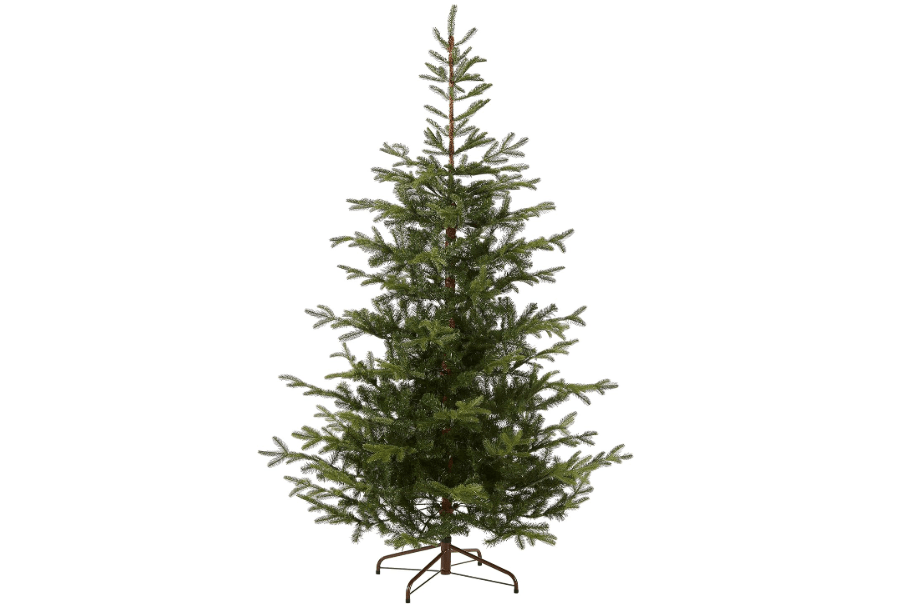
Price Tier: $280.59
Key Features & Benefits:
-
Hardiness Zones: 3-7
-
Growth Rate: 1 to 2 feet per year.
-
Mature Height: 40-60 feet.
-
Exceptional cold hardiness and sturdy, wind-resistant branching.
Pros & Cons:
-
Pros: Thrives in harsh, freezing environments; exceptionally long lifespan; great for local wildlife and birds.
-
Cons: Slower initial growth compared to the Green Giant; needs ample space to spread horizontally.
Amazon Customer Ratings and Reviews:
Reviewers note that these trees often arrive dormant but burst into vigorous, healthy growth in the spring. Customers in the Midwest and Northeast heavily favor them for surviving winters that kill off less hardy species.
Why it’s a Good Choice:
It is the ultimate defense against brutal winter snowdrifts and sub-zero wind chills. Its rigid branches won’t snap under heavy ice loads.
Ideal Use Case:
Northern states, Midwestern farms, and wide-open spaces exposed to severe winter weather.
4. Emerald Green Arborvitae (Best for Small Yards)
Product Description:
Not everyone has a sprawling estate. The Emerald Green Arborvitae is a compact, highly controlled evergreen that grows in a tight columnar shape. Its shimmering emerald foliage maintains its bright color year-round, never taking on the brownish winter tint common in other arborvitae.
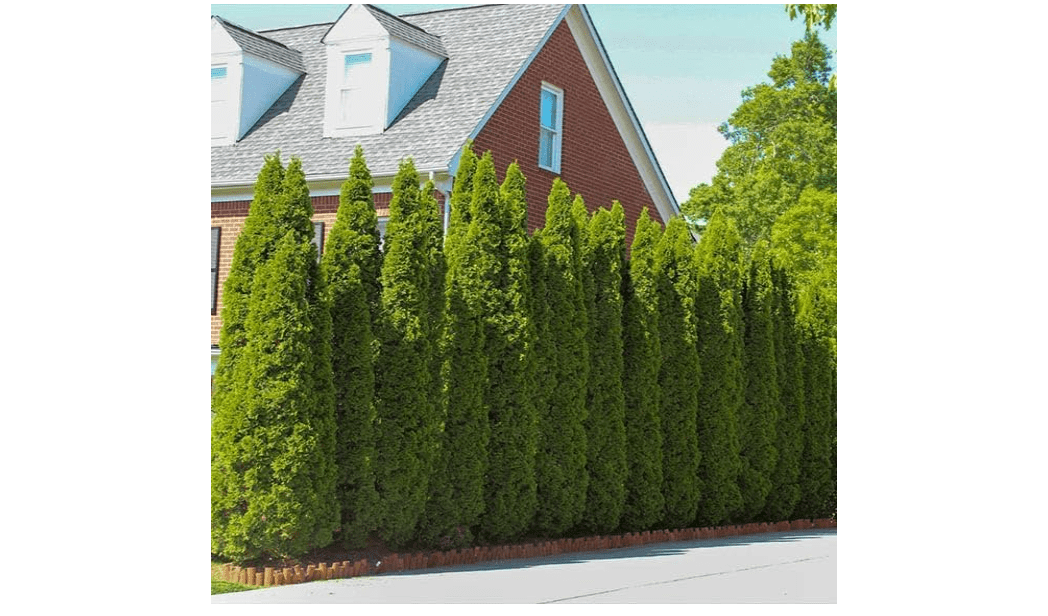
Price Tier: $73.99
Key Features & Benefits:
-
Hardiness Zones: 3-8
-
Growth Rate: 6 to 9 inches per year.
-
Mature Height: 10-15 feet (and only 3-4 feet wide).
-
Space-saving vertical growth habit.
Pros & Cons:
-
Pros: Perfect for tight property lines; never needs pruning; beautiful, highly photogenic color.
-
Cons: Grows slowly; less effective at blocking high-altitude winds due to its shorter mature height.
Amazon Customer Ratings and Reviews:
Buyers love using these for tight spaces, particularly to block wind and noise around ground-level patios or to hide unsightly AC units. They consistently arrive in great condition from top Amazon sellers.
Why it’s a Good Choice:
It provides a dense, impenetrable block against ground-level winds without eating up valuable square footage in a small backyard.
Ideal Use Case:
Urban gardens, townhouses, and tight suburban property lines.
5. Colorado Blue Spruce (Best Aesthetic Windbreak)
Product Description:
For those who want a windbreak that is as stunning as it is functional, the Colorado Blue Spruce is unmatched. Its striking, silvery-blue needles provide incredible contrast in landscape design. Structurally, it is a fortress, featuring rigid, stiff branches that laugh in the face of gale-force winds.
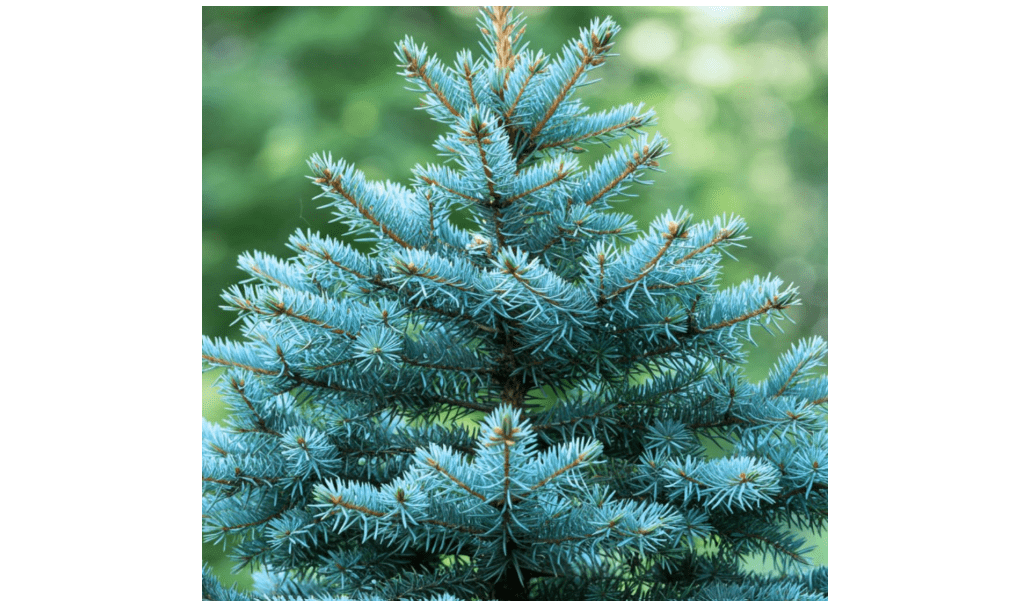
Price Tier: $8.90
Key Features & Benefits:
-
Hardiness Zones: 2-7
-
Growth Rate: 1 to 2 feet per year.
-
Mature Height: 50-75 feet.
-
Highly deer-resistant due to sharp, prickly needles.
Pros & Cons:
-
Pros: Incredibly beautiful visual appeal; highly wind and cold resistant; deer won’t touch it.
-
Cons: The sharp needles make it less ideal to plant right next to walkways or play areas; prone to needle cast disease if planted in overly humid, stagnant air.
Amazon Customer Ratings and Reviews:
Reviewers rave about the vibrant blue color upon arrival. Customers appreciate the strong root systems of the shipped saplings, noting excellent survival rates even in rocky soils.
Why it’s a Good Choice:
It offers heavy-duty wind deflection while serving as a spectacular focal point for property photography and curb appeal.
Ideal Use Case:
Mountain properties, northern climates, and homeowners prioritizing high-end landscape aesthetics.
6. Eastern Redcedar (Best for Poor Soil and Drought)
Product Description:
Despite its name, the Eastern Redcedar is actually a hardy juniper. It is a native North American workhorse that can survive almost anywhere. Where other trees fail due to poor soil health, drought, or neglect, the Redcedar pushes through, creating a dense, rugged barrier.
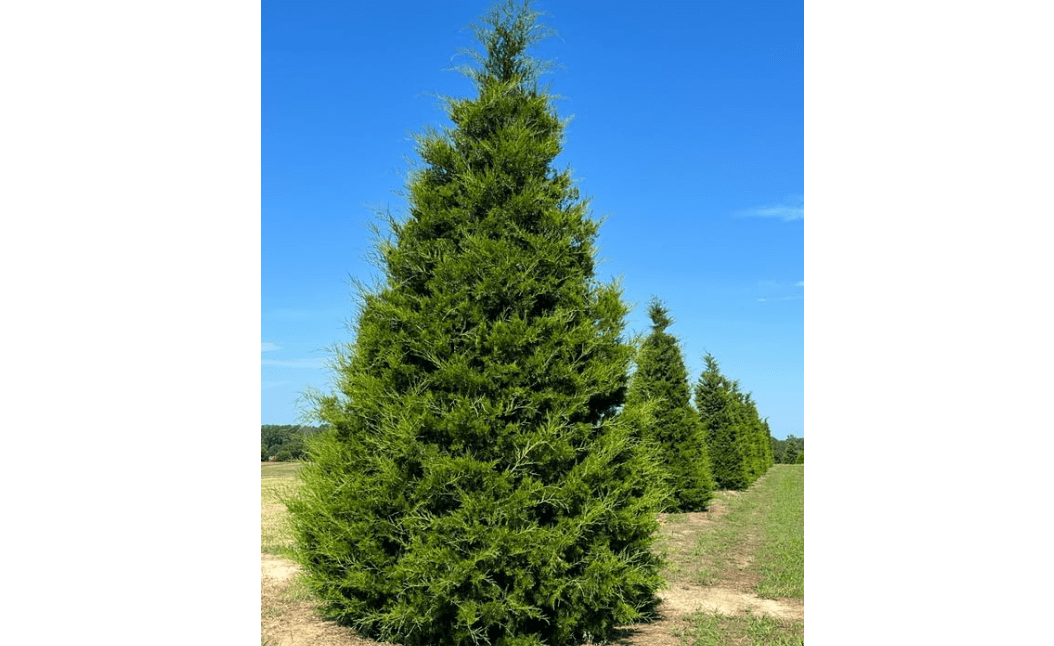
Price Tier: $28.99
Key Features & Benefits:
-
Hardiness Zones: 2-9
-
Growth Rate: 1 to 2 feet per year.
-
Mature Height: 40-50 feet.
-
Extreme drought tolerance and ability to thrive in poor, rocky, or clay soils.
Pros & Cons:
-
Pros: Nearly indestructible once established; handles road salt and pollution well; produces berries that attract birds.
-
Cons: Foliage can take on a slight brownish-bronze tint in severe winters; susceptible to cedar-apple rust (do not plant near apple orchards).
Amazon Customer Ratings and Reviews:
Buyers who have struggled to keep other plants alive on their properties praise the Eastern Redcedar for its “plant it and forget it” toughness.
Why it’s a Good Choice:
It is the ultimate survivor tree. If your soil quality is poor and you cannot run irrigation to your tree line, this tree will still form a formidable windbreak.
Ideal Use Case:
Rural roadsides, properties with degraded or clay-heavy soil, and areas prone to dry spells.
7. Douglas Fir (Best for Slopes and Erosion Control)
Product Description:
The Douglas Fir is a regal, towering evergreen with soft, flat needles and a perfectly conical shape. Beyond its beauty, it boasts an incredibly robust, deep-reaching root system that is highly effective at stabilizing loose soil on hillsides while simultaneously blocking heavy winds.
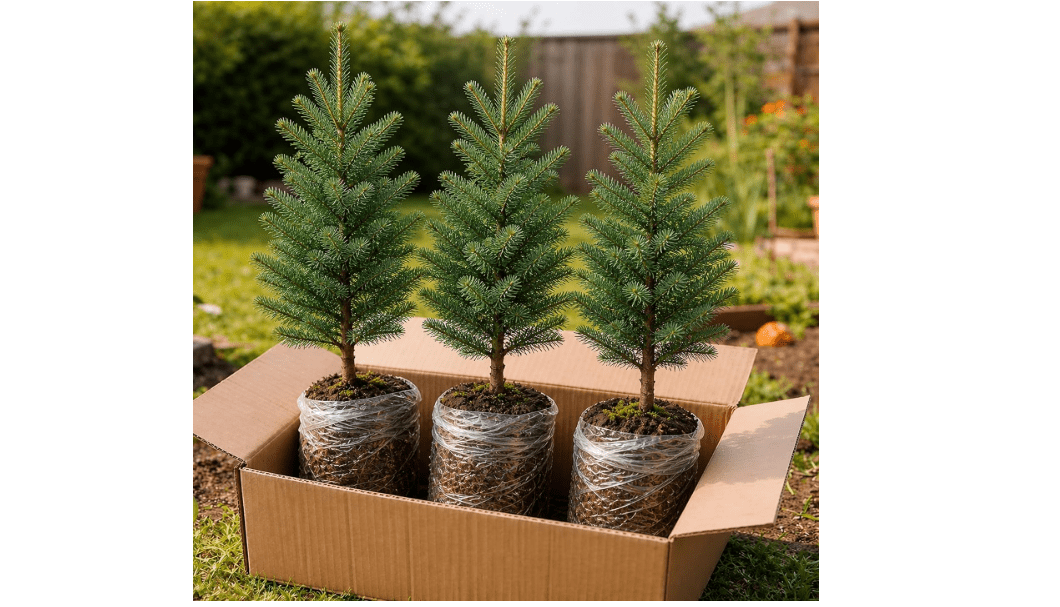
Price Tier: $32.95
Key Features & Benefits:
-
Hardiness Zones: 4-6
-
Growth Rate: 1 to 2 feet per year.
-
Mature Height: 40-70 feet.
-
Exceptional soil-binding root structure.
Pros & Cons:
-
Pros: Beautiful, fragrant foliage; outstanding at preventing soil erosion on slopes; highly durable wood.
-
Cons: Does not tolerate prolonged drought or exceptionally hot southern summers; requires well-draining soil to prevent root rot.
Amazon Customer Ratings and Reviews:
Customers highlight the lush, healthy appearance of these trees upon delivery. Many utilize them for hillside properties where wind and water erosion are constant threats.
Why it’s a Good Choice:
It solves two landscaping problems at once: stopping wind dead in its tracks and holding your hillside together.
Ideal Use Case:
Sloped properties, properties in the Pacific Northwest, and northern landscapes with good soil drainage.
8. Japanese Cedar / Cryptomeria (Best for Humid Climates)
Product Description:
Many classic conifers suffer in the sweltering heat and high humidity of the American South. The Japanese Cedar (Cryptomeria japonica), particularly the ‘Radicans’ or ‘Yoshino’ varieties, thrives in it. It features soft, awl-shaped foliage that turns a beautiful bronze-green in winter.
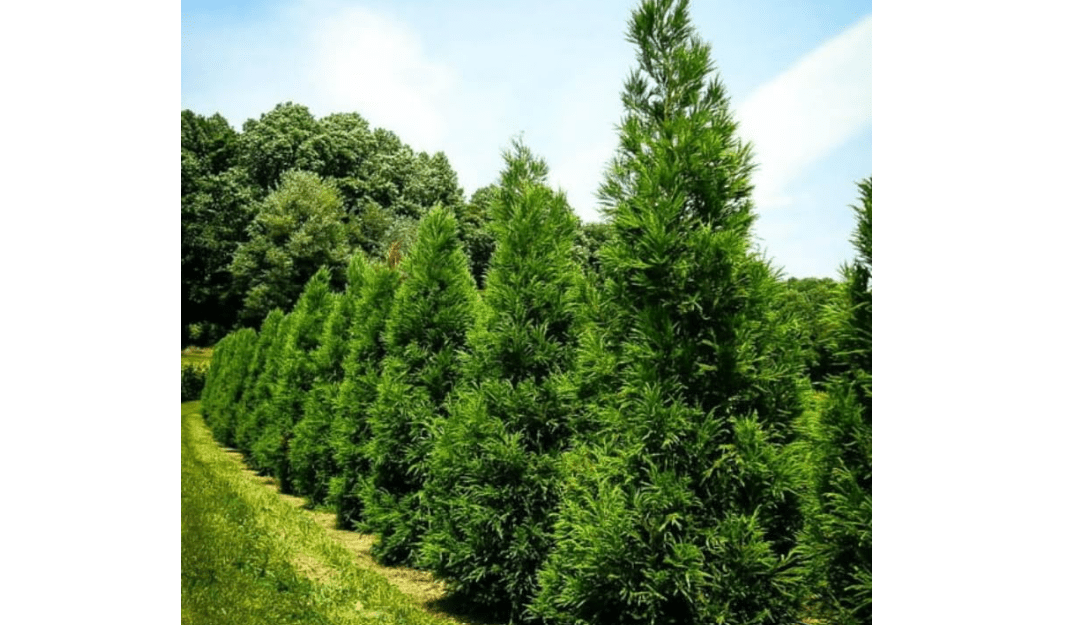
Price Tier: $24.99
Key Features & Benefits:
-
Hardiness Zones: 5-9
-
Growth Rate: 2 to 3 feet per year.
-
Mature Height: 30-40 feet.
-
High resistance to heat, humidity, and common fungal diseases.
Pros & Cons:
-
Pros: Elegant, slightly weeping aesthetic; fast growth rate; thrives where spruces and firs fail.
-
Cons: Branches are slightly more brittle than a spruce; requires supplemental water during extreme dry spells.
Amazon Customer Ratings and Reviews:
Southern buyers are thrilled to find a fast-growing evergreen that doesn’t suffer from the blights that often kill Leyland Cypresses in the heat.
Why it’s a Good Choice:
It provides the dense, year-round wind protection of a northern conifer but is biologically adapted for southern humidity.
Ideal Use Case:
The Southeast US, humid environments, and properties looking for a unique, textured landscape border.
9. Black Hills Spruce (Best Dense, Compact Conifer)
Product Description:
A natural variant of the White Spruce, the Black Hills Spruce is shorter, denser, and more compact. Because its branches grow incredibly close together, it acts as an absolute brick wall against wind and blowing snow, making it a favorite for natural snow fences.
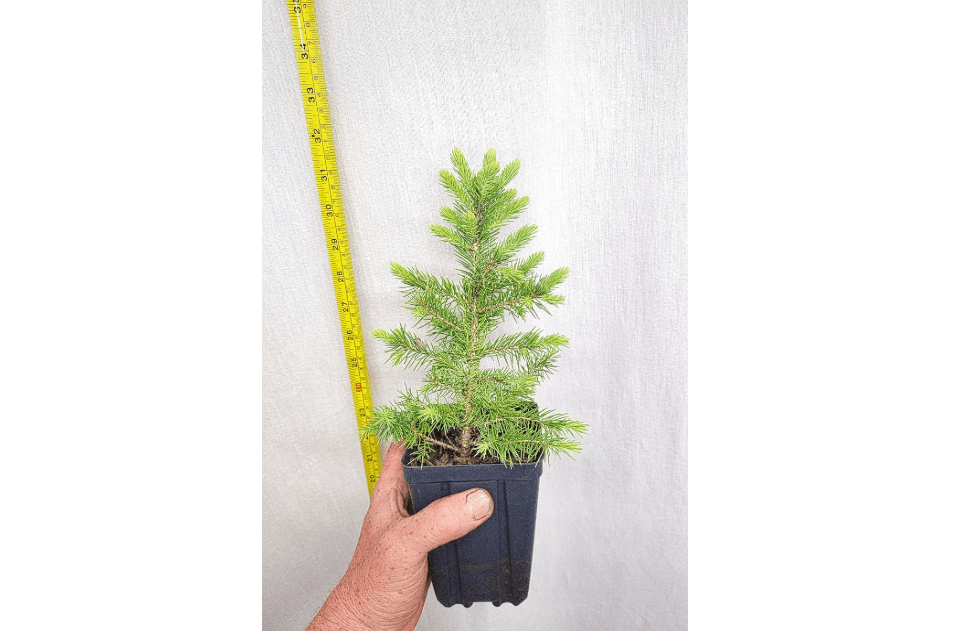
Price Tier: $19.00
Key Features & Benefits:
-
Hardiness Zones: 2-6
-
Growth Rate: 6 to 12 inches per year.
-
Mature Height: 20-40 feet.
-
Incredibly dense branching habit from the ground up.
Pros & Cons:
-
Pros: Impenetrable defense against snowdrifts; highly adaptable to various soil types; very low maintenance.
-
Cons: Slower growth rate means you will wait a few extra years for full maturity.
Amazon Customer Ratings and Reviews:
Reviewers value its thick, uniform shape. Customers note that it arrives looking like a perfect miniature Christmas tree and establishes easily.
Why it’s a Good Choice:
What it lacks in speed, it makes up for in density. Wind simply cannot penetrate its tightly packed branches.
Ideal Use Case:
Properties needing a highly effective snow fence or windbreak where space is too limited for a sprawling Norway Spruce.
10. Nellie Stevens Holly (Best Broadleaf Evergreen Alternative)
Product Description:
Not everyone wants a property lined with pine needles. The Nellie Stevens Holly is a vigorous, broadleaf evergreen that grows rapidly into a dense, pyramidal shape. As a bonus, it produces a stunning display of bright red berries in the winter against deep, glossy green leaves.
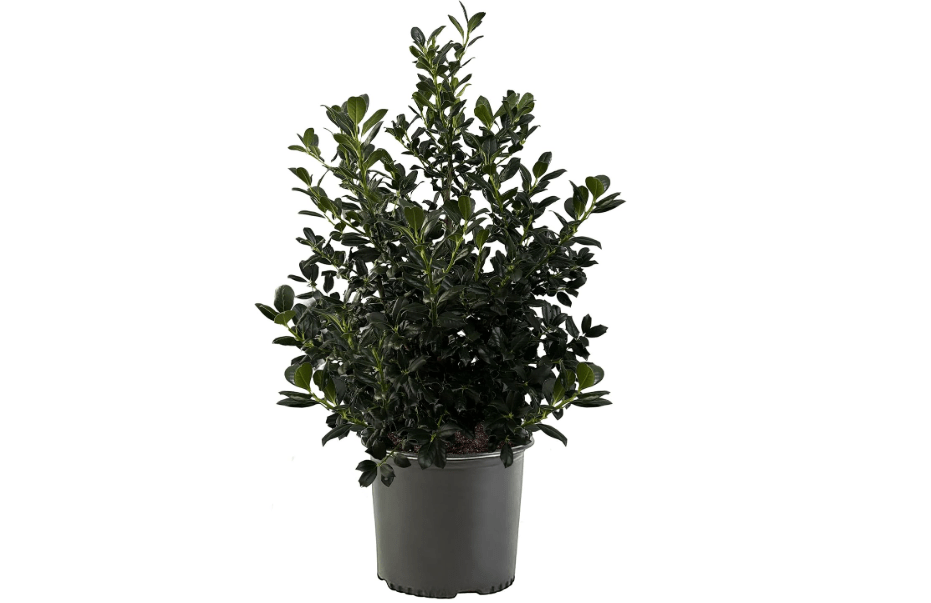
Price Tier:
Key Features & Benefits:
-
Hardiness Zones: 6-9
-
Growth Rate: 2 to 3 feet per year.
-
Mature Height: 15-25 feet.
-
Thick, leathery leaves that buffer wind and noise effectively.
Pros & Cons:
-
Pros: Gorgeous winter visual interest; fast growth; creates an excellent barrier against both wind and trespassers due to slightly prickly leaves.
-
Cons: Does not survive severe northern winters; berries can be messy if planted directly over a patio.
Amazon Customer Ratings and Reviews:
Buyers rave about the visual contrast this plant brings to their yards. The dense foliage is frequently mentioned as an excellent sound and wind dampener along busy streets.
Why it’s a Good Choice:
It offers all the wind-blocking benefits of a conifer with the manicured, upscale aesthetic of a classic hedge, plus vibrant winter color.
Ideal Use Case:
Southern and transitional climates, suburban front yards, and properties wanting a hedge that doubles as a security barrier.
Frequently Asked Questions (FAQ)
How far apart should I plant trees for a windbreak?
For an effective windbreak, spacing depends on the mature width of the tree. Generally, fast-growing large trees like the Green Giant or Leyland Cypress should be planted 8 to 12 feet apart. For a truly impenetrable wall, plant two staggered rows (a zigzag pattern) rather than one single straight line.
How long does it take for a wind barrier to be effective?
If you purchase standard 2-to-3-foot saplings and choose a fast-growing species, you will begin to see a noticeable reduction in wind and noise within 3 to 5 years. Within 7 to 10 years, the canopy will fully close, providing maximum protection.
Is it safe to buy live trees on Amazon?
Yes. Amazon partners with highly reputable, certified national nurseries. Trees are shipped in specially designed clam-shell or fortified cardboard packaging that locks the soil and root ball in place. They are shipped dormant or well-hydrated, ensuring they arrive ready to thrive in your soil.
Conclusion & Final Verdict
Investing in one of the best 10 wind barrier trees is one of the most rewarding home improvement projects you can undertake. Not only do you solve the immediate problem of harsh winds and high heating bills, but you also cultivate a beautiful, living perimeter that enhances your property’s value and visual appeal.
-
If you want the best overall balance of speed, disease resistance, and structural strength, you cannot beat the Thuja Green Giant.
-
If you are battling harsh, freezing northern winters, the Norway Spruce is your safest bet.
-
If you have a small yard and need a tight, controlled screen, choose the Emerald Green Arborvitae.
Check your USDA Hardiness Zone, assess your soil, and click through to Amazon to secure your saplings. The best time to plant a windbreak was ten years ago; the second best time is today. Order your trees now before the prime spring or fall planting seasons slip away!