
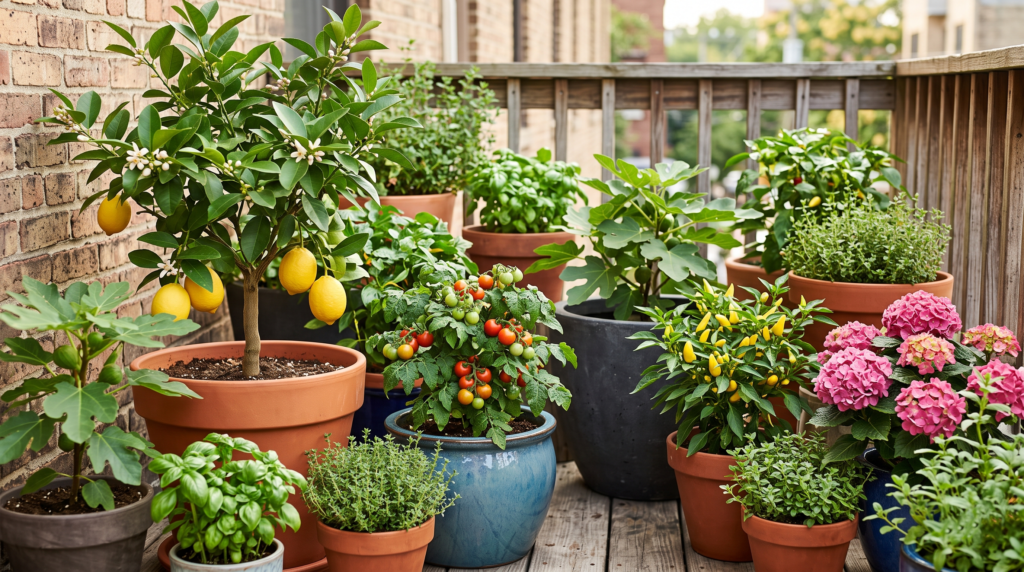
Picture this: you are staring out at an empty balcony, a modest patio, or a tiny sunlit courtyard, dreaming of a lush, productive garden. You want that picture-perfect, visually stunning oasis you might see in a magazine or on a vibrant Pinterest board, but without the chaotic clutter of overgrown vines. The most common pitfall for ambitious small-space gardeners is purchasing standard-sized plants that rapidly outgrow their containers, becoming root-bound, stressed, and unable to fruit or flower.
The ultimate secret to a thriving patio oasis lies in your plant selection. Specifically, choosing dwarf or bush varieties for pots is the single most effective strategy for building a resilient, high-yielding small-space garden.
As a plant care specialist deeply invested in soil health management and plant diagnostics, I have seen countless container gardens fail simply because the wrong genetics were forced into the wrong environment. In this comprehensive guide, we are going completely beyond the basics. We will explore the exact biological advantages of compact plants, reveal professional soil secrets, and provide a curated list of the absolute best varieties to help you achieve a massive impact in your limited space. Let’s dig in! 🌻
Why Container Gardens Thrive on Compact Genetics 🧬
To master container gardening, you must first understand that a pot is an artificial environment. In the ground, roots can forage indefinitely for water and nutrients. In a container, a plant’s universe is strictly limited to the walls of the pot.
The Difference Between “Dwarf” and “Bush” 🌿 While often used interchangeably, these terms mean different things botanically:
-
Dwarf Varieties: These are typically plants that have been grafted onto specialized dwarf rootstock (common with fruit trees like apples and citrus) or bred with a specific genetic mutation that naturally shortens the internodes (the space between leaves on a stem). They produce full-sized fruits or flowers but on a miniature frame.
-
Bush Varieties: This term usually applies to vegetables and annuals that have a naturally compact, determinate growth habit. Instead of sending out long, sprawling vines that require heavy trellising, they grow into a tidy, self-supporting mound and tend to set their fruit all at once.
The Biological Advantage in Pots 🔬 The key to plant health is the root-to-shoot ratio. A standard plant genetically programmed to grow ten feet tall will constantly try to expand its root system to support that massive canopy. When confined to a pot, those roots begin circling, choking themselves, and quickly depleting the soil of oxygen and nutrients.
By prioritizing compact genetics, you ensure the plant’s natural root-to-shoot ratio perfectly matches the volume of your container. These smaller plants utilize water and nutrients far more efficiently, experience significantly less environmental stress, and can channel their vital energy into producing bountiful blooms and harvests rather than fighting for survival.
Key Considerations Before Buying Your Plants 🛒
Before heading to the nursery, setting up the right foundation is critical. A successful potted garden is a harmonious system involving the right container, the ideal soil biology, and an understanding of your specific microclimate.
Matching Plant Size to Pot Dimensions 📏
One of the most frequent diagnostic issues I encounter is the “over-potting” mistake. When you place a small plant in a massive pot, the roots cannot drink the water fast enough. This leaves a vast perimeter of soggy, unused soil that inevitably leads to root rot.
-
For Dwarf Trees: Start with a 5-to-7-gallon container. As the tree matures over a few years, gradually “up-pot” it to a 10-to-15-gallon size, and eventually a half-barrel (20-25 gallons) if necessary.
-
For Bush Vegetables: Most compact tomatoes, peppers, and beans thrive beautifully in 3-to-5-gallon pots.
-
Pro Tip: Always ensure your pots have ample drainage holes. Without drainage, even the best plants will drown.

Formulating the Perfect Soil Mix 🪱
Soil health is my absolute favorite topic, and it is the beating heart of your container garden! Never scoop standard backyard topsoil into a pot. Field soil is too heavy; it will compact down to the consistency of concrete after a few waterings, suffocating the roots.
Instead, you need a lightweight, highly porous potting mix that holds moisture but drains rapidly. Here is an expert-level, well-draining recipe for container success:
-
40% High-Quality Compost or Worm Castings: For essential organic matter, biological life, and a slow drip of nutrients.
-
30% Coconut Coir or Peat Moss: To retain necessary moisture.
-
20% Perlite or Pumice: To ensure excellent aeration and drainage.
-
10% Pine Bark Fines: This adds vital structure to the soil, preventing compaction over time.
E-E-A-T Insight: To truly elevate your soil health, inoculate your potting mix with mycorrhizal fungi during planting. These beneficial fungi form a symbiotic relationship with plant roots, effectively acting as microscopic extensions that dramatically increase nutrient and water uptake within the confined space of a pot.
Assessing Your Microclimate ☀️
A balcony or patio is essentially its own microclimate, often drastically different from a traditional backyard.
-
Sun Exposure: Track the light. Are you getting a full 6-8 hours of direct sun (perfect for fruit and veggies), or just dappled morning light (ideal for shade-loving ornamentals)?
-
Heat Sinks: Brick walls, concrete floors, and glass windows absorb and reflect heat. A sunny balcony can easily become 10-15 degrees hotter than the ambient temperature, which means your potted plants will dry out much faster and may require heat-tolerant varieties.
-
Wind Corridors: High-rise balconies often act as wind tunnels. Wind rapidly strips moisture from leaves (transpiration). If you are in a windy spot, you will need heavier pots to prevent tipping and plants with thicker, more robust foliage.
Top Dwarf Fruit Trees for Patios and Balconies 🍋
Creating a patio orchard is entirely possible when you select the right container-friendly fruit trees. By leveraging grafted dwarf rootstocks, you can enjoy full-sized, delicious fruit from a tree that will never exceed four to six feet in height.
-
Meyer Lemons: The undisputed gold standard for potted citrus. Meyer lemons are a hybrid between a traditional lemon and a mandarin orange, making them sweeter and slightly more cold-tolerant. They are incredibly prolific and boast continuous, heavenly scented blooms throughout the year. Because they are self-pollinating, you only need one plant to secure a harvest.
-
Dwarf Figs: Figs are a container gardener’s best friend. In fact, standard figs often refuse to fruit heavily until their roots are restricted! For small spaces, look for true dwarf varieties like ‘Little Miss Figgy’ or ‘Petite Negra’. They produce incredibly sweet, jammy fruits and feature gorgeous, architectural foliage that adds a Mediterranean flair to any balcony.
-
Columnar Apples: If horizontal space is at an absolute premium, columnar apple trees (like the ‘Urban Apple’ series) are an engineering marvel of the plant world. Instead of branching outward, they grow straight up like a pillar, developing fruiting spurs directly along the main trunk. They are the ultimate vertical growers, perfect for tucking into tight, sunny corners.

High-Yield Bush Vegetables for Container Farmers 🍅
You do not need raised beds or a massive backyard plot to grow your own food. When selecting vegetables for pots, bypass the sprawling vines and zero in on “bush” or “determinate” varieties.
-
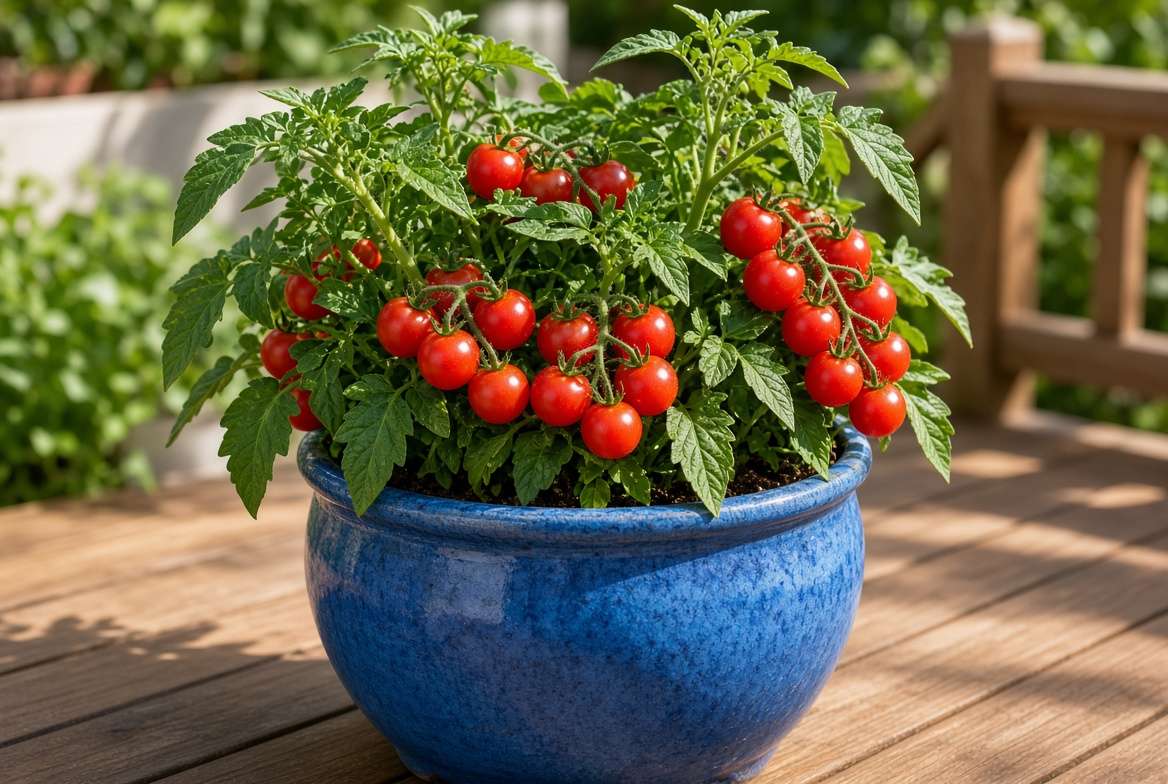
Determinate Tomatoes: Standard (indeterminate) tomatoes will grow like wild vines, requiring massive cages and constant pruning. Determinate tomatoes, however, are genetically programmed to grow to a compact, predetermined height (usually 3 to 4 feet). They set their blossoms and ripen their fruit all within a short window, making them incredibly space-efficient and perfect for 5-gallon buckets. Look for varieties like ‘Patio Princess’, ‘Bush Early Girl’, or the ultra-compact ‘Micro Tom’.
-
Bush Beans: Climbing pole beans require tall, sturdy trellises that catch the wind and can easily tip over on a balcony. Bush beans, on the other hand, form a tidy, 2-foot mound. They grow astonishingly fast, require virtually no support, and naturally fix nitrogen in your potting soil, acting as a living fertilizer.
-
Compact Peppers: Peppers naturally thrive in the warm, well-drained environment that a container provides. Sweet varieties like ‘Snackabelle’ or spicy favorites like bush jalapeños produce heavily in relatively small 3-gallon pots. Because the soil in containers heats up faster in the spring than ground soil, you’ll often see earlier yields from potted peppers!
Ornamental Dwarf Shrubs for Year-Round Beauty 🌸
If your goal is to create a serene, ornamental sanctuary rather than a working farm, dwarf shrubs provide essential structure, texture, and color without taking over your outdoor living space.
-
Dwarf Hydrangeas: The large, sprawling hydrangeas of traditional landscapes can quickly look messy in a pot. Enter dwarf varieties like ‘Bobo’ or ‘Little Lime’. These compact powerhouses stay under 3 feet tall but are completely smothered in massive blooms all summer long. Bonus: Growing hydrangeas in pots makes it incredibly easy to control soil acidity, allowing you to manipulate the bloom color between pink and blue with precision!
-
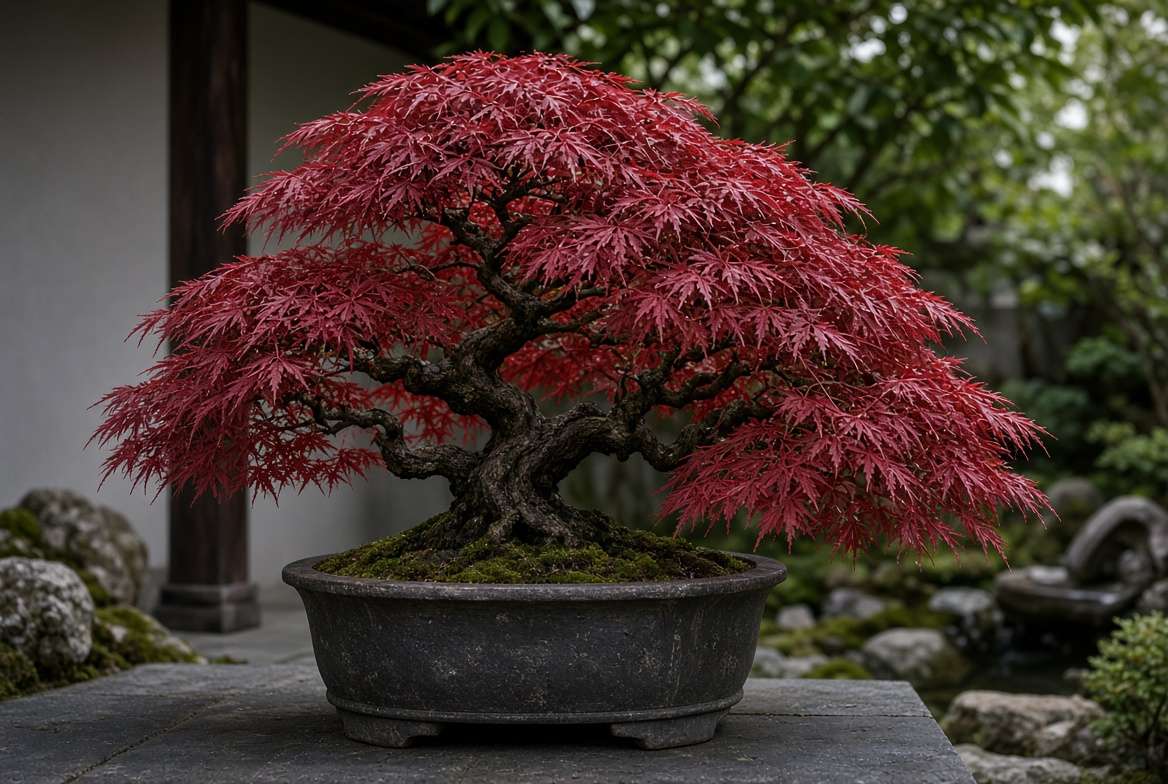
Compact Japanese Maples: For shaded or dappled-light patios, nothing beats the high-end elegance of a dwarf Japanese Maple (look for Acer palmatum dissectum varieties like ‘Crimson Queen’ or ‘Red Dragon’). Their weeping, cascading habit makes them look like living sculptures spilling over the edges of a high-quality ceramic pot.
-
Miniature Evergreens: A common mistake in container design is forgetting about winter. When the perennials die back, a patio can look incredibly bleak. Incorporating miniature evergreens—like the Dwarf Alberta Spruce or the slow-growing Mugo Pine—provides vital, structural winter interest when everything else goes dormant.
Expert Care Routine for Potted Dwarf Varieties 🛠️
Once you have selected your perfect compact plants and formulated your soil, mastering the maintenance routine is what separates the thriving patio gardens from the struggling ones.
Mastering Watering Dynamics 💧
Watering a potted plant is vastly different from watering a garden bed. You must water deeply to ensure moisture reaches the very bottom of the root zone, but you must also allow the soil to dry out partially between waterings to allow oxygen back into the root zone.
-
The Perched Water Table: In every container, the bottom inch or two of soil will remain completely saturated due to capillary action—this is known as the perched water table. If you water too frequently, or if your pot lacks drainage, this saturated zone expands upward, suffocating the roots and causing root rot. Always test moisture by pushing your finger two inches deep into the topsoil; if it feels dry, it’s time to water. If it’s damp, wait.

Precision Fertilizing for Confined Roots 🌿
Every time you water a potted plant until water runs out the bottom (which you should do to prevent salt buildup), you are washing vital nutrients out of the soil. This is called nutrient leaching.
-
Because your dwarf plants cannot send roots out to find more food, you must replenish it. Use a balanced, slow-release organic granular fertilizer at the time of planting, and supplement with a liquid feed (like fish emulsion or liquid kelp) every two weeks during the peak blooming and fruiting seasons.
Pruning for Airflow and Vigor ✂️
Even bush varieties can become overly dense. When foliage is too crowded, air cannot circulate, creating a humid microclimate that invites powdery mildew and other fungal diseases. Selectively prune out crossing branches and thin the interior of the plant. This not only prevents disease but also allows sunlight to penetrate the canopy, resulting in better fruit ripening.
Expert Insight: Healthy soil is the beating heart of any container garden. Because potted plants cannot stretch their roots into the earth to forage for nutrients, proactively managing your soil health is non-negotiable. Incorporating mycorrhizal fungi and applying regular organic compost teas will dramatically increase the resilience, nutrient uptake, and yield of your dwarf varieties! 🤎
Troubleshooting Common Container Pitfalls 🚨
Even experts run into issues. Catching these problems early is the key to container gardening success.
-
Root Rot: If your plant’s leaves are turning yellow and dropping, but the soil is wet, you likely have root rot. This is a soil biology issue caused by a lack of oxygen. Stop watering immediately, elevate the pot to ensure the drainage holes aren’t blocked, and consider top-dressing with dry perlite to help wick away excess moisture.
-
Nutrient Lockout and Salt Buildup: Over time, synthetic fertilizers and hard tap water leave behind mineral salts. If you notice a white, crusty buildup on the soil surface or the rim of the pot, your plant may be experiencing nutrient lockout—meaning the soil is too salty for the roots to absorb food. Flush the pot completely by running copious amounts of fresh water through it for several minutes to wash away the salts.
-
Pest Control in Close Quarters: A pot lacks the complex predatory ecosystem of a full garden. Aphids and spider mites can multiply rapidly. Regularly inspecting the undersides of leaves and using gentle, natural controls—like a strong blast from a hose, neem oil, or insecticidal soap—will keep populations in check without toxic chemicals.
Frequently Asked Questions (FAQs) ❓
Can any standard plant be kept small just by keeping it in a small pot? No, this is a dangerous myth. Forcing a standard, fast-growing plant into a tiny pot does not create a healthy “miniature” plant; it creates a severely stunted, highly stressed plant. It will become root-bound, highly susceptible to disease, and will rarely produce flowers or fruit. Always choose genetics that naturally match your space.
How often should I repot a dwarf fruit tree? As a general rule, dwarf fruit trees should be repotted every 2 to 3 years. Even with excellent soil, the organic matter will eventually break down and the roots will fill the space. You can either up-pot to a larger container, or—if you want to keep the tree in its current pot—you can carefully slide it out, perform a gentle root pruning (trimming back the outer inch of roots), refresh the soil mix, and place it back in the same pot.
Do bush vegetables need trellising? One of the main benefits of bush varieties is that they require minimal support. However, when loaded with heavy fruit, branches can snap under their own weight or in high winds. A single, sturdy bamboo stake placed in the center of the pot at planting time is usually all the insurance a bush tomato or heavy-yielding pepper plant needs.
Conclusion: Cultivating Your Small-Space Sanctuary 🏡
Transforming a bare patio, balcony, or courtyard into a thriving, green oasis doesn’t require acres of land; it requires intelligent design and strategic plant selection. By choosing dwarf or bush varieties for pots, you align the natural biology of the plant with the physical limitations of your space.
When you pair these compact powerhouses with a high-quality, well-draining soil mix and a consistent watering routine, you unlock the true potential of urban gardening. You save time on maintenance, eliminate the frustration of overgrown, stressed plants, and maximize the beauty and yield of every single square foot.
Are you ready to bring your small space to life? Drop a comment below with the dwarf plant variety you are most excited to try, share a picture of your current patio setup, or subscribe to our newsletter for more deep dives into expert plant care and soil health mastery! Happy planting! 🌿✨











