You walk into a nursery and are instantly captivated by an explosion of fuchsia, magenta, or fiery orange. You bring the stunning specimen home, give it the best spot on your patio, water it diligently, and feed it premium plant food. Yet, a few months later, that vibrant masterpiece has transformed into a massive, vigorous green vine that refuses to produce a single flower. If this sounds familiar, you are experiencing the classic “Green Monster” dilemma.
The harsh truth about caring for a bougainvillea plant is that our well-intentioned nurturing is exactly what prevents it from blooming. Native to the harsh, dry, and sunny coastal scrublands of South America, these resilient vines do not want to be pampered like delicate tropical ferns. They are survivors that rely on environmental stress to trigger their reproductive cycle—which means producing those dazzling colors.
To get your bougainvillea to bloom prolifically, you have to adopt a counter-intuitive approach: they thrive on neglect. By identifying and correcting five specific, well-intentioned watering, feeding, and potting mistakes, you can stop growing a leafy green vine and start triggering explosive, colorful blooms.
2. Mistake #1: Treating Your Bougainvillea Plant Like a Shade Lover ☀️
When it comes to the bougainvillea plant, there is no such thing as “too much sun.” One of the most frequent mistakes gardeners make is placing their plant in an area with dappled sunlight, partial shade, or just a “bright spot” indoors.
The 6-Hour Rule
A minimum of six hours of harsh, direct sunlight every single day is absolutely non-negotiable. If your plant is receiving only four or five hours of direct sun, it will use that energy to survive and produce green foliage, but it will lack the immense solar power required to push out its colorful modified leaves (known botanically as bracts). The true flowers are actually the tiny, tubular white centers; the brilliant colors we love are foliage that only changes color under intense UV exposure.

The Science of Sun and Blooms
Maximum UV exposure drives an aggressive rate of photosynthesis. In its native habitat, the bougainvillea uses this intense solar energy to fuel massive flushes of growth. Without this intense light, the plant remains in a vegetative state.
Expert Placement Checklist:
-
Outdoor Cultivation: Place against south-facing walls, fences, or trellises that absorb and radiate heat throughout the day.
-
Indoor/Conservatory Placement: It must be pressed directly up against a south-facing or west-facing window. Ensure no outdoor trees or overhangs are blocking the light.
-
Cooler Climates: If you live in a region with shorter summers, utilize reflective surfaces (like white walls) behind the plant to maximize light bouncing onto the foliage.
3. Mistake #2: Overwatering & Skipping “Drought Stress” 💧
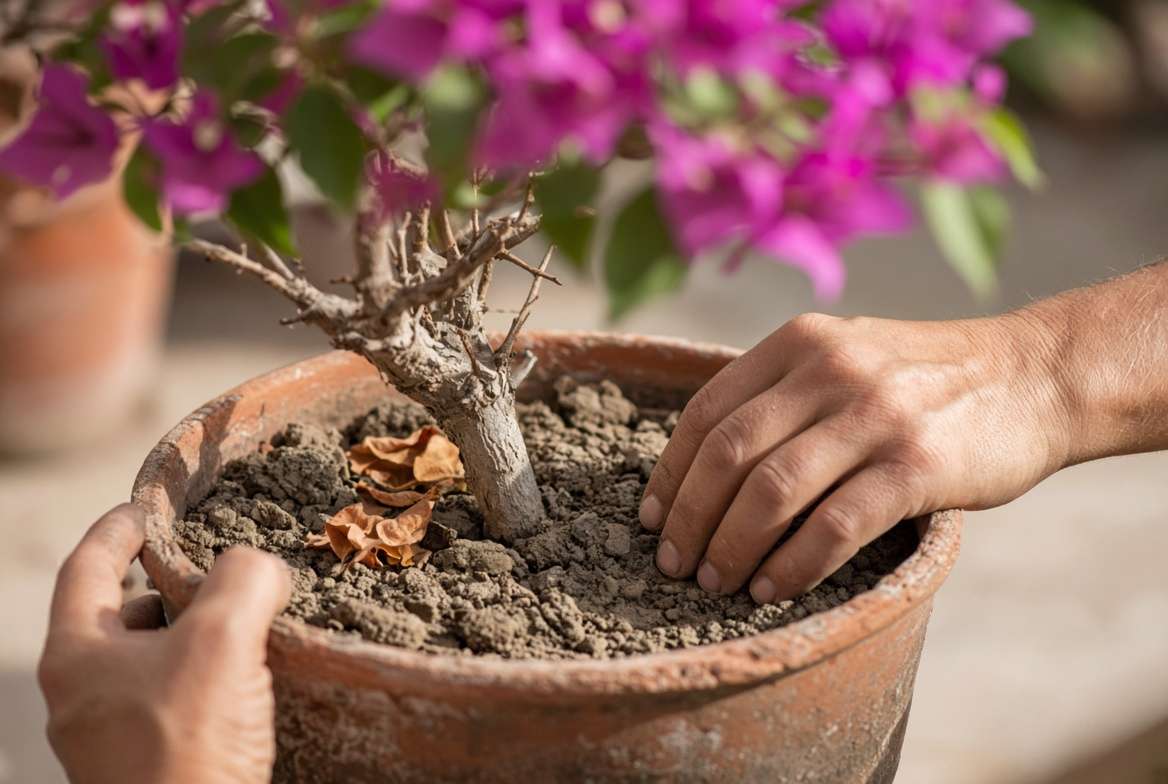
If there is a golden rule in bougainvillea care, it is this: put down the watering can. Keeping the soil perpetually moist is the absolute fastest way to stop a bougainvillea plant from blooming.
The Number One Killer of Blooms
When a bougainvillea has constant access to water, it feels perfectly comfortable. A comfortable plant has no urgency to reproduce (flower), so it focuses entirely on vegetative growth, resulting in long, unruly green shoots. Furthermore, overwatering quickly leads to root rot in this species, causing existing bracts to drop prematurely.
The Drought Stress Technique
To force your plant to bloom, you must implement a technique known as “drought stressing.” By allowing the soil to dry out completely—to the point where the leaves just barely begin to droop or wilt—you send a biological signal to the plant that its environment is becoming hostile. Believing its survival is threatened, the plant rapidly shifts energy into reproducing, pushing out a massive flush of colorful bracts and flowers.
Actionable Watering Schedule
-
Active Summer Growth: Deeply drench the pot until water runs out the drainage holes. Then, walk away. Do not water again until the soil is bone-dry all the way to the bottom of the pot and the foliage shows a slight, soft wilt.
-
Winter Dormancy: Water incredibly sparingly. Depending on the temperature and humidity, this may mean watering only once every three to four weeks just to keep the root ball from completely desiccating.
4. Mistake #3: Feeding with High-Nitrogen Fertilizers 🛑
Nutrient management is where many well-meaning gardeners accidentally sabotage their own display. When a plant isn’t blooming, the common instinct is to hit it with a heavy dose of generic all-purpose or houseplant fertilizer.
The Fertilizer Trap
Most standard fertilizers, especially those formulated for lawns or leafy houseplants, are incredibly high in Nitrogen. Nitrogen is the macronutrient responsible for rapid, lush green foliage. If you feed a bougainvillea plant a high-nitrogen diet (like urea or blood meal), it will gladly consume it and reward you with ten feet of green vines and zero flowers.
The Ideal Nutrient Blend
To support and encourage blossom development, you need a fertilizer profile that is low in nitrogen but rich in Potassium and Phosphorus. Phosphorus supports robust root health and bud development, while Potassium is critical for flower size, vibrant color, and overall stress resistance.
Look for a specialized bougainvillea fertilizer, a tomato feed, or a bloom-booster with an N-P-K ratio similar to 5-10-10 or 0-52-34. Additionally, bougainvilleas are heavy consumers of iron and magnesium. Supplementing with a trace mineral liquid or a tablespoon of Epsom salts dissolved in water once a season can prevent yellowing leaves and keep colors vivid.
The Feeding Schedule
-
Late Spring to Late Summer: Apply your bloom-boosting fertilizer every two weeks during the active growing season.
-
Autumn and Winter: Stop feeding entirely. The plant needs a rest period, and pushing nutrients during dormancy will cause weak, spindly growth.
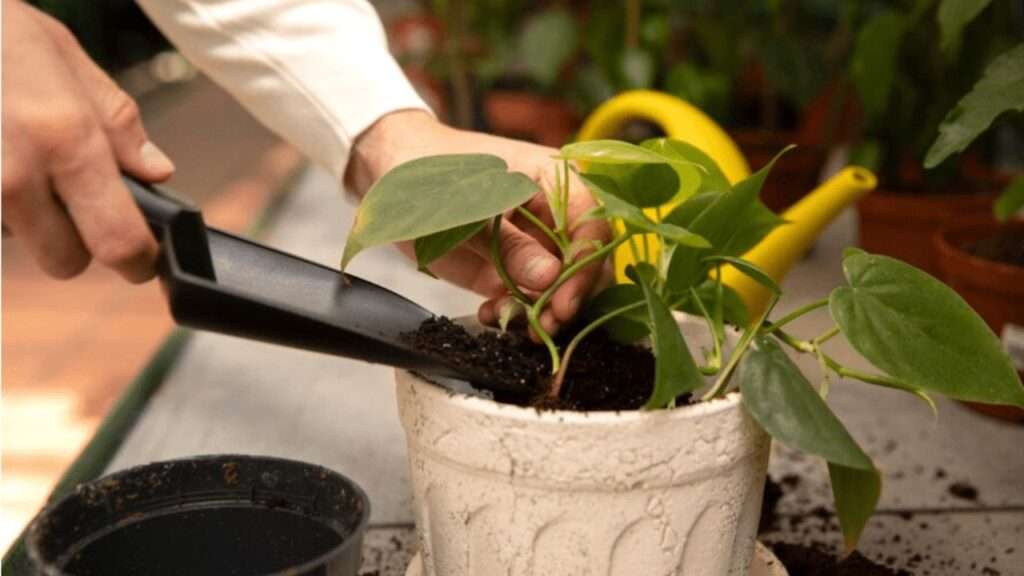
5. Mistake #4: Repotting Your Bougainvillea Plant Too Often 🪴
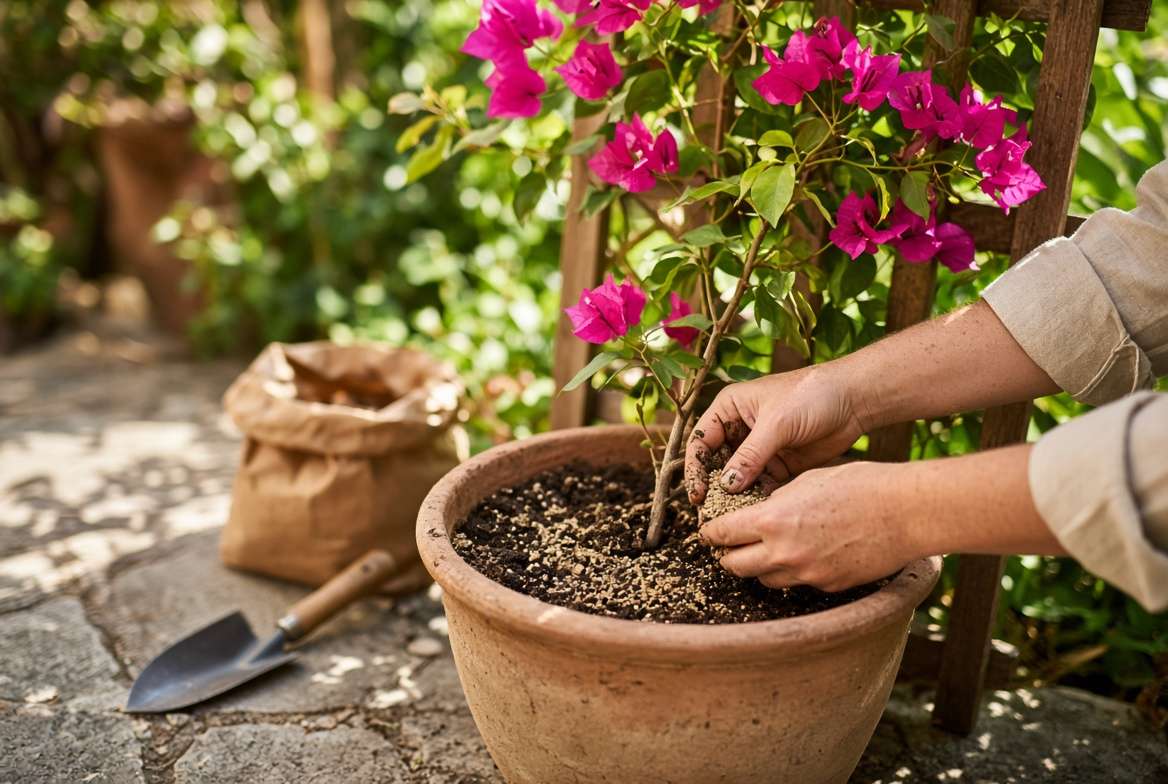
Human logic suggests that providing a plant with more space will allow it to grow larger and healthier. Bougainvillea logic dictates the exact opposite.
The Psychology of the Roots
A bougainvillea plant blooms most prolifically when its root system is pot-bound (slightly cramped). When you place the plant in a large, spacious pot, it shifts all its energy into expanding its root system to explore the newly available soil. It will completely abandon flower production until its roots hit the sides of the new container. By keeping the roots restricted, you force the plant’s energy strictly into above-ground blooming.
Highly Sensitive Root Systems
Beyond the space issue, this plant has a notoriously fragile and brittle root system. Unlike other vines that can handle heavy root pruning, disturbing a bougainvillea root ball can send the plant into severe shock, causing it to drop every single leaf and flower it currently holds.
When to Actually Repot
You should only consider repotting when the plant is practically bursting from its container.
-
The Visual Cue: Roots actively escaping and circling out of the bottom drainage holes, or water running straight through the pot instantly because it is entirely root and no soil.
-
The Golden Rule of Sizing: When you must repot, only size up the container by one to two inches in diameter. Never jump from a small nursery pot directly into a massive decorative planter.
6. Mistake #5: Pruning at the Wrong Time in the Bloom Cycle ✂️
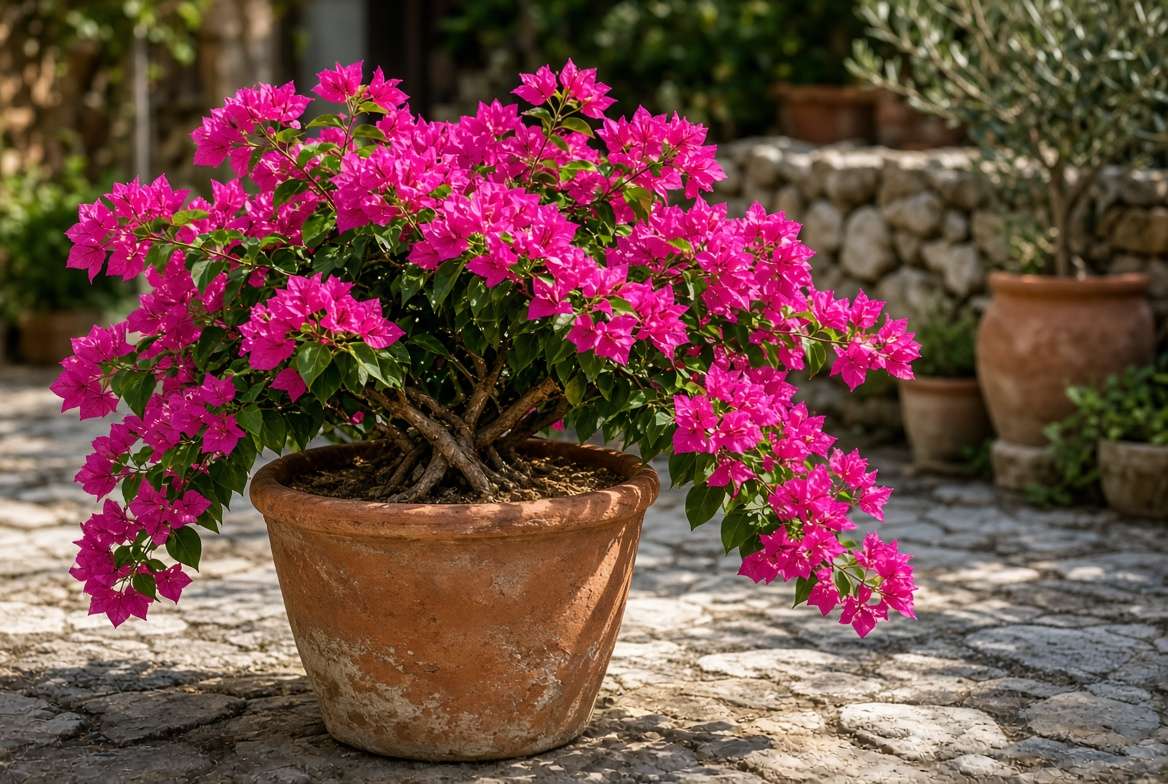
Because this plant is a vigorous grower, pruning is essential to maintain shape and encourage a dense, bushy habit rather than a straggly vine. However, poor timing will literally cut away your future flowers.
Understanding the Flush
A bougainvillea plant only produces flowers on new growth. Every time a branch grows, the blooms will appear at the tips of that fresh wood. If you constantly shear the plant like a hedge throughout the summer, you are continuously cutting off the very sites where buds are trying to form.
The Pinch-and-Prune Method
To maximize color while controlling size, you need to sync your pruning with the plant’s natural blooming cycles (flushes).
-
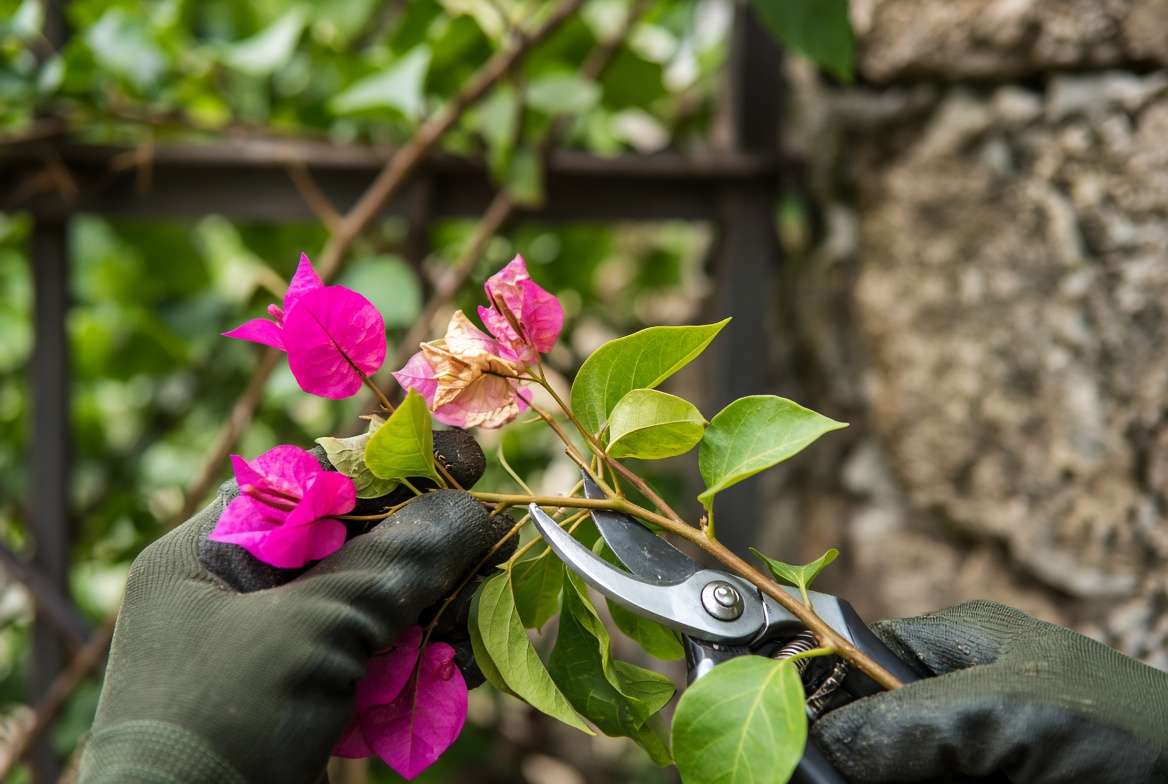
The Hard Prune (Late Winter/Early Spring): Just before the growing season begins, perform a structural prune. Cut away dead wood, thin out the center for airflow, and reduce the overall size of the plant by up to a third. This forces the plant to push out dozens of new branches as the weather warms.
-
The Gentle Pinch (Post-Bloom): During the summer, your plant will push out a massive flush of color, which will eventually fade and drop. Immediately after this flush ends, go in and “pinch” or snip off the soft growing tips of the branches just behind where the old flowers were. This light trimming forces that single branch to split into two or three new branches, multiplying the number of tips available for the next flush of blooms a few weeks later.
7. Expert Bougainvillea Troubleshooting (Quick Reference Table) 🛠️
Even with perfect intentions, environmental factors can occasionally throw your plant off balance. Use this diagnostic table to quickly identify and resolve common issues.
8. Frequently Asked Questions (FAQs) ❓
Can a bougainvillea plant survive indoors year-round? Yes, but it requires a very specific environment. It must be placed in a sun-baked south-facing window, conservatory, or greenhouse. Without immense light, it will survive as a green houseplant but will rarely, if ever, flower. Keep indoor humidity low and strictly limit winter watering.
Why is my bougainvillea losing all its leaves in the winter? Do not panic—your plant is likely not dead. Bougainvilleas are semi-deciduous. When exposed to lower light levels and cooler winter temperatures (especially anything below 10°C/50°F), it is a completely natural biological response for them to drop their leaves and enter dormancy. Keep the soil barely moist during this time, and it will flush back out vigorously when spring warmth returns.
Should I mist my bougainvillea to increase humidity? Absolutely not. Because they are coastal scrubland natives, they actively prefer dry air and arid heat. Misting the foliage provides no benefit and actively invites fungal diseases, leaf spot, and rot.
By fundamentally changing how you view this plant—forcing it to work for its survival through tight potting, sun-baking, and strategic drought-stressing—you can transform a stubborn, unruly green bush into a breathtaking, cascading wall of vibrant color. What begins as a counter-intuitive care regimen quickly becomes the easiest, most low-maintenance routine in your entire garden. Let the soil dry, let the sun shine, and let the plant do what it does best.