
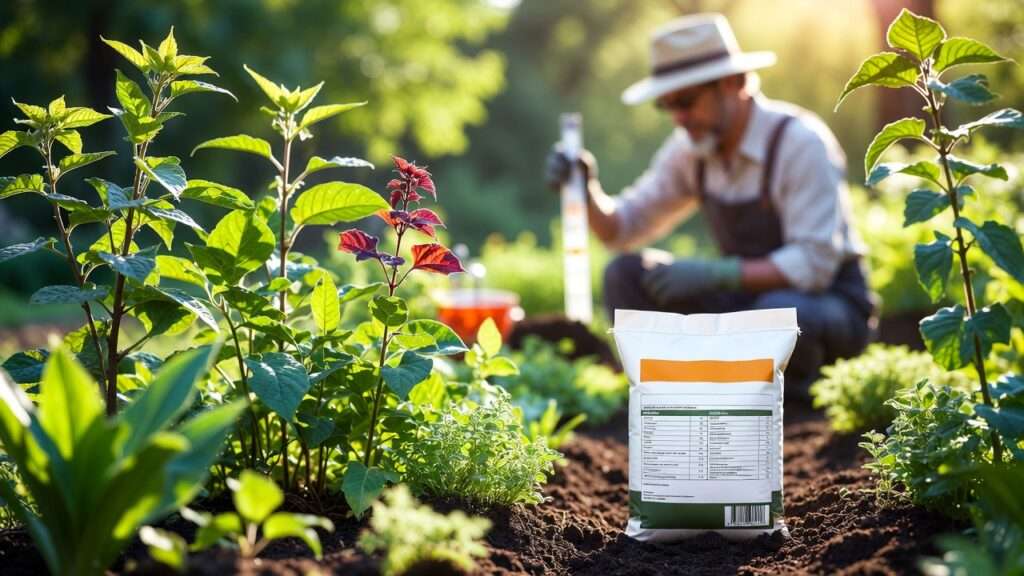
Have you ever poured your heart (and a whole bag of fertilizer) into your garden, only to end up with tomato plants sporting giant leaves but barely a single fruit 🍅😩? Or maybe your prized rose bush looks lush and green, yet the blooms are sparse and weak 🌹. If this sounds familiar, you’re not alone—many gardeners struggle with the same mystery.
The culprit is often hidden right on the fertilizer label: the NPK ratio. Choosing the right fertilizer NPK ratio is the single most powerful step you can take to unlock vibrant growth, abundant harvests, and resilient trees.
NPK stands for Nitrogen (N), Phosphorus (P), and Potassium (K)—the three macronutrients plants crave most. Getting the balance wrong leads to disappointing results: too much nitrogen creates leafy monsters with no flowers, low phosphorus starves roots and blooms, and insufficient potassium leaves plants vulnerable to stress and disease.
In this in-depth guide, we’ll break down everything you need to know—from what those numbers truly mean to tailored recommendations for vegetables, flowers, houseplants, and especially trees. Whether you’re a beginner frustrated with yellow leaves or an experienced grower aiming for maximum yields, you’ll walk away with the confidence to select (and apply) the perfect fertilizer every time. Let’s turn confusion into thriving gardens! 🚀
What Do the NPK Numbers Really Mean? 🤔
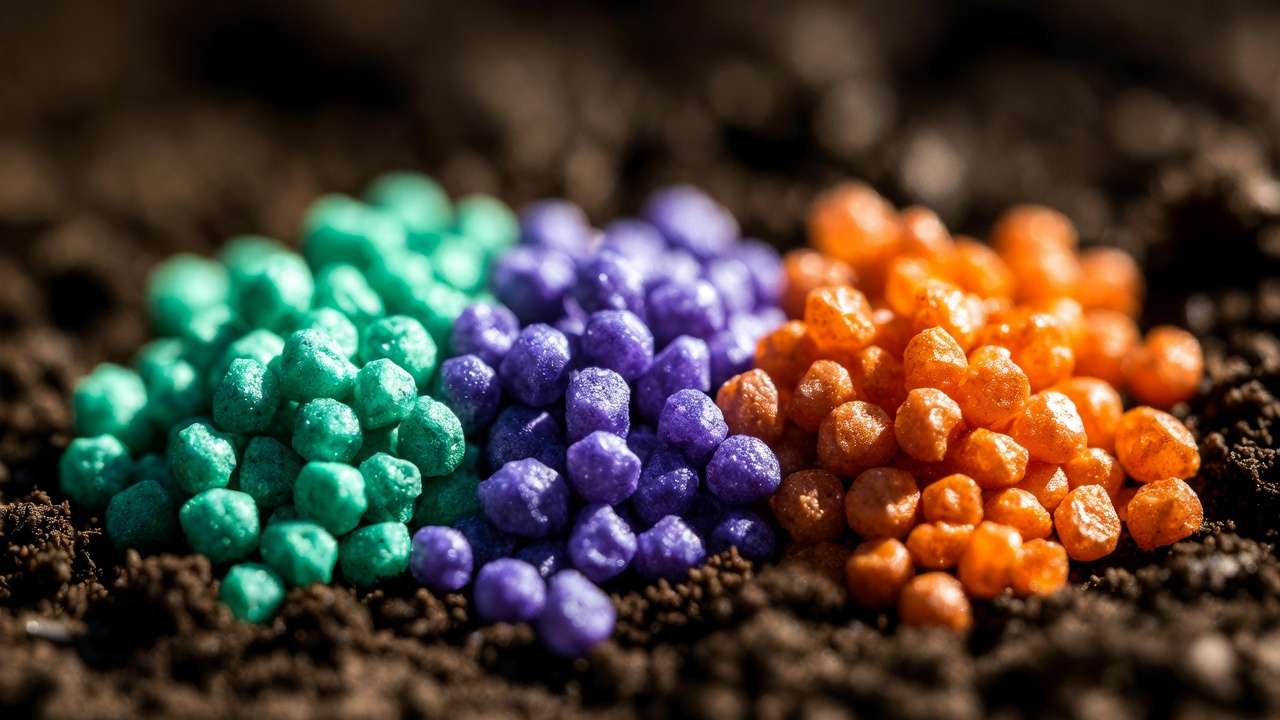
The three bold numbers on every fertilizer bag (like 10-10-10 or 5-10-5) represent the percentage by weight of nitrogen, phosphorus, and potassium.
- Nitrogen (N) – The first number: Fuels vigorous leafy, green growth and chlorophyll production. It’s essential for photosynthesis and overall plant vigor 🌿. Too much? Plants get “leggy” with excessive foliage at the expense of flowers or fruits.
- Phosphorus (P) – The middle number: Builds strong roots, supports flower and fruit development, and aids seed formation 🌸🍅. Critical during establishment and blooming phases.
- Potassium (K) – The last number: Enhances overall plant health, improves disease resistance, regulates water uptake, and boosts fruit quality and flavor 🍎. It helps plants withstand drought, cold, and pests.
For example, a 10-10-10 fertilizer contains 10% nitrogen, 10% phosphorus (as P₂O₅), and 10% potassium (as K₂O). The remaining 70% is filler, carriers, or secondary nutrients/micronutrients like calcium, magnesium, sulfur, and trace elements (iron, zinc, etc.).
Pro tip: To compare fertilizers easily, simplify the ratio by dividing all numbers by the smallest one. A 10-20-10 becomes 1-2-1, showing it’s phosphorus-heavy—perfect for root and bloom stages! 📊
Why the Right NPK Ratio Matters More Than You Think
Many gardeners assume “more is better” and grab the highest numbers, but that’s a common trap. The wrong ratio wastes money, harms plants, and pollutes waterways through runoff.
Signs you’ve chosen poorly:
- Excessive leafy growth + no blooms/fruits → Too much N 😬
- Stunted roots, purplish leaves, poor flowering → Low P
- Yellow/brown leaf edges, weak stems, disease susceptibility → Low K
- Burnt leaf tips, wilting despite watering → Nutrient burn from over-application
The right NPK ratio matches your plants’ current needs, soil conditions, and growth stage—leading to balanced, healthy development and bigger rewards. Soil tests confirm this: they reveal deficiencies so you fertilize precisely, not blindly. 🌟
Step-by-Step: How to Choose the Perfect NPK Ratio
Follow this expert process every time for foolproof results:
-
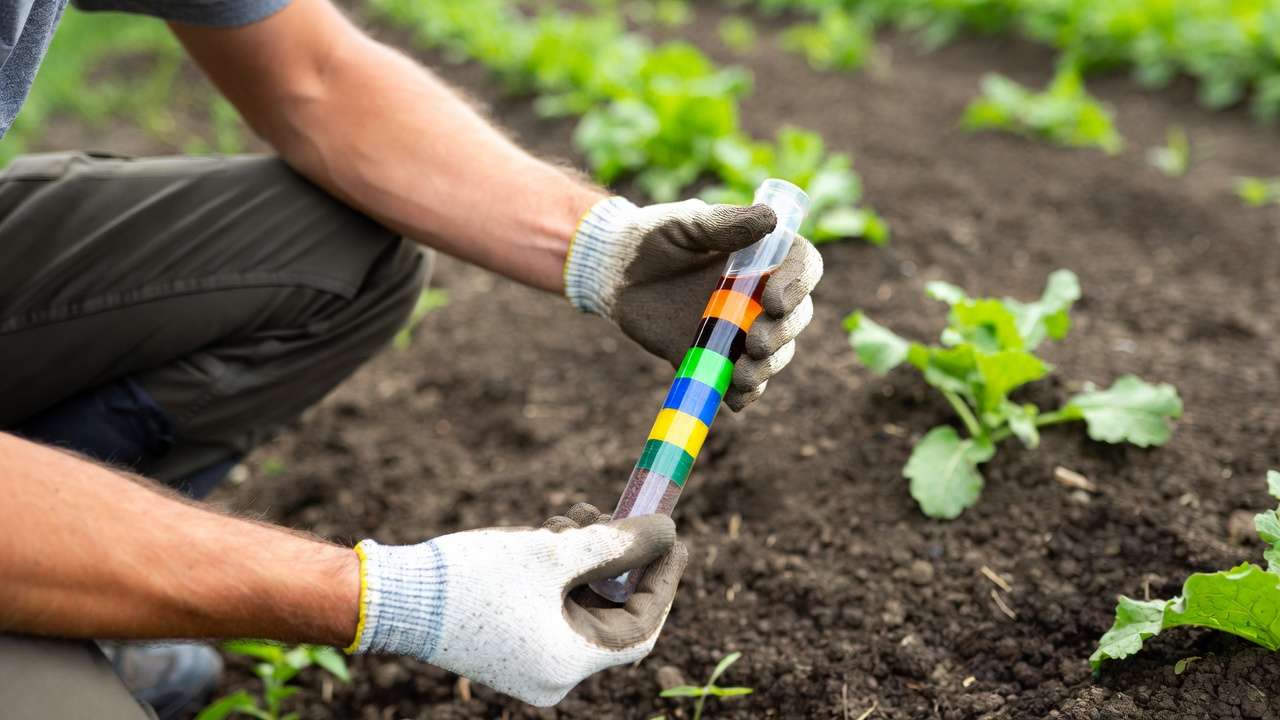
Start with a Soil Test (The #1 Expert Tip) 🧪 Soil testing is non-negotiable for serious gardeners. Affordable home kits give quick insights, but lab tests (from university extensions or services) provide detailed NPK levels, pH, organic matter, and micronutrients.
- Look for: Nitrogen (often low, as it leaches), phosphorus (Bray or Olsen P), potassium (exchangeable K), and pH (ideal 6.0–7.0 for most plants).
- Interpretation basics: If P or K is “high,” skip those in your fertilizer to avoid buildup. Nitrogen recommendations often come as pounds per area—match closest without excess P.
- Retest annually or after major changes. This prevents guesswork and saves money long-term!
-
Consider Plant Type and Growth Stage Plants have shifting needs: vegetative (leafy) phase loves higher N; flowering/fruiting demands more P and K.
-
Factor in Organic vs. Synthetic Fertilizers
- Synthetic: Fast-acting, precise ratios, higher numbers (e.g., 20-20-20). Great for quick fixes but can burn if over-applied.
- Organic: Slower release, improve soil health, lower numbers (e.g., 4-3-3 from manure). Build long-term fertility with microbes.
-
Account for Application Type ⏳
- Granular: Slow-release for steady feeding.
- Liquid: Fast uptake, ideal for foliar or quick boosts (dilute properly!).
- Slow-release: Less frequent applications, safer for beginners.
Recommended NPK Ratios by Plant Category 🌳🥕🌼
For Vegetables & Edible Crops 🍅
Vegetables vary by type:
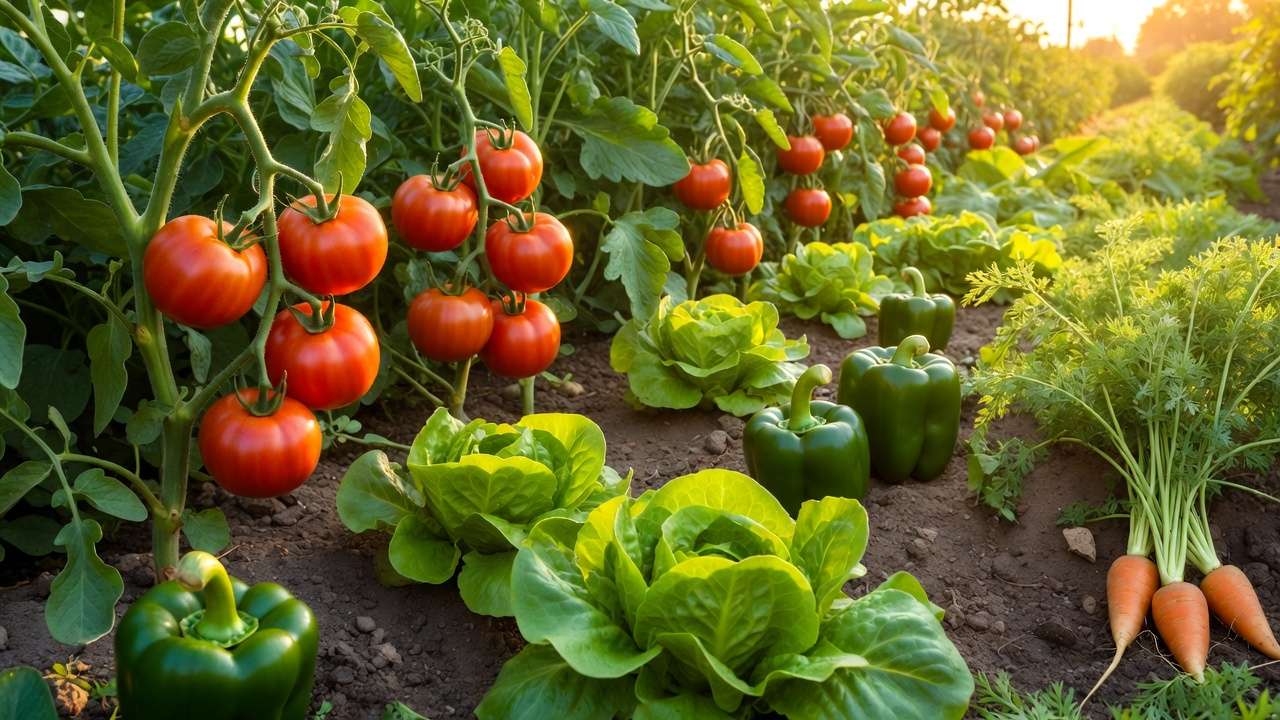
- Leafy greens (lettuce, spinach, kale): Higher N for lush foliage—try 20-10-10, 10-5-10, or 12-4-8.
- Root crops (carrots, beets): Balanced or P-focused like 5-10-10 to promote roots without excess tops.
- Fruiting veggies (tomatoes, peppers, cucumbers): Low-medium N, high P/K during bloom/fruit set—5-10-10, 10-30-20, 4-6-8, or 8-16-16. Start balanced (10-10-10), then switch to bloom boosters.
General starter: 10-10-10 or 5-10-10 for most veggie gardens.
For Flowers & Ornamentals 🌸
- Bloom boosters: Higher P like 10-20-20, 5-10-5, or 1-3-2 to encourage vibrant flowers without leggy growth.
- General: Balanced or P-dominant for continuous blooms. Avoid high-N for flowering plants!
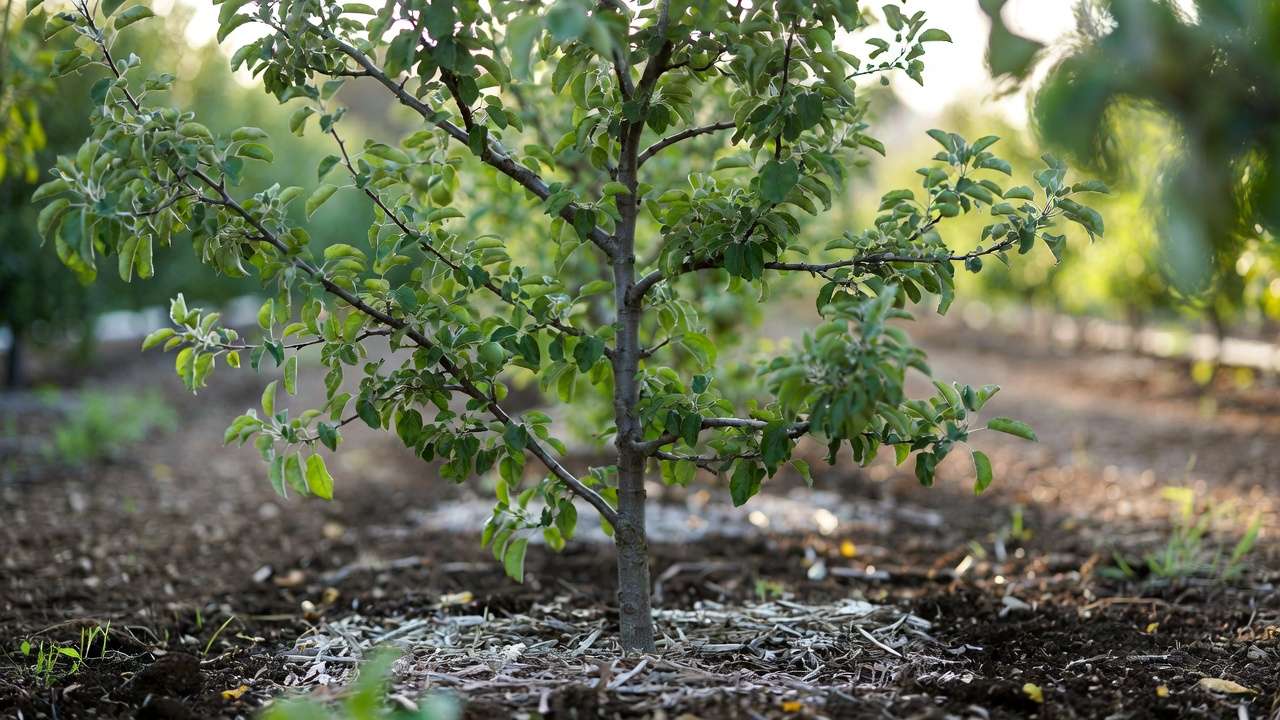
For Trees & Shrubs (Fruit & Ornamental) 🌳🍎
Trees need careful balance—young ones build structure, mature ones focus on fruit.
- Young trees (1-3 years, establishment): Higher N for growth—20-10-10 or 10-10-10.
- Mature fruit trees (4+ years): Lower N, higher K—10-10-20, 5-10-20, 8-4-12, or 10-10-10 balanced. High-K improves fruit size/flavor.
- Evergreen/shade trees: Moderate N for foliage health.
- Tropical fruit trees: Often balanced or K-heavy (e.g., 10-5-25).
Apply around the drip line, not trunk—once or twice yearly.
For Indoor & Houseplants 🪴
- Foliage plants (e.g., pothos, monstera): Higher N like 3-1-2, 20-10-10 (diluted), or 10-5-5.
- Flowering houseplants: Balanced or bloom formulas (e.g., 10-20-10).
Fertilize sparingly—half-strength during growth, none in winter.
For Lawns & General Garden Use
- Spring: High N for green-up (e.g., 20-5-10).
- Fall: Higher K for root strength and winter prep.
Common Mistakes When Choosing & Using NPK Ratios (And How to Avoid Them) ⚠️
Even experienced gardeners slip up on NPK—here are the most frequent pitfalls I’ve seen over years of consulting and hands-on growing:
- Assuming “higher numbers = better” 😱 — A 30-10-10 isn’t automatically superior to a 10-10-10. High-N formulas push foliage but can reduce blooms/fruits and burn roots. Always match the ratio to needs, not chase big numbers!
- Using the same ratio year-round — Plants shift demands: high N in spring for growth, then P/K for flowering/fruiting. Sticking to one blend starves key stages.
- Ignoring soil pH & micronutrients — NPK works best at pH 6.0–7.0. Acidic soils lock up phosphorus; alkaline ones limit iron/manganese. Test soil and add lime/sulfur as needed—NPK alone isn’t enough!
- Over-fertilizing (leading to nutrient burn) — Signs: scorched leaf tips/edges, wilting despite moisture, stunted growth. Solution: follow package rates, start at half-strength for liquids, and water deeply after applying.
- Skipping soil tests — Blind fertilizing wastes money and risks imbalances. Annual tests prevent over-application of P/K (which don’t leach easily and can pollute waterways).
- Misunderstanding organic vs. synthetic availability — Organics release slowly (great for steady feeding); synthetics act fast but can leach. Don’t expect instant results from compost like you get from Miracle-Gro!
Avoid these by soil testing first, reading labels carefully, and applying conservatively. Your plants will thank you with balanced, vigorous growth! 🌿
Application Tips for Maximum Results
Proper timing and technique turn good fertilizer into great results. Here’s how pros do it:
- Timing ⏰: Apply in early spring (as growth resumes) and again mid-season if needed. For trees, fertilize once in spring or split into spring + early summer. Avoid late fall/high N to prevent tender growth vulnerable to frost.
- How much 📏: Base on package instructions + area. For trees/shrubs: spread over 1.5× canopy diameter (roots extend far!). Example: 10-10-10 at 1 lb per 100 sq ft for maintenance. For veggies: side-dress during growth.
- Methods:
- Granular: Broadcast evenly, rake lightly into soil, water in deeply.
- Liquid/foliar: Dilute properly (often ½ strength for houseplants), apply to soil or leaves for quick uptake.
- Slow-release: Safer for beginners—top-dress and let rain/irrigation work it in.
- Side-dressing: Place bands 4–6 inches from stems for veggies/flowers.
- Watering after 💧: Always! Helps dissolve and carry nutrients to roots while preventing burn.
- Pro strategy: Use slow-release for steady feeding; quick-release for deficiencies. In hot/dry climates, water more to avoid salt buildup.
Follow these, and nutrients reach roots efficiently—no waste, no harm!
Organic Alternatives & Natural Sources of N, P, K 🌿
Prefer natural feeding? Organics build soil health long-term while providing NPK:
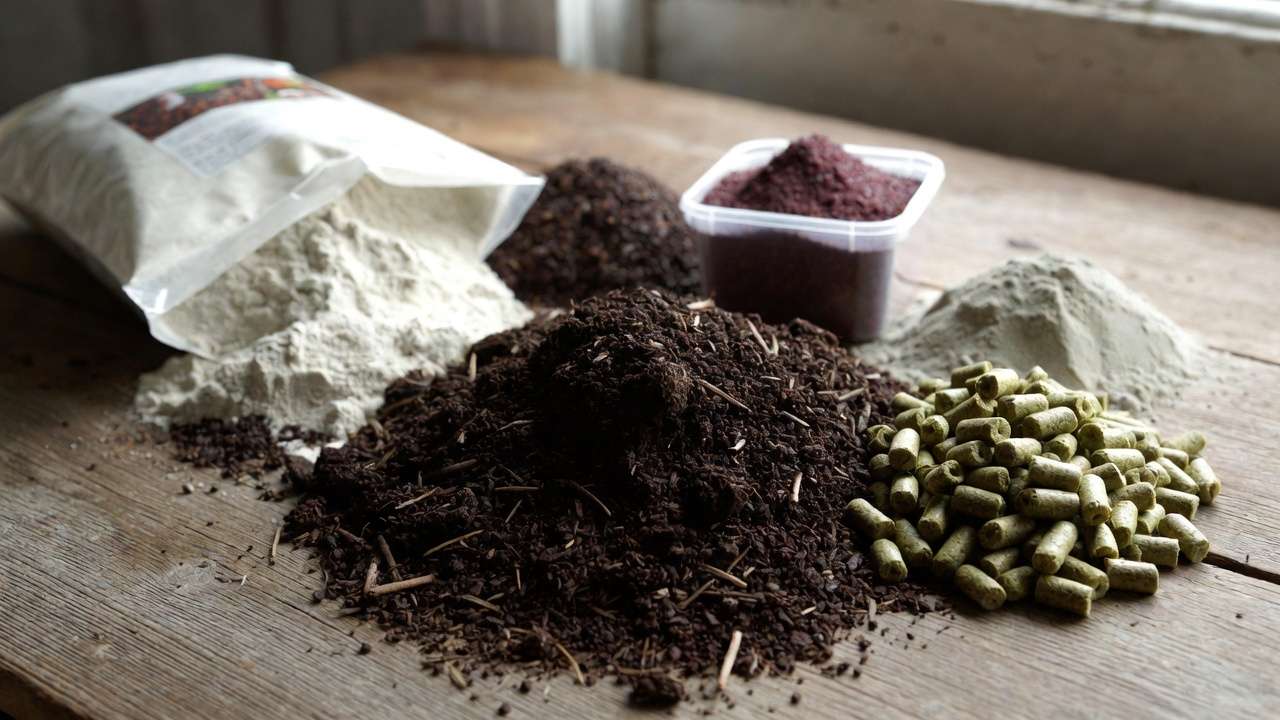
- Compost & aged manure — Balanced ~1-1-1 to 3-1-2. Excellent all-rounder; improves structure and microbes.
- Blood meal (12-0-0) — High N for leafy growth.
- Bone meal (3-15-0 or similar) — Phosphorus powerhouse for roots/blooms.
- Kelp/seaweed meal (1-0-2 to 2-1-4) — Potassium + trace minerals; great for stress resistance.
- Wood ash (0-1-3+) — Potassium source (use sparingly—raises pH!).
- Fish emulsion (5-1-1) — Quick N boost.
- Alfalfa meal (2-1-2) — Balanced with growth hormones.
- Worm castings (~1-0-0 but microbe-rich) — Steady, gentle feeding.
Blending your own: Mix blood meal + bone meal + kelp for custom ratios (e.g., 4-3-3). Apply 2–4 inches of compost annually as top-dressing. Organics release slowly, so combine with occasional synthetics for heavy feeders if needed.
Advanced Insights & Expert Tips from Pros
- Climate & soil tweaks: Sandy soils leach N fast—use slow-release + mulch. Clay holds nutrients but drains poorly—add organics for aeration.
- Micronutrients matter: NPK alone fails without iron (for chlorosis), magnesium (yellow between veins), etc. Chelated supplements fix issues quickly.
- Sustainable practices: Minimize runoff—apply before rain, use buffers near water. Rotate organics to feed soil biology.
- Real-world case studies:
- Yellow tomato leaves? Often N deficiency or pH lockout—test, then apply balanced + lime.
- Poor fruit set on apples? Switch to low-N/high-K (e.g., 8-4-12) mid-season—boosts quality.
- Stunted young tree? High-P blend (10-20-10) encourages roots without excess tops.
These tweaks separate good gardens from exceptional ones!
Frequently Asked Questions (FAQs) ❓
- What does 10-10-10 mean exactly? 10% nitrogen, 10% phosphorus (as P₂O₅), 10% potassium (as K₂O). The rest is inert or secondary elements.
- Is organic fertilizer better for NPK? Not “better”—different! Organics build soil health slowly; synthetics deliver fast/precise. Best gardens use both.
- Can I use lawn fertilizer on vegetables? Often yes (high-N types for leafy greens), but check ratios—avoid high-P if not needed (P runoff concerns).
- How often should I fertilize trees? Mature trees: once yearly (spring). Young: 2–3 times during growing season. Always soil test first!
- What if I used the wrong ratio—what now? Flush soil with water to leach excess. Adjust next application (e.g., add P/K if N-heavy caused no blooms). Monitor recovery—plants are resilient!
Conclusion: Your Path to a Thriving Garden Starts Here! 🌟
Mastering choosing the right fertilizer NPK ratio is the game-changer for turning struggling plants into healthy, productive stars. Start with that all-important soil test, match ratios to plant type/stage/conditions, apply thoughtfully, and incorporate organics for lasting soil vitality.
Your reward? Lush foliage, explosive blooms, juicy harvests, and resilient trees that withstand weather and pests. Gardening becomes easier and more joyful when nutrition is dialed in.
Happy gardening—your green friends are ready to thrive! 🌿💚 Share your NPK wins (or before/after pics) in the comments—I’d love to hear how this guide helps your garden bloom! 🚀











