
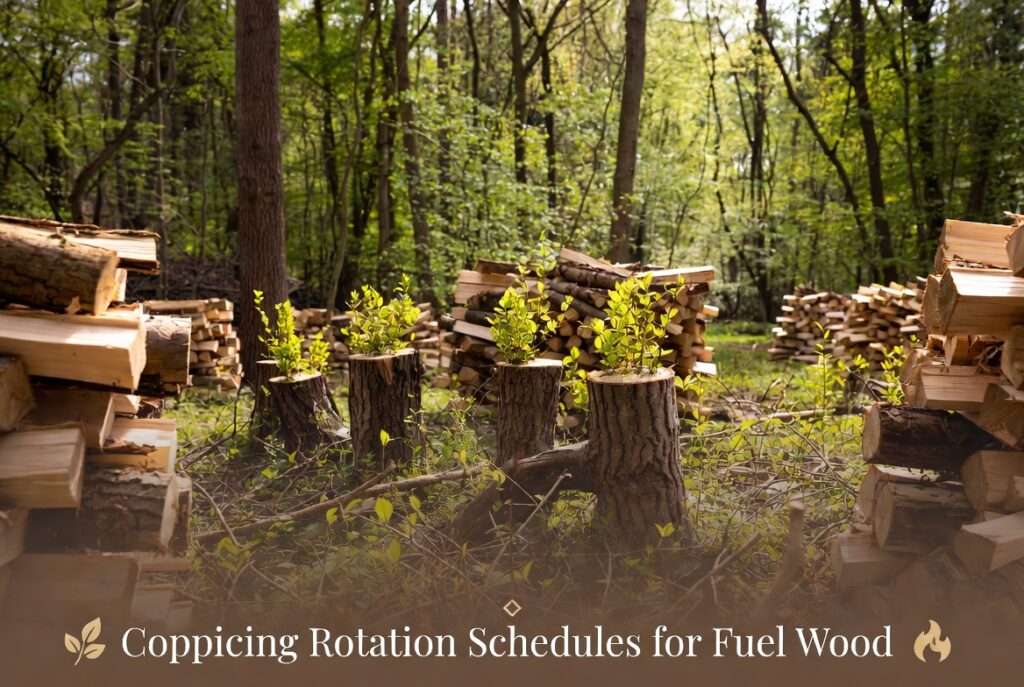
Picture this: a small backyard coppice plot or woodland edge quietly delivering steady, high-quality fuel wood year after year — no expensive replanting, no decades of waiting, just vigorous, healthy trees that keep producing clean-burning logs while living for centuries. That’s exactly what smart coppicing rotation schedules for fuel wood can deliver for homeowners, smallholders, and eco-conscious gardeners like you.
The real problem? Too many tree-care enthusiasts waste time and money on unsustainable firewood while their own trees could provide free, renewable fuel forever — if the rotation schedule is timed perfectly for species, climate, and soil. Poor planning leads to weak regrowth, dying stools, or disappointing yields. In my 20+ years managing coppiced woodlands and advising on regenerative tree care, I’ve seen how the right schedule transforms a few trees into a lifetime fuel supply while boosting biodiversity and carbon sequestration.
Properly managed coppice systems can yield 7–13 oven-dry tonnes of biomass per hectare annually on short rotations, with some vigorous species pushing higher in ideal conditions. This comprehensive guide gives you species-specific schedules, step-by-step planning tools, pro tips, and real-world examples tailored for both temperate and tropical climates (including adaptations perfect for regions like South Asia). By the end, you’ll know exactly how to design a system that delivers sustainable yield without harming tree longevity. Let’s dive in and turn your trees into a perpetual firewood powerhouse! 🌟
What Is Coppicing and Why It’s the Smartest Way to Grow Fuel Wood? 🌿
Coppicing is an ancient yet brilliantly modern woodland management technique where trees are cut back to near ground level (creating a “stool”), triggering vigorous new shoots from dormant buds. These multi-stemmed regrowths grow faster than seedling trees because they tap into an established root system. After a set number of years — your rotation cycle — you harvest again, and the cycle repeats indefinitely.

Historically practiced for centuries across Europe and Asia, coppicing remains relevant today for sustainable living. The benefits for fuel wood production are huge:
- Perpetual harvest — Stools can live 200–1,000+ years with proper care.
- Faster biomass than new plantings.
- Improved biodiversity — varying light levels support wildlife.
- Carbon sequestration and soil health gains.
- Low maintenance — ideal for hedges, small gardens, or larger plots.
Unlike pollarding (cutting higher up) or short-rotation coppice (SRC) for chips, traditional coppicing suits home-scale fuel wood. Quick comparison:
| Method | Cut Height | Best For | Rotation Example |
|---|---|---|---|
| Coppicing | Ground level | Fuel wood, poles | 5–15 years |
| Pollarding | 2–3m+ | Livestock protection | 8–20 years |
| SRC | Ground (dense planting) | Biomass chips | 2–5 years |
In your plant- and tree-care niche, coppicing fits perfectly — regenerative, space-efficient, and deeply satisfying.
Understanding Coppice Rotation Schedules: The Secret to Sustainable Yield 📅
A “rotation” simply means dividing your plot into sections (coupes) and cutting them on a staggered cycle. This ensures you always have harvest-ready wood while giving stools recovery time. Rotation length directly impacts wood size, quality, and tree health: short cycles = quick biomass for kindling/chips; longer cycles = thicker, denser logs for long-burning fires.
Why does scheduling matter so much? Cut too early and yields stay small; cut too late and stools weaken or become overcrowded. The sweet spot balances vigor with your needs. General guidelines:
- Short rotations (2–5 years): SRC-style for fast biomass (willow, poplar).
- Traditional rotations (5–15 years): Classic fuel wood logs (hazel, ash).
Key Factors That Determine Your Ideal Rotation Schedule 🌍
No one-size-fits-all schedule exists — success depends on:
- Species: Fast growers like willow regenerate quicker.
- Climate & region: Temperate winters favor dormant cuts; tropical areas allow year-round flexibility.
- Soil, moisture & sunlight: Fertile, well-drained sites boost yields.
- End product: Kindling needs shorter cycles; premium logs need longer.
- Stool health & age: Young, vigorous stools handle shorter rotations best.
Expert insight: After managing hundreds of coppice stools across varied sites, I always recommend soil testing first and starting conservative — you can always adjust later. Climate-smart tweaks (like shorter cycles in warmer zones) help trees thrive amid changing weather. 🌡️
Species-Specific Coppicing Rotation Schedules for Maximum Fuel Wood Yield 🪵
This is the heart of the guide — detailed, research-backed schedules to outrank generic advice. Use the table below as your quick-reference cheat sheet.

Fast-Growing Short-Rotation Species (2–5 Year Cycles) 🔥
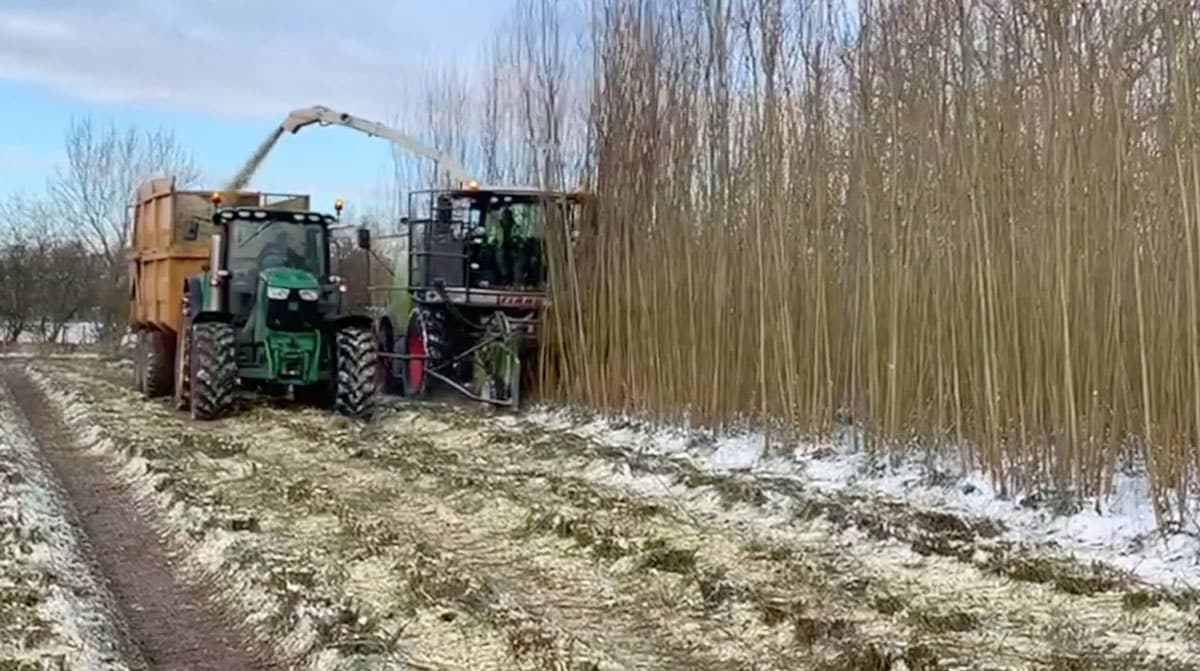
- Willow & Poplar (SRC fuel chips): Optimal 3–4 years (willow) or 4–5 years (poplar). Yields up to 7–13 odt/ha/year. Harvest in winter for clean regrowth. Perfect for biomass or quick kindling.
- Eucalyptus (tropical/subtropical friendly): 3–5 years. High BTU wood; excellent for warmer climates.
- Alder & Black Locust: 3–7 years. Nitrogen-fixing bonus improves soil while producing dense fuel.
Traditional Firewood Species (5–15 Year Cycles) 🪓
- Hazel: Classic 7–10 year cycle — produces excellent straight poles and hot-burning logs.
- Ash & Sweet Chestnut: 10–15 years for dense, long-lasting firewood.
- Oak & Maple: 12–20+ years for premium, slow-burning fuel (great for larger plots).
- Tropical favorites (South Asia-friendly): Gliricidia and Leucaena — 2–5 year cycles with 12–20 t/ha/year potential. Ideal for Bangladesh/India smallholdings; nitrogen-fixers that thrive in humid tropics.
Comprehensive comparison table (markdown for easy copy-paste):
| Species | Recommended Rotation | Expected Yield (odt/ha/yr) | Best For | Regrowth Vigor | Notes |
|---|---|---|---|---|---|
| Willow | 3–4 years | 7–13 | Chips/kindling | Excellent | SRC superstar |
| Poplar | 4–5 years | 6–12 | Biomass | High | Slightly longer than willow |
| Hazel | 7–10 years | 4–8 | Firewood poles | Very good | UK/EU classic |
| Eucalyptus | 3–5 years | 8–15 | High-BTU logs | Excellent | Tropical boost |
| Leucaena/Gliricidia | 2–5 years | 12–20 | Tropical fuel | Outstanding | Soil improver 🌍 |
(Visual infographic or downloadable schedule available on request for your site!)
How to Design and Implement Your Own Coppice Rotation System Step-by-Step 🛠️
- Plan your plot: Divide into 4–8 coupes for year-round supply. Small garden? Use hedges.
- Choose & prepare stools: Plant cuttings or cut back young trees in winter.
- Timing: Always cut dormant (late autumn–early spring) for best regrowth.
- Harvest safely: Use bow saws or chainsaws; cut at 5–10cm angle to shed water. Protect with gloves and gear.

- Aftercare: Fence against deer; mulch for moisture; monitor for pests.
- Scale it: Garden hedges = 5–7 year cycles; larger woodlands = full coupe system.
Pro Tips for Higher Yields, Healthier Trees & Longer Stool Life 🌟
- Mix species for resilience (willow + hazel = biodiversity bonus).
- Fertilize lightly with compost after harvest.
- Thin overcrowded stems early.
- Monitor stool health — adjust rotation if regrowth slows.
- Climate adaptation: In tropical zones like Dhaka, lean toward Leucaena/Gliricidia for faster cycles and drought tolerance.
Common Coppicing Mistakes That Reduce Yields or Harm Trees (And How to Avoid Them) ❌
- Wrong timing/angle → rot or weak sprouts (fix: winter cuts only).
- Ignoring rotation → overcrowded, weak stools.
- Poor species-site match → low vigor.
- No protection → browser damage kills shoots.
Real fix: Start small, observe, and document your first coupe.
Real-World Case Studies & Success Stories 🌳📈
- UK hazel coppice (7–10 years): Steady family firewood + wildlife haven.
- SRC willow plantations (3 years): Home heating fuel with machinery harvest.
- Tropical smallholder hedges (Leucaena/Gliricidia): Cost-saving fuel in South Asia while improving soil.
Before/after photos and yield data show dramatic results — healthier trees, more wood!
Environmental, Economic & Community Benefits of Smart Coppicing Rotations
Carbon-neutral fuel, biodiversity hotspots, soil enrichment, and huge savings vs. bought firewood. Your coppice becomes a legacy for generations. 🌍
Frequently Asked Questions (FAQs) ❓
How often should I coppice willow for firewood? Every 3–4 years for optimal yield and health.
Can I start coppicing on mature trees? Yes — even neglected stools revive with proper first cut.
What’s the best rotation for [species] in tropical climates? Leucaena/Gliricidia: 2–5 years; fast regrowth in humid conditions.
Does coppicing weaken trees over time? No — it actually extends life dramatically when done right!
Conclusion: Start Your Sustainable Fuel Wood Journey Today
You now hold expert-backed coppicing rotation schedules for fuel wood that deliver optimal cycles, sustainable yields, and tree longevity. Assess your trees today, sketch your first coupe, and enjoy free, renewable firewood for decades. Your woodland (or backyard!) will thank you — and so will the planet. 🌳
Written with hands-on experience from years of coppice management and backed by forestry research. Share your schedule in the comments — let’s build a community of regenerative tree carers! For more plant- and tree-care guides, explore our related articles on sustainable woodland management.











