
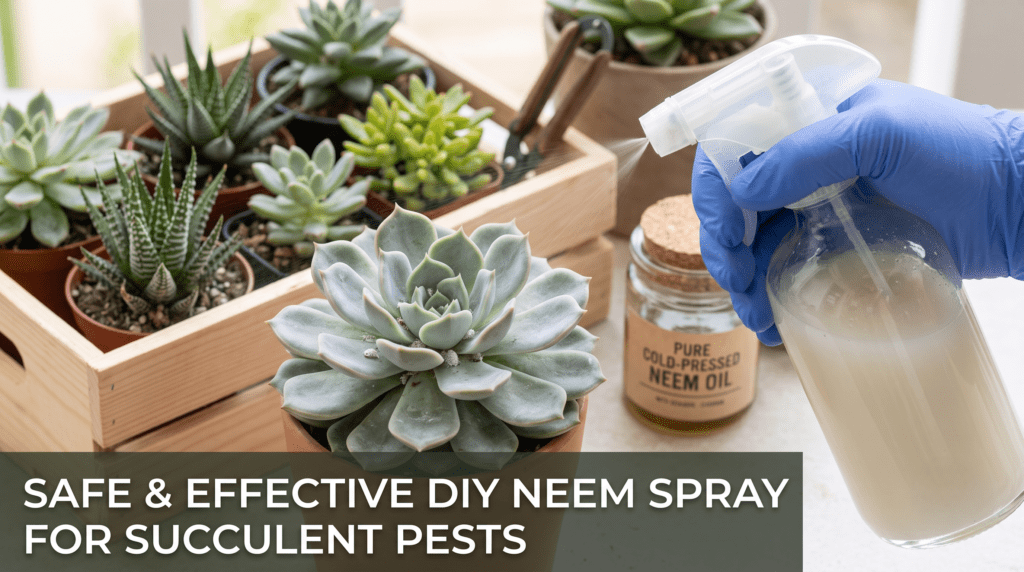
It happens to the best of us. You are admiring your prized Echeveria, enjoying your morning coffee, only to spot a cluster of sticky, cotton-like fuzz tucked deep within the center rosette. Panic immediately sets in. Before you reach for harsh, toxic chemical pesticides that can permanently damage your fragile plants or put your pets at risk, take a deep breath.
The safest, most effective solution is a natural one. Learning how to properly mix a DIY neem oil spray for succulent pests is a fundamental skill every plant parent must master. Over my years of cultivating, propagating, and rehabilitating succulents in both indoor and greenhouse environments, this specific organic pest control recipe has successfully saved hundreds of my plants from total devastation.
Commercial pesticides often contain synthetic chemicals that can strip away a succulent’s protective wax (farina) and leave toxic residues in your home. By utilizing this completely natural, highly effective DIY treatment, you will learn exactly how to mix, apply, and safely store this organic bug-busting miracle in under 5 minutes. Let’s dive in and rescue your plant collection! 🪴💚
2. Why Are Succulents Magnets for Pests? 🪲
To defeat the enemy, you must first understand them. Succulents evolved in harsh, arid climates where their thick, fleshy leaves serve as vital water storage reservoirs. To thirsty, sap-sucking insects, your plump succulent is essentially a giant, refreshing water bottle just waiting to be tapped.
When we bring these desert-dwelling plants into our homes, we inadvertently create the perfect storm for pest infestations. Indoor environments typically lack natural predators like ladybugs, lacewings, and predatory mites that would normally keep pest populations in check. Combine this lack of predators with poor indoor airflow and the most common succulent care mistake—overwatering—and you have created a five-star resort for bugs.
Before you spray, you need to identify what is attacking your plant. Here are the “Big Three” succulent pests you are most likely to encounter:
-
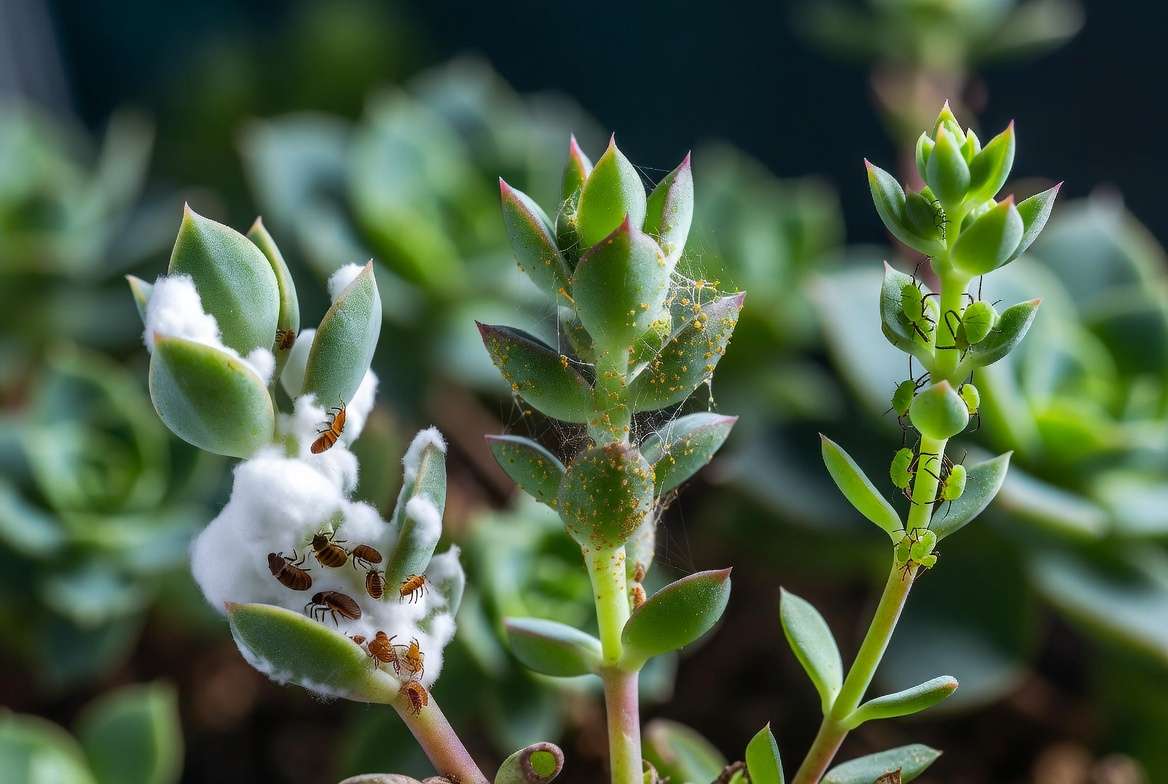
Mealybugs (The Cotton Invaders): ☁️ These are the most common and arguably the most frustrating succulent pests. They look like tiny, white pieces of fuzzy cotton hiding in the tight crevices of rosettes, under leaves, or even on the roots (root mealybugs). They suck the sap from your plant, leaving behind a sticky substance called honeydew that can lead to sooty mold.
-
Spider Mites (The Invisible Threat): 🕸️ If you see fine, delicate webbing stretched across the tips of your succulent leaves, you have spider mites. These pests are practically microscopic, but the damage they cause is massive. They puncture the plant cells, leaving tiny yellow, brown, or silvery dots (stippling) all over the leaves. They thrive in hot, dry conditions.
-
Aphids (The Sap Suckers): 🐛 Usually green, yellow, or black, these small, pear-shaped bugs love to congregate on the tender, newly formed growth or the beautiful flower stalks of your succulents. Like mealybugs, they drain the plant’s vital fluids and excrete honeydew, causing the leaves to pucker and stunt.
3. The Magic of Neem Oil: How Does It Work? 🌿
Neem oil is not just a trendy gardening buzzword; it is a scientifically proven, centuries-old agricultural powerhouse. Derived from the seeds of the Neem tree (Azadirachta indica), native to the Indian subcontinent, this oil is a staple in organic gardening and integrated pest management (IPM).
But how exactly does it work its magic on succulent pests without harming the plant? The secret lies in a naturally occurring chemical compound called Azadirachtin.
When you apply a high-quality neem oil spray, it attacks pests on multiple fronts:
-
Hormonal Disruption: When insects ingest Azadirachtin by feeding on the treated succulent, it closely mimics their natural hormones. This completely scrambles their biological systems. They “forget” to eat, lose the urge to mate, and become unable to lay eggs or molt into their next life stage.
-
The Smothering Effect: Because neem is an oil, coating the insects physically blocks their spiracles (the tiny pores on their bodies they use to breathe), effectively suffocating adult bugs on contact.
-
Anti-Feedant Properties: The bitter taste and strong odor of neem oil act as a powerful deterrent. Bugs will often choose to starve rather than take a bite out of a neem-treated leaf.
Why It’s Safe: Unlike broad-spectrum chemical insecticides that kill everything in their path, neem oil is biodegradable and generally safe for beneficial pollinators (like bees and butterflies) because they do not chew on the plant tissue. It is also widely considered safe to use around humans and most household pets, making it the perfect choice for indoor houseplant care. 🐾
4. Ingredients & Supplies for Your DIY Neem Oil Spray 🧪
To build a skyscraper, you need a solid foundation. The same goes for your pest control spray. The biggest mistake novice plant parents make is buying the wrong ingredients, which leads to ineffective treatments and lingering pest problems. Here is exactly what you need to gather for your master recipe:
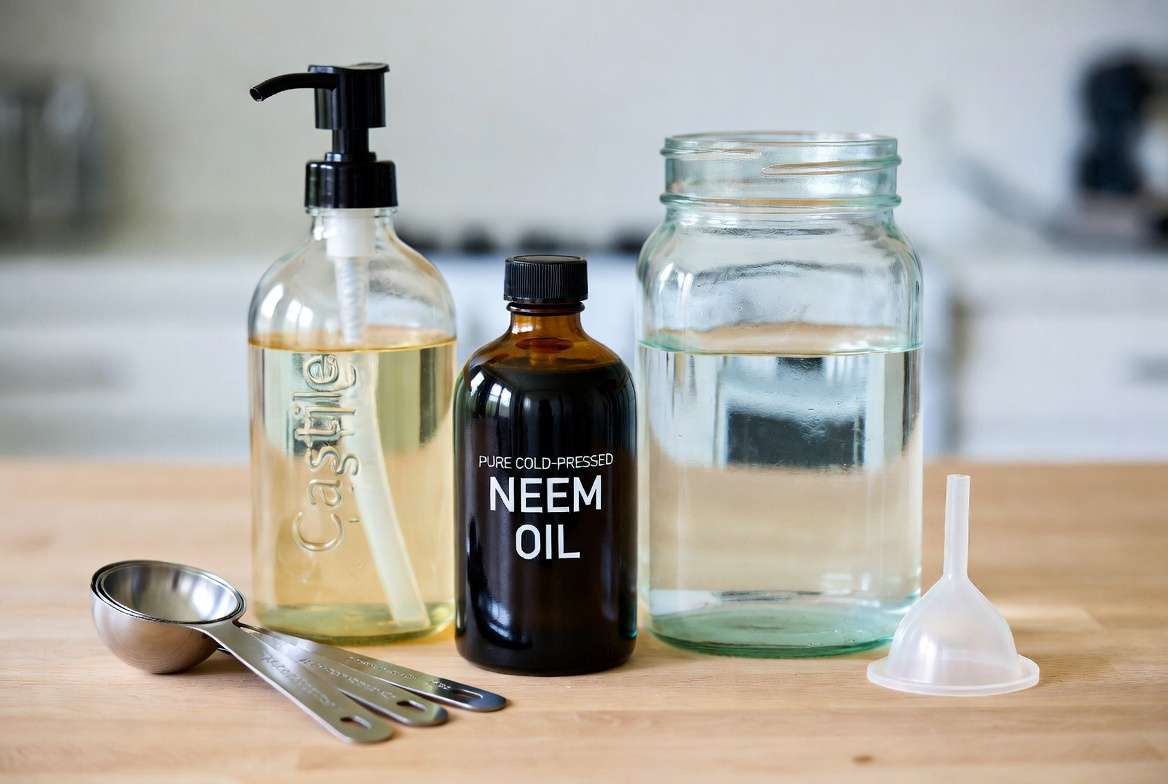
1. 100% Pure, Cold-Pressed Neem Oil Do not grab just any bottle off the shelf at the big-box hardware store. Many commercial “Neem Oil” sprays are actually “Clarified Hydrophobic Neem Oil Extract.” This means the oil has been heavily processed and stripped of its most valuable active ingredient: Azadirachtin. You must look for a bottle explicitly labeled 100% Pure, Cold-Pressed Neem Oil. It will be thick, cloudy, and smell strongly of garlic and sulfur (a sign of high quality!). 🧄
2. The Emulsifier (Liquid Soap) Remember basic chemistry: oil and water do not mix. If you put pure neem oil directly into water, it will just float in globs at the top of your spray bottle, rendering it useless and potentially burning your plant. You need an emulsifier to bind the oil to the water.
-
The Best Choice: Pure liquid Castile soap (like Dr. Bronner’s Peppermint or Unscented). It is gentle, organic, and highly effective.
-
The Backup: A very mild, grease-cutting dish soap (like Dawn). Avoid harsh detergents with heavy degreasers, bleaches, or synthetic fragrances, as these can severely burn your succulent’s leaves.
3. High-Quality Water While tap water works in a pinch, it often contains heavy minerals, chlorine, and fluoride that can leave unsightly hard-water spots on your succulent leaves. For a truly professional-grade spray, use distilled water, filtered water, or collected rainwater. 🌧️
4. The Right Equipment
-
A clean, opaque spray bottle with a fine-mist setting (sunlight degrades neem oil, so an opaque or amber glass bottle is ideal). 🧴
-
Measuring spoons dedicated to your gardening supplies.
-
A small funnel to prevent messy spills.
5. The Master Recipe: Step-by-Step Instructions 👩🔬
Now that you have the correct, high-quality ingredients, it is time to play chemist. Getting the ratios right is vital—too much oil and you risk burning the plant; too little, and the pests will continue to feast.
Here is the foolproof, nursery-tested master recipe for a highly effective DIY neem oil spray for succulent pests.
-
Step 1: Warm the Oil (If Necessary) 100% pure, cold-pressed neem oil has a freezing point of around 55°F (13°C). If your house is cool, the oil may solidify in the bottle, resembling a thick, sludgy paste. Do not microwave it! The extreme heat will destroy the beneficial Azadirachtin. Instead, simply place the tightly sealed bottle in a bowl of warm (not boiling) tap water for 10 to 15 minutes until it returns to a smooth, pourable liquid state. 🌡️
-
Step 2: Create the Emulsion Fill your spray bottle with 1 quart (32 oz) of lukewarm, distilled or filtered water. Add 1 teaspoon of your gentle liquid Castile soap or mild dish soap to the water. Gently swirl the bottle to mix the soap into the water. Try to avoid shaking it violently at this stage, as you don’t want a bottle full of dense foam. 💧
-
Step 3: Add the Neem Oil Using your funnel, carefully pour 1 to 2 teaspoons of the pure neem oil into the soapy water mixture. (Use 1 teaspoon for minor infestations or sensitive succulents, and 2 teaspoons for a heavy, stubborn outbreak).
-
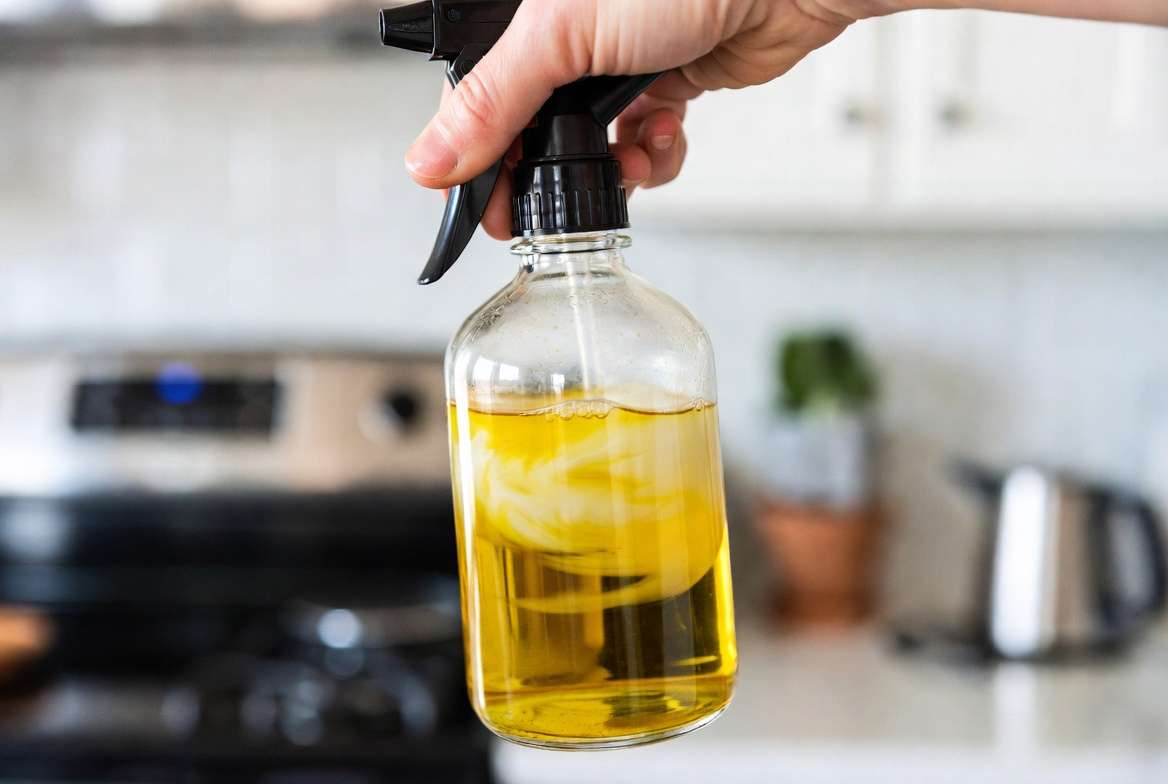
Step 4: Shake Vigorously Secure the nozzle onto the spray bottle and shake it vigorously for 30 seconds. You will notice the water transform from clear to a cloudy, milky yellow color. This visual change confirms that the soap has successfully emulsified the oil, breaking it down into microscopic droplets suspended in the water. 🌪️
6. How to Safely Apply Neem Oil to Succulents (Crucial!) 🧤
Having the perfect organic pesticide is only half the battle; proper application technique is what separates novice growers from expert succulent rehabilitators. Applying oil to fleshy, water-filled leaves requires caution.
The Golden Rule of Neem Oil: Timing is Everything 🌙 NEVER spray your succulents in direct sunlight. This cannot be stressed enough. Neem oil coats the leaf in a thin layer of natural lipid. If the sun hits that wet oil, it acts exactly like a magnifying glass, causing severe, irreversible phototoxicity (sunburn) that will leave your plant scarred with ugly brown or black patches. Always apply your treatment in the late evening as the sun goes down, or move your indoor plants to a shaded, well-ventilated room to dry overnight.
The Spot Test 🔍 Succulents belong to a diverse array of families, and some are more sensitive than others. Before drenching your entire prized Aeonium or Haworthia, conduct a 24-hour spot test. Spray a single, lower leaf. If the leaf shows no signs of wrinkling, blackening, or dropping after 24 hours, you are safe to proceed with a full treatment.
The Application Process 🚿
-
Prep the Plant: Remove any dead, dried-up leaves from the base of the stem, as mealybugs love to hide and lay eggs in this decaying matter.
-
Shake the Bottle: Give your spray bottle a good shake before every few spritzes to ensure the mixture hasn’t separated.
-
Complete Coverage: Spray the succulent thoroughly. Pests are exceptional at hiding. You must coat the tops of the leaves, the undersides of the leaves (where spider mites cluster), and all the way down the main stem.
-
Target the Soil: Lightly mist the top layer of the potting soil. Many pests lay their eggs in the substrate, and this will help break the breeding cycle.
-
The Q-Tip Method: For very tight rosettes (like a densely packed Sempervivum), use a cotton swab dipped directly into your neem mixture to dab into the tiny crevices where a spray might miss.
Treatment Frequency 📅 Neem oil is not a one-and-done miracle. Because it works by disrupting the hormonal lifecycle rather than killing instantly on contact, you must be persistent. Apply this DIY spray once every 7 days. It usually takes 2 to 3 consecutive weekly treatments to completely eradicate overlapping generations of adults, nymphs, and newly hatched eggs.
7. Will Neem Oil Ruin My Succulent’s Farina? 🌫️
This is the most common and critical question among succulent enthusiasts. If you grow pastel-colored succulents like Echeveria laui, Graptopetalum amethystinum, or Pachyphytum oviferum, you are familiar with farina (also known as epicuticular wax). This is the beautiful, powdery white coating on the leaves that acts as a natural sunscreen and water repellent.
The Hard Truth: Farina is a lipid-based wax. Because basic chemistry dictates that oils dissolve waxes, heavily spraying your pastel succulents with any horticultural oil—including neem—will likely dissolve or permanently mar this beautiful powdery finish. Once farina is wiped away or dissolved, it never grows back on those specific leaves.
The Workaround for Farina-Coated Plants: If your dusty, farina-coated succulent gets an infestation, you have to weigh the pros and cons: a live plant with a slightly damaged cosmetic finish is better than a dead plant.
However, to minimize damage, skip the broad spray bottle method. Instead, pour a small amount of your neem mixture into a cup, dip a precision Q-tip or a soft, small makeup brush into the liquid, and surgically dab only the exact spots where you see the mealybugs or aphids. This targeted strike method saves the plant’s life while preserving the majority of its gorgeous, powdery aesthetic. 🖌️

8. What NOT to Do: Common Neem Oil Mistakes 🚫
Even with the best intentions, it is easy to make a fatal error in plant care. Avoid these common pitfalls to ensure your succulent’s survival:
-
Spraying a Dehydrated Plant: If your succulent is severely wrinkled, limp, and thirsty, do not spray it with insecticidal soaps or oils. A dehydrated plant is highly susceptible to chemical burn (phytotoxicity). Water the plant thoroughly, wait 24 to 48 hours for the leaves to plump up, and then treat for pests. 💧
-
Skipping the Emulsifier: Forgetting the soap means you are just spraying water and floating globs of pure oil. It won’t work, and the undiluted oil globs will suffocate the plant’s pores (stomata).
-
Applying During a Heatwave: If ambient temperatures are consistently above 85°F (29°C), hold off on applying oils. High temperatures combined with oil coatings can cause the plant to overheat and suffocate. ☀️
-
Using Too Much Oil: If a 1% concentration works, a 10% concentration must be better, right? Wrong. Over-saturating the mixture will clog the plant’s pores and kill it faster than the bugs would. Stick strictly to the recipe.
9. Frequently Asked Questions (FAQs) 🤔
Does neem oil kill succulent pests instantly? No, it does not provide an instant “knockdown” like harsh synthetic neurotoxin pesticides. It takes a few days to a week for the bugs to stop feeding, fail to molt, and ultimately die off. Patience is key with natural pest control!
Can I use neem oil on my indoor succulents? Absolutely. It is one of the safest treatments for indoor use. However, be aware that 100% pure cold-pressed neem oil has a very strong, distinctive scent—often described as a mix of garlic, sulfur, and crushed peanuts. The smell usually dissipates once the spray completely dries.
Should I wipe the neem oil off my succulent after spraying? No, do not wipe it off. Wiping the leaves can cause unnecessary mechanical damage and rub off the farina. Simply let the plant air dry in a well-ventilated, shaded area out of direct sunlight.
Does pure neem oil expire? When stored correctly in its concentrated, undiluted form, pure neem oil has a shelf life of about 1 to 2 years. Keep the original bottle tightly sealed and store it in a cool, dark place (like a garden cabinet or a temperature-controlled basement) away from extreme heat and direct sunlight to preserve the organic compounds.
10. Conclusion: Reclaiming Your Plant Collection 🏆
Dealing with an indoor pest infestation can feel incredibly overwhelming, but it is a rite of passage for every dedicated succulent owner. Bugs happen, even in the most meticulously kept greenhouses!
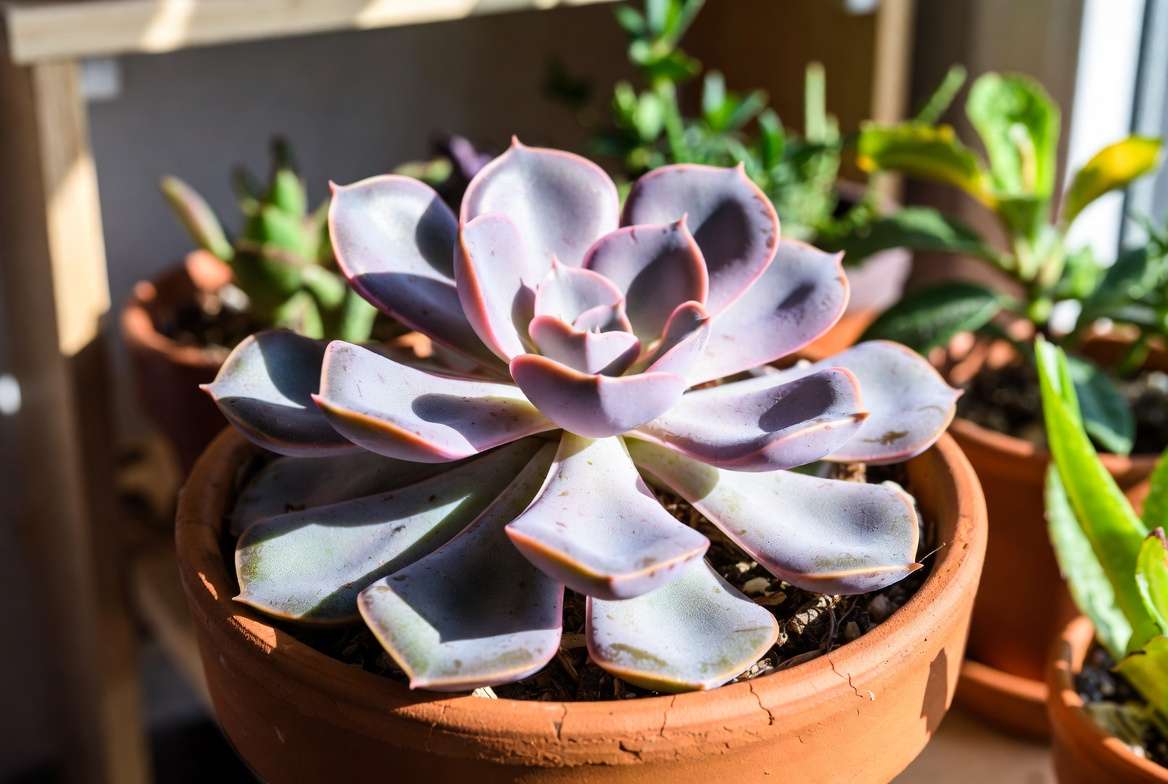
By taking quick action, isolating your affected plants, and utilizing this highly effective DIY neem oil spray for succulent pests, you are tackling the problem safely, organically, and effectively. Remember that consistency is your greatest weapon. Stick to your weekly application schedule, ensure you are mixing fresh batches with an emulsifying soap, and keep your freshly treated plants safely tucked away from the harsh afternoon sun.
You now have the knowledge and the exact recipe to break the pest lifecycle and reclaim your beautiful indoor jungle. Your succulents are remarkably resilient—with a little bit of organic intervention, they will bounce back, begin pushing out healthy new growth, and thrive for years to come! 🌵✨











