
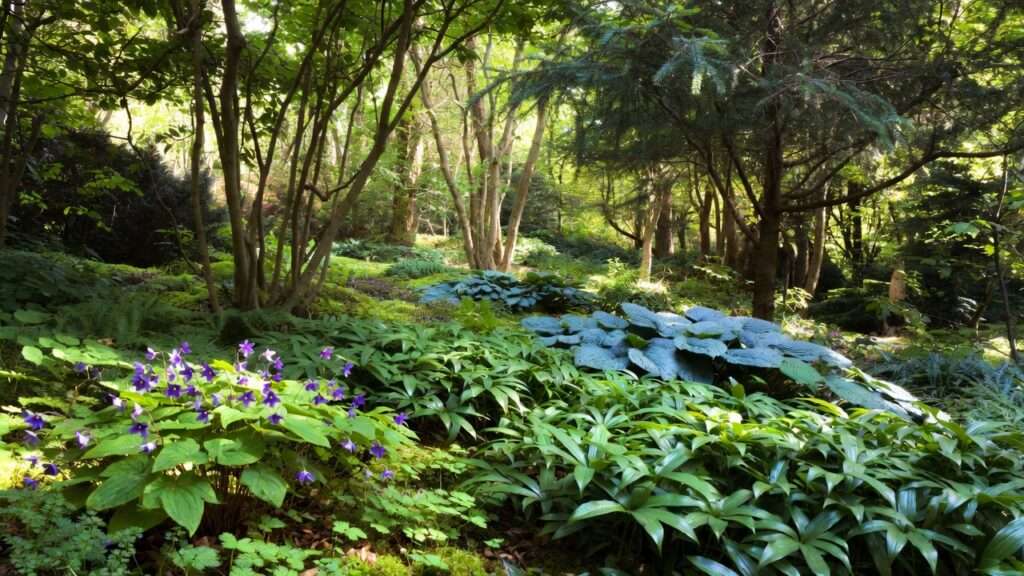
That bare, dusty patch under your favorite shade tree where grass refuses to grow… and every plant you’ve tried wilts away in defeat? 😩 If you’ve stared at those stubborn dry shade spots wondering why nothing survives the combo of deep shade, thirsty tree roots, and zero rainfall relief, you’re not alone. Dry shade under trees is one of gardening’s biggest headaches—tree canopies block rain like a giant umbrella 🌂, while shallow, competitive roots suck up every drop of moisture and nutrient.
But here’s the good news: with the right dry shade plants for under trees, you can transform those problem areas into lush, low-maintenance woodland retreats that look amazing year-round. These tough performers thrive where others fail, offering evergreen coverage, seasonal blooms, texture contrasts, and even wildlife benefits—all with minimal watering or fuss once established. 🌳💚
In this comprehensive guide, we’ll cover why dry shade is so tricky, how to prep your site without harming your tree, the absolute best groundcovers, perennials, and shrubs that actually succeed, smart design ideas, maintenance secrets, and more. Drawing from decades of real-world gardening experience (and backed by horticultural experts like Ken Druse, who calls certain picks the “gold standard” for tough shade), this is your ultimate resource for conquering dry shade under trees. Let’s turn bare dirt into beauty!
Why Dry Shade Under Trees Is So Challenging (And How Understanding It Helps You Win) 🤔
Mature trees create a perfect storm for underplanting failure. The canopy intercepts rainfall, often leaving the ground surprisingly dry even after storms. Meanwhile, trees like maples, oaks, beeches, and birches develop dense, shallow root mats that spread far beyond the drip line, aggressively competing for water and nutrients.
Common myths persist: “Just add more water!” (leads to shallow roots and tree stress) or “Grass will eventually fill in” (rarely does in deep shade). The truth? Standard shade lovers often flop here because they need consistent moisture that tree roots steal. Success comes from selecting plants adapted to woodland floor conditions—drought-tolerant once rooted, with fibrous or rhizomatous systems that weave between tree roots without harm.
Key takeaway: Match plants to your tree’s specific challenges (e.g., surface roots under maples vs. deeper ones under pines), and focus on establishment care. This knowledge alone prevents most failures.
How to Prepare the Site Before Planting (The Foundation of Success) 🛠️
Never rush planting—prep smart to respect your tree and give new plants the edge they need.
- Respect the tree roots 🚫: Avoid cutting large roots (>1 inch diameter) or piling soil/compost more than 2–3 inches deep over the root zone. Excessive fill reduces oxygen to tree roots and risks rot or decline. Plant at least 1–2 feet from the trunk to keep the flare exposed.
- Soil improvement tricks: Loosen soil gently with a garden fork (not a tiller—too risky for roots). In planting holes only, mix in 30–50% compost or well-rotted organic matter to boost moisture retention and nutrients without smothering roots. For heavy clay, add leaf mold or pine bark fines.
- Watering strategy for establishment: Soak deeply (to 8–12 inches) 2–3 times weekly during the first 1–2 growing seasons. Use soaker hoses or drip lines laid under mulch to deliver water slowly and directly to roots.
- Mulching dos & don’ts 🌱: Apply 2–3 inches of organic mulch (shredded leaves, bark, or pine needles) after planting, but keep it 3–6 inches away from the tree trunk to prevent rot and pests. Refresh annually for weed suppression and moisture conservation.
- Pro tip: Test soil pH—many dry shade spots trend alkaline under concrete-adjacent trees or acidic under conifers. Adjust lightly if needed, but tough plants usually adapt.
With proper prep, even tough spots become welcoming for resilient plants.
Top Groundcovers for Dry Shade Under Trees (The Workhorses That Carpet Bare Spots) 🌱👑
Groundcovers are your first line of defense—they spread to suppress weeds, retain soil moisture, and create a unified look. Here are proven winners:
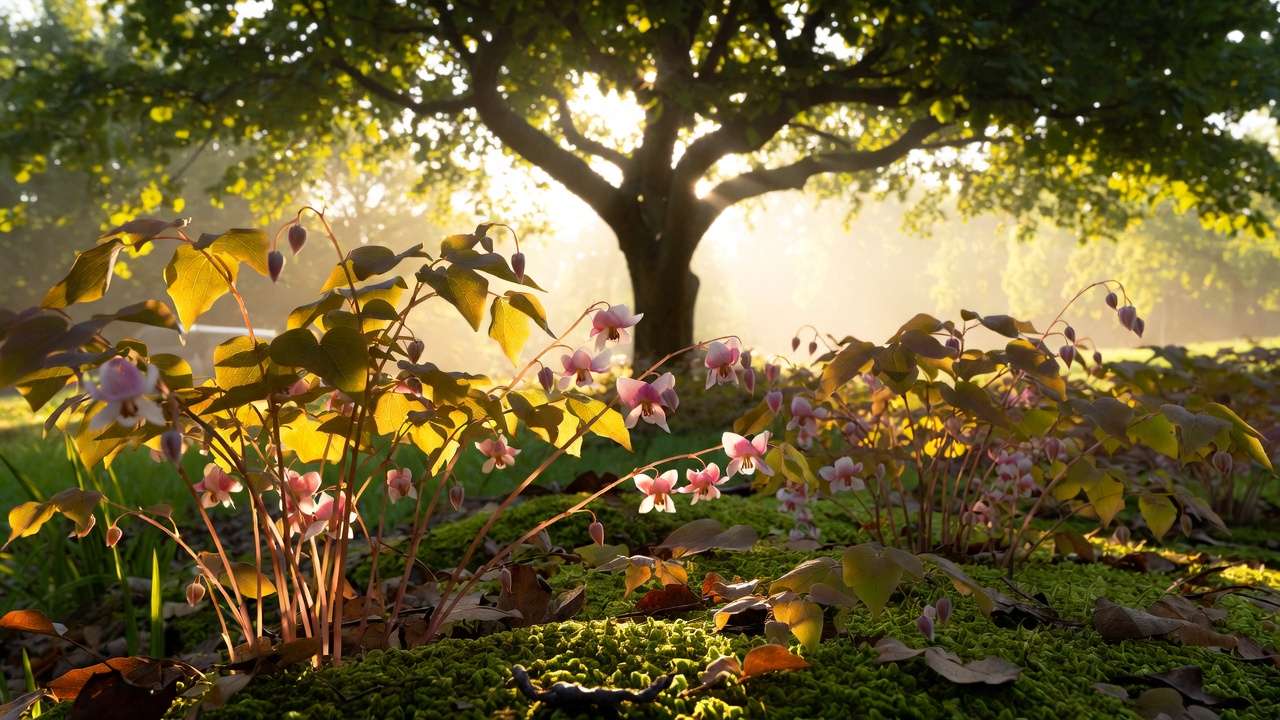
- Epimedium (Barrenwort / Bishop’s Hat) – Often hailed as the gold standard for dry shade 🌟. Rhizomatous roots push through competition; heart-shaped leaves (semi-evergreen in mild zones) turn bronze in fall. Delicate spring flowers in white, pink, yellow, or purple. Zones 5–9, 8–12″ tall. Plant 12–18″ apart for quick coverage. Pros: Deer-resistant, ultra-tough. Cons: Slow to establish initially.
- Pachysandra (Japanese or native Allegheny spurge) – Forms glossy evergreen carpets. Native Allegheny (P. procumbens) offers better wildlife value. Zones 4–8, 6–12″ tall. Excellent under dense shade.
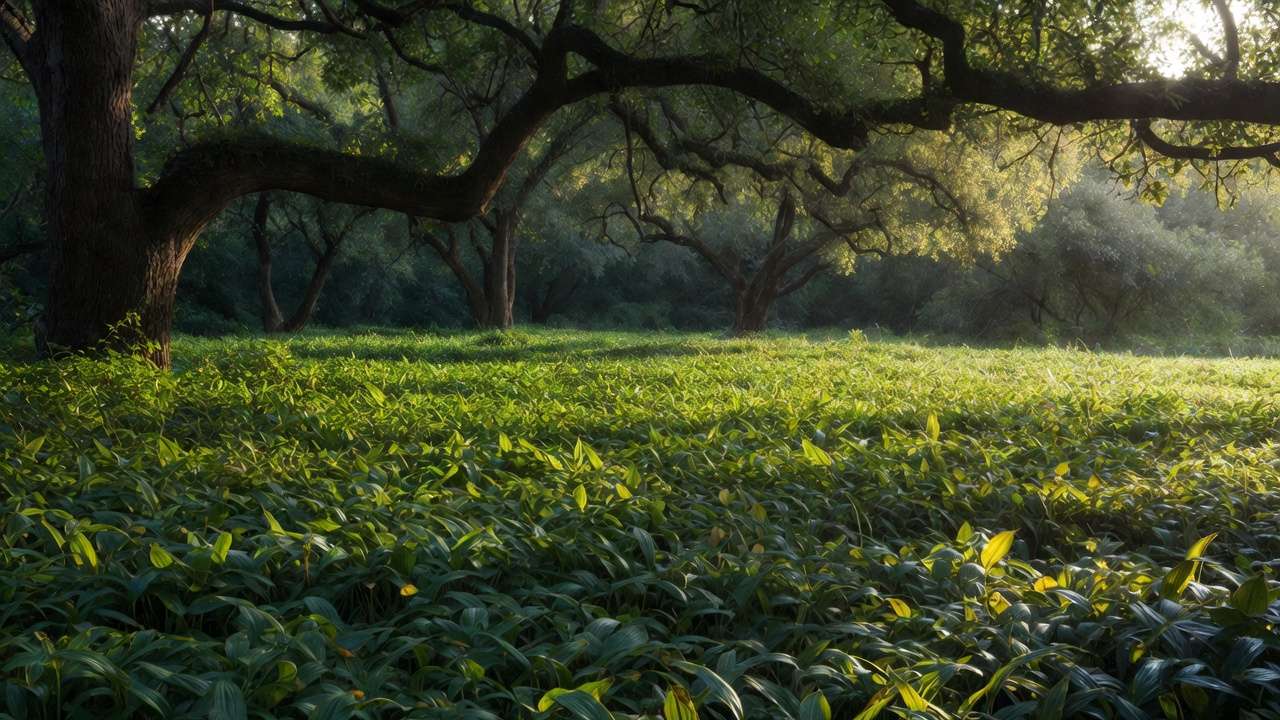
- Liriope (Lilyturf) – Grass-like texture with late-summer purple spikes. Super resilient once rooted. Zones 5–10, 12–18″ tall.
- Vinca minor (Periwinkle) – Classic evergreen trailer with blue-violet flowers in spring. Spreads steadily. Zones 4–9.
- Asarum (Wild Ginger) – Native, aromatic foliage hides small maroon flowers. Excellent spreader. Zones 4–7.
- Waldsteinia (Barren Strawberry) – Strawberry-like leaves, bright yellow blooms. Native-friendly. Zones 4–7.
For each groundcover, I’ve included key details like USDA hardiness zones (based on reliable sources like university extensions and proven performers), mature height/spread, seasonal highlights, pros/cons, and planting tips to help you choose wisely.
- Epimedium (Barrenwort / Bishop’s Hat) – Often hailed as the gold standard for dry shade 🌟. Rhizomatous roots push through competition; heart-shaped leaves (semi-evergreen in mild zones) turn bronze/red in fall for bonus color. Delicate spring flowers in white, pink, yellow, orange, or purple dangle like tiny hats. Zones 5–9, 8–18″ tall, spreads 12–24″ wide. Plant 12–18″ apart for quicker fill-in. Pros: Extremely drought-tolerant once established, deer-resistant, low-maintenance, foliage interest year-round. Cons: Slow to establish (give it 1–2 years), flowers subtle. Best under maples or oaks.
- Pachysandra (Japanese or native Allegheny spurge) – Forms dense, glossy evergreen carpets that smother weeds. Japanese (P. terminalis) is classic and fast; native Allegheny (P. procumbens) offers matte leaves and better ecological value for pollinators. Zones 4–8, 6–12″ tall. Pros: Excellent deep shade tolerance, deer/rabbit resistant in many areas, spreads steadily. Cons: Can be invasive in ideal conditions (monitor spread), prefers slightly acidic soil. Plant 6–12″ apart.
- Liriope (Lilyturf) – Grass-like evergreen blades with late-summer purple flower spikes that turn to black berries. Tough as nails. Zones 5–10, 12–18″ tall. Pros: Handles foot traffic lightly, drought-tolerant, adds texture contrast. Cons: Can spread aggressively (choose clumping varieties like L. muscari if worried). Great under birches or pines.
- Vinca minor (Periwinkle / Lesser Periwinkle) – Classic evergreen trailer with glossy leaves and spring blue-violet (or white/purple) flowers. Zones 4–9, 4–6″ tall, spreads indefinitely. Pros: Reliable spreader, blooms early, tolerates poor soil. Cons: Can become invasive in some regions (check locally), occasional leaf spot in wet years.
- Asarum (Wild Ginger) – Native favorite with kidney-shaped, aromatic leaves (smell like ginger when crushed). Hidden maroon flowers in spring. Zones 4–7 (some to 9), 6–8″ tall. Pros: Excellent native spreader, deer-resistant, woodland feel. Cons: Slow initial growth, prefers humus-rich soil.
- Waldsteinia (Barren Strawberry) – Strawberry-like foliage with bright yellow spring flowers, semi-evergreen in mild climates. Zones 4–7, 4–6″ tall. Pros: Native-friendly, cheerful blooms, good erosion control. Cons: Less aggressive spreader than others.
These groundcovers form the backbone—start with a mix for diversity and faster coverage. Water generously the first season, then taper off. 🌱
Best Perennials That Thrive in Dry Shade (Add Height, Color & Texture) 🌸
Once groundcovers are in place, layer in perennials for vertical interest, seasonal blooms, and foliage drama. These selections excel in root competition and low moisture, backed by extension services and long-term gardener success.
- Hosta (Plantain Lily) – Foliage superstars! Choose tougher, slug-resistant varieties like ‘Halcyon’ (blue), ‘Stained Glass‘ (golden), or ‘Sum and Substance’ (huge chartreuse). Zones 3–9, 12–36″ tall/wide depending on cultivar. Pros: Endless color/shape options, shade-tolerant, low care. Cons: Slugs love tender types (use barriers or resistant picks), dies back in winter. Plant in groups for impact.
- Brunnera (False Forget-Me-Not / Siberian Bugloss) – Heart-shaped silver or variegated leaves shine; tiny blue spring flowers resemble forget-me-nots. Varieties like ‘Jack Frost’ or ‘Silver Heart’ dazzle. Zones 3–8, 12–18″ tall. Pros: Striking foliage all season, deer-resistant, self-seeds gently. Cons: Prefers consistent moisture early on (mulch helps).
- Heuchera & Heucherella (Coral Bells & Foamy Bells) – Colorful evergreen foliage in purples, silvers, caramels, and greens; airy flower spikes in summer. Heucherella hybrids combine best traits. Zones 4–9, 8–18″ tall. Pros: Year-round interest, hummingbird magnets, tough in dry shade. Cons: Crown rot if mulch too wet.
- Tiarella (Foamflower) – Native woodland gem with frothy white/pink spring spikes and lobed leaves that turn bronze in fall. Zones 4–9, 8–12″ tall. Pros: Pollinator-friendly, spreads gently, great companion plant. Cons: Slower in very dry spots.
- Ferns (e.g., Dryopteris marginalis – Marginal Wood Fern; Polystichum acrostichoides – Christmas Fern) – Texture without flowers; evergreen or semi-evergreen options add structure. Zones 3–8, 18–36″ tall. Pros: Ultra-reliable, deer-resistant, no bloom maintenance. Cons: Some deciduous types brown in drought (Christmas fern stays green).
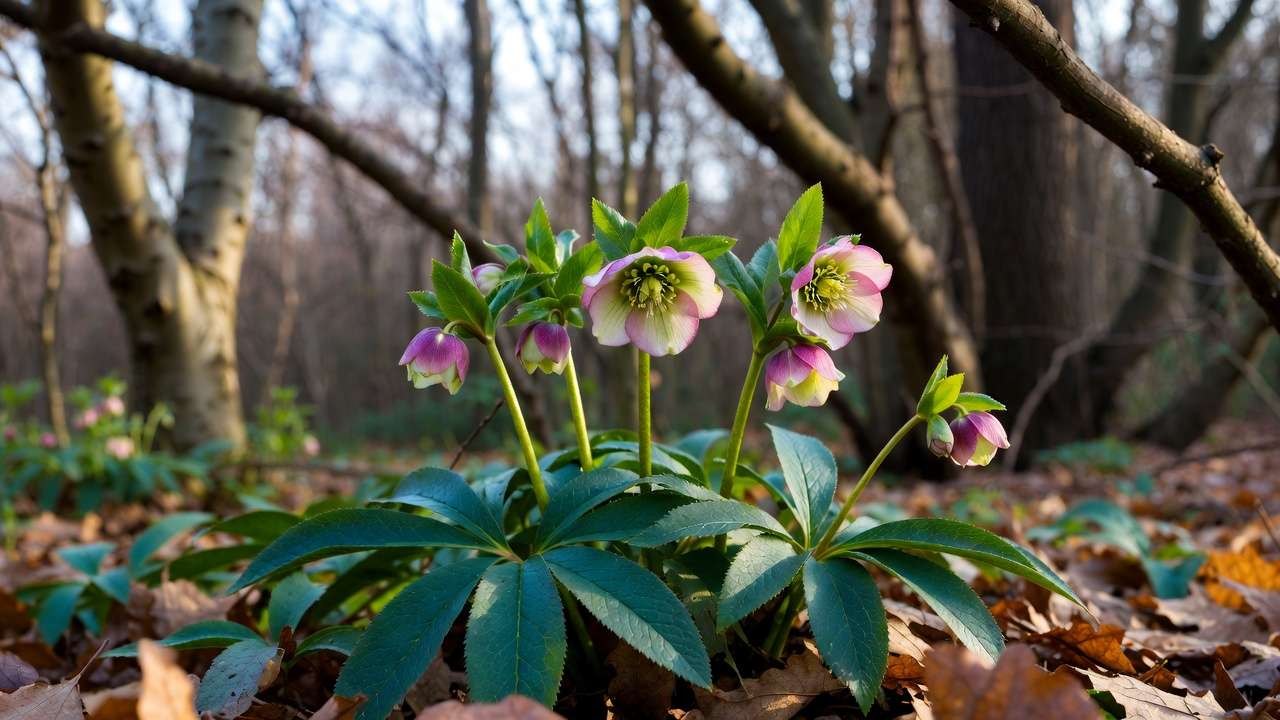
- Helleborus (Lenten Rose / Christmas Rose) – Winter/early spring blooms in white, pink, purple; leathery evergreen foliage. Zones 4–9, 12–24″ tall. Pros: Blooms when little else does, long-lasting flowers, tough once established. Cons: Toxic if ingested, slow to bulk up.
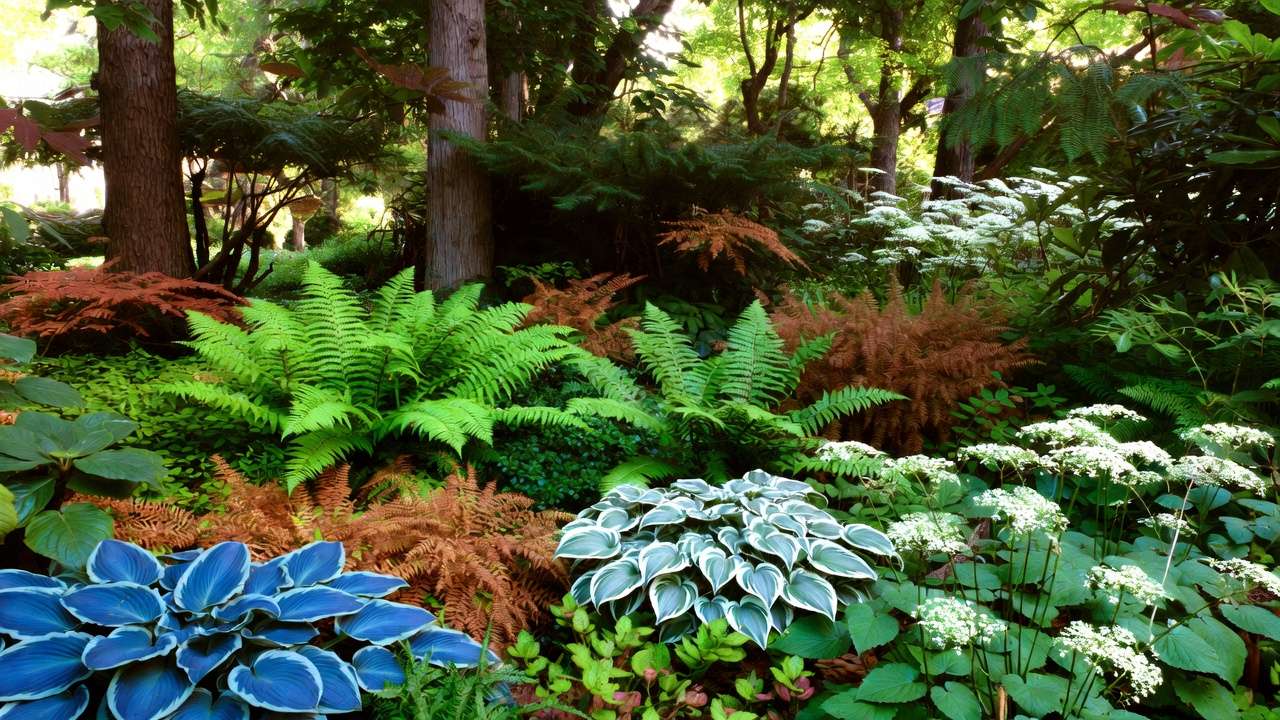
These perennials bring the “wow” factor—combine foliage contrasts (e.g., blue hosta + silver brunnera) for visual pop even without many flowers.
Evergreen & Shrub Options for Structure & Year-Round Coverage 🪴🌲
While groundcovers and perennials create the carpet and color, adding a few well-chosen small shrubs or sub-shrubs brings vertical interest, winter structure, and a more polished woodland look. These picks are compact enough to fit under low tree branches and tough enough to handle dry shade competition.
- Sarcococca (Sweet Box / Christmas Box) – One of the most fragrant winter performers! Glossy evergreen leaves and tiny, powerfully sweet white flowers in late winter/early spring, followed by black berries. Zones 6–9 (some hardy to 5 with protection), 2–4 ft tall and wide. Pros: Intense fragrance when you least expect it, deer-resistant, excellent deep shade tolerance. Cons: Slow-growing, prefers slightly acidic soil. Plant one or two as focal points.
- Mahonia / Oregon Grape (Mahonia aquifolium or M. repens) – Native options in many regions. Holly-like evergreen leaves turn bronze-purple in winter; bright yellow flower clusters in late winter/early spring, then edible (tart) blue berries. Zones 5–9, 2–6 ft tall depending on species (choose dwarf forms like M. repens for under trees). Pros: Multi-season interest, wildlife food source (birds love berries), very drought-tolerant once established. Cons: Spiny leaves (plant away from paths).
- Leucothoe fontanesiana (Drooping Leucothoe) – Arching evergreen branches with bronze-tinged new growth and small white bell flowers in spring. Zones 5–8, 3–5 ft tall/wide. Pros: Graceful form, good fall/winter color, shade-loving. Cons: Needs consistent moisture the first 2 years; protect from winter wind in colder zones.
- Pieris japonica (Japanese Andromeda) – In milder climates (Zones 5–8), offers drooping clusters of white/pink bell flowers in early spring and colorful new foliage (red/pink). Choose compact cultivars like ‘Mountain Fire’. Pros: Striking seasonal changes, evergreen structure. Cons: Acid-loving (amend soil if needed), toxic to pets.
- Dwarf or low-growing natives – Consider Mapleleaf Viburnum (Viburnum acerifolium) for fall color and berries, or lowbush blueberry relatives (Vaccinium angustifolium) in acidic soils. These add ecological value without overwhelming space.
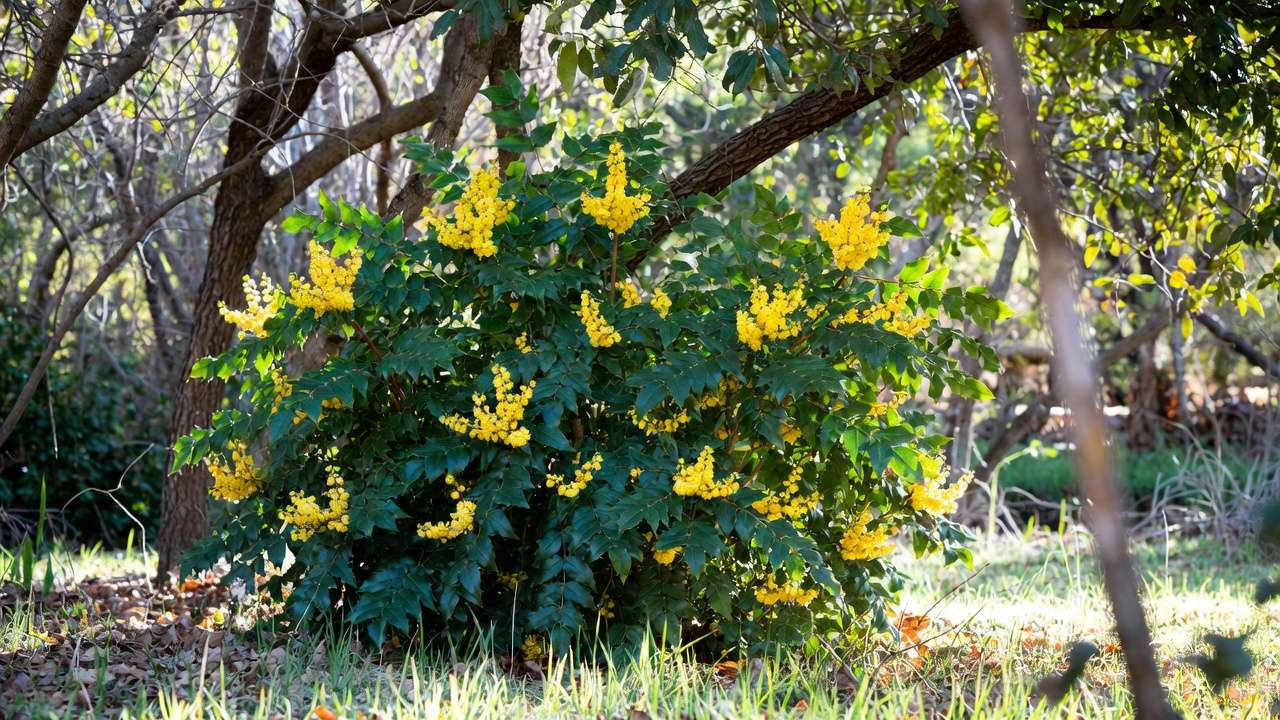
Use shrubs sparingly—2–4 per large area—to avoid competing too much with the tree. They anchor the design and provide habitat for birds and pollinators. 🐦
Design Ideas & Planting Combinations That Work (Turn Bare Spots into Beautiful Retreats) 🎨🌳
The magic happens when you layer plants thoughtfully. Here are proven combinations that gardeners rave about for dry shade success:
- Classic Native Woodland Style Base: Epimedium + Asarum (wild ginger) Mid-layer: Christmas fern + Tiarella foamflower Accents: Helleborus + one Sarcococca Result: Natural, low-growing tapestry with spring flowers, summer texture, and winter greenery. Perfect under oaks or beeches.
- Foliage-First Modern Look Base: Pachysandra or Vinca minor Mid-layer: Brunnera ‘Jack Frost’ + Heuchera (purple/silver varieties) + tougher Hostas Accents: One or two Mahonia for height Result: Silver-blue-purple contrasts that glow even in deep shade—no heavy reliance on flowers.
- Seasonal Interest Plan Early spring: Epimedium flowers + Helleborus blooms Late spring/early summer: Brunnera blue clouds + Tiarella foam Summer: Fern texture + Liriope spikes Fall/Winter: Hosta dieback reveals evergreen groundcovers + Sarcococca fragrance + Mahonia berries This ensures something beautiful every month.
- Wildlife-Friendly Bonus Prioritize natives (Asarum, Tiarella, Mahonia, ferns) to support local pollinators and birds. Add a shallow birdbath nearby (with pebbles for safe perching) to make your dry shade spot a mini sanctuary.
Sketch your tree’s drip line on paper, note sun/shade patterns throughout the day, and start small—plant one 10×10 ft section first to test what thrives best in your microclimate.
Maintenance Tips to Keep It Looking Great Long-Term 🔧🍂
The beauty of these plants? Once established (usually 2–3 years), they need very little care.
- Watering after establishment: Rely on natural rainfall in most years. Only supplement during prolonged droughts (2+ weeks without rain). Deep, infrequent soaks encourage deep roots.
- Pruning & cleanup: Minimal effort—cut back dead hosta/fern foliage in late winter/early spring. Trim spent flower stems on Liriope or Brunnera if desired. Remove any tree leaves that mat too thickly.
- Pest & problem solutions: – Slugs on hostas: Use iron phosphate baits, copper tape, or beer traps. – Deer: Try deer-resistant picks (Epimedium, Sarcococca, ferns) or use repellents. – Leaf spot (occasional on Vinca/Pachysandra): Improve air circulation; remove affected leaves.
- Fertilizing: Apply a light layer of compost or slow-release organic fertilizer in early spring. Avoid heavy nitrogen—it encourages weak growth.
- Mulch refresh: Top up organic mulch annually (spring or fall) to 2–3 inches for weed control and moisture retention.
With smart habits, your under-tree garden will improve every year.
Common Mistakes to Avoid (Learn from Others’ Regrets) ⚠️😬
Even experienced gardeners slip up in dry shade situations. Here are the most frequent pitfalls—and how to sidestep them:
- Overwatering new plants right after planting → Ironically causes root rot in poorly drained spots. Solution: Water deeply but infrequently; let the top 2–3 inches dry slightly between waterings during establishment.
- Planting too deep or too close to the trunk → Buries the tree’s root flare or smothers major roots. Keep planting depth at the same level as the nursery pot and maintain at least 1–2 feet clearance from the trunk.
- Choosing thirsty or sun-loving plants anyway → Astilbe, impatiens, and many hostas bred for moist shade often struggle here. Stick to the drought-tolerant list above.
- Ignoring your USDA hardiness zone or microclimate → A Zone 5 plant may survive Zone 7 winters but not vice versa. Check your exact zone and observe winter wind exposure under the tree.
- Expecting instant coverage → Most of these plants take 1–3 years to fill in nicely. Patience + proper spacing = success.
- Adding too much heavy mulch or soil over roots → Reduces oxygen to tree roots and invites fungal issues. Keep additions light and away from the trunk.
- Forgetting to monitor for invasiveness → Vinca, Pachysandra, and some Liriope can spread beyond desired areas in ideal conditions. Choose natives or less aggressive cultivars if containment is a concern.
Avoid these, and you’ll save time, money, and frustration.
Frequently Asked Questions (FAQ) – Your Dry Shade Questions Answered ❓🌱
Here are the questions I hear most often from gardeners tackling dry shade under trees:
What is the absolute toughest plant for dry shade under trees? Epimedium (barrenwort) consistently ranks #1 among horticulturists and long-term gardeners for its ability to push through dense root mats and survive with almost no supplemental water once established.
Can I grow actual flowers in deep dry shade? Yes, but expect more subtle or early-season blooms. Reliable flowering options include Epimedium (spring), Brunnera (spring blue), Helleborus (winter/early spring), Sarcococca (winter fragrance), and Mahonia (late winter yellow). Foliage plants deliver the main show in midsummer.
How long until these plants fill in and cover the bare spot? Most groundcovers take 2–3 years to create solid coverage when planted at recommended spacing. Perennials and small shrubs fill out faster individually but benefit from groundcover support underneath.
Are there good native options for my area? Absolutely! Excellent natives include: Asarum canadense (wild ginger), Tiarella cordifolia (foamflower), Polystichum acrostichoides (Christmas fern), Waldsteinia fragarioides (barren strawberry), and Mahonia repens (creeping Oregon grape). Natives support local wildlife and often adapt better long-term.
Will these plants harm my tree? No—when planted properly. These selections have non-invasive, shallow root systems that coexist with tree roots rather than compete aggressively. Never pile heavy soil or mulch against the trunk, and avoid wrapping roots around major tree roots.
What about heavy clay soil vs. sandy soil under trees? Clay: Improve drainage slightly with compost in planting holes; Epimedium, Pachysandra, ferns, and Sarcococca excel here. Sandy: Add organic matter for moisture retention; Asarum, Waldsteinia, Liriope, and Brunnera perform well. Most of these plants are adaptable with good mulching.
Do I need to fertilize every year? Not heavily. A thin layer of compost or organic slow-release fertilizer in spring is usually enough. Over-fertilizing encourages leggy growth vulnerable to drought.
Conclusion: Transform Your Problem Spot Today! 🌟🍃
That once-bare, dusty patch under your tree doesn’t have to stay an eyesore. With the right dry shade plants for under trees—tough groundcovers like Epimedium and Pachysandra, colorful perennials like Brunnera and Heuchera, fragrant evergreens like Sarcococca, and smart prep—you can create a serene, low-maintenance woodland garden that gets better every year.
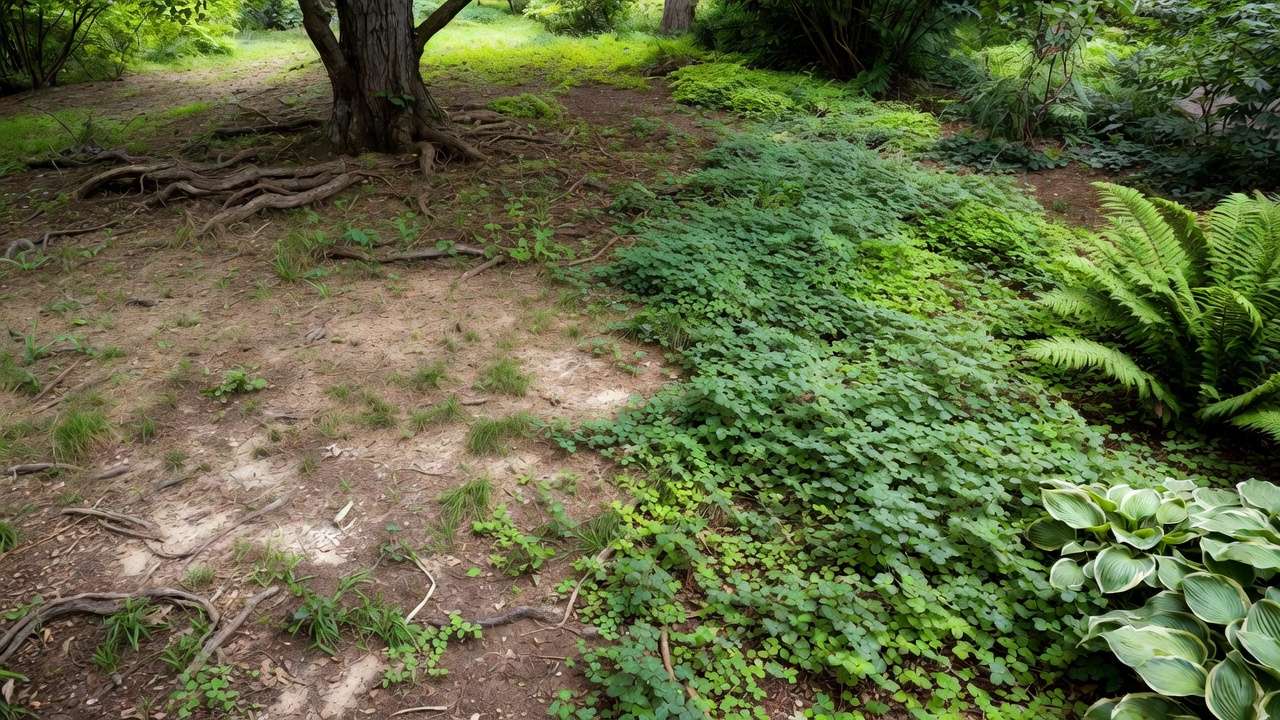
The secret? Choose plants adapted to competition and drought, prepare the site thoughtfully, water diligently during establishment, then step back and let nature do the rest. Your tree’s shade isn’t a curse—it’s an opportunity for a lush, tranquil retreat that requires far less work than a sunny border.
Ready to get started? Begin with a small test area, observe your specific tree and soil conditions, and add more plants each season. Before you know it, you’ll be the one giving advice to neighbors wondering how you made that tricky spot look so beautiful. 😊
Happy planting—and enjoy the shade! 🌳💚











