
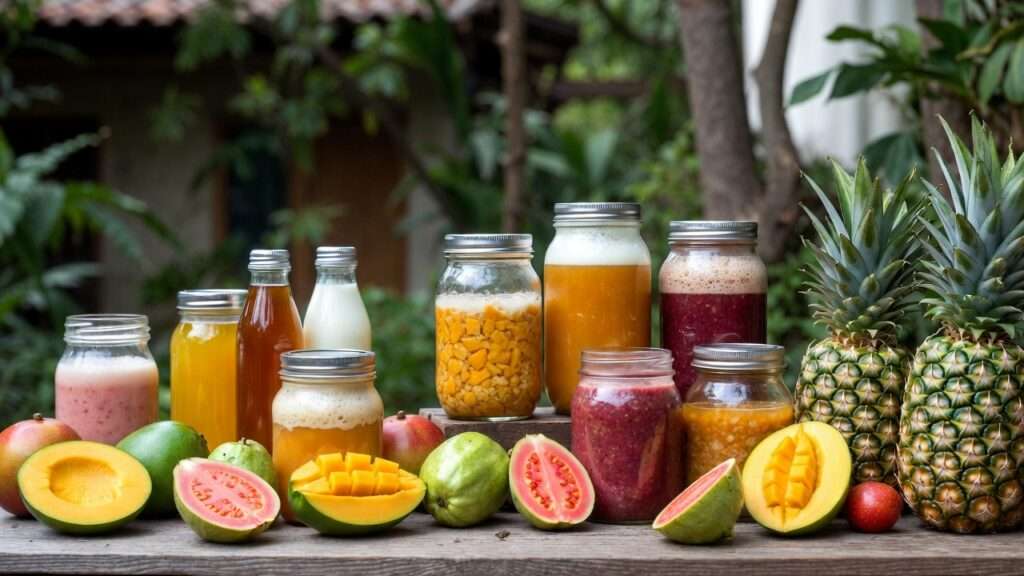
Picture this: It’s peak season in your Khulna backyard, and your mango tree is drooping under the weight of golden, sun-ripened fruits. Guava branches are heavy, pineapples are ready, and a few berry bushes are bursting with extras you can’t possibly eat fresh. What do you do with all that glorious homegrown bounty before the heat turns it to waste? 🍋
Instead of letting surplus fruit spoil or feeding it to the compost pile, you can transform it into something magical: probiotic-rich ferments for gut health and flavorful craft beverages that capture the essence of your garden. Fermenting or brewing with homegrown fruit is one of the most rewarding ways to extend your harvest, reduce food waste, and create unique, homemade delights right from your trees and plants.
As someone who’s spent years tending fruit trees in tropical climates like Bangladesh’s Khulna Division—dealing with humid summers, monsoons, and abundant yields—I’ve learned that proper plant care (from pruning to soil enrichment) not only boosts fruit quality but sets the stage for exceptional ferments and brews. The natural sugars in ripe, homegrown fruit make it ideal for both lacto-fermentation (non-alcoholic, probiotic-packed treats like tangy sauces and preserves) and alcoholic brewing (fruit wines, ciders, and infused beers).
In this comprehensive guide, we’ll cover everything you need: why it’s worth doing, key differences between methods, step-by-step processes tailored to tropical fruits like mango, guava, pineapple, and jackfruit, safety essentials, and how better tree care leads to better results. Whether you’re a beginner gardener wanting to preserve your harvest or an experienced homesteader exploring new flavors, you’ll walk away with practical recipes and tips to turn your garden into a year-round source of health and joy. 🌱 Let’s dive in!
Why Ferment or Brew Your Homegrown Fruit? The Benefits for Gardeners 🍏
Homegrown fruit is special—it’s fresher, often more flavorful, and free from commercial preservatives. But in our hot, humid climate, abundance can quickly become waste without preservation methods. Here’s why fermenting or brewing stands out:
- Preservation without electricity — No need for freezers or canning equipment that struggles in power outages. Fermentation naturally preserves fruit for months using beneficial microbes, perfect for tropical regions.
- Health perks — Lacto-fermented fruits deliver live probiotics that support digestion, immunity, and gut health—especially valuable after heavy monsoon meals. Brewing retains antioxidants while adding the relaxing benefits of moderate homemade alcohol.
- Sustainability & zero waste — Use overripe, blemished, or excess fruit (cut away any truly spoiled parts). This reduces kitchen waste and honors the effort you put into growing.
- Flavor adventure — Create signature tastes: tangy fermented mango chutney or a tropical mango wine that’s impossible to buy. Homegrown fruit often has higher natural sugars and terpenes for bolder results.
- Cost savings — Turn “free” garden produce into gourmet items worth far more than store-bought versions.
From my experience, trees cared for with organic pruning, compost mulching, and natural pest control (like neem sprays) yield fruit with better sugar-acid balance—key for successful ferments and brews. 🍯
Understanding the Two Main Approaches: Fermentation vs. Brewing 🔬
These processes both rely on microbes converting sugars, but they differ significantly:
- Lacto-fermentation (non-alcoholic) — Beneficial lactic acid bacteria (from the environment or fruit skin) create tangy, probiotic-rich results. Think fizzy fruit preserves or sauces. No alcohol (or very trace amounts), quick (days to weeks), and super safe when done right.
- Alcoholic brewing/fermentation — Yeast (wild or added) turns sugars into alcohol and CO2. Ideal for fruit wines, ciders, meads, or fruit-infused beers. Takes weeks to months, produces 5–15% ABV, and requires more monitoring.
Choose lacto-fermentation for quick, gut-friendly treats; brewing for celebratory drinks. In tropical heat, both ferment faster—great for results, but watch closely to avoid over-fermentation! ⚡
Preparing Your Homegrown Fruit for Fermenting or Brewing 🥭
Success starts with quality prep:
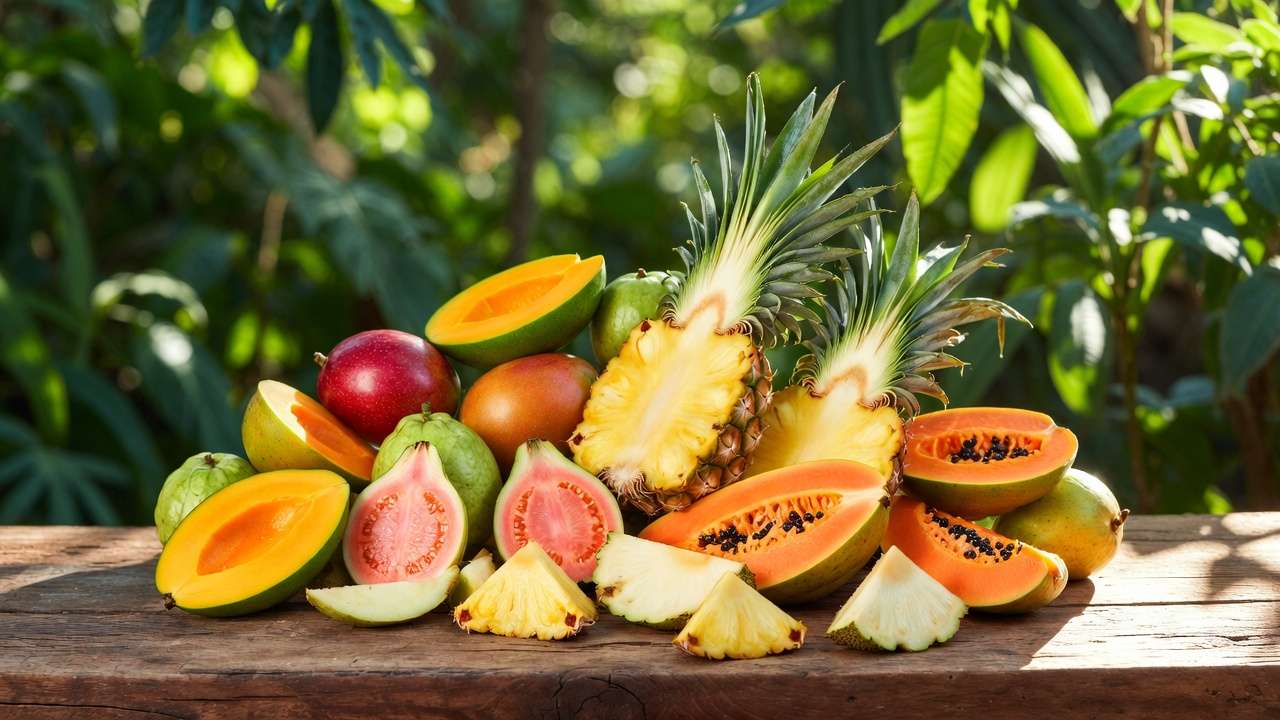
- Harvest at peak ripeness — Pick when fruit is fully colored and fragrant for max sugars/flavors. In Khulna, mangoes peak May–July; guavas year-round.
- Wash safely — Rinse gently with clean water or a light vinegar solution (no soap—it kills good microbes).
- Sort wisely — Use blemished or overripe fruit here (remove moldy spots). Freeze first to burst cell walls for better juice extraction. 🍒
- Tools & sanitation — Use glass jars, food-grade plastic, or fermentation crocks. Sanitize with boiling water or star san. Avoid chlorine (kills bacteria/yeast). Use non-chlorinated water.
Pro tip: For tropical fruits, chop or mash to release juices quickly in our warm climate.
Lacto-Fermenting Homegrown Fruit: Probiotic Treats & Preserves 🥫
Basic Principles of Fruit Lacto-Fermentation
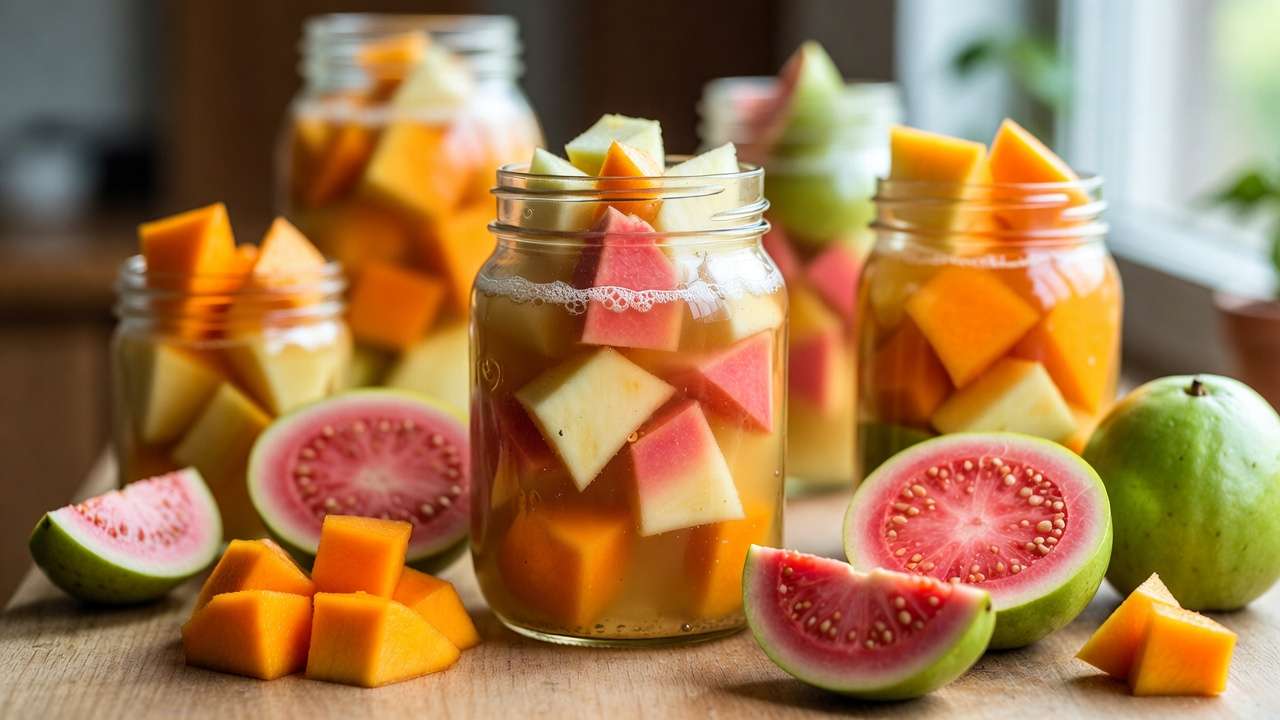
Fruit ferments faster than veggies due to high sugars. Use a 2% salt brine (by weight) or honey/sugar for wild/honey ferments. Salt draws out juices; beneficial lactobacillus thrive in the resulting acidic environment.
Step-by-Step: Simple Fermented Fruit Basics
- Weigh fruit.
- Add 2% sea salt (or honey for sweeter versions).
- Pack into jar, submerge in juices/brine.
- Use weight/airlock to keep fruit under liquid.
- Ferment at room temp (25–30°C in Khulna) 3–14 days, burp daily.
- Taste-test; refrigerate when tangy enough.
Recipe: 2% Salt Fermented Tropical Fruit Mix
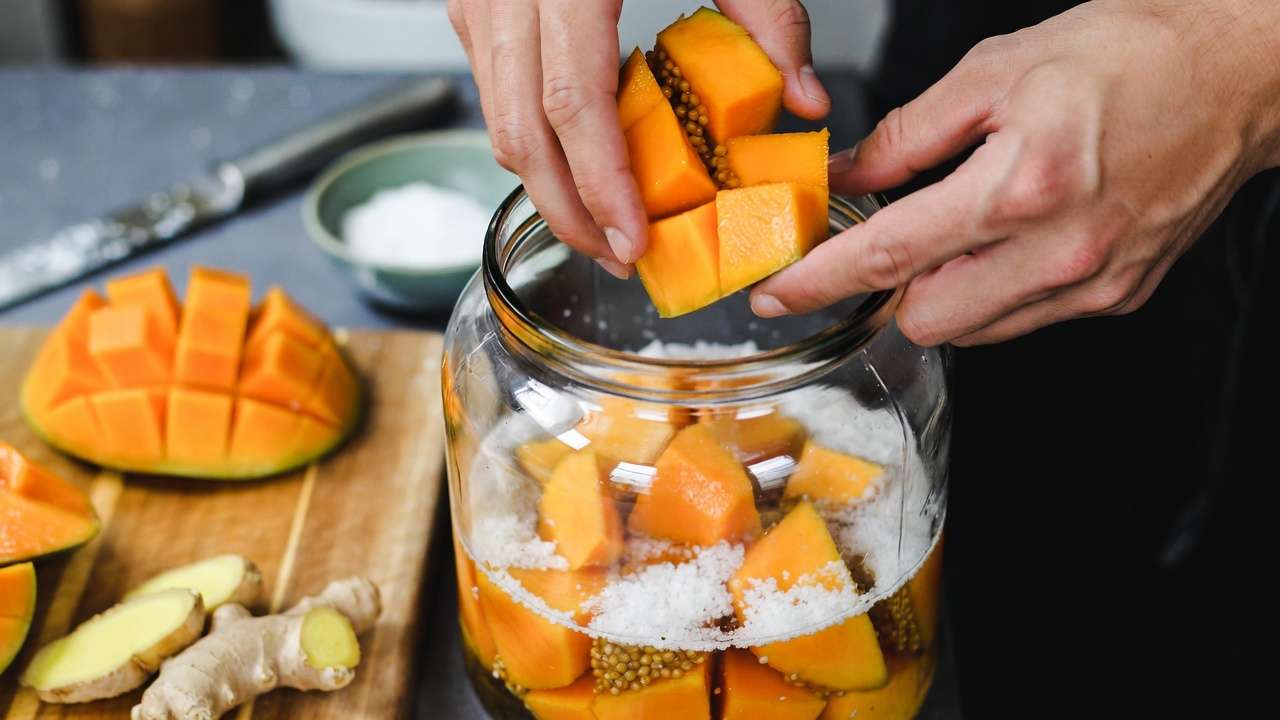
- 1 kg mixed mango, guava, pineapple (chopped)
- 20g sea salt
- Optional: ginger, chili 🌶️ Mix, pack, ferment 5–10 days. Result: tangy, probiotic chunks!
Recipe: Honey-Fermented Mango
- 500g ripe mango chunks
- Raw honey to cover (about 300–400ml) Submerge, ferment 1–3 weeks. Sweet-tangy syrup forms—drizzle on yogurt! 🍯
Delicious Variations & Recipes
- Fermented Berry Sauce — Mash berries, 2% salt, ferment 7 days → blend for probiotic topping.
- Spicy Fermented Fruit Chutney — Mango/guava + garlic, chili, salt → bold, gut-loving condiment.
- Tropical Fruit “Kimchi” Style — Pineapple, papaya, lime, chili → vibrant side dish.
Troubleshooting: Normal bubbles/kefir-like smell = good! Fuzzy mold = discard top layer; slimy = start over.
Storage & Usage Ideas
Once your lacto-fermented fruit reaches the desired tanginess, move the jar to the refrigerator. There it will slow down dramatically and keep developing deeper flavor for 3–12 months (sometimes longer if you keep tasting and burping occasionally). The live cultures continue working slowly in the cold, which is actually a bonus for gut health.
Creative ways to enjoy:
- Spoon fermented mango or guava chunks over morning curd/yogurt 🍦
- Blend into smoothies for a probiotic boost
- Use as a topping for flatbreads, rice bowls, or grilled fish
- Strain and reduce the brine into a tangy salad dressing
- Perpetual method: Every time you eat some, top the jar with fresh chopped fruit + a little extra honey/salt brine to keep the batch going indefinitely! ♻️
This low-effort technique is especially practical in Bangladesh where refrigeration space can be limited and electricity unreliable during summer storms.
Brewing with Homegrown Fruit: Craft Alcoholic Beverages 🍺
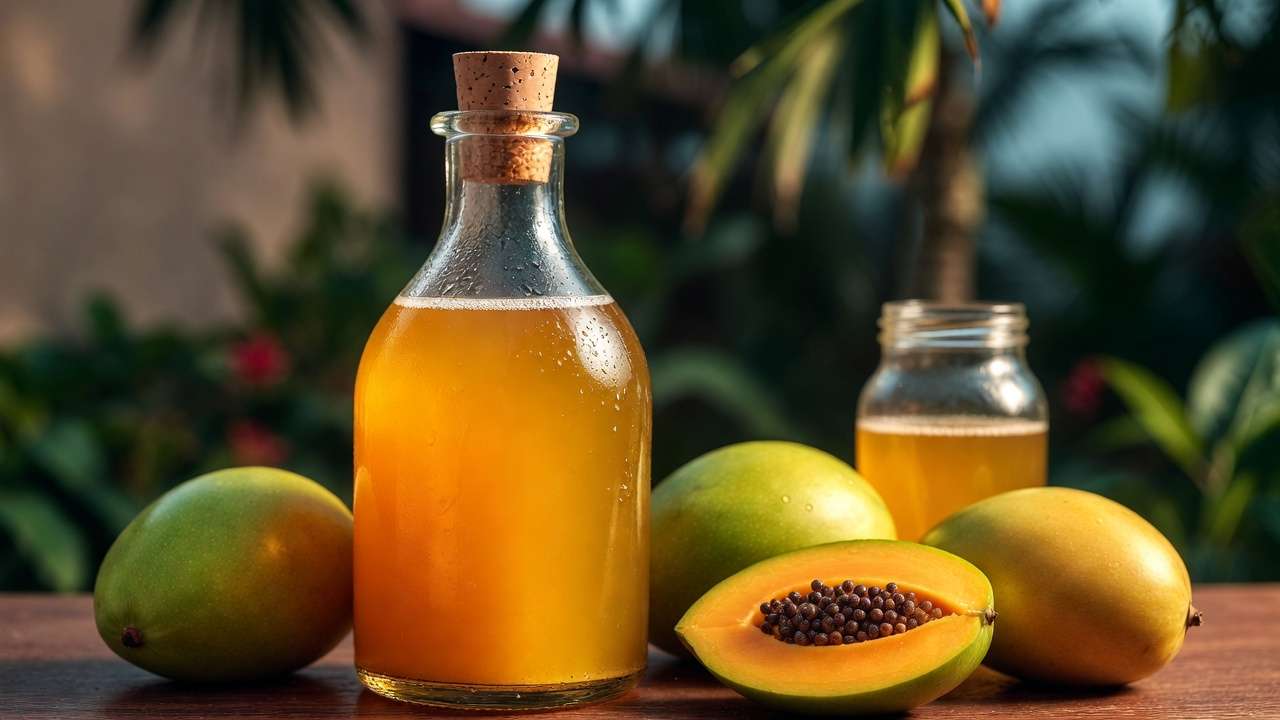
Now let’s move to the more celebratory side — turning your homegrown fruit into homemade alcohol. In tropical climates like Khulna, fruit brewing shines because many local varieties (mango, jackfruit, pineapple, jamun, lychee) have exceptionally high natural sugar content — often 18–25° Brix — which translates to stronger, fruitier finished drinks.
Choosing the Right Base & Method
- Fruit wines & ciders → Best for high-sugar single fruits (mango wine, pineapple wine, guava cider)
- Fruit beers → Add fruit purée or juice during secondary fermentation to pale ales, wheat beers, or sours
- Fruit meads → If you also keep bees or buy local raw honey, combine with fruit for melomels
In our warm weather (25–32°C year-round), primary fermentation races — usually complete in 5–10 days instead of the 2–3 weeks seen in cooler climates. This is an advantage for quick turnaround, but it also means you must monitor closely to avoid off-flavors.
Step-by-Step Brewing Process
- Prepare fruit — Chop or crush, freeze/thaw if desired to maximize juice release.
- Sanitize everything — Fermenter, siphon, airlock, bottles. Use Star San or boiling water.
- Primary fermentation — Combine fruit/juice + water (if needed to reach desired volume) + sugar/honey to reach 1.080–1.100 starting gravity + wine/champagne yeast.
- Add sulfites (optional but recommended in humid climates) — Crush one Campden tablet (potassium metabisulfite) per 20 liters to kill wild yeast/mold before pitching cultured yeast. Wait 24 hours, then add yeast.
- Ferment — 5–14 days in primary until bubbling slows.
- Rack to secondary — Siphon off sediment, add more fruit if desired for stronger aroma.
- Bottle/keg — When gravity stabilizes (~1.000–1.010), bottle with priming sugar for carbonation or keg. Age 1–6 months for best flavor.
Recipe: Simple Homegrown Mango Wine 🍾
- 4 kg very ripe mangoes (peeled, pitted, chopped or blended)
- 3–4 liters clean water
- 1.2–1.8 kg sugar (adjust for desired strength: ~12–14% ABV)
- 1 packet wine yeast (EC-1118 or similar champagne yeast works great in heat)
- 1 Campden tablet (optional)
- Optional: pectic enzyme (helps clarify), tannin powder or black tea bag for structure
Process:
- Mash mangoes, mix with water + sugar.
- Add crushed Campden → wait 24 h.
- Pitch yeast, ferment 7–10 days primary.
- Rack to secondary, age 2–4 months.
- Bottle still or carbonate lightly. Result: golden, aromatic, mango-forward wine — perfect for gifting or special evenings.
Recipe: Backyard Guava Cider
- 5 kg ripe guavas (washed, roughly chopped — skins on for tannin)
- Water to make 20 liters total
- Sugar to reach ~1.050–1.060 gravity
- Cider or wine yeast Ferment 10–14 days, bottle with priming sugar for natural fizz. Crisp, floral, slightly pink — very refreshing in hot weather! 🍹
Recipe: Easy Fruit-Infused Light Beer Brew or buy a simple pale ale/wheat beer kit → during secondary, add 1–2 kg puréed pineapple or jamun. Steep 5–7 days, then bottle. Gives bright tropical notes without overpowering the base beer.
Advanced Tips for Better Results
- pH management — Tropical fruits can be very acidic. Test pH (aim 3.2–3.6 for stability); add calcium carbonate if too low.
- Tannins & body — Use fruit skins, oak chips, or black tea during secondary.
- Clearing — Pectic enzyme + cold crashing + bentonite or sparkolloid.
- Carbonation safety — Never over-prime in glass bottles — tropical heat accelerates refermentation! Use swing-top bottles or PET for first batches.
Safety First: Avoiding Risks in Home Fermenting & Brewing ⚠️
Fermentation is one of the safest food preservation methods when basic rules are followed — especially important in warm, humid climates where unwanted microbes love to grow.
- Botulism myth — Almost impossible in properly fermented foods (pH drops below 4.6 very quickly, and botulism needs low-acid, anaerobic, low-salt conditions without competition from lactobacillus/yeast).
- Spoilage signs — Fuzzy green/black mold → discard entire batch. Slimy texture, nail-polish remover smell, or vomit-like odor → toss it. Normal smells: tangy, yeasty, fruity, slightly funky (but pleasant).
- Alcohol safety — Know your ABV (use a hydrometer), drink responsibly, never distill (illegal and dangerous).
- Legal note for Bangladesh — Home fermentation for personal use is generally tolerated; commercial sale requires licenses. Keep batches small and private.
- Hygiene in tropics → Sanitize twice, work quickly, ferment in shaded/cooler indoor spots (avoid direct sun), use airlocks to prevent fruit flies.
Integrating with Plant & Tree Care: Grow Better for Better Results 🌳
The secret to truly exceptional home ferments and brews isn’t just in the kitchen — it starts in your garden. Healthier, sweeter, more flavorful fruit makes dramatically better final products. Here’s how your everyday tree and plant care routine directly improves fermentation/brewing outcomes, tailored to Khulna’s hot-humid growing conditions.
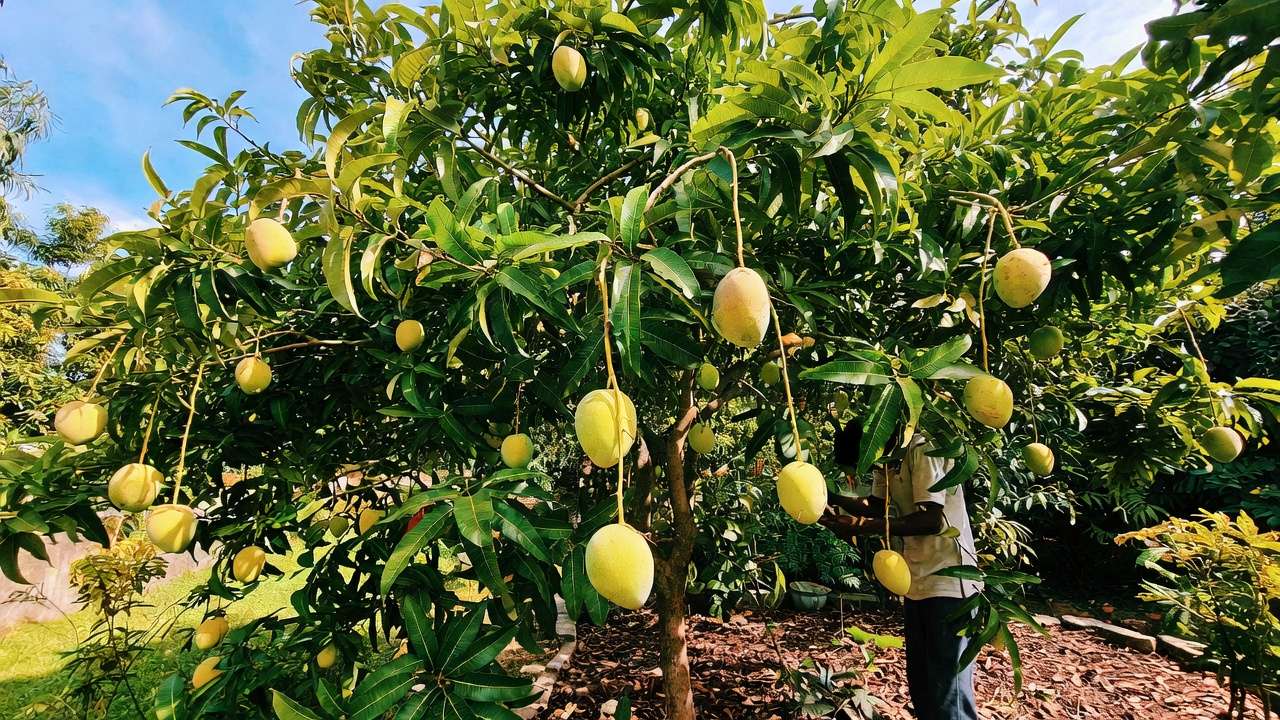
- Best fruit varieties for fermenting & brewing in tropical Bangladesh
- Mango (Langra, Fazli, Gopalbhog) → ultra-aromatic wines & honey ferments
- Guava (pink & white flesh types) → crisp ciders, tangy lacto-chutneys
- Pineapple (Giant Kew, Mauritius) → bright, acidic wines & fizzy probiotic drinks
- Jackfruit (ripe bulbs) → sweet mead-like brews, rich fermented preserves
- Jamun / black plum → deep purple wines & antioxidant-rich ferments
- Citrus (lime, pomelo, sweet orange) → adds acidity & aroma to both methods
- Papaya (ripe) → fast-fermenting probiotic bases
- Pruning & thinning for higher sugar content Heavy pruning after fruit set (late winter/early spring) concentrates sugars in remaining fruit. Thin clusters so each mango or guava gets more sunlight — aim for 15–20 cm spacing between fruits. Higher Brix = stronger fermentation potential and richer flavor.
- Soil & nutrition tips for ferment-ready fruit
- Apply well-rotted compost or vermicompost in February–March and again after monsoon.
- Use potassium-rich organic feeds (banana peel water, wood ash sparingly) in fruiting stage — potassium boosts sugar accumulation.
- Maintain soil pH 6.0–6.8; add lime if too acidic from monsoon leaching.
- Mulch heavily with dried leaves or straw to retain moisture and suppress weeds — less stress = sweeter fruit.
- Natural pest & disease management (clean fruit = safe ferments)
- Neem oil + soap spray for aphids, fruit flies.
- Bordeaux mixture (copper + lime) early in season for fungal issues common in humidity.
- Bag fruit clusters with breathable mesh to protect from birds/insects without chemicals.
- Pick up fallen fruit daily — prevents fruit fly larvae that can ruin batches.
When you grow cleaner, riper, higher-sugar fruit, your lacto-ferments develop faster with better tang, and your brews finish smoother with more complex tropical aromatics. It’s a beautiful full-circle: care for your trees → harvest abundance → preserve & enjoy year-round. 🌱🍋
Troubleshooting Common Issues & Pro Tips from the Garden 🛠️
Even experienced fermenters hit bumps. Here are the most common tropical-climate problems and fixes:
- Too vinegary / over-sour → Fermented too long or too warm. Next time, taste daily after day 4 and refrigerate earlier.
- Too sweet / stuck fermentation → Not enough wild bacteria/yeast or too much sugar. Add a pinch more salt (lacto) or fresh yeast + nutrients (brewing).
- Flat flavors → Fruit wasn’t ripe enough or variety low in aromatics. Freeze-thaw fruit first next time to rupture cells & release more flavor compounds.
- Excessive foam / overflow → Normal in hot weather! Use larger headspace or blow-off tube for brewing; burp lacto jars twice daily.
- Mold on surface → Usually just aerobic spoilage on top. Skim off carefully if thin/white; discard if fuzzy black/green or if smell is unpleasant. Prevent with better submersion weights & airlocks.
- Off smells (nail polish, rotten eggs) → Acetobacter (vinegar bacteria) or sulfur-producing yeast. Restart with sanitized equipment & cultured yeast/salt brine.
Pro hacks from years of trial in Khulna gardens
- Blend 2–3 fruit types for complexity (mango + pineapple + ginger = magic).
- Add garden herbs/spices: holy basil, lemongrass, mint, green chili during secondary for signature twists.
- Save & reuse successful “mother” brine from one batch to jump-start the next — speeds up good bugs.
- Scale small first: start with 1-liter jars or 5-liter buckets before committing to 20-liter carboys.
Conclusion: From Tree to Table – Your Homemade Revolution 🍇
Fermenting or brewing with homegrown fruit is more than a preservation trick — it’s a celebration of your garden’s hard work. You reduce waste, capture peak-season flavor at its best, support your family’s health with probiotics or moderate homemade libations, and create one-of-a-kind products no shop can match.
Start small: try a simple honey-fermented mango jar this week or a 5-liter batch of guava cider next harvest. Taste, adjust, experiment — every batch teaches you something new about your trees, your climate, and your palate.
Your backyard isn’t just growing food — it’s growing possibilities. Tend those trees with love, harvest with care, preserve with creativity… and enjoy the delicious rewards. 🌳🥂
What will you ferment or brew first from your garden? Drop a comment below — I’d love to hear (and maybe swap recipe tweaks)!
FAQs ❓
Can I ferment overripe or slightly bruised fruit from my tree? Yes — in fact, it’s ideal! Overripe fruit has more accessible sugars and softer texture. Just trim away any moldy or rotten spots.
Is home brewing legal in Bangladesh? For personal, non-commercial use in small quantities, it is generally tolerated under current laws. Avoid selling or distributing — keep it for family & friends.
How long do lacto-fermented fruits last in the fridge? 3–12 months easily, sometimes longer. Flavor deepens over time. As long as it smells/tastes pleasantly tangy (not putrid), it’s good.
What’s the easiest beginner project? Start with honey-fermented mango or pineapple chunks. Minimal equipment (just a jar & honey), fast results (1–3 weeks), and very forgiving.











