
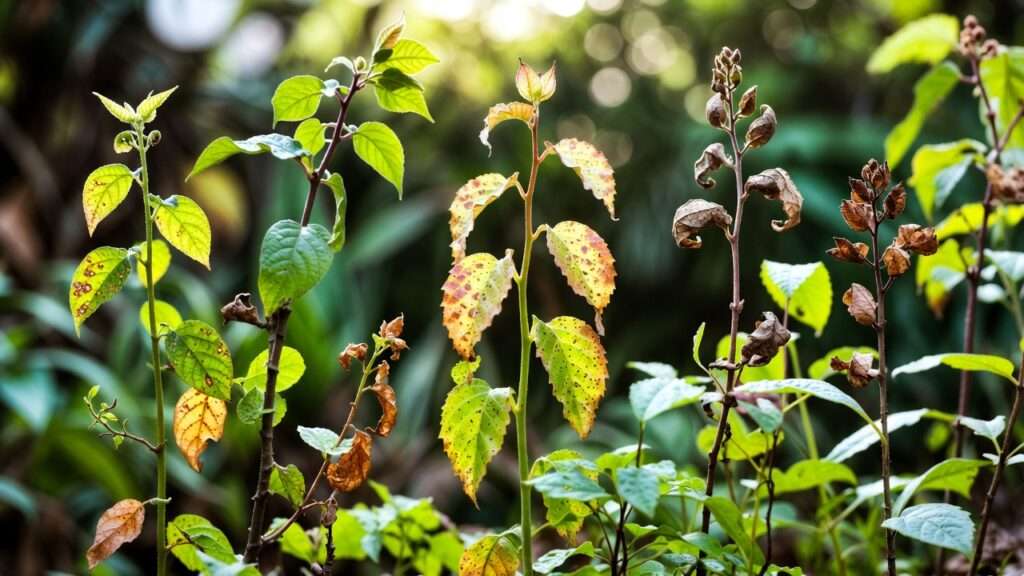
Imagine stepping into your garden one morning to find your beautiful tomato plants suddenly covered in strange spots, or your prized rose bush wilting overnight with blackened shoots. 😱 Is it a sneaky fungal invader creeping slowly, or a fast-spreading bacterial infection threatening to wipe out everything? Making the wrong call can waste precious time, money, and even your entire crop or favorite tree!
Fungal vs. bacterial infections in plants are two of the most common causes of plant disease worldwide. In fact, experts estimate that around 85% of all plant diseases are caused by fungi or fungal-like organisms, while bacterial infections often strike harder and faster when conditions are right. Knowing the differences isn’t just garden trivia — it’s the key to quick diagnosis, effective treatment, and saving your plants before irreversible damage occurs. In this comprehensive guide, we’ll walk you through everything: the root causes, telltale symptoms, real-world examples, proven treatments, and powerful prevention strategies to keep your garden thriving. Let’s dive in and arm you with expert-level knowledge! ✨
What Causes Plant Infections? The Basics of Pathogens 🧬
Plant pathogens are microscopic troublemakers that exploit stressed or wounded plants. The two main culprits we’re comparing today are fungi (including fungal-like organisms like Phytophthora) and bacteria.
Fungi thrive in moist, humid environments and reproduce via spores that spread through wind, water, soil, or even on tools. They can penetrate plant tissues directly or through natural openings. Bacteria, on the other hand, are single-celled organisms that usually need wounds, stomata, or other entry points to invade. They spread rapidly via splashing water, rain, contaminated tools, or insects.
Common triggers for both include:
- High humidity and poor air circulation 🌧️
- Overwatering or wet foliage
- Temperature swings (many fungi love cool, damp conditions; bacteria prefer warm, wet weather)
- Poor soil drainage or nutrient imbalances
Understanding these basics helps you spot trouble early and choose the right defense!
Key Differences Between Fungal and Bacterial Infections – Side-by-Side Comparison 📊
One of the biggest mistakes gardeners make is treating all spots and wilts the same way. Here’s a clear breakdown to help you tell them apart:
Speed of Spread Fungal infections usually progress slowly over weeks or months 🐢 Bacterial infections explode in days, especially in warm, wet weather ⚡
Entry Points Fungi can penetrate healthy tissue directly Bacteria almost always need wounds or natural openings
Survival & Spread Fungal spores linger in soil, air, and debris for years Bacterial cells spread via water splash, ooze, or contaminated pruning tools
Treatment Response Many effective fungicides exist (preventive & curative) Bactericides are limited — copper-based products are the go-to for home gardeners
Here’s a handy comparison table for quick reference:
| Aspect | Fungal Infections 🌱🍄 | Bacterial Infections 🦠💧 |
|---|---|---|
| Common Signs | Powdery growth, rust pustules, fuzzy mold | Water-soaked lesions, bacterial ooze, yellow halos |
| Spread Rate | Gradual | Rapid & aggressive |
| Best Prevention | Improve airflow, fungicides | Strict sanitation, copper sprays |
| Typical Weather | Cool & humid | Warm & wet |
Pro tip: If you see fuzzy mold or colorful pustules — think fungus! If lesions look greasy or ooze sticky fluid — suspect bacteria! 🔍
Here are some visual examples to help you spot powdery mildew (a classic fungal infection):
Identifying Fungal Infections: Symptoms You Can’t Miss 🍄🔍
Fungal diseases often announce themselves with visible signs of the pathogen itself.
Common symptoms include:
- Powdery mildew — White or gray powdery coating on leaves, stems, and buds (looks like talcum powder) ❄️
- Rust — Orange, yellow, or brown pustules, usually on leaf undersides 🟠
- Black spot — Dark, circular spots on rose leaves, often with yellow halos ⚫
- Leaf spots & blights — Irregular brown spots with fuzzy mold edges
- Root rots & wilts — Plants wilt despite moist soil; roots appear dark and mushy
These often start on lower or older leaves and spread upward. Real-world examples: Roses suffer black spot, squash gets powdery mildew, and lawns battle brown patch.
Look for fruiting bodies (tiny dots, pustules, or mold) — that’s a dead giveaway for fungal issues!
Spotting Bacterial Infections: The Red Flags 🦠⚠️
Bacterial diseases tend to look “wet” and messy.
Key signs:
- Water-soaked, greasy lesions that turn brown/black
- Spots with bright yellow halos 🌟
- Bacterial ooze — sticky, milky fluid when you cut infected tissue
- Sudden wilting (vascular — bacteria clog water-conducting tissues)
- Soft rots and cankers on stems/fruits
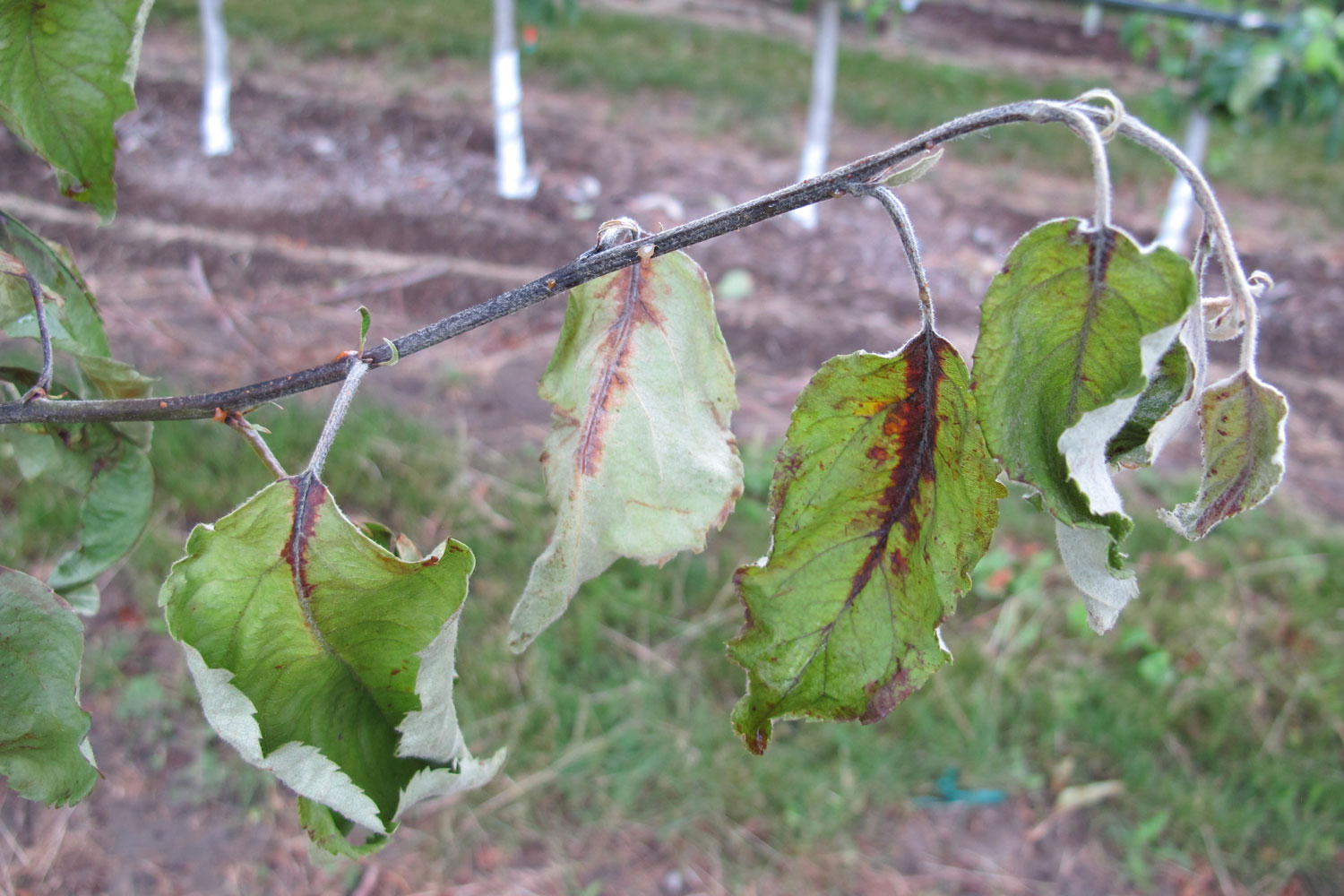
Classic examples: Bacterial spot on tomatoes/peppers, crown gall (tumor-like growths), and fire blight on apples/pears.
Here’s the infamous “shepherd’s crook” symptom of fire blight — a must-know for fruit tree owners:
Head-to-Head: Fungal vs. Bacterial – Real Plant Examples 🌳🍅
Nothing drives the differences home like seeing them side-by-side on the same plant species. Here are some of the most common garden showdowns:
Tomatoes
- Fungal: Early Blight (caused by Alternaria solani) — Starts with dark brown spots that develop concentric rings like a target. Lower leaves are hit first, and it spreads upward slowly in cool, wet conditions. Here are clear examples of early blight symptoms:
- Bacterial: Bacterial Spot (caused by Xanthomonas spp.) — Small, water-soaked spots with irregular edges and bright yellow halos. Spots often merge, and fruit can develop raised, scabby lesions. Spreads explosively in warm, rainy weather.
Check out these textbook bacterial spot images:
Roses
- Fungal: Black Spot (Diplocarpon rosae) — Classic round black spots with feathery edges and yellow halos. Leaves yellow and drop prematurely. Thrives in humid summers.
Real black spot examples on roses:
:max_bytes(150000):strip_icc()/BlackSpot_onRose-56f18bb03df78ce5f83c10e0.jpg)
- Bacterial — Bacterial blight is less common on roses but appears as water-soaked black lesions spreading rapidly from wounds.
Fruit Trees (especially apples & pears)
- Fungal — Peach leaf curl, apple scab, etc. — Curling, discolored leaves with powdery or velvety growth.
- Bacterial: Fire Blight (Erwinia amylovora) — The infamous “shepherd’s crook” where shoots blacken and bend like a cane. Infected blossoms turn brown and ooze bacterial ooze in spring.
Dramatic fire blight visuals:

These side-by-side comparisons make diagnosis much easier in your own garden! 🔍💡
How to Treat Fungal Infections Effectively 🛠️🍄
The good news? Fungal diseases respond well to a combination of cultural practices and targeted treatments.
- Cultural Controls First (always the foundation):
- Prune for better airflow ✂️
- Water at the base (avoid wetting foliage)
- Remove and destroy infected debris (don’t compost it!)
- Mulch to reduce soil splash
- Organic Remedies (great for home gardens):
- Neem oil — Broad-spectrum preventive
- Baking soda + horticultural oil spray (1 tbsp baking soda + 1 tsp oil per gallon water) for powdery mildew
- Sulfur-based products (safe and effective for rust & black spot)
- Chemical Fungicides (when needed):
- Use systemic fungicides like myclobutanil or chlorothalonil for curative action
- Rotate modes of action to prevent resistance
- Always follow label rates and apply preventively during high-risk weather
Start treatments at first sign and repeat every 7–14 days during wet periods. Many gardeners save 80–90% of their plants with early intervention!
How to Treat Bacterial Infections – What Actually Works 🦠🧴
Bacterial diseases are trickier — antibiotics aren’t approved for home use, so focus on suppression and sanitation.
- Immediate Action:
- Prune out infected parts 12–18 inches below visible symptoms (sterilize tools between cuts with 10% bleach or alcohol) 🔥
- Dispose of clippings — never compost
- Copper-Based Sprays — The gold standard for home gardeners:
- Copper hydroxide, copper sulfate, or fixed copper products
- Apply as a protectant before wet weather; repeat after heavy rain
- Works best early in infection
- Supportive Care:
- Reduce nitrogen fertilizer (excess N promotes succulent growth that bacteria love)
- Improve drainage and avoid overhead watering
Biological options (like Bacillus subtilis products) show promise but are less consistent than copper for severe cases.
Prevention: Stop Infections Before They Start 🛡️🌱
The absolute best strategy is prevention — here’s your complete checklist:
- Plant resistant varieties (look for labels like VFNT for tomatoes, disease-resistant roses)
- Space plants properly for airflow
- Use drip irrigation or soaker hoses
- Maintain healthy soil (compost, balanced fertility, good drainage)
- Rotate crops annually (especially veggies)
- Sterilize all tools after each use
- Apply preventive sprays during high-risk seasons (e.g., copper in spring for fruit trees)
Follow these habits, and you’ll dramatically reduce both fungal and bacterial threats year after year!
When to Call a Professional or Lab Test 🧪
If infections persist despite treatment, affect valuable trees, or you suspect something unusual (like sudden oak death or new invasive pathogens), contact your local cooperative extension service. They often offer free or low-cost plant disease diagnosis — simply collect fresh samples in a paper bag (not plastic) and submit photos or physical specimens.
Frequently Asked Questions (FAQs) ❓
Is powdery mildew fungal or bacterial? Definitely fungal! Look for the telltale white powder.
Can one treatment work for both fungal and bacterial infections? Rarely. Copper helps with some bacteria and a few fungi, but most fungicides won’t touch bacteria, and vice versa.
Are there natural remedies that kill bacteria? Some (garlic extracts, neem, essential oils) show mild activity, but they’re best as supplements to sanitation and copper.
How long does it take to recover a plant? Mild cases: 2–6 weeks with proper care. Severe infections: months, or the plant may not fully recover.
What’s the difference between blight and spot? “Blight” usually means widespread, rapid death (common in both fungal & bacterial); “spot” refers to localized lesions.
And more — feel free to ask in the comments!
Conclusion: Save Your Plants with Knowledge & Action 🌟
Distinguishing fungal vs. bacterial infections in plants isn’t just academic — it’s the difference between a quick fix and heartbreaking losses. By learning the symptoms, understanding the key differences, applying targeted treatments, and prioritizing prevention, you now have the tools to protect your garden, houseplants, and trees like a true plant health expert.
Your garden is worth it. Take action today, and watch your plants thrive! 🌿💚











