We’ve all been there. You walk through the local nursery in early spring, captivated by a stunning, lushly blooming container. You eagerly bring it home, set it on your porch, and dream of a summer filled with relentless color. But a few weeks later? The stems grow leggy, the bright blooms fade, and the vibrant display dwindles to a sad, stretched-out mess of green foliage. Why does this happen? Standard watering and feeding routines simply fall short for these heavy bloomers. If you want to break this cycle of disappointment, understanding exactly how to nurture geranium plants is the foundational key to unlocking their true potential.
As a dedicated plant care specialist and horticultural writer, I’ve spent years testing and refining the exact environmental, nutritional, and pruning strategies guaranteed to push these classic garden staples into overdrive. The truth is, achieving that magazine-cover look isn’t about luck; it’s about precise, intentional care. In this comprehensive, step-by-step guide, I will break down the foolproof systems required to turn both potted and bedded geraniums into thriving, low-maintenance centerpieces that bloom continuously from early spring until the very first frost. Let’s dive into the secrets of spectacular growth! ✨
1. Demystifying the Geranium Plant: Know What You’re Growing 🌿
Before we get our hands dirty, we need to clear up a massive botanical misunderstanding that trips up countless beginner gardeners. The vibrant, container-friendly summer flowers we universally call “geraniums” actually belong to the genus Pelargonium. True geraniums (often called Cranesbill or hardy geraniums) are perennial woodland plants that look completely different and survive freezing winters. For this guide, we are focusing entirely on the beloved, sun-worshipping Pelargonium varieties that dominate summer gardens.
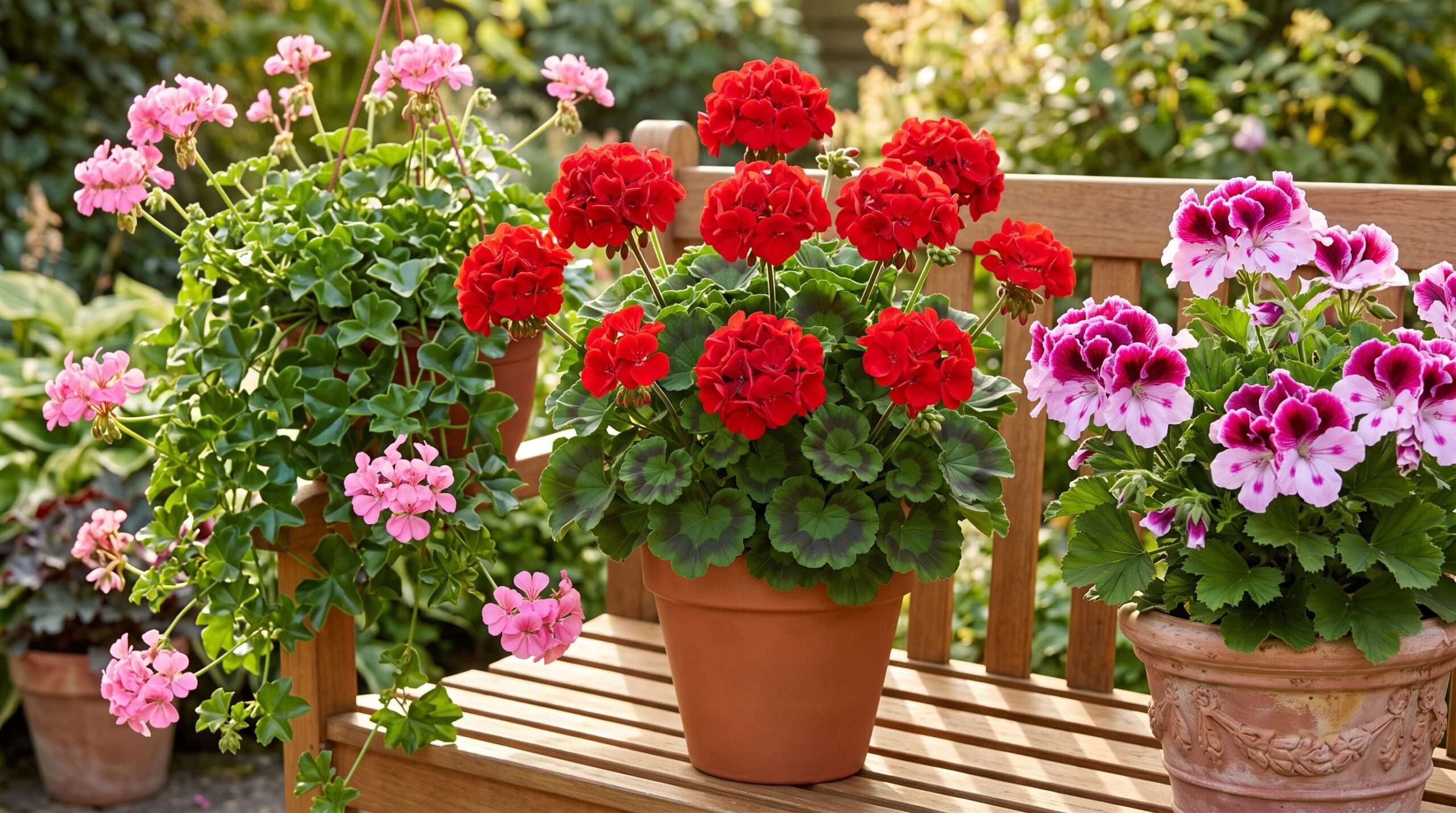
To provide the best care, you must first identify which variety you brought home from the garden center:
The 4 Main Types of Garden Geraniums 🌺
-
Zonal Geraniums (Pelargonium x hortorum): These are the classic, upright growers you see everywhere. They are easily identified by the distinct, dark circular bands (or “zones”) on their velvety green leaves. Zonal varieties are structurally robust, making them the absolute best choice for standard garden beds, large patio pots, and cemetery urns.
-
Ivy-Leaved Geraniums (Pelargonium peltatum): Characterized by glossy, smooth leaves resembling ivy, these trailing varieties possess a cascading growth habit. If you want a plant that spills elegantly over the edges of hanging baskets or window boxes, ivy geraniums are your go-to.
-
Regal / Martha Washington Geraniums (Pelargonium x domesticum): Known for their massive, dramatic, multi-colored blooms with ruffled petals, Regals are the divas of the family. Unlike their heat-loving cousins, they prefer cooler spring temperatures and often pause their blooming when the deep summer heat sets in.
-
Scented-Leaved Geraniums: These are cultivated almost exclusively for the intoxicating essential oils in their foliage rather than their small, delicate flowers. Brushing against their leaves can release intense fragrances of lemon, peppermint, rose, or even chocolate.
2. Setting the Stage: Ideal Growing Conditions ☀️
You cannot fertilize or water your way out of a bad location. Geranium plants are native to the warm, sunny regions of South Africa, and mimicking their natural habitat is the first non-negotiable step to endless blooms.
Cracking the Sunlight Code 🌞
To trigger massive flower production, a geranium requires a minimum of 6 to 8 hours of direct sunlight every single day. When grown in too much shade, the plant will prioritize foliage growth over flower production, resulting in long, weak, “leggy” stems stretching desperately for light.
-
Regional Nuance: If you live in a Southern or high-heat climate (like USDA Hardiness Zones 8 and above), the rules shift slightly. The intense, scorching afternoon sun can actually fry the foliage and fade the blooms. In these regions, position your plants to receive abundant morning sun, followed by dappled or protective afternoon shade.
Temperature & Humidity Sweet Spots 🌡️
Geraniums thrive when daytime temperatures hover comfortably between 65°F and 85°F (18°C – 29°C), with nighttime temperatures dropping to around 50°F to 60°F (10°C – 15°C).
-
The Humidity Danger: While they love heat, high humidity can be a silent killer. Stagnant, humid air prevents moisture from evaporating off the leaves, creating the perfect breeding ground for devastating fungal diseases. If you live in a humid environment, you must actively manage this by ensuring excellent airflow around your plants.
3. Soil, Pots, and Planting: The Foundation of Health 🪴
A gorgeous plant above ground is entirely dependent on a healthy, oxygen-rich root system below ground.
The Perfect Potting Mix Recipe
Never, under any circumstances, use heavy garden topsoil in your geranium pots. Garden soil compacts quickly in containers, suffocating the roots and trapping excess moisture, which inevitably leads to rot.
-
The Expert Soil Blend: You want a loose, well-draining environment. Start with a high-quality, peat-based (or coco coir-based) potting soil. Mix in a generous amount of perlite (about 20% of the total volume) to maximize drainage and aeration. Finally, blend in a handful of rich organic compost to provide a slow release of foundational nutrients.

Choosing the Right Container 🏺
-
The Golden Rule: Your pot absolutely must have unobstructed drainage holes at the bottom. A pot without drainage is essentially a bathtub, and geraniums will quickly drown in standing water.
-
Terracotta vs. Plastic: While plastic nursery pots are cheap and lightweight, unglazed terracotta is the professional’s choice for geraniums. Terracotta is porous, allowing the soil to “breathe” and excess moisture to evaporate through the walls of the pot. This acts as a fantastic buffer against accidental overwatering.
Spacing and Air Circulation 🌬️
When transplanting into garden beds, fight the urge to crowd the plants together for instant impact. Space them at least 12 to 18 inches apart. This spacing allows the wind to flow through the foliage, quickly drying the leaves after a rainstorm and severely reducing the risk of powdery mildew and gray mold (Botrytis).
4. The Watering Masterclass: Avoid the #1 Geranium Killer 💧
If there is one single factor that separates expert growers from frustrated beginners, it is watering technique. Overwatering is the number one killer of geranium plants worldwide.
The “Drench and Dry” Method
Geraniums prefer to dry out significantly between watering sessions. Stick your index finger into the potting mix. If the top 1 to 2 inches of soil feel even slightly moist, walk away. Wait until the soil is completely bone dry to the touch. When it is time to water, drench the soil deeply and thoroughly until water freely runs out of the bottom drainage holes, flushing out excess salt buildup from fertilizers.
Reading Your Plant’s Signals
-
Signs of Overwatering: The plant will communicate its distress through yellowing lower leaves that eventually drop off. The stems at the soil line may feel soft, mushy, or blackened—a fatal condition known as root rot.
-
Signs of Underwatering: While they are somewhat drought-tolerant, severe underwatering will cause the edges of the leaves to turn crispy and brown. More importantly, a thirsty plant will prematurely drop its unopened flower buds to conserve energy.
Pro Tip: Always apply water directly to the soil at the base of the plant. Using a sprinkler or watering from above gets the fuzzy leaves and tightly clustered flower heads wet, inviting bacterial blight and fungal rot.
5. Feeding for Maximum Flower Power 🧪
Blooming requires a massive amount of metabolic energy. To keep a geranium producing massive flower heads from May through October, you must feed it correctly.
Choosing the Right Fertilizer 🌸
Many novice gardeners grab a generic, all-purpose liquid fertilizer and wonder why their plants look like giant, green bushes with zero flowers. The problem is usually nitrogen. High-nitrogen fertilizers prioritize leafy, vegetative growth at the expense of blooms.
-
The Ideal NPK Ratio: You need a fertilizer tailored for blooming. Look for a water-soluble formula where the middle number (Phosphorus) is higher than the first number (Nitrogen). Phosphorus is the macronutrient responsible for root development and spectacular flower production.
The Feeding Schedule 🗓️
-
Potted Geraniums: Because watering constantly flushes nutrients out of the drainage holes, container plants need frequent feeding. Apply a water-soluble bloom-booster fertilizer at half-strength every two weeks during the active growing season.
-
In-Ground Geraniums: Mix a granular, slow-release blooming fertilizer into the soil at the time of planting. Supplement this with a liquid feed midway through the summer when the initial nutrients have been depleted.
6. Pruning and Deadheading: The Engine of Endless Blooms ✂️
If you simply water and feed your geranium plants but ignore their structural maintenance, your bloom production will eventually crash. To keep the plant focused entirely on generating new flowers, you have to actively manage its growth through strategic pruning and deadheading.

How to Deadhead Correctly (The “Snap” Method) 🤌
When a geranium flower cluster begins to fade, dry up, and lose its petals, the plant’s biological imperative shifts from attracting pollinators to producing seeds. Seed production consumes a massive amount of metabolic energy—energy that is instantly diverted away from forming new flower buds.
To stop this process, you must remove the spent blooms, a technique known as deadheading. However, beginners often make the mistake of just pulling off the dead petals or cutting the stem halfway down. Leaving a hollow, headless stem on the plant invites fungal rot that can travel down into the main branch.
-
The Expert Technique: Trace the naked flower stem all the way down to where it meets the main, thick branch of the plant (the joint or node). Grasp the stem firmly near the base and push it sharply downward or sideways. It should cleanly “snap” off at the joint. This clean break heals quickly and signals the plant to immediately start developing a new flower stalk.
Leggy Geraniums: How to Pinch and Prune 🪴
Even with perfect sunlight, geraniums can occasionally become “leggy,” meaning they produce long, stretched-out stems with very few leaves or flowers at the base. To encourage a dense, bushy, and compact plant, you need to “pinch” them back.
-
Early Spring Pinching: When the plant is young and actively putting out new green growth, use your thumb and forefinger to literally pinch off the top half-inch of the newest growing tips. This forces the plant to stop growing upward and instead push out lateral (side) branching. More branches equal more structural support for future flower heads.
-
Mid-Summer Rejuvenation: If your plant looks exhausted or straggly by mid-August, don’t be afraid to take a sharp, sterilized pair of pruning shears and cut the longest stems back by a third. It will look a bit bare for a week or two, but it will rapidly flush out with fresh, vigorous foliage and a late-season burst of blooms.
7. Troubleshooting Common Geranium Pests & Diseases 🐛
Even the most meticulously cared-for garden can occasionally face environmental challenges. Catching pests and fungal issues early is the key to preserving your stunning display.
Pests to Watch Out For 🕷️
-
Aphids & Spider Mites: Aphids are tiny, soft-bodied sap-suckers that cluster on new growth, causing leaves to curl and distort. Spider mites thrive in hot, dry conditions, leaving behind faint stippling on the leaves and ultra-fine webbing. Treat both by thoroughly spraying the foliage (especially the undersides of leaves) with organic cold-pressed neem oil or a gentle insecticidal soap in the early evening when the sun is low.
-
Tobacco Budworm: If you notice perfectly round little holes bored into your unopened flower buds, or if the blooms open with shredded petals, you likely have a budworm infestation. These tiny caterpillars can decimate a blooming cycle in days. Treat the plant with Bacillus thuringiensis (Bt), a highly effective, naturally occurring soil bacterium that targets caterpillars while remaining completely harmless to beneficial pollinators like bees and butterflies.
Fungal and Bacterial Issues 🍄
-
Botrytis Blight (Gray Mold): This is a devastating fungal infection that typically strikes during cool, excessively rainy, or humid weather. It manifests as fuzzy, brownish-gray spots on the flowers and leaves, turning them to mush. To combat Botrytis, immediately remove all affected plant parts, clear away dead fallen leaves from the soil surface, and dramatically increase air circulation around the pot.
-
Oedema: If you spot small, corky bumps or watery blisters on the undersides of the leaves, your plant is suffering from oedema. This is not a pest or a disease, but a physiological disorder caused by erratic watering—specifically when the roots absorb water faster than the leaves can transpire it. The plant cells literally burst. Fix this by strictly adhering to the “drench and dry” watering method discussed earlier.
8. Overwintering: Keep Your Geraniums Alive for Years ❄️
Most gardeners treat Pelargoniums as single-season annuals, tossing them into the compost bin when the first hard frost hits. But these plants are actually tender perennials! With a little effort, you can save your favorite varieties year after year, eventually growing massive, tree-like specimens.
Before the first autumn frost threatens your area, choose one of these three expert overwintering strategies:
-
The Bare Root Method (The Classic Trick): Carefully dig the plant out of its pot or garden bed and gently shake off the loose soil from the root ball. Hang the bare plant upside down from the rafters in a cool, dark, and frost-free location, such as an unheated basement or root cellar (ideally around 45°F to 50°F). Once a month, take them down and soak the roots in a bucket of water for an hour to keep them from completely desiccating. In spring, prune away the dead wood and replant.
-
The Houseplant Method: If you have a bright, sunny, south-facing window indoors, simply bring the potted plant inside. Prune it back heavily by about half to compensate for the lower indoor light levels. Water sparingly throughout the winter—only when the soil is completely dry—and do not apply any fertilizer until early spring when you see fresh growth.
-
The Cuttings Method: If you lack space for large pots, take several stem cuttings in late summer and root them indoors in small nursery pots. These will grow into robust, perfectly sized transplants ready for the garden by the following spring.
9. Propagation: Multiply Your Plants for Free 🌱
Why buy flats of expensive plants every spring when you can easily clone your absolute favorites? Geraniums are incredibly resilient and eager to root, making them one of the easiest plants to propagate at home.
-
Step 1: The Cut. Using a sterilized razor blade or bypass pruners, take a 3- to 4-inch cutting from a healthy, non-blooming stem tip. Ensure your cut is made just below a leaf node (the swollen joint where leaves emerge), as this area contains high concentrations of rooting hormones.
-
Step 2: The Callous. Strip the lower leaves off the cutting, leaving just two or three at the very top. Set the cutting aside on a paper towel in a shady room for 12 to 24 hours. This allows the freshly cut end to dry out and form a protective “callous,” which severely reduces the risk of the stem rotting when it hits the moist soil.
-
Step 3: Rooting. Fill a small pot with a sterile, highly porous mix of 50% peat moss (or coir) and 50% perlite. Moisten the mix, poke a hole with a pencil, and gently insert the calloused stem. Keep the medium lightly moist, and in about three to four weeks, give the stem a gentle tug. If you feel resistance, congratulations—you have successfully grown a brand-new root system!
-
Expert Warning: Do not try to root geranium cuttings in a glass of water. While they will produce stringy white roots, these “water roots” are incredibly brittle and often fail to adapt when transitioned into the soil, leading to a high mortality rate. Always root directly in a sterile, soil-less medium.

10. Frequently Asked Questions (Expert Q&A) 💬
Why are my geranium plant’s leaves turning yellow? Yellowing leaves are the most common complaint and almost always point to moisture issues. If the entire leaf is turning a sickly yellow and feels slightly limp, you are overwatering. Allow the soil to dry out completely. If the yellowing starts at the bottom of the plant and features dry, crispy edges, it is severely underwatered. Occasionally, a nitrogen or magnesium deficiency can cause yellowing, but always rule out watering issues first.
Do geraniums prefer sun or shade? They are strictly sun-loving plants. For optimal blooming, they require a minimum of 6 to 8 hours of direct, unfiltered sunlight daily. The only exception is in zones with extreme, scorching afternoon heat (like the Deep South or desert Southwest), where a few hours of late afternoon shade will prevent the blooms from fading and the leaves from burning.
Can geranium plants survive a freeze? No. The common garden Pelargonium is a tender perennial native to warm climates. Even a light frost will severely damage the fleshy foliage, and a hard freeze will kill the root system entirely. You must bring them indoors or take cuttings before the first projected frost date in your region.
Are geraniums toxic to pets? Yes, they are mildly to moderately toxic to both cats and dogs. The foliage contains essential oils, including geraniol and linalool, which can cause gastrointestinal upset, vomiting, lethargy, and loss of appetite if ingested by curious pets. If you have pets that like to nibble on greenery, it is best to keep these plants elevated in hanging baskets or tall urns out of their reach.
By mastering these fundamental techniques—from providing the right soil and conquering the “drench and dry” watering method to understanding the magic of deadheading—you are now fully equipped to cultivate breathtaking, professional-level displays. The days of leggy stems and scarce flowers are over.
Which specific variety of geranium are you planning to write about first on your plant care website?