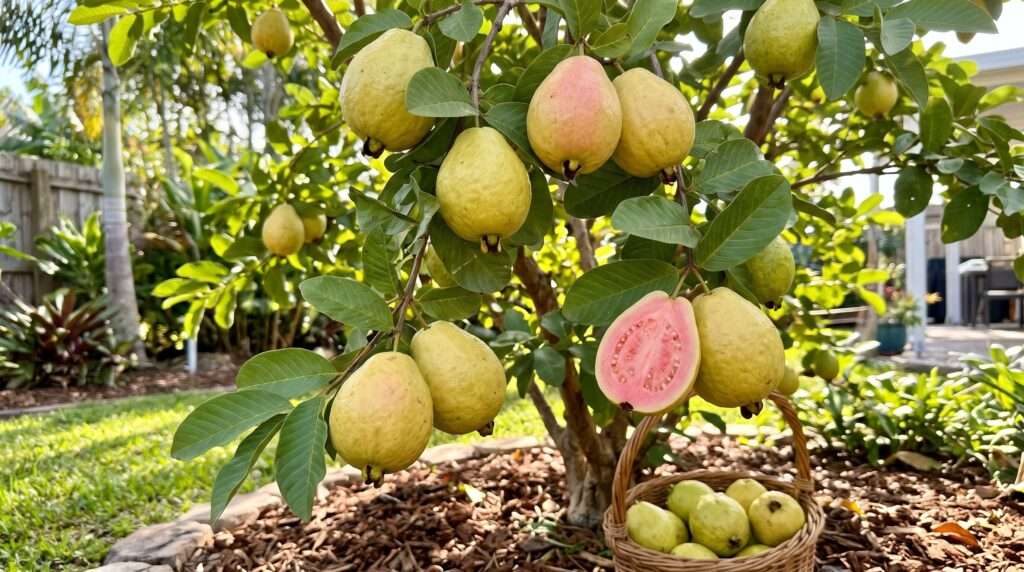
There is nothing quite like biting into a sun-warmed, homegrown guava—fragrant, honey-sweet, and bursting with tropical flavor that grocery store fruit can never replicate. Yet, for many home gardeners, growing a guava fruit tree ends in quiet frustration. The tree looks lush and healthy, but it either refuses to flower, drops its tiny fruits prematurely, or produces bland, woody guavas that taste more like cardboard than paradise. 🌿😕
Here is the good news: harvesting baskets of sweet, juicy guavas isn’t about luck or living in a rainforest. After years of cultivating tropical fruit trees in both backyard soil and patio containers, I’ve found that exceptional harvests come down to mastering three specific levers: uninterrupted sunlight, potassium-rich feeding, and strategic annual pruning.
Whether you are planting your very first sapling in the ground or nursing a dwarf variety on a sunny balcony, this complete guide will walk you through every step—from choosing the sweetest cultivar to using a simple watering trick that concentrates fruit sugars right before harvest.
📌 Quick Navigation:
Guava Fruit Tree Quick-Care Chart
Choosing the Right Variety
Planting in Ground vs. Pots
Watering, Fertilizing & Cold Care
Pruning & Thinning for Bigger Yields
Troubleshooting Pests & Fruiting Issues
Harvesting at Peak Sweetness
Guava Fruit Tree Quick-Care Reference Chart 📊
If you want a fast snapshot of what your tree needs to thrive, bookmark this quick-reference table:
Choosing the Right Guava Variety for Your Climate 🌱
Success starts before you ever dig a hole. Selecting a cultivar that matches your local climate—and your personal taste buds—will save you years of disappointment.
Tropical Guavas (Psidium guajava) vs. Cold-Hardy Guavas ❄️☀️
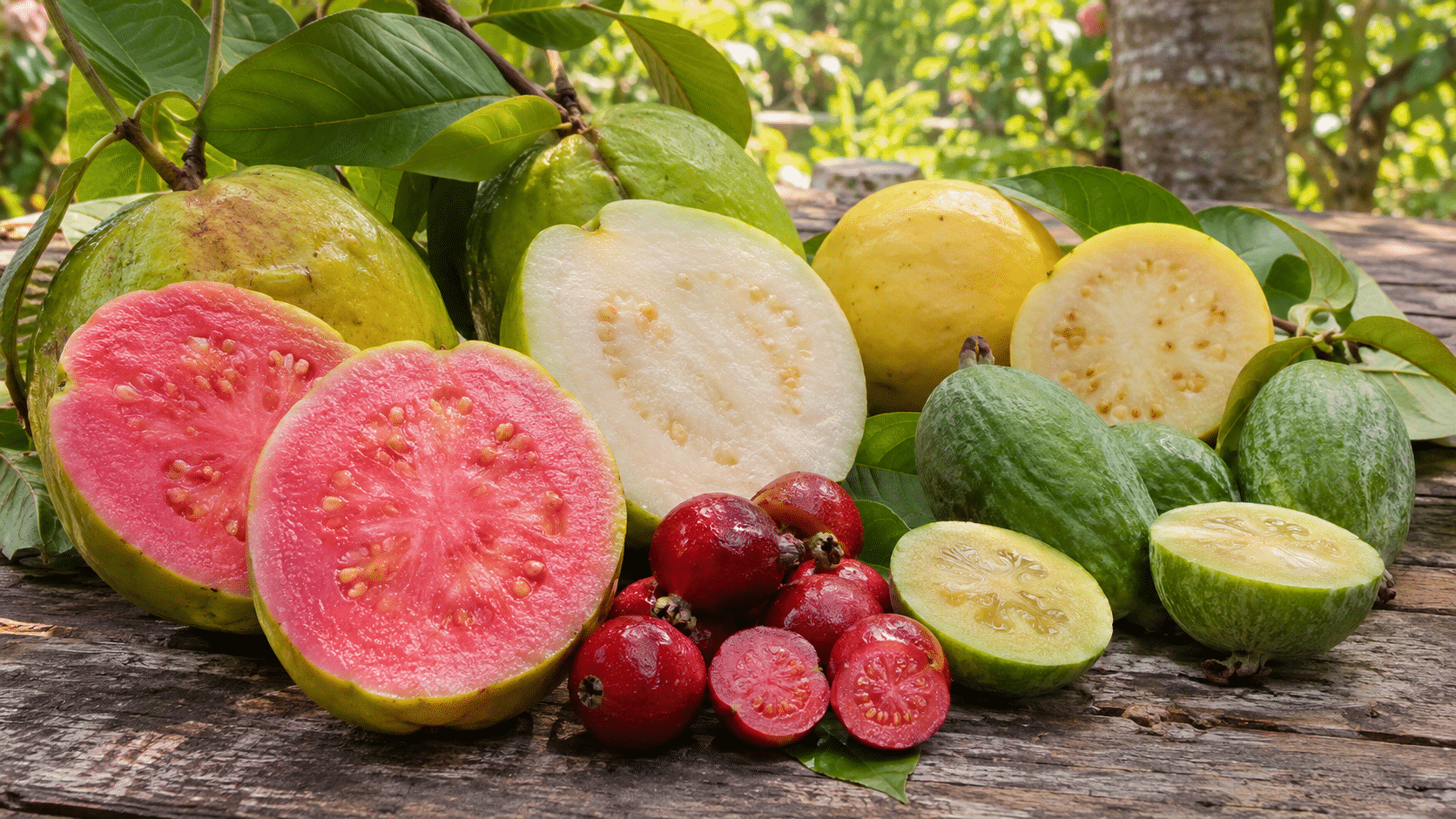
When most people picture a guava, they are thinking of the tropical guava (Psidium guajava). These trees produce large, fragrant fruits with pink, white, or yellow flesh. They thrive in warm, frost-free climates (USDA Zones 9b–11), though mature trees can survive brief dips down to 28°F (-2°C) with minor leaf drop.
If you live in a cooler region (Zones 8–9a) and want to plant directly in the ground, consider two cold-hardy cousins:
-
Pineapple Guava (Acca sellowiana / Feijoa): Hardy down to 15°F (-9°C), with silvery-green foliage and tangy, minty-sweet fruit.
-
Strawberry Guava (Psidium cattleianum): Hardy down to 22°F (-5°C), producing bite-sized, ruby-red or yellow fruits with a sweet, berry-like flavor. It also adapts exceptionally well to indoor container growing.
Top 4 Guava Varieties for Maximum Sweetness 🍯
If you are growing classic tropical guavas, skip the mystery seedlings and look for these proven, dessert-quality cultivars:
-
Ruby Supreme: A backyard favorite for good reason. It produces large, oval fruits with vibrant pink flesh, a low-acid profile, and a rich, sweet aroma.
-
Thai White (or Kilogram Guava): Famous for its massive size and crisp, apple-like crunch. Unlike soft pink guavas, Thai White is often eaten while still slightly firm and light green.
-
Mexican Cream: Small to medium-sized with pale yellow skin and creamy-white flesh. It boasts a decadent, dessert-like sweetness that melts in your mouth.
-
Tropic Pink: A reliable, heavy-bearing variety that performs well in both humid and dry-heat climates, making it ideal for beginners.
Grafted Nursery Trees vs. Growing from Seed 🌿
While it is tempting to sprout seeds from a delicious store-bought guava, always buy a grafted or air-layered nursery tree if your goal is abundant, sweet fruit.
Grafted and air-layered trees are genetic clones of a proven parent tree. They begin fruiting within 1 to 2 years and stay more compact. Seed-grown guavas, on the other hand, take 3 to 5 years to mature and do not always grow “true to type.”
💡 Expert Insight: Growing from grocery-store seeds is a fun science project, but it’s a genetic lottery. You might nurture a seedling for four years only to end up with small, overly seedy, or sour fruit. Investing $30–$50 in a named, grafted cultivar guarantees top-tier flavor from your very first harvest.
How to Plant a Guava Fruit Tree for Strong Roots 🪴
Guavas are remarkably resilient trees, but their early root establishment dictates how heavily they will fruit for the next 30 years.
Picking the Perfect Spot ☀️
Sunlight is the engine of sugar production. Choose a location that receives at least 6 to 8 hours of direct, unfiltered sun every day. A tree planted in partial shade will survive, but its foliage will grow sparse, and the fruit will lack sweetness.
Also, consider wind protection. Young guava branches are somewhat brittle, and strong gusts can snap fruit-laden limbs or strip away delicate blossoms. Plant at least 10 to 15 feet away from walls, fences, or other large trees to ensure good airflow and room for the root system to expand.
Soil Preparation & Drainage Essentials 🪨
Guava trees tolerate a wide range of soils—from sandy coastal loam to slightly alkaline clay—as long as drainage is excellent. Standing water around the roots is the fastest way to invite fatal root rot.
-
Ideal pH: 5.0 to 7.0 (slightly acidic to neutral).
-
Amending Heavy Clay: If your yard has dense clay soil that puddles after rain, dig a wide planting mound (12–18 inches high) and mix your native soil with 30% aged compost and coarse builder’s sand or pine bark fines to improve aeration.
Step-by-Step: Planting in the Ground vs. Growing in Pots 🏺
Planting In-Ground:
-
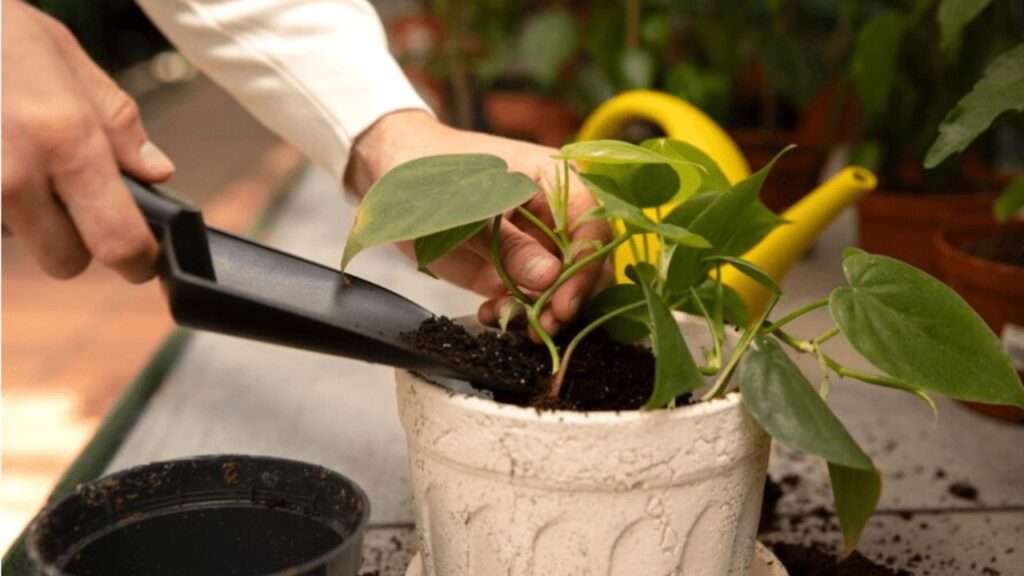
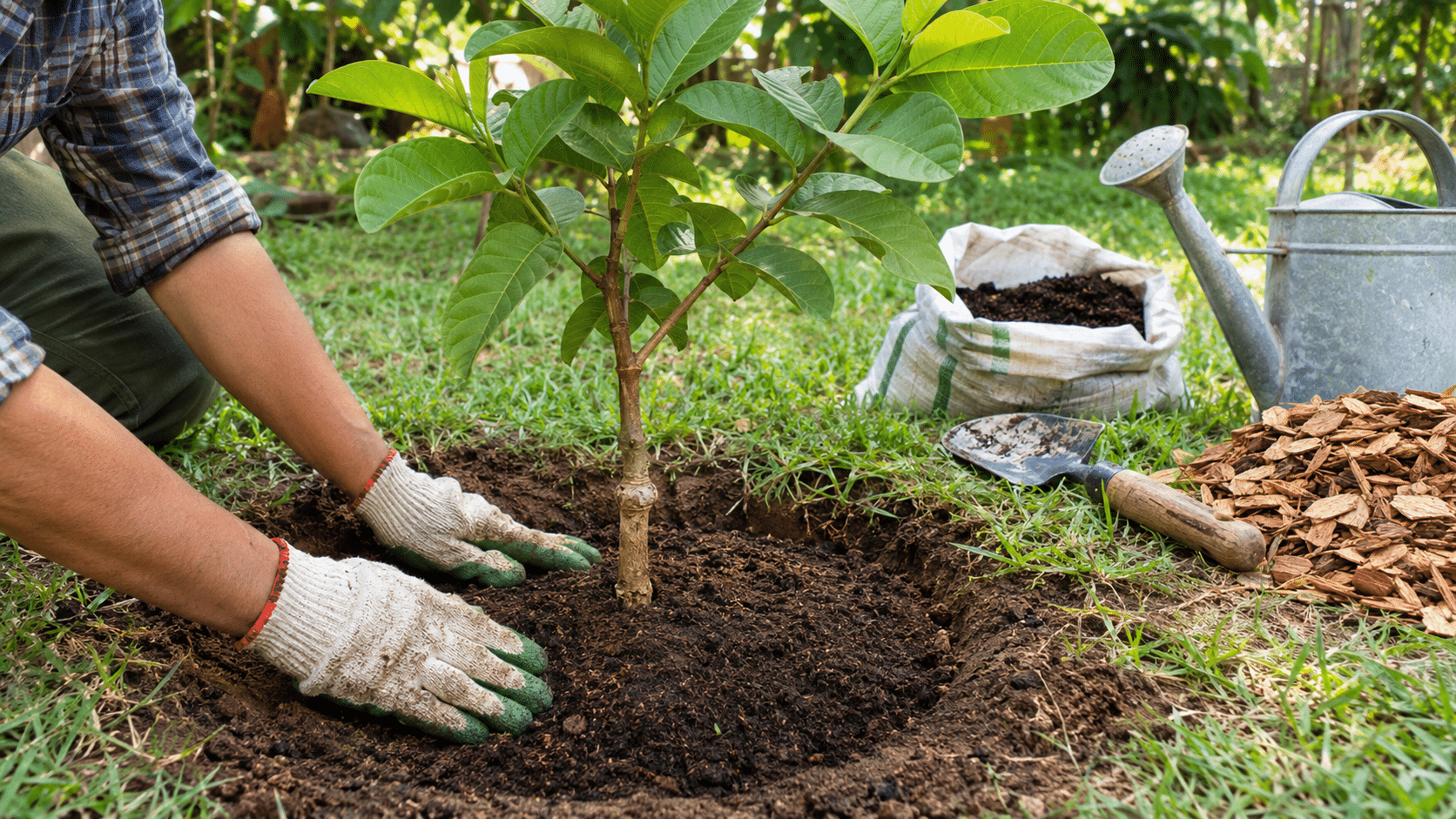
Dig wide, not deep: Dig a hole twice as wide as the nursery root ball, but no deeper than the pot it came in.
-
Inspect the roots: Gently slide the tree out of its container. If the roots are tightly circling the bottom (root-bound), lightly score the sides with a clean knife or tease them outward with your fingers.
-
Check the graft union: Place the tree in the hole so the top of the root ball sits level with (or 1 inch above) the surrounding soil. Ensure the graft union (the swollen bump near the base of the trunk) stays well above the soil line.
-
Backfill and water deeply: Fill the hole with native soil, gently tamping down to remove air pockets. Water thoroughly to settle the soil, and build a shallow 3-foot-wide watering berm around the drip line.
Growing in Containers (Patios & Cold Climates):
-
Choose the right pot: Start with a 15- to 25-gallon container with ample drainage holes. Fabric grow bags or terracotta pots work wonders because they allow oxygen to reach the roots.
-
Use airy potting mix: Never use heavy garden soil in a pot. Blend a high-quality citrus and tropical fruit potting mix with 20% extra perlite or pumice for crisp drainage.
-
Plan for root-pruning: Every 2 to 3 years in late winter, slide the tree out of its pot, trim off the outer 2 inches of circling roots, and refresh with new potting mix to keep the tree vigorous.
Essential Guava Fruit Tree Care for Abundant, Sweet Fruit 💧
Once your tree is planted, consistent seasonal care transforms it from an ornamental shrub into a fruit-producing powerhouse.
Watering for Flavor (The Ripening Trick) 💦
Guavas need steady moisture during their first two years to build a deep taproot.
-
Young Trees (Years 1–2): Water deeply 2 to 3 times per week during warm months, allowing the top 2 inches of soil to dry slightly between waterings.
-
Mature Trees (Year 3+): Once established, guavas are surprisingly drought-tolerant. Provide a deep, slow soak once every 7 to 10 days during dry spells, especially during flowering and early fruit set.
🌟 Pro Grower Secret (The Sugar Trick): As your guavas reach full size and begin their color shift toward ripeness, gradually reduce your watering. Excess water right at the finish line floods the fruit with moisture, diluting its natural sugars (Brix levels) and resulting in watery, bland guavas. Slight, controlled dryness during the final 2–3 weeks concentrates the flavor dramatically.
Fertilizing Schedule & The Best NPK Ratios 🧪
Guavas are moderate-to-heavy feeders, and their nutritional needs shift as they mature.
-
Growth Phase (Years 1–2): Feed every 6 to 8 weeks from spring through early autumn using a balanced fertilizer like 6-6-6 or 8-8-8. This builds a sturdy trunk and lush canopy.
-
Fruiting Phase (Year 3+): Once your tree is ready to bear fruit, switch to a potassium-rich formula—such as 6-6-12 or a specialized citrus/tropical fruit blend. Potassium (the third number in the NPK ratio) is directly responsible for flower formation, fruit size, and sugar development.
-
Don’t forget micronutrients: Guavas are prone to iron, zinc, and magnesium deficiencies, which show up as yellowing leaves with green veins (interveinal chlorosis). Apply a chelated micronutrient foliar spray or a handful of Epsom salts once or twice a year.
-
Organic Options: Prefer organic gardening? Top-dress twice a year with well-rotted composted manure, kelp meal (for potassium and trace minerals), and a light dusting of hardwood ash.
Mulching & Cold Protection 🍂🧣
Spread a 2- to 4-inch layer of organic mulch (wood chips, pine straw, or shredded bark) around the base of your tree, extending out to the drip line. Mulch locks in soil moisture, regulates root temperatures, and breaks down into rich humus.
Crucial Rule: Always keep mulch 4 to 6 inches away from the trunk. Piling mulch against the bark traps moisture and causes lethal collar rot.
If you live in a marginal climate (Zone 8b–9a) and a freak frost is in the forecast:
-
Water the soil deeply the afternoon before the freeze (moist soil holds and radiates heat better than dry soil).
-
Drape breathable frost cloth over the canopy down to the ground—avoid letting plastic touch the leaves directly.
-
Move potted guava trees into a bright garage, sunroom, or indoors whenever night temperatures dip below 35°F (2°C).
Pruning & Thinning: The Secret to Bigger Harvests ✂️
If you only remember one horticultural rule from this entire guide, make it this one: pruning your guava tree doesn’t reduce your harvest—it multiplies it.
Why Pruning Directly Increases Fruit Production 🌳
Unlike apples or cherries that fruit on old wood, guavas produce flowers and fruit exclusively on new growth. If you leave a guava fruit tree unpruned, it will grow tall, leggy, and bare in the center, producing only a handful of unreachable fruits at the very tips of its highest branches.
Regular pruning stimulates a massive flush of fresh, lateral shoots—and every single one of those new shoots is a potential site for flower buds.
When and How to Prune Your Guava Tree 🗓️
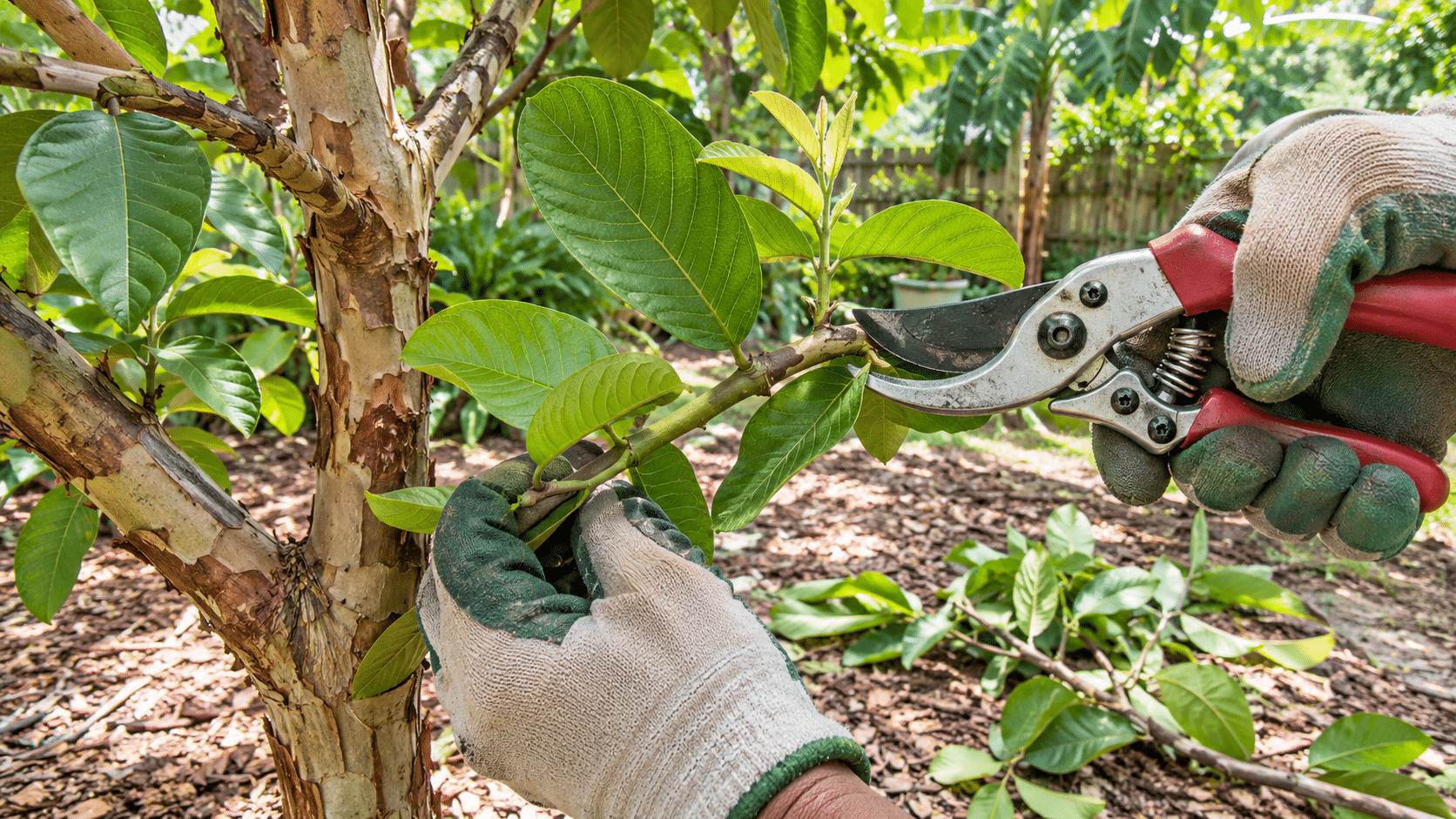
The best time to prune is in late winter or early spring, right before the new growing season kicks off (or immediately after your main harvest in frost-free tropical climates).
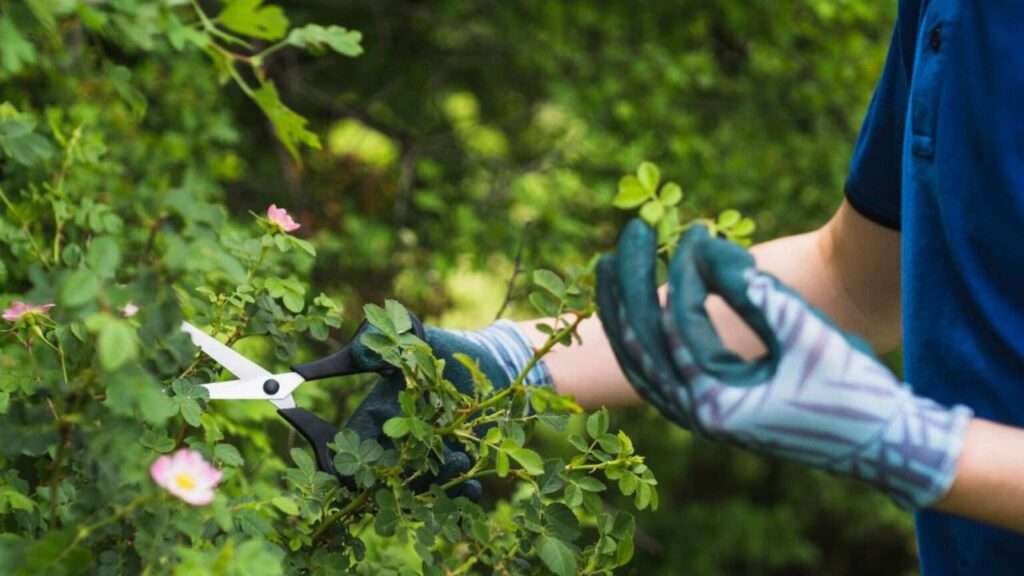
Follow these four simple steps using clean, sanitized bypass pruners:
-
Remove rootstock suckers: Snip off any shoots sprouting from the base of the trunk below the graft union. They steal energy from your fruiting canopy.
-
Clear the deadwood: Cut out any dead, diseased, or broken branches back to healthy wood.
-
Open the center: Remove branches that cross or rub against each other. An open, vase-shaped canopy lets sunlight penetrate the interior and improves airflow, which slashes fungal disease risk.
-
Tip back long shoots: Trim back overly long, whip-like branches by one-third to encourage bushy side branching. Keep your tree at a manageable 6 to 8 feet tall so you can easily bag and harvest your fruit without a ladder.
Fruit Thinning for Restaurant-Quality Guavas 🍈
A healthy guava tree often sets too much fruit. While it feels painful to snip off baby guavas, fruit thinning is essential. When fruits are about the size of a marble, thin each cluster down to 1 or 2 fruits per shoot.
This prevents heavy branches from snapping under the weight and forces the tree to funnel all of its sugars and nutrients into fewer, much larger, sweeter guavas.
Troubleshooting Common Guava Pests, Diseases & Fruiting Issues 🐛
Even the most attentive gardeners run into hiccups. Here is how to diagnose and solve the most common guava problems naturally.
Why Isn’t My Guava Fruit Tree Fruiting? (4 Common Culprits) 🤔
If your tree is all leaves and no fruit, check these four causes:
-
Too much nitrogen: Lawn fertilizers or high-nitrogen plant foods push rapid, leafy green growth at the expense of flowers. Switch to a low-nitrogen, high-potassium fertilizer immediately.
-
Insufficient sunlight: Less than 6 hours of direct sun drastically reduces flower bud formation.
-
Immaturity: If you planted a seed-grown tree, it simply may not be old enough yet (wait 3–5 years).
-
Extreme heat or water stress: Sudden heatwaves above 100°F (38°C) or erratic watering can cause the tree to drop its blossoms before they set fruit.
Organic Solutions for Common Guava Pests 🐞
-
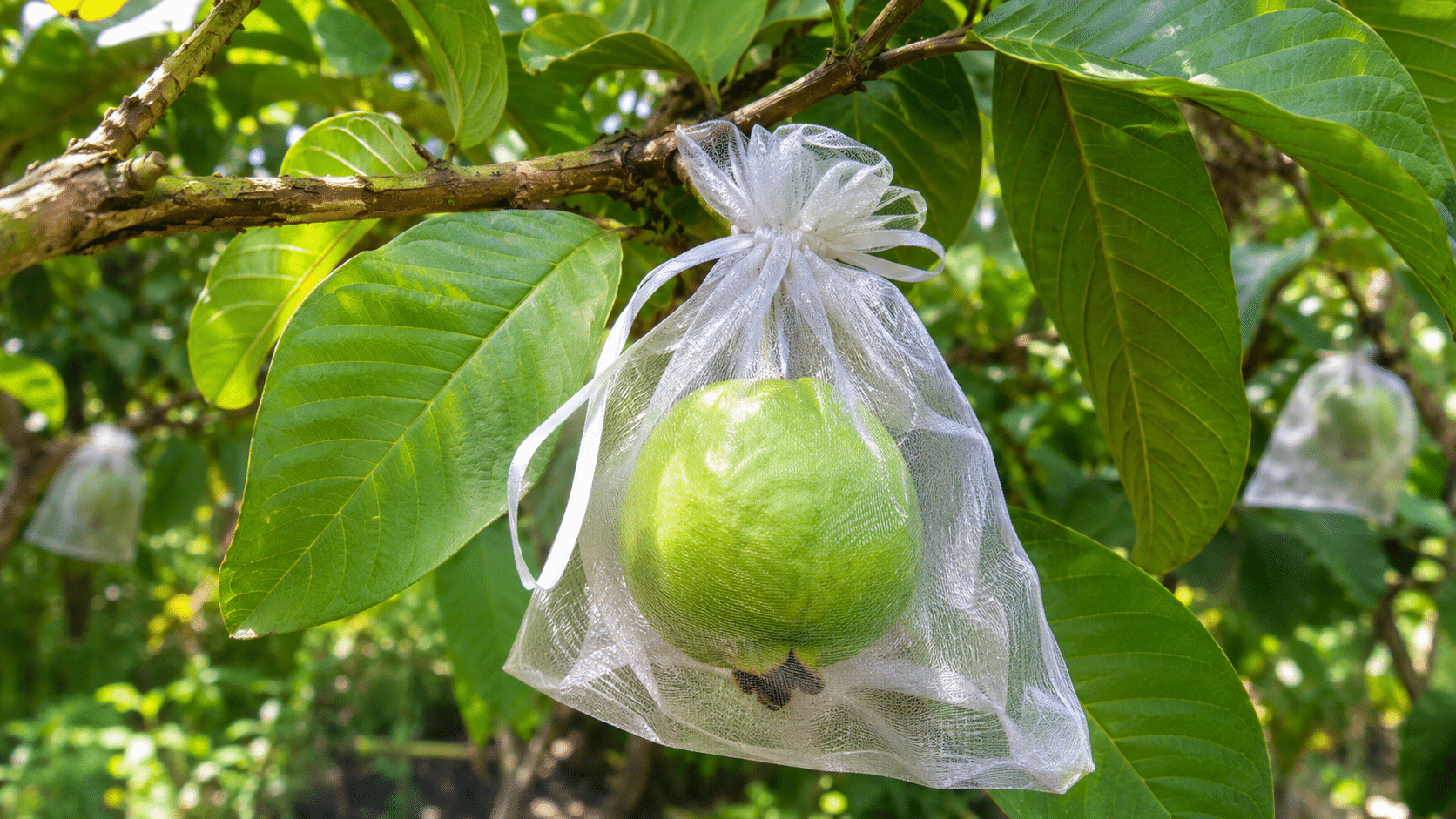
Caribbean & Oriental Fruit Flies (The #1 Enemy): If you’ve ever cut open a gorgeous guava only to find tiny white maggots inside, fruit flies are the culprit. Chemical sprays rarely work well for home growers. Instead, use fruit bagging: as soon as the baby guavas are walnut-sized, slip a small organza drawstring bag or brown paper bag over each fruit and tie it gently around the stem. This 100% organic barrier lets sunlight and air in while keeping fruit flies completely out. 🛍️✨
-
Aphids, Scale & Whiteflies: These sap-sucking insects leave behind sticky “honeydew” that attracts ants and black sooty mold. Blast them off with a strong stream of water, then spray the undersides of the leaves with cold-pressed neem oil or insecticidal soap in the early morning or evening.
Preventing Guava Diseases 🍄
-
Anthracnose: Appears as dark, sunken, circular spots on ripening fruit, especially in humid weather. Prevent it by pruning for good airflow, avoiding overhead watering, and applying a preventative organic copper fungicide spray just as flower buds open.
-
Guava Wilt & Root Rot: Causes sudden yellowing, wilting, and branch dieback. Because fungal root rot is nearly impossible to cure once advanced, prevention is everything: plant in well-draining soil and never let your tree sit in soggy mud.
Harvesting & Storing Guavas at Peak Sweetness 🧺
Picking a guava too early leaves you with a hard, tart, astringent fruit. Picking it too late means squirrels, birds, or fruit flies will beat you to it.
3 Signs Your Guavas Are Ready to Pick ✨
-
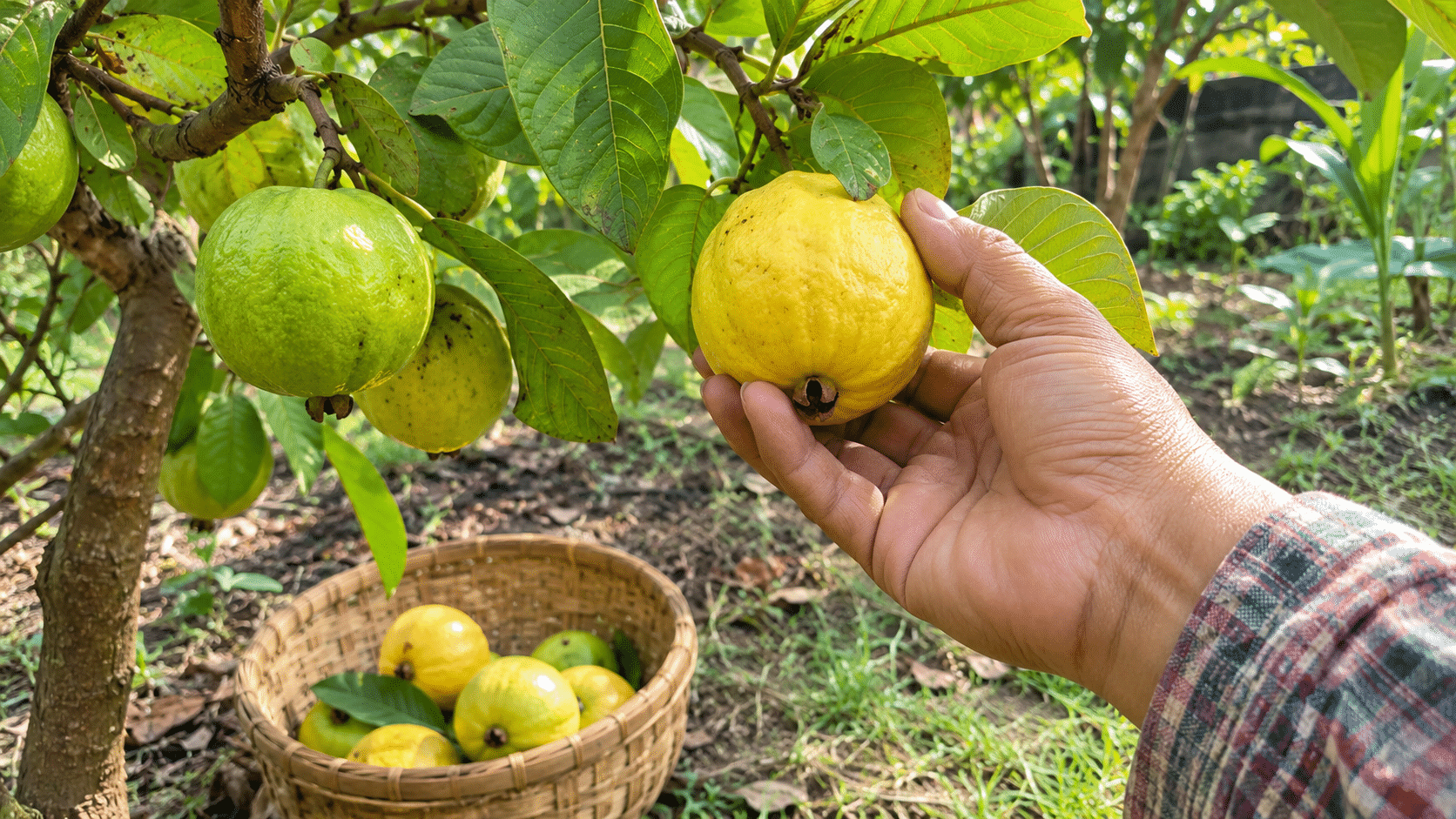
Color Shift: Depending on your variety, the skin transitions from a deep, matte green to a bright yellowish-green, creamy yellow, or develops a soft pink blush.
-
The Gentle Squeeze Test: Cradle the fruit in your palm and press gently with your thumb. A ripe tropical guava yields slightly to pressure—similar to a ripe avocado or peach. (Note: Crisp varieties like Thai White are harvested while still firm and pale green).
-
Unmistakable Aroma: Lean in and take a sniff! Ripe guavas emit a heavenly, sweet, musky-tropical perfume right on the branch.
Harvesting & Post-Harvest Storage Tips 🧊
To harvest, gently twist the fruit upward or snip the stem with clean pruners so you don’t tear the bark.
-
Counter Ripening: If you pick guavas slightly firm to beat local wildlife, place them in a brown paper bag on your kitchen counter alongside a ripe banana or apple. The natural ethylene gas will ripen them to perfection in 2 to 3 days.
-
Refrigeration: Once fully ripe, guavas are delicate and bruise easily. Store them in the crisper drawer of your refrigerator for up to 4 to 5 days.
-
Freezing: Have a bumper crop? Wash, slice, and freeze guavas on a baking sheet before transferring them to freezer bags. They are incredible blended into tropical smoothies, jams, or homemade guava paste! 🥤💛
Frequently Asked Questions About Guava Fruit Trees ❓
Do I need two guava trees to get fruit?
No! Guava fruit trees are self-pollinating, meaning a single tree can produce a full, abundant harvest all on its own. However, planting a second different variety nearby can increase cross-pollination by bees and boost overall yields slightly.
How fast does a guava fruit tree grow?
Guavas are vigorous, fast-growing trees. In warm climates with full sun and regular feeding, a young guava tree can easily grow 2 to 3 feet per year, reaching fruiting maturity much faster than mangoes or avocados.
Can you grow a guava fruit tree indoors?
Yes! Dwarf varieties like Nana, Ruby Supreme (pruned small), or Strawberry Guava thrive indoors if placed directly in front of a bright, south-facing window. If natural light is limited during winter, supplement with a full-spectrum LED grow light for 8–10 hours a day, and hand-pollinate the flowers using a small, soft paintbrush. 🖌️🌸
How long do guava trees live?
With proper drainage, annual pruning, and basic seasonal care, a healthy guava fruit tree can live and produce delicious fruit for 30 to 40+ years.
Ready for Your Sweetest Harvest Yet? 🌿✨
Growing a thriving guava fruit tree is one of the most rewarding projects any home gardener can take on. You don’t need a sprawling orchard or fancy equipment—just commit to the three golden rules: full sun, potassium-rich feeding, and annual pruning to encourage fresh fruiting wood. Add in the late-season watering taper and organza fruit bags, and you’ll be harvesting sweet, fragrant, blemish-free guavas that put store-bought fruit to shame.
Which guava variety are you growing—or dreaming of planting—in your backyard this season? Drop your USDA zone and any questions in the comments below, and let’s get your tree thriving! 👇🍈
👩🌾 About the Author: Written by a dedicated tropical fruit gardener and horticulture enthusiast with over a decade of hands-on experience growing guavas, citrus, and subtropical edibles in both backyard orchards and small-space patio containers. Passionate about helping home growers achieve organic, abundant harvests using science-backed plant care.