
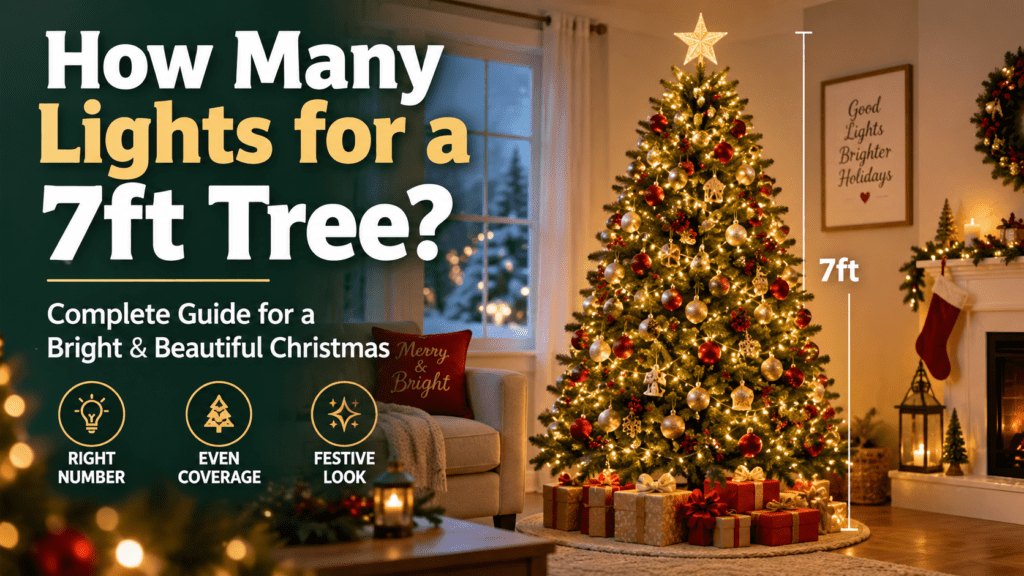
We’ve all been there. You’ve brought home a stunning Balsam Fir or painstakingly unboxed a pristine artificial spruce. You’re 75% of the way up the branches, stringing away with festive cheer, only to reach the end of the wire with two feet of bare branches left at the top. 🤦♀️ It’s the ultimate holiday frustration. If you find yourself staring at your evergreen and wondering exactly how many lights for a 7ft tree you actually need, you are definitely not alone.
As specialists in tree care and plant cultivation, we look at holiday decorating a bit differently. We don’t just focus on the aesthetics; we understand the physical structure, needle retention, and branch strength of your holiday centerpiece. Lighting a tree shouldn’t be a guessing game that ends in a tangled, frustrating mess.
In this comprehensive, skyscraper-level guide, we are completely eliminating the guesswork. We will break down the exact expert formulas required to achieve that flawless, camera-ready glow. Whether you are aiming for a minimalist aesthetic on a slim artificial pine, or you want to create a dense, Pinterest-perfect masterpiece on a lush, freshly cut fir, we have the mathematical breakdown you need—all while ensuring your tree stays healthy and vibrant all season long. Let’s get glowing! 🌟🌲
🧮 The Short Answer: The Math Behind the Magic
Let’s not beat around the bush (or the pine!). If you are standing in the holiday decor aisle right now trying to calculate what to put in your shopping cart, here is the immediate answer you need.
The industry standard formula is based on the height of your tree. For a standard 7-foot tree, here is how the math breaks down depending on the level of brightness you want to achieve:
-
The Standard Rule of Thumb (Minimalist/Classic): Aim for 100 lights per foot of tree.
-
Calculation: 7 feet x 100 = 700 lights.
-
The Look: This provides a beautiful, traditional look. It is enough to outline the shape of the tree and highlight your ornaments without being overwhelming.
-
-
The “Perfect Glow” Formula (Professional/Rich): Aim for 150 lights per foot of tree.
-
Calculation: 7 feet x 150 = 1,050 lights. 🌟
-
The Look: This is the sweet spot. It creates a rich, deep, professional illumination that makes the tree look like it’s glowing from the inside out.
-
-
The “Clark Griswold” Maximum (Statement/Brilliant): Aim for 200 lights per foot of tree.
-
Calculation: 7 feet x 200 = 1,400 lights.
-
The Look: Blindingly bright and beautifully intense. This is for the ultimate holiday enthusiast who wants their tree to be the undeniable focal point of the entire house.
-
📏 Three Factors That Change the Math
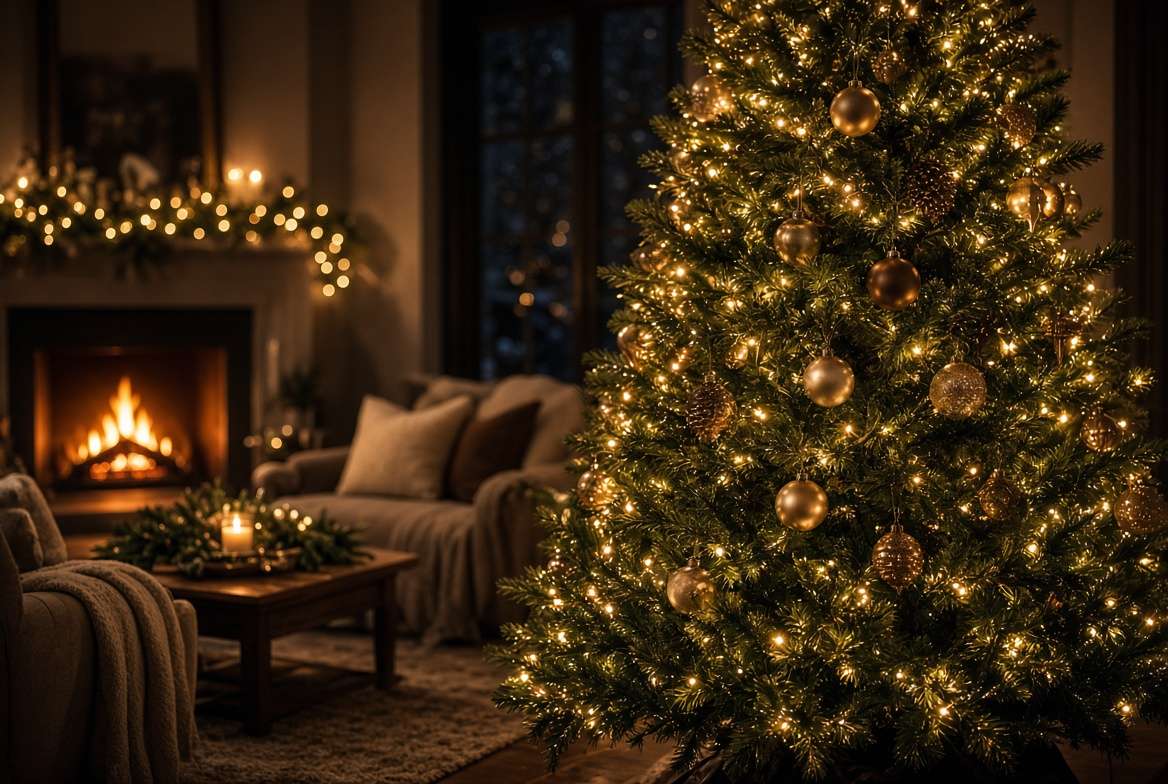
While the 100-to-150 lights per foot rule is an excellent baseline, trees—just like the plants in our gardens—are not one-size-fits-all. To truly master your holiday lighting, you must adjust the formula based on three crucial variables.
1. The Girth and Shape of Your Tree 🌲
A tree’s silhouette dramatically impacts its surface area and internal volume.
-
Slim or “Pencil” Trees: These space-saving trees have a much smaller circumference. You can safely reduce your light count by about 30%. For a 7ft pencil tree, 500 to 700 lights will provide a stunning, full-coverage glow.
-
Standard/Medium Trees: This is your typical conical shape (like a classic artificial tree or a well-sheared Fraser Fir). Stick strictly to the standard formula of 700 to 1,000 lights.
-
Full, Plump, or Unsheared Trees: If you have a wildly natural tree with deep pockets between branches, or a heavily flocked artificial tree with a massive girth, you have significantly more real estate to cover. You will likely need 1,200+ lights to ensure the light reaches all the way to the trunk.
2. The Size of the Bulbs 💡
Not all string lights are created equal, and the physical size of the diode or bulb changes how much light is cast.
-
Mini Lights (Fairy/Dewdrop): These micro-LEDs are incredibly trendy and delicate, often strung on thin copper wire. Because the bulbs are so tiny, their individual light output is lower. To get a noticeable impact on a 7ft tree, you will need to scale up to 1,000 to 1,500 mini lights.
-
Traditional String Lights (T5 or M5): These are the standard, slightly elongated bulbs most people use. The standard formulas (700-1,050 lights) apply perfectly here.
-
Large Bulbs (C7 or C9): These retro, strawberry-shaped bulbs are massive. Because they cast so much light and take up so much physical space, you need far fewer. For a 7ft tree, 300 to 400 large bulbs are more than enough.
3. Your Wrapping Technique 🎀
How you apply the lights changes the required quantity just as much as the tree itself!
-
The Traditional Spiral: Wrapping the lights round and round the outside of the tree is the most common method. The standard 700-light formula works great here.
-
Branch Wrapping: This professional technique involves running the light strand from the trunk, out to the tip of a single branch, and back to the trunk again, repeating for every major branch. It creates unparalleled depth, but beware: branch wrapping requires nearly double the lights! If you choose this method for a 7ft tree, prepare to use 1,400 to 2,000 lights.
🌿 Tree Care Expert Insight: Lighting Real Trees Safely
As plant care advocates, we cannot talk about decorating without talking about the health of the tree itself. A freshly cut evergreen is still a living, transpiring organism, and how you light it directly impacts how long it will survive in your living room.
LED vs. Incandescent for Live Trees 🚫🔥 If you have a real 7ft tree, you must transition to LED string lights. Traditional incandescent bulbs generate a significant amount of heat. When nestled tightly against live pine or fir needles, that heat accelerates moisture loss. This leads to premature drying, rapid needle drop, and most dangerously, a severe fire hazard. LEDs remain completely cool to the touch, preserving your tree’s cellular moisture and keeping it perfectly green for weeks longer.
Weight Distribution and Branch Health ⚖️ Different tree species have different branch strengths. A stiff Noble Fir can hold heavy glass ornaments and bulky C9 light strands with ease. However, a delicate White Pine has soft, flexible branches that will droop under heavy weight. When lighting a softer tree species, use lightweight mini-LEDs and ensure the bulk of the wire is anchored closer to the sturdy central trunk rather than the fragile branch tips.
The Potted Living Tree Advantage 🌱 More families are opting for living, potted Christmas trees (with intact root systems) that can be planted in the garden after the holidays. If you are lighting a potted 7ft tree, remember that the soil health is paramount. Ensure your lowest tier of lights is secured several inches above the rim of the pot. When you are assessing soil moisture and watering the root ball, you never want your electrical connections resting in damp soil or getting splashed by your watering can! 💧
🛠️ Step-by-Step: The Professional Way to String Lights on a 7ft Tree
Now that you know your ideal light count, how do you actually put them on without wanting to pull your hair out? Amateurs string lights horizontally around the outside of the tree like a spiral notebook, which creates a flat, superficial look and leaves dark holes near the trunk.
Professionals use structural techniques that maximize depth and brilliance. Follow this step-by-step masterclass to get that high-end designer look on your 7-foot tree:
Step 1: Test Before You Tangle 🔌
Never, under any circumstances, start wrapping a tree before plugging your strands in. Lay every box out on the floor, connect them end-to-end, and plug them into the wall. There is nothing more heartbreaking than finishing a 1,000-light masterpiece only to discover a dead bulb right in the middle.
Step 2: The “Trunk-Out” Technique
Start at the bottom of the tree, near the base of the trunk. Instead of wrapping the outside, anchor the plug end at the back interior of the tree. Work your light strand slowly along a major branch out toward the tip, and then back in toward the trunk. This “zigzag” method ensures that the inner core of the tree catches the light, creating a gorgeous 3D glowing effect rather than just an illuminated shell.
Step 3: The Vertical Weave Method (An Expert Secret!) ↕️
If you hate walking in circles around your tree, try the vertical approach used by professional visual merchandisers:
-
Divide your total light count into vertical sections (e.g., if you have four 250-light strands, treat the tree as four vertical panels).
-
Start at the top of the tree and string the lights straight down to the base.
-
Move a few inches over, and weave the next strand straight back up to the top.
-
Why it works: It’s infinitely faster, makes replacing burnt-out strands a breeze, and allows the wires to hang naturally hidden deep inside the branches rather than cutting across the front.
💡 Expert Trick: Step back about ten feet, squint your eyes until everything is slightly blurred, and look at your tree. The dark spots and shadows will immediately jump out at you, showing you precisely where to tuck your next strand of lights! 🧐
🎨 Pro Tips for Hiding Wires and Maximizing the Glow
Getting the right number of lights is only half the battle. Making them look seamless takes a few clever styling tricks:
-
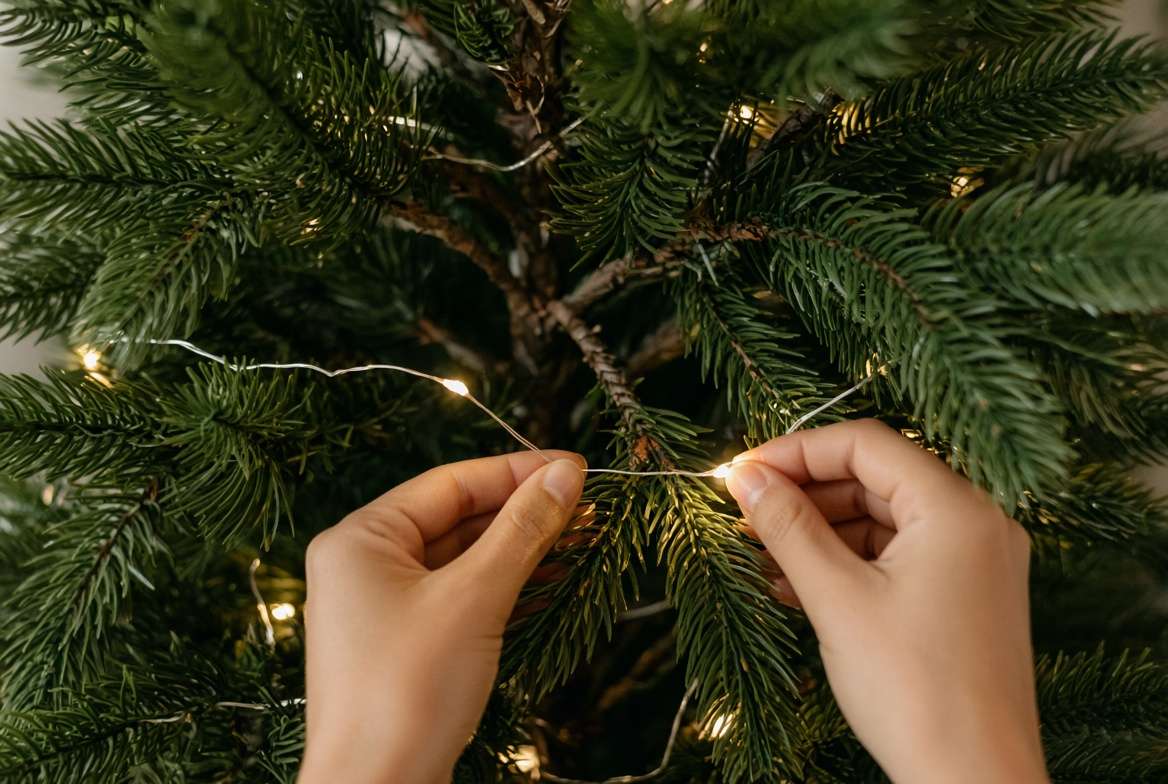
Match Your Wire Color to Your Bark: If you have an artificial green tree, green wire is a must. If you have a heavily flocked, snow-dusted white tree, use white-wire lights. If you are decorating a real tree with exposed brown bark, brown wire blends in far better than green! 🎨
-
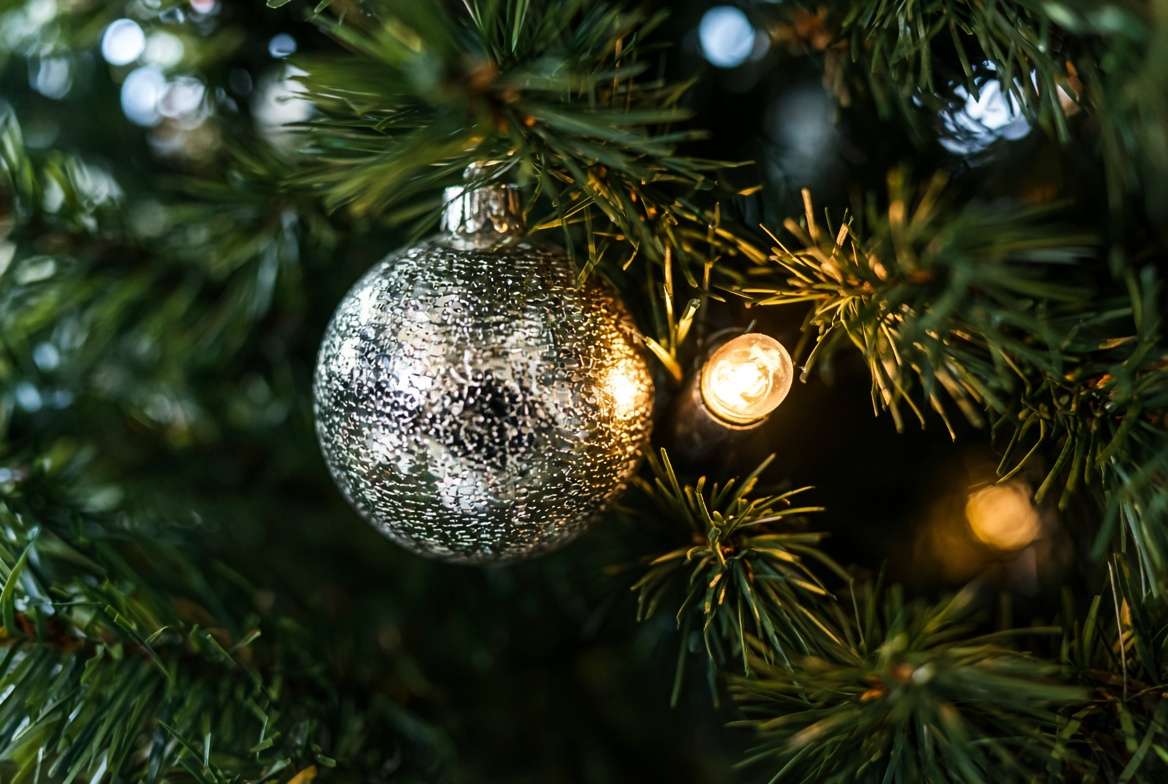
Deploy Reflective Ornaments Strategically: Hang shiny, metallic, or mirrored glass ornaments directly behind or adjacent to your light bulbs deep within the branches. This acts like a mirror, bouncing the illumination outward and effectively doubling your light output without adding another single watt to your electricity bill. ✨
-
Layer Textures: Combine a base layer of tiny, warm-white fairy lights for a subtle twinkle with a secondary layer of classic medium-sized bulbs for classic warmth and texture.
⚠️ Safety First: Electrical Limits for a 7ft Tree
With great light comes great responsibility. Piling hundreds—or thousands—of lights onto a 7-foot tree requires careful attention to electrical safety.
-
Mind Your “End-to-End” Limits: Every box of lights has a maximum capacity rating printed on the tag. Traditional incandescent bulbs usually limit you to stringing 3 to 4 sets together before risking a blown fuse or a fire hazard. LED lights, on the other hand, draw so little power that you can often connect 35 to 45 sets end-to-end safely. Always check the manufacturer’s label!
-
Inspect Last Year’s Storage: Pulling lights out of a hot attic or a damp basement can cause wire insulation to crack or fray. Toss any strands with exposed copper wire or loose bulb sockets.
-
Invest in a Smart Timer: Never leave your tree plugged in overnight or when you leave the house. Put your lights on a heavy-duty mechanical timer or a smart plug so they automatically turn off while you sleep. ⏱️
🙋♀️ Frequently Asked Questions (FAQ)
Can I put 2,000 lights on a 7ft tree?
Yes, but choose your lights wisely! If you are using ultra-fine micro-fairy lights and branch-wrapping every single tip, 2,000 lights will look breathtakingly magical. However, if you try to put 2,000 standard incandescent bulbs on a 7ft tree, it will overheat the branches and look chaotic.
How many physical strands of lights do I need?
It depends entirely on the bulb count per box. If you are aiming for the “Perfect Glow” formula of 1,050 lights:
-
You will need ten 100-count strands
-
Or seven 150-count strands
-
Or four 250-count strands
Do flocked (snow-covered) trees need more or fewer lights?
Flocked trees actually need slightly fewer lights (around 10% to 15% less than a green tree). The white flocking material acts as a massive reflector, bouncing the light around and making the tree appear significantly brighter and fuller with fewer bulbs. ❄️
🏁 Conclusion
Stringing lights on your holiday centerpiece doesn’t have to end in a tangled knot of frustration or a patchy, half-lit evergreen. By sticking to our expert formula of 100 to 150 lights per foot—bringing your total to 700 to 1,050 lights for a standard 7-foot tree—you can achieve a rich, professionally styled glow every single time.
Remember to factor in your tree’s unique shape, prioritize safe and cool-running LEDs if your tree is real, and use the vertical weave or trunk-out techniques to build gorgeous depth.
What lighting style are you planning for your holiday tree this year? Drop a comment below and let us know your favorite decorating secrets! 👇











