
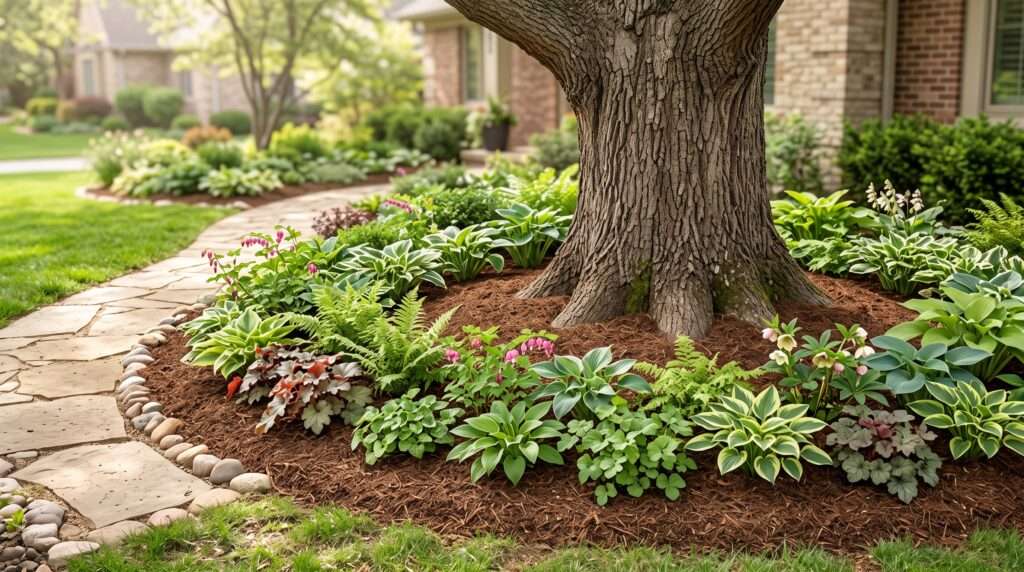
Millions of mature, magnificent trees die slow, silent deaths in residential yards every year—not from disease, pest infestations, or drought, but from well-intentioned homeowners making fatal gardening mistakes. Whether it is the dreaded “mulch volcano” suffocating the trunk or a rototiller tearing through vital surface roots, the desire for a picturesque yard often clashes directly with a tree’s biological needs. Fortunately, landscaping around trees doesn’t have to be a death sentence for your beloved oaks, maples, or pines. You can cultivate a stunning, lush under-canopy garden if you understand how to work with the tree’s intricate root system rather than against it. This comprehensive guide provides arborist-approved strategies to design, plant, and maintain a vibrant shade garden that keeps your flowers blooming and your trees thriving for generations. 🌱
🧠 Understanding Tree Roots: The Foundation of Safe Landscaping
To successfully garden under a canopy, you must first unlearn a common landscaping myth. Most people picture a tree’s root system as a deep, subterranean mirror image of its branches. In reality, a tree’s root system resembles a wide, flat pancake. Over 90% of a tree’s crucial feeder roots are located in the top 12 to 18 inches of soil.
These roots require highly porous soil to absorb oxygen, water, and essential nutrients. When you dig aggressively, pack heavy topsoil over them, or compress the ground with heavy equipment, you are actively suffocating the tree.
The “Critical Root Zone” (CRZ) Explained 📏
The Critical Root Zone (CRZ)—sometimes referred to as the tree protection zone—is the invisible boundary where the majority of the tree’s life-sustaining roots live. As a general rule, the CRZ extends to the “drip line,” which is the outer edge of the tree’s leafy canopy where rainwater naturally drips to the ground.
Expert Arborist Tip: For a more accurate measurement, measure the trunk’s diameter in inches at chest height. Multiply that number by 1.5. The resulting number is the radius in feet from the trunk that makes up the most vital portion of the CRZ. Protect this area at all costs.
Why Trees Hate “Mulch Volcanoes” and Raised Beds 🌋
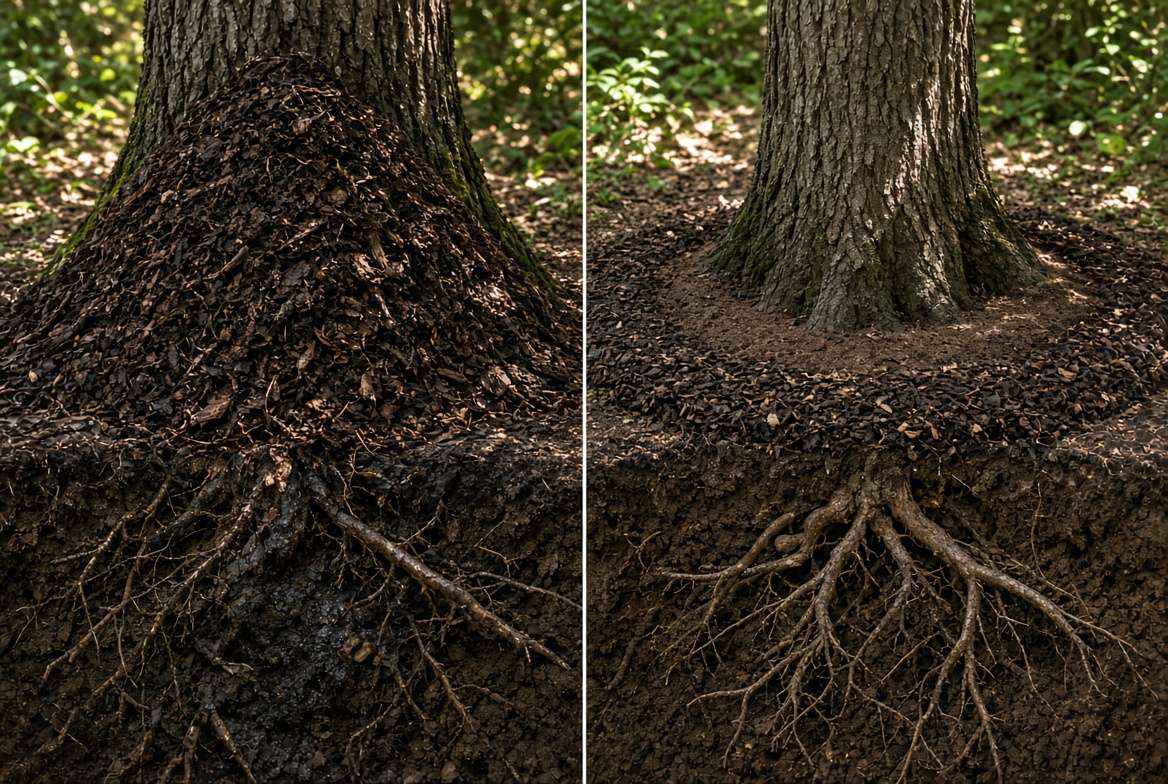
One of the most destructive practices in modern landscaping is piling thick layers of mulch or topsoil high against the trunk of a tree to create a neat, conical shape or a raised planter bed. Bark is designed to protect the tree from the elements above ground; it is not designed to withstand constant moisture.
When soil or mulch sits against the bark, it traps moisture, leading to phloem and xylem rot. This cuts off the vascular system that transports food and water between the canopy and the roots. Furthermore, suffocated roots will instinctively grow upward toward the oxygenated surface, circling the trunk inside the mulch pile. These are known as “girdling roots,” and as they thicken, they will literally strangle the tree to death.
📐 Top 5 Golden Rules for Landscaping Around Trees
Before you purchase your first flat of shade-loving perennials, commit these five foundational rules of under-tree landscaping to memory.
1. Never Raise the Soil Grade 🛑
Adding a thick layer of rich topsoil over the existing ground might seem like a favor to your new flowers, but it is disastrous for the tree. Adding even 2 inches of dense soil over the CRZ alters the gas exchange process. The existing feeder roots will suffocate, causing canopy dieback within a year or two. Work with the soil level you already have.
2. Respect the Trunk Flare 🌳
The trunk flare (or root collar) is the widening base of the tree where the vertical trunk transitions into the horizontal root system. This flare must remain completely exposed to the air. If you cannot see the distinct flare at the base of your tree, carefully pull back the soil and debris until it is visible.
3. Adopt the “Dig Once” Philosophy ⛏️
Minimize root disturbance by planning your precise layout before touching a trowel. Never use a rototiller, auger, or heavy spade under a mature tree canopy. Severing a root that is just one inch in diameter can kill a massive portion of the tree’s canopy. Dig cautiously by hand, and if you encounter a thick, woody root, simply shift your planting hole a few inches to the side.
4. Choose Shallow-Rooted “Team Players” 🌼
Trees are fiercely competitive for water and nutrients. Deep-taproot plants or aggressive, moisture-hogging shrubs will engage in a subterranean battle with the tree—a battle the tree will eventually win. Choose shallow-rooted, shade-tolerant woodland plants, groundcovers, and spring ephemerals that naturally co-evolved to thrive under forest canopies.
5. Start Small (Use Plugs or 4-Inch Pots) 🪴
It is tempting to buy mature, one-gallon plants for instant gratification. However, a one-gallon pot requires a massive hole, increasing the risk of chopping through vital tree roots. Instead, purchase landscape plugs or 4-inch nursery pots. These require tiny, shallow holes that easily slip between existing tree roots, ensuring a trauma-free planting process for both the plant and the tree.
🌸 4 Beautiful, Tree-Safe Landscaping Ideas (Design Inspiration)
You do not need to rely on aggressive hardscaping or massive flower beds to create a striking visual impact. These four landscape designs prioritize tree health while delivering high aesthetic value.
Idea 1: The Natural Woodland Edge (Living Mulch) 🌿
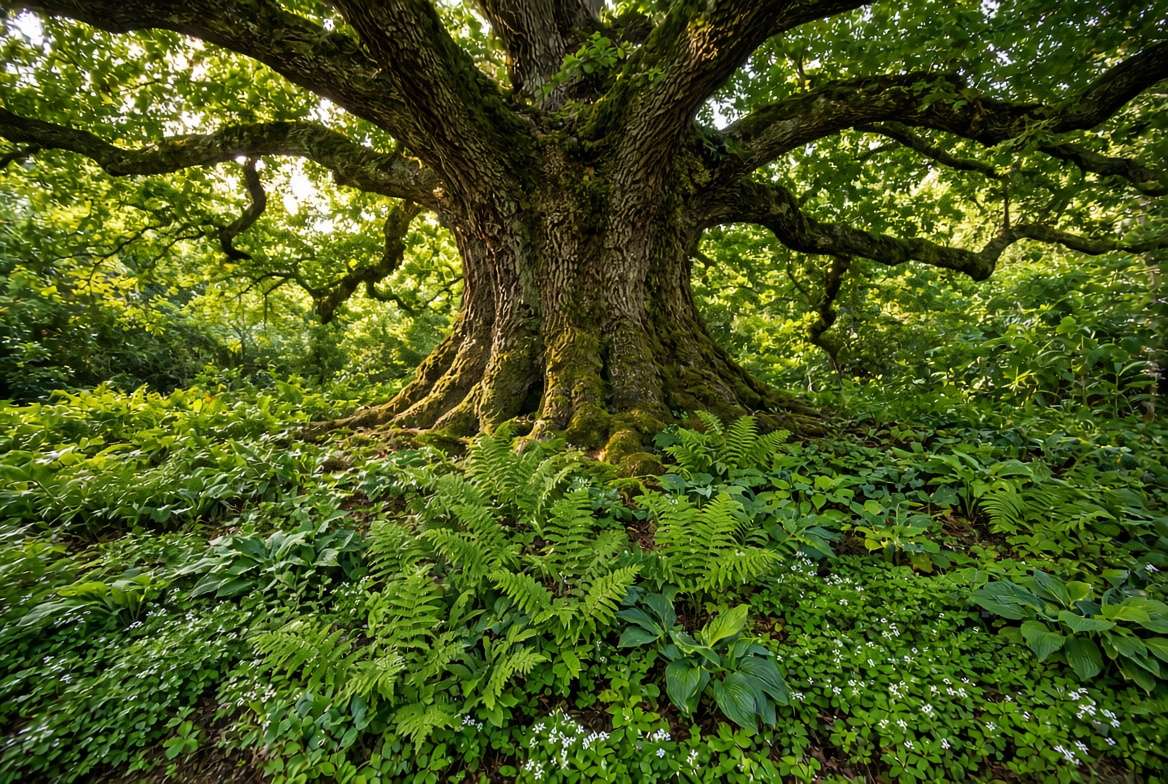
Nature does not leave bare soil under trees in a forest. Recreate a lush, ecological forest floor by planting sweeping drifts of native groundcovers, delicate ferns, and mosses. This “living mulch” acts as a natural insulator, suppressing weeds and retaining moisture without suffocating the tree roots. Once established, a woodland edge requires virtually zero maintenance, providing a soft, highly textured, and organic transition from the lawn to the tree trunk.
Idea 2: The “Potted Garden” Oasis 🏺
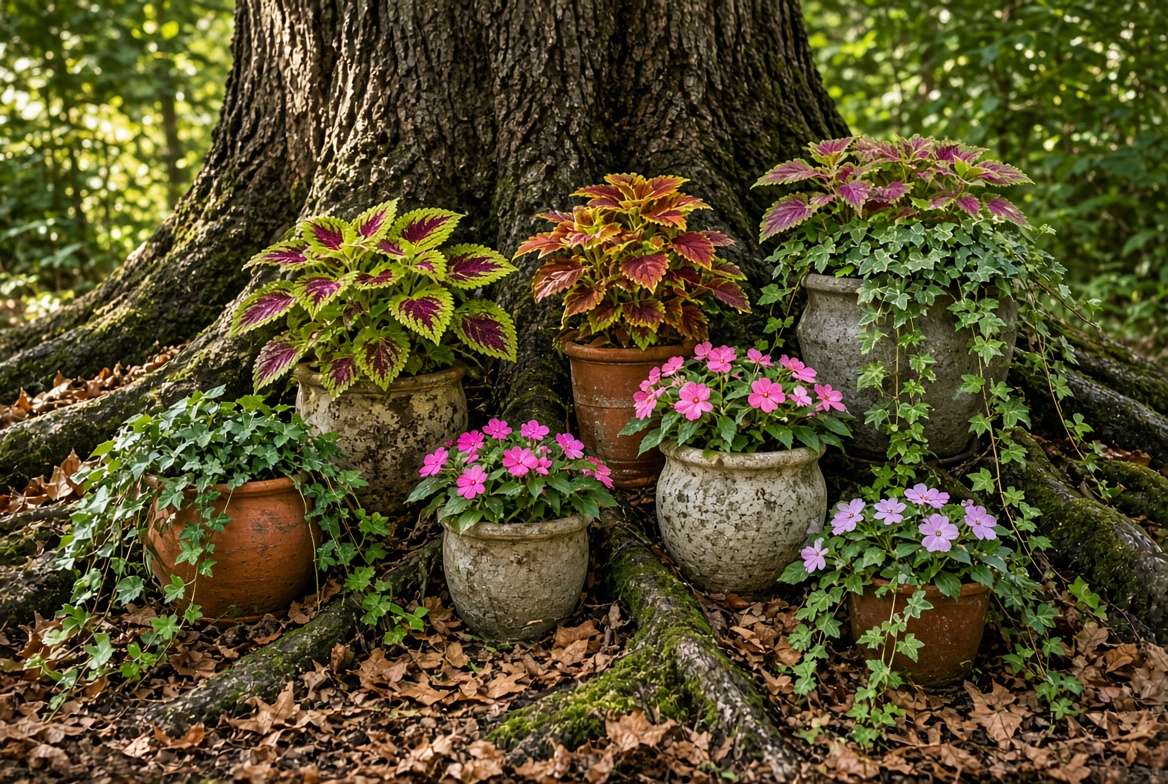
If the soil under your tree is impenetrable due to dense surface roots (common with Maples), skip the digging entirely. Arrange an aesthetically pleasing cluster of decorative containers, terra-cotta pots, and elevated planters around the base of the tree.
-
The Benefit: This method requires zero root disturbance. It also allows you to grow plants that require rich, moist soil and heavy fertilizers that might otherwise harm the tree’s delicate root zone. You can easily rotate the pots for vibrant, seasonal color changes throughout the year.
Idea 3: Strategic Hardscaping (The Zen Approach) 🪨
Incorporate permeable hardscaping materials to create a serene, structured look. Consider laying a winding flagstone pathway set in sand, adding a simple crescent-shaped wooden bench, or using decorative pea gravel.
-
The Crucial Rule: Never pave, brick, or concrete over the entire root zone. Limit any hardscaping to less than 20% of the CRZ to ensure the vast majority of the roots continue receiving unimpeded rainfall and oxygen.
Idea 4: The Minimalist Mulch Ring (Done Right) 🪵
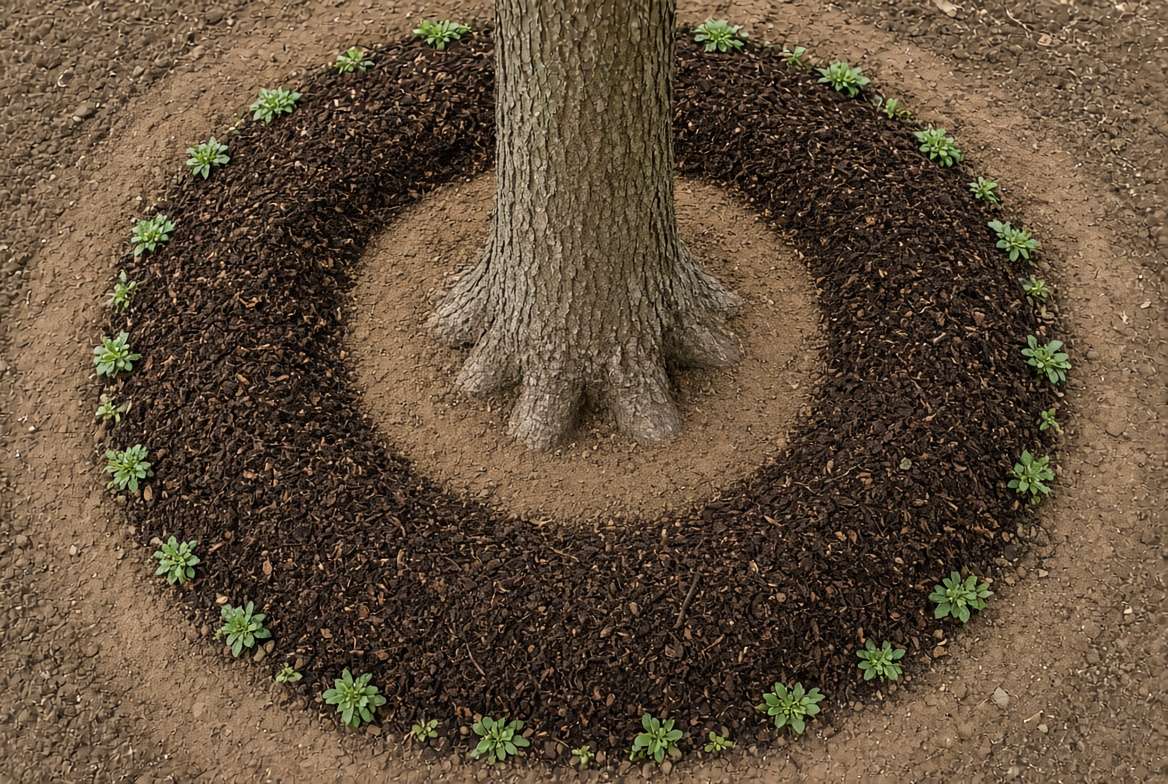
For homeowners who prefer an ultra-clean, modern, and manicured look, a properly executed mulch ring is highly effective. Cut a crisp, shallow edge into the turf exactly at the drip line. Apply a flat, even, 2-inch layer of high-quality organic mulch (like shredded hardwood or pine bark), ensuring the mulch stops a few inches short of the trunk flare. This eliminates lawnmower damage (mower blight), retains moisture, and creates a beautifully defined architectural anchor for the yard.
🌼 The Best Plants for Landscaping Around Trees (By Zone & Light)
Gardening under a mature canopy presents a unique microclimate challenge known to horticulturists as “dry shade.” Not only does the dense foliage act like an umbrella, deflecting rainfall away from the trunk, but the tree’s massive root system immediately monopolizes any moisture that does reach the soil. To succeed, you must select resilient, shade-tolerant plants that can handle intense root competition.
Top Shade-Loving Perennials 🪻
These steadfast perennials offer beautiful foliage and delicate blooms without requiring deep, heavy soils:
-
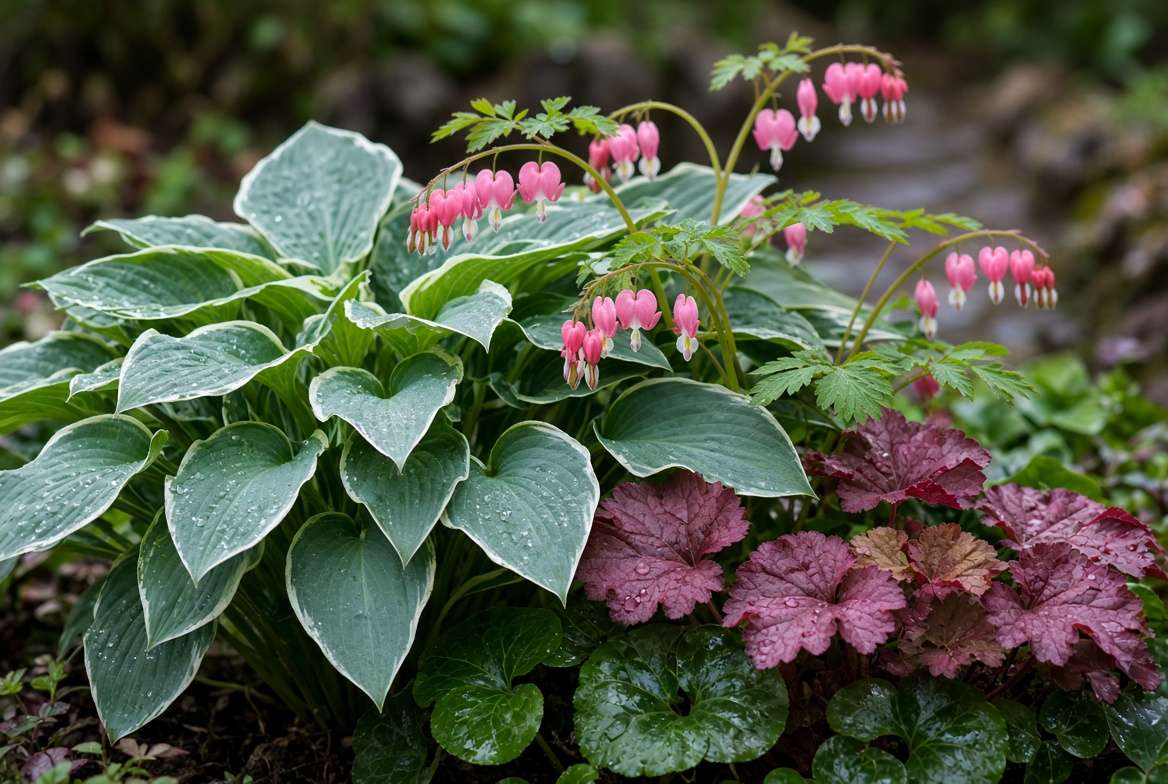
Hostas: The undisputed kings of the shade garden. With hundreds of varieties offering blue, green, and variegated leaves, they provide bold texture. Just be prepared to manage slugs and deer!
-
Coral Bells (Heuchera): Known for their stunning ruffled foliage that ranges from deep burgundy and lime green to vibrant caramel. They thrive in dappled light and have relatively shallow root systems.
-
Bleeding Hearts (Dicentra spectabilis): Bring a touch of whimsy with arching stems of heart-shaped pink or white flowers. They love woodland edges and go dormant in the late summer heat.
-
Hellebores (Lenten Rose): Incredibly tough, drought-tolerant once established, and evergreen in many zones. Best of all, they bloom in late winter or early spring when the rest of the garden is asleep.
Groundcovers that Compete Well with Roots 🍃
To create a lush carpet that chokes out weeds while coexisting with tree roots, look to these vigorous spreaders:
-
Wild Ginger (Asarum): A phenomenal native groundcover with rich, heart-shaped glossy leaves. It spreads slowly via rhizomes and handles dry shade beautifully.
-
Sweet Woodruff (Galium odoratum): Produces whorled, star-shaped foliage and delicate white spring blooms. It emits a scent like freshly mown hay and thrives in challenging shaded areas.
-
Pachysandra (Pachysandra terminalis): An evergreen workhorse that creates a dense, uniform mat. It is highly deer-resistant and can survive directly over competing tree roots.
Spring Ephemerals (The Early Bloomers) 🌷
Spring ephemerals are nature’s cleverest botanical hack for under-tree landscaping. Bulbs like Daffodils, Snowdrops, and Crocuses sprout, bloom, and store their energy in the early spring before the deciduous tree canopy fully leafs out. By the time the tree casts deep shade and begins aggressively pulling water from the soil in summer, these ephemerals have already retreated beneath the earth into a state of safe dormancy.
🌲 Troubleshooting: Landscaping Around Difficult Trees
Not all trees are created equal. Some species are notoriously difficult landlords, creating highly specialized and hostile environments for understory plants. Here is how to handle the toughest species in your yard.
Maples and Beeches (Dense Surface Roots) 🍁
Norway Maples, Silver Maples, and Beech trees are infamous for their aggressive, web-like networks of surface roots that completely choke out the topsoil.
-
The Solution: Do not attempt to dig traditional planting holes; you will lose the battle. Instead, rely on the “living mulch” approach. Tuck tiny plugs of resilient groundcovers (like sedum or sweet woodruff) directly into the small crevices between the exposed roots. Alternatively, use decorative mosses and allow the architectural beauty of the gnarled surface roots to serve as the focal point.
Pine Trees and Evergreens (Acidic Soil & Heavy Shade) 🌲
Evergreens cast year-round shade and drop acidic pine needles, which slowly alter the soil’s pH over time, making it inhospitable for standard garden center perennials.
-
The Solution: Lean into the natural environment. Leave the fallen pine straw in place as a free, organic mulch. Focus your planting efforts near the outer drip line where light penetrates, utilizing acid-loving companion shrubs like native Azaleas, Rhododendrons, and Hydrangeas.
Black Walnut Trees (The Toxic Challenge) 🌰
Black Walnut trees engage in allelopathy—they actively release a chemical called juglone from their roots, leaves, and nut hulls into the soil. Juglone is highly toxic to many common landscape plants (especially tomatoes, azaleas, and peonies), causing them to wilt and die rapidly.
-
The Solution: You must exclusively plant juglone-tolerant species. Fortunately, beautiful plants like Ferns, Astilbe, Spiderwort, Coral Bells, and Hostas are naturally immune to juglone toxicity and will happily grow beneath a Black Walnut.
🛠️ Step-by-Step Guide: How to Safely Plant Under an Existing Tree
When you are finally ready to get your hands dirty, follow this arborist-approved planting procedure to ensure zero harm comes to your tree.
Step 1: Map the Root Zone 🧹 Using a soft leaf rake or a broom, gently sweep away the top layer of existing leaves, pine needles, or old mulch. Visually inspect the ground to identify where the major, woody surface roots are snaking away from the trunk.
Step 2: Dry Run Your Layout 🪴 Leave your new plants in their nursery pots and arrange them above ground. Step back and evaluate the design. Group plants with similar water needs together, and ensure you are keeping the area immediately surrounding the trunk flare completely bare.
Step 3: Dig with Extreme Caution 🛑 Use a small hand trowel or a soil knife (hori-hori)—never a large pointed shovel. Scrape the soil away slowly. If you hit a web of fibrous feeder roots, try to gently tease them apart. If you encounter a tree root thicker than your thumb, stop immediately. Do not chop it. Simply fill the hole back in and move your plant a few inches to the left or right.
Step 4: Backfill and Hydrate 💧 Once the plant is situated in the pocket between the roots, backfill the hole using the native soil you just removed. Do not fill the hole with rich, heavy compost, as this creates a “bathtub effect” where water pools and rots the new plant’s roots. Water the new plants deeply, aiming the hose at the base of the flowers to avoid saturating the tree trunk.
Step 5: Apply a Protective Mulch Layer 🍂 Finish by applying a maximum 2-inch layer of organic mulch (shredded leaves or bark) over the newly planted area to lock in moisture and regulate soil temperature. Remember the golden rule: maintain a strict 3-to-4-inch mulch-free buffer zone completely around the tree’s trunk flare.
❓ Frequently Asked Questions (FAQs)
Can I build a raised planter box or retaining wall around a mature tree? Absolutely not. Building a raised bed or stone ring around a tree and filling it with soil is a guaranteed way to slowly kill it. The added soil suffocates the existing root system by cutting off oxygen, and the moisture held against the bark will induce fatal trunk rot.
How do I landscape over ugly exposed tree roots in my lawn? The safest approach is to stop trying to hide them. Exposed roots are often a sign of soil erosion or the natural maturity of the tree. Instead of burying them in topsoil, define the area with a crisp edge, apply a light layer of mulch, and plant small groundcovers between the roots. Treat the exposed roots as natural, rustic architectural features of your landscape.
Do I need to water and fertilize my new plants differently because of the tree? Yes. Your new plants are competing with a giant water-pump. For the first full growing season, you will need to water your under-story plants more frequently than you would in an open garden bed. When fertilizing, skip the harsh synthetic chemical fertilizers, which can easily burn the tree’s sensitive feeder roots. Instead, use a gentle, slow-release organic compost or worm castings to nourish the soil biome safely.
✨ Conclusion: Growing in Harmony
Mastering the art of landscaping around trees is fundamentally an exercise in biomimicry. When you step into a thriving forest, you do not see perfect squares of thick mulch or heavy retaining walls wrapped around ancient oaks. You see delicate layers of woodland flora naturally weaving their way through the leaf litter and around the gnarled roots. By respecting the critical root zone, avoiding the dreaded mulch volcano, and selecting the right shallow-rooted plants for dry shade, you can easily replicate this natural beauty in your own backyard.
Remember that establishing an under-canopy garden requires a bit of patience. Your new plants will take time to adapt to the intense competition for resources. But by working in harmony with your tree’s biology rather than fighting it, you will create a stunning, sustainable landscape that provides shade, beauty, and ecological value for decades to come.
What type of tree are you planning to landscape around this weekend? Let us know in the comments below so we can suggest the perfect native plants for your specific region! 👇











