
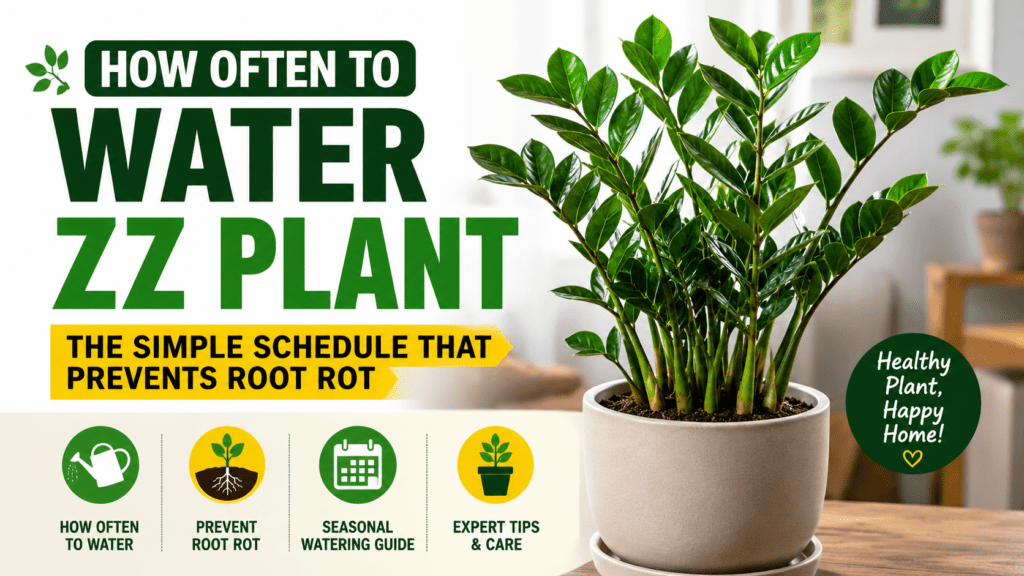
The truth is, most ZZ plants don’t die from neglect — they die from too much care. And learning how often to water ZZ plant properly is the difference between a thriving, glossy green plant and a rotting mess.
ZZ plants (Zamioculcas zamiifolia) are famous for being drought-tolerant indoor plants that can survive low light, missed waterings, and even beginner mistakes. But they have one major weakness: overwatering. Because these plants store water in their thick rhizomes beneath the soil, they need far less water than most houseplants.
In this complete expert guide, you’ll learn:
- 🌱 The ideal ZZ plant watering schedule
- 💧 How to tell when your plant actually needs water
- 🚨 Signs of overwatering and root rot
- 🪴 The best soil and pot for healthy roots
- ☀️ Seasonal watering adjustments
- 🧪 Pro care tips for long-term growth
Whether you’re a beginner plant parent or an experienced indoor gardener, this guide will help you keep your ZZ plant healthy, vibrant, and nearly indestructible. ✨
🌵 Understanding ZZ Plants and Their Water Needs
🌿 What Is a ZZ Plant?
The ZZ plant, scientifically known as Zamioculcas zamiifolia, is a tropical perennial native to Eastern Africa. It has become one of the most popular indoor plants because of its glossy dark-green leaves, ability to tolerate low light, and low-maintenance nature.

Unlike many tropical plants, ZZ plants evolved in dry environments where rainfall is inconsistent. To survive drought conditions, they developed thick underground rhizomes that store water for long periods.
This natural adaptation explains why ZZ plants prefer dry soil over constantly moist conditions.
💧 Why ZZ Plants Need Less Water Than Most Houseplants
Many beginners treat ZZ plants like peace lilies or pothos, watering them every few days. Unfortunately, that’s one of the fastest ways to kill them.
Here’s why ZZ plants need less water:
- 🌱 Their rhizomes act like water reservoirs
- 🍃 Thick waxy leaves reduce moisture loss
- 🪴 Slow growth means lower water consumption
- ☀️ They naturally tolerate drought better than wet soil
Because of this, ZZ plants thrive when the soil dries out completely between waterings.
In fact, slight underwatering is usually much safer than overwatering.
⭐ The Golden Rule of ZZ Plant Care
If there’s one rule every ZZ plant owner should remember, it’s this:
“When in doubt, don’t water yet.” 🌿
ZZ plants hate soggy soil. Their roots need airflow, and constantly wet soil quickly leads to fungal problems and root rot.
Instead of watering on a strict schedule, always check the soil first.
💦 How Often to Water ZZ Plant (Complete Answer)
📅 Ideal ZZ Plant Watering Schedule
So, exactly how often should you water a ZZ plant?
For most indoor environments, the ideal watering schedule is:
| Season | Watering Frequency |
|---|---|
| 🌸 Spring | Every 2–3 weeks |
| ☀️ Summer | Every 2–3 weeks |
| 🍂 Fall | Every 3–4 weeks |
| ❄️ Winter | Every 4–5 weeks |
However, this schedule is only a general guideline.
Some homes are warmer, drier, brighter, or more humid than others. That’s why successful plant care depends more on soil dryness than calendar dates.
🪴 Factors That Affect ZZ Plant Watering Frequency
Several environmental conditions influence how quickly your ZZ plant dries out.
☀️ Light Exposure
Plants in bright indirect light dry faster and need more frequent watering.
ZZ plants in low-light rooms grow slowly and require less water.
🌡️ Temperature
Warm rooms increase evaporation and plant activity, causing soil to dry faster.
Cool temperatures slow water usage dramatically.
💨 Humidity Levels
Dry indoor air — especially during winter heating — may require slightly more frequent watering.
High humidity slows moisture evaporation.
🏺 Pot Type
Terracotta pots absorb moisture and dry soil faster.
Plastic and ceramic pots retain moisture longer.
🌱 Soil Mix
Fast-draining soil dries quicker and protects against root rot.
Dense soil stays wet too long and can suffocate roots.
👆 Best Way to Check if Your ZZ Plant Needs Water
Never water blindly. Instead, use one of these reliable methods:
🖐️ 1. The Finger Test
Insert your finger 2–3 inches into the soil.
If the soil feels completely dry, it’s time to water.
If you detect any moisture, wait a few more days.
🪵 2. The Wooden Stick Method
Insert a chopstick or wooden skewer deep into the soil.
If it comes out dry and clean, your plant is ready for watering.
📟 3. Use a Moisture Meter
A moisture meter gives more accurate readings, especially for larger ZZ plants.
Aim for the “dry” zone before watering again.
🚨 Signs Your ZZ Plant Is Overwatered
Overwatering is the most common ZZ plant problem — and it can become serious quickly.

⚠️ Early Symptoms of Overwatering
Watch for these warning signs:
- 🍂 Yellowing leaves
- 🥀 Drooping stems
- 💧 Mushy or soft stalks
- 🪴 Wet soil that stays soggy for days
- 🍃 Leaves falling off easily
Many people mistakenly think drooping means thirst and add even more water, worsening the problem.
☠️ Advanced Root Rot Symptoms
If overwatering continues, root rot develops.
Symptoms include:
- 🤢 Foul smell from the soil
- ⚫ Black or brown roots
- Mushy underground rhizomes
- Collapsing stems
- Severe leaf yellowing
At this stage, immediate action is necessary.
✂️ How to Save an Overwatered ZZ Plant
Follow these steps carefully:
1. Remove the Plant From the Pot
Inspect roots and rhizomes immediately.
2. Trim Rotten Areas
Use sterile scissors to remove black, mushy roots.
3. Allow Roots to Dry
Leave the plant out for several hours before repotting.
4. Repot in Fresh Soil
Use a well-draining cactus or succulent mix.
5. Delay Watering
Wait several days before watering again.
🥵 Signs Your ZZ Plant Needs More Water
Although overwatering is more common, ZZ plants can occasionally become too dry.
🌱 Common Symptoms of Underwatering
Signs include:
- Wrinkled stems
- Dry curling leaves
- Drooping foliage
- Crispy leaf edges
Unlike root rot, underwatering damage is usually reversible.
💪 Why ZZ Plants Recover Well From Drought
ZZ plants evolved to survive dry conditions.
Their rhizomes store enough water to help them bounce back quickly after watering resumes.
This is why underwatering is generally safer than overwatering.
🚿 How to Rehydrate a Severely Dry ZZ Plant
If your ZZ plant has been neglected for weeks:
- Water deeply until water drains from the bottom
- Allow excess water to drain fully
- Return the plant to bright indirect light
- Resume a proper watering schedule
Avoid watering repeatedly to “compensate” for missed care.
🌦️ Seasonal ZZ Plant Watering Guide
☀️ Spring and Summer Watering
Spring and summer are active growing seasons.
Your ZZ plant may produce new stems and require slightly more moisture.
During warm months:
- Check soil every 10–14 days
- Water only when fully dry
- Increase airflow around the plant
❄️ Fall and Winter Watering
Growth slows dramatically during colder months.
As a result, the plant uses less water.
Winter care tips:
- Water less frequently
- Avoid cold drafts
- Keep soil drier than usual
Many ZZ plants only need water once a month during winter.
🔥 Watering During Heat Waves or Dry Indoor Air
Indoor heating and air conditioning can dry soil faster.
Monitor the plant carefully instead of relying solely on schedules.
Signs you may need slightly more frequent watering:
- Faster soil drying
- Wrinkled stems
- Lightweight pot
🪴 Best Soil and Pot for Proper ZZ Plant Watering
🌱 Best Soil Mix for ZZ Plants
The ideal ZZ plant soil should drain quickly while allowing airflow around roots.
A perfect mix includes:
- 2 parts indoor potting soil
- 1 part perlite
- 1 part coarse sand

Avoid heavy garden soil or moisture-retaining mixes.
🏺 Choosing the Right Pot
Drainage holes are non-negotiable.
Without proper drainage, excess water becomes trapped around roots.
Best Pot Types:
- 🟤 Terracotta: Best for airflow and drying
- ⚪ Ceramic: Good if drainage exists
- ⚫ Plastic: Retains more moisture
Terracotta is often ideal for beginners prone to overwatering.
🌬️ Why Drainage Matters More Than Watering Frequency
Even a perfectly timed watering schedule can fail if soil remains soggy.
Healthy ZZ roots need oxygen.
Good drainage prevents:
- Root suffocation
- Fungal growth
- Rhizome rot
- Pest problems
🚿 How to Water a ZZ Plant Properly (Step-by-Step)
✅ The Correct Watering Method
Step 1: Check Soil Dryness
Never skip this step.
Step 2: Water Thoroughly
Pour water evenly until it drains from the bottom.
Step 3: Empty the Saucer
Never allow standing water beneath the pot.
Step 4: Let Soil Dry Completely
Wait until fully dry before watering again.
❌ Common Watering Mistakes to Avoid
🚫 Watering Too Frequently
Small frequent watering encourages shallow roots and rot.
🚫 Following a Rigid Calendar
Environmental conditions change constantly.
🚫 Ignoring Drainage
Even perfect watering habits can fail in poorly draining containers.
💦 Should You Mist ZZ Plants?
No — ZZ plants do not require misting.
Unlike humidity-loving tropical plants, they tolerate average indoor humidity well.
Excessive misting may even encourage fungal issues.
🏡 ZZ Plant Watering Indoors vs Outdoors
🪟 Indoor ZZ Plant Care
Indoor ZZ plants dry slowly because of lower airflow and reduced sunlight.
This means indoor plants typically need less water.
🌳 Outdoor ZZ Plant Care
Outdoor ZZ plants exposed to heat and wind may dry faster.
However, avoid leaving them in heavy rain for extended periods.
🧪 Expert Tips to Keep Your ZZ Plant Healthy Year-Round
Keeping a ZZ plant alive is easy. Keeping it lush, glossy, and thriving for years? That takes a little expert knowledge. 🌿✨
These advanced care tips will help your plant grow stronger roots, healthier foliage, and better resistance to common problems.
🚰 Best Water Type for ZZ Plants
Most ZZ plants tolerate regular tap water well, but water quality can still affect long-term health.
✅ Best Water Options
- Filtered water
- Rainwater 🌧️
- Distilled water (occasionally)
⚠️ Potential Problems With Hard Tap Water
Some tap water contains:
- Excess fluoride
- Chlorine
- Mineral buildup
Over time, this may cause:
- Brown leaf tips
- White crust on soil
- Slower growth
If your tap water is heavily chlorinated, let it sit overnight before using it.
🌱 Fertilizing and Watering Relationship
Many plant owners make the mistake of fertilizing dry soil.
This can damage roots and stress the plant.
🌿 Best Practice:
Always water lightly before fertilizing.
Recommended Fertilizer Schedule:
- Feed once monthly during spring and summer
- Use balanced liquid houseplant fertilizer
- Avoid fertilizing in winter ❄️
ZZ plants are naturally slow growers, so excessive feeding won’t speed growth dramatically.
In fact, overfertilizing often causes more harm than good.
✨ Clean Leaves for Better Growth
Dust buildup blocks sunlight and reduces photosynthesis.
Cleaning your ZZ plant leaves regularly helps maintain:
- Healthy growth
- Better light absorption
- Rich glossy appearance 🌟

How to Clean ZZ Plant Leaves
- Use a soft damp cloth
- Wipe gently every few weeks
- Avoid commercial leaf shine sprays
Natural shine is healthier than artificial products.
🪴 Repotting and Watering After Repotting
ZZ plants don’t need frequent repotting because they grow slowly.
Typically, repotting every 2–3 years is enough.
Signs It’s Time to Repot
- Roots pushing through drainage holes
- Cracked pots from expanding rhizomes
- Soil drying extremely fast
- Stunted growth
💧 Should You Water Immediately After Repotting?
Yes — but lightly.
After repotting:
- Water gently to settle the soil
- Allow excess water to drain completely
- Resume normal watering only after soil dries again
Avoid soaking freshly disturbed roots.
📊 Quick ZZ Plant Watering Cheat Sheet
Sometimes you just need a fast answer. Here’s your easy ZZ plant watering reference guide 🌿👇
| Situation | What To Do |
|---|---|
| Soil still moist | Wait before watering |
| Soil fully dry | Water thoroughly |
| Yellow leaves + wet soil | Reduce watering immediately |
| Wrinkled stems + dry soil | Deep water plant |
| Winter season | Water less often |
| Bright indirect light | Check soil more frequently |
| Low light room | Water sparingly |
| No drainage holes | Repot ASAP |
🌡️ ZZ Plant Watering by Environment
Different homes create different watering needs.
🏠 Dry Climate Homes
If you live in a dry climate or use indoor heating:
- Soil may dry faster
- Check moisture more often
- Terracotta pots help regulate moisture
🌴 Humid Environments
High humidity slows evaporation.
In humid homes:
- Water less frequently
- Improve airflow
- Avoid heavy soil mixes
🪟 Low-Light Apartments
Low light significantly slows growth and water usage.
This means:
- Soil stays wet longer
- Overwatering risk increases
- Watering intervals become longer
Low-light ZZ plants may only need water every 4–5 weeks.
🌱 Common ZZ Plant Problems Related to Watering
🍂 Yellow Leaves
The most common cause is overwatering.
However, yellow leaves can also result from:
- Poor drainage
- Root rot
- Sudden temperature changes
Solution:
- Check soil immediately
- Inspect roots if necessary
- Reduce watering frequency
🥀 Drooping Stems
Drooping can indicate:
- Overwatering
- Severe underwatering
- Root damage
The soil condition will tell you which issue is causing the problem.
Wet Soil + Drooping = Overwatering
Bone-Dry Soil + Drooping = Underwatering
⚫ Brown Tips or Crispy Edges
Usually caused by:
- Extremely dry air
- Mineral-heavy water
- Severe dehydration
🦠 Fungus Gnats Around Soil
Fungus gnats thrive in consistently moist soil.
If you notice tiny flying insects:
- Let soil dry more thoroughly
- Improve drainage
- Avoid frequent watering
🪴 Best Placement for Healthy Watering Balance
Placement affects watering more than most people realize.

☀️ Ideal Light Conditions
ZZ plants prefer:
- Bright indirect light
- Medium indoor light
- Partial shade
Avoid:
- Harsh direct afternoon sun
- Extremely dark corners for long periods
Better light helps the plant use water more efficiently.
🌡️ Ideal Temperature Range
Best temperatures:
- 65°F–80°F (18°C–27°C)
Avoid:
- Cold drafts
- Sudden temperature swings
- Frost exposure
Cold soil stays wet longer and increases root rot risk.
🌿 Beginner-Friendly ZZ Plant Care Routine
If you want a simple maintenance routine, follow this easy system:
Weekly
- Check soil dryness
- Inspect leaves for yellowing
- Rotate plant slightly for even growth
Monthly
- Water thoroughly if soil is dry
- Clean leaves
- Inspect drainage holes
Seasonally
- Adjust watering frequency
- Repot if rootbound
- Fertilize during growing season
This simple approach keeps ZZ plants thriving without constant attention.
❓ Frequently Asked Questions About How Often to Water ZZ Plant
💧 Can You Overwater a ZZ Plant Easily?
Yes — very easily.
ZZ plants are highly drought-tolerant and sensitive to excessive moisture. Overwatering is the leading cause of root rot and plant death.
📅 Should I Water My ZZ Plant on a Schedule?
Not exactly.
Instead of following a strict calendar, check the soil before watering.
Environmental conditions change throughout the year, affecting how quickly the soil dries.
⏳ How Long Can a ZZ Plant Go Without Water?
Healthy ZZ plants can often survive:
- 3–4 weeks without watering
- Sometimes longer in low-light environments
Their underground rhizomes store water efficiently.
🌱 Should ZZ Plant Soil Dry Out Completely?
Yes.
Allow the soil to dry fully between waterings to prevent root rot and maintain healthy roots.
🚿 Do ZZ Plants Like Bottom Watering?
They can tolerate bottom watering occasionally, but traditional top watering usually works best.
The key is ensuring excess water drains completely.
🍂 Why Are My ZZ Plant Leaves Turning Yellow?
The most common reason is overwatering.
Other possible causes include:
- Poor drainage
- Low temperatures
- Root rot
- Excess fertilizer
🌤️ Can ZZ Plants Survive in Low Light?
Absolutely.
ZZ plants are famous for tolerating low-light conditions, although growth slows significantly.
Low light also means reduced watering needs.
🚰 Is Tap Water Safe for ZZ Plants?
Usually yes.
However, filtered or rainwater may improve long-term plant health if your tap water is heavily mineralized.
🌟 Expert Insights: Why ZZ Plants Thrive on Neglect
One reason ZZ plants are so popular is their resilience.
Unlike many houseplants that demand constant attention, ZZ plants prefer:
- Dry conditions
- Minimal interference
- Infrequent watering
- Stable indoor environments
In many cases, plant owners actually improve ZZ plant health by doing less. 🌿
The secret is understanding the plant’s natural adaptation to drought conditions.
Once you stop treating it like a thirsty tropical plant, care becomes remarkably easy.
🌱 Final Thoughts: The Secret to a Thriving ZZ Plant
Learning how often to water ZZ plant properly is less about following strict schedules and more about understanding the plant itself.
ZZ plants thrive when:
- Soil dries completely
- Drainage remains excellent
- Watering stays infrequent
- Roots receive airflow
The simplest rule is often the best:
🌿 “Dry soil first, water second.”
If you remember that one principle, your ZZ plant can stay healthy for many years with very little effort.
Whether your plant lives in a bright living room, a low-light office, or a cozy bedroom corner, patience and restraint are the real secrets to success.
Sometimes the best plant care is simply knowing when to leave your plant alone. ✨











