
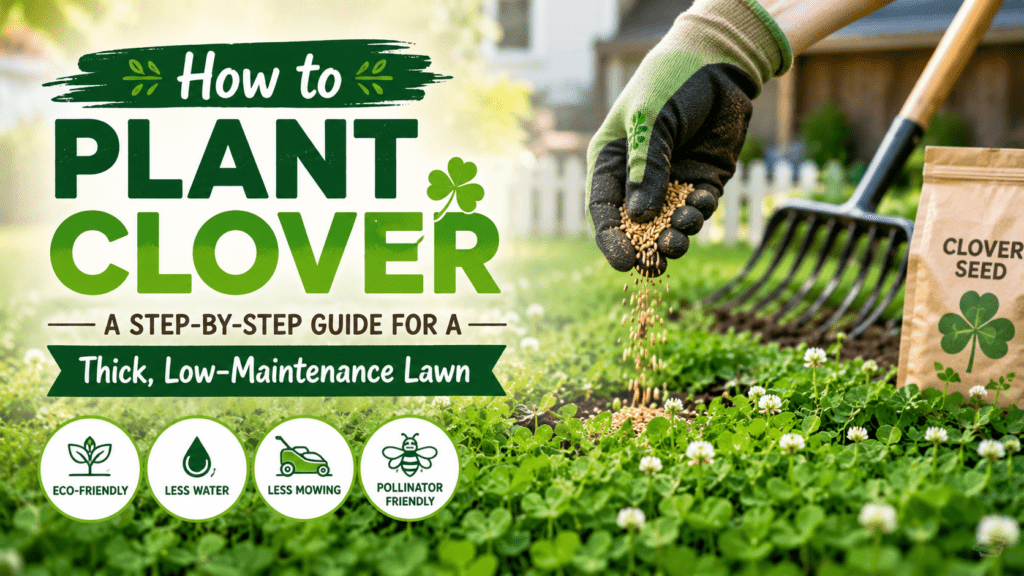
What if you could have a greener, healthier lawn that needs less mowing, less watering, and fewer chemicals — all while improving your soil naturally? 🍀
That’s exactly why more homeowners are learning how to plant clover instead of relying only on traditional grass lawns. Clover lawns have become one of the most popular eco-friendly landscaping trends because they are low-maintenance, drought-tolerant, budget-friendly, and beautiful year-round.
Whether your yard struggles with dry patches, stubborn weeds, poor soil, or expensive lawn care routines, clover can be a game-changing solution. Unlike high-maintenance grass, clover naturally fixes nitrogen into the soil, stays greener during heat, and creates a soft, lush ground cover that looks fantastic with minimal effort.
In this complete expert guide, you’ll learn:
- The best type of clover for your lawn 🌱
- When and where to plant it
- How to prepare your soil properly
- Step-by-step clover planting instructions
- Common mistakes to avoid 🚫
- Long-term clover lawn care tips
- Expert strategies for thick, healthy growth
By the end of this guide, you’ll have everything you need to grow a thriving clover lawn successfully — even if you’re a beginner.
What Is Clover and Why Should You Plant It? 🍀
Clover is a flowering plant from the legume family that has been used for centuries in lawns, pastures, and soil improvement projects. While many people once considered clover a weed, modern gardeners and lawn care experts now recognize it as one of the smartest lawn alternatives available.
Today, clover is commonly used as:
- A full lawn replacement
- A ground cover plant
- A grass companion
- A soil enhancer
- A pollinator-friendly landscaping option 🐝
Its ability to thrive in difficult conditions makes it ideal for homeowners looking for a beautiful yard without constant maintenance.
Understanding Clover as a Lawn Alternative 🌱
Unlike traditional turf grass, clover has unique characteristics that make lawn care easier and more sustainable.
Key Features of Clover Lawns:
- Deep roots improve soil structure
- Naturally drought-resistant
- Stays green longer during summer
- Requires little fertilizer
- Suppresses weeds naturally
- Handles poor soil conditions well
The most common lawn clover varieties include:
| Clover Type | Best For | Appearance |
|---|---|---|
| White Clover | Traditional lawns | Medium leaves |
| Microclover | Modern manicured lawns | Tiny leaves |
| Red Clover | Soil improvement & pollinator gardens | Taller growth |
Microclover has become especially popular because it blends beautifully with grass while maintaining a neat appearance.
Key Benefits of Planting Clover 🌿✨
1. Clover Improves Soil Naturally
Clover is a nitrogen-fixing plant, meaning it pulls nitrogen from the air and adds it back into the soil naturally.
This helps:
- Improve lawn health
- Reduce fertilizer use
- Support nearby plants
- Build healthier soil biology
2. Requires Less Water 💧
One major reason people switch to clover lawns is drought tolerance.
Compared to traditional grass:
- Clover needs less irrigation
- Survives dry periods better
- Retains green color longer
This can significantly reduce water bills during summer.
3. Minimal Lawn Maintenance ✂️
Clover grows lower than many grass species, so it requires less mowing.
Many homeowners mow:
- Only once or twice per month
- Or sometimes not at all
That means:
- Less fuel
- Less labor
- Less equipment wear
4. Helps Prevent Weeds 🚫
A dense clover lawn naturally crowds out weeds by forming thick ground coverage.
This reduces:
- Bare soil
- Weed germination
- Need for herbicides
5. Supports Pollinators 🐝
Flowering clover attracts beneficial insects like:
- Bees
- Butterflies
- Pollinating insects
This makes clover an environmentally friendly landscaping choice.
Potential Downsides to Consider ⚠️
Although clover has many advantages, it’s important to understand possible limitations.
Clover May Not Be Ideal For:
- Extremely heavy foot traffic
- Sports fields
- Formal golf-course style lawns
Additionally:
- Flowering clover can attract bees
- Some varieties go dormant in extreme cold
- It may spread into nearby garden beds
For most homeowners, however, the benefits outweigh the drawbacks.
Best Types of Clover for Lawns and Ground Cover 🌱
Choosing the right clover variety is one of the most important decisions when creating a healthy lawn.
Different clovers serve different purposes.

White Clover 🍀
White clover is the most popular option for residential lawns.
Why Homeowners Love It:
- Durable
- Easy to grow
- Handles moderate foot traffic
- Low maintenance
- Affordable seed cost
It spreads quickly and creates a dense carpet-like lawn.
Best for:
- Beginner gardeners
- Mixed grass lawns
- Eco-friendly yards
Microclover 🌿
Microclover is a smaller-leaf version of white clover designed specifically for lawns.
Benefits of Microclover:
- More refined appearance
- Blends naturally with turf grass
- Requires fewer mowings
- Less noticeable flowers
This is the best choice for homeowners who want a modern-looking lawn without sacrificing sustainability.
Red Clover 🌸
Red clover grows taller and is commonly used for:
- Soil rehabilitation
- Pollinator gardens
- Meadow landscaping
It is less suitable for manicured lawns but excellent for biodiversity.
Which Clover Variety Is Best for Your Yard? 🏡
Here’s a quick guide:
Choose White Clover If:
✅ You want a simple low-maintenance lawn
✅ You need drought tolerance
✅ You want quick coverage
Choose Microclover If:
✅ You prefer a cleaner lawn appearance
✅ You want to blend with grass
✅ You want less visible flowering
Choose Red Clover If:
✅ You want pollinator support
✅ You need soil improvement
✅ You prefer natural meadow aesthetics
The Best Time to Plant Clover 🌤️
Timing plays a huge role in successful germination and long-term growth.
Planting at the wrong time can lead to:
- Poor seed establishment
- Drying out
- Weak growth
- Patchy lawns
Spring vs. Fall Planting 🍂🌸
Spring Planting
Spring is one of the best seasons for planting clover because:
- Soil moisture is higher
- Temperatures are mild
- Germination happens quickly
Ideal spring temperatures:
- 60°F–75°F (15°C–24°C)
Fall Planting
Fall is another excellent option because:
- Cooler weather reduces stress
- Weed competition is lower
- Soil remains warm enough for germination
Many lawn care experts actually prefer early fall planting for stronger root development.
Ideal Soil Conditions 🌱
Clover grows best in:
- Well-draining soil
- Slightly acidic to neutral pH
- Loose soil texture
Ideal pH range:
- 6.0 to 7.0
However, clover is highly adaptable and can tolerate poor soil better than most grasses.
When NOT to Plant Clover 🚫
Avoid planting during:
- Extreme summer heat ☀️
- Drought conditions
- Frozen winter ground
- Heavy storm seasons
Young seedlings are vulnerable during harsh weather.
How to Prepare Your Lawn or Soil Before Planting 🧑🌾
Proper soil preparation dramatically improves seed germination and lawn thickness.
Skipping this step is one of the biggest reasons clover lawns fail.

Test Your Soil First 🧪
Before planting, test your soil to understand:
- pH levels
- Nutrient deficiencies
- Drainage quality
You can use:
- Home soil test kits
- Professional lab testing
Healthy soil leads to thicker, healthier clover growth.
Remove Existing Weeds and Grass 🌾
Clover seeds struggle when competing with established weeds.
Weed Removal Options:
- Hand pulling
- Solarization
- Smothering with cardboard
- Light tilling
Avoid aggressive chemical herbicides immediately before seeding.
Loosen and Level the Soil 🪴
Use a rake or garden cultivator to:
- Break compacted soil
- Remove debris
- Create smooth seed contact
Good seed-to-soil contact is critical for successful germination.
Should You Add Compost or Fertilizer? 🌿
Adding organic compost can:
- Improve moisture retention
- Encourage microbial activity
- Boost early growth
Avoid heavy nitrogen fertilizers because clover naturally produces nitrogen on its own.
How to Plant Clover Step by Step 🌱✨
Now it’s time for the actual planting process.
The good news? Planting clover is surprisingly simple — even for beginners.
What You’ll Need Before You Start 🧰
Gather these supplies:
- Clover seed
- Rake
- Garden spreader
- Compost
- Water hose or sprinkler
- Lawn roller (optional)
Step 1 — Measure Your Lawn Area 📏
Knowing your lawn size helps avoid underseeding or overseeding.
Typical seeding rates:
- Pure clover lawn: 1–2 pounds per 1,000 sq ft
- Clover-grass mix: 0.5–1 pound per 1,000 sq ft
Too much seed can overcrowd seedlings.
Step 2 — Spread the Clover Seed Evenly 🌱
You can spread seed:
- By hand
- With a broadcast spreader
For even distribution:
- Mix seed with sand
- Spread in two directions
This prevents patchy growth.
Step 3 — Rake the Seeds Lightly Into the Soil 🍂
Clover seeds should remain close to the surface.
Ideal depth:
- About 1/4 inch or less
Planting too deep is a common mistake that prevents germination.
Step 4 — Water Gently but Consistently 💦
Keep the soil consistently moist during germination.
Watering Schedule:
- Light watering 1–2 times daily
- Avoid flooding or puddling
Most clover seeds sprout within:
- 7–14 days
Step 5 — Protect Young Seedlings 🌿
During the first few weeks:
- Avoid heavy foot traffic
- Prevent soil erosion
- Keep pets off newly seeded areas
Young plants establish quickly when protected early.
How Long Does Clover Take to Grow? ⏳
One reason homeowners love clover is its fast establishment.
Under ideal conditions:
- Germination begins within 7 days
- Visible coverage appears within 2–4 weeks
- Full lawn establishment occurs in 6–8 weeks
Several factors affect growth speed:
- Temperature
- Moisture
- Sunlight
- Soil quality
Growth Stages Explained 🌱
Stage 1 — Germination
Tiny sprouts emerge from moist soil.
Stage 2 — Seedling Development
Roots establish while leaves expand.
Stage 3 — Mature Coverage
Plants spread horizontally to form dense ground cover.
Signs Your Clover Lawn Is Healthy ✅
Healthy clover should appear:
- Dense
- Bright green
- Evenly distributed
- Soft underfoot
Thin or yellow patches may indicate:
- Poor watering
- Compacted soil
- Nutrient imbalance
Clover Lawn Care Tips for Long-Term Success 🌿✨
Once established, clover requires far less maintenance than traditional turfgrass.
Still, proper care helps keep it lush and healthy year-round.
Watering Requirements 💧
Mature clover lawns generally need:
- Deep watering once per week
- Less irrigation than grass lawns
During drought:
- Water deeply rather than frequently
This encourages deeper root growth.
Mowing Tips ✂️
Most clover lawns thrive when maintained between:
- 2–3 inches tall
Benefits of less mowing:
- Better drought resistance
- More pollinator flowers
- Reduced lawn stress
Microclover may require occasional mowing for appearance.
Fertilizing Needs 🌱
One of clover’s greatest advantages is low fertilizer dependency.
Because clover fixes nitrogen naturally:
- Synthetic fertilizers are usually unnecessary
- Organic compost is often enough
Overfertilizing can actually weaken clover growth.
Weed Management Strategies 🚫
A thick clover lawn naturally suppresses weeds, but some weeds may still appear.
Natural weed control methods include:
- Overseeding thin spots
- Maintaining dense growth
- Hand pulling invasive weeds
- Proper mowing height
Avoid herbicides labeled for broadleaf weeds because they can damage clover.
Overseeding Thin Areas 🌿
Over time, small patches may become thin.
The solution:
- Rake lightly
- Spread fresh seed
- Water consistently
Clover responds very well to overseeding.
Common Mistakes to Avoid When Planting Clover 🚫
Even though clover is beginner-friendly, several common mistakes can reduce success.
Planting Seeds Too Deep 🌱
Clover seeds are tiny and need light exposure.
If buried too deeply:
- Germination decreases
- Growth becomes patchy
Always keep seeds close to the surface.
Overwatering the Lawn 💦
Too much water can:
- Rot seeds
- Encourage fungus
- Wash seeds away
Aim for moist soil — not soggy conditions.
Choosing the Wrong Variety ⚠️
Not all clovers work equally well for every lawn.
For example:
- Red clover may grow too tall for standard lawns
- White clover handles foot traffic better
Choose based on your yard goals and climate.
Ignoring Soil Preparation 🧑🌾
Poor preparation leads to:
- Weak germination
- Uneven growth
- Weed problems
Healthy soil creates stronger lawns.
Planting at the Wrong Time 🌤️
Extreme heat or cold stresses seedlings.
The best planting windows are:
- Early spring
- Early fall
Clover Lawn vs Traditional Grass Lawn ⚖️🍀

Traditional lawns can look beautiful, but they often require:
- Frequent watering
- Fertilizing
- Weed treatments
- Constant mowing
Clover offers a simpler alternative.
| Feature | Clover Lawn | Traditional Grass |
|---|---|---|
| Water Needs | Low | High |
| Fertilizer Needs | Minimal | Frequent |
| Weed Resistance | Strong | Moderate |
| Mowing Frequency | Low | High |
| Drought Tolerance | Excellent | Moderate |
For environmentally conscious homeowners, clover often wins in both sustainability and cost savings.
Can You Mix Clover With Grass? 🌾🍀
One of the smartest ways to create a durable, attractive lawn is by mixing clover with traditional grass. In fact, many lawn care experts recommend a clover-grass blend because it combines the strengths of both plants.
A mixed lawn offers:
- The softness of grass
- The drought tolerance of clover
- Better soil health
- Reduced fertilizer needs
- Improved lawn resilience
For homeowners who are not ready to fully replace grass, overseeding clover into an existing lawn is often the perfect middle ground.

Benefits of a Clover-Grass Blend 🌱
1. Naturally Greener Lawn 🍀
Clover stays green longer during heat and drought compared to many turf grasses.
This helps your lawn:
- Look healthier in summer
- Recover faster from stress
- Maintain color with less watering
2. Reduced Fertilizer Costs 💰
Because clover naturally fixes nitrogen into the soil, nearby grass benefits too.
This means:
- Less synthetic fertilizer
- Lower maintenance expenses
- Healthier soil ecosystems
3. Better Weed Suppression 🚫
Grass and clover together create dense coverage that reduces open soil where weeds thrive.
A healthy mixed lawn can naturally crowd out:
- Crabgrass
- Dandelions
- Broadleaf weeds
4. Improved Drought Resistance ☀️
Grass roots and clover roots work together to improve soil structure and moisture retention.
This helps lawns survive:
- Heatwaves
- Dry spells
- Water restrictions
Best Grass Types to Pair With Clover 🌾
Not all grasses mix equally well with clover.
Fine Fescue
Excellent for:
- Shade tolerance
- Low-maintenance lawns
- Eco-friendly landscapes
Perennial Ryegrass
Best for:
- Fast germination
- Durable lawns
- Cool-season regions
Kentucky Bluegrass
Ideal for:
- Thick lawn appearance
- Colder climates
- Traditional lawn aesthetics
Microclover blends especially well with fine fescue and ryegrass.
How to Overseed Clover Into Existing Grass 🌿
Adding clover to an established lawn is easier than most people expect.
Step 1 — Mow Your Lawn Short ✂️
Short grass allows more sunlight to reach clover seeds.
Step 2 — Rake the Lawn 🍂
Loosen debris and expose soil for better seed contact.
Step 3 — Spread Clover Seed Evenly 🌱
Use a spreader for consistent distribution.
Step 4 — Water Consistently 💦
Keep the topsoil moist until seedlings establish.
Step 5 — Reduce Heavy Traffic 🚶
Allow seedlings time to root properly.
Within several weeks, clover begins blending naturally into the lawn.
Expert Tips for Growing a Thick, Beautiful Clover Lawn 🌟
If you want a lush, professional-looking clover lawn, these expert strategies can make a major difference.

Encourage Deep Root Growth 🌱
Deep roots create:
- Better drought tolerance
- Stronger lawn resilience
- Improved nutrient absorption
The best way to encourage deeper roots:
- Water deeply but less frequently
Avoid shallow daily watering once the lawn matures.
Improve Soil Drainage Naturally 🌿
Compacted soil can weaken clover growth.
Improve drainage by:
- Aerating compacted lawns
- Adding organic compost
- Avoiding excessive foot traffic
Healthy soil creates healthier roots.
Use Organic Lawn Care Practices 🌎
Organic maintenance protects:
- Soil microbes
- Pollinators
- Long-term lawn health
Good organic lawn habits include:
- Compost topdressing
- Natural weed control
- Reduced chemical use
Support Pollinators Without Overgrowth 🐝
If you want pollinator benefits without excessive flowering:
- Mow occasionally during bloom periods
- Use microclover varieties
- Maintain moderate lawn height
This balances aesthetics with biodiversity.
Seasonal Clover Lawn Maintenance Checklist 📅
Spring 🌸
- Overseed thin spots
- Remove winter debris
- Light compost application
Summer ☀️
- Water deeply during drought
- Avoid excessive mowing
- Monitor lawn stress
Fall 🍂
- Overseed if needed
- Aerate compacted soil
- Prepare for winter dormancy
Winter ❄️
- Minimize heavy traffic
- Avoid salt damage near walkways
Common Clover Lawn Problems and Solutions 🛠️
Even low-maintenance lawns occasionally face challenges.
Understanding common issues helps prevent long-term damage.
Patchy Growth 🌱
Causes:
- Uneven watering
- Poor seed distribution
- Soil compaction
Solutions:
- Overseed bare spots
- Improve soil preparation
- Water consistently
Yellowing Clover Leaves 🍂
Causes:
- Overwatering
- Nutrient imbalance
- Poor drainage
Solutions:
- Reduce watering frequency
- Improve soil aeration
- Add organic matter
Excessive Weeds 🚫
Causes:
- Thin lawn coverage
- Weak establishment
- Poor mowing habits
Solutions:
- Overseed densely
- Maintain proper mowing height
- Hand-remove invasive weeds
Clover Not Germinating 🌱
Causes:
- Planting too deep
- Dry soil
- Extreme temperatures
Solutions:
- Reseed lightly
- Keep soil moist
- Plant during ideal seasons
Is Clover Safe for Pets and Children? 🐾👨👩👧
One reason many families choose clover lawns is their safety profile.
Compared to chemically treated grass lawns, clover often requires:
- Fewer pesticides
- Less fertilizer
- Reduced herbicide use
This creates a safer environment for:
- Children
- Dogs
- Cats
- Backyard play areas
Additionally:
- Clover feels soft underfoot
- It reduces muddy patches
- It stays cooler in summer heat
However, flowering clover can attract bees, so families with bee allergies should mow blooms more regularly.
Environmental Benefits of Clover Lawns 🌎🍀
Clover lawns are becoming increasingly popular in sustainable landscaping because they provide major environmental advantages.

Reduced Water Consumption 💧
Traditional grass lawns consume massive amounts of water annually.
Clover helps conserve water because it:
- Tolerates drought
- Retains moisture better
- Requires less irrigation
Lower Chemical Usage 🌱
Clover naturally suppresses weeds and fixes nitrogen, reducing dependency on:
- Fertilizers
- Herbicides
- Synthetic lawn treatments
Improved Soil Health 🌿
Healthy soil ecosystems support:
- Beneficial microbes
- Earthworms
- Better nutrient cycling
Clover improves long-term soil structure naturally.
Supports Biodiversity 🐝
Flowering clover provides food for:
- Bees
- Butterflies
- Pollinating insects
This helps support local ecosystems and food production.
Frequently Asked Questions About How to Plant Clover ❓
Will Clover Take Over My Entire Lawn? 🍀
Clover spreads naturally, but regular mowing helps control its growth.
In mixed lawns, clover usually coexists well with grass.
Does Clover Come Back Every Year? 🌱
Most lawn clovers are perennial, meaning they return yearly under proper conditions.
White clover especially tends to reseed itself naturally.
Can You Walk on a Clover Lawn? 🚶
Yes — clover handles moderate foot traffic well.
However:
- Heavy sports activity may damage it
- Mixed grass-clover lawns tolerate traffic better
How Often Should You Water Clover? 💦
Once established:
- Deep watering once weekly is usually enough
During extreme drought, additional watering may help maintain color.
Can Clover Grow in Shade? 🌤️
Clover prefers partial sun to full sun.
Some varieties tolerate light shade, but dense deep shade can reduce growth.
Does Clover Attract Bees? 🐝
Yes — flowering clover attracts pollinators.
If this is a concern:
- Mow before flowering
- Choose microclover
- Maintain shorter lawn height
Final Thoughts 🌿🍀
Learning how to plant clover can completely transform the way you think about lawn care.
Instead of fighting constant weeds, watering schedules, fertilizer applications, and endless mowing, clover offers a smarter, more sustainable solution.
Whether you choose:
- A full clover lawn
- A clover-grass blend
- A microclover landscape
- A pollinator-friendly yard
You’ll enjoy benefits like:
✅ Lower maintenance
✅ Improved soil health
✅ Reduced watering
✅ Natural weed suppression
✅ Eco-friendly landscaping
Best of all, clover is beginner-friendly and affordable, making it one of the easiest ways to upgrade your outdoor space naturally.
With proper soil preparation, smart watering, and the right planting techniques, your lawn can become thicker, greener, and healthier than ever before. 🌱✨











