
Imagine carefully planting your new apple, peach, or cherry tree in the backyard, dreaming of future harvests bursting with juicy fruit—only to return after a gusty storm and find it leaning precariously, roots rocking loose in the soil, and the trunk bent at an awkward angle. 😟 Heartbreaking, right? This is a common issue for home gardeners planting fruit trees, especially in windy areas or with young stock on dwarf rootstocks. Without proper support during those crucial first seasons, wind can tear delicate new roots, stunt growth, or even kill the tree before it establishes.
The good news? Learning how to stake newly planted fruit trees correctly prevents these problems and sets your tree up for vigorous, straight growth and abundant production years down the line. Proper staking anchors the root ball while allowing just enough flex to build a sturdy trunk—think of it as gentle training wheels for your future orchard star! In this comprehensive guide, we’ll cover everything from deciding if staking is needed to choosing methods, step-by-step instructions, avoiding costly mistakes, and expert tips for long-term success. Backed by recommendations from university extensions (like UMN, RHS, and others), this skyscraper-level resource goes beyond basic advice to give you the tools for thriving fruit trees. Let’s get your trees standing tall! 🌱💪
Why Stake Newly Planted Fruit Trees? (The Science & Benefits) 🔬🍏
Newly planted fruit trees face a vulnerable establishment phase. Their roots are often confined from nursery containers or bare-root packaging, meaning limited anchorage for the first 1–3 years. Wind, heavy rain, or even the tree’s own future fruit load can cause “wind rock”—where the trunk sways excessively, tearing fine feeder roots and delaying establishment.
Staking provides temporary support to:
- Prevent root ball movement and protect developing roots from shear forces.
- Encourage straight trunk growth for better structural form and easier future pruning/harvesting.
- Reduce stress so the tree focuses energy on root expansion rather than recovery from leaning or damage.
- Build trunk taper and strength through controlled movement—studies show trees allowed slight sway develop thicker, more resilient trunks and deeper roots compared to rigidly staked ones.
Fruit trees have unique needs compared to ornamentals: Many popular varieties (apples, pears, peaches) are grafted onto dwarf or semi-dwarf rootstocks for compact size and earlier fruiting. These root systems are shallower and weaker, making staking more essential, especially in exposed sites. Even standard-sized trees benefit in windy or sloped locations. Proper staking isn’t about coddling—it’s smart investment in healthy, productive trees! 🍐
When Should You Stake a Newly Planted Fruit Tree? (Decision Checklist) ✅
Not every tree needs staking—overdoing it can weaken trees more than help. Here’s how to decide:
- Perform the “rock test”: After planting (and removing any nursery stake/ties), gently push the trunk side to side. If the root ball shifts significantly or the tree can’t hold upright, stake it.
- High-risk factors:
- Exposed, windy locations 🌬️ (common in open yards or hills).
- Sloped or loose/sandy soils where anchorage is poor.
- Bare-root trees (lightweight roots) or container-grown with small root balls.
- Dwarf/semi-dwarf rootstocks (e.g., M.9, M.26 for apples; Gisela for cherries)—these often need support due to weaker roots.
- Young trees under 6–8 feet tall that top-heavy from branches or future fruit potential.
- When NOT to stake: If the tree stands firm naturally after planting, skip it! Unstaked trees develop stronger taper and roots through natural flexing. Over-staking prevents this “exercise,” leading to spindly trunks prone to snapping later.
Quick tip: In calm, sheltered spots with good soil, many semi-dwarf fruit trees establish without support. Always err on caution in questionable conditions, but remove supports promptly. 🌟
Materials You’ll Need for Proper Staking 🛠️
Gather these before planting to avoid delays:
- Stakes: Sturdy options include wooden posts (2×2 or 3×3 inches, treated for longevity), metal T-posts, steel rebar, or conduit pipes. Aim for 6–8 feet tall (driven 18–24 inches deep for stability).
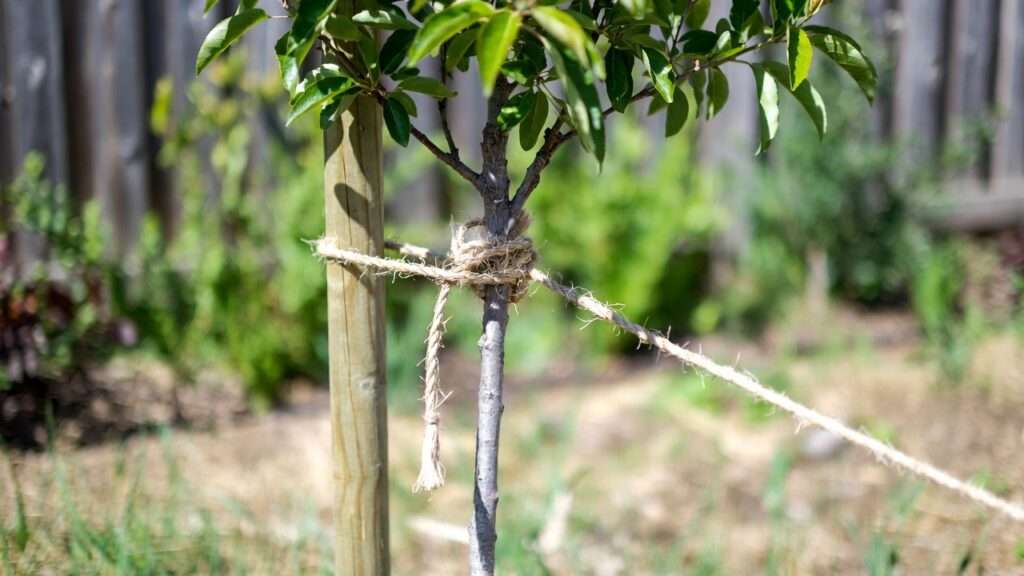
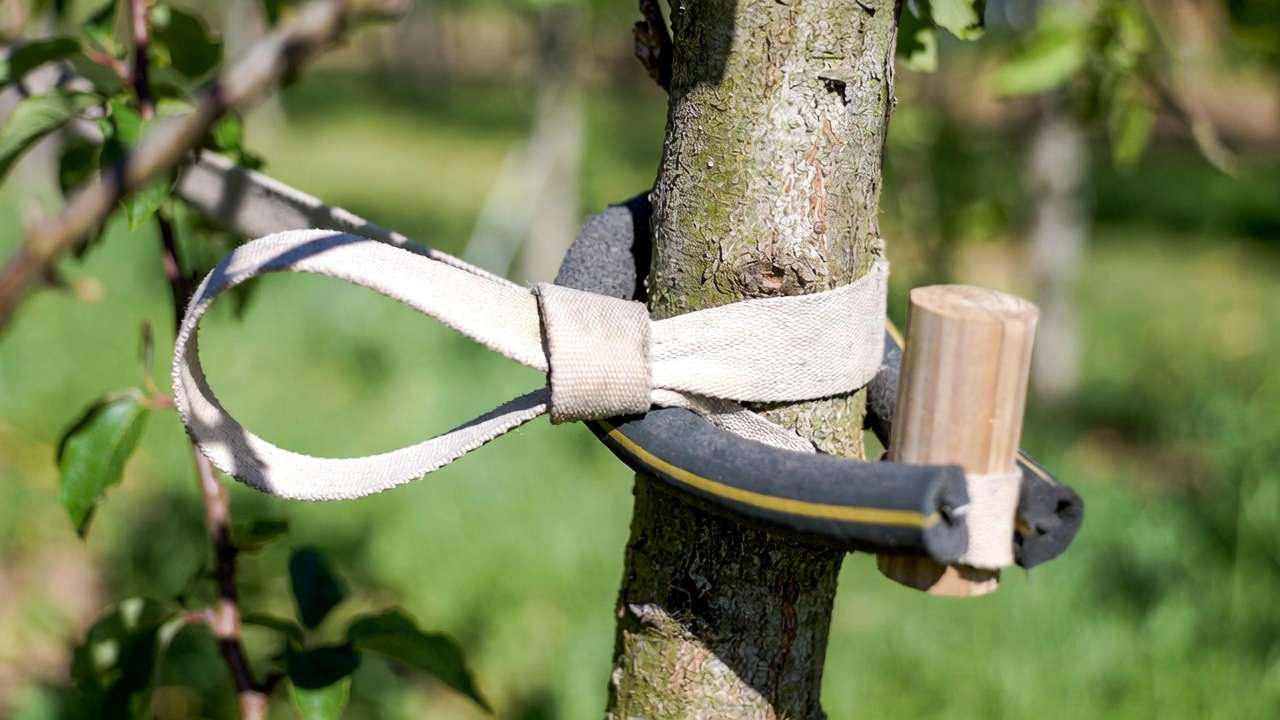
- Ties: Wide, flexible materials are crucial—tree-specific straps, soft webbing, old stockings/hose-protected rope, or rubber ties. Avoid thin wire, zip ties, or string—they cut into bark and girdle the tree! 🚫
- Tools: Mallet or post driver, hammer, gloves, and scissors for adjustments.
- Optional: Spacers or buckles for ties to prevent direct trunk contact.
Pro choice: Wide canvas or rubber straps with grommets distribute pressure evenly and last seasons. 🍃
Step-by-Step: How to Stake Your Newly Planted Fruit Trees (Core Guide) 📋🌟
Choosing the Best Staking Method for Fruit Trees
Different setups suit varying conditions and tree sizes:
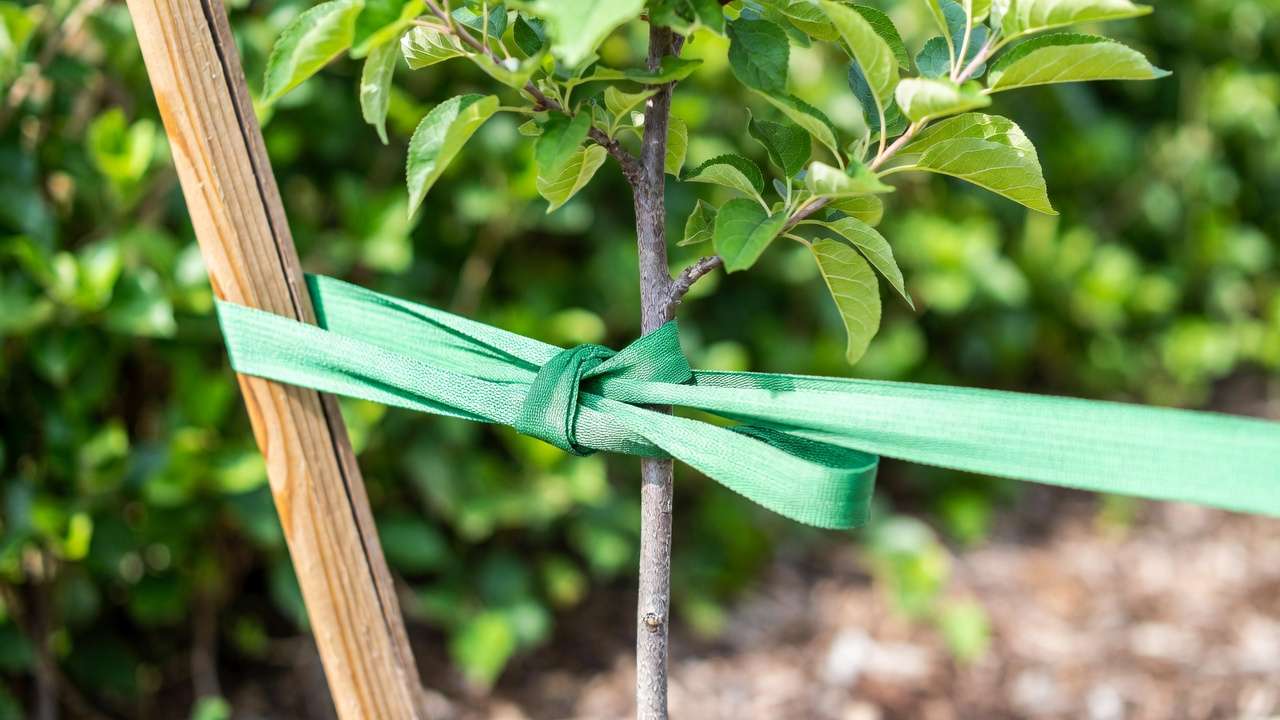
- Single angled stake (most recommended for small/young fruit trees): Simple, effective, allows flex. Best for mild-moderate wind.
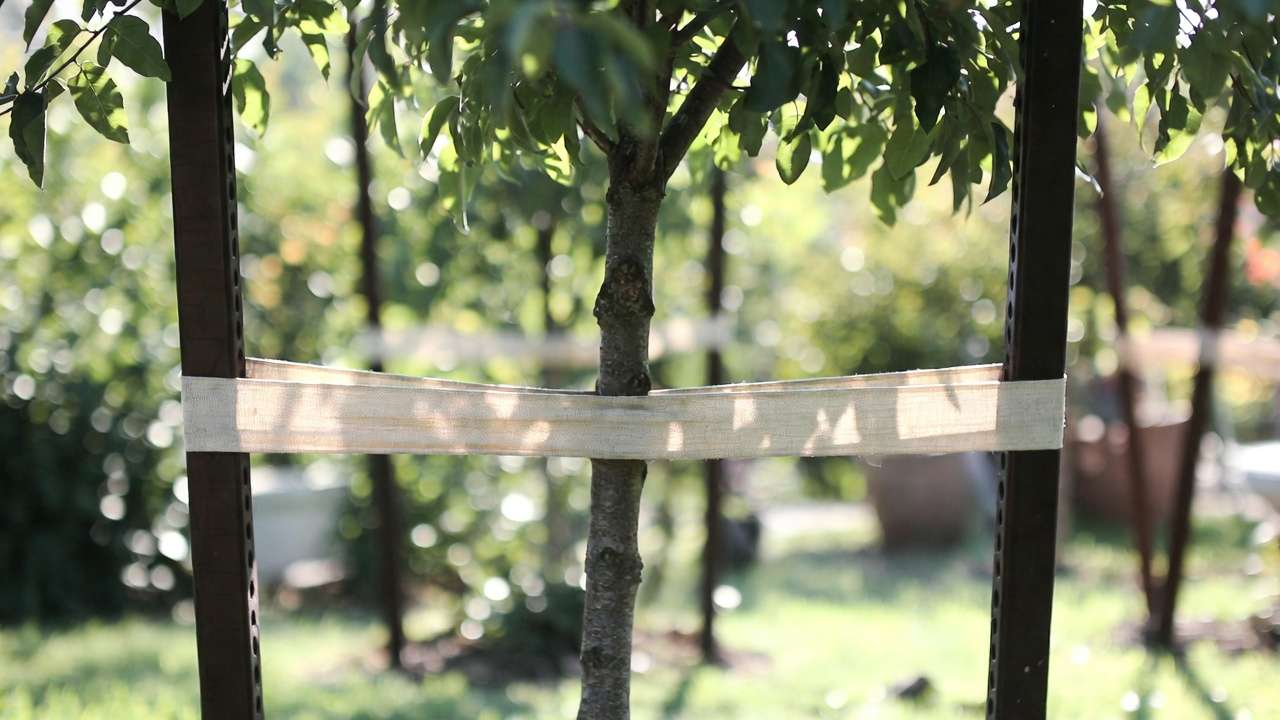
- Two parallel stakes (moderate wind or larger/semi-dwarf trees): Provides balanced support from two sides.
- Three-stake tripod (high-wind areas or very loose soil): Maximum stability without rigidity.
| Method | Best For | Pros | Cons |
|---|---|---|---|
| Single Angled | Small/young fruit trees, average sites | Easy install, good flex | Less support in extreme wind |
| Two Parallel | Semi-dwarf, moderate wind | Balanced, strong anchorage | More materials |
| Three Tripod | High-wind, loose soil | Excellent stability | More complex |
For most home fruit trees, start with single angled—it’s sufficient 80% of the time!
Detailed Steps for Single Angled Stake Method (Most Recommended)
- Plant your fruit tree first: Dig a wide hole, position at correct depth (graft union 4–6 inches above soil), backfill gently, and water deeply.
- Position the stake: Place on the windward side (direction prevailing winds come from), angled toward the tree at 45 degrees. Keep 6–12 inches from trunk to avoid root damage.
- Drive stake deep: Hammer or drive 18–24 inches into firm soil outside root ball for solid anchor.
- Attach ties: Locate attachment point at 1/3 to 1/2 tree height (usually 2–4 feet up). Use figure-8 loop or spacer: Wrap tie loosely around trunk (allow 2–3 inches sway), then secure to stake. Padding (hose section) prevents rubbing.
- Allow controlled movement: Ties should be snug but not tight—trunk flexes in wind to build strength.
- Check & adjust: After first wind/rain, inspect for rubbing or looseness. Readjust as needed.
Variations for Special Cases
- Leaning trees: Stake on opposite side of lean; gently straighten trunk while attaching.
- Dwarf fruit trees (e.g., on M.9 or Gisela rootstocks): Often need permanent or long-term support due to weak anchorage—consider two stakes or trellis.
- Multi-stake for orchards: Use parallel or tripod for groups in windy zones.
Follow these steps, and your tree establishes faster with minimal stress! 🍑
Common Mistakes to Avoid (With Expert Warnings) ⚠️
Even well-intentioned gardeners can unintentionally harm their trees with staking errors. Here are the most frequent pitfalls—and how to dodge them—drawn from decades of horticultural research and extension service recommendations:
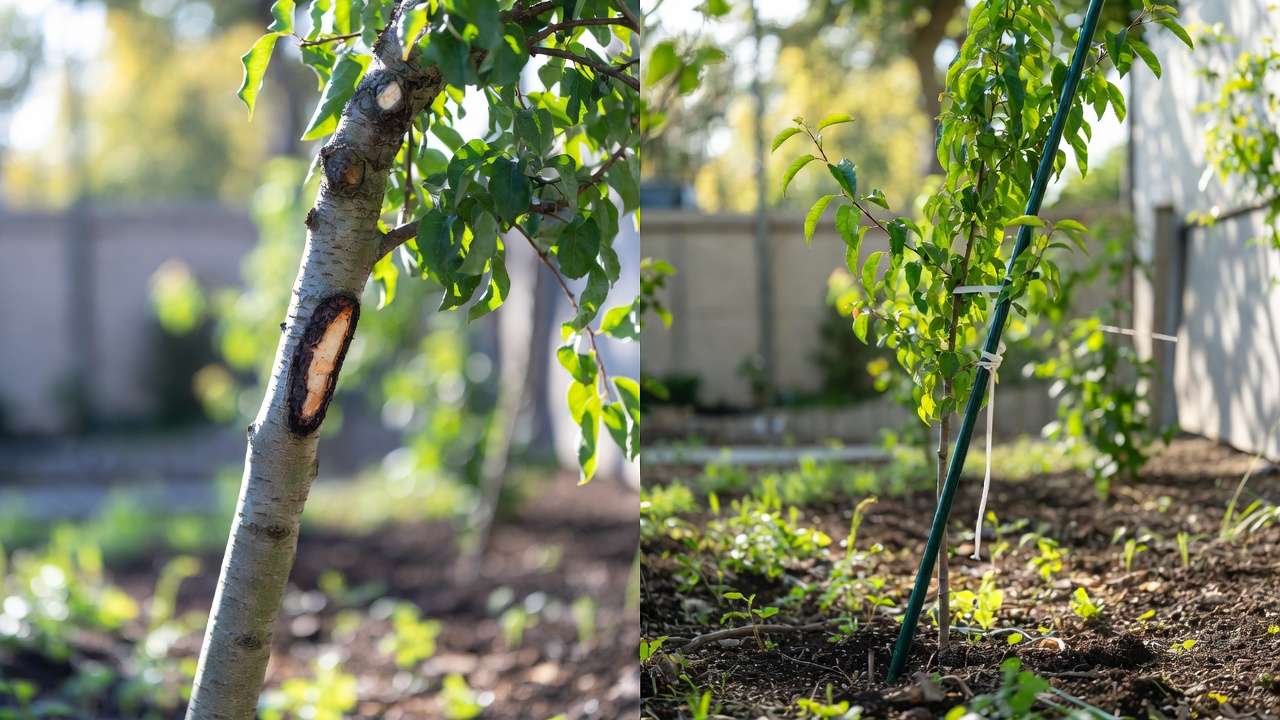
- Staking too tightly or rigidly This is the #1 mistake. If the trunk can’t flex at all, the tree never develops the natural taper and strength it needs. University of Minnesota Extension warns: “Trees staked too rigidly often end up with weaker trunks that snap when supports are removed.” Solution: Always allow 2–3 inches of gentle sway in any direction.
- Using damaging ties (wire, zip ties, string, or narrow bands) 🚫 These materials cut into the bark as the tree grows, causing girdling wounds that restrict nutrient flow and invite disease/pests. Instead, choose wide, soft, flexible ties that expand or can be loosened easily.
- Leaving stakes on too long Many people forget and leave supports for 3–5+ years. Over time, the tree becomes dependent (“lazy staking syndrome”), developing thin trunks and shallow roots. Most fruit trees only need 1 growing season (sometimes 2 max). Check annually—if the tree stands firm when you loosen ties, remove them.
- Placing stakes vertically or too close to the trunk Vertical stakes offer poor wind resistance and can damage roots. Positioning too close (under 6 inches) risks root injury during driving. Always angle and offset properly.
- Staking trees that don’t need it In sheltered spots with good soil, forcing unnecessary support prevents the natural “exercise” that thickens trunks via wind-induced hormone responses (auxin redistribution).
- Ignoring bark rubbing or tie adjustments Friction wounds from ties rubbing in wind can girdle just like tight ties. Inspect monthly in the first season and pad/add spacers as needed.
Avoid these, and you’ll give your fruit trees the best possible start! 🌱
How Long to Leave Stakes On – And When to Remove Them ⏳
Timing is critical—too soon risks instability; too long creates weak trees.
- General guideline for most fruit trees: Remove after 1 full growing season (typically 12–18 months). In very windy or poor-soil sites, extend to 2 years maximum.
- How to know it’s time:
- Perform the rock test again: Grasp trunk at base and gently rock—if root ball stays put and trunk feels solid, supports can come off.
- Trunk has noticeable taper (thicker at base).
- Tree has survived several storms without leaning.
- Best time to remove: Early spring (before new growth) or late fall (after leaf drop) during calm weather. Avoid summer heat stress periods.
- Gradual transition (pro tip): Loosen ties a few weeks before full removal. This lets the tree “test” its strength gradually and reduces shock.
Once removed, store stakes/ties for future use or compost biodegradable ones. Celebrate—your tree is now officially independent! 🎉
Aftercare Tips for Staked Fruit Trees (To Maximize Success) 💚
Staking is just the beginning. Follow these practices during establishment to ensure vigorous roots and healthy growth:
- Watering wisely: Deep, infrequent watering (1–2 inches per week, more in hot/dry spells) encourages roots to grow downward and outward. Avoid shallow daily sprinkles.
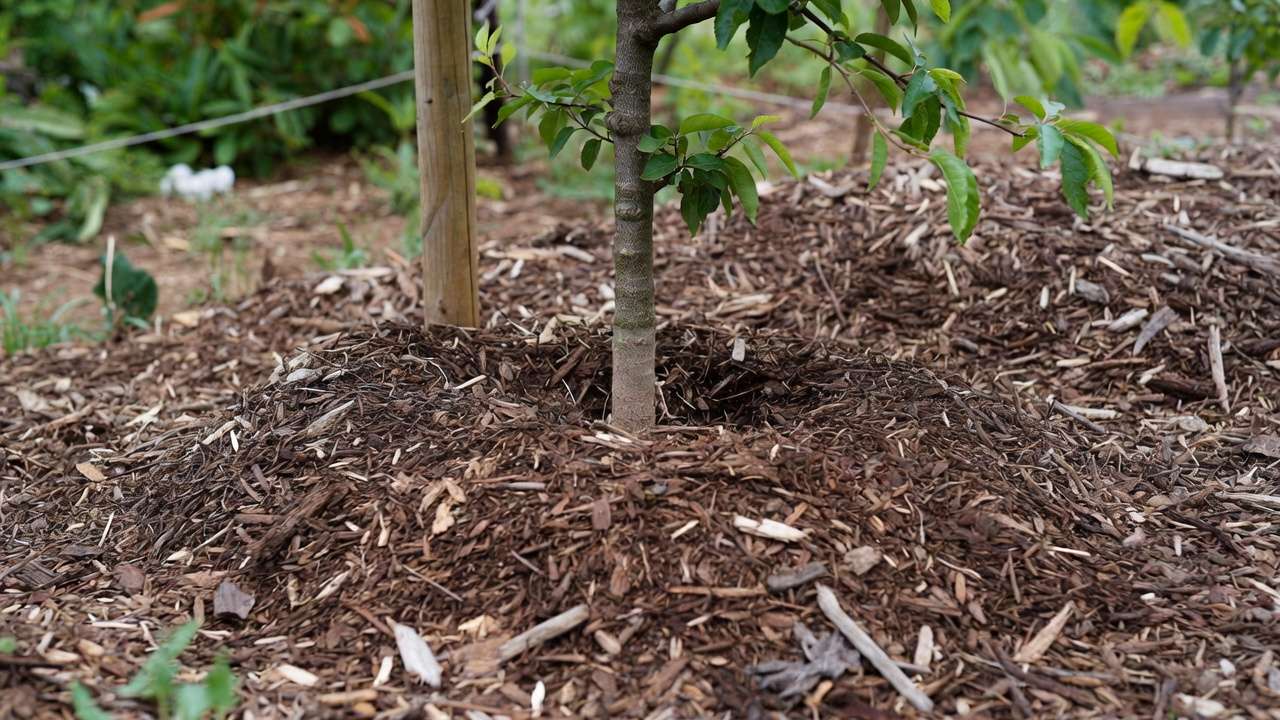
- Mulching magic: Apply 2–4 inches of organic mulch (wood chips, bark, straw) in a 3–4 foot diameter around the base—keeps soil moist, cool, suppresses weeds, and regulates temperature. Keep mulch 2–3 inches away from trunk to prevent rot.
- Pruning young fruit trees: While staked, do light structural pruning in late winter/early spring. Remove crossing branches, water sprouts, and any damaged wood to shape a strong scaffold.
- Fertilizing lightly: Skip heavy feeding in year 1. In year 2, use balanced slow-release or organic fertilizer (e.g., 10-10-10) sparingly in early spring—over-fertilizing promotes leafy growth over root development.
- Pest & disease monitoring: Watch for borers, aphids, fire blight (especially on apples/pears), or peach leaf curl. Early intervention prevents setbacks.
- Seasonal tie checks: After storms or rapid growth spurts, inspect and adjust ties to prevent rubbing or constriction.
Consistent care during these first years pays off with faster fruiting and stronger, longer-lived trees. 🍎
Expert Insights & Pro Tips from Horticulturists 🌟
Here are distilled gems from university extension services, arborists, and experienced orchardists:
- “Movement is medicine.” – RHS (Royal Horticultural Society): Controlled flex stimulates reaction wood formation, creating stronger trunks.
- In windy regions (common in many parts of the U.S. and similar climates), two-stake systems often outperform single stakes for semi-dwarf apples and pears.
- For peaches and nectarines (more brittle wood), prioritize early removal to avoid dependency.
- Eco-friendly upgrade: Use biodegradable jute or coconut-fiber ties that decompose naturally—no removal needed if they last 1–2 seasons.
- Regional note: In areas with clay soils, root establishment may take longer—be patient. In sandy soils, deeper staking is key.
These insights come from trusted sources like Oregon State University Extension, University of California Agriculture, and decades of field trials. Trust the science! 📚
Frequently Asked Questions (FAQs) ❓
Do all newly planted fruit trees need staking? No—only those that fail the rock test or face high wind/poor soil. Many standard and some semi-dwarf varieties establish fine without help.
Can I use bamboo stakes? Yes, for very small trees in low-wind areas, but bamboo often rots quickly. Wooden treated posts or metal T-posts are more reliable for fruit trees.
What if my tree is already leaning badly? Gently straighten it (don’t force), stake on the opposite side of the lean, and secure loosely. Water well and monitor—it usually corrects within a season.
Is staking better than no staking? In risky conditions, yes. But unnecessary staking is worse than none—always test first.
How do I protect bark from rubbing? Use wide straps, add short sections of old garden hose over ties where they contact the trunk, or insert wooden spacers.
Can I stake a container-grown fruit tree the same way? Yes, but plant first, then stake outside the root zone. Container trees often have circling roots—tease them out gently during planting.
Got more questions? Drop them in the comments—we love helping fellow tree growers! 🌳
Conclusion (Call to Action & Final Encouragement) 🎉
Staking may seem like a small step, but it’s one of the most impactful things you can do for newly planted fruit trees. When done right—with the right materials, method, timing, and aftercare—you prevent wind damage, protect fragile roots, encourage strong trunk development, and pave the way for years of healthy growth and delicious homegrown fruit.
Follow this step-by-step guide, avoid the common traps, and give your trees the gentle support they need only as long as they need it. Soon you’ll be harvesting baskets of apples, peaches, cherries, or whatever delights you’ve planted—knowing you set them up for success from day one.
Ready to stake your claim in the orchard game? Grab your mallet and ties, head to the garden, and watch your trees thrive! Share your before-and-after photos or success stories in the comments—we’d love to cheer you on. Happy planting! 🍑🌟











