
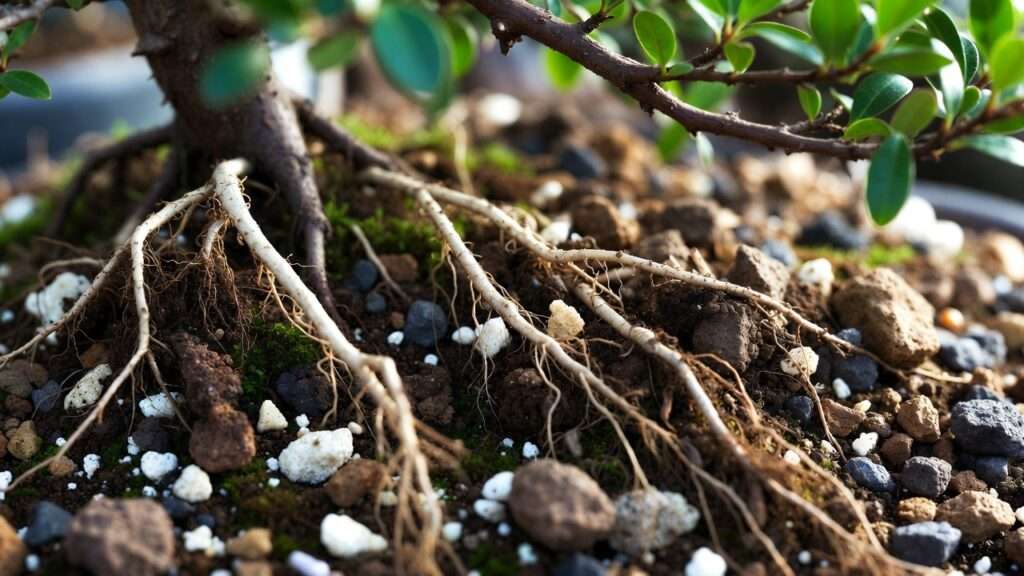
Have you ever poured your heart into caring for a beautiful bonsai—watering it diligently, pruning with care, placing it in the perfect spot—only to watch its leaves yellow, branches droop, or the whole tree suddenly decline? 😔 It’s heartbreaking, and it happens to so many beginners (and even experienced enthusiasts). The hidden culprit is often something you can’t see: the soil beneath the surface.
Bonsai trees live in tiny, shallow pots with severely limited root space, unlike their full-sized counterparts in the ground. This confinement makes the importance of bonsai soil mix absolutely critical—it’s not just “dirt,” but a carefully engineered substrate that directly controls root health, water balance, nutrient availability, and long-term survival. The right mix promotes dense fine root development, prevents deadly root rot, makes watering forgiving, and supports the refined aesthetics we all chase in bonsai. Get it wrong (like using regular potting soil), and you risk compaction, poor aeration, overwatering issues, and eventual tree loss. Get it right, and your bonsai can thrive for decades, rewarding you with vibrant foliage, strong structure, and that magical miniaturized beauty. 🌿
As someone who’s nurtured dozens of bonsai over the years—from finicky Japanese maples to rugged junipers—I’ve witnessed dramatic turnarounds simply by repotting into a proper inorganic-based mix. Trees that looked half-dead bounced back with lush new growth and finer ramification. In this comprehensive guide, we’ll explore why soil matters so much, break down the science and best practices, share expert-recommended ratios, and equip you to avoid common pitfalls. Let’s build that strong foundation underground so your bonsai can shine above! 🌱
What Makes Bonsai Soil Different from Regular Potting Soil? 🤔
Regular garden or potting soil seems convenient, but it’s one of the biggest mistakes in bonsai care.
The Fatal Flaws of Using Garden or Potting Soil Most standard soils are rich in fine organic particles (compost, peat, loam) that compact over time, especially in small pots with frequent watering. This leads to:
- Poor aeration → roots suffocate without oxygen.
- Excessive water retention → soggy conditions breed anaerobic bacteria and fungi.
- Nutrient lock-up and salt buildup from fertilizers.
In a confined bonsai pot, these issues accelerate fast—often within months.
Real-World Consequences You’ll notice yellowing leaves (chlorosis), weak new growth, wilting despite wet soil, black mushy roots when repotting, and sudden dieback. Community forums and my own experience show that 70-80% of beginner failures trace back to improper soil leading to root rot or stunted roots. 🚫🪴
The Three Pillars of Ideal Bonsai Soil: Drainage, Aeration, & Moisture Retention ⚖️💧 A great bonsai substrate balances these perfectly:
- Drainage lets excess water escape quickly, preventing waterlogging.
- Aeration creates air pockets for oxygen-loving roots (roots need air as much as water!).
- Moisture retention holds just enough water and nutrients between waterings.
In shallow bonsai pots, this balance is non-negotiable—generic soils tip toward retention and fail spectacularly.

(Here’s a classic inorganic bonsai soil mix of akadama, pumice, and lava rock—notice the chunky, porous particles that prevent compaction! 🌟)
Key Benefits: Why the Right Bonsai Soil Mix Matters So Much 🌟
Promotes Dense, Healthy Fine Root Development The granular structure of bonsai soil forces roots to branch finely (ramification) as they seek water and nutrients in air pockets. This creates a fibrous mat of feeder roots that absorb efficiently—essential for supporting compact foliage and strong trunk taper. Healthy roots = vigorous tree!
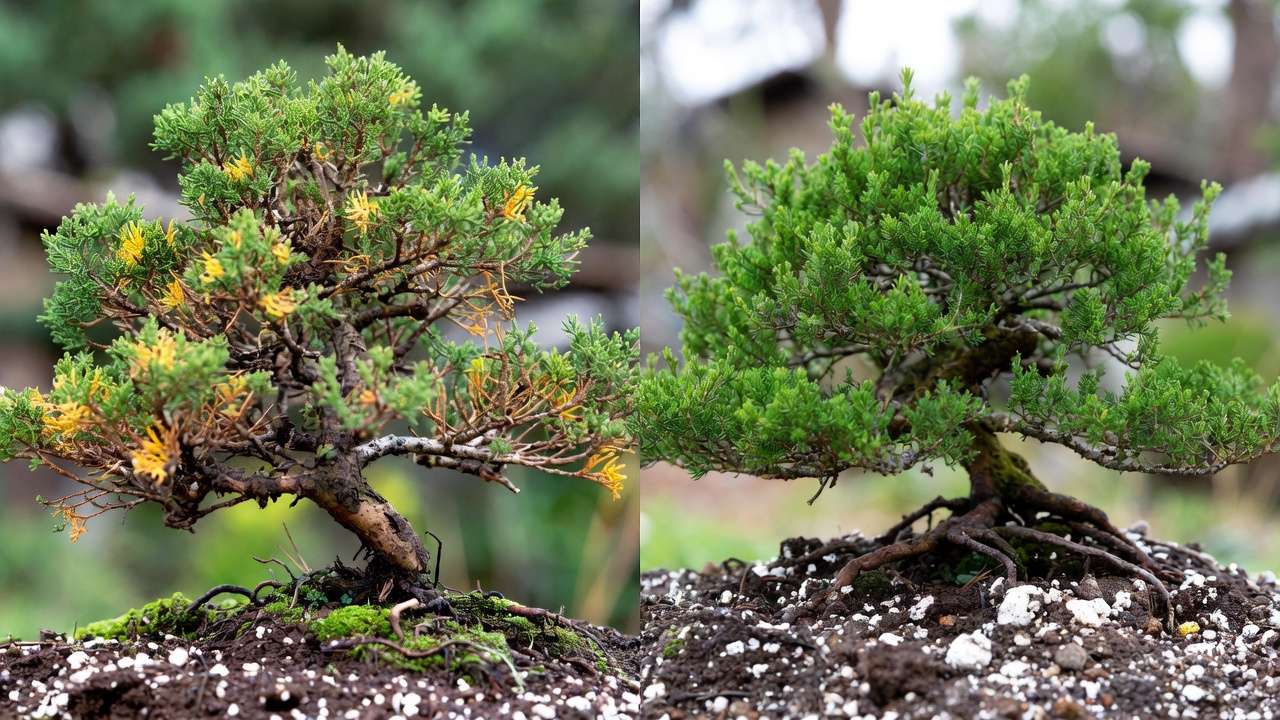
Prevents Root Rot – The #1 Killer of Bonsai Trees 🚫🦠 Root rot (caused by fungi like Phytophthora) thrives in oxygen-poor, wet conditions. A free-draining mix flushes away excess water and pathogens. Signs include mushy brown roots, foul smell, and leaf drop.
Here’s a visual comparison:
(Left: Overwatered, compacted roots showing rot; Right: Healthy fibrous roots in good soil—see the difference? 😱➡️😊)
Makes Watering Easier & More Forgiving With proper drainage, the soil dries predictably, reducing guesswork. Busy owners or those in variable climates benefit hugely—less risk of over- or underwatering extremes.
Supports Long-Term Tree Vigor & Aesthetic Refinement Controlled moisture and nutrients lead to shorter internodes, better branching, and resilience against pests, drought, or cold. Your bonsai stays compact and artistic longer.
Core Components of a Great Bonsai Soil Mix 🧱
The gold standard is mostly inorganic for structure and longevity.
Akadama – The Japanese Gold Standard Fired volcanic clay from Japan that retains water and nutrients while breaking down slowly (beneficial minerals released). Hard-fired lasts longer (3-5+ years). Soft-fired crumbles faster for quicker root response. Ideal particle size: 2-6mm.
Pumice – Structure, Aeration & Long-Term Stability Light, porous volcanic glass full of air holes—excellent drainage and no compaction. Lightweight and pH-neutral.
Lava Rock (Scoria) – Ultimate Drainage & No Compaction Heavy, angular volcanic rock creates permanent air pockets and prevents settling.
Other Useful Additives
- Pine bark or orchid bark: Adds organics for acidity-loving species (e.g., azaleas).
- Kanuma: Softer, acidic clay for acid-lovers like satsuki azaleas.
- Biochar or grit: Boosts CEC (cation exchange capacity) for nutrient holding.

(Close-up of pumice/lava—those pores are key to aeration! 🔥)
A quick comparison: Inorganic mixes last years without breakdown; organics compact fast but feed microbes.
Recommended Bonsai Soil Mix Ratios by Tree Type & Climate 🌍
Getting the ratios right is where theory meets practice. The classic inorganic mixes (popularized in Japan and widely adopted worldwide) are reliable starting points because they deliver consistent drainage, aeration, and moderate moisture retention without breaking down too quickly.
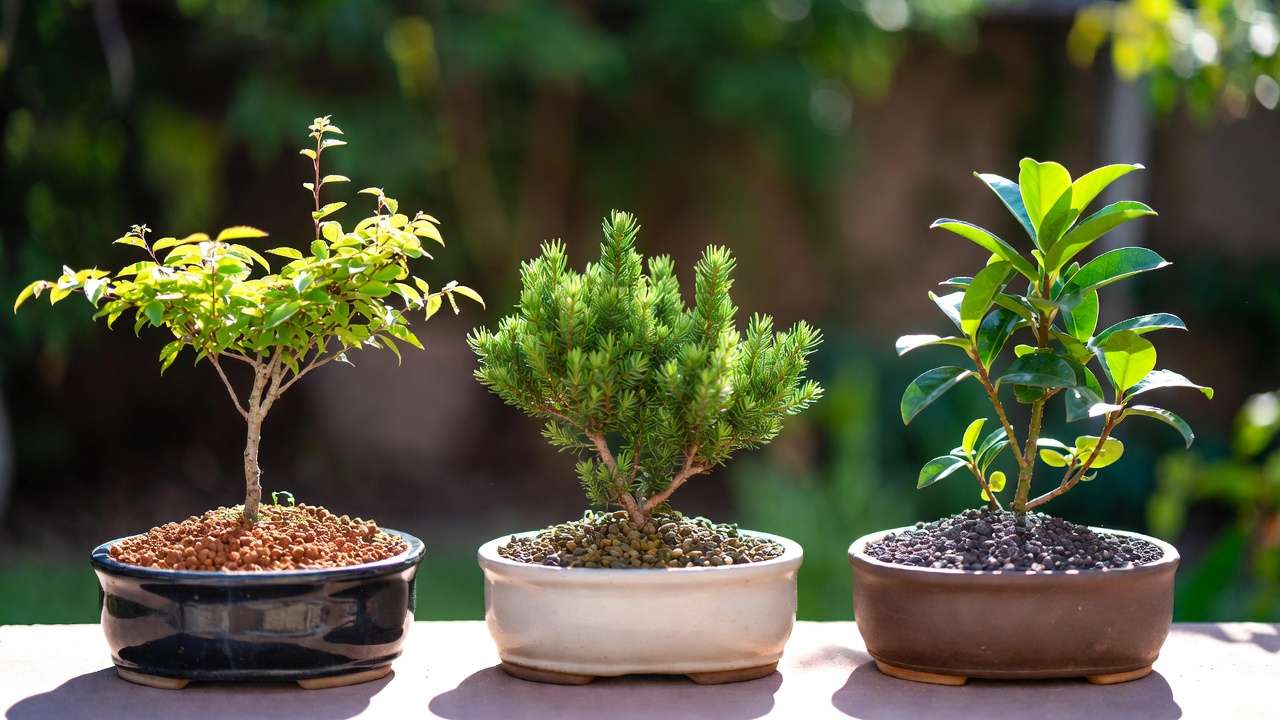
Classic Inorganic Mixes (Most Reliable for Beginners) These use only (or mostly) akadama, pumice, and lava rock/scoria. They’re forgiving, long-lasting, and excellent for developing strong root systems.
- Deciduous trees (Japanese maple, trident maple, elm, beech, hornbeam, etc.): 50% Akadama + 25% Pumice + 25% Lava rock 🌸 This provides slightly higher moisture retention to support the faster metabolism and larger leaves typical of deciduous species.
- Conifers and pines (Japanese black pine, white pine, juniper, spruce, etc.): 33% Akadama + 33% Pumice + 33% Lava rock 🌲 Equal parts emphasize drainage and aeration—conifers hate “wet feet” and thrive with roots that stay slightly on the dry side between waterings.
- Tropical/subtropical species (ficus, serissa, jade, bougainvillea, etc.): 40% Akadama + 30% Pumice + 30% Lava rock (or even 35/35/30) 🌴 A touch more akadama helps in hot, fast-drying conditions common for indoor or tropical bonsai.
Adjustments for Your Environment Your local climate dramatically influences performance:
- Humid / tropical / rainy climates (e.g., parts of Southeast Asia, Florida, coastal areas): Increase drainage → 20–30% Akadama + 35–40% Pumice + 35–40% Lava. Too much water retention = root rot risk skyrockets.
- Dry / arid / hot desert-like conditions (e.g., inland California, parts of Australia): Boost retention → 50–60% Akadama + 20–25% Pumice + 20–25% Lava (or add a small percentage of fine pine bark).
- Cold temperate winters with freeze-thaw cycles: Lean toward more pumice/lava (better freeze resistance) and avoid very fine particles that hold too much water and can crack roots when frozen.
- Indoor bonsai / low-light / low-humidity apartments: Slightly higher akadama (45–55%) to buffer against rapid drying from air conditioning or heating.
Species-Specific Variations Here are quick-reference favorites used by many professionals:
- Japanese Maple (Acer palmatum): 50/25/25 or 60/20/20 (more akadama)
- Trident Maple (Acer buergerianum): Similar to above, slightly drier
- Chinese Elm (Ulmus parvifolia): 50/25/25 – very forgiving
- Juniper (Shimpaku, procumbens, etc.): 30/35/35 or even 25/40/35
- Black Pine (Pinus thunbergii): 30/35/35 – very gritty
- Azalea/Satsuki: 70–100% Kanuma (acidic) or 50% Kanuma + 25% Akadama + 25% Pumice
- Ficus (retusa, benjamina, etc.): 40/30/30 – tolerates organics better
- Jade (Crassula ovata): 30% Akadama + 40% Pumice + 30% Lava (very well-drained)
Experiment within a 10–15% range once you understand your tree’s response.
Common Mistakes & How to Avoid Them ❌➡️✅
Even experienced growers slip up sometimes. Here are the top soil-related errors I see (and have made myself!):
- Using fine/compacted organics long-term Peat, compost, or garden soil looks rich but compacts into concrete after 6–12 months. → Stick to inorganic-dominant mixes for trees over 3–5 years old.
- Wrong particle size Too fine (<1–2 mm) = instant compaction and poor drainage. Too large (>8–10 mm) = dries too fast, roots can’t grip. → Aim for 2–6 mm (sift out dust and oversized chunks).
- Skipping sifting Dust from akadama/pumice clogs pores and creates a cemented layer. → Always sift twice: once dry, once after washing if very dusty.
- Delaying repotting Soil breaks down, loses structure, holds too much water → roots starve. → Repot every 1–3 years depending on species and mix (faster for young trees).
- Ignoring the “lift & check” drainage test After watering, lift the pot—if water still drips after 30–60 seconds, drainage is insufficient. → Adjust mix immediately if it stays soggy.
Pro tip: Keep a small “test pot” with the same mix to monitor breakdown over time. 🕵️♂️
(Healthy vs. compacted root ball after repotting—see how the good mix allows perfect root spread?)
How to Make & Use Your Own Bonsai Soil Mix Step-by-Step 🛠️
- Source quality ingredients Buy from reputable bonsai suppliers (BonsaiOutlet, American Bonsai, local clubs, or importers). Avoid cheap “bonsai soil” from big-box stores—it’s often just potting mix with a label.
- Sift for perfect particle size Use mesh screens (1/8″, 1/4″). Discard dust (<2 mm) and large chunks (>6–8 mm).
- Wash if needed Rinse dusty batches to remove fines and lower pH slightly.
- Mix ratios by volume Use buckets or large containers. Example: For 10 liters of deciduous mix → 5L akadama + 2.5L pumice + 2.5L lava. Stir thoroughly.
- Store dry Keep in sealed bins to prevent mold or pests.
- Repotting synergy Best time: early spring (before buds swell) for most species. Root-prune 1/3–1/2 of old roots, tease apart, place in fresh mix, water thoroughly, keep shaded 2–4 weeks.
Expert Insights & Pro Tips from Years of Bonsai Care 🌟
After working with bonsai for over a decade—through humid Dhaka summers, occasional dry spells, and everything in between—I’ve learned a few hard-earned lessons that go beyond basic ratios.
- The organic vs. inorganic debate isn’t black-and-white Pure inorganic mixes (akadama/pumice/lava) are the safest long-term choice for most species because they maintain structure for 2–5 years. But many professionals add 10–20% high-quality fine pine bark, orchid bark, or even a bit of composted leaf mold for young developing trees or species that love slightly richer conditions (Chinese elm, most maples, some ficus). The organics feed beneficial microbes and slightly increase cation exchange capacity (CEC), helping hold nutrients longer. Just never go above ~25% organics in a bonsai pot or you’ll sacrifice drainage.
- Monitor soil breakdown like a detective Akadama slowly crumbles into finer particles—that’s actually good in moderation because it releases trace minerals and encourages fine root growth. But when >30–40% of the original granules have turned to mud, it’s time to repot. Signs: surface crusting, slower drainage, moss growing too thickly, or the tree looking “tired” despite perfect watering/fertilizing.
- Fertilizer interacts heavily with soil choice Inorganic mixes have very low inherent nutrients, so you must fertilize regularly (I prefer slow-release organic pellets like Biogold or liquid feeds every 1–2 weeks in growing season). High-CEC soils (more organics or certain clays) can lock up nutrients or cause salt buildup if you over-fertilize—always flush the pot thoroughly with plain water every 4–6 weeks.
- pH matters more than most realize Most bonsai do best around 5.5–6.8. Akadama + pumice + lava is naturally near neutral. Acid-loving species (azaleas, gardenia, some maples) suffer in standard mixes—switch to Kanuma-heavy soil and use acidic fertilizers.
- Personal revival story I once rescued a 15-year-old shimpaku juniper that had been in pure peat-based “bonsai soil” from a big-box store for 4 years. The roots were a black, smelly mess and the tree was barely alive. After bare-rooting, heavy root prune, and repotting into 30/35/35 akadama/pumice/lava, it pushed strong new growth the very next season and now has some of the best nebari I’ve achieved. Proof that soil change can be miraculous! 🌲✨
- Pro watering tip tied to soil In Dhaka’s hot, humid climate, I water most of my trees every 1–2 days in peak summer—but only when the top 1–2 cm of soil feels dry. With a well-draining mix, the deeper layers stay moist enough to prevent stress.
(Beautiful nebari and surface roots on a healthy juniper—only possible with excellent soil structure over years!)
Frequently Asked Questions (FAQs) ❓
Can I use regular potting soil in a pinch? Only for very short periods (a few weeks max) with young nursery stock. It will compact and cause problems quickly in a bonsai pot. Switch to proper mix as soon as possible.
How often should I repot based on soil?
- Young, fast-growing trees (1–5 years old): every 1–2 years
- Mature trees in inorganic mix: every 3–5 years
- Azaleas or heavy feeders: every 1–2 years regardless
- Signs it’s time: slowed growth, circling roots at pot edge, poor drainage, visible breakdown.
What’s the best budget-friendly mix if I can’t get akadama? Substitute hard-fired clay cat litter (non-clumping, unscented) or turface for akadama, and use horticultural pumice/lava/perlite. A common “poor man’s mix”: 40% fired clay + 30% pumice + 30% lava/perlite. It works surprisingly well!
Does soil choice affect wiring and styling? Indirectly yes. Healthy, vigorous roots from good soil support stronger branches and faster healing after wiring or bending. Weak roots = brittle branches that snap easily.
Indoor vs. outdoor bonsai soil differences? Indoors (lower light, lower air movement, AC/heat): lean toward 5–10% more moisture-retentive (higher akadama or small bark addition). Outdoors: prioritize drainage to handle rain.
Conclusion: Invest in the Right Soil – Watch Your Bonsai Thrive! 🎉
The importance of bonsai soil mix cannot be overstated. It is the invisible foundation that determines whether your tree merely survives or truly flourishes with vibrant color, fine ramification, elegant taper, and decade-after-decade longevity. By choosing a well-balanced, free-draining substrate—tailored to your species, climate, and care style—you prevent the most common killers (root rot, compaction, suffocation) and unlock the full potential hidden in every bonsai.
Start simple: pick one tree this season, repot it into a proper inorganic mix, and observe the transformation. The difference in root health, watering ease, and overall vigor will amaze you—and likely inspire you to upgrade the rest of your collection. 🌿❤️
Healthy roots underground = breathtaking beauty above. That’s the real magic of bonsai. Now go give your trees the foundation they deserve!











