
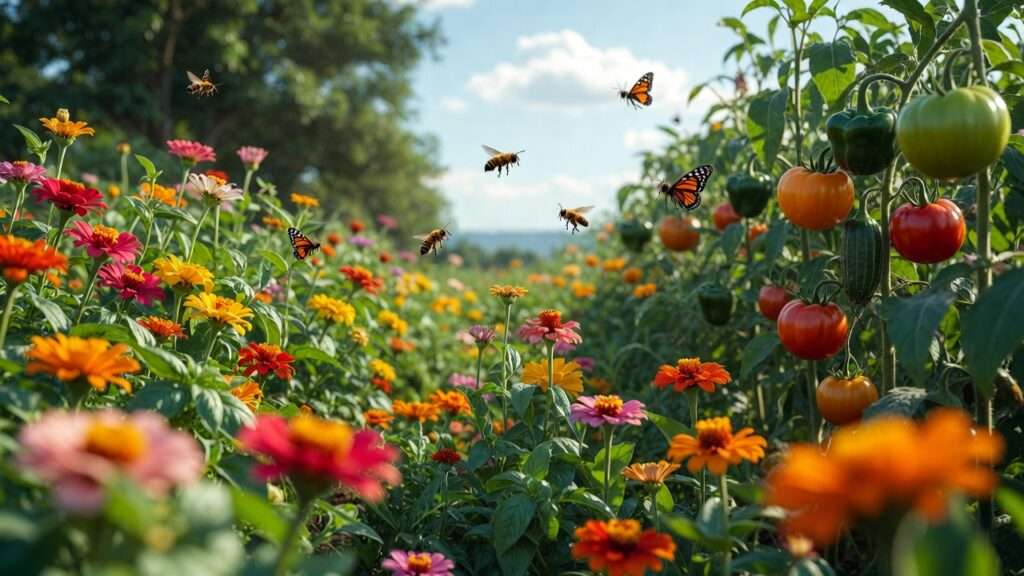
Have you ever nurtured a patch of vibrant tomatoes, peppers, or zucchini plants through the hot Barisal summer, only to harvest fruits that are small, misshapen, or drop off before ripening? 😔 You’re not alone—this frustrating issue affects many home gardeners, especially in tropical regions like Bangladesh where heat, humidity, and occasional heavy rains can disrupt natural pollination. The culprit is often poor pollination, leading to lower yields, deformed vegetables, and wasted effort despite good soil, watering, and care.
The good news? You can turn things around naturally and effectively by improving pollination with companion plants. This time-tested, eco-friendly strategy attracts more bees, butterflies, and other pollinators to your garden, ensuring better fruit set and often 20–50% higher yields in crops like cucumbers, peppers, strawberries, and more (backed by studies from the American Society for Horticultural Science and others). 🌿
In this in-depth guide, we’ll explore the science behind it, share the best companion plants suited for tropical/subtropical climates (including easy-to-find options in Bangladesh), provide crop-specific pairings, step-by-step implementation tips, and pro advice to help you create a buzzing, productive garden. Whether you’re growing in a small backyard in Phuljhuri or a larger plot, these methods support biodiversity, reduce reliance on chemicals, and deliver tastier, more abundant harvests. Let’s dive in and help your garden thrive! 🚀
Why Pollination Matters & How Companion Plants Help (Science & Benefits) 🐝
The Role of Pollinators in Your Garden
Pollination is the magical transfer of pollen from the male parts of a flower (anthers) to the female parts (stigma), enabling fruit and seed development. Many vegetables and fruits rely on insect pollinators—especially bees—for this process.
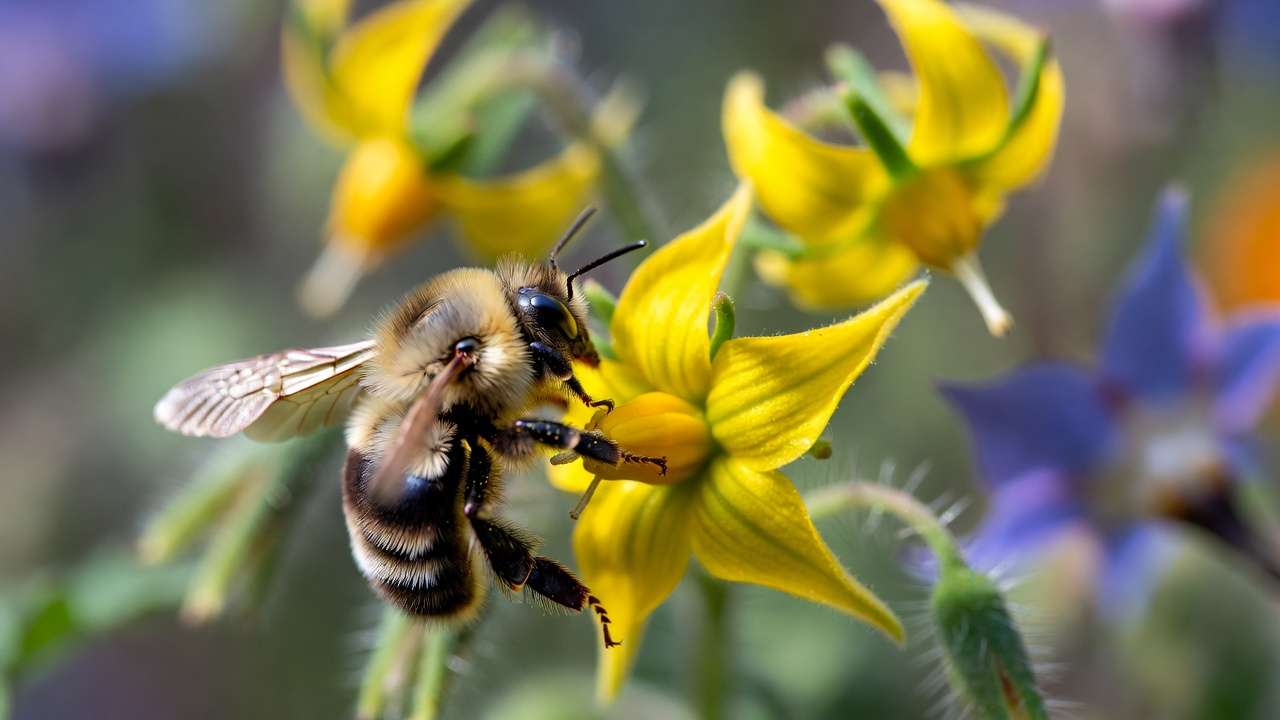
- Honeybees and bumblebees are superstars, with bumblebees excelling at “buzz pollination” — vibrating to release pollen from flowers like tomatoes, peppers, eggplants, and blueberries.
- In tropical climates like Bangladesh, native bees, hoverflies, butterflies, and even some moths play key roles.
Signs of poor pollination are easy to spot:
- Cucumbers, squash, or melons with twisted, bulbous, or underdeveloped ends (only partial stigma pollination).
- Tomatoes or peppers with cat-facing (deep scars), blossom-end drop, or small/empty fruits.
- Zucchini or pumpkin flowers that wilt without forming fruit.
- Low overall yields despite healthy foliage.
These issues often stem from fewer pollinators due to habitat loss, pesticide use, extreme heat, or lack of continuous nectar sources.
How Companion Planting Supercharges Pollination
Companion planting means growing mutually beneficial plants together. For pollination, flowering companions provide nectar and pollen all season, drawing in more diverse pollinators and keeping them around longer.
Scientific evidence supports big wins:
- A study in HortScience showed pollinator-attracting companions increased cucumber and habanero pepper yields significantly by boosting bee visits.
- Research from the Royal Entomological Society found companion flowers improved strawberry yield and quality through enhanced insect pollination.
- Texas A&M AgriLife research confirmed annuals and perennials near crops offset land use by raising yields in peppers and cucumbers.
- Meta-analyses highlight that diverse pollinator communities (abundance + functional variety) enhance crop pollination and output.
Beyond yields, benefits include:
- Natural pest control (some flowers attract predatory insects).
- Biodiversity support amid declining pollinator populations.
- Aesthetic appeal—your garden becomes a colorful, buzzing oasis! 🌺
No extra land needed—just smart interplanting for chemical-free results.
Best Companion Plants to Attract Pollinators (Top Recommendations) 🌼
Focus on easy-to-grow, nectar-rich flowers with long bloom times. In Bangladesh’s warm climate, prioritize heat-tolerant, locally available options.
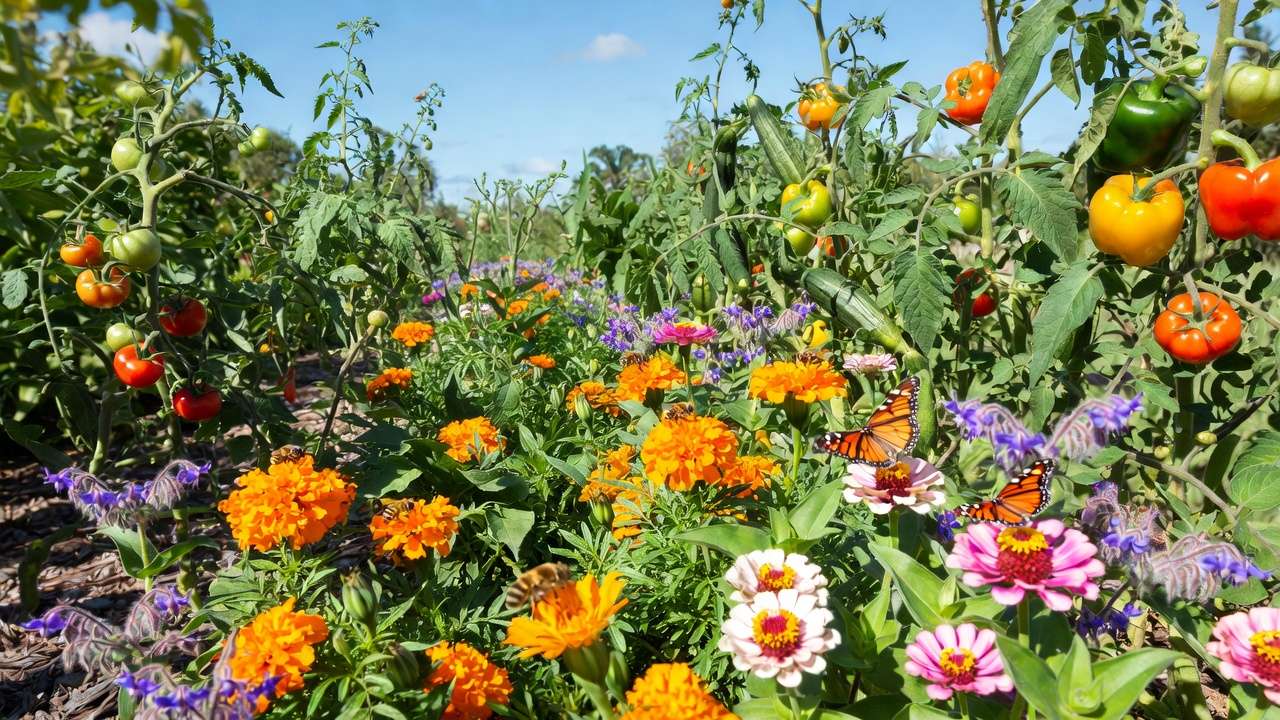
Must-Have Annuals for Quick Results
These bloom fast and abundantly:
- Borage (starflower) ⭐ — A top bee magnet with blue star-shaped flowers; said to improve tomato flavor and yield. Self-seeds easily.
- Cosmos — Tall, daisy-like blooms in pink/white; attracts bees and butterflies; thrives in heat.
- Zinnias — Bright, long-lasting flowers; excellent for native bees; succession plant for continuous color.
- Marigolds (Tagetes) — Common in BD gardens; French/African varieties deter pests while drawing pollinators.
- Sunflowers — Towering pollen/nectar sources; choose shorter varieties for small spaces.
Powerful Perennials for Long-Term Support 🌺
Plant once for years of benefits:
- Echinacea (Purple Coneflower) — Drought-tolerant; beloved by bees and butterflies.
- Black-Eyed Susan (Rudbeckia) — Hardy; golden blooms attract diverse pollinators.
- Bee Balm (Monarda) — Tubular flowers perfect for bumblebees; aromatic leaves repel some pests.
- Lavender and Salvia — Heat-loving; fragrant and long-blooming.
- Yarrow and Coreopsis — Low-maintenance; flat tops ideal for landing.
- Milkweed — Essential for butterflies; some tropical varieties suit BD.
Herbs That Double as Pollinator Magnets 🌿
Many herbs bolt to flowers loved by bees:
- Basil — Common in BD; allow some to flower for pollinators (great near tomatoes).
- Oregano, Dill, Cilantro — Umbel flowers attract tiny beneficial insects too.
- Mint family (contain in pots to prevent spreading).
Native & Regional Picks for Tropical/Subtropical Climates
In Barisal’s humid conditions, try:
- Local basil varieties, marigolds (already widespread).
- Lantana (tough, colorful; attracts butterflies).
- Brazilian Tea or similar nectar-rich natives if available.
- Adapt perennials like salvia or verbena for year-round blooms.
Mix heights, colors, and bloom times for maximum attraction!
Crop-Specific Companion Planting Strategies 🍅🥒
Tailoring companions to your main crops maximizes pollination benefits. In Phuljhuri’s hot, humid Barisal climate—with its long rainy season and intense summer heat—choose heat-tolerant, locally available plants that bloom reliably without competing too much for water or nutrients.
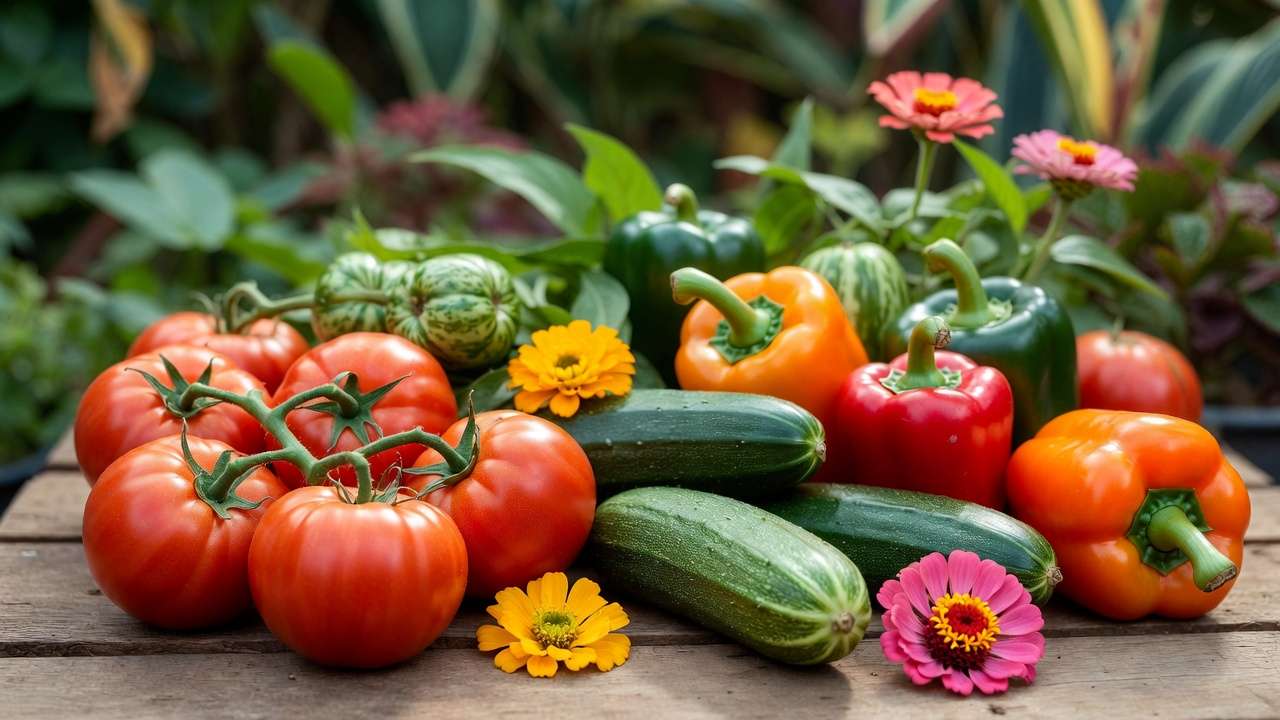
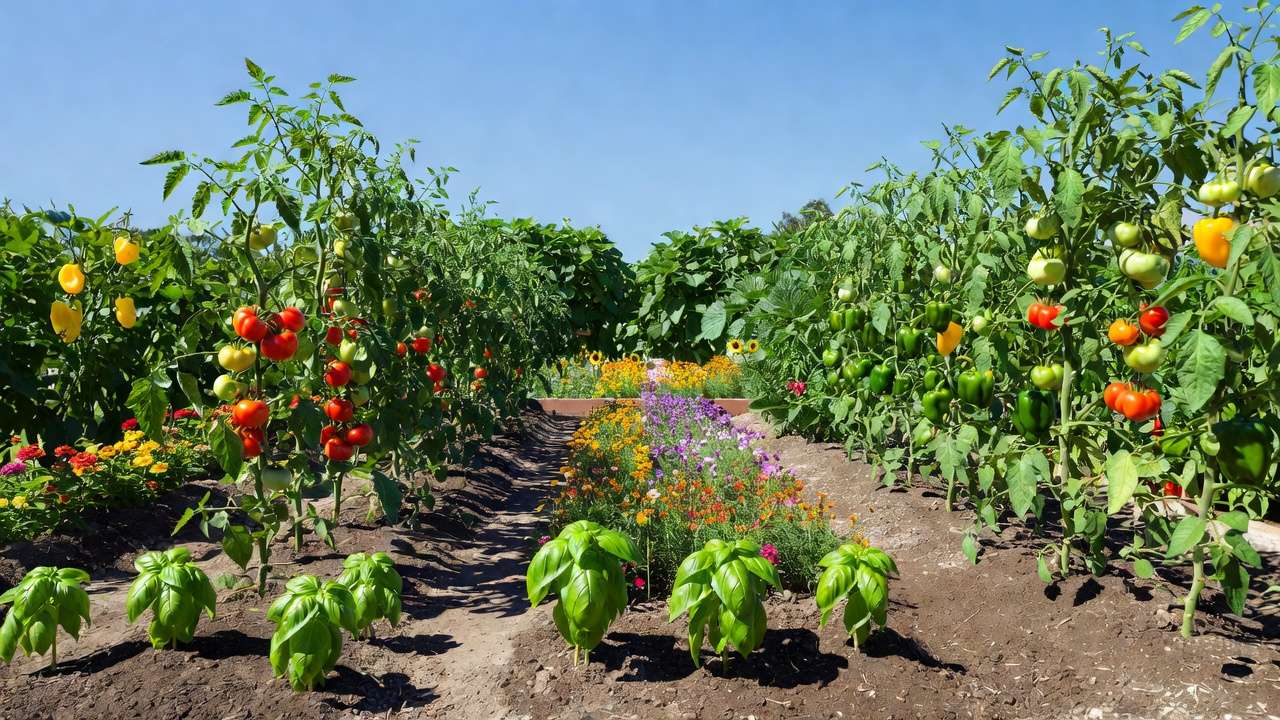
For Nightshades (Tomatoes, Peppers, Eggplants) 🍅
Tomatoes, peppers (like the popular green chilies or capsicum), and eggplants (brinjal) in Bangladesh are mostly self-fertile but produce dramatically better with insect visits—especially bumblebees or native solitary bees for buzz pollination. Poor fruit set often shows as small, scarred, or dropped fruits during the monsoon or hot spells.
Top companions to boost bee traffic:
- Borage — The ultimate bee attractor with continuous blue stars; plant 2–3 per tomato group. Gardeners report improved flavor and more uniform fruits.
- Basil (Tulsi or local varieties) — Extremely common in BD; allow some to flower for tiny pollinators. Pairs perfectly with tomatoes (classic companion) and peppers; repels some pests too.
- Marigolds (Genda) — Widely grown in Bangladesh; French or African types draw bees while deterring nematodes and aphids. Interplant along rows.
- Cosmos or Zinnias — Bright daisy blooms keep bees coming back; succession sow every 3–4 weeks.
Pro tip: In humid conditions, space companions 30–45 cm away to avoid fungal spread (e.g., early blight on tomatoes). Studies from Texas A&M and HortScience show these flowers increase bee visits, leading to higher fruit numbers and quality in peppers and similar crops.
For Cucurbits (Cucumbers, Squash, Melons, Pumpkins) 🥒
Cucurbits need strong pollinator activity—each female flower needs multiple bee visits for full, even fruit development. In Barisal, vines often suffer from partial pollination (twisted or small ends) due to heat stress reducing bee activity midday.
Best pairings:
- Nasturtiums — Edible flowers attract bees and hoverflies; act as trap crops for aphids. Trail under cucumber trellises.
- Dill or Cilantro (Dhania, let bolt) — Umbel flowers are magnets for tiny beneficial insects and bees; short bloom but succession planting extends it.
- Sunflowers — Plant tall varieties at the garden edge; massive pollen/nectar draw for squash bees and honeybees.
- Borage and Marigolds — Again, top performers; borage especially helps with even pollination.
Research from ASHS journals confirms companion flowers near cucumbers and peppers significantly boost yields by increasing pollinator abundance—even offsetting land used for the flowers themselves.
For Beans, Peas & Legumes
These are often wind/self-pollinated but get a yield bump from extra insect visits (more pods, better fill).
- Add Zinnias, Cosmos, or Basil borders — Bright colors pull in bees during flowering peaks.
- Marigolds — Deter bean beetles while attracting helpers.
In tropical setups, interplant with low-growers to avoid shading vines.
For Fruit Trees & Berries (Mango, Guava, Citrus, Papaya in BD context)
Many tropical fruits rely on diverse pollinators—bees for mangoes, guava; butterflies/moths sometimes for papaya. Underplanting boosts visits without competing.
- Bee Balm (if available) or Salvia varieties — Tubular flowers for larger bees.
- Lantana — Tough, colorful tropical perennial; blooms year-round in Barisal heat, huge butterfly/bee draw.
- Basil or Marigolds — Easy under mango/guava; citrus benefits from basil too.
- Local herbs like mint (contained) or oregano — Provide extra nectar.
In home gardens, plant a “pollinator guild” circle around tree bases—mix heights for continuous bloom. This supports native stingless bees and honeybees common in the region.
Planning for Continuous Bloom (Seasonal Calendar) 📅
In Bangladesh’s tropical climate—no true winter—aim for year-round nectar to keep pollinators resident.
- Pre-monsoon/Spring (Feb–May) — Early bloomers: Marigolds, basil (let flower), cosmos starts, sunflowers.
- Monsoon/Summer (Jun–Sep) — Heat/humidity-tolerant: Zinnias, lantana, borage, salvia; succession plant annuals every 3 weeks.
- Post-monsoon/Autumn-Winter (Oct–Jan) — Perennials like echinacea (if adapted), black-eyed Susan, or local asters; allow herbs to bolt.
Key: Succession sowing + perennials = no bloom gaps. In Barisal’s high rainfall, choose well-drained spots and raised beds for companions to prevent rot.
How to Implement: Step-by-Step Guide 🛠️
- Site Selection — Full sun (6+ hours) for most companions; edges, borders, or between rows work best. Avoid overcrowding main crops.
- Spacing & Layout — Plant pollinator strips along garden perimeters (1–2 m wide) or intersperse in guilds. For example: tomatoes with basil/marigolds every 2–3 plants.
- Planting Tips — Start seeds indoors or buy seedlings; mix heights/colors for visual appeal to pollinators. Water consistently but don’t overdo in rainy season.
- Maintenance — Deadhead annuals for rebloom; mulch to retain moisture; avoid broad-spectrum pesticides (use neem sparingly if needed). Provide shallow water dishes with pebbles for bees.
Start small—add 5–10 companion plants this season and track fruit set improvements!
Common Mistakes to Avoid & Pro Tips from Experts ⚠️
- Too few plants → Minimal attraction; aim for clumps of 5+ same species.
- Mismatched bloom times → Plan calendar so companions flower when crops do.
- Overcrowding → Competes for water/nutrients in humid heat; give space.
- Pesticide use → Kills visitors; go organic.
Expert insight: Diversify beyond honeybees—native solitary bees and hoverflies are crucial in tropics. Studies emphasize functional diversity (different bee sizes/shapes) for better pollination efficiency.
FAQs ❓
- How many companion plants per crop? Start with 1–2 per main plant or 10–20% of garden area in flowers. More = better results!
- Do they compete for nutrients? Rarely if spaced properly; many companions (marigolds, basil) are light feeders.
- Best for small spaces/containers? Yes—zinnias, marigolds, basil in pots around veggies; borage in large containers.
- Organic pest control bonus? Many (marigolds, nasturtiums) deter pests naturally while attracting good bugs.
Conclusion: Transform Your Garden Today 🌱🐝
Improving pollination with companion plants is one of the easiest, most rewarding ways to boost your home garden in Phuljhuri or anywhere in Barisal Division. By attracting more bees and pollinators naturally, you’ll enjoy bigger, better-shaped fruits, higher yields, and a vibrant, biodiverse space—all without chemicals.
Start small this season: Pick 3–4 easy companions like marigolds, basil, and zinnias, plant them strategically, and watch the difference. Your tomatoes will thank you, your cucumbers will fill out beautifully, and the buzzing will become music to your ears! Share your before-and-after photos or results in the comments—we’d love to hear how it goes. Happy gardening! 🚀🌿











