
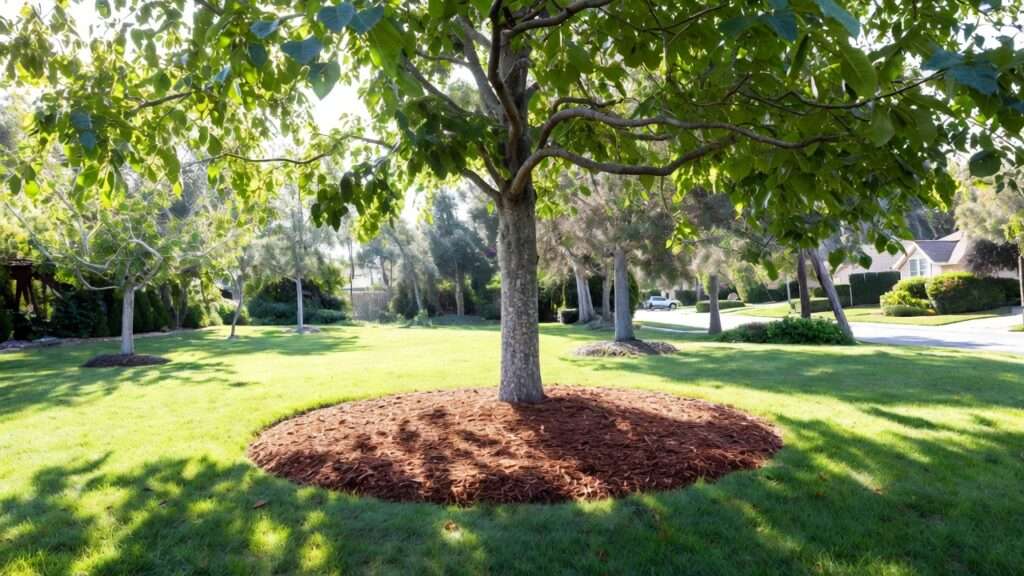
Imagine planting a young tree in your yard, full of hope for a majestic shade provider or beautiful flowering specimen—only to watch it struggle year after year. Barely adding new growth, looking stressed during dry spells, and showing weak branches despite your best watering efforts. The culprit? Fierce competition from lawn grass and weeds stealing precious water, nutrients, and root space right under the surface. 😔
But here’s the exciting part: one simple, natural change can transform that slow-growing tree into a vigorous, thriving giant. Research from trusted sources like the Morton Arboretum shows that properly applied mulch rings can accelerate establishment dramatically—often leading to three times the trunk diameter growth and up to four times the root density in just a few years compared to trees surrounded by turf. Many extension services report young trees establishing nearly twice as fast with wide mulch rings, mimicking the nutrient-rich forest floor where trees naturally excel. 🌱🚀
In this comprehensive guide, we’ll dive deep into improving tree growth with mulch rings—a low-effort, chemical-free method that homeowners, gardeners, and tree enthusiasts swear by. You’ll learn the science, step-by-step application, common pitfalls to avoid, and maintenance tips to keep your trees growing strong for decades. Whether you’re planting a new sapling or reviving an existing landscape tree, this natural technique addresses the real problem of urban/turf competition and delivers measurable results.
Why Mulch Rings Supercharge Tree Growth 🌟
Mulch rings aren’t just pretty landscaping—they’re a powerful tool rooted in how trees actually grow in nature.
The Science Behind the Magic
In forests, trees thrive under a constant blanket of fallen leaves, twigs, and organic matter. This layer retains moisture, moderates soil temperature, suppresses competing plants, and slowly releases nutrients as it decomposes. Urban and suburban lawns strip away this benefit: grass roots aggressively compete for the same shallow soil resources, while mower damage scars trunks and compacts soil.
A well-designed mulch ring reverses this:
- Eliminates competition — Grass and weeds are blocked, preventing them from stealing water and nutrients (and avoiding allelopathic effects where some grasses inhibit tree roots).
- Boosts moisture retention — Mulch reduces evaporation by up to 50% in some studies, meaning deeper, less frequent watering suffices even in hot summers.
- Regulates temperature — Keeps roots cooler in scorching heat and insulated during cold snaps, reducing stress and encouraging steady growth.
- Improves soil health — Organic mulches feed beneficial microbes, earthworms, and fungi, enhancing soil structure and nutrient cycling over time.

Evidence from Studies
The Morton Arboretum’s long-term research is particularly compelling: Young sugar maples with 8-foot diameter mulch rings showed three times the trunk diameter increase and four times the root density in the top soil layers after five years compared to turf-surrounded trees. This accelerated establishment translates to faster canopy development and better long-term health.
Kansas State University Extension, Purdue Extension, and University of New Hampshire studies echo this—mulched trees establish roots quicker, face less drought stress, and show improved vigor. In turf-heavy settings, growth rates can improve by 50–100% or more in the critical first 3–5 years. Real-world perks include fewer pest issues (healthier trees resist better), reduced erosion, and enhanced curb appeal without synthetic fertilizers. 🌿
Bonus: Mulch rings act as a protective buffer against lawnmowers and string trimmers, preventing those nasty trunk wounds that invite decay and insects.
Choosing the Right Mulch for Maximum Growth 🪵
Not all mulches are created equal—selecting the best type maximizes benefits while minimizing risks.
Best Organic Options
- Hardwood chips or bark — Excellent slow-release nutrients; long-lasting (2–4 years before refreshing).
- Pine bark fines or nuggets — Great for acidic-loving trees like oaks or pines; good drainage.
- Shredded leaves or compost blends — Free/cheap, nutrient-rich, and eco-friendly.
- Arborist wood chips — Often free from local tree services; diverse particle sizes promote aeration.
What to Avoid
Skip dyed mulches (potential chemicals), rubber mulch (no nutrient benefit, heats up), fresh grass clippings (can mat and heat excessively), or anything too fine that compacts. Aim for coarse, aged organic mulch for best airflow and longevity. Pro tip: In hot, dry climates, darker mulches retain more heat—opt for lighter colors if summers are intense. ☀️
Step-by-Step: How to Create the Perfect Mulch Ring 🛠️
Creating a mulch ring is straightforward, but doing it right ensures maximum growth boost.
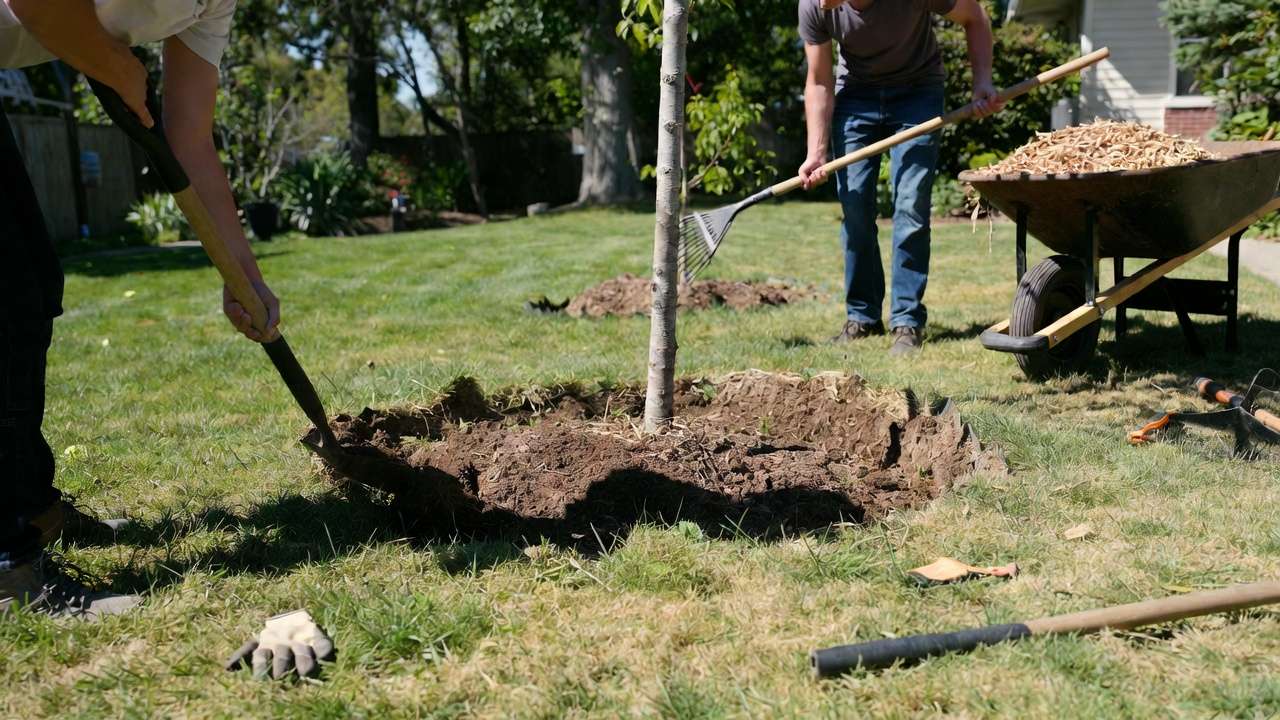
For New Trees vs. Established Trees
New plantings benefit most immediately—apply right after planting. For mature trees, expand rings gradually to avoid shocking roots.
Step 1: Measure & Size It Right Wider is always better! Aim for at least 3–6 feet in diameter (or to the drip line for larger trees). A good rule: 1 foot of radius per inch of trunk diameter (measured at 4.5 feet high). The Morton Arboretum’s 8-foot rings delivered standout results—don’t skimp!
Step 2: Prepare the Area Remove sod/grass in a circle around the tree (carefully to avoid damaging surface roots). Edge the perimeter with a spade for a crisp, professional look—prevents grass creep.
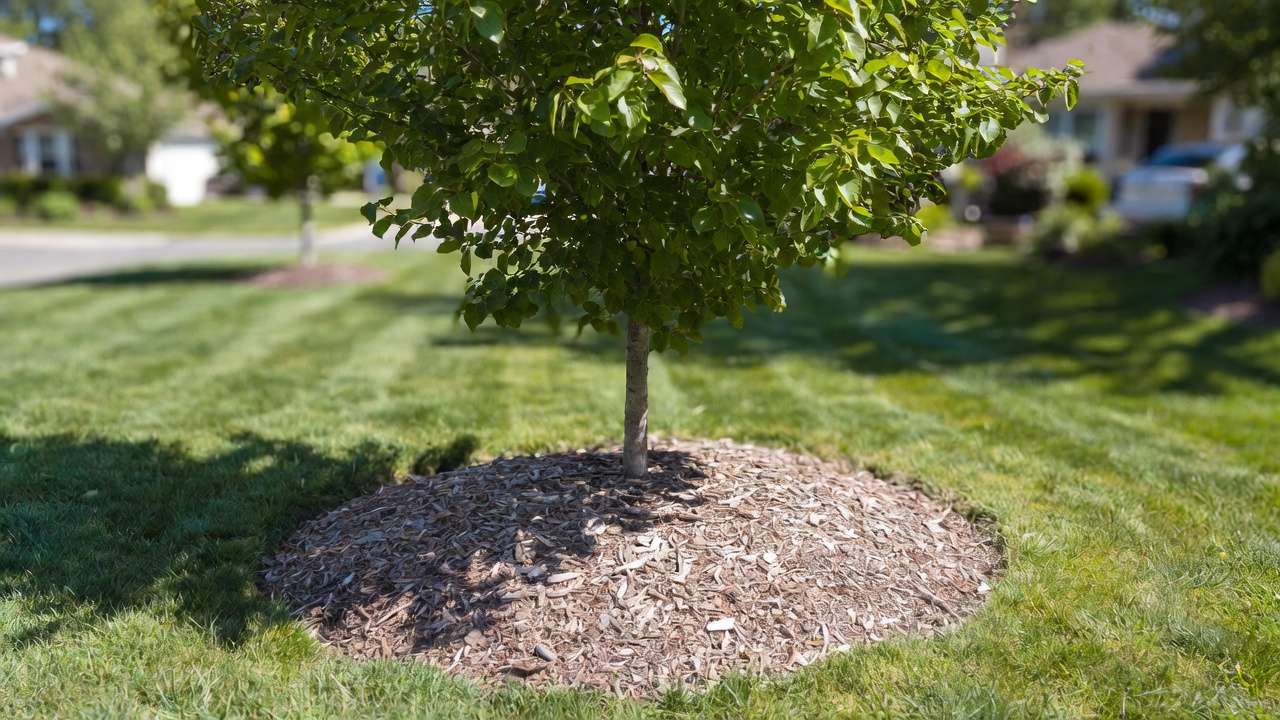
Step 3: Apply the Right Depth Spread 2–4 inches evenly (2–3 inches ideal for most soils; shallower in clay to avoid waterlogging). Taper slightly toward the edges.
Step 4: The Donut Shape – Keep It Away from the Trunk! Leave a 4–6 inch bare soil gap around the trunk base—no mulch touching bark! This prevents moisture buildup, rot, and girdling roots. Shape like a donut or volcano’s opposite: flat with a central “moat.”
Tools needed: Shovel, rake, wheelbarrow, gloves. Suggest including photos/diagrams: proper donut vs. volcano mulching for visual contrast.
How Wide & Deep Should Your Mulch Ring Be? 📏
Size Guidelines by Tree Age & Type
- Young trees (under 4 inches trunk): Start 4–8 feet diameter—gives roots room to expand fast.
- Mature trees: Extend to drip line or beyond for ongoing moisture/nutrient perks.
- Fruit/nut trees: Wider rings boost flowering/fruiting per some studies.
Depth Sweet Spot
2–4 inches max after settling. Deeper risks oxygen deprivation, rodent habitats, or fungal issues. In poorly drained soils, stick to 2 inches. Wider coverage trumps deeper piles every time—roots spread horizontally far more than down.
Common Mistakes (and How to Fix Them Forever) ❌
Even well-intentioned mulching can backfire—here’s how to avoid pitfalls.
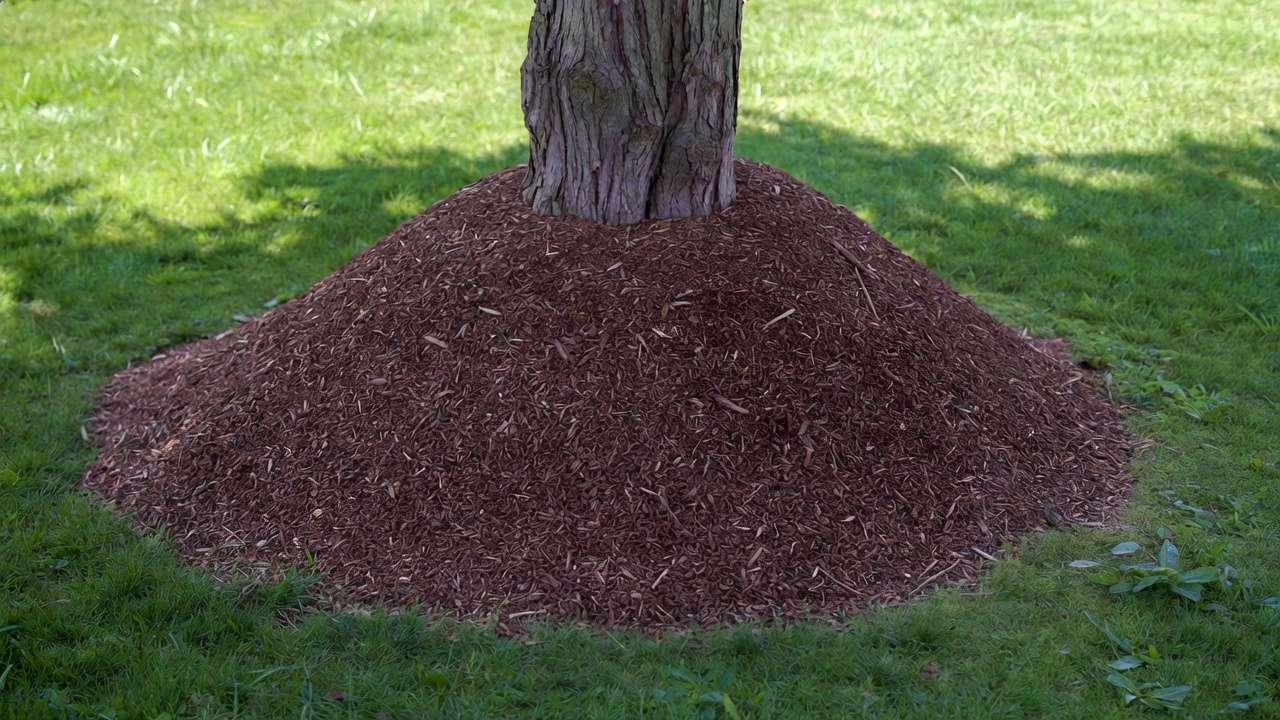
Volcano Mulching: The #1 killer—piling mulch high against the trunk like a volcano. Causes bark rot, stem girdling roots (roots wrap and choke the trunk), oxygen starvation, and pest entry. Fix: Rake away excess immediately; reshape into flat donut.
Too Deep or Too Narrow: Deep mulch suffocates roots; narrow rings limit benefits. Fix: Stick to 2–4 inches, expand radius annually.
Mulch Against Trunk: Invites decay and disease. Fix: Maintain that 4–6 inch gap forever.
Wrong Timing/Materials: Applying in wet seasons can trap moisture; fresh clippings heat up. Fix: Apply in spring/fall; refresh annually by topping up (no need to remove old layers—they enrich soil).
Before/after examples: A stunted oak revived with wide ring shows dramatic new growth in 2–3 seasons.
Maintenance Tips to Keep Growth Soaring Year After Year 🔄
Once your mulch ring is in place, consistent care keeps the momentum going and maximizes long-term tree health.
Annual Reapplication & Refreshing Organic mulches break down over time—expect to add 1–2 inches of fresh material every spring or fall. Don’t remove old layers; they’re feeding the soil ecosystem. Simply fluff up the existing mulch with a rake, remove any weeds that snuck through, and top-dress. This refreshes nutrient release and maintains moisture-holding capacity without compacting the soil.
Weed Control & Edging Hacks
- Hand-pull weeds early before they seed.
- Maintain a sharp edge with a half-moon edger or spade once or twice a year—creates a clean barrier that grass struggles to cross.
- For persistent invaders, a light application of cardboard or newspaper under fresh mulch smothers them naturally (eco-friendly sheet mulching technique).
Watering Synergy Mulch rings make watering far more efficient. Water deeply and infrequently—aim for 1–2 inches per week during the first two growing seasons (more in extreme heat). Apply water slowly so it soaks in rather than runs off. The mulch holds that moisture longer, encouraging roots to grow deeper and wider instead of staying shallow and vulnerable. In regions with seasonal monsoons (common in many parts of Bangladesh 🌧️), mulch prevents soil compaction from heavy rains and reduces runoff erosion.
Seasonal Adjustments
- Hot/dry climates 🌵: Add extra depth (up to 4 inches) and consider lighter-colored mulch to reflect heat.
- Wet/cool climates: Stick to 2–3 inches to avoid excess moisture retention.
- Winter prep: In areas with freeze-thaw cycles, a thicker layer insulates roots—refresh before the first hard frost.
With these habits, many homeowners report their trees continuing to outperform turf-planted neighbors by 50%+ in growth metrics even 5–10 years later.
Real-Life Examples & Case Studies 🌍
Let’s look at practical success stories that illustrate the power of mulch rings.
- Homeowner in a suburban lawn setting: A young red maple planted in 2018 was barely reaching 6 feet tall by year three—classic turf competition symptoms. After installing a 6-foot diameter mulch ring with hardwood chips in spring 2021, the tree added over 3 feet of height in the following season and showed noticeably thicker caliper (trunk diameter). By 2024, it had doubled its expected growth trajectory compared to neighbors’ identical maples left in grass.
- Urban street tree revival: A municipal planting of young oaks struggled with compacted soil and mower damage. City arborists expanded mulch rings to 8 feet and used arborist wood chips. Within two years, survival rates improved dramatically, and average height growth increased by nearly 80% versus non-mulched controls (similar to findings reported by urban forestry programs).
- Fruit tree boost: A backyard mango tree (common in tropical/subtropical zones like Barisal Division 🍋) produced sparse fruit for years. After a wide mulch ring of shredded coconut coir and compost, flowering intensity and fruit set noticeably improved the next season—likely due to reduced stress and better nutrient availability.
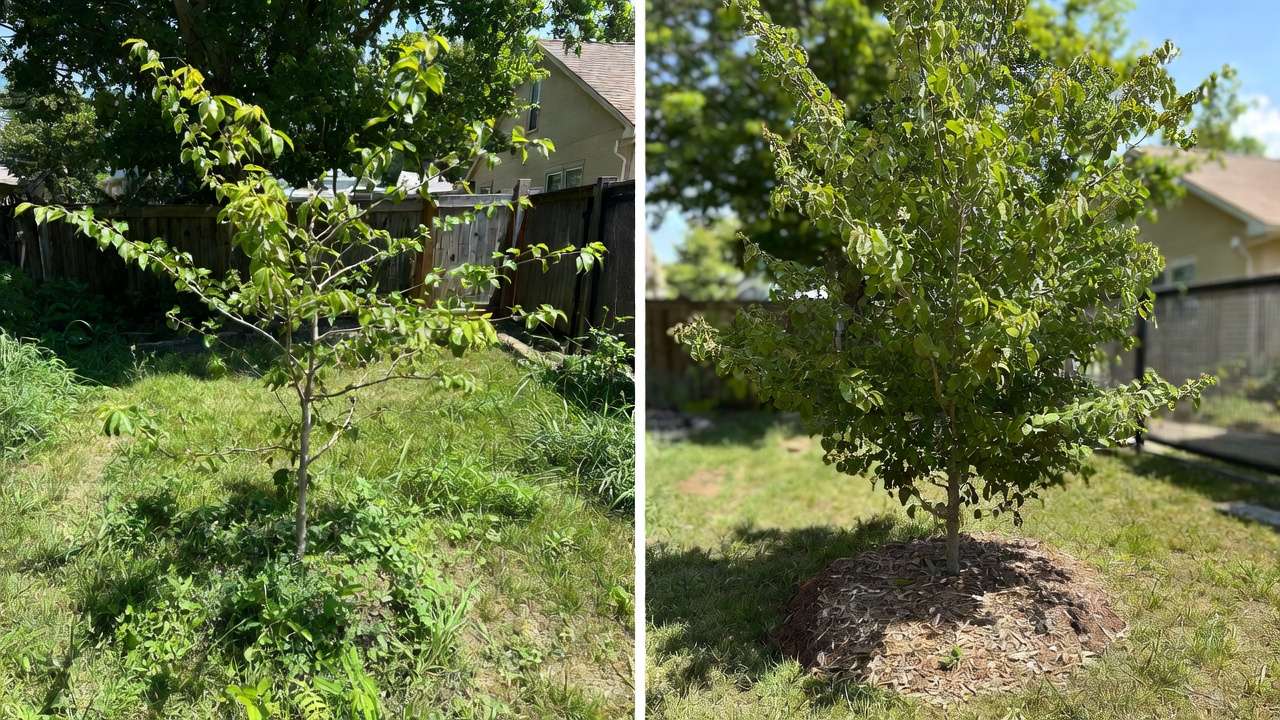
These examples highlight a consistent pattern: the bigger and better-maintained the mulch ring, the faster and healthier the tree responds.
FAQs: Quick Answers to Your Mulch Ring Questions ❓
Can mulch rings help mature trees too? Yes! While young trees see the most dramatic acceleration during establishment, mature trees benefit from reduced drought stress, better nutrient cycling, and protection from lawn equipment. Expanding rings gradually on older trees can improve vigor, flowering, and resilience—especially in dry or poor-soil conditions.
Is it worth it for established trees? Absolutely, if the tree shows signs of stress (sparse canopy, slow growth, dieback). Even healthy mature trees often live longer and perform better with ongoing mulch coverage extended to the drip line.
Best mulch type for hot, humid climates like Bangladesh? Coarse hardwood chips, coconut coir, or pine bark work well. They resist matting in heavy rains and provide good airflow. Avoid very fine mulches that can compact or encourage fungal issues in high humidity.
How long until I see faster growth? Most homeowners notice visible differences (longer shoots, larger leaves, quicker height increase) within the first full growing season. The biggest jump often occurs in years 1–3 as the root system expands into the protected zone.
Safe for all tree species? Yes, nearly all landscape trees benefit—deciduous, evergreen, fruit, nut, and ornamentals alike. A few acid-loving species (blueberries, some conifers) prefer pine-based mulches, but the technique itself is universally helpful.
Conclusion
Improving tree growth with mulch rings is one of the simplest, most cost-effective, and environmentally friendly ways to give your trees the advantage they need in a lawn-dominated landscape. By eliminating competition, conserving water, enriching soil naturally, and protecting trunks, you’re mimicking the ideal conditions trees evolved in—without expensive fertilizers, irrigation systems, or constant interventions.
Start small: pick one tree, create a generous 4–6 foot ring this weekend, shape it like a perfect donut, and watch the transformation begin. Within a season or two, you’ll likely see stronger branches, fuller foliage, and faster height gains that can easily approach—or exceed—double the growth rate of unprotected trees.
Your yard, your community, and future generations will thank you for healthier, longer-lived trees. 🌳💚
Have you tried mulch rings before? Share your before-and-after results or ask any follow-up questions in the comments—I’d love to help refine your approach!











