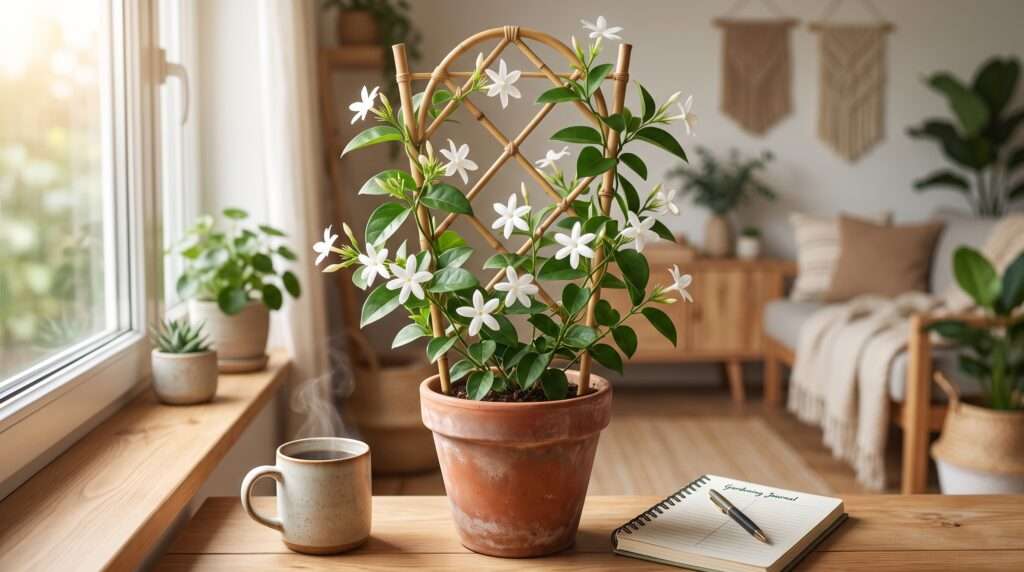
Imagine stepping onto your patio or into your sunroom on a warm evening, the air suddenly thick with a sweet, intoxicating perfume. That is the undeniable magic of jasmine. But while its world-renowned fragrance captures our senses instantly, few realize the profound jasmine plant meaning hidden beneath its delicate, star-shaped petals.
Over my years of cultivating, propagating, and writing about various botanical wonders, I’ve discovered that understanding the spiritual and cultural roots of a plant transforms it from a mere decoration into a living, breathing piece of history. Many plant lovers buy a jasmine plant on a fragrant impulse, only to watch it struggle on a dry windowsill because they don’t understand its true nature.
In this comprehensive, expert-led guide, we are going to dive deep into the rich cultural symbolism of jasmine. More importantly, we will explore exactly why bringing one into your home can elevate your living space, alongside the precise, step-by-step care strategies you need to keep this magnificent vine thriving and blooming year after year. 🌿
1. The Global Symbolism and True Jasmine Plant Meaning 🌎
To truly appreciate this plant, we must look at how it has shaped human culture for centuries. The name “Jasmine” is derived from the Persian word Yasmin, which translates to “Gift from God.” This botanical family (Oleaceae) has woven its way into the traditions, religions, and folklore of civilizations across the globe.

The Universal Symbol of Love and Romance ❤️
If there is one universal truth about the jasmine plant, it is its unbreakable association with love, romance, and deep affection. Its sweet, lingering scent has been prized by perfumers and royalty alike for its aphrodisiac qualities. Across many cultures, jasmine flowers are intricately woven into bridal bouquets, floral crowns, and wedding garlands. The delicate white blooms represent the purity of a couple’s promise, while the resilient vines symbolize a love that grows and endures over time.
Purity, Good Luck, and Spiritual Awakening 🕊️
Beyond romantic love, jasmine holds a sacred place in spiritual practices. In many Hindu ceremonies in India, jasmine flowers are offered to deities—specifically Lord Shiva and Lord Vishnu—as a symbol of divine hope, purity of mind, and spiritual awakening. Because the flowers often bloom at night and release their most potent fragrance in the dark, they are seen as a beacon of light, positivity, and good luck breaking through periods of darkness.
The Cultural Significance Across the Globe 🗺️
The global footprint of this fragrant vine is truly astounding. It doesn’t just sit in a pot; it defines national identities:
-
In Asia: Jasmine is deeply revered. The Poet’s Jasmine (Jasminum officinale) is the national flower of Pakistan, while the Sampaguita (Jasminum sambac) is the national flower of the Philippines, symbolizing purity, simplicity, and humility.
-
In the Middle East: It is the undisputed symbol of hospitality, divine hope, and maternal love. Offering jasmine tea or garlands is a profound gesture of welcoming guests.
-
In Western Culture: Introduced via the Silk Road, jasmine quickly became a staple in European royal gardens, representing elegance, grace, and amiability.
2. Decoding Jasmine Plant Meaning by Color 🎨
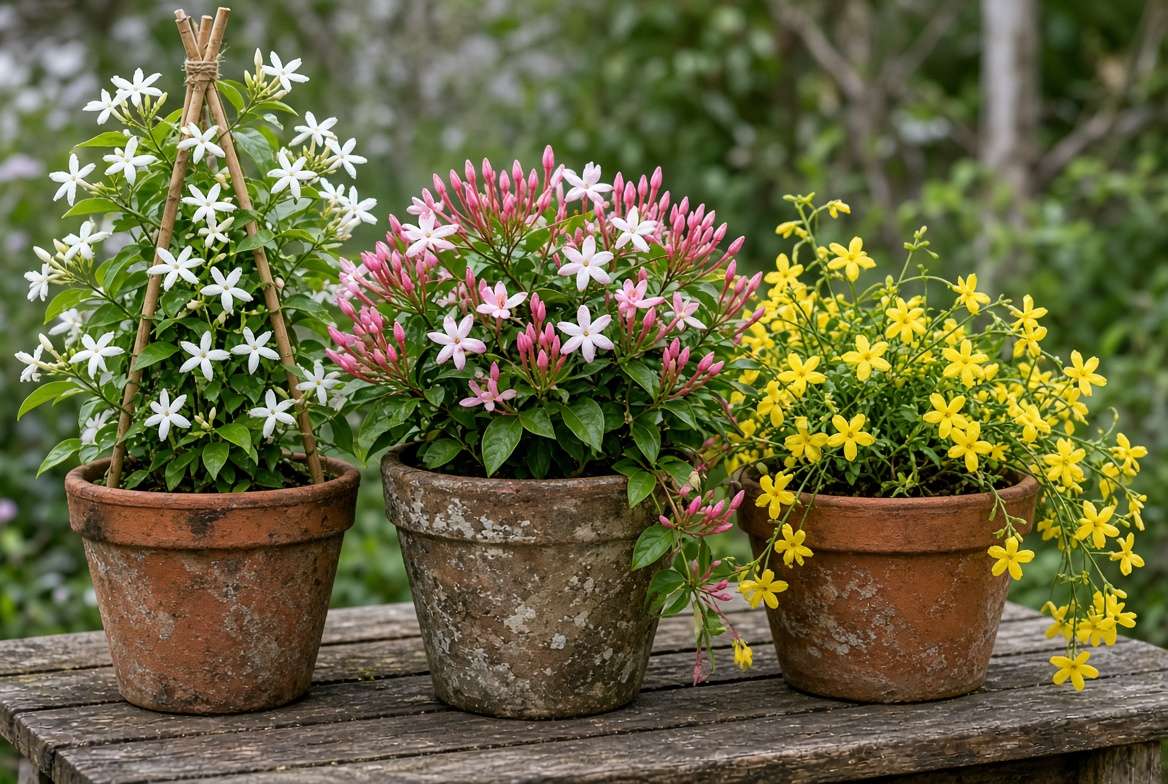
While we often picture pristine white, star-shaped flowers when we think of jasmine, the genus Jasminum boasts over 200 species with subtle color variations, each carrying its own unique energetic signature and meaning.
-
🤍 White Jasmine: The most iconic and widely cultivated. It represents absolute purity, innocence, deep respect, and spiritual devotion. If you are gifting a plant to celebrate a new baby, a wedding, or a fresh start, white jasmine is the ultimate choice.
-
💛 Yellow Jasmine (Winter Jasmine): Often blooming in late winter or early spring before its leaves even appear, yellow jasmine (Jasminum nudiflorum) symbolizes grace, elegance, and enduring friendship. It is a testament to resilience and the promise of brighter days ahead.
-
💖 Pink/Red Jasmine (Pink Jasmine Vine): Known as Jasminum polyanthum, the buds start out a vibrant, rosy pink before opening into white flowers. This variety represents passion, romance, and playful joy, making it a fantastic alternative to roses for an anniversary gift.
💡 Expert Insight: Did you know? Not all “jasmines” are true jasmines! Plants like Star Jasmine (Trachelospermum jasminoides) and Cape Jasmine (Gardenia jasminoides) share the intoxicating scent and the name, but they belong to entirely different botanical families. True jasmines strictly belong to the Oleaceae (olive) family.
3. Beyond Symbolism: 5 Reasons Your Home Needs a Jasmine Plant 🏡
Understanding the history is beautiful, but how does that translate to your daily life? Bringing a jasmine plant indoors or cultivating it on your patio offers tangible, scientifically backed lifestyle benefits that go far beyond aesthetics.
1. Natural Aromatherapy and Stress Relief 🧘♀️
You don’t need expensive essential oil diffusers when you have the real thing growing in your living room. The linalool naturally present in jasmine fragrance has been extensively studied for its calming effects on the nervous system. Research suggests that inhaling the scent of blooming jasmine can significantly lower anxiety levels, reduce stress, and even promote deeper, more restorative sleep. Placing a small potted Jasminum sambac near your bedroom window is a natural remedy for a restless mind.
2. Feng Shui and Positive Energy ☯️
In the practice of Feng Shui, plants are vital for balancing the flow of Chi (energy) in a home. Jasmine is considered an incredibly auspicious plant that attracts wealth, romance, and harmonious relationships. Because it symbolizes upward growth and positive energy, Feng Shui experts recommend placing a jasmine plant in a south-facing window or in the relationship corner of your home (the far right corner from your front door) to invite love and prosperity.
3. A Natural Air Purifier 🌬️
Like many lush houseplants, jasmine acts as a natural biological filter. Through photosynthesis, its dense canopy of green foliage absorbs carbon dioxide and releases fresh oxygen, helping to clear out indoor air pollutants. A healthier indoor microclimate leads to better focus, fewer headaches, and a more vibrant living space.
4. Culinary and Tea Gardens 🍵
For centuries, jasmine has been celebrated not just for its visual and aromatic charm, but for its culinary applications. The most famous example is jasmine tea, a staple of Chinese culture dating back to the Ming Dynasty. By cultivating Jasminum sambac (Arabian Jasmine) in your own home or greenhouse, you are growing the exact species used to scent premium green teas. While I always recommend consulting a professional before consuming homegrown plants (to ensure you haven’t used toxic pesticides), having a fragrant, edible flower in your indoor garden bridges the gap between ornamental botany and traditional herbalism.
5. Unmatched Aesthetic Appeal 🖼️
From an interior design perspective, jasmine is a powerhouse. Whether you are letting a vigorous vine trail elegantly from a macramé hanging basket, or training it upwards on a decorative bamboo trellis in a living room corner, jasmine transforms dull spaces into vibrant, living ecosystems. Its delicate, star-shaped white flowers provide a stunning visual contrast against its dark, glossy green foliage, adding immediate texture and a touch of wild, natural elegance to modern and traditional aesthetics alike.
4. Selecting the Right Jasmine for Your Space (Expert Recommendations) 🪴
One of the biggest mistakes I see beginners make is picking up a generic “jasmine” label at the garden center without knowing the specific variety. Different species have vastly different growth habits, blooming cycles, and light requirements. To set yourself up for success and fully embrace the jasmine plant meaning in your home, here are my top expert recommendations:
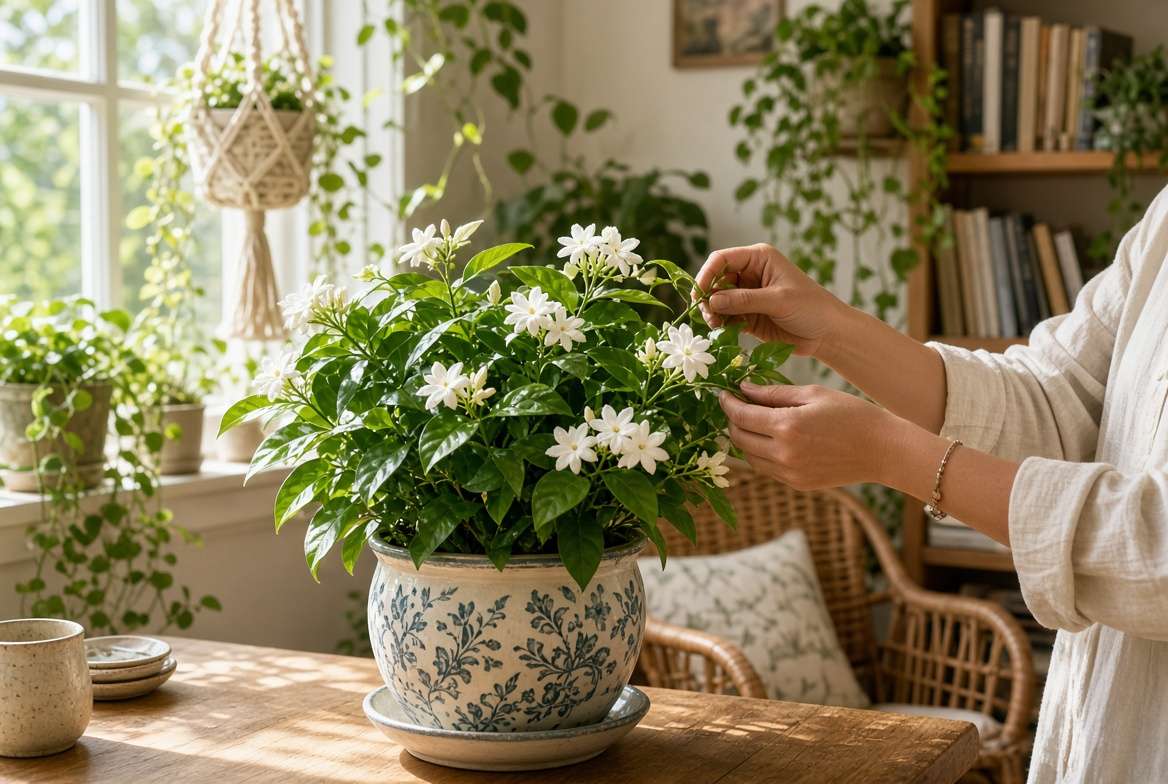
Best for Indoors: Arabian Jasmine (Jasminum sambac) 🌟
If you live in an apartment or want a fragrant indoor plant that stays relatively compact, this is your holy grail. Unlike aggressive climbing vines, Arabian Jasmine grows more like a shrub. It is famous for its continuous blooming cycle in warm conditions, producing incredibly fragrant, waxy white flowers that often look like miniature roses (especially the ‘Grand Duke of Tuscany’ variety). It tolerates standard indoor temperatures beautifully.
Best for Scent: Poet’s Jasmine (Jasminum officinale) 🌬️
Often called Common Jasmine or True Jasmine, this is the classic scent used in high-end perfumery. It is a vigorous, twining vine that thrives beautifully in a sunroom, on a patio, or planted near a window where its intense, sweet fragrance can drift indoors during the warm summer months. It requires plenty of sunlight and space to sprawl.
Best for Beginners: Pink Jasmine (Jasminum polyanthum) 🌸
If you are new to flowering houseplants, Jasminum polyanthum is incredibly rewarding and forgiving. It is a fast-growing climber famous for producing thousands of vibrant pink buds in late winter that burst into incredibly fragrant white blossoms in early spring. It looks spectacular trained on a hoop trellis and is generally very resilient, making it a fantastic confidence-builder for novice indoor gardeners.
5. The Expert Care Guide: How to Keep Your Jasmine Thriving 💧
Now that you understand the profound symbolism and have selected your perfect variety, how do you keep it alive? Jasmine plants have a reputation for being finicky indoors, but with the right foundational care, they are surprisingly robust. Here is my masterclass on indoor jasmine care.
☀️ Light Requirements: The Secret to Massive Blooms
If there is one non-negotiable rule for growing jasmine, it is light. Jasmine plants are sun-lovers. To trigger a robust blooming cycle, your plant needs bright, indirect sunlight with at least 4 to 6 hours of direct morning sun.
-
Indoors: A South-facing or West-facing window is ideal. If you notice your plant is growing long, “leggy” vines but zero flowers, it is crying out for more light. Consider supplementing with a full-spectrum LED grow light during the darker winter months.
-
Outdoors: If you move your plant to the patio for the summer (which they love!), ensure it gets partial shade during the scorching afternoon hours to prevent the delicate leaves from crisping.
💦 Watering Masterclass: Finding the Sweet Spot
Jasmine plants despise “wet feet” (soggy soil), but they will quickly drop their leaves if allowed to dry out completely. The goal is consistent, even moisture.
-
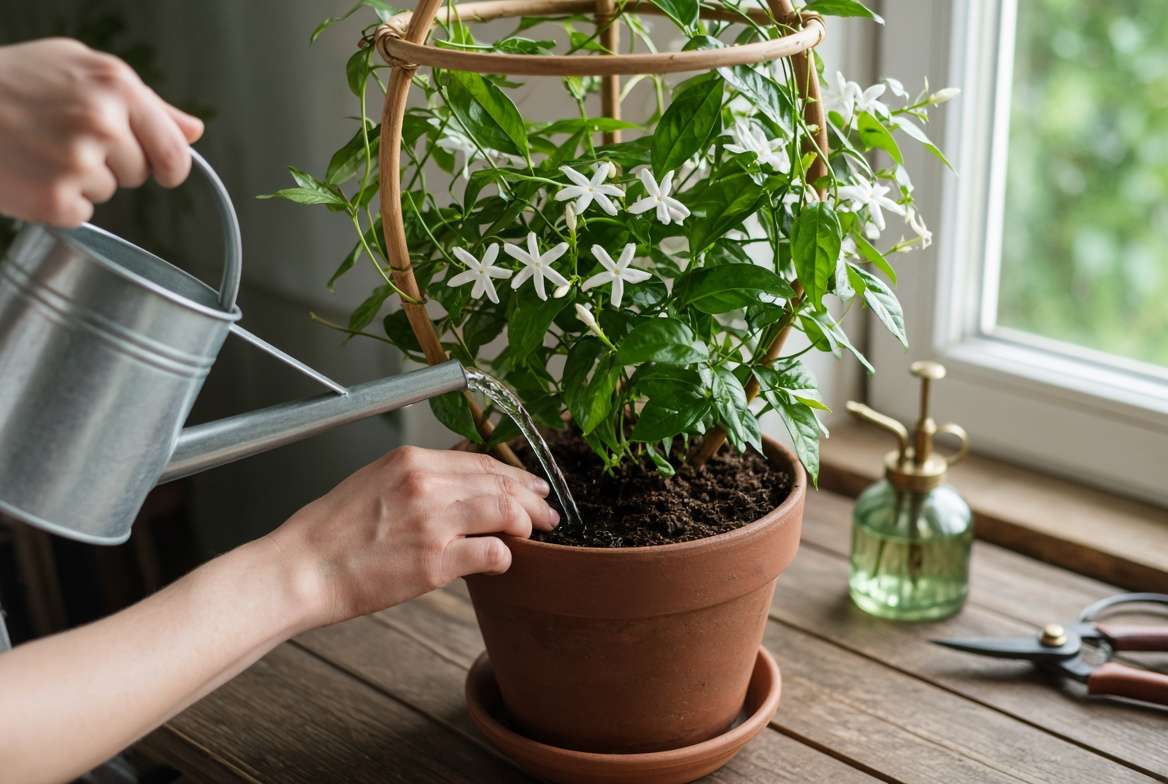
The Finger Test: Before you reach for the watering can, stick your index finger about two inches deep into the potting mix. If it feels dry, it is time to water. If it is still moist, wait another day or two.
-
Watering Technique: Water thoroughly until it drains out the bottom of the pot, and always empty the saucer beneath it. During their active growing phase (spring and summer), they will drink heavily. In the winter, you must significantly reduce your watering frequency.
🪨 Soil & Fertilizer Needs
A heavy, dense potting soil is a death sentence for a jasmine’s delicate root system. You need a rich, well-draining potting mix. I recommend blending a high-quality organic indoor potting soil with a generous handful of perlite and a bit of orchid bark for maximum aeration.
When it comes to feeding, jasmine is a heavy feeder during blooming season. Use a water-soluble, high-potassium fertilizer (often labeled as a “bloom booster” or tomato fertilizer) diluted to half-strength every two weeks from early spring through late summer. Stop fertilizing completely in the fall and winter.
✂️ Pruning and Training
Because many jasmines are aggressive vines, pruning is essential for maintaining their shape and encouraging bushier growth rather than a single, long, straggly stem.
-
When to prune: Always prune immediately after the plant has finished its main blooming cycle. Pruning too late in the year will cut off next year’s flower buds!
-
Training: Provide a sturdy structure—like a bamboo teepee, a wire hoop, or a wooden trellis. Gently weave the young, pliable green vines through the structure. Once the vines turn woody, they are very difficult to redirect.
❄️ Winter Care: The Crucial Chilling Period
Here is the biggest secret that most basic care guides miss, particularly for Pink Jasmine (Jasminum polyanthum): They need a winter chill to set their flower buds. If you keep your home at a cozy 75°F (24°C) all winter, you will likely get lush green leaves but absolutely no flowers in the spring. In the late fall, allow your jasmine to experience cooler nighttime temperatures (around 50°F to 60°F or 10°C to 15°C) for a few weeks by placing it near a drafty window or in an unheated, brightly lit room. This temperature drop signals the plant to prepare for its spectacular spring bloom.
6. Troubleshooting Common Jasmine Problems 🚑
Even with the best foundational care, indoor gardening always presents a few curveballs. As a plant care specialist, I receive countless questions from frustrated jasmine owners. The good news is that jasmines are fantastic communicators. If you know what to look for, you can diagnose and fix almost any issue before it becomes fatal.
Why is my jasmine not blooming? 🥀
This is the number one question I get, and the culprit usually falls into one of three categories:
-
Insufficient Light: As mentioned earlier, without 4 to 6 hours of direct sunlight, your jasmine will prioritize foliage over flowers. Move it closer to a south-facing window.
-
The Fertilizer Trap (Too Much Nitrogen): If you are feeding your plant a standard, all-purpose houseplant fertilizer high in nitrogen, you are encouraging the plant to grow massive amounts of green leaves at the expense of blooms. Switch to a phosphorus-heavy or high-potassium “bloom booster” formula in the early spring.
-
Missing the Winter Chill: For varieties like Pink Jasmine (Jasminum polyanthum), skipping the cool dormancy period (temperatures between 50°F–60°F or 10°C–15°C for a few weeks in late fall) means no bud set for the spring.
Dropping or Yellowing Leaves 🍂
Yellowing leaves are the universal distress signal of the plant kingdom, but the way they yellow tells a specific story:
-
Overwatering (Root Rot): If the lower leaves are turning a pale, sickly yellow and feel soft or mushy to the touch, you are likely overwatering. Check the drainage tray—is the pot sitting in a puddle? Allow the top few inches of the potting soil to dry out completely before watering again. If the soil smells swampy, you may need to repot in fresh, dry soil to save the roots.
-
Underwatering: If the leaves are turning yellow but feel crispy, dry, and begin to drop off rapidly, the root ball has dried out too much. When potting soil becomes bone-dry, it can repel water. Give the plant a thorough soak by placing the entire pot in a basin of water for 30 minutes to allow the soil to rehydrate from the bottom up.
Pest Patrol 🐛
When brought indoors, especially in the dry air of winter heating systems, jasmine plants can become susceptible to a few common houseplant pests.
-
Spider Mites: These are the most common invaders. Look for fine, silvery webbing tucked in the corners of the stems and leaves, along with a stippled (tiny yellow dots) appearance on the foliage.
-
Aphids and Whiteflies: These sap-sucking insects love the tender, new green growth of a jasmine vine. You might also notice a sticky residue (honeydew) on the leaves.
-
The Expert Solution: At the first sign of pests, isolate the plant immediately. Take it to the shower and gently wash off the leaves with lukewarm water to physically remove the bugs. Once dry, treat the entire plant—especially the undersides of the leaves—with a high-quality organic neem oil spray or insecticidal soap. Repeat every 7 days until the infestation is completely gone.
7. Frequently Asked Questions (FAQs) ❓
What does a jasmine plant symbolize as a gift? 🎁 Gifting a jasmine plant carries profound meaning. It symbolizes deep affection, purity, and spiritual devotion. Because of its sweet fragrance and elegant vines, giving a potted jasmine is considered a gesture of wishing the recipient good luck, romance, and positive energy in their home.
Is the jasmine plant toxic to cats and dogs? 🐾 True jasmines (plants belonging to the Jasminum genus, such as Jasminum sambac or Jasminum officinale) are completely non-toxic and pet-safe according to the ASPCA. However, beware of imposters! The “Carolina Jasmine” (Gelsemium sempervirens) and “Night-Blooming Jasmine” (Cestrum nocturnum) are highly toxic to pets and humans. Always verify the botanical name before bringing a plant into a pet-friendly home.
How long does a jasmine plant live indoors? ⏳ With proper care, appropriate pruning, and routine repotting every few years to refresh the soil, an indoor jasmine plant can live for decades. Many gardeners pass their mature, thriving jasmine vines down through generations.
Can I grow a jasmine plant from a cutting? ✂️ Yes, jasmine is surprisingly easy to propagate! Take a 4-to-6-inch semi-hardwood cutting in the summer just beneath a leaf node. Strip the lower leaves, dip the cut end in rooting hormone, and place it in a small pot with moist perlite or a peat-based propagation mix. Cover it with a clear plastic bag to create a mini greenhouse, and you should see root development in 4 to 6 weeks.
Embrace the Beauty and Meaning of Jasmine ✨
Bringing a jasmine plant into your life is about so much more than acquiring a new piece of green decor. When you understand the true jasmine plant meaning—its rich history as a global symbol of love, its spiritual ties to purity, and its natural ability to purify the air and calm the mind—you aren’t just tending to a houseplant. You are cultivating a living tradition right in your own living room.
Whether you choose the continuous blooms of the Arabian Jasmine or the vigorous, trailing vines of the Pink Jasmine, providing the right light, mindful watering, and a little seasonal pruning will reward you with a sensory experience like no other.
Now, I want to hear from you! Have you ever tried growing jasmine indoors, or are you feeling inspired to pick one up for your bedroom window? Share your experiences, photos, and any lingering questions in the comments below. And if you are looking to expand your fragrant indoor garden further, don’t forget to subscribe to our newsletter and check out our comprehensive guide on the Top 10 Fragrant Houseplants for a Sweeter Home. Happy planting! 🌿💚