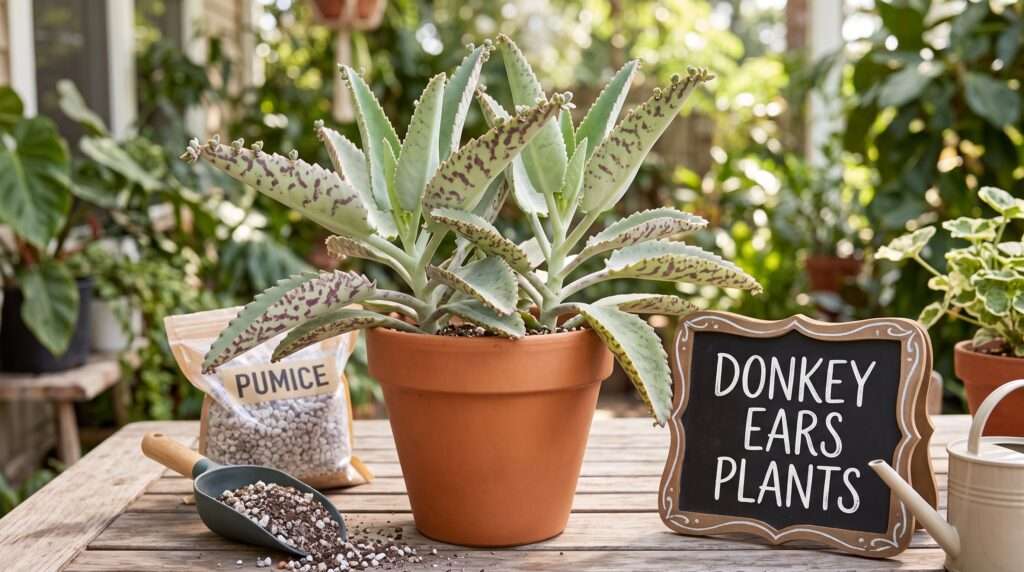
If you are looking for a bold, architectural standout in the succulent world, look no further. Donkey ears plants (Kalanchoe gastonis-bonnieri) are dramatic, show-stopping specimens that can transform any sunny windowsill into a prehistoric landscape. With their massive, 12- to 20-inch powdery green leaves marked by striking maroon-purple blotches, they easily dominate a room.
But there is a catch. While they are hailed as low-maintenance, the traditional houseplant care routine—especially standard watering—will kill them faster than pure neglect. The delicate moisture balance required to encourage vigorous, giant foliage is a tightrope walk. Tip too far one way, and you stunt their growth. Tip too far the other, and you invite the number one killer of succulents: root rot.
In this comprehensive guide, we will break down exactly how to cultivate giant Kalanchoe gastonis-bonnieri leaves, the science of creating the perfect well-draining soil, and foolproof succulent root rot prevention strategies. Let’s dive in! 🪴
Botanical Snapshot & Quick Care Facts 📋
Before we get our hands dirty, let’s look at the basic profile of this giant succulent:
-
Botanical Name: Kalanchoe gastonis-bonnieri
-
Common Names: Donkey Ears, Giant Kalanchoe, Sprout Leaf, Tree of Life, Palm Beach Bells
-
Family: Crassulaceae
-
Native Habitat: Northwestern Madagascar (thriving on dry, rocky outcrops)
-
Hardiness Zones: USDA Zones 9b–11 (must be grown indoors or overwintered everywhere else)
-
Toxicity: Highly toxic to cats, dogs, and humans if ingested (contains cardiac glycosides). ⚠️
Natural Habitat Meets Indoor Window: Understanding What Donkey Ears Crave ☀️
To truly master donkey ear succulent care, you have to think like a plant native to the rocky cliffs of Madagascar.
The Madagascan Native Environment 🌍
In their natural habitat, Donkey Ears experience intense direct sunlight, mineral-heavy soils with minimal organic matter, and fast-draining slopes. They are subjected to intense seasonal wet-and-dry cycles. When you bring this plant into a typical indoor living room, the lack of airflow, combined with moisture-retaining potting soil, essentially feels like a suffocating rainforest to their root system. Replicating their native rocky environment is the secret to unlocking massive leaf growth.
Farina: The “Powder” You Must Never Wipe Away 🛡️
Have you ever noticed a chalky, white, powdery coating on the leaves of your Donkey Ears plant? Beginners often mistake this for dust or mildew and try to wipe it off with a damp cloth. Stop right there! 🛑
This coating is called farina (epicuticular wax). It is a vital botanical feature that serves three critical functions:
-
Natural SPF: It acts as sunscreen, protecting the fleshy leaves from intense UV radiation and sunburn.
-
Water Repellent: It helps water bead off the leaves, preventing fungal infections in the plant’s crown.
-
Pest Barrier: It makes it difficult for sap-sucking insects to latch onto the leaf surface.
Expert Field Note: Farina does not grow back once removed. If you touch the leaves with your bare hands, the oils from your skin will leave permanent, unsightly smudge marks. Always handle your Donkey Ears by the pot or the very base of the stem! 🧤

Soil Science: The Absolute Foundation of Root Rot Prevention 🪨
If you want to prevent root rot, you must start beneath the surface. You cannot out-water a bad soil mix.
Why Off-the-Shelf Succulent Mixes Fail 🚫
Most commercial bagged “cactus and succulent” soils found at big-box hardware stores are surprisingly terrible for giant Kalanchoes. They are typically loaded with peat moss, coconut coir, and vermiculite. While these ingredients are cheap for manufacturers, they retain way too much moisture and compact over time.
Compacted soil chokes the root zone of oxygen. When roots sit in damp, oxygen-deprived (anaerobic) conditions, it triggers the rapid multiplication of fatal fungal pathogens like Pythium and Phytophthora. Once root rot sets in, it travels up the stem, turning your beautiful plant into a pile of black mush.
The Ultimate “Breathe-Easy” DIY Gritty Soil Recipe 🥣
To grow massive leaves, the root system needs to breathe. By creating a gritty, inorganic-heavy mix, water will flush through the pot immediately, pulling fresh oxygen down into the root zone as it drains.
Here is the professional-grade recipe for maximum growth and zero rot:
-
40% Coarse Horticultural Pumice or Perlite: Provides aggressive aeration and prevents compaction.
-
30% Coarse Sharp Sand or Crushed Granite (Poultry Grit): Adds weight to support the massive, top-heavy leaves and ensures rapid drainage.
-
20% Calcined Clay (Turface) or Bonsai Block: Absorbs just enough water and nutrients to feed the plant, releasing it slowly as the roots need it.
-
10% High-Quality Sifted Compost or Earthworm Castings: The only organic matter needed to provide a gentle, natural baseline of nutrients.
Target pH: Aim for a slightly acidic to neutral range (6.0 to 6.8). 🧪

Pot Anatomy: Materials, Shape, and Drainage Hole Rules 🏺
Even the best soil will fail in the wrong container.
-
The Material: Unglazed terracotta reigns supreme. The porous clay walls actively wick excess moisture out of the soil, acting as a failsafe against accidental overwatering.
-
The Shape: Donkey ears plants have surprisingly shallow root systems. A wide, shallow terracotta bowl is infinitely better than a deep, narrow pot. Deep pots hold a “perched water table” at the bottom that shallow roots can’t reach, creating a stagnant swamp of rot.
-
The Golden Rule: Never, under any circumstances, plant a Donkey Ears succulent in a pot without a drainage hole. 🕳️
Mastering the Soak-and-Dry Method: How to Water Without Fear 💧
Watering is the most misunderstood aspect of indoor succulent care.
The Golden Rule: Water Only When the Plant Begs for It 🗣️
Throw away your watering calendar. Watering “every 10 days” is a guaranteed path to root rot because a plant’s thirst fluctuates based on temperature, humidity, and active growth cycles. Instead, read the visual and tactile cues your plant gives you:
-
The Pinch Test: Gently give the lowest, oldest leaf a tiny squeeze (being careful not to smudge the farina). If it feels rock-hard and plump, do not water. If it feels slightly soft, pliable, or shows minor wrinkling near the edges, it is time for a drink.
-
The Weight Test: Lift the terracotta pot after watering. Memorize that heavy feeling. Only water again when the pot feels as light as air.
Top Watering vs. Bottom Soaking 🛁
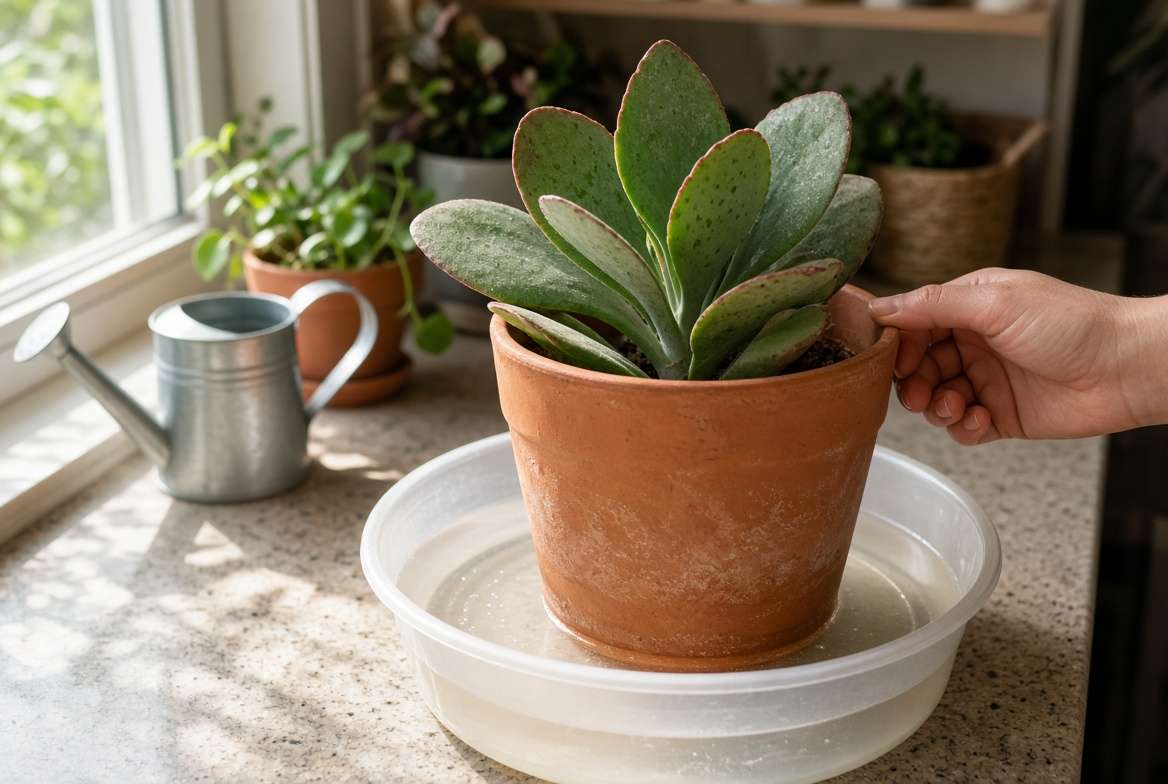
Because the leaves grow in a tight rosette formation, top-watering can trap water in the crevices of the crown, leading to crown rot. Bottom-watering is the safest, most effective method:
-
Fill a basin with 2-3 inches of room-temperature water.
-
Place the potted plant in the basin and let the gritty soil wick the moisture up through the drainage hole.
-
Leave it for 20-30 minutes until the top layer of soil feels slightly damp.
-
Remove the pot and let it drain completely in the sink for at least an hour before putting it back on its saucer.
Seasonal Water Adjustments 🍂❄️
A common mistake indoor gardeners make is treating their plants the same way year-round. Donkey Ears have distinct seasonal needs:
-
Spring and Summer (Active Growth): During the warm months, your succulent will actively push out new growth. Depending on your home’s humidity and light levels, the soil may dry out every 7 to 14 days, requiring more frequent, deep soakings.
-
Fall and Winter (Dormancy): As daylight hours shorten and temperatures drop, Kalanchoe gastonis-bonnieri enters a state of near-dormancy. Its metabolism slows down, and its water requirements plummet. You may only need to water once every 4 to 6 weeks. When in doubt during winter, simply do not water.
How to Grow Truly Massive, Show-Stopping Leaves 📏
With the foundation of soil and water locked in, it is time to optimize the environment. If your Donkey Ears plant looks a little uninspired or leggy, adjusting the following three factors will trigger explosive, oversized foliage.
Maximizing Light Intensity Without Scorching ☀️
Donkey Ears are sun-worshippers. To grow 18-inch leaves that stay compact and structural rather than stretched and floppy, they need at least 6+ hours of strong light daily.
-
The Sweet Spot: An east-facing or south-facing window is ideal. Direct morning sun combined with bright, filtered afternoon glare mimics their natural habitat perfectly.
-
Sun Stress Colors: When exposed to adequate light, the powdery blue-green leaves will develop gorgeous, deep maroon or bronze blotches. This “sun stressing” is highly desirable and a sign of a happy plant! However, if you see white, papery, blistered patches, the plant is genuinely sunburned. Introduce them to brighter light gradually over two weeks.
-
Grow Lights: If you live in a dark, northern climate, a full-spectrum LED grow light (aiming for around 300–500 PPFD) is essential during the winter months to keep the leaves massive and upright. 💡
Nutritional Boosters: Feeding for Foliage Size 🧪
Succulents are light feeders, but if you want giant leaves, you need to provide the right fuel.
-
The N-P-K Balance: Avoid high-nitrogen fertilizers, which cause weak, brittle, and stretched-out “leggy” growth. Instead, opt for a low-nitrogen, balanced liquid fertilizer (like a 5-10-10 or 10-10-10) diluted to 1/4 of the recommended strength.
-
Feeding Schedule: Feed only once a month, strictly during the active growing season (late spring through late summer). Never fertilize a dormant succulent in winter—it can burn the root system.
Airflow and Temperature: The Overlooked Growth Triggers 💨
Stagnant air breeds disease and weakens cellular structure. Mimic the open breezes of a Madagascan cliffside by keeping a small circulation fan on low in the same room.
-
Temperature: Keep daytime temperatures warm (70°F–85°F / 21°C–29°C). While they can tolerate a slight evening chill, never let temperatures drop below 50°F (10°C).
Triage Protocol: Diagnosing & Rescuing a Rotting Donkey Ears Plant 🩺
Despite your best efforts, accidents happen. If you suspect your Kalanchoe gastonis-bonnieri has been overwatered, immediate action is required to save it.
Early Warning Signs vs. Terminal Collapse ⚠️
Catching rot early is the difference between life and death.
-
Early Signs: Lower leaves turn translucent, squishy, or yellow (like overripe fruit) and drop off at the slightest touch.
-
Advanced Signs: A dark, mushy ring appears at the base of the stem near the soil line.
-
Terminal Signs: The entire root ball smells sour, swampy, or fungal.
Step-by-Step Emergency Surgical Rescue ✂️
If root rot has set in, you must act like a surgeon.
-
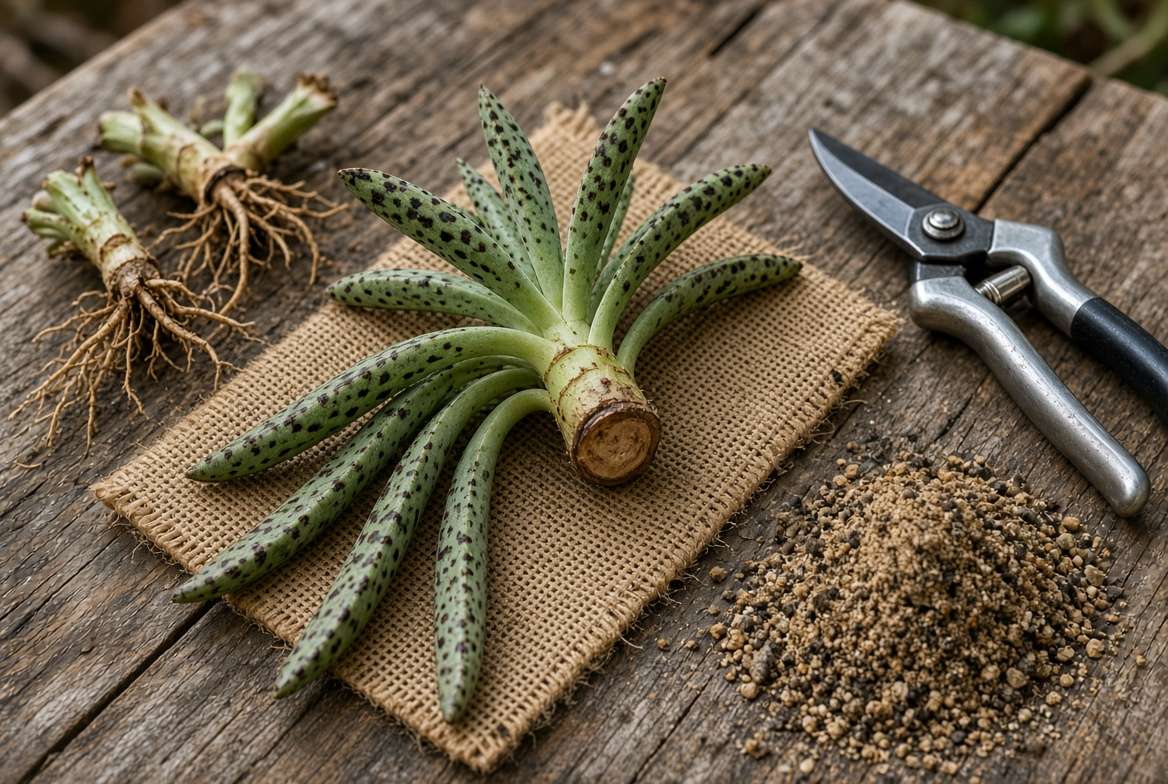
Unpot and Wash: Immediately remove the plant from its wet soil. Gently wash the roots under room-temperature water to expose the damage.
-
Sterilize Tools: Wipe your sharpest pruning shears with 70% isopropyl alcohol.
-
Radical Excision: Snip away all brown, mushy, or stringy roots. You only want to leave firm, white or pale-tan root tissue.
-
The Beheading Protocol: If the rot has reached the main stem, roots are a lost cause. You must cut the healthy top portion of the stem completely off, about an inch above the black mushy rotline.
-
Callusing: Leave the rescued plant or stem cutting in a dry, shady, well-ventilated spot for 3 to 7 days until the cut end forms a hard, dry scab (callus).
-
Re-Rooting: Place the callused cutting gently into completely dry pumice or your gritty mix. Do not water it for at least two weeks while it pushes out fresh, healthy roots. 🌱
The Magic of “Sprout Leaves”: Foolproof Propagation 🌱
Propagating the Donkey Ears plant is so easy it almost feels like cheating. It belongs to a unique group of Kalanchoes that are viviparous.
Vivipary: Nature’s Automatic Cloner 👶
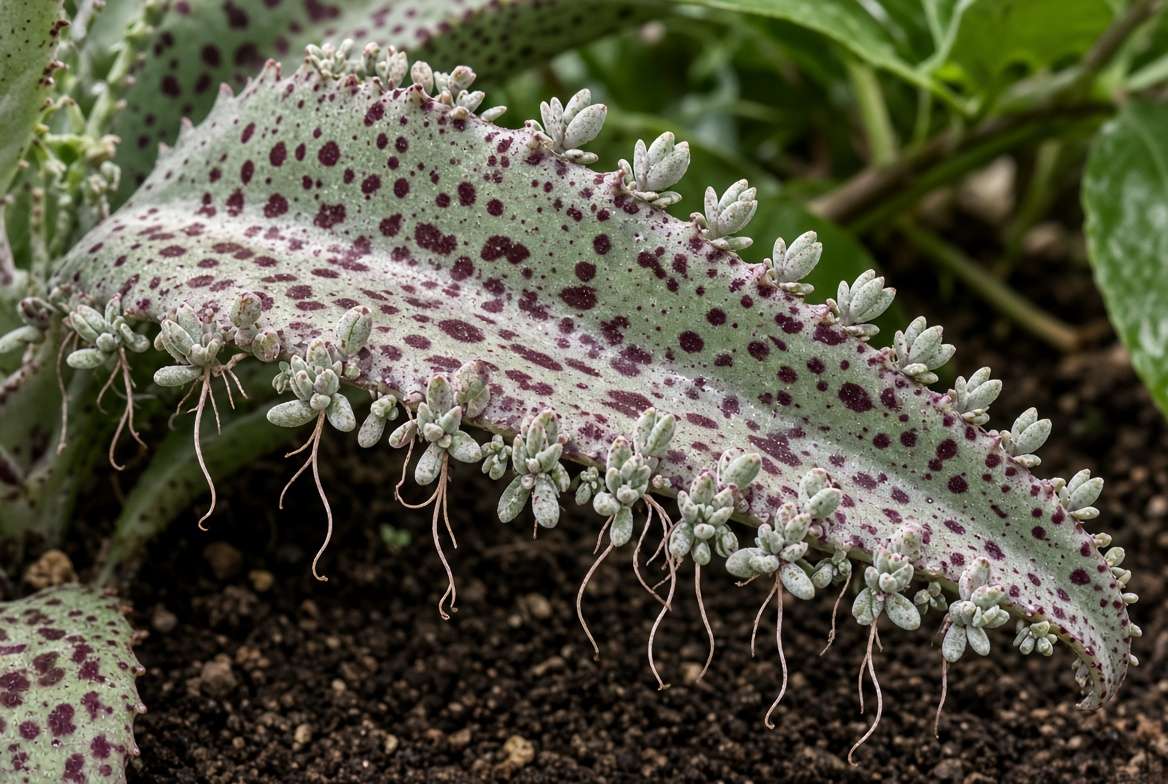
Vivipary means the plant produces live, miniature clones of itself (called bulbils or “pups”) directly along the serrated margins of its mature leaves.
-
You will notice tiny rootlets forming in the air while the pups are still attached to the mother plant.
-
How to Harvest: Wait until the pup has 3 or 4 tiny leaves and visible aerial roots. Gently pluck it from the mother leaf and lay it on top of slightly damp, gritty soil. It will root itself within days!
Leaf Cuttings & Stem Tips 🌿
If you don’t have pups, you can propagate via stem cuttings or mature leaf cuttings. Simply snap off a healthy leaf, let it callus for a few days, and lay it flat on dry soil. In a few weeks, tiny pink roots and a new rosette will emerge from the broken end.
The Monocarpic Dilemma: Blooms, Death, and Succession 🌸
One of the most spectacular, yet bittersweet, events in a Donkey Ear’s life is its blooming cycle.
What to Expect When Donkey Ears Flowers 🌺
When mature (usually after 2 to 4 years), the plant will shoot up an incredibly tall, 2- to 3-foot flower stalk. Over several weeks, it will produce stunning, bell-shaped, salmon-pink to reddish flowers that dangle elegantly, earning it the nickname “Palm Beach Bells.”
Managing the “Terminal Bloom” 🥀
Kalanchoe gastonis-bonnieri is monocarpic, meaning it blooms once and then naturally dies. You cannot stop this process. Once the flower stalk emerges, the main mother rosette will stop producing leaves, expend all its energy into the flowers, and slowly wither away over several months.
-
The Good News: Before she fades, the mother plant will produce dozens, sometimes hundreds, of pups along the flower stalk and her remaining leaves. Simply collect these clones, and the genetic legacy of your giant succulent will continue forever! ♾️
Common Pests, Diseases, and Environmental Stressors 🐛
Even a robust indoor succulent can face challenges. Keep an eye out for these invaders:
-
Mealybugs & Scale: These sap-sucking pests look like tiny cotton swabs hiding in the tight crevices where the massive leaves meet the stem. Spot-treat immediately by dabbing them with a cotton swab dipped in 70% rubbing alcohol.
-
Powdery Mildew: Do not confuse this with the natural farina! Powdery mildew looks like patchy, dusty white spiderwebs and thrives in poor airflow. Treat with a succulent-safe fungicide and drop the room’s humidity below 50%.
-
Edema: If you notice hard, corky, or blister-like bumps on the undersides of the leaves, your plant has edema. This happens when the roots absorb water faster than the leaves can transpire it, causing cells to burst. It is harmless but permanent, signaling that you need to wait longer between waterings.
Expert Summary Comparison Table (Quick-Reference Cheat Sheet) 📊
| Care Metric | Ideal Target | Danger Zone (Avoid!) |
| Light Exposure | 6+ hours bright, indirect/morning sun ☀️ | Deep shade or immediate, scorching afternoon sun |
| Soil Mixture | 70% inorganic grit (pumice/turface), 30% organic | 100% standard potting soil or heavy peat moss |
| Watering Method | Soak-and-dry bottom watering 🛁 | Fixed weekly schedules or misting the leaves |
| Temperature | 70°F–85°F (21°C–29°C) | Extended exposure below 50°F (10°C) ❄️ |
| Rot Warning Signs | Translucent, yellowing, or mushy bottom leaves | Ignoring foul smells from the drainage hole |
Frequently Asked Questions (FAQ) ❓
Are donkey ears plants toxic to cats and dogs?
Yes, highly toxic. Kalanchoe gastonis-bonnieri contains bufadienolide cardiac glycosides. Ingestion can cause severe drooling, vomiting, diarrhea, and abnormal heart rates in pets. Keep this plant far out of reach of curious animals. 🐾⚠️
How big can donkey ears plants get indoors vs. outdoors?
Outdoors in tropical climates, they can form massive clumps over 2 feet wide, with leaves stretching 20 inches long. Indoors, restricted by pot size and lighting, they typically max out around 12 to 15 inches wide, which is still incredibly impressive for a houseplant!
Why are my donkey ears drooping instead of standing upright?
Drooping leaves are almost always a symptom of insufficient light (etiolation). The plant is spreading its leaves flat to capture as much ambient light as possible. Slowly introduce it to a brighter window.
Can donkey ears survive a light frost?
No. A frost will cause the water stored inside their fleshy leaves to freeze and burst the cell walls, turning the plant to mush overnight. Always bring them indoors before temperatures hit 45°F (7°C).
How often should I repot a mature plant?
Because their root systems are relatively small, they prefer to be slightly root-bound. Repotting every 2 to 3 years into a pot only 1-2 inches larger is more than enough.
Final Thoughts: Embrace the Wait 💬
Growing gigantic, architectural leaves on a Donkey Ears plant is incredibly rewarding, but it requires restraint. The golden rule of succulent resilience is simple: when in doubt, wait three more days before watering. Give them gritty soil, blast them with sunshine, and keep your hands off those beautiful powdery leaves.
How wide are the leaves on your Donkey Ears right now? Are you dealing with any mysterious spots or droops? Drop a comment below or share a photo of your plant—I’d love to help you troubleshoot your growing setup! ✨